This is third part of a three-part series about a thru-hike with my brother of the stunning Larapinta trail. Part one, the story of our trek, can be viewed here and part two, photos from Standley Chasm, here.
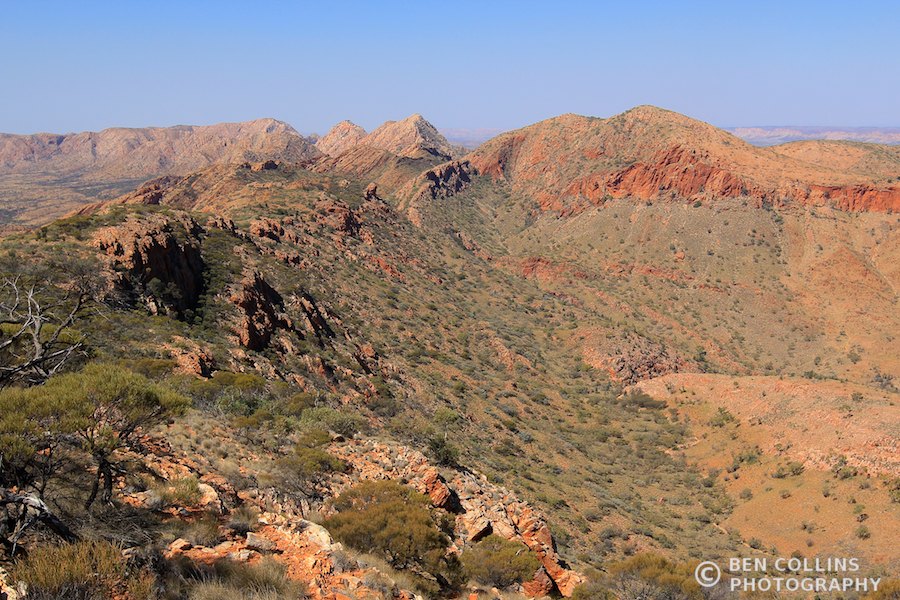
The country ahead, from the summit of Brinkley Bluff, Larapinta Trail, Australia
John McDouall Stuart, a small but incredibly tough Scotsman, led the first successful expedition to cross Australia from south to north and back again, traversing the then blank interior of Australia. He named the West MacDonnell range, the very range that we had spent 8 days crossing as we walked the Larapinta Trail; he named and was the first to climb Brinkley Bluff, a mountain that we climbed along the way; heck, there is even a pass through the mountain range named after him. In short, walking the Larapinta trail is to take a journey back in time to discover the lands and people that played a formative part in the exploration and development of the Australian continent.
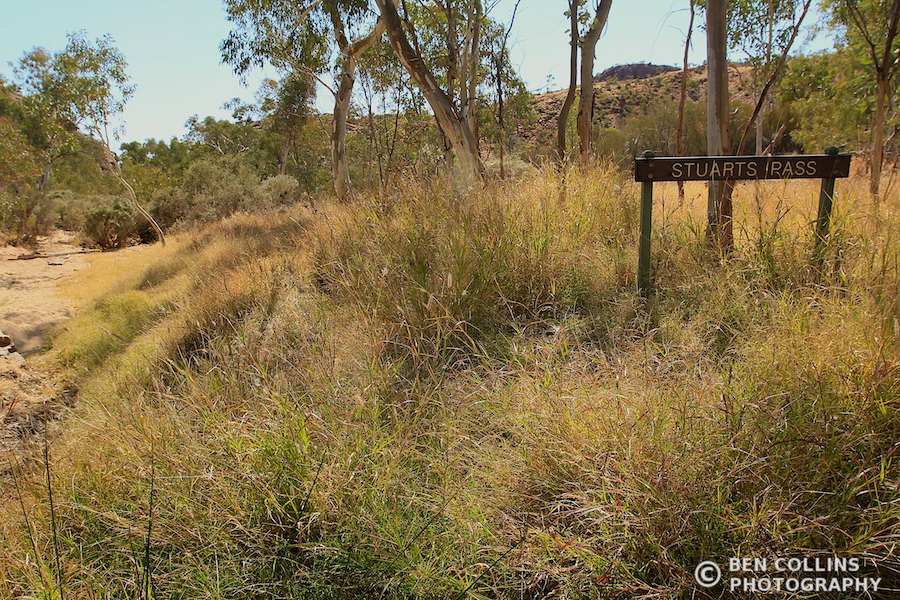
Stuart’s Pass, Larapinta Trail, Australia
After the trek I bought a recently reprinted copy of Stuart’s 1861 Expedition Diary. It is a compelling tale of a journey full of serious hardships and genuine first-hand geographical discoveries. The mention of Brinkley Bluff really brought his journey to life for me – we had also climbed that mountain only a week earlier:
THURSDAY, February 27. [1861] – Owen’s Springs. This morning the clouds all cleared away without any rain. Proceeded up the Hugh [river] to the north-east side of Brinkley’s Bluff. I have been obliged to leave one of the weak horses behind. Three more have given in to-day, and it was as much as we could do to get them here.

On the summit of Brinkley Bluff which was climbed by the early explorer John Stuart during his explorations of the interior of Australia
He probably stood in some of the same places that my brother and I did, seeing an almost identical landscape (nothing man-made is visible from the summit except for the cairn and the trail obviously, and one distant jeep track).
For the information of His Excellency the Governor-in-Chief, I have the honour to report to you my return to Adelaide, after an absence of twelve months and thirteen days; and I herewith beg to hand you my Chart and Journals of the Expedition, from which I have just returned. – John McDouall Stuart, Explorer, from his 1861-2 Expedition Diary
After an absence of only eight days, I returned to Adelaide having taken the considerably quicker and easier option of a flight back from Alice Springs. Whilst staying in Adelaide with my relatives, I took a trip to see the State Library. Incredibly, the library had an exhibition wall displaying memorabilia, maps and books from the Stuart expeditions. It was fascinating to learn more about his journeys and lifetime of work to open up the interior. I delighted in recognizing place names where I had been trekking only a week earlier; places he had named as he laid eyes on them for the first time. It was enthralling.

The magnificent Adelaide State Library
The serendipity didn’t end there however. The Royal Geographical Society of South Australia is housed on the third floor of the State Library and their door was open. A staff member warmly invited us in to have a look round. The large room was a haphazard explosion of maps, old books, objects of exploration, photographs and who knows what else. Like a kid in a candy shop, I excitedly scanned the room trying to take it all in. In one corner was a statue of John Stuart himself. At his feet was a piece of the dig tree from the ill-fated Burke and Wills expedition.

Statue of John Stuart, Explorer, in the Royal Geographical Society of South Australia
“Do you want to see any of the maps?” asked the volunteer librarian.
“Yes, I’d love to. I’ve just come back from the West MacDonnell ranges, so maybe we can find a map of that area.”
After rummaging through the filing cabinet, he found a facsimile 1886 map of the area west of Alice Springs. Lo and behold! There were names I recognized on this map. Campsites, peaks, ranges from my recent Larapinta trek were marked this ancient map.
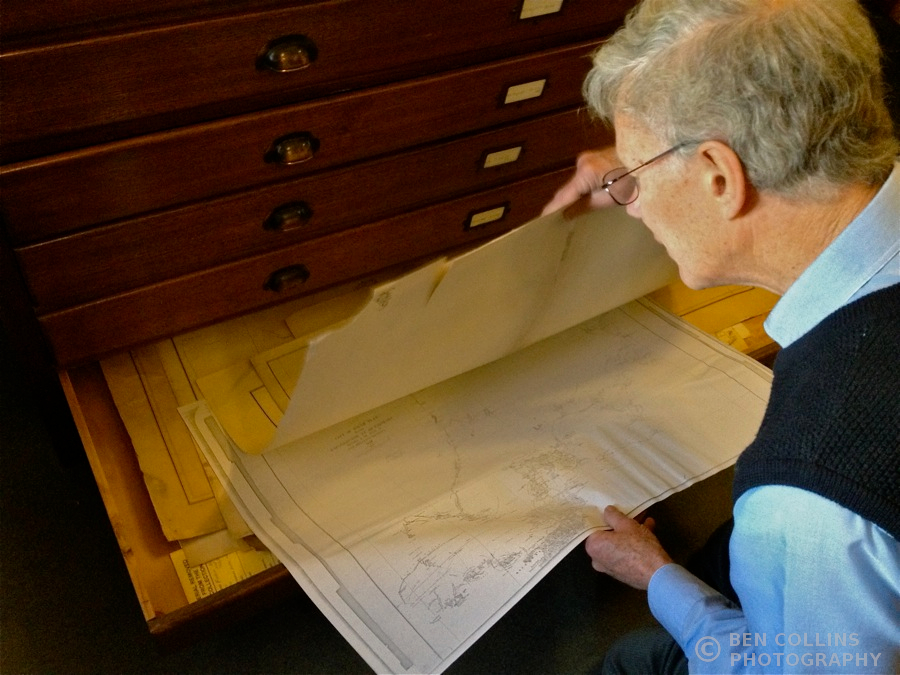
Old facsimile maps, Royal Geographical Society of South Australia
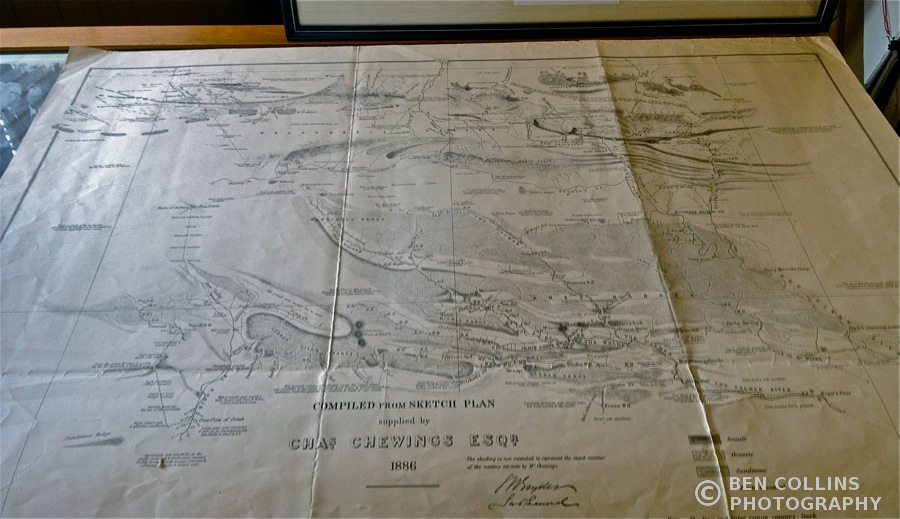
Old facsimile map, Royal Geographical Society of South Australia
Redbank Gorge, Sonder Mountain, Rockybar Creek, Glen Helen Station, Mt. Giles, Fish Waterhole, Ellery’s Creek, Chewings Range… All names that we had discussed, passed, climbed or camped at only a week earlier.
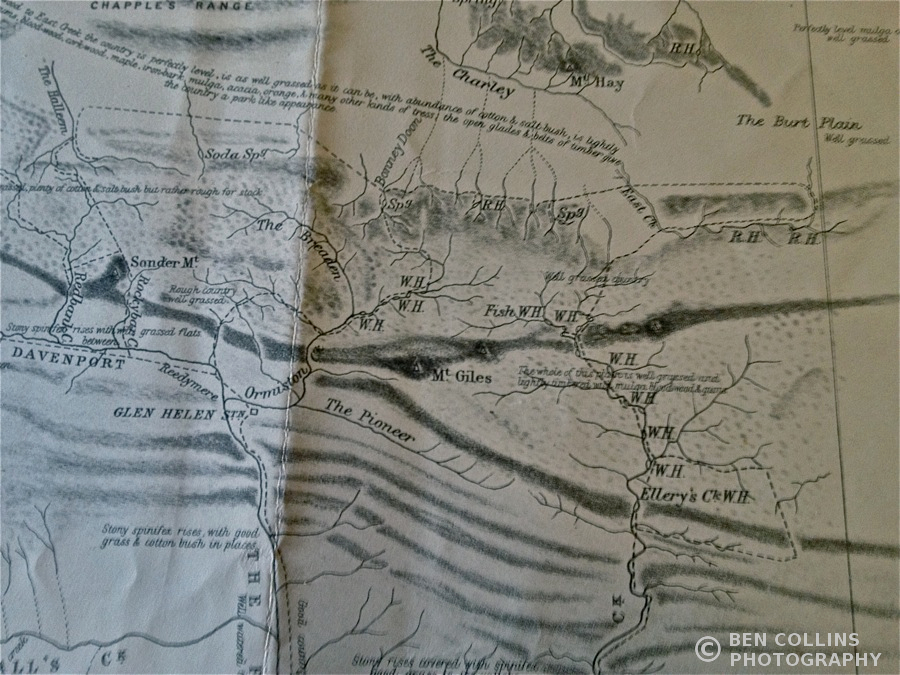
Old facsimile map showing the area where the modern-day Larapinta Trail runs

Old exploration tomes, Royal Geographical Society of South Australia
I wonder how John Stuart must have felt as he opened up this country and saw these views for the first time. Did he allow himself to smile at the beauty of it all? Or was he consumed by the task at hand, constantly breaking trail and searching for his next source of water? To be an explorer, now that’s the life!

Surveying the land ahead on the Larapinta Trail, day 5
 Ben Collins Outdoors
“Or was he consumed by the task at hand, constantly breaking trail and searching for his next source of water? To be an explorer, now that’s the life!” I often ponder the same question…yet to walk this, but will do…great read, thanks.
What a great perspective on the Larapinta Trail. I remember thinking of the historical treks when I was around Brinkley Bluff too