Tasmania Packrafting 2026

24th April – 8th May 2026

My brother and I had two weeks in Tasmania with packrafts. We packrafted on 9 days, hiked on 3 days, and had a 1 day transfer at the end of the Huon River expedition to get back to the car, which represented a really good ratio of adventure days to rest days.

It was one of the best expeditions we’ve been on together and we really maximized the good weather to achieve our objectives.

Here’s a 22-minute video stitched together from all the short clips we recorded. Below that is a more detailed photo essay. Enjoy!

Lake Pedder Expedition (Days 1 – 3)

  • Total Distance: 22 miles / 35.4 km
  • 3 days
  • 1 summit (Scotts Peak)

When we arrived in Southwest National Park, a large high pressure system had settled over Tasmania. Wanting to take take advantage of these calm conditions—wind is the enemy of packrafters!—we decided to explore some of the islands in Lake Pedder.

We camped and explored both islands, Mt Solitary and Scotts Peak, and climbed Scotts Peak. The packrafting involved open water crossings of up to about 2.5 miles between the islands. Even with the relatively benign conditions, the afternoon wind affected our plans, so we had to abandon the circumnavigation of Mt Solitary and return with the wind at our backs (which was great fun!). 
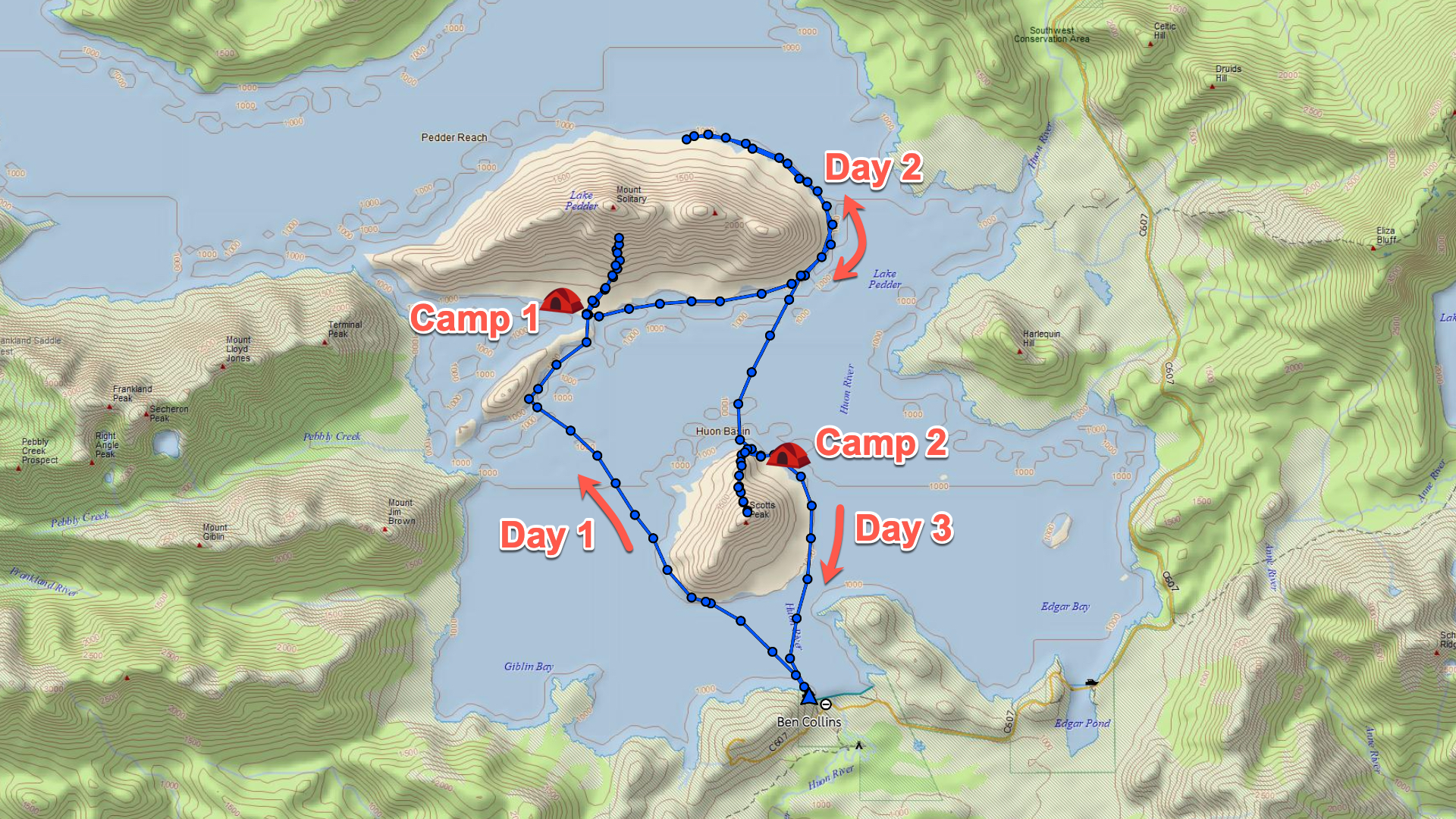
Day 1: Paddling to Mt Solitary and exploring the island
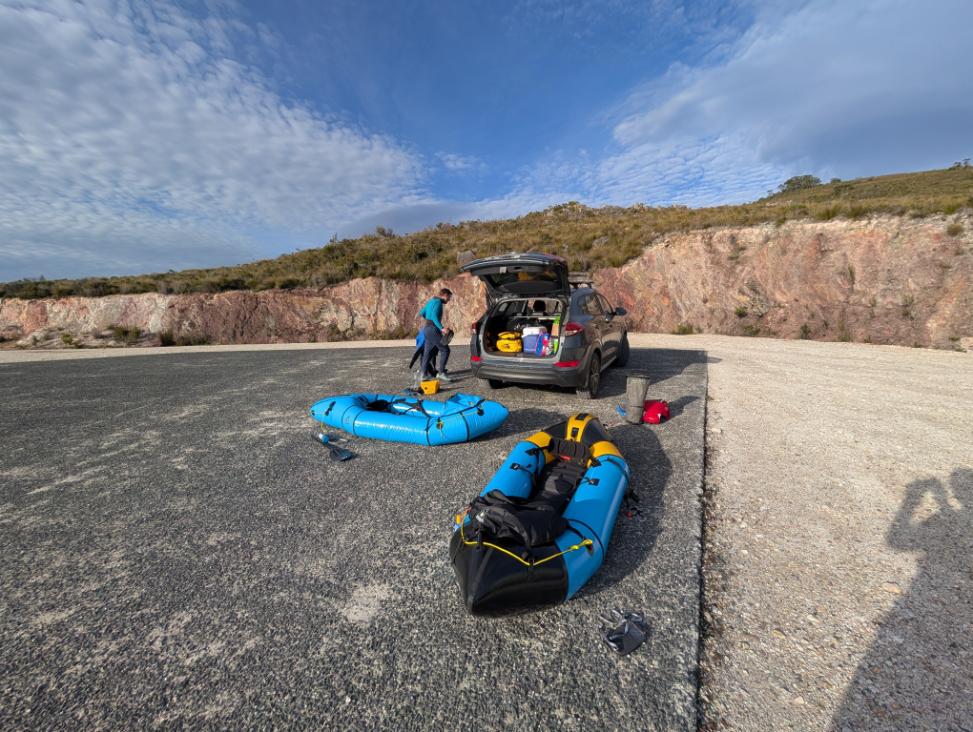
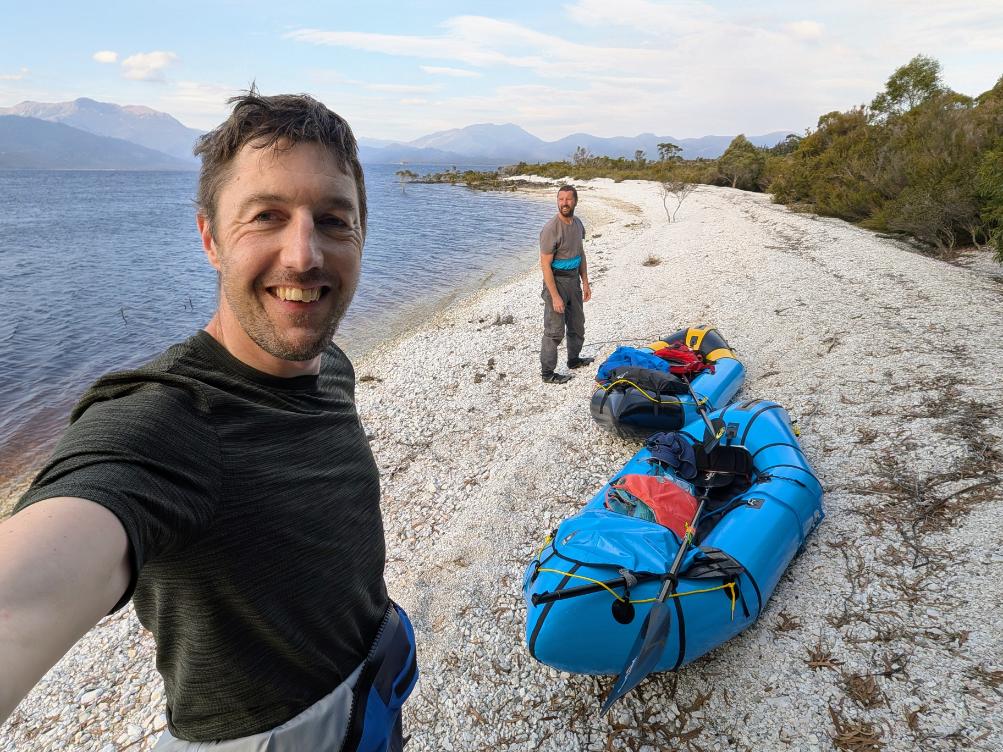
Packing at Scotts Dam boat ramp. (Photo Pete Collins)
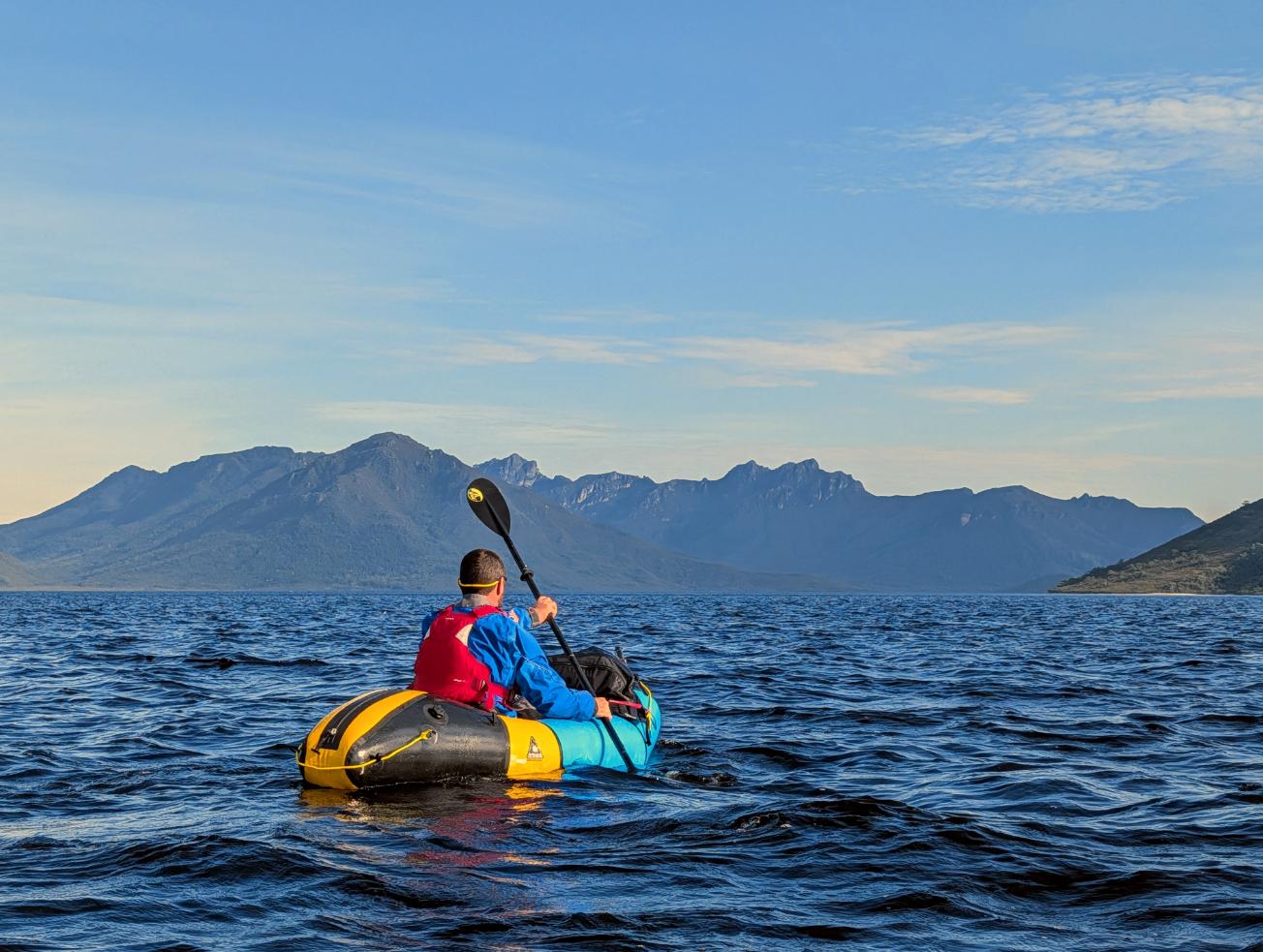
Paddling towards Scotts Peak island
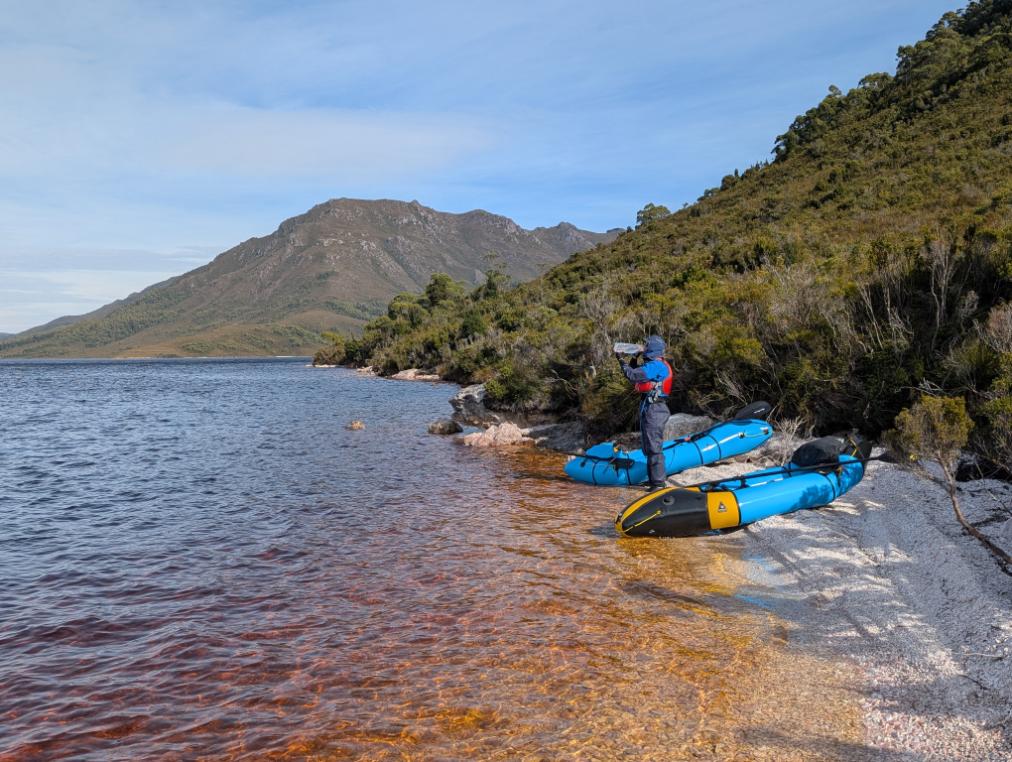
Drinks break on the small Barrier Islands between Scotts Peak island and Mt Solitary island. (Photo Pete Collins)
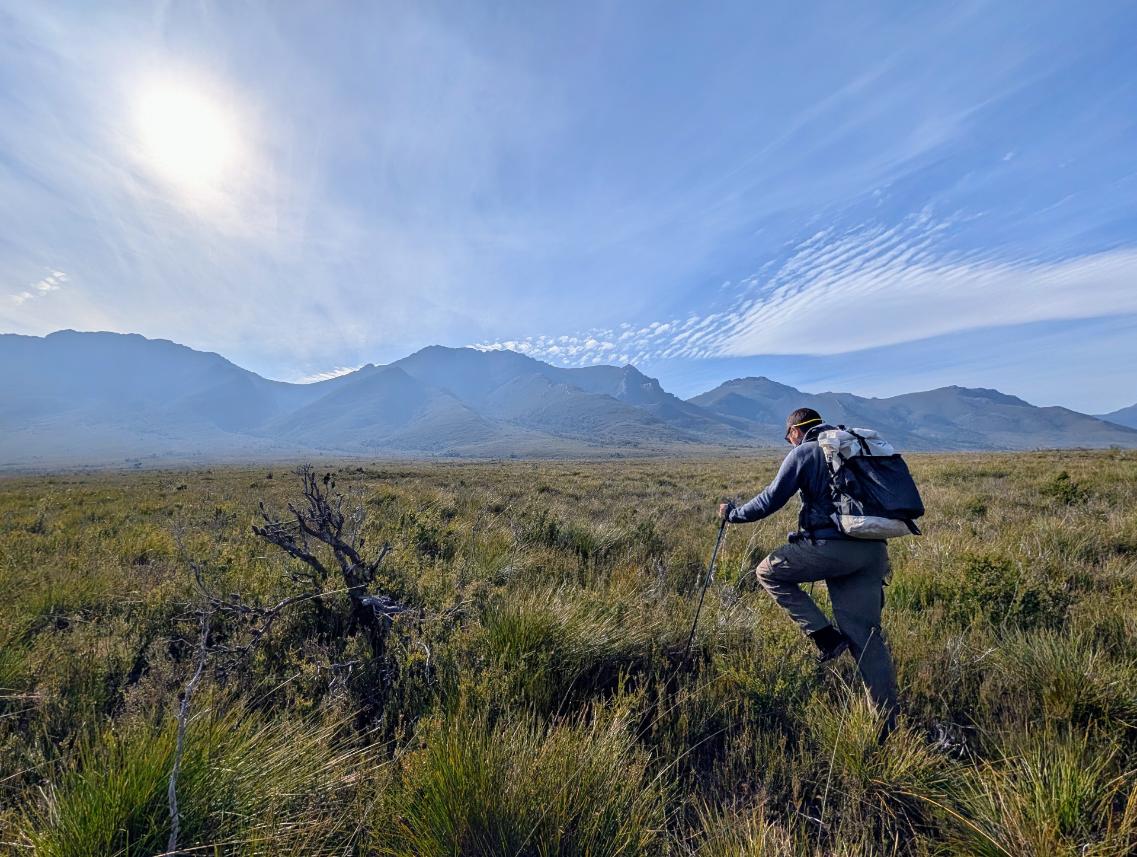
Pete hiking over the rough button grass at the start of our attempted climb of Mt Solitary
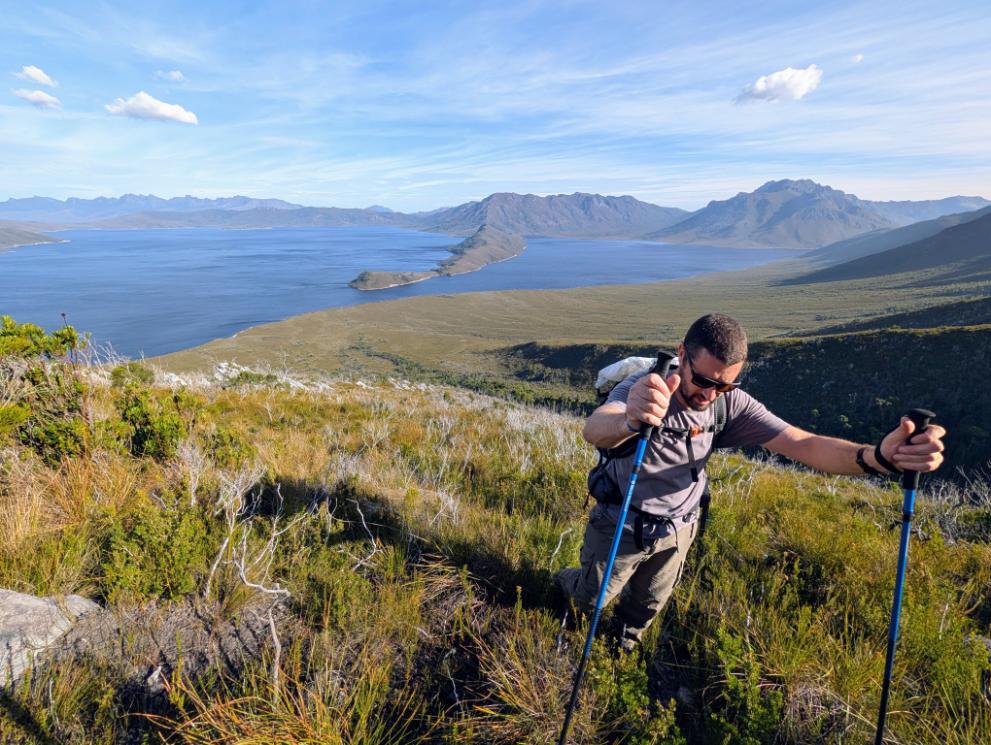
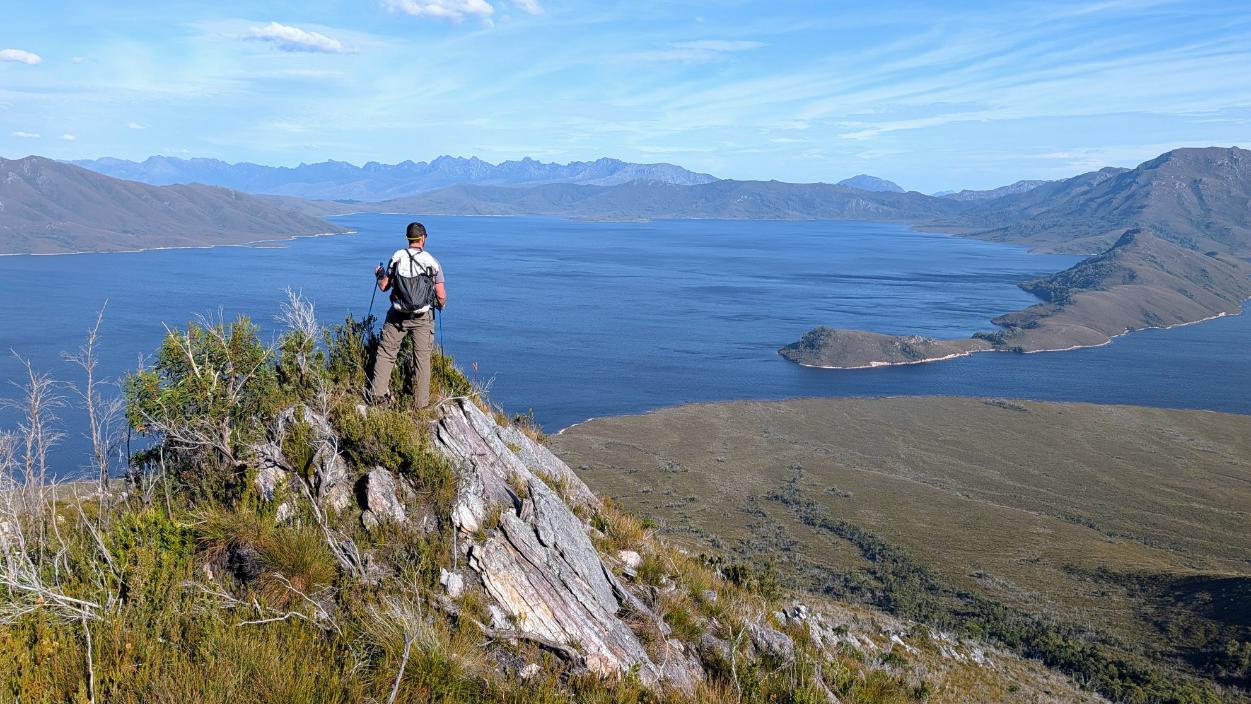
Pete high on the shoulder of Mt Solitary. You can clearly see the Barrier Islands center of the picture.
Taking in the views at our high point on the shoulder of Mt Solitary. The going was tough underfoot and we didn’t have enough daylight to get to the top before dark.
Our campsite on the edge of Lake Pedder, about the only flat bit of ground we could find. (Photo Pete Collins)

Day 2: Paddling around Mt Solitary on Lake Pedder
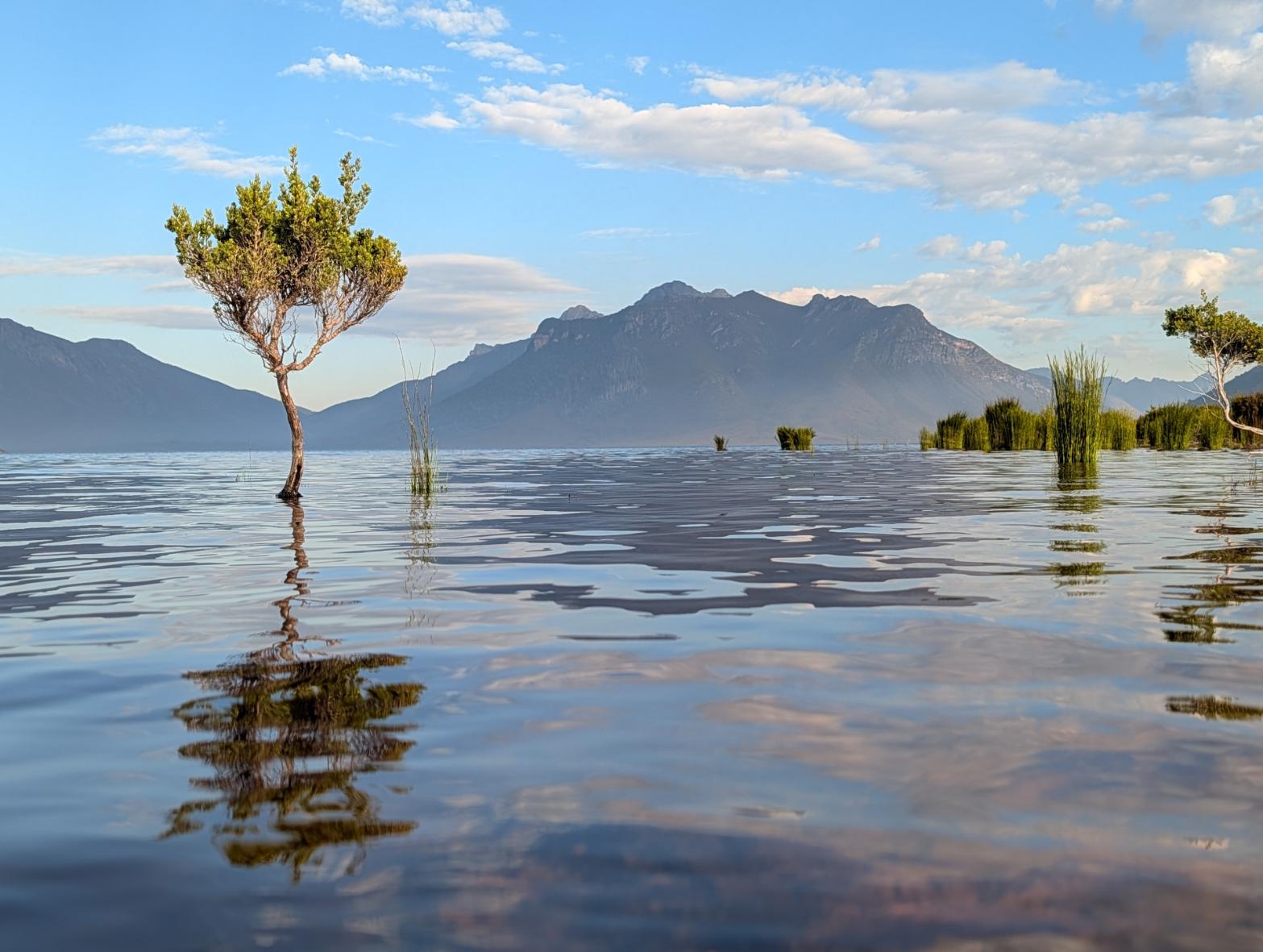
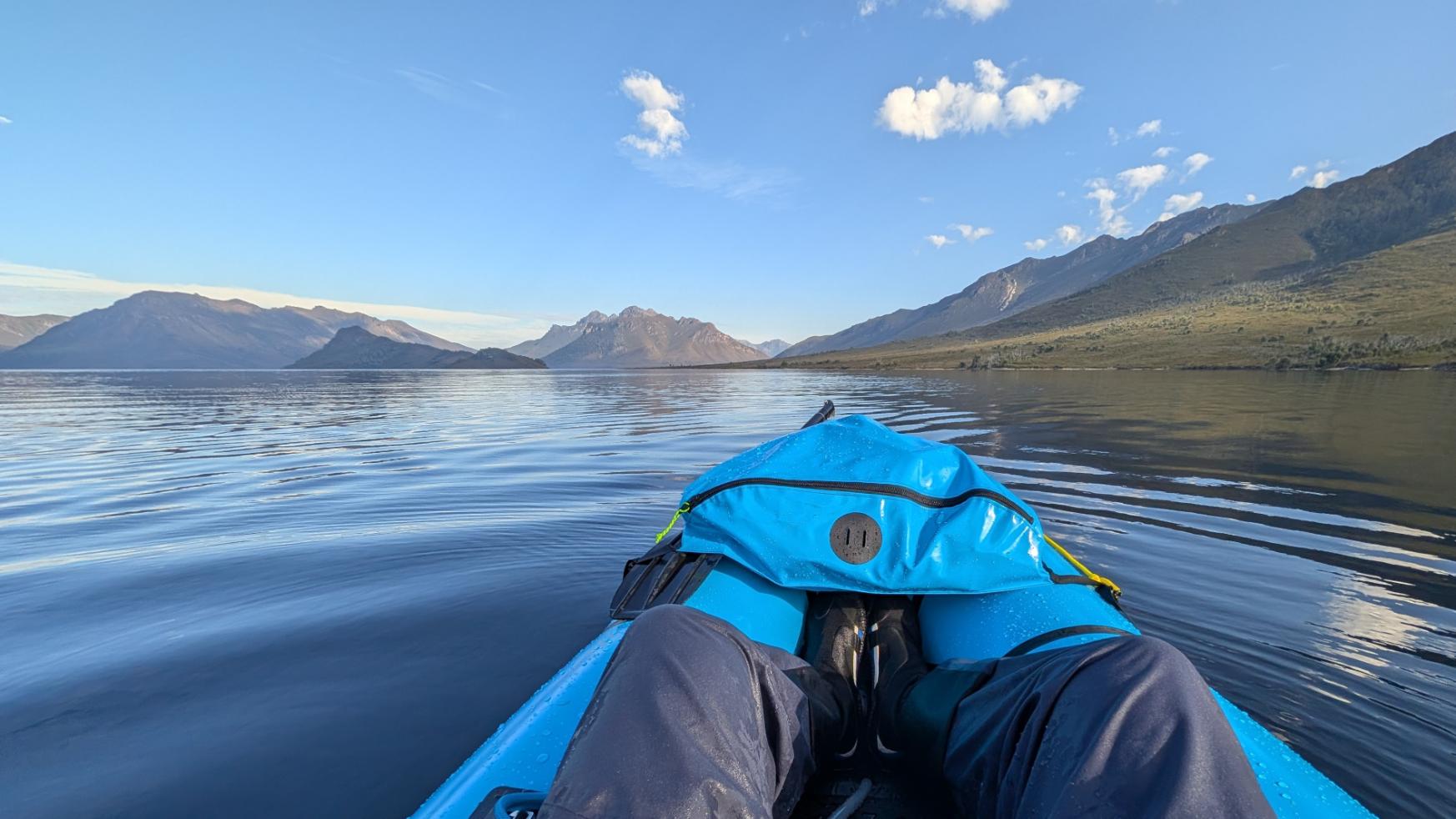
Beautiful, calm conditions on the morning of day 2
Glorious views from the shores of Mt Solitary
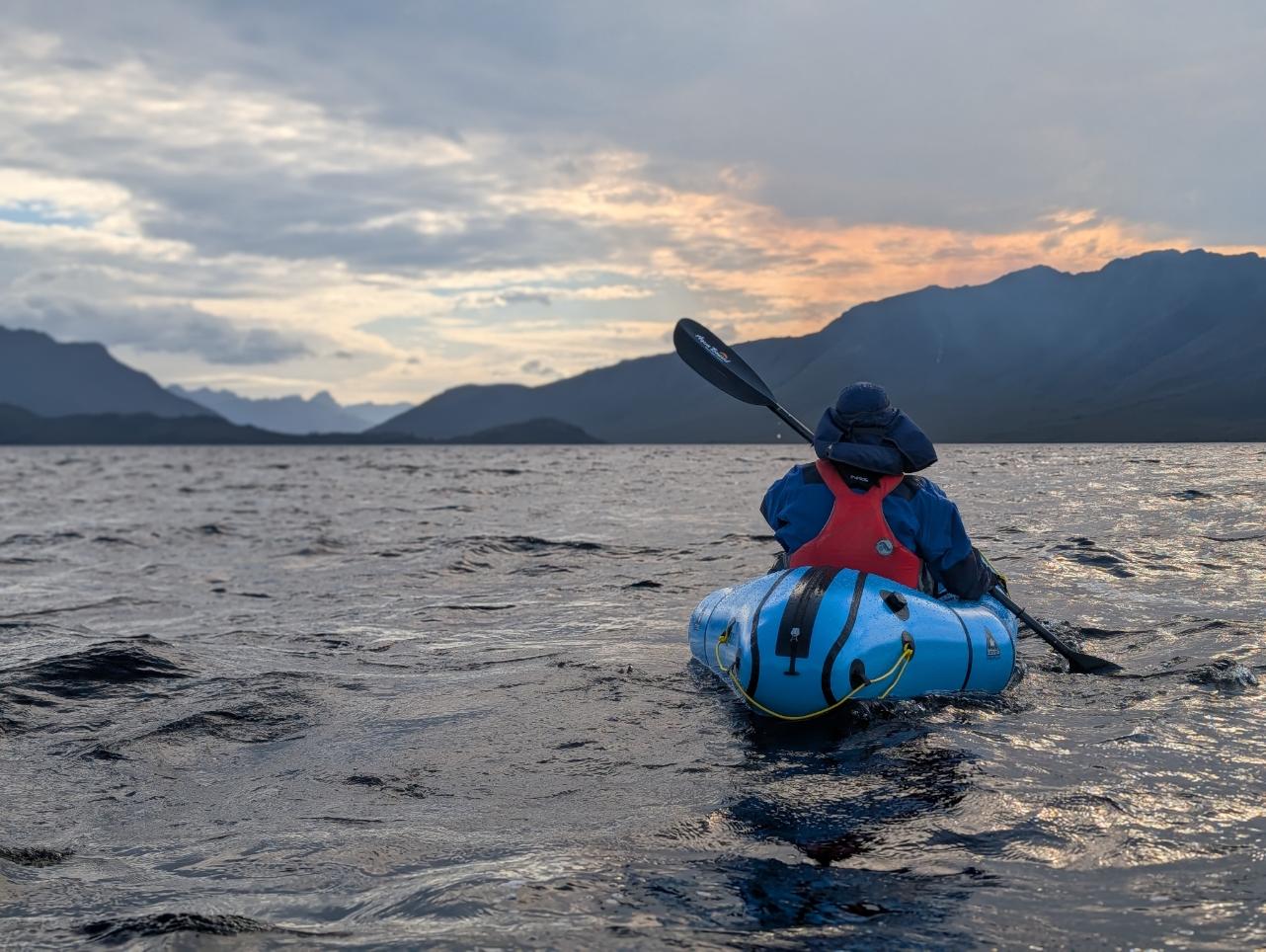
The conditions got considerably rougher as the day wore on and the wind became too strong to paddle against. We had to abandon our plans to circumnavigate Mt Solitary. (Photo Pete Collins)
“Yep, this looks like a good campsite” at the end of day 2
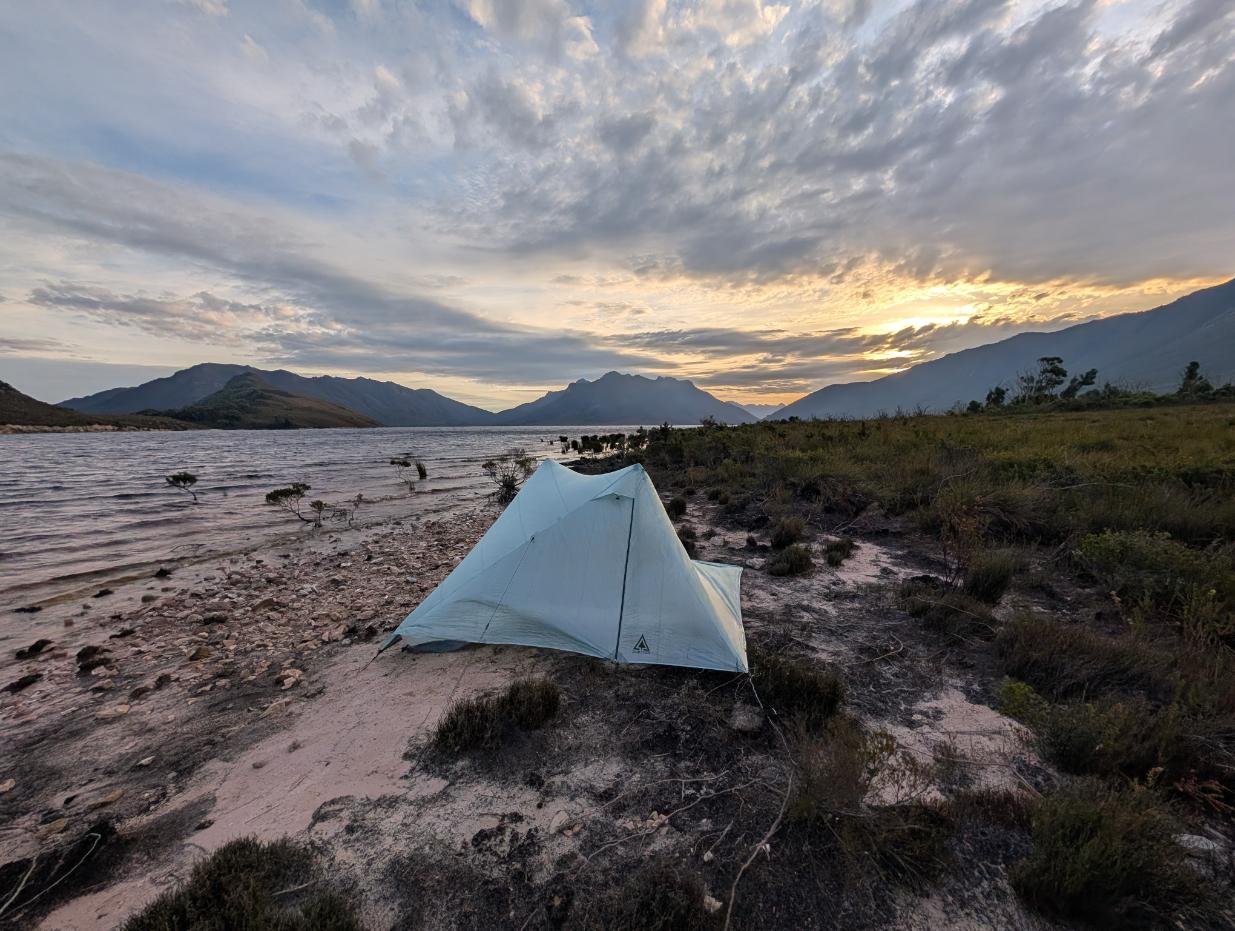
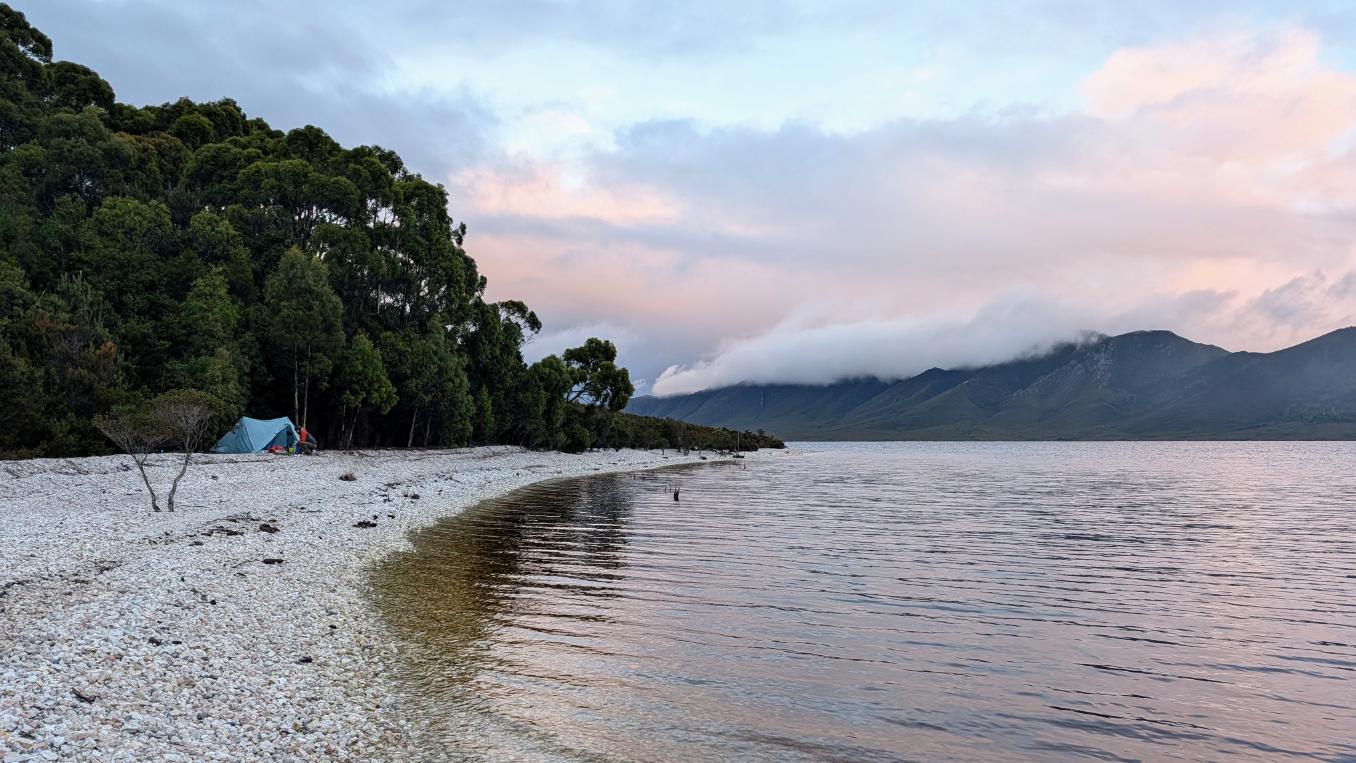
Our five-star campsite on Scotts Peak island: flat, sheltered, private beach, epic views, infinite water supply. One of the best wild camping spots I’ve stayed at.
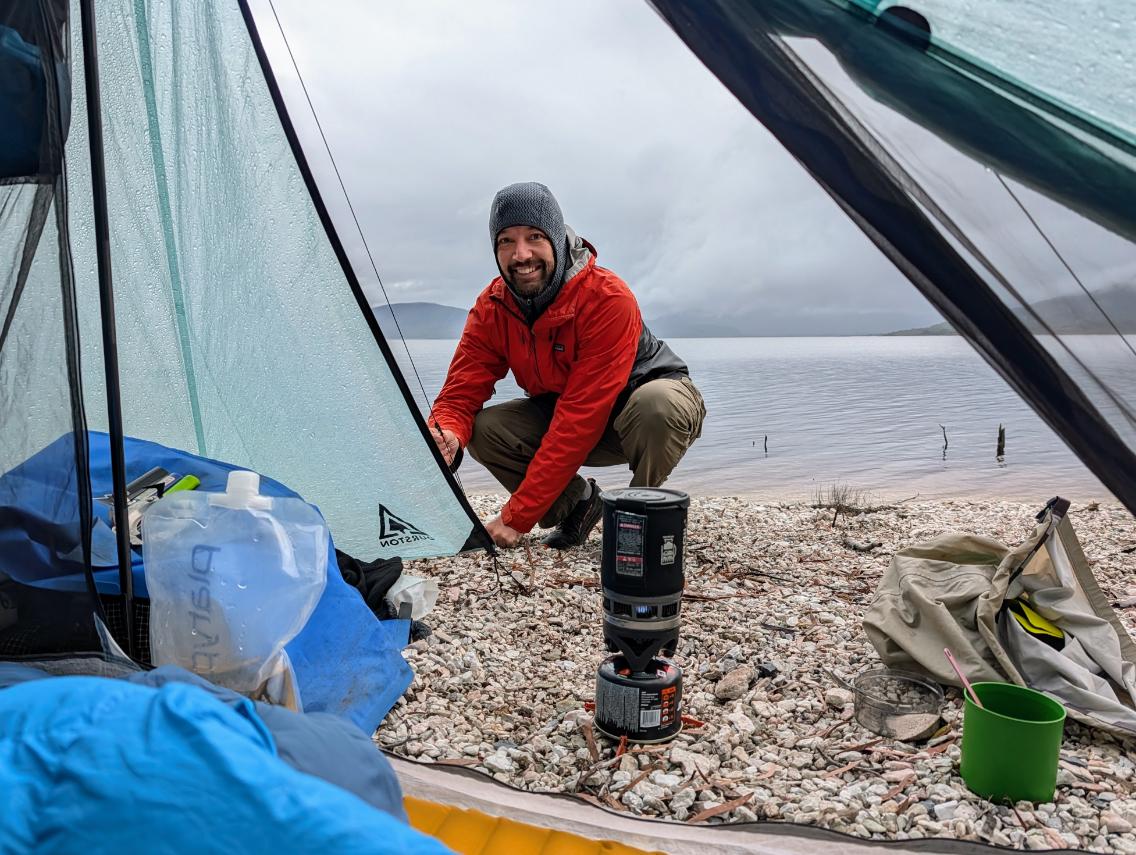
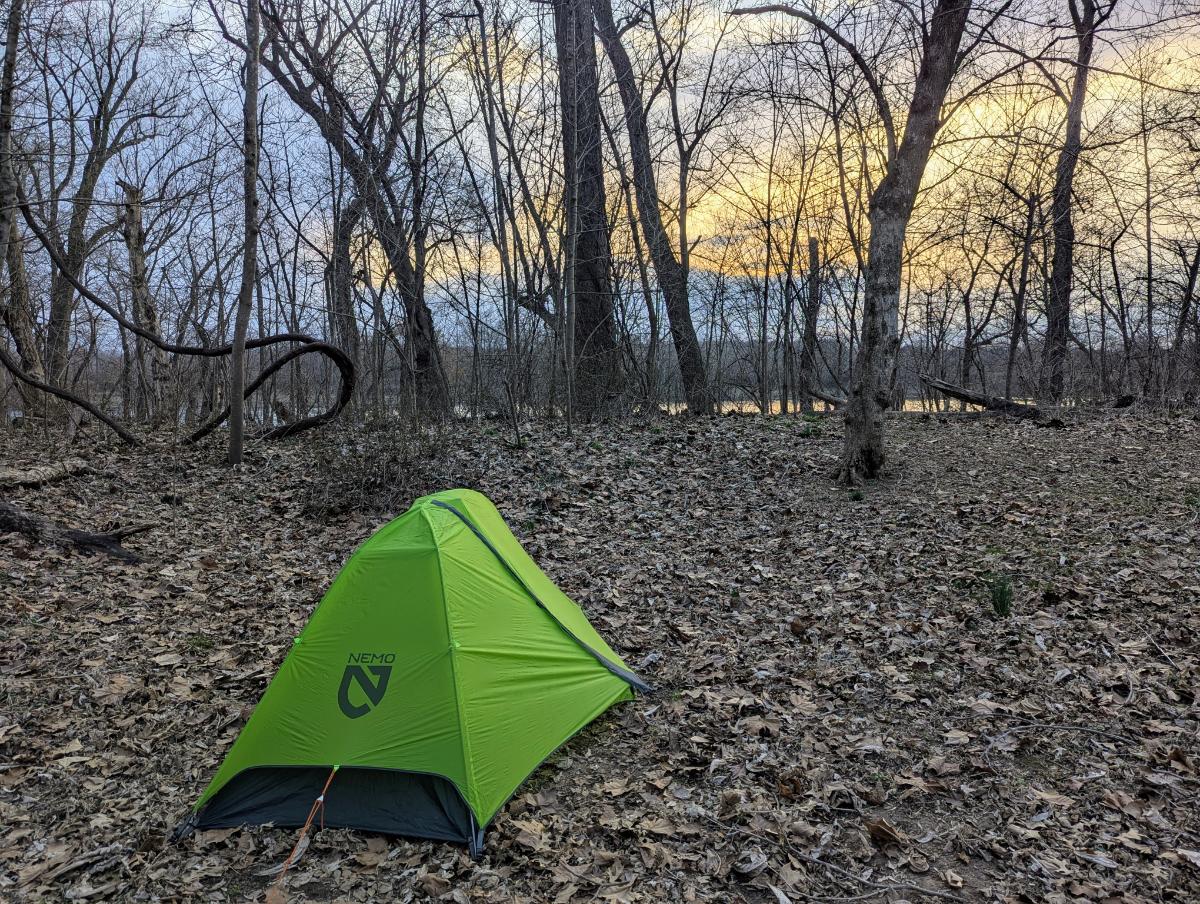
Tent pitched with epic views, water on the boil for a cup of tea. Happy days!

Day 3: Scotts Peak climb and Lake Pedder Packrafting
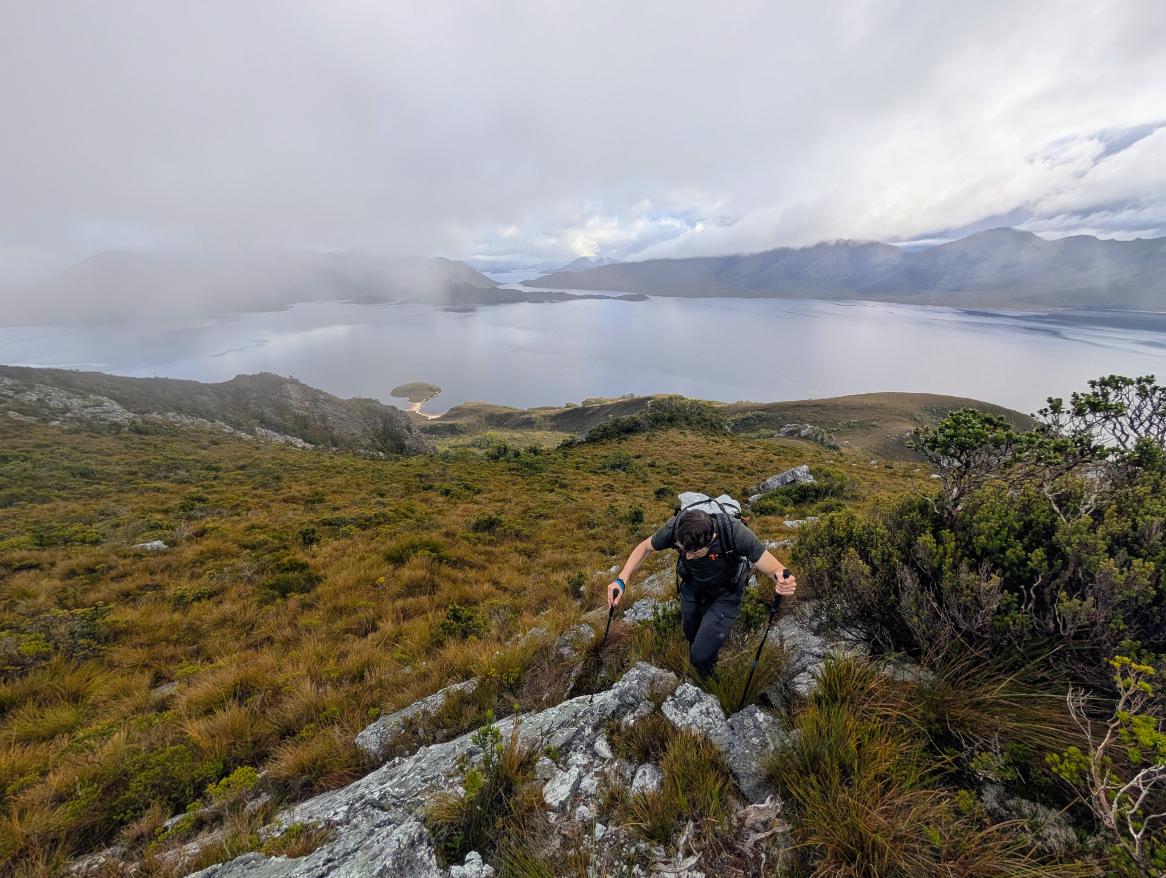
Yours truly climbing Scotts Peak, with Lake Pedder and Mt Solitary island in the background. (Photo Pete Collins)
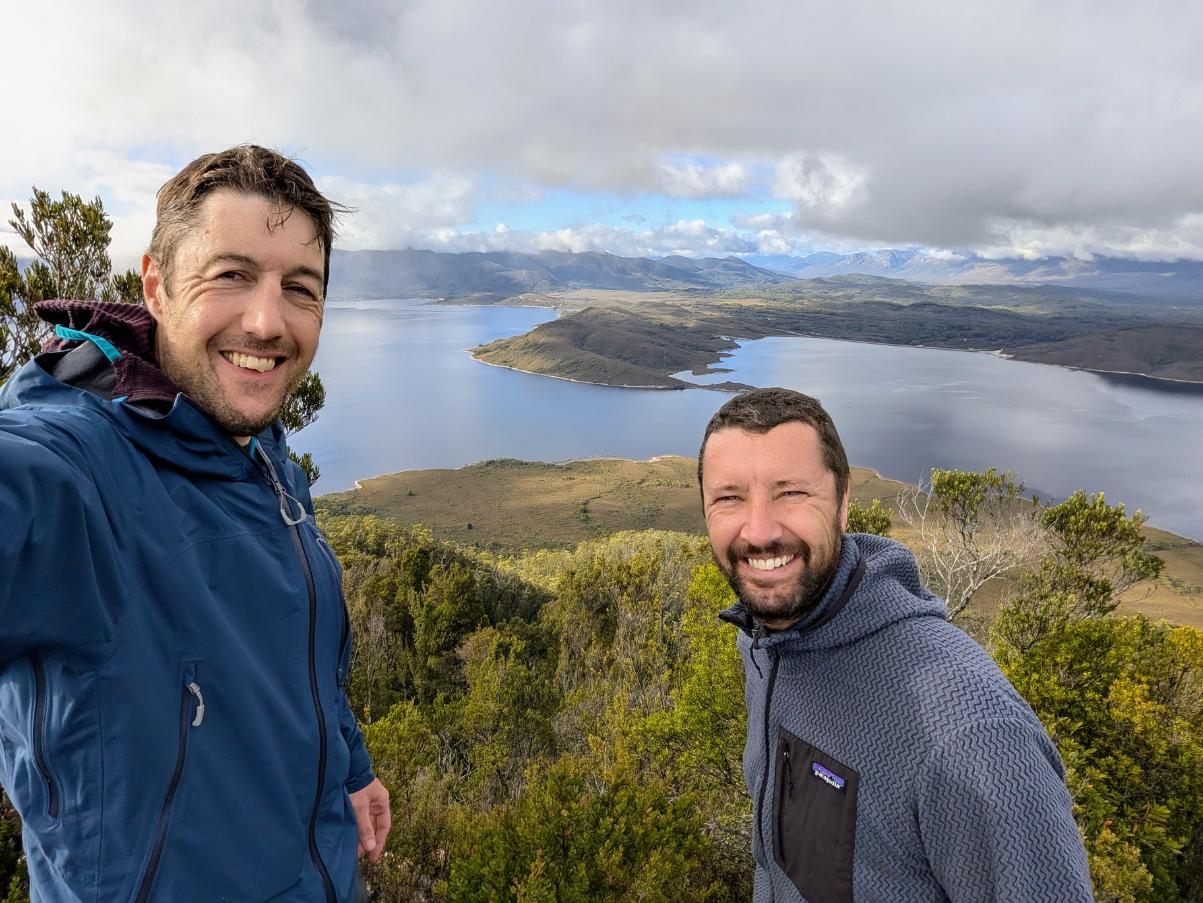
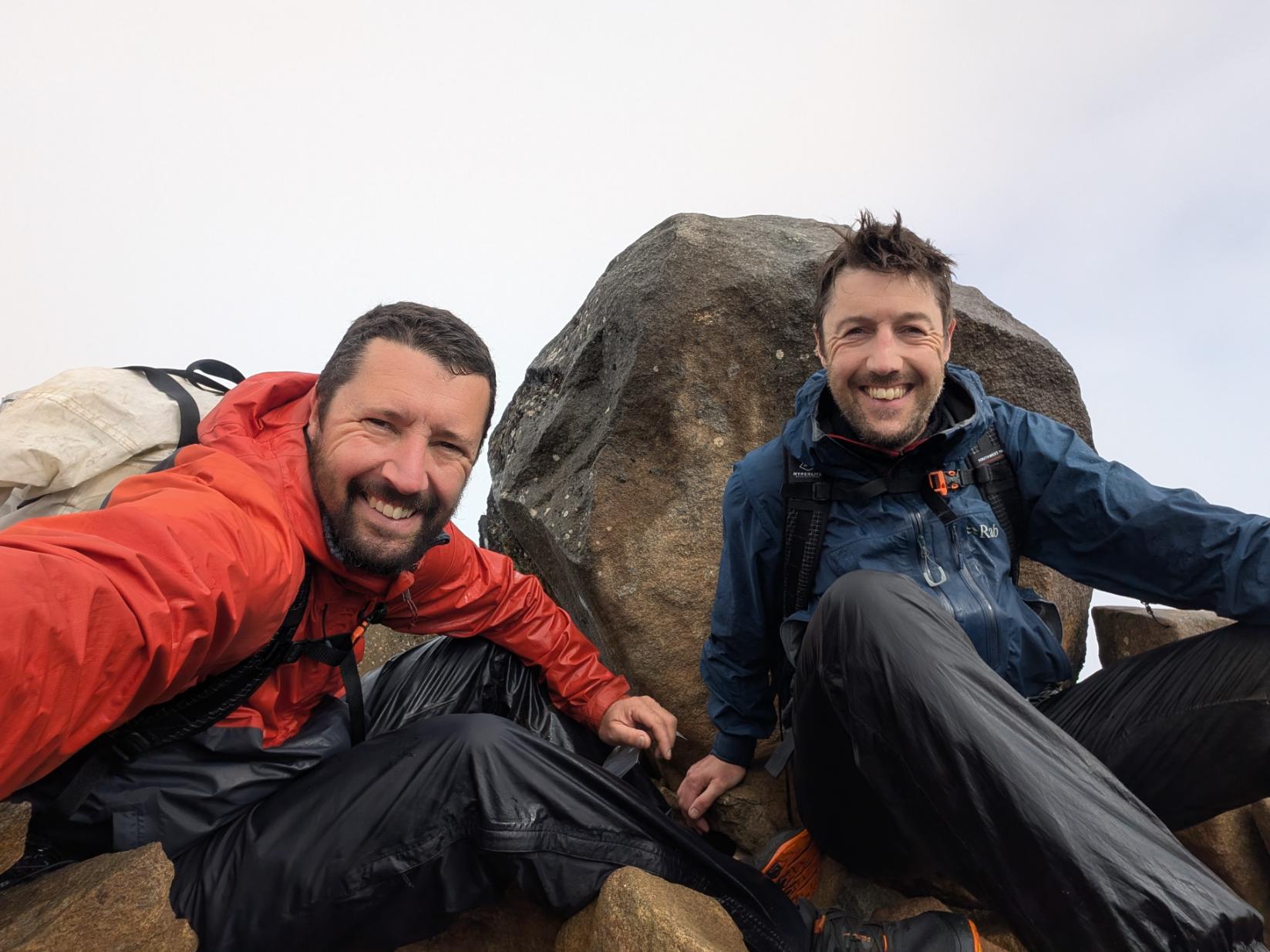
Brothers on the summit of Scotts Peak. So cool to be up here together! No sign of others humans or man-made objects in any direction (except for the metal pole marking the summit). We could look across to Mt Eliza and Mt Anne, from our 2018 Tasmania trip.
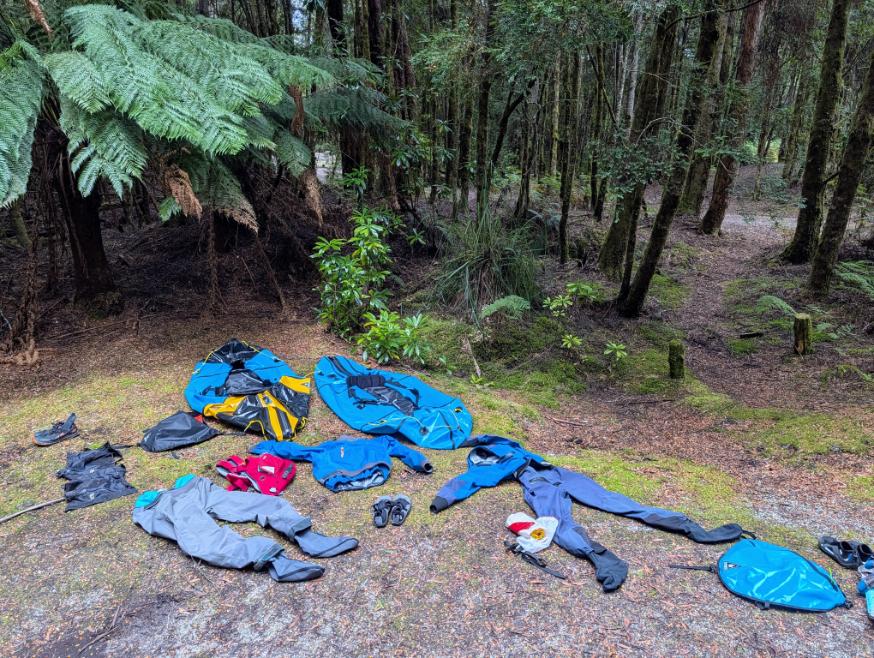
Back at the Huon River basecamp, drying our paddling gear

Huon River Expedition (Days 4 – 9)

  • Total Distance: 60 miles / 96.5 km
  • 6 days (2 hiking, 4 packrafting)
  • Grade II rapids

Next up was our main objective: the Huon River, a remote Grade II river flowing from Scotts Peak dam to Huonville.

The route was a long traverse from left (Port Davey trailhead) to right (town of Huonville):
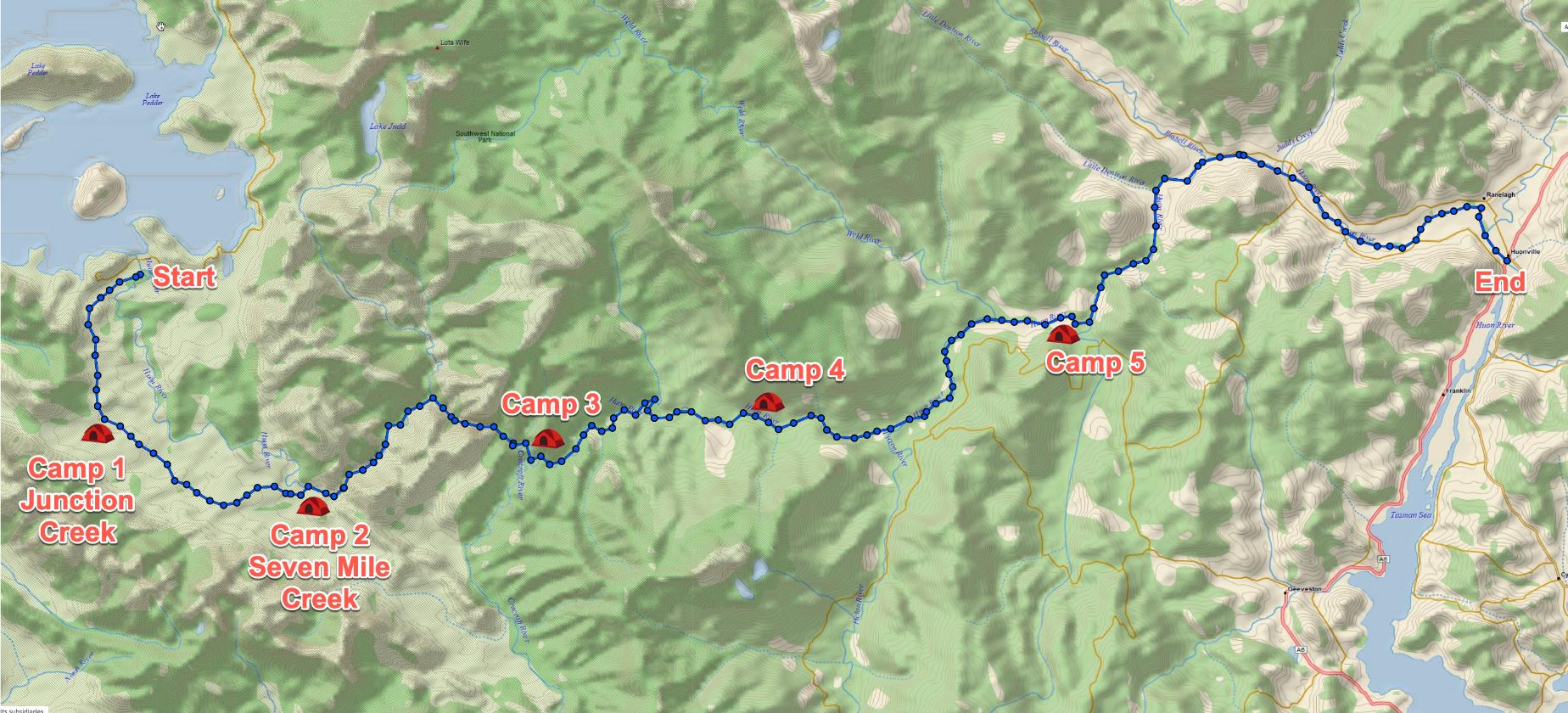
Day 4: Port Davey Track to Junction Creek Campsite (hiking)

My brother and I have done many mountain trips before, but this was our first backcountry trip with packrafts. We felt a mix of excitement and trepidation as we set off for the remote Huon river.
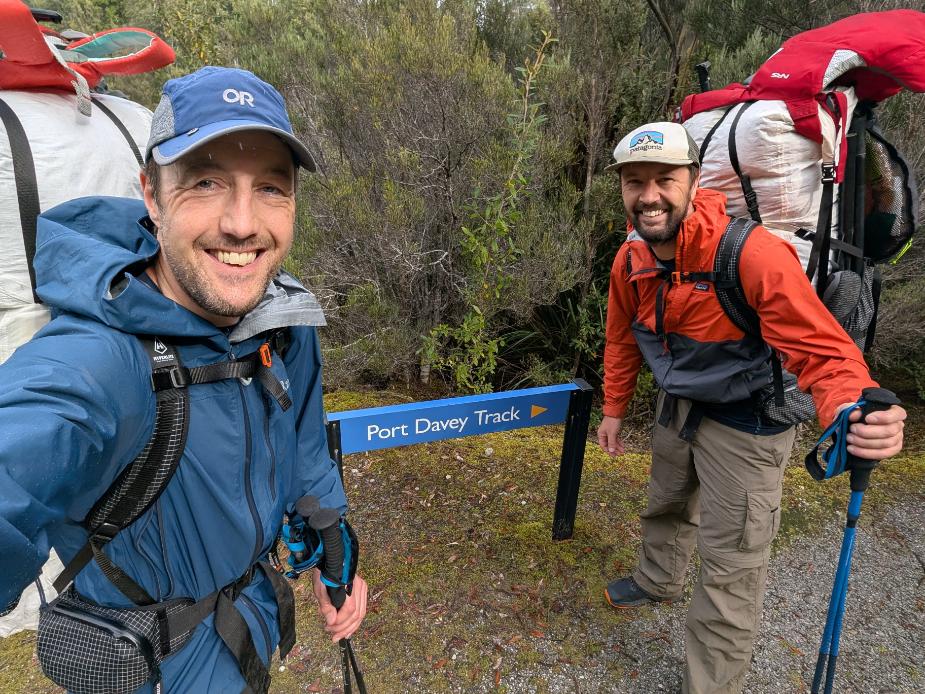
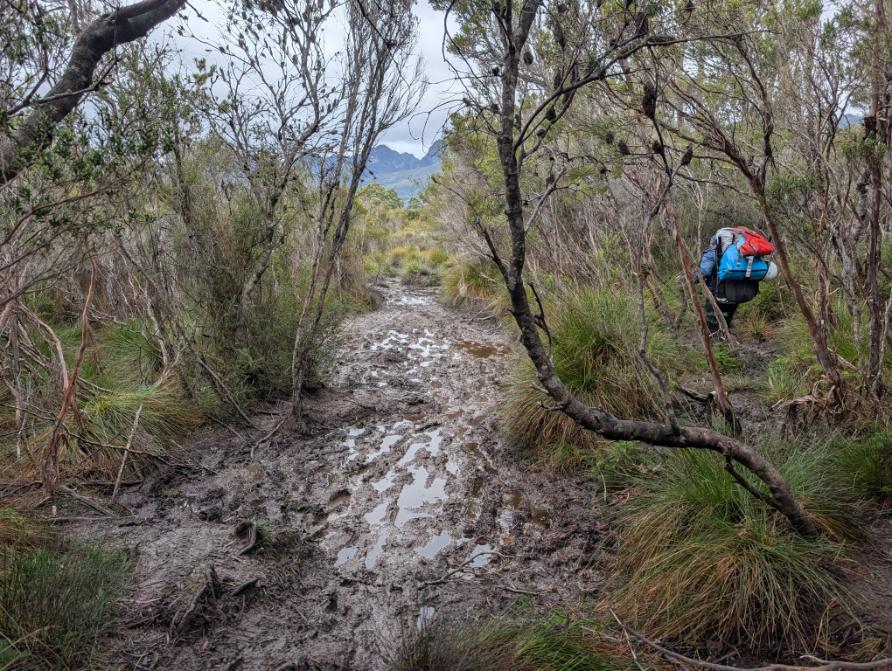
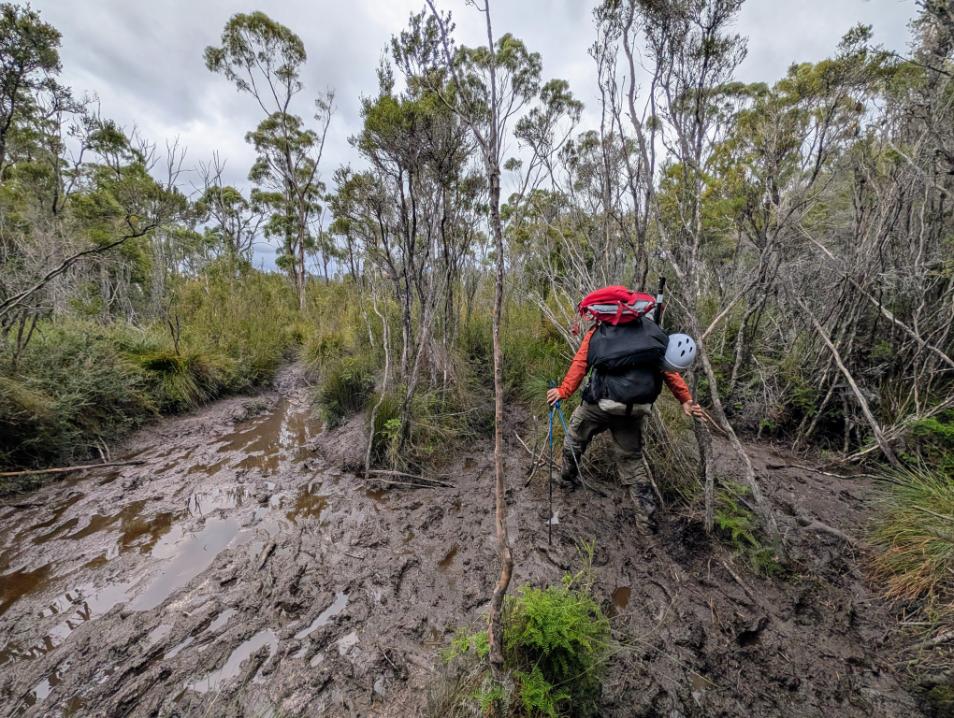
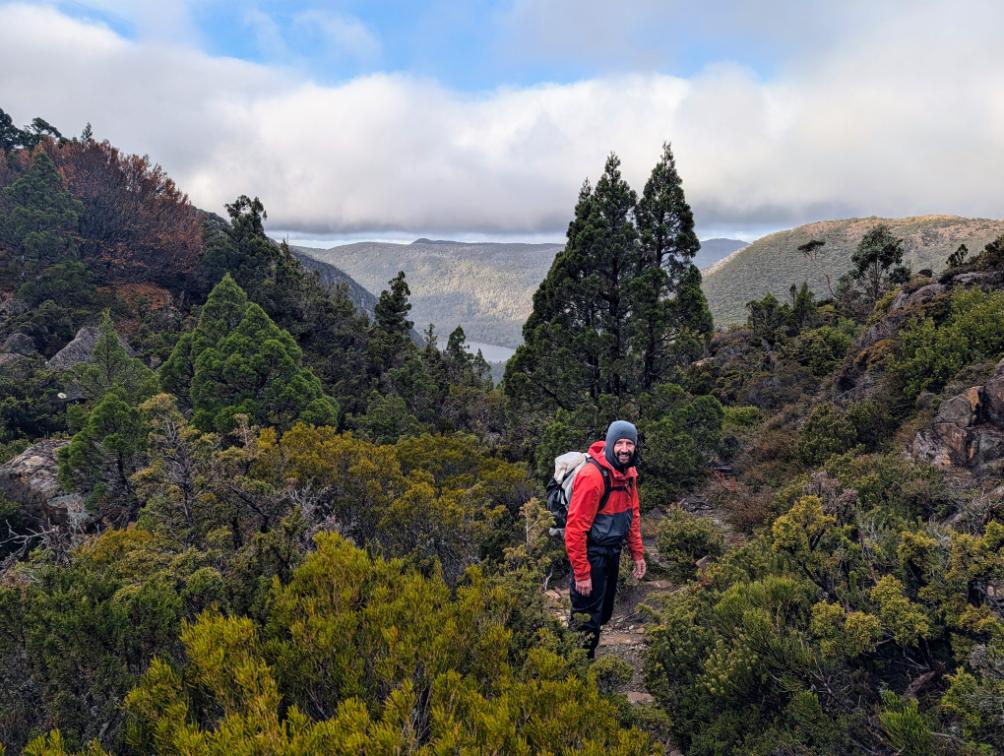
At the trailhead of the Port Davey track. It was hard going, especially with heavy packs and thick mud.
Did I mention the thick mud? (Photo Pete Collins)
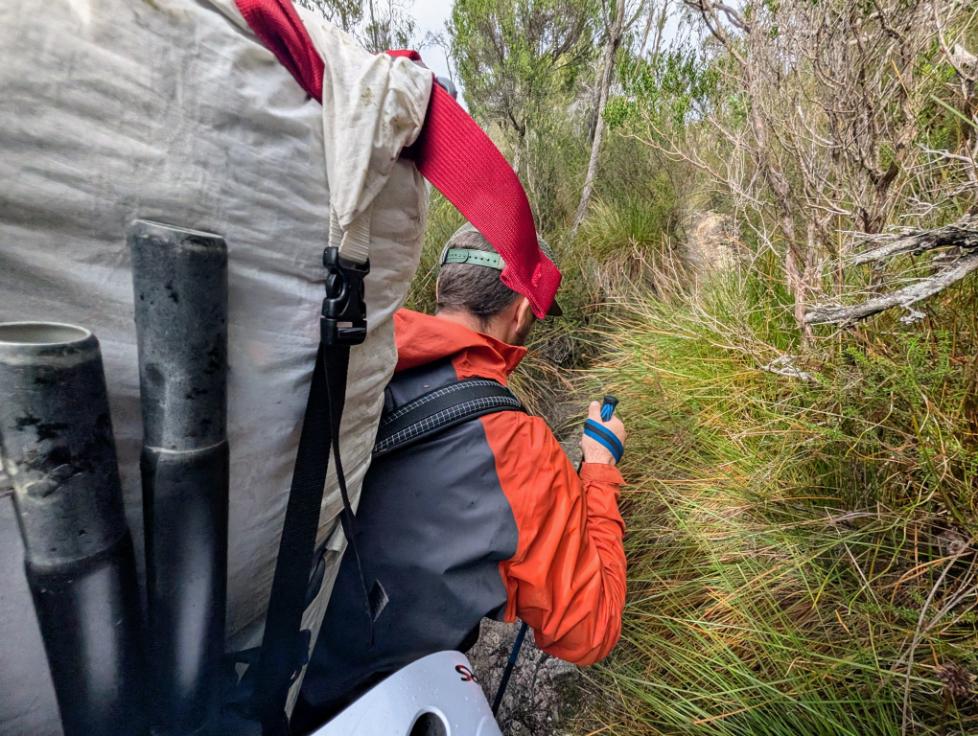
Or thick vegetation? Yes, we were on the trail at this point.
More of that thick mud.

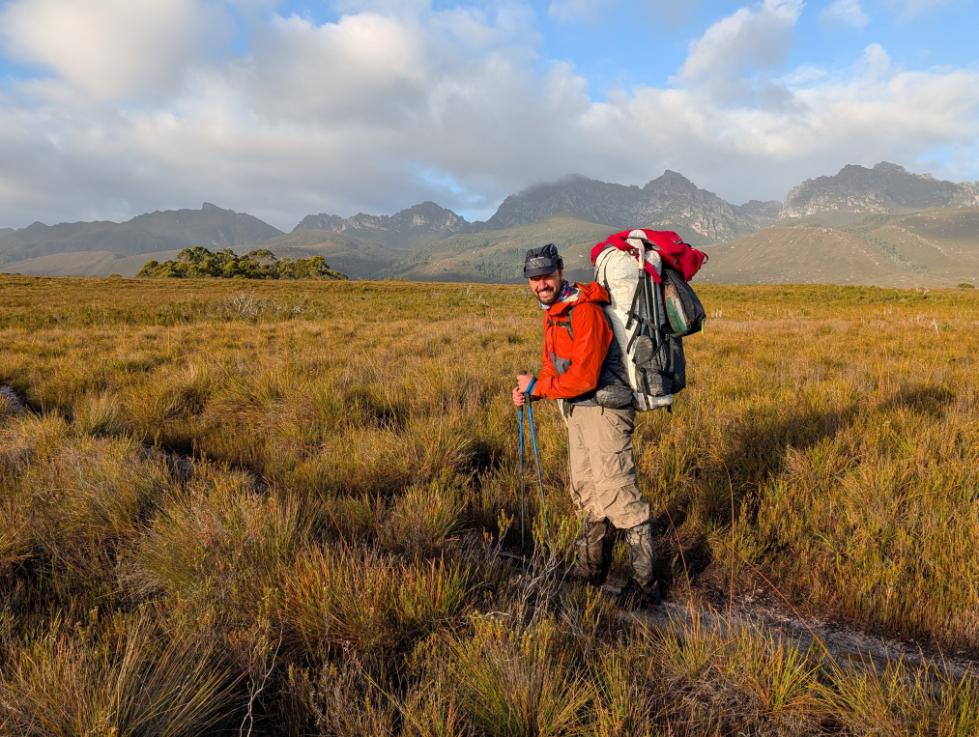
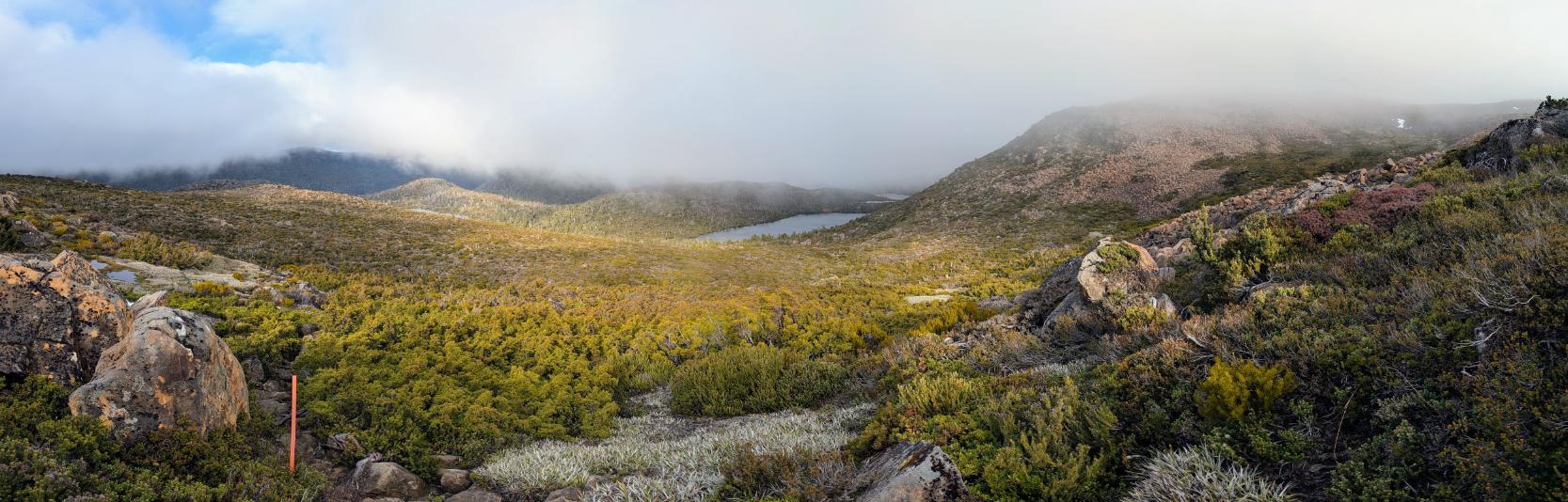
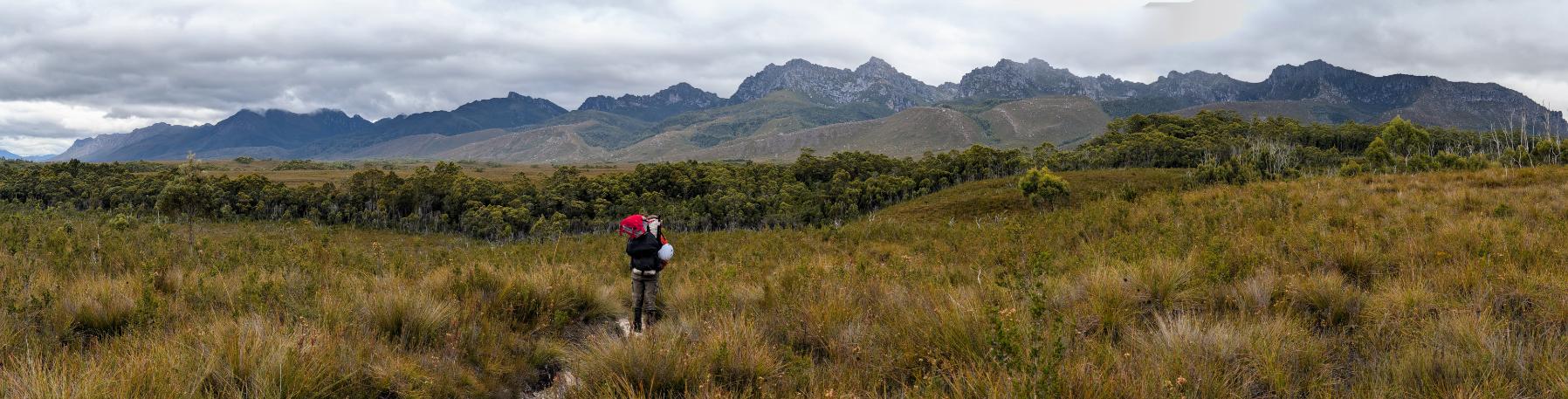
We were lucky with the continuing good weather and had fantastic views of the Western Arthurs mountains stretching into the distance.
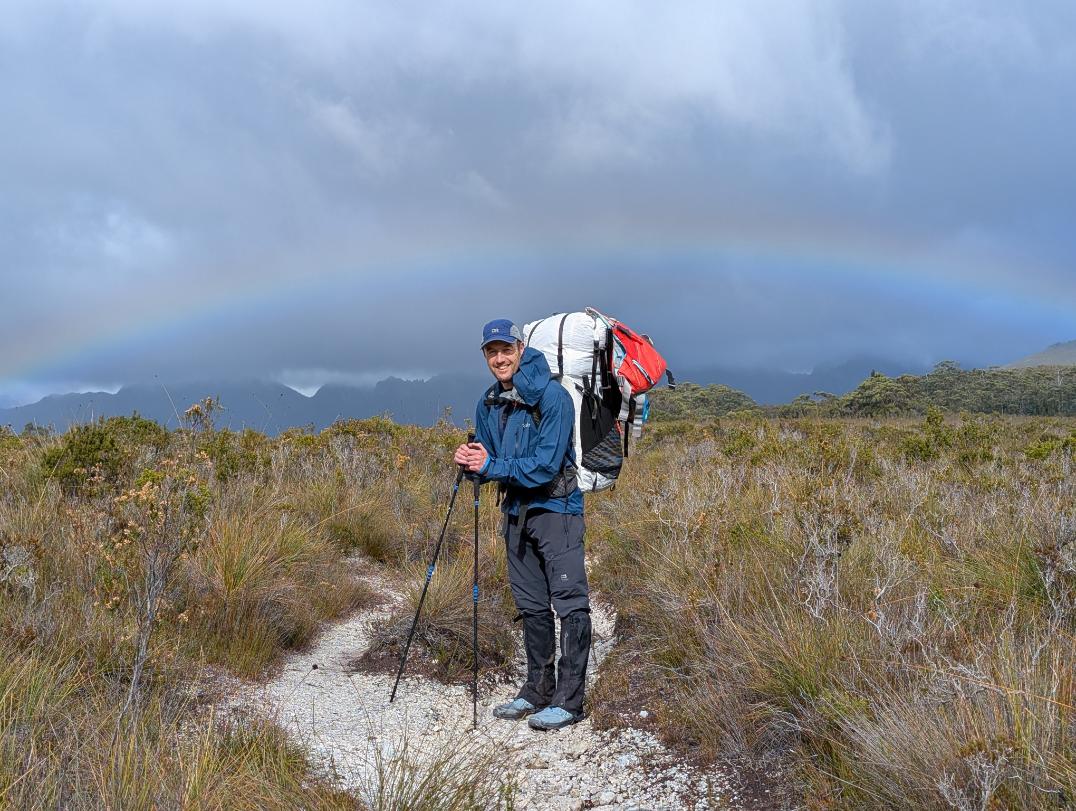
Rainbow over the Western Arthurs range. Enjoying ourselves despite the mud and heavy bags. (Photo Pete Collins)
Pete with the full Western Arthurs stretching across the horizon.

As the river levels were very low (borderline runnable) we opted to skip the upper part of the river and put in near Junction Creek, where the trail and the river converge and are less than a mile apart. We camped at Junction Creek that night, full of excitement to get on the river early the next morning. Little did we know what Mother Nature had in store for us.

Day 5: Junction Creek camp to Seven Mile Creek camp (hiking)
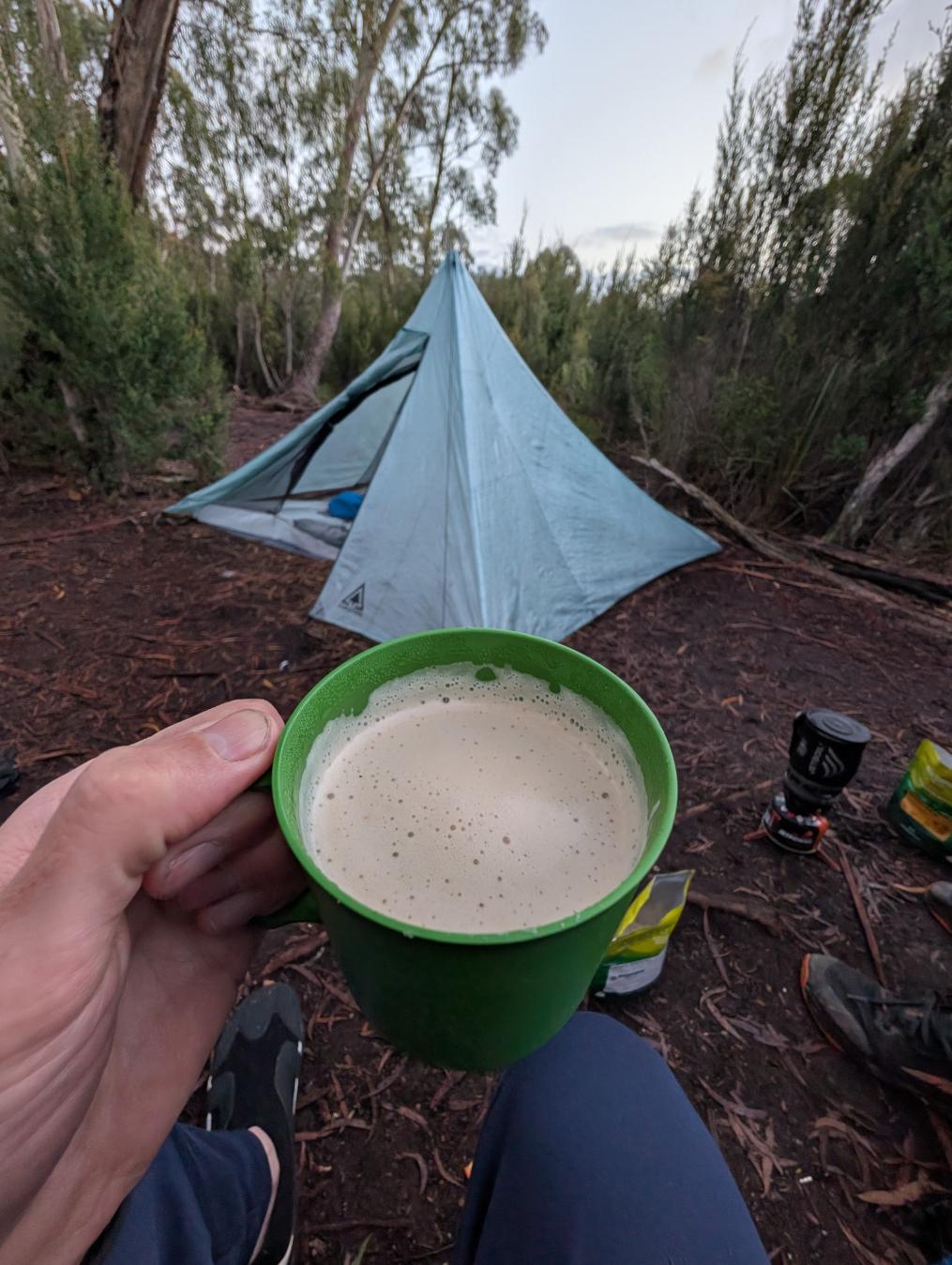
Morning coffee at camp, one of the highlights of the day. Definitely the highlight of the day that followed this one, haha.
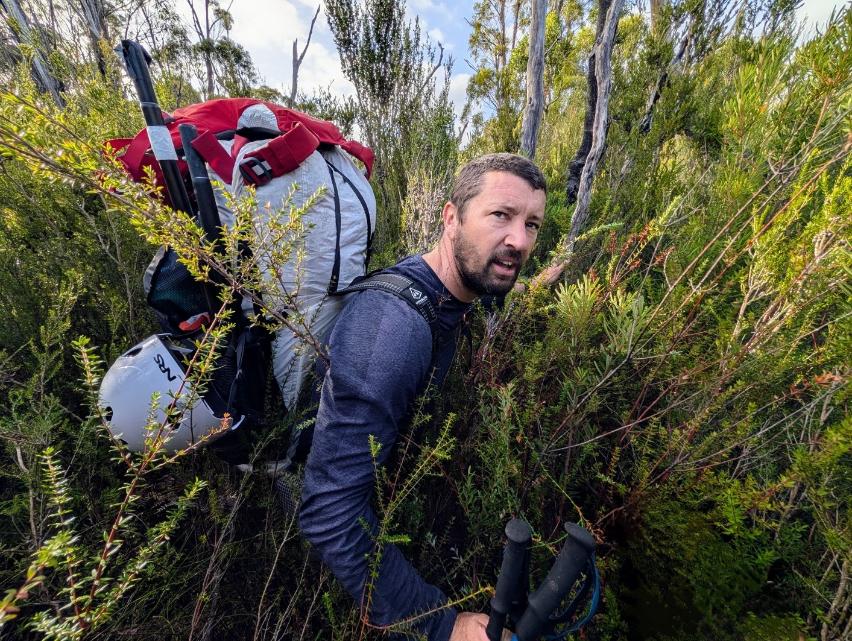
Trying to cross the mile of thick bush between the trail and the Huon River, close to Junction Creek, but the vegetation was so thick as to be impassable. And, much as my brother and I love a good sufferfest, after taking hours to cover only a few hundred feet, we cut our losses and backtracked to the trail.
We continued hiking for another day until the trail converged on the river again. We would try to put in there. At least we had fantastic weather and fantastic views of the Western Arthurs range all day.
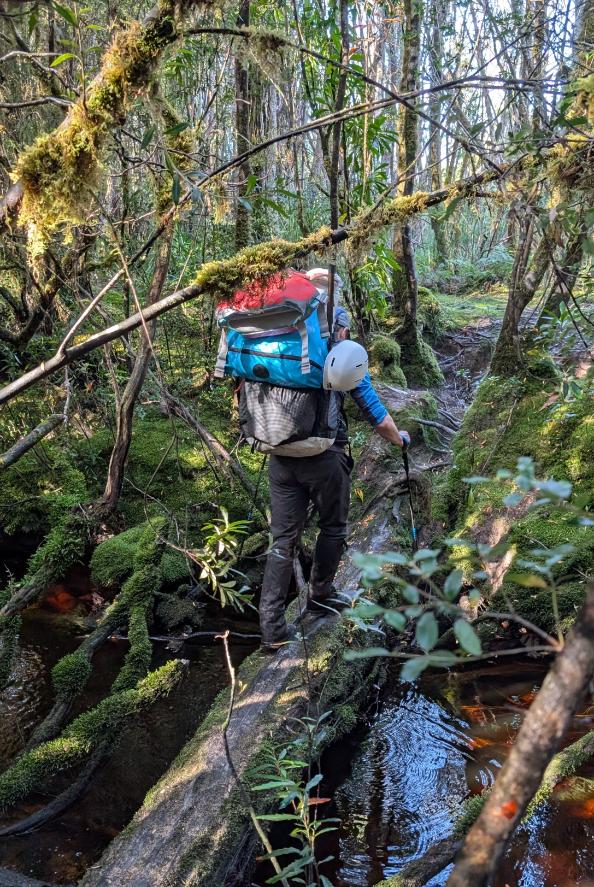
The best sections of hiking were the ones through the old growth forest, where Dead Man’s moss hung thick and time seemed to stand still. (Photo Pete Collins)
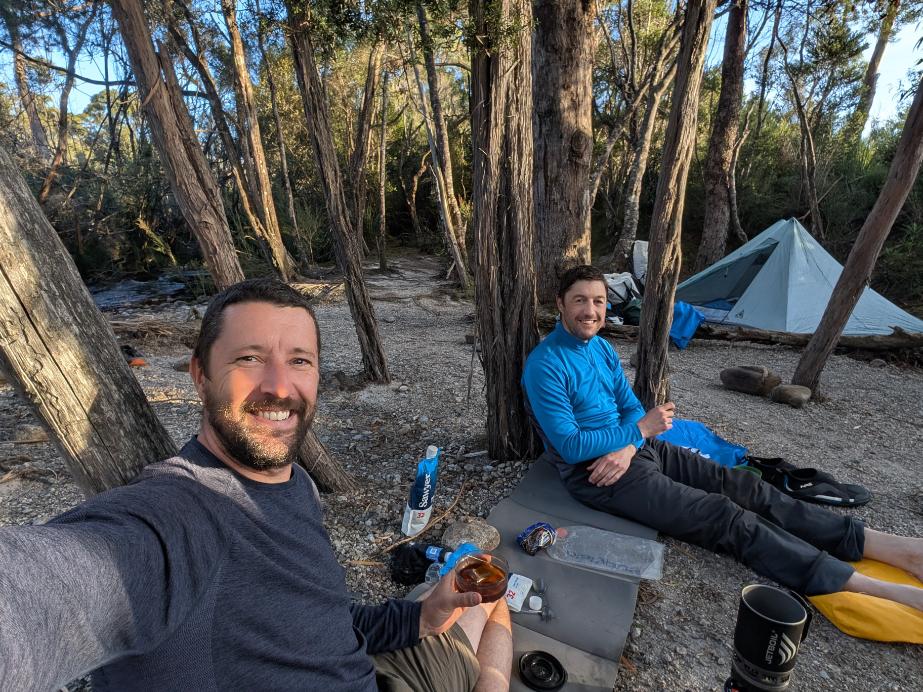
Camped next to Seven Mile Creek at the end of second day of the Huon expedition (day 5 overall). Pete left and me on the right (blue top). (Photo Pete Collins)

Day 6: Seven Mile Creek and Huon River Gorge (packrafting)

The following morning we were able to paddle the few hundred feet down the narrow gorge of Seven Mile Creek to reach the Huon River proper.

The gauge at Judbury was around 0.7m during our trip, which was definitely on the low side. The first day on the river, starting from Seven Mile Creek, was scratchy, and we repeatedly had to jump out to scoot over rocks. But it got better as we got further down the river. But the upper rapids would definitely be more fun and you’d move a lot quicker if the gauge was over 1m.
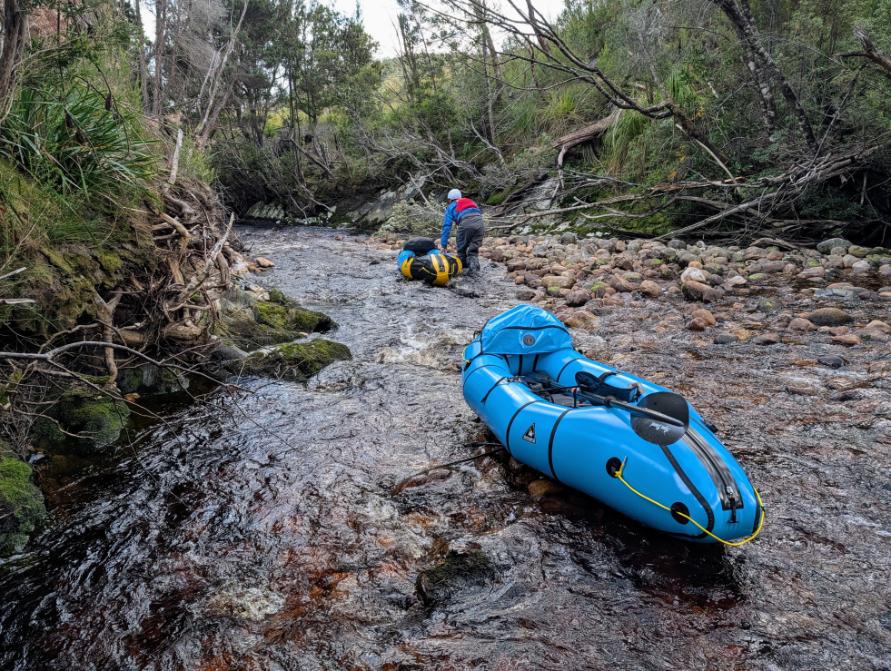
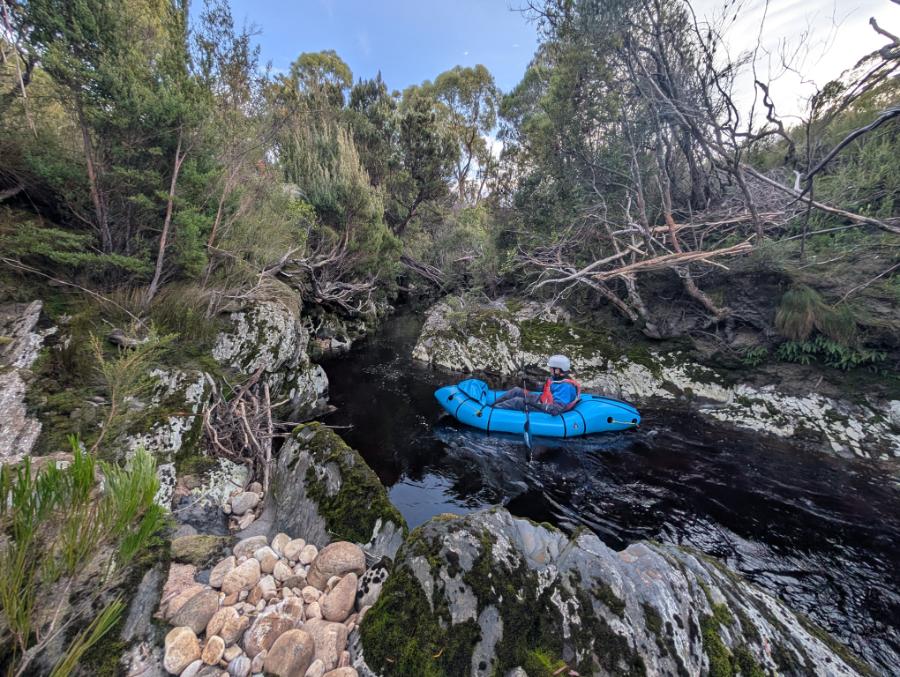
Starting down Seven Mile Creek, not sure what to expect. But super excited to be in the rafts and to get the weight off our shoulders.
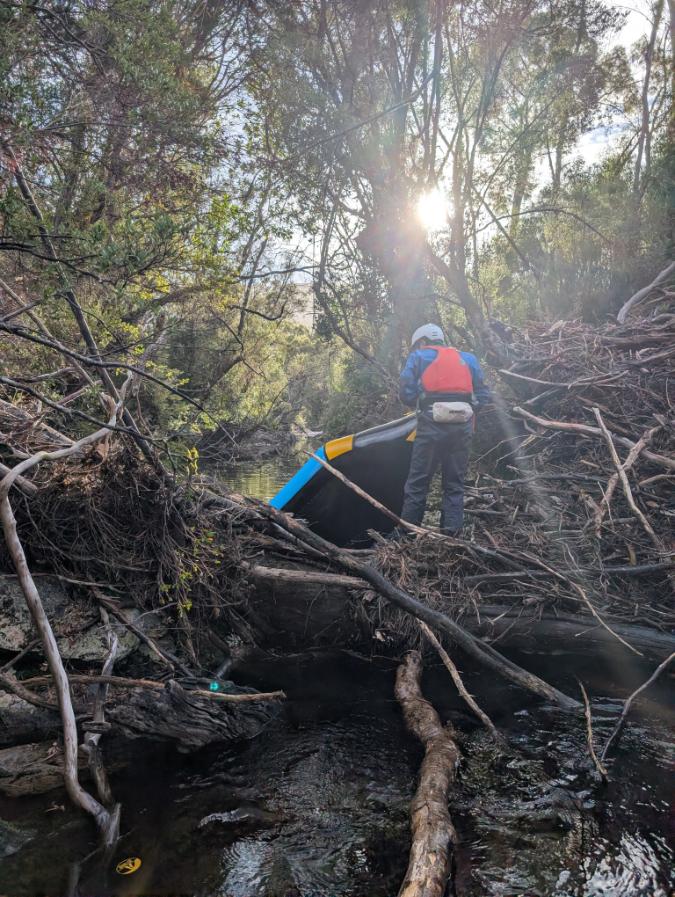
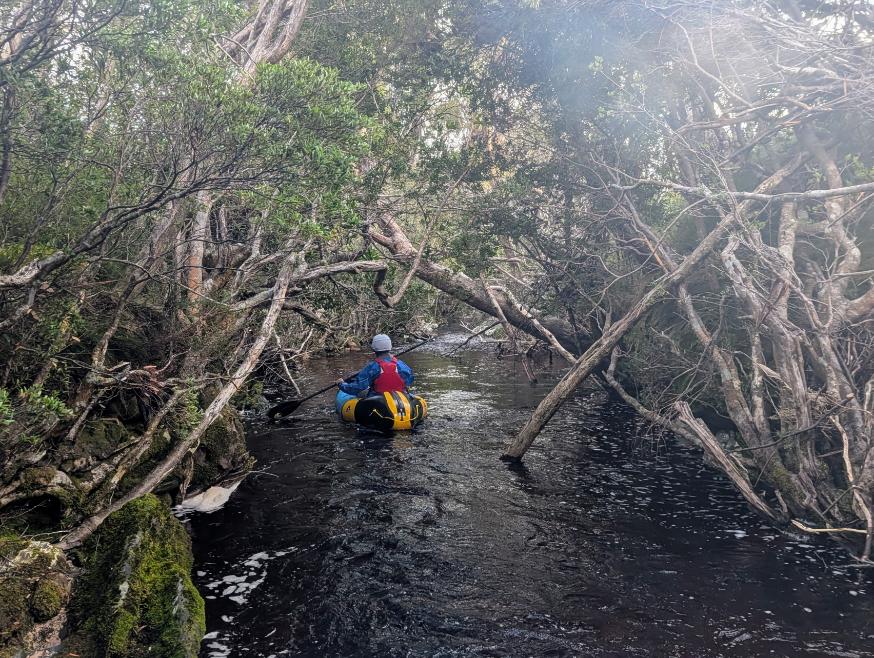
We didn’t have to wade for long. Soon, we were taking our first paddle strokes through the unbelievably cool, narrow gorge of Seven Mile Creek. It didn’t last long though, because we soon had to get over a huge log jam. (Photo Pete Collins)
Pete taking his first paddle strokes on Seven Mile Creek.
Giant log pile blocking the river required some strenuous work to get over. It felt like we crossed over a threshold here too. Behind was the Western Arthurs trails and campsites, which although remote, still had a few other hikers about. Now, we would be totally alone as we headed down river into the wilderness. We wouldn’t see anyone for the next 3 days. (Photo Pete Collins)
Seven Mile Creek was an outstanding mini section of gorge that gave us a flavor of what was to come.
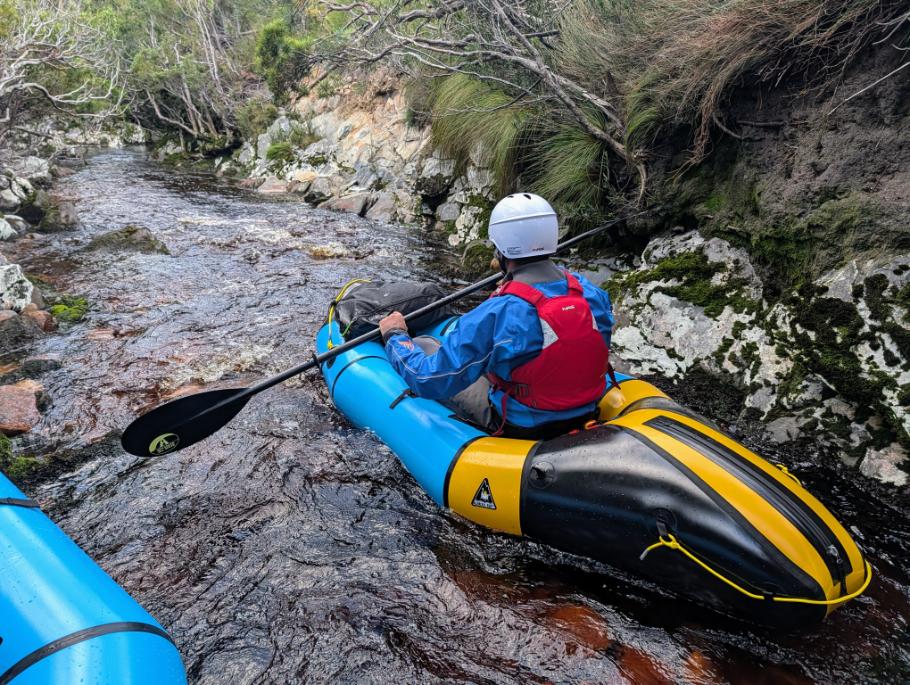
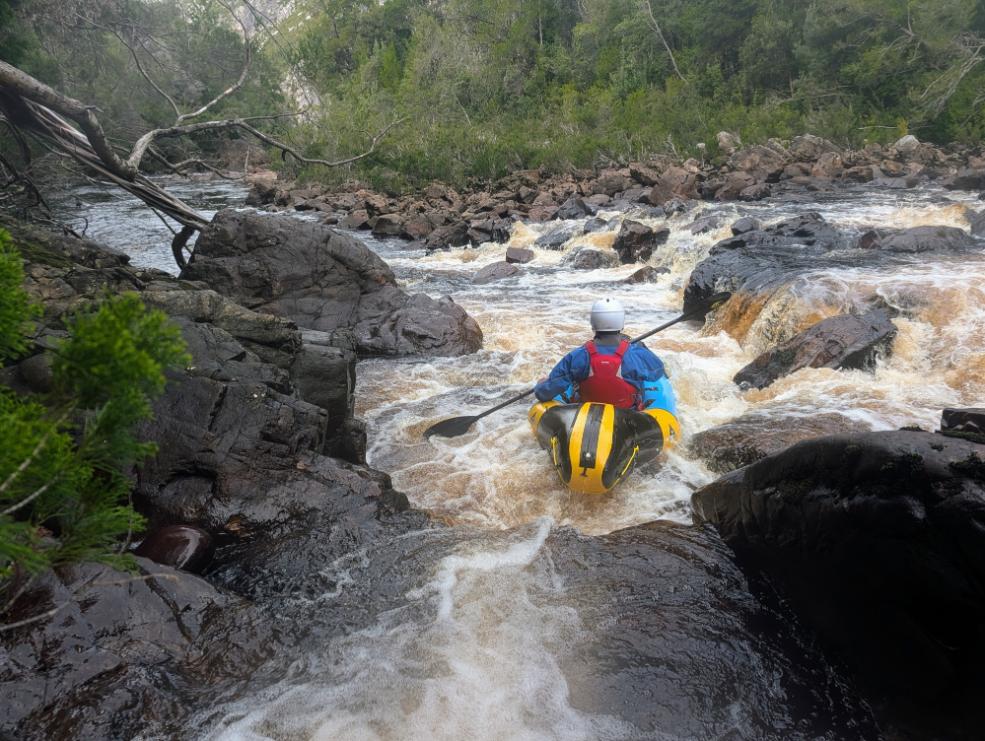
On the Huon River proper and navigating our first rapids. It was quite bony but the rafts didn’t care as we scooted over countless rocks on this first day. They’re tough little boats. (Photo Pete Collins)
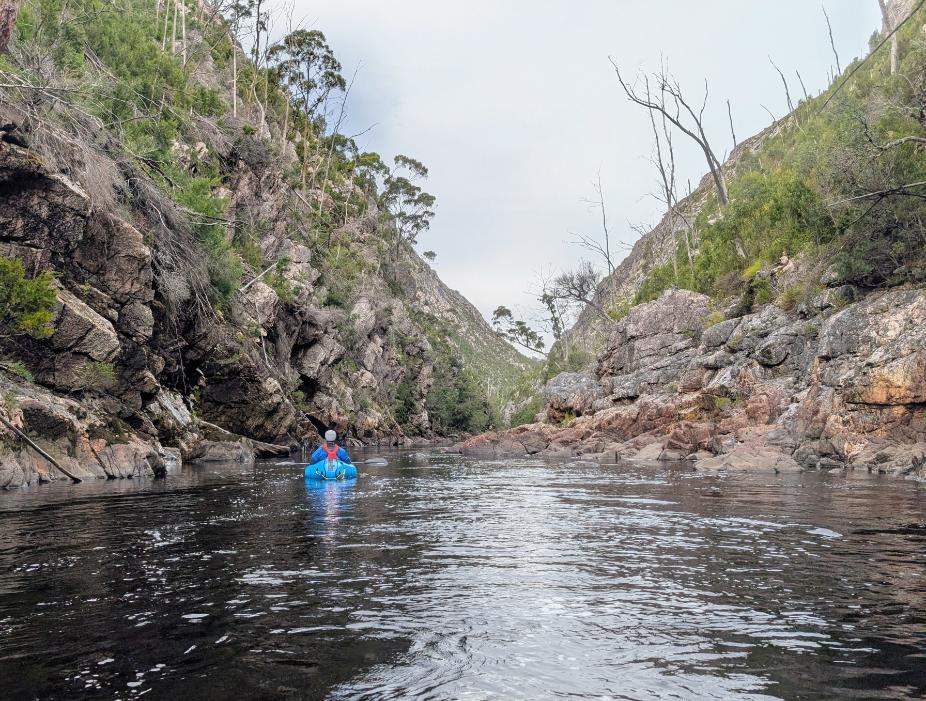
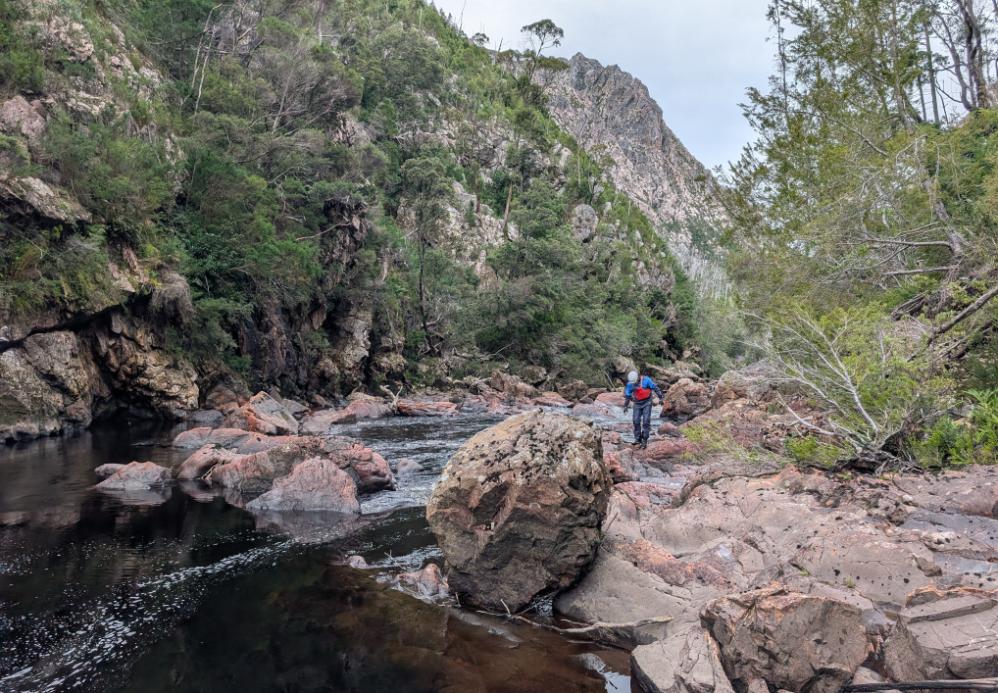
Me entering the Huon Gorge, which was the highlight of our whole time in Tasmania. A spectacular and utterly wild place that we had entirely to ourselves. (Photo Pete Collins)
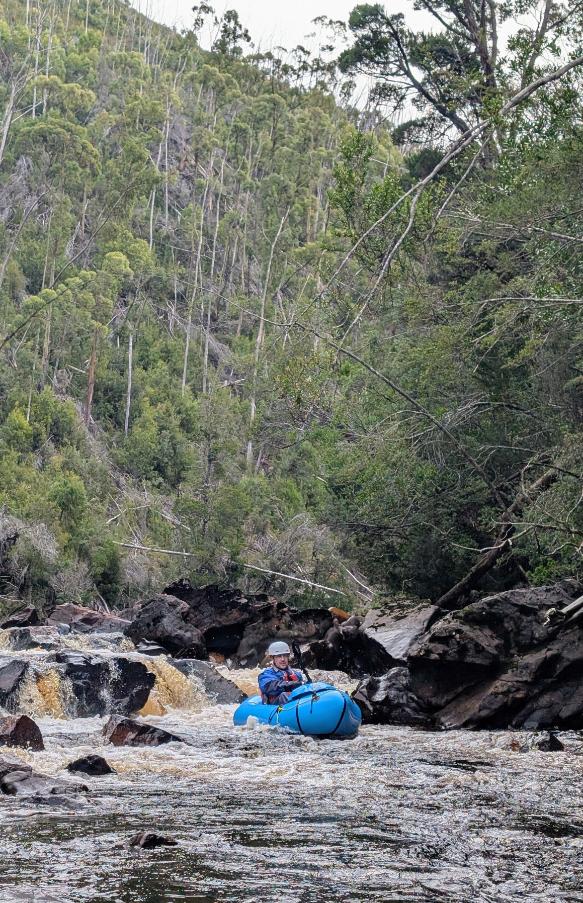
Pete scouting a rapid in the Huon Gorge looking for strainers and a suitable line.
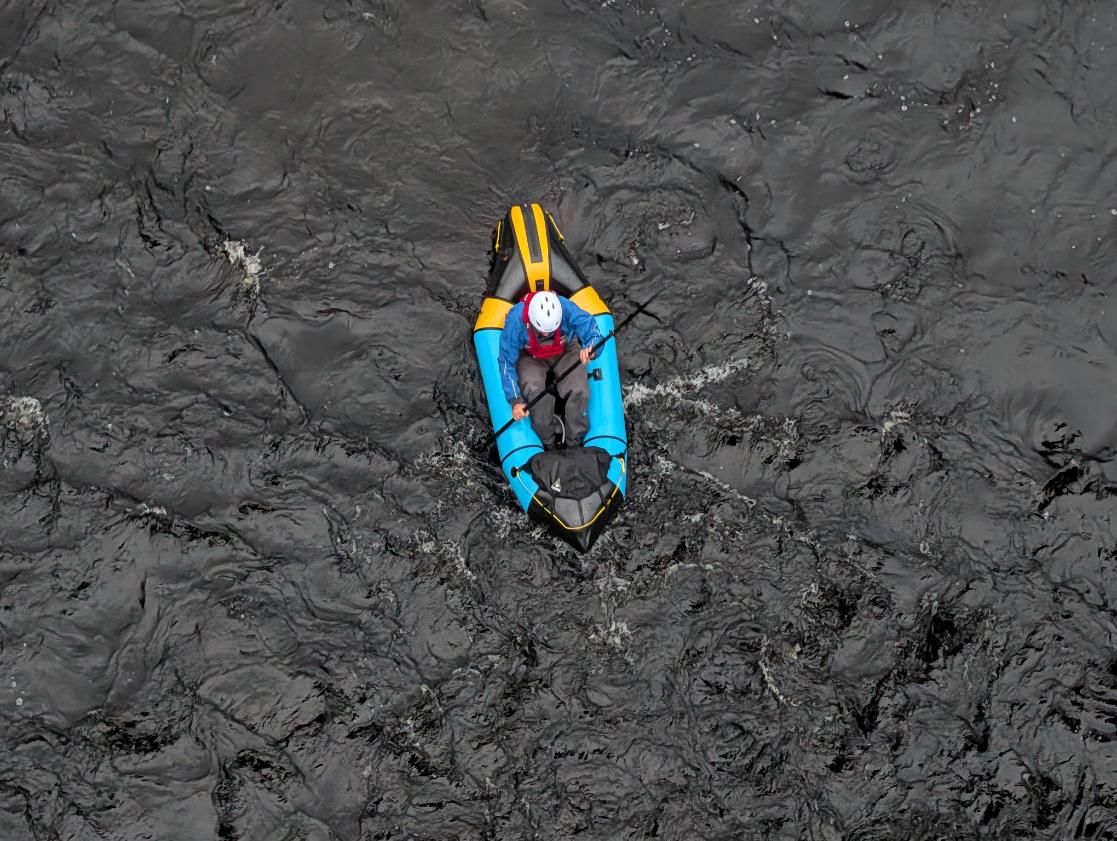
Pete mid rapid on the Huon.

The gorge was an incredible place.

High walls on both sides, fun rapids, lots of birds, big gum trees and huon pines lining the banks. And we had the river entirely to ourselves for days.
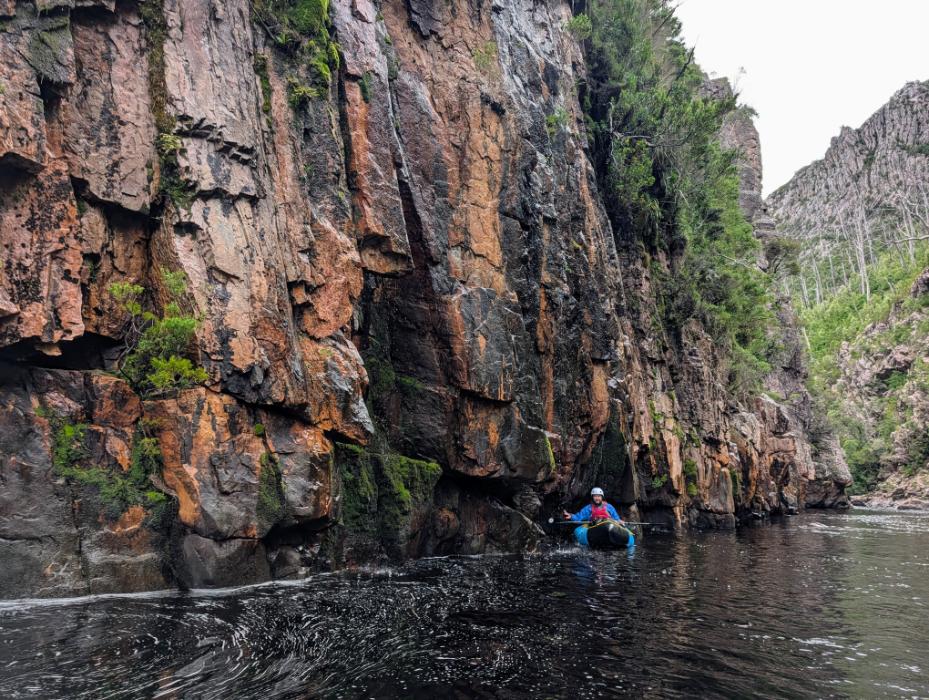
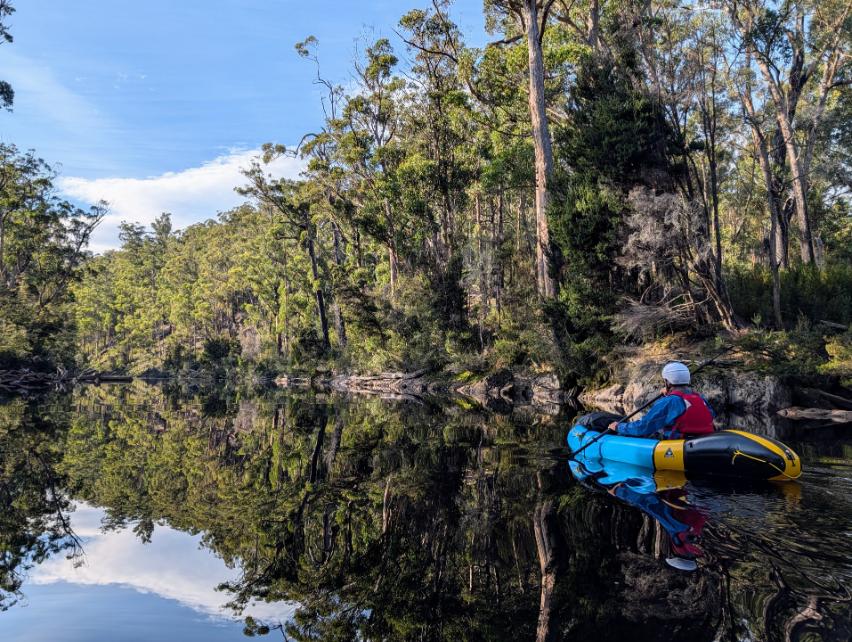
Pete next to the mighty walls of the Huon Gorge.
As we paddled further downstream, the gorge walls gave way to gently sloping forested banks. Rapids were followed by pools followed by more rapids and by more pools and so on. A sort of endless moving walkway of beautiful scenery.

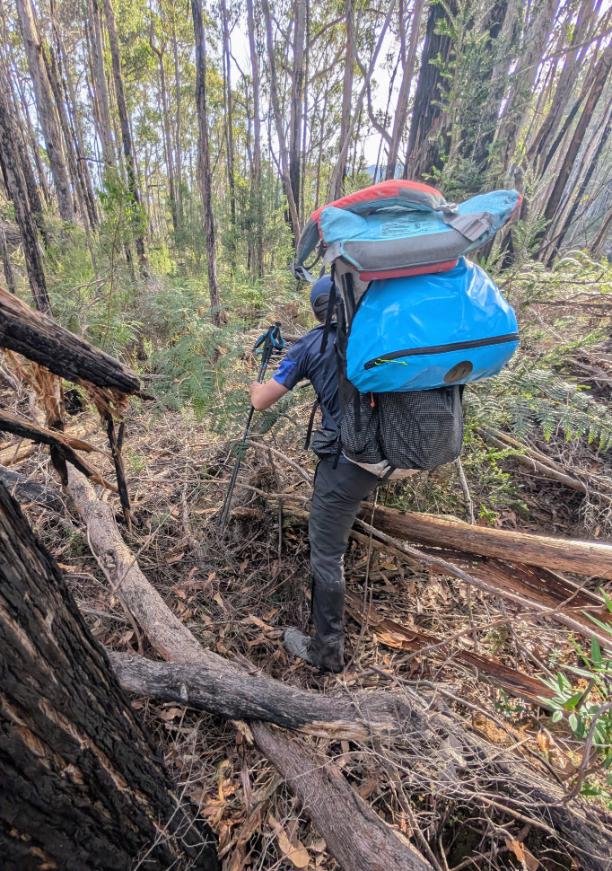
After 2 days of paddling, we took out, turned around and tried to hike back to the car along the Huon Track (plan A). Much like our earlier attempts at off trail travel, the Huon Track was a no-go. The supposed trail barely existed and whenever we found a trace of it, it quickly disappeared into thick, impenetrable bush. After a couple of hours of hard work with little progress, we opted for a Plan B. Return to the river and paddle the remaining miles downstream to Huonville. Once there, we would have to figure out transport back to the car 60 miles away at Scotts Peak dam.

In the end, the transfer was easy to come by (thanks Airtasker!) so running the full river was a much more enjoyable and satisfying trip. Instead of slogging along with heavy packs, we floated down the beautiful river and enjoyed a few days of serene, chill paddling and occasional rapids.
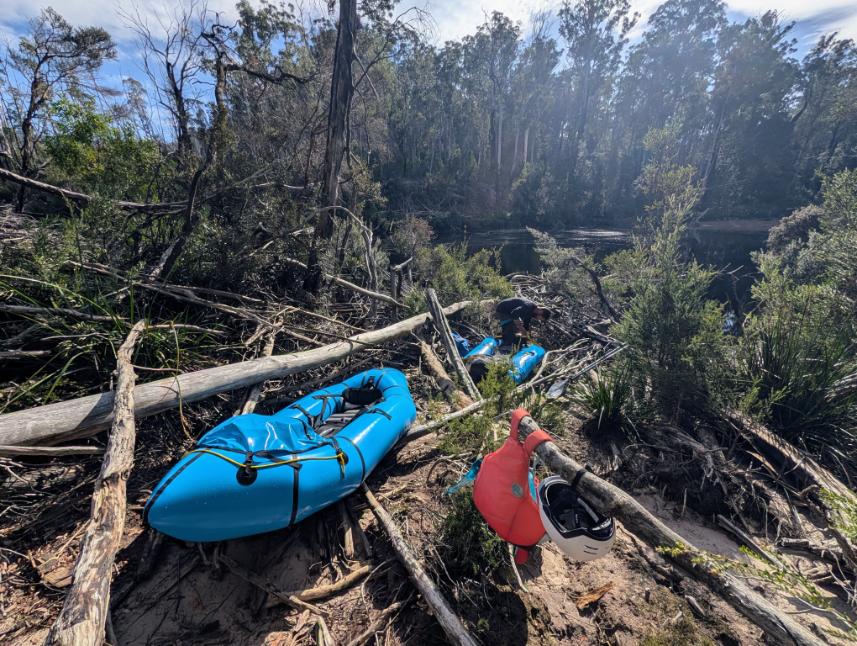
Our takeout spot was a bit scrappy. The sun was beating down and I remember how hot and frustrated I got trying to roll up my raft small enough to fit in my bag again.
Trying to find the Huon track. We found traces of it, which were confirmed by our GPS Alltrails maps, but the track barely existed and frequently disappeared into thick bush or piles of dead trees. It was VERY heavy going. After an hour of barely any progress, we realized the folly of this plan and decided to return to the river and continue downstream to the town of Huonville. From there, we would figure out a ride back to our car somehow. (Photo Pete Collins)
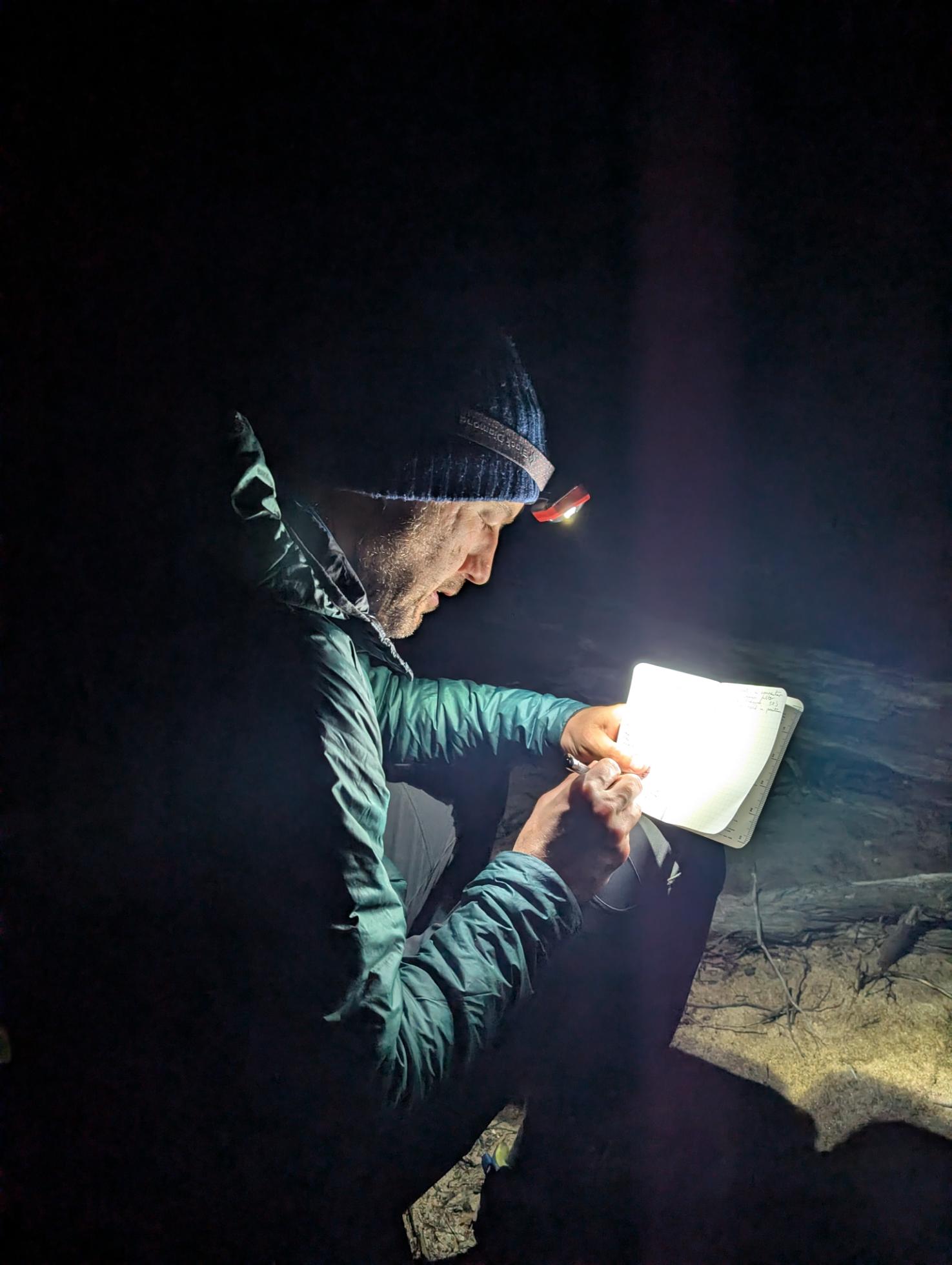
Catching up on the journal at day’s end, an essential ritual of very trip I do. (Photo Pete Collins)

Day 7: Huon River below the gorge (packrafting)
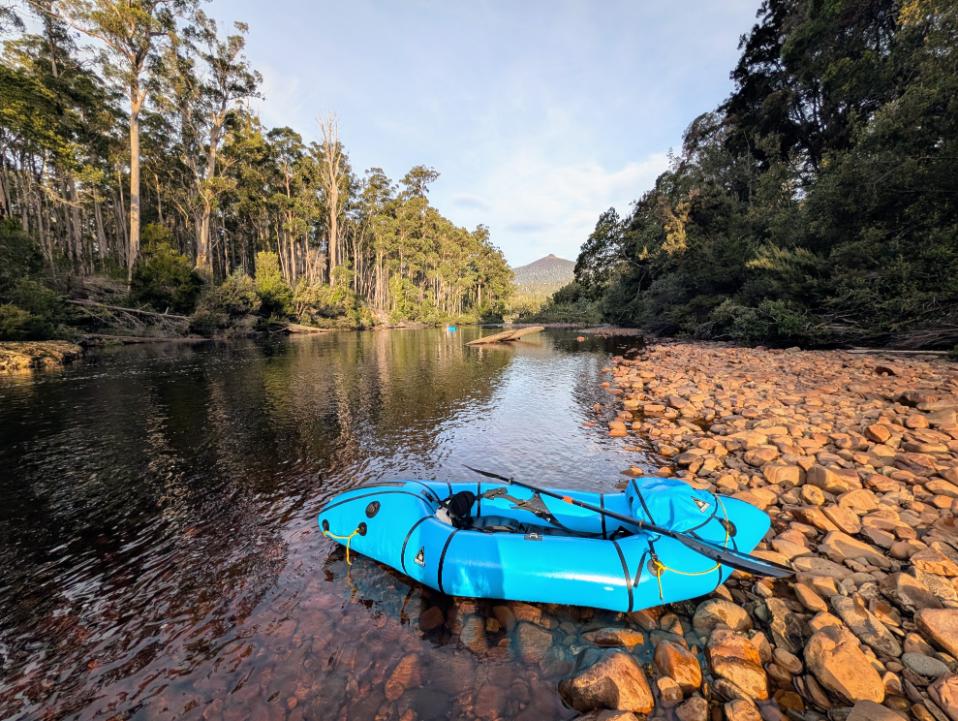
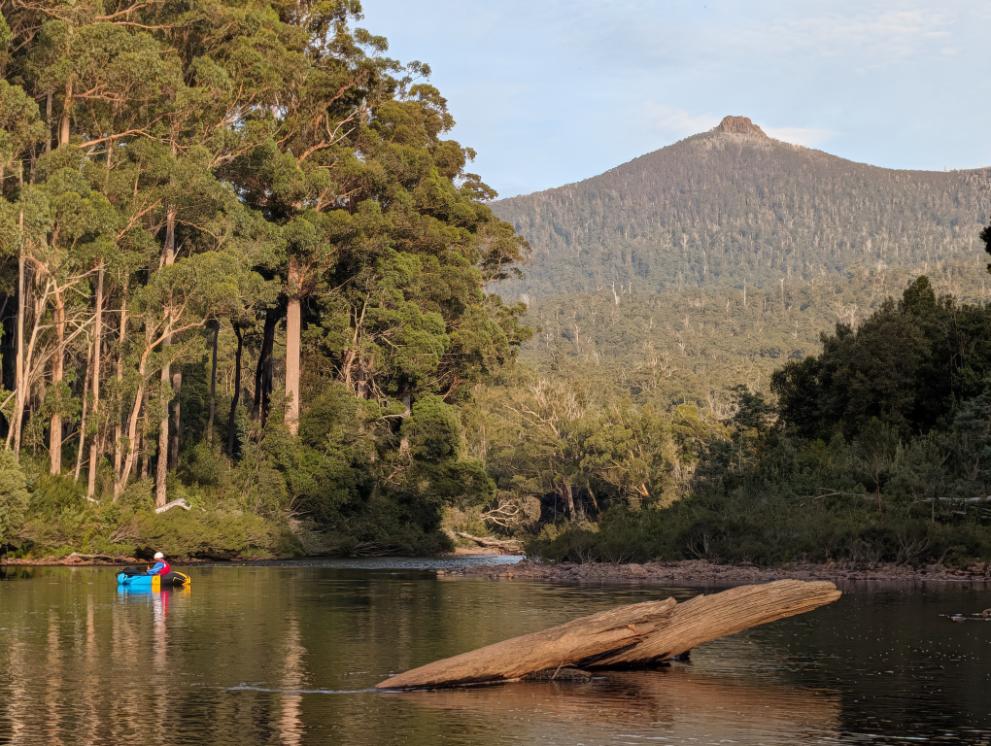
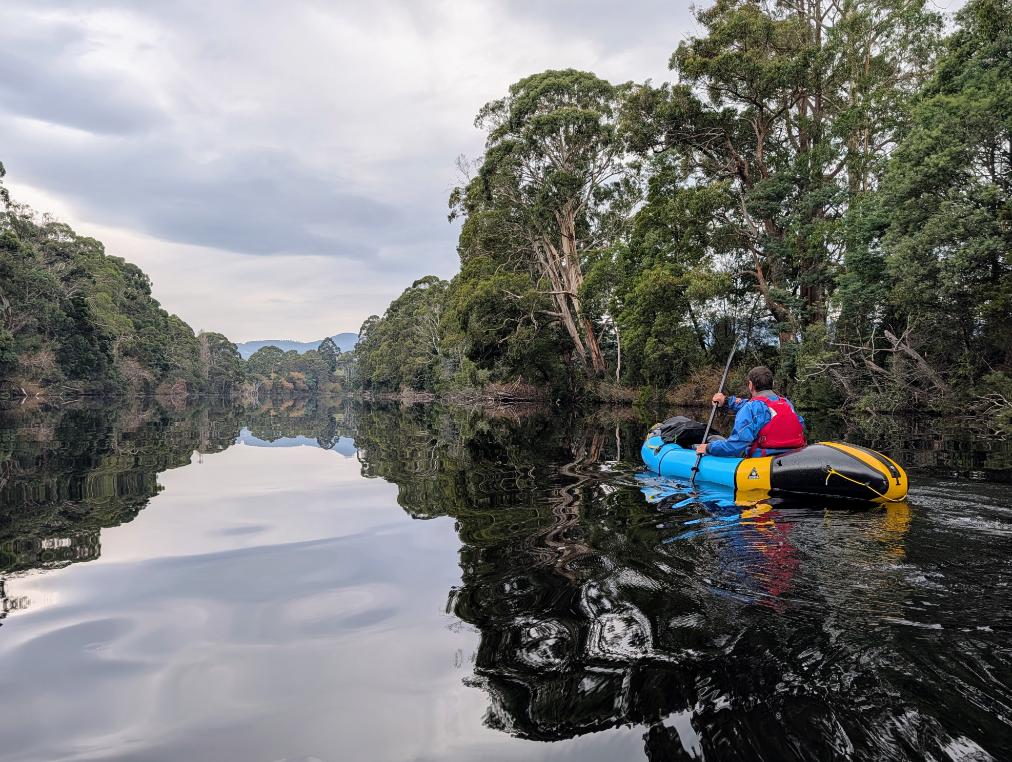
Typical scenery of the Huon River on one of the serene sections
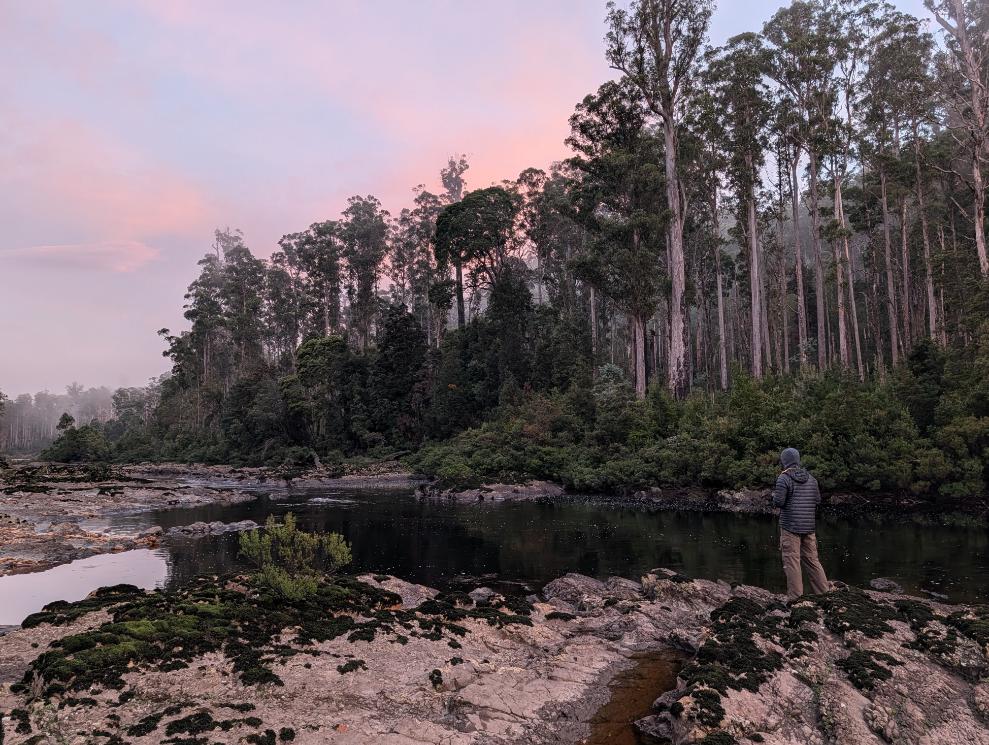
Beautiful evening light over Pear Hill (I think?)
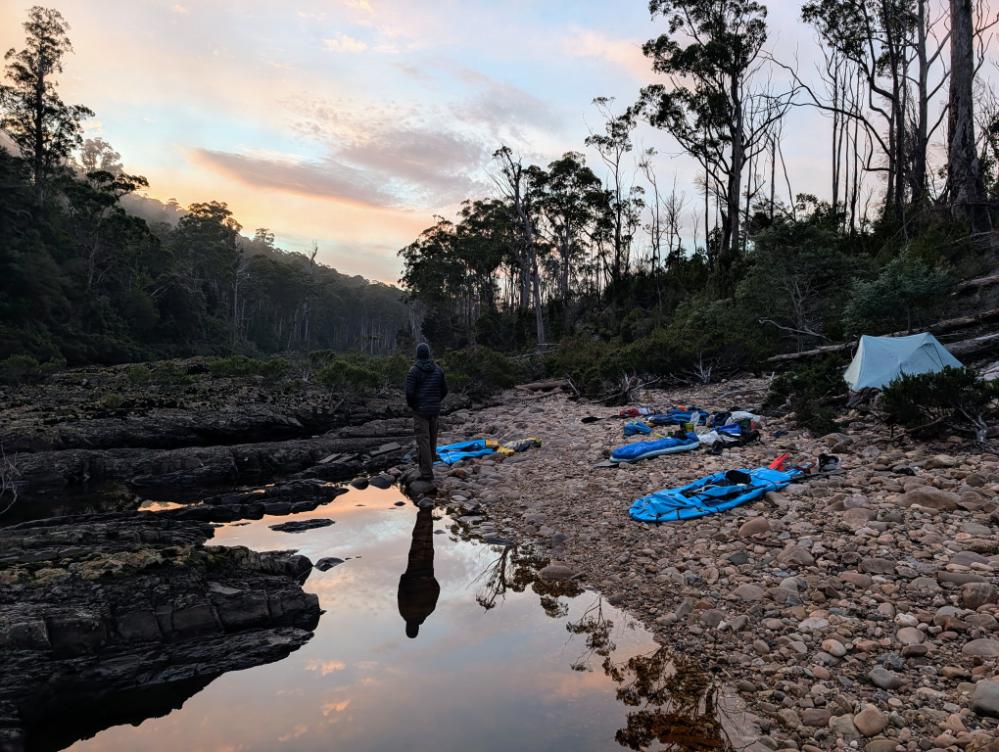
The riverbanks were often steep, wooded banks so we were always on the lookout for flat (ish) gravel bars like this, where we could pitch the tent back from the river edge and have rocks to dry the gear. Better than sand, which gets stuck everywhere, including wrecking one of the zips on Pete’s tent.
Our own lost world to explore

Day 8: Huon River (packrafting)
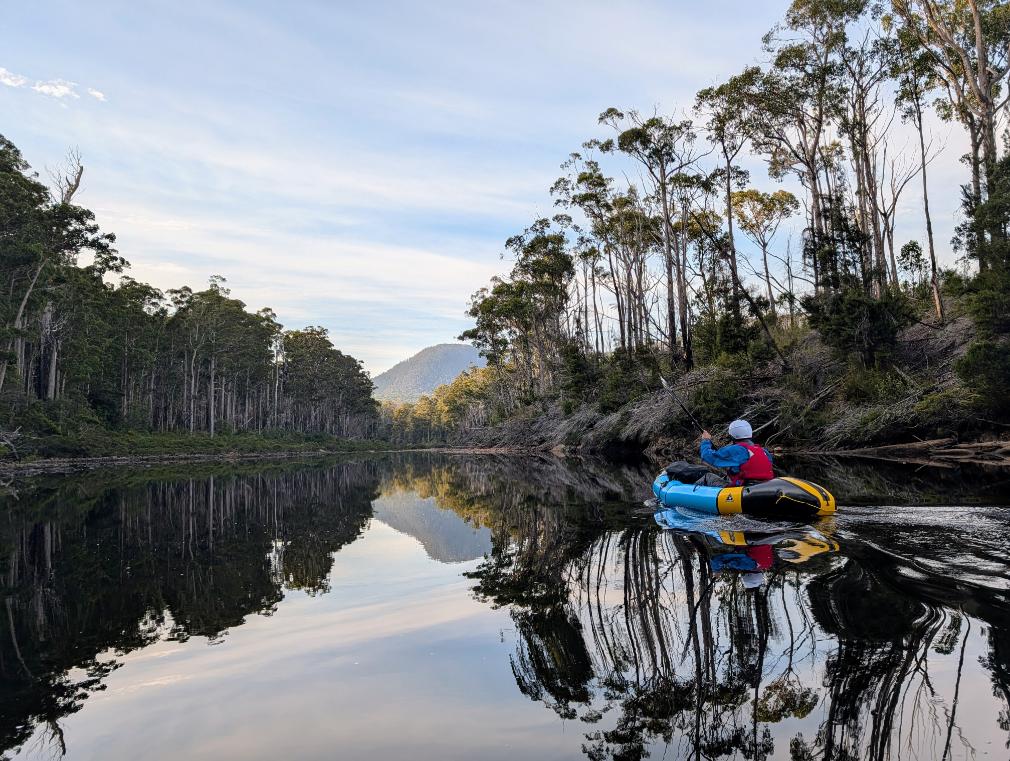
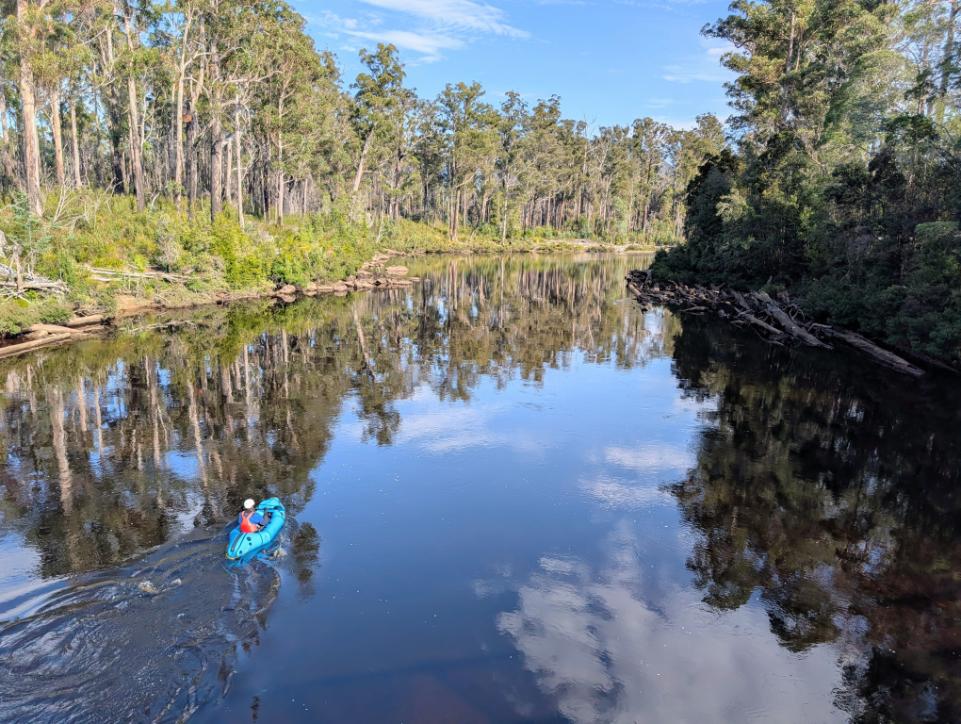
Pete snapped this photo of me from Arve Road bridge at Tahune, our first sighting of other humans in a few days. (Photo Pete Collins)
Pete paddling
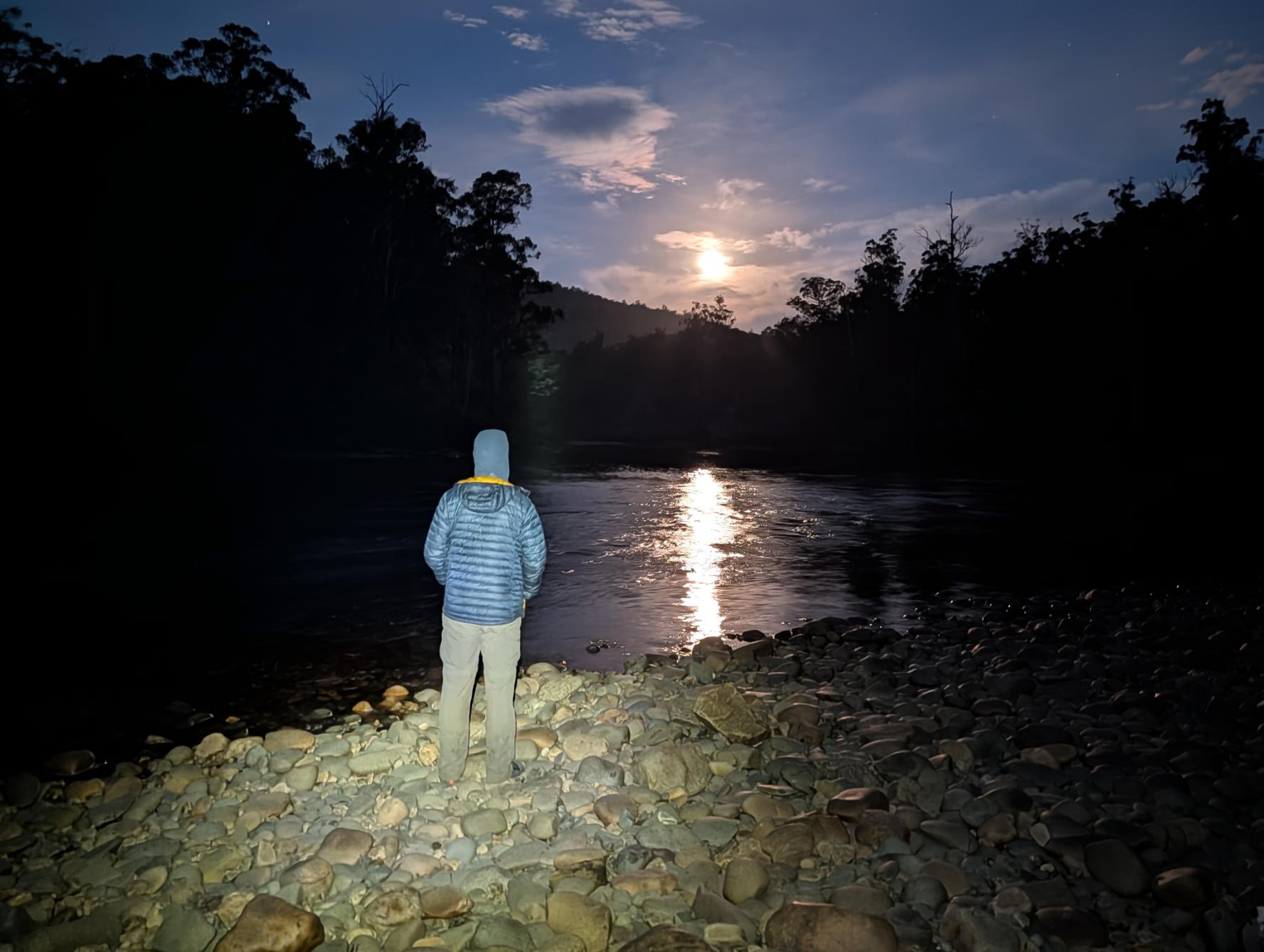
Most nights were clear with a full moon, enough light to move around camp without a headtorch.
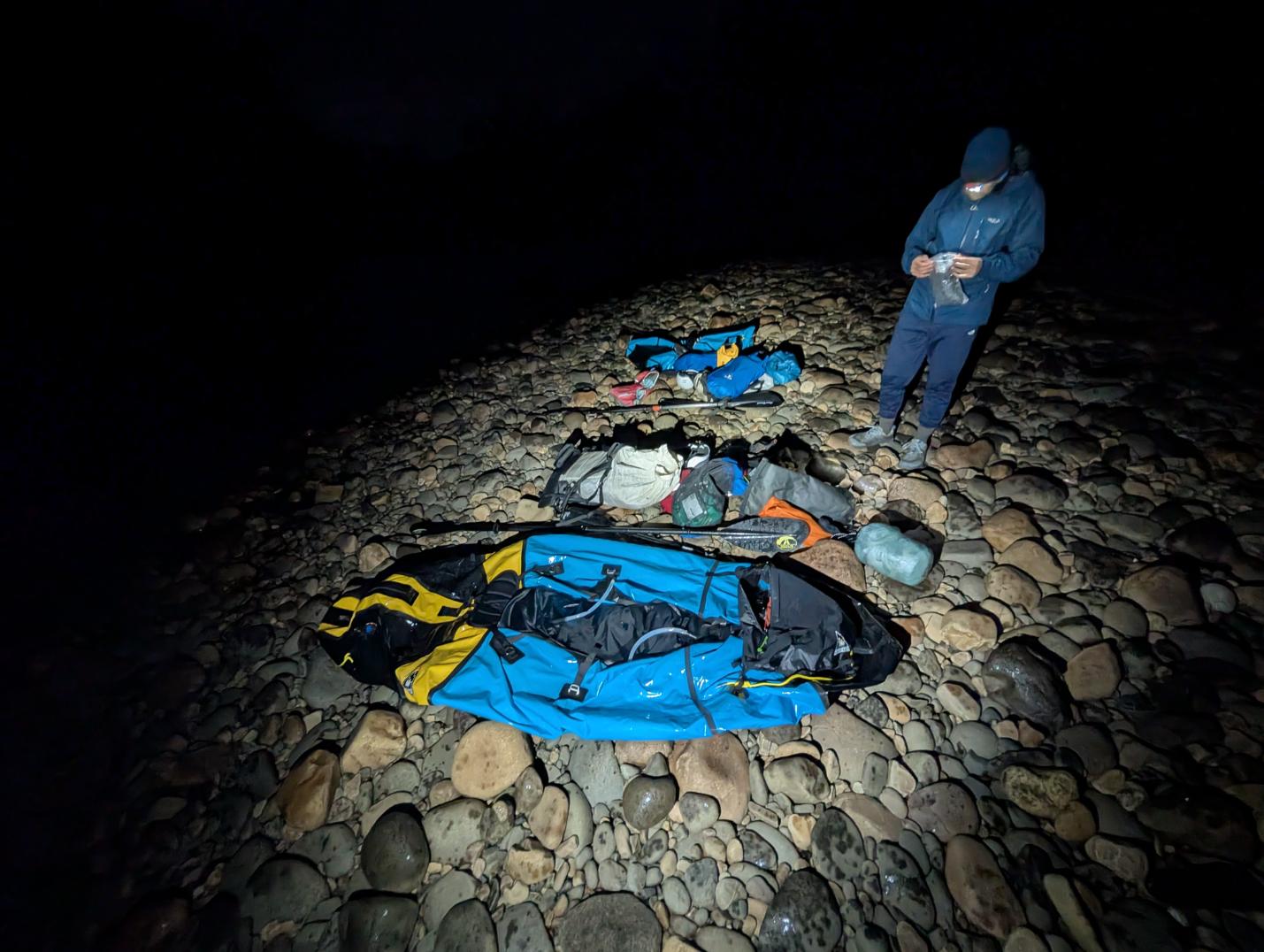
Organizing gear before storing it all for the night.

Day 9: Huon River to Huonville (packrafting)
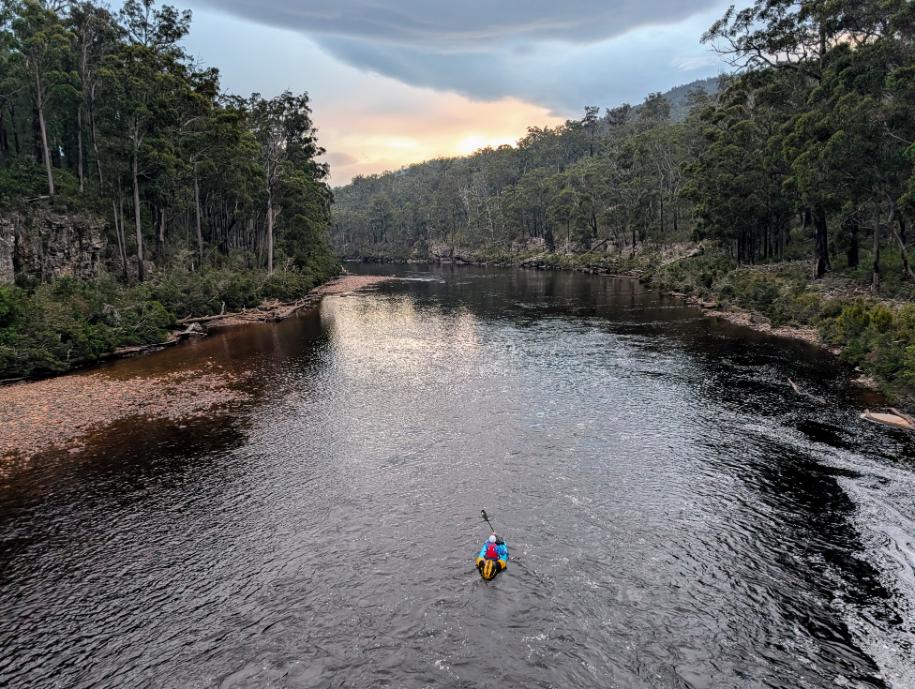
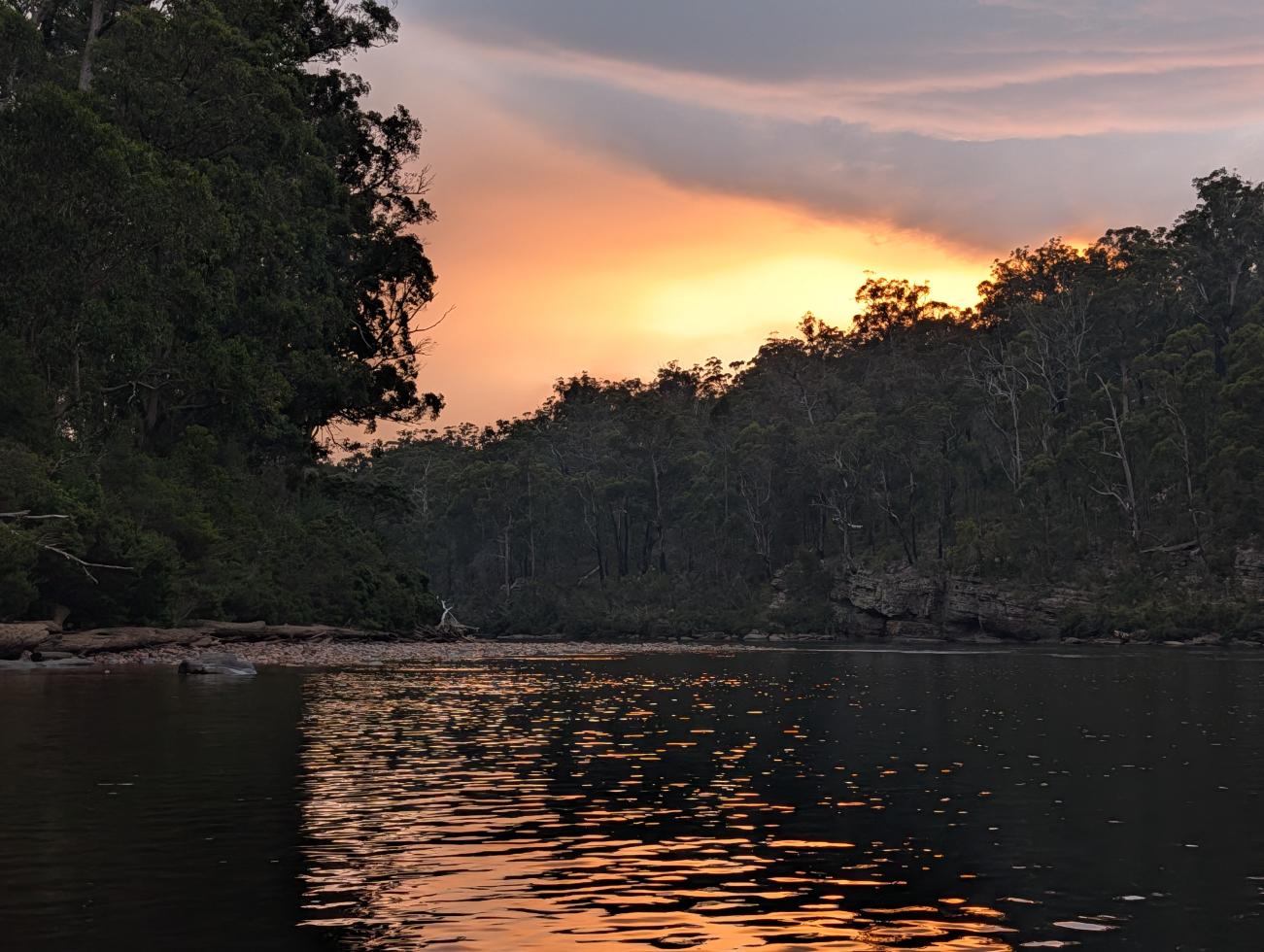
We got an early start on the final day and witnessed sunrise from the river. The colors were gorgeous.
Mother Nature doing her thing. We were feeling grateful to witness it.
Packrafts are incredible little boats. So fun and so capable at the same time.
Nearly there. Final few miles of flat paddling on the Huon River.
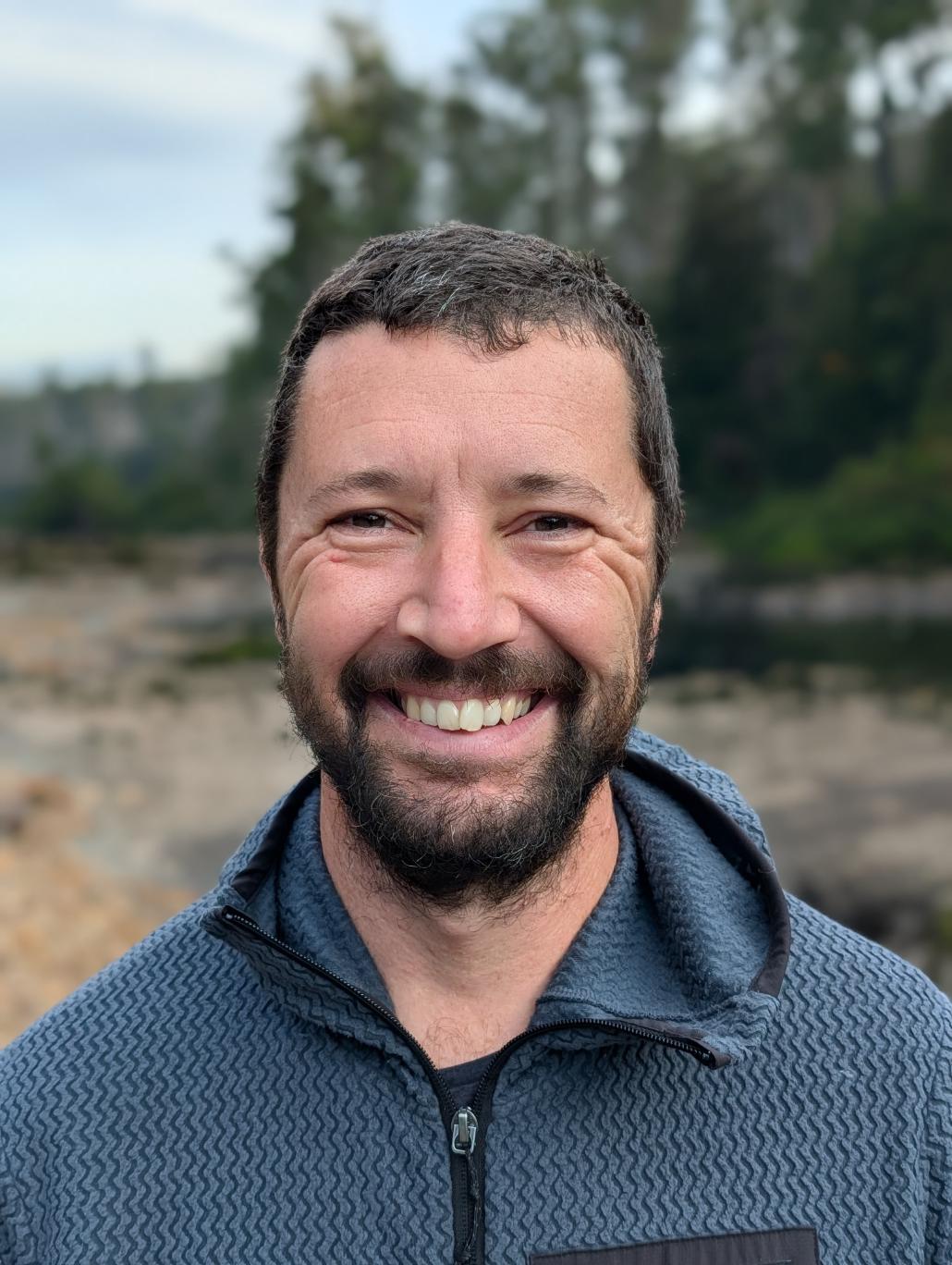
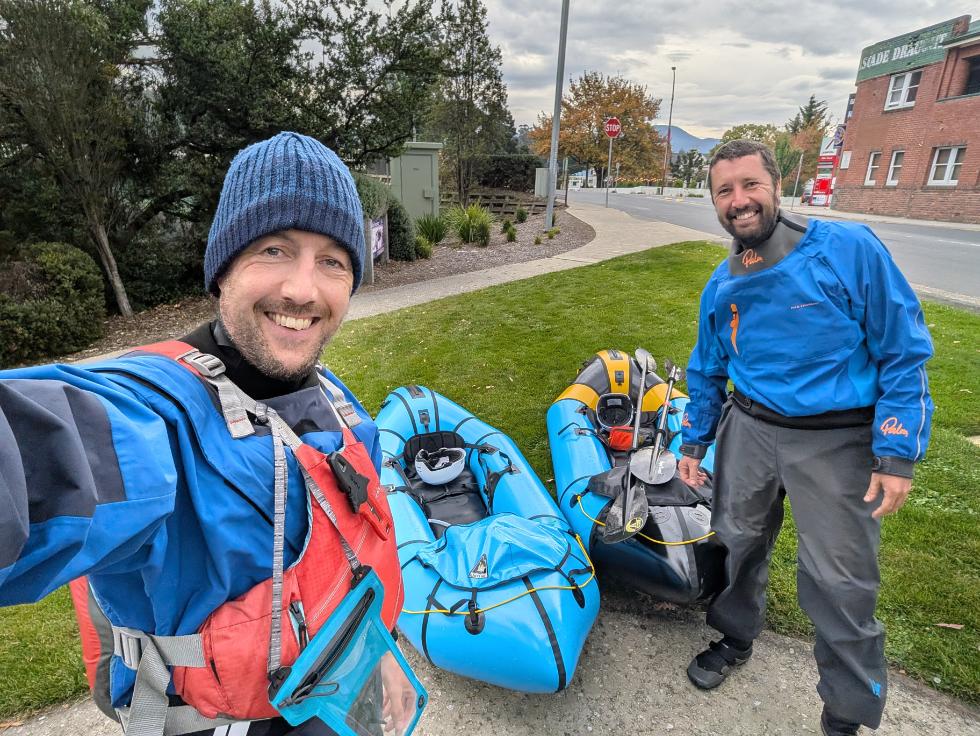
All smiles at the takeout in Huonville, six days after setting out from the Port Davey trailhead.

Almost immediately after stepping foot on dry land, we were accosted by a drunk guy who claimed to be James Joyce from Ireland. When we told him we were headed back to Hobart, he said he would join us. Haha! This was our first interaction with another human being in six days, welcome back to the real world. Wild.
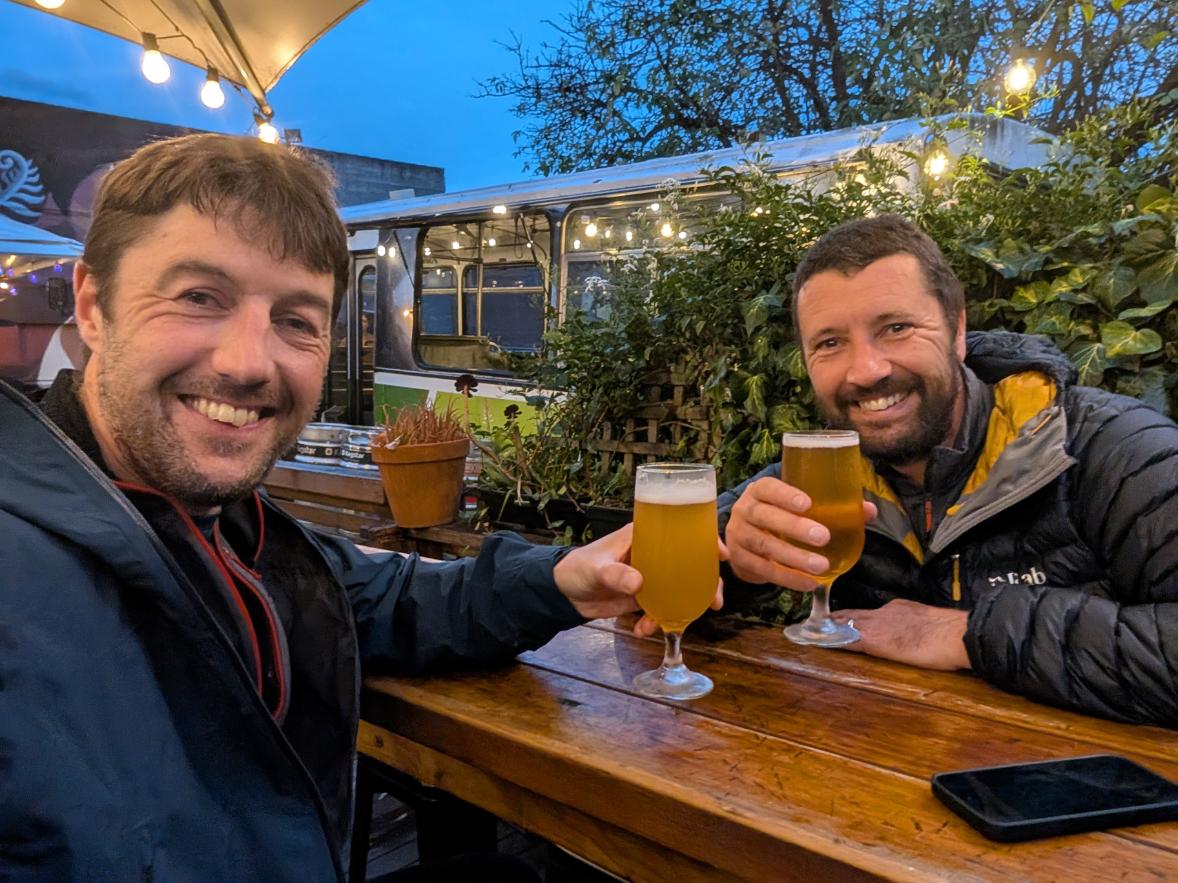
Celebratory beers in Hobart!

All-in-all, it was a fantastic expedition and has me fired up for future missions! Packrafts are so much fun and open up so many possibilities for backcountry expeditions.

Days 10: Transfer from Hobart / flat battery / drive to Mt Field

We used Airtasker to set up a transfer from Hobart back to Pete’s car in the Scots Peak Dam area. Our driver was a young guy, very friendly, who drove us back at breakneck speed.

The car was still there, but it wouldn’t start because the battery was dead. Argh!

This could have been quite serious because it’s such a remote area. There were two other cars in the parking area at the trailhead, but these people could be out for days still. And since we’re at the very end of a remote gravel road in the National Park, there’s not exactly much passing traffic.

We tried pushing the car, but could barely budge it, since it was parked at a slight incline. Luckily, within about half an hour of arriving back at the car, a Parks Tasmania crew (thanks Baz and Andy!) were passing to pick up an excavator with a dead battery. We flagged them down and it was a trifle to get the car going again. What a stroke of luck!

Since we needed to drive around for a while to charge the battery up and the latest weather forecast indicated a dump of snow was on the way, we headed north to the Mount Field area.
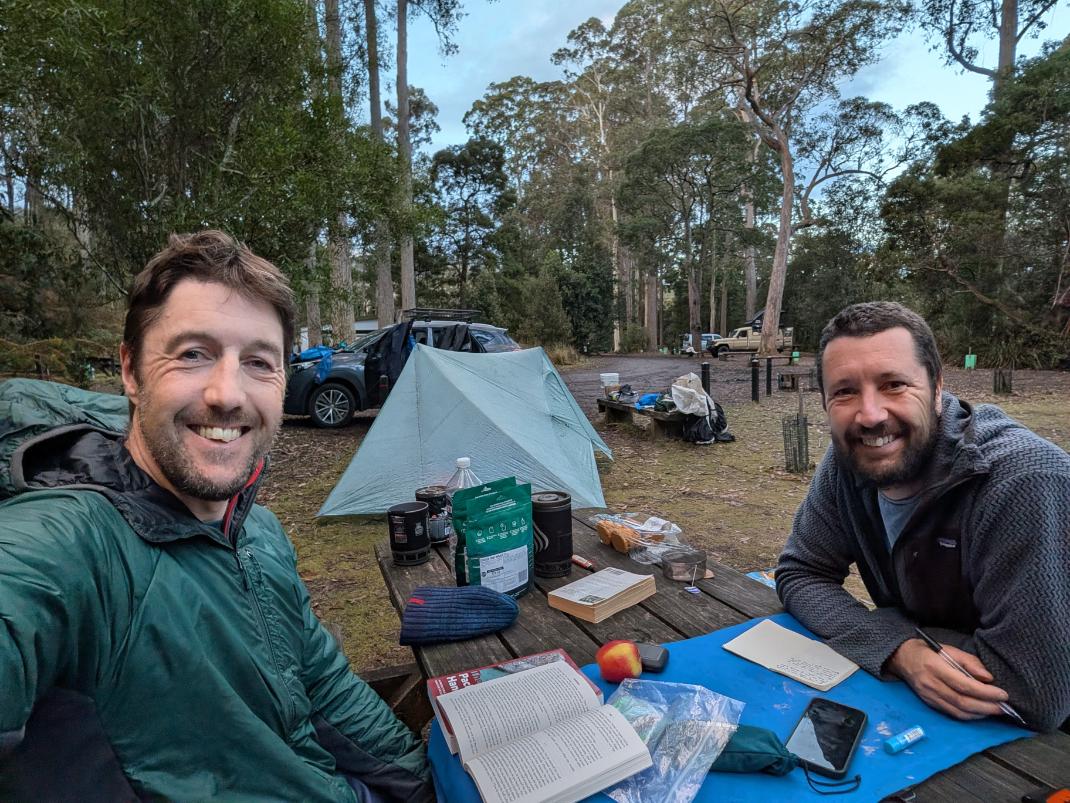
Camped at Mt Field National Park.

Day 11: Mt Field West & Tarn Shelf circuit hike

Brilliant day, despite the foul conditions in the first half of the day.
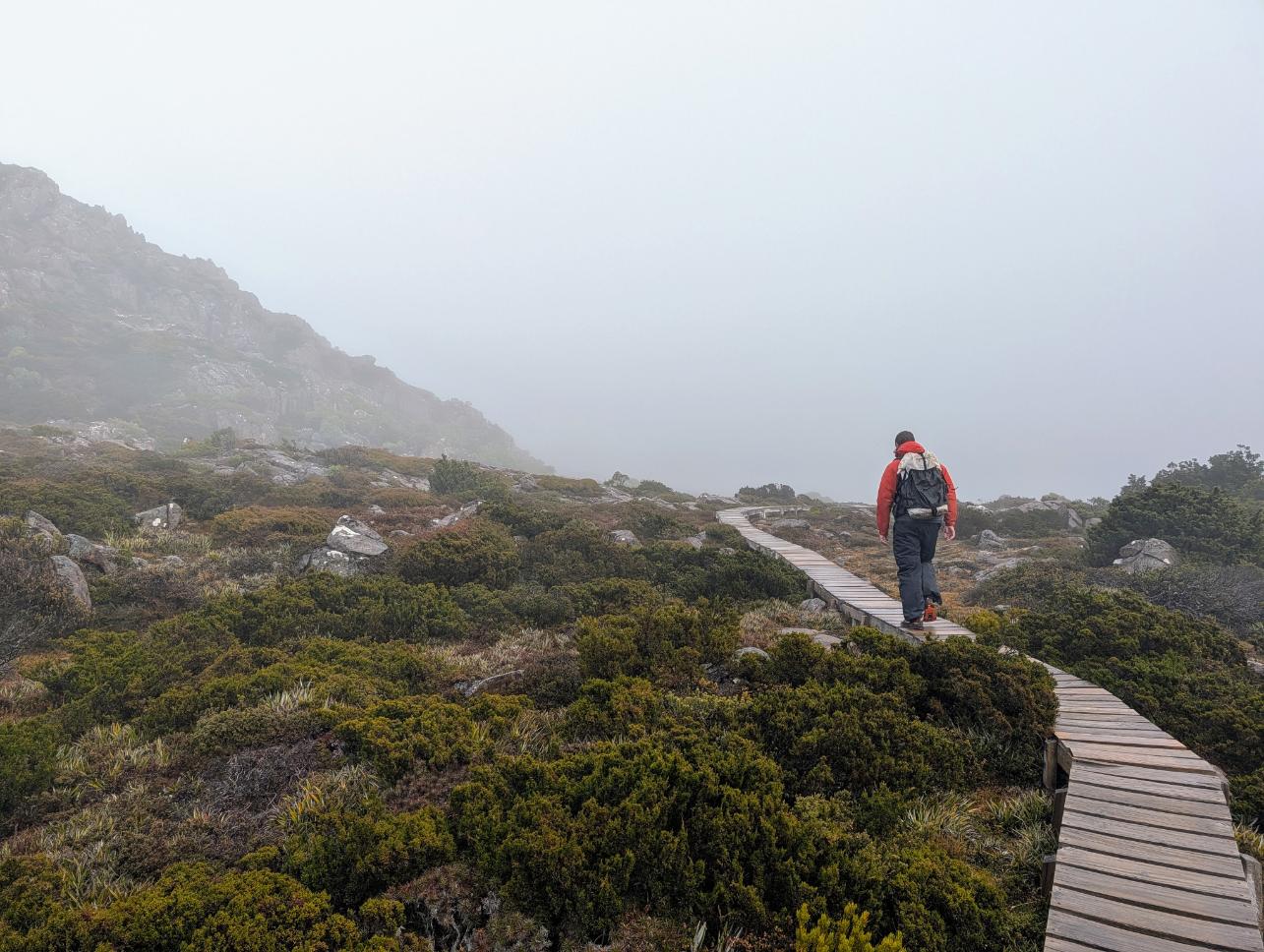
Into thick weather as we climb Tarn Shelf Track.
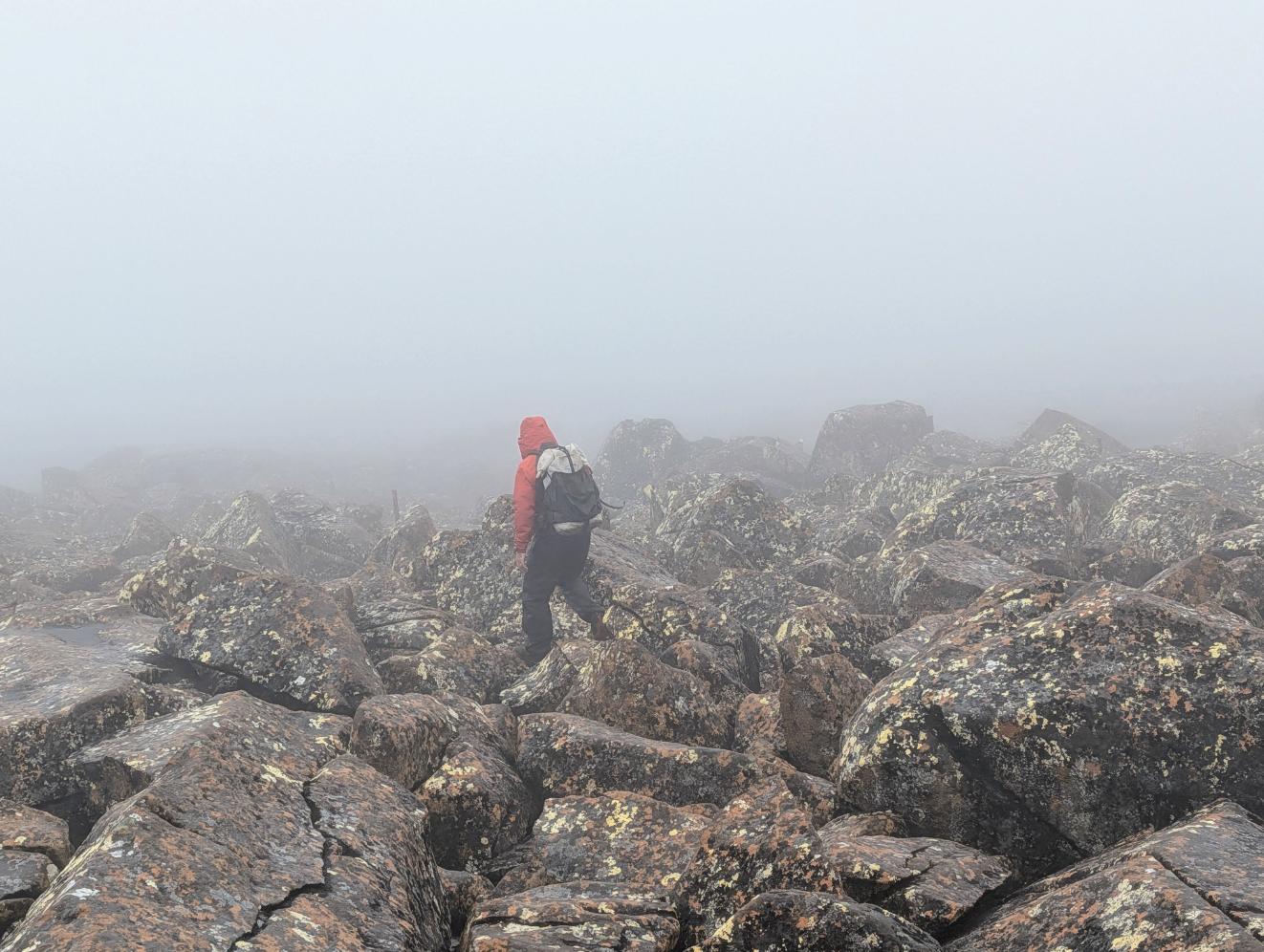
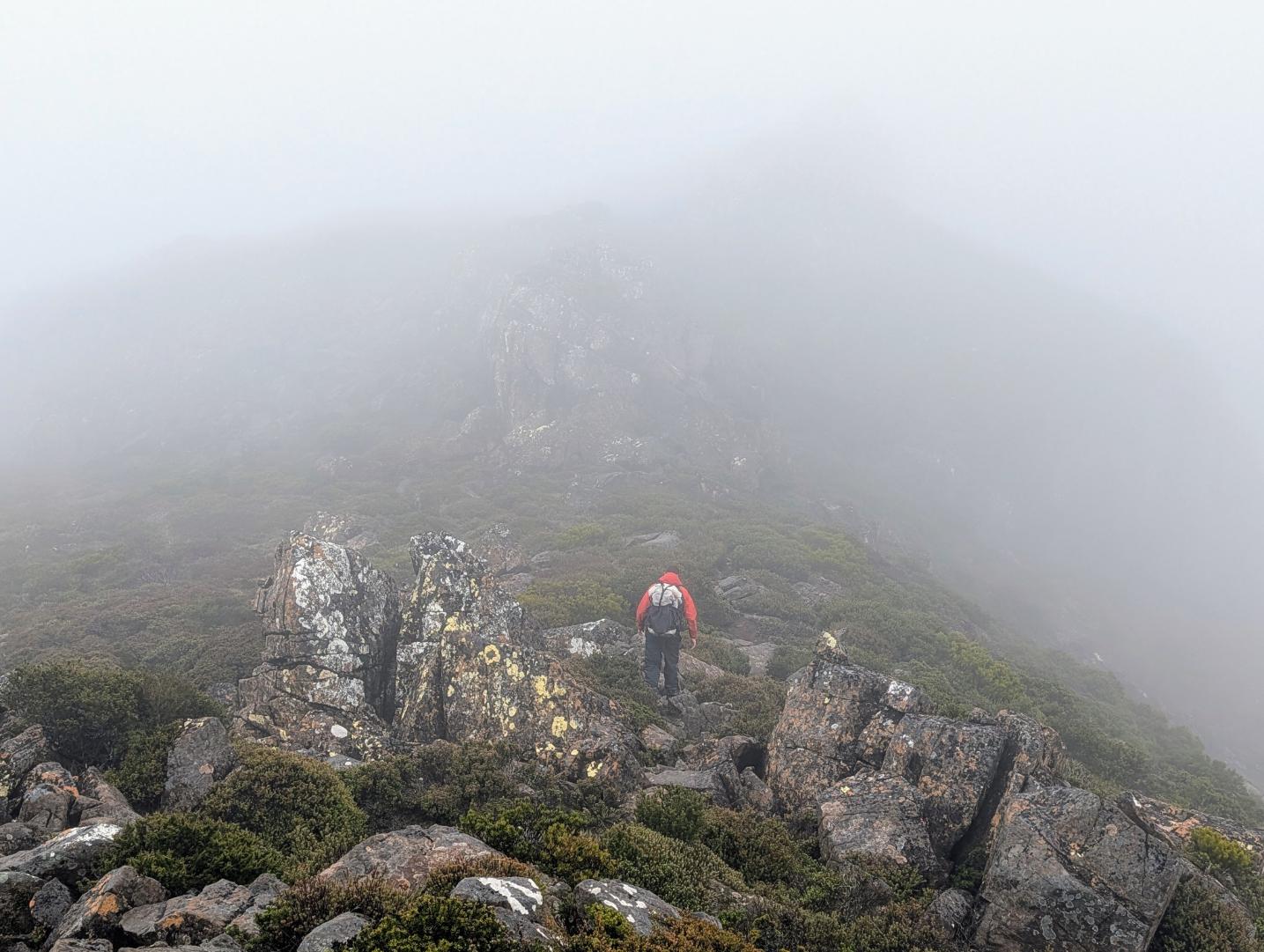
Crossing the Rodway Range in driving rain and thick mist. Bit different to the last time we were here in 2018 (see end of this post).
Ascending the Mount Field West Track, no let up in the weather.
Summit of Mount Field West. We stood here together in January 2018 and had magnificent views that day (although I had a terrible headache). Sadly not today though! Still a great adventure to get here. (Photo Pete Collins)
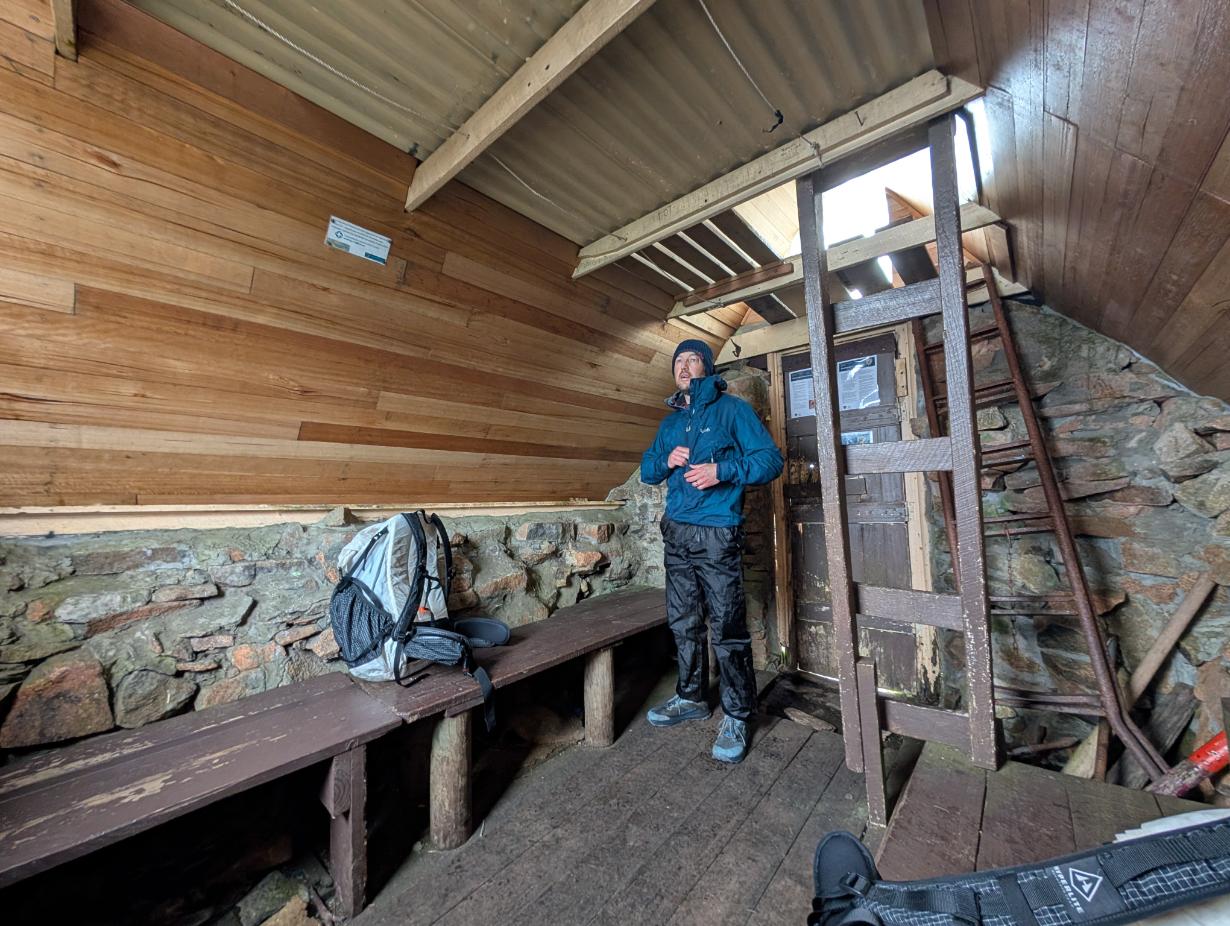
Taking a break in K Col hut. We were wet and cold, so this hut was a welcome respite from the sideways rain. It also marked a shift in the weather. When we left the hut, the rain abated and blue skies broke through in patches, lifting our mood and drying us out somewhat. (Photo Pete Collins)
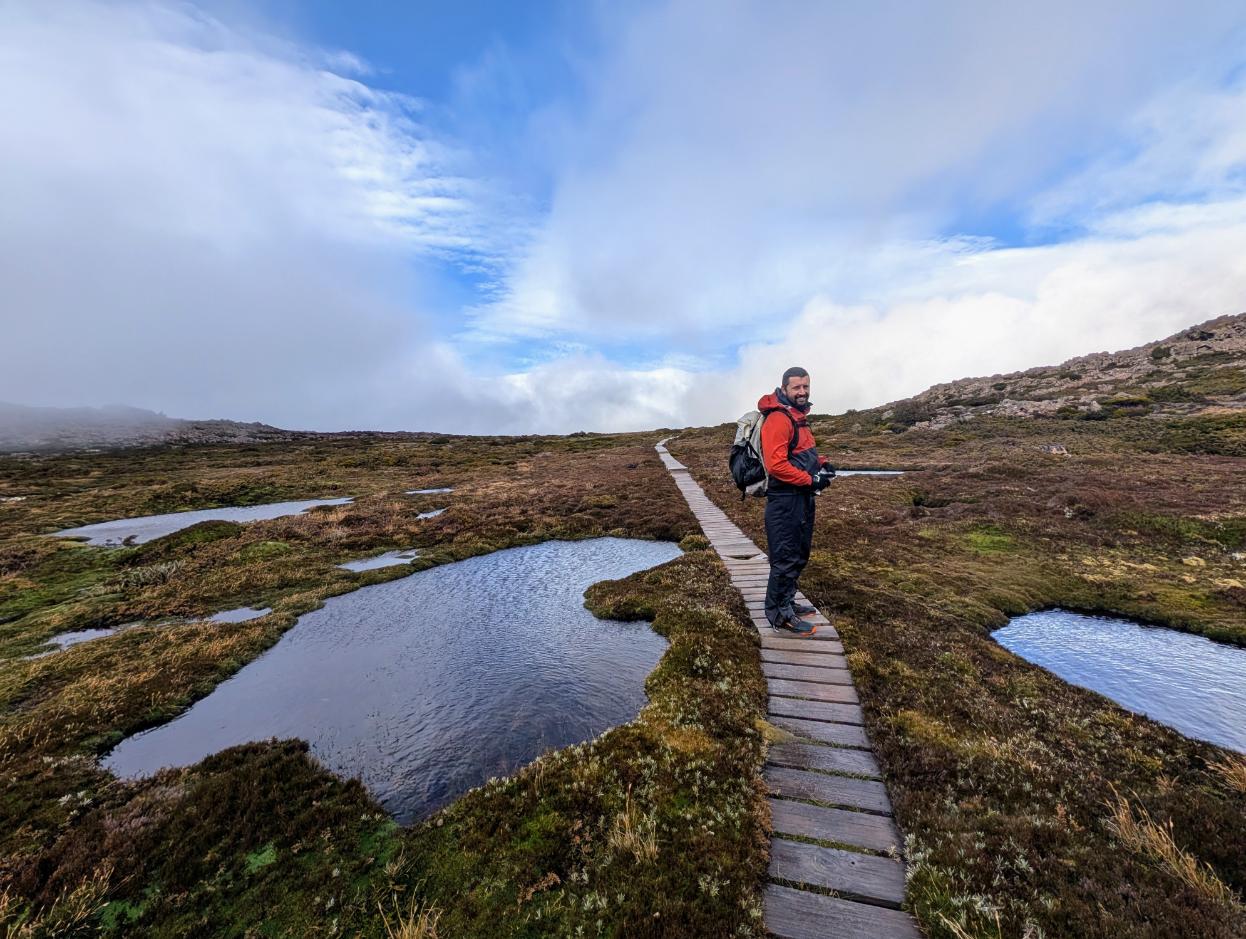
New boardwalks on the K Col track, to protect the alpine ecosystem.
Spectacular view from K Col track.
Pete on the Tarn Shelf track, a beautiful section of trail towards the end of the day.

Day 12: Packraft Training on the River Mersey

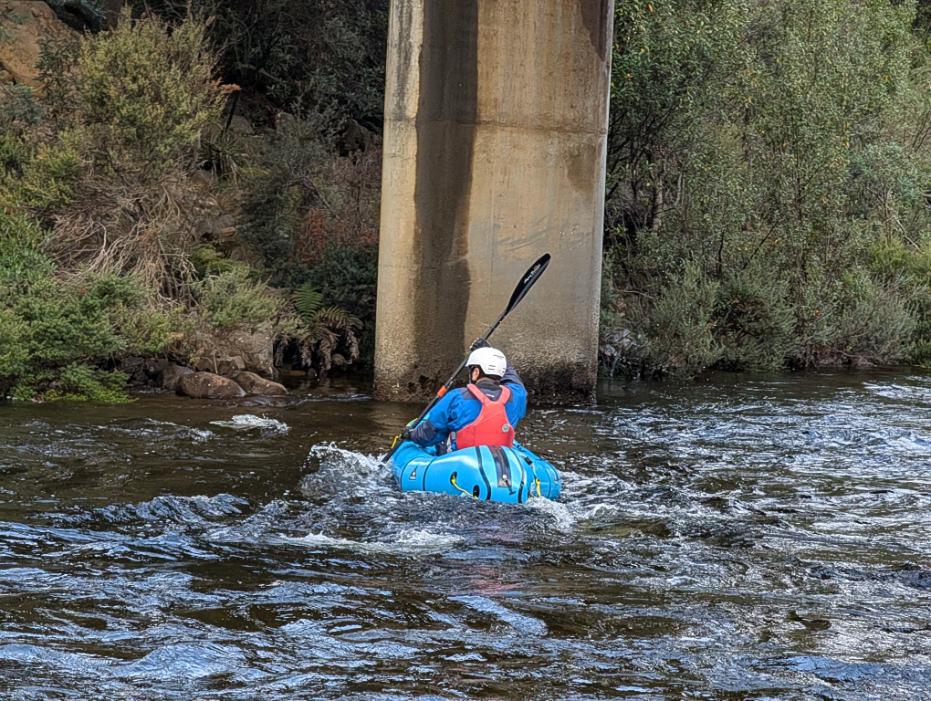
Another day of mixed weather so we spent half a day practicing eddy turns and ferrying in a fast, pushy river environment on the River Mersey.
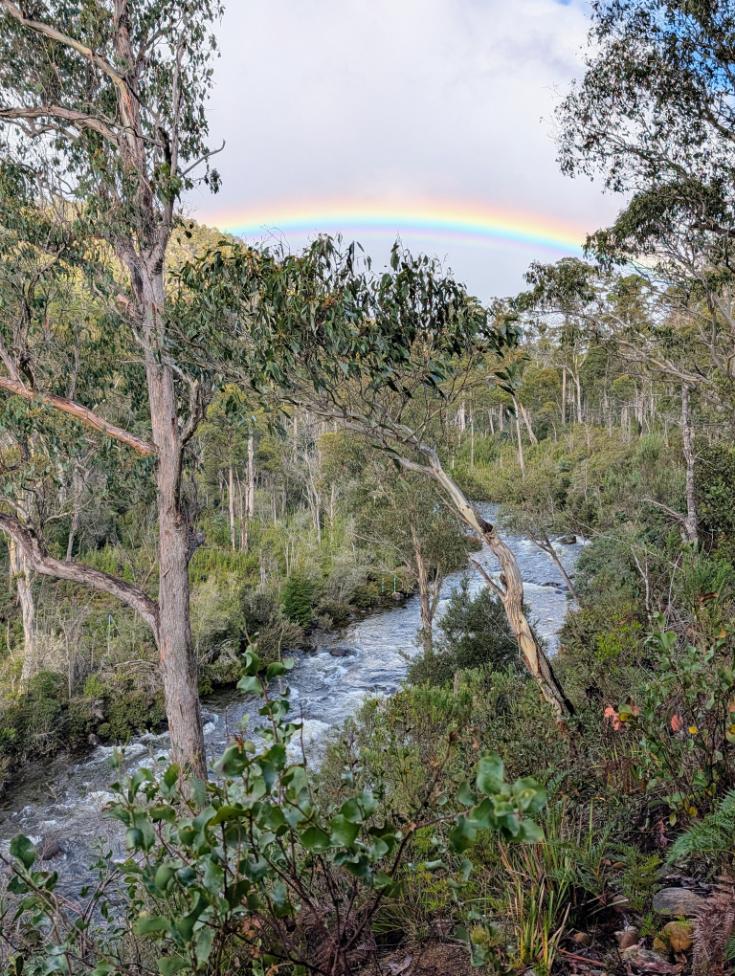
Rainbow over the River Mersey
Practicing ferrying in the fast flowing water. (Photo Pete Collins)
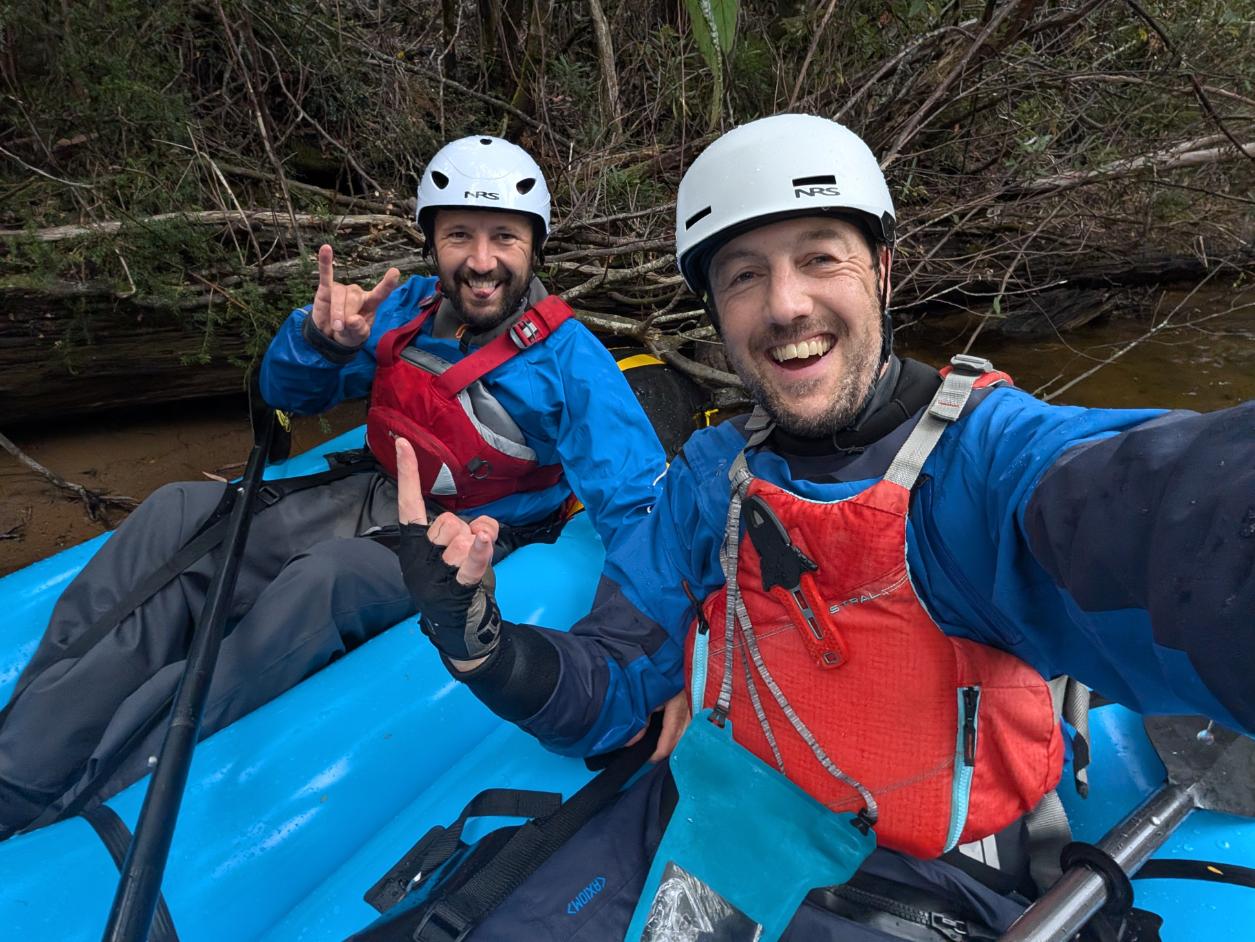
Having a blast!
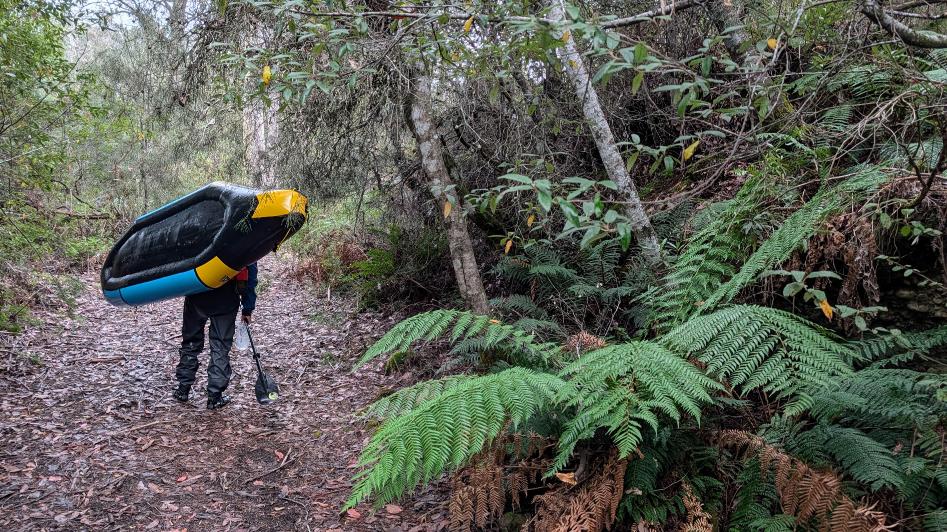
Walking back to the car after a successful few hours on the river.

Day 13: Packrafting on Lake Barrington
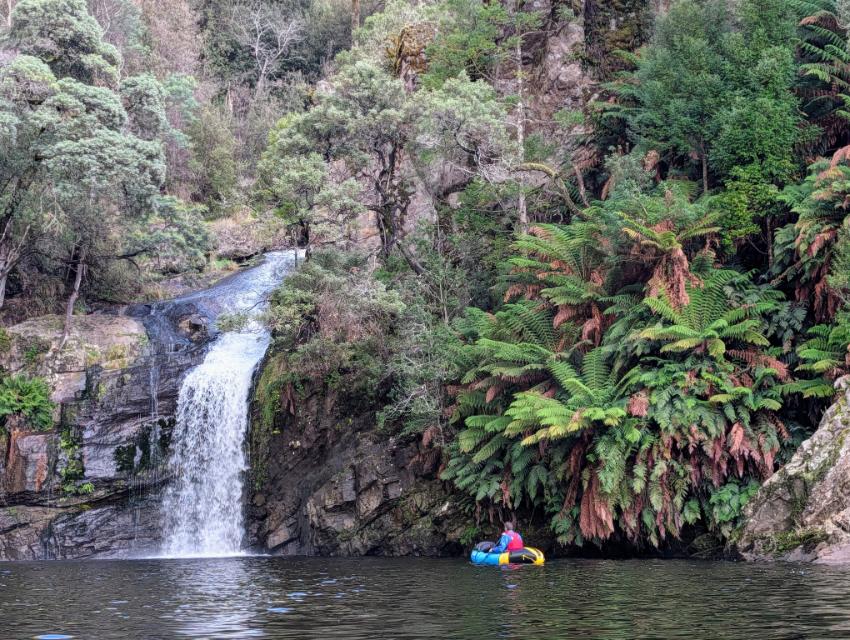
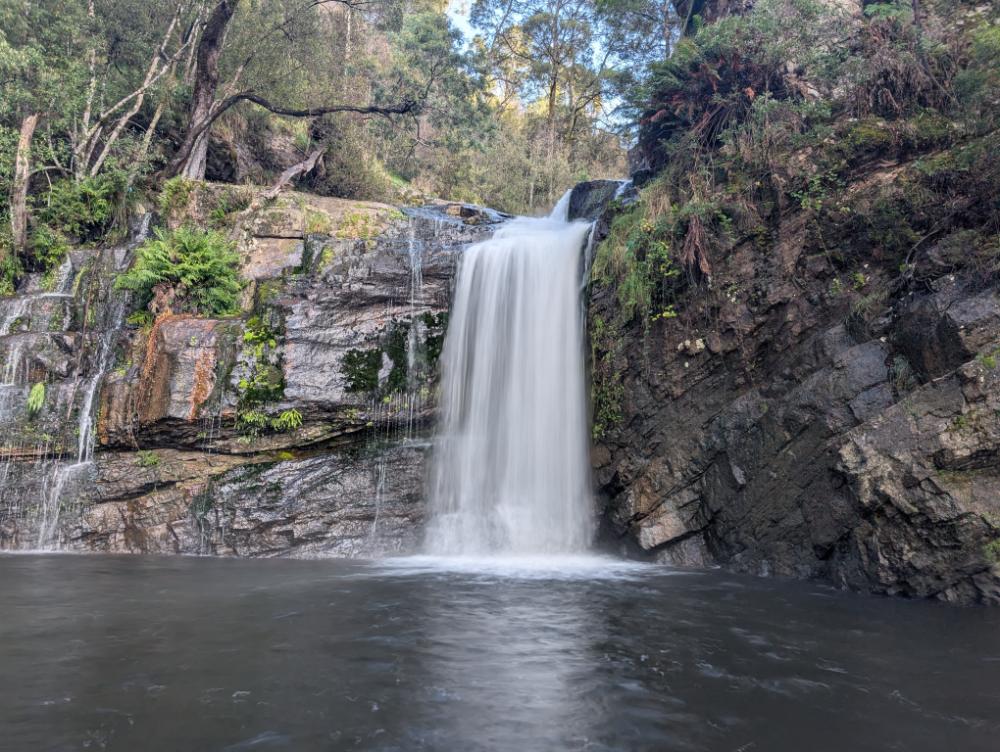
Pete next to Forth Falls.
Forth Falls. (Photo Pete Collins)
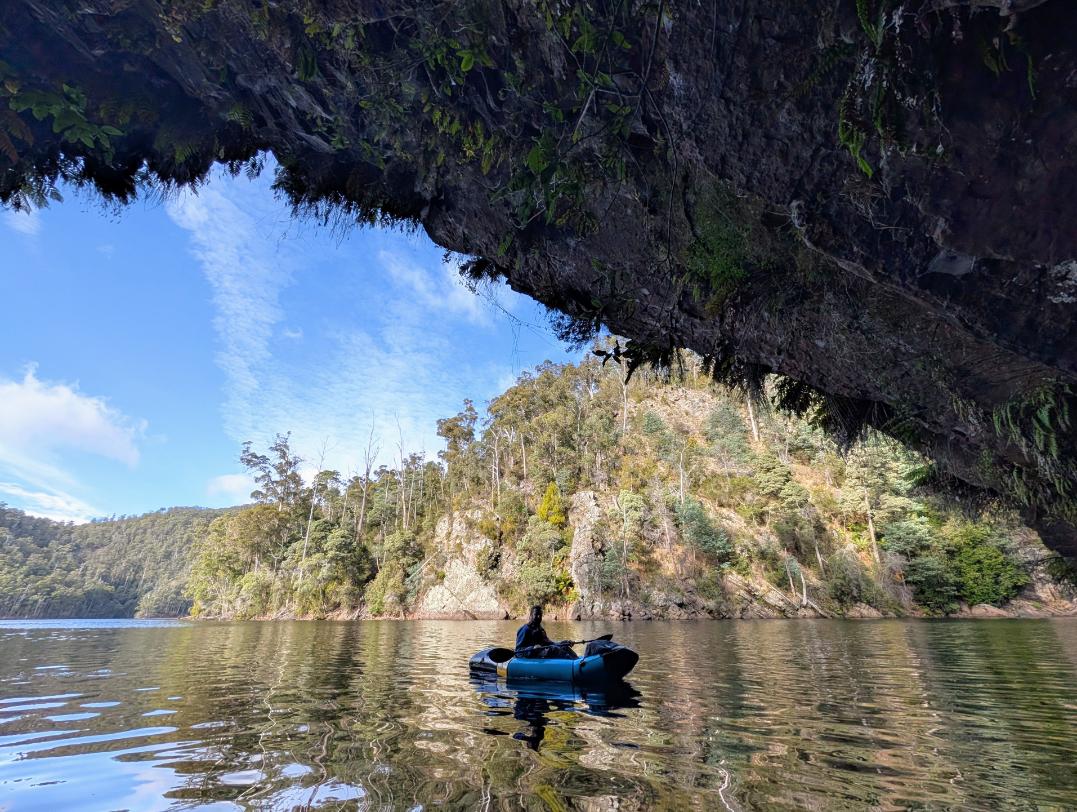
Paddling into the cave by Forth Falls.
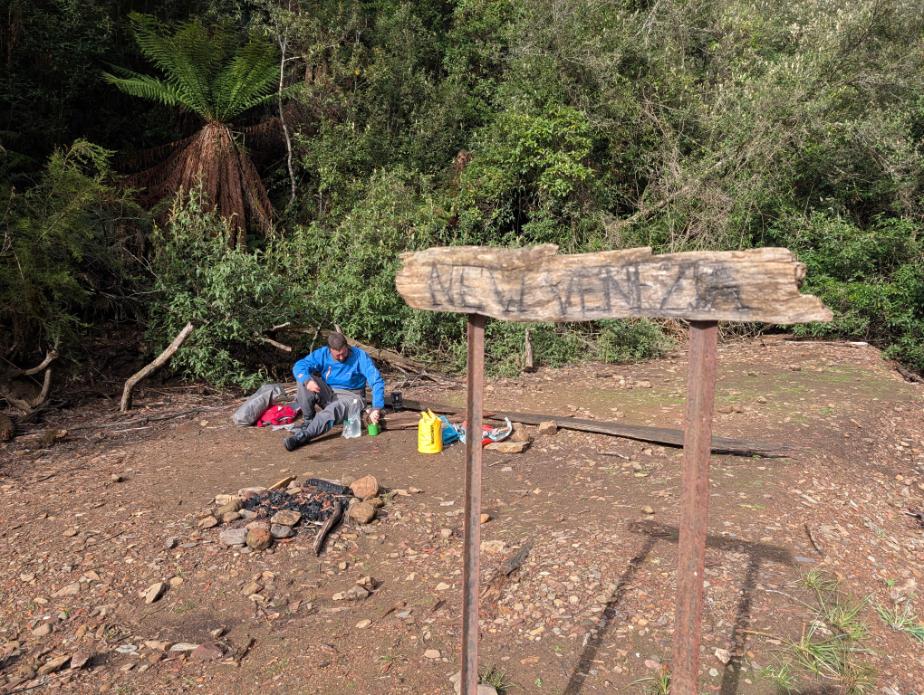
Our final trip brew stop in a cove called “New Venezia”.
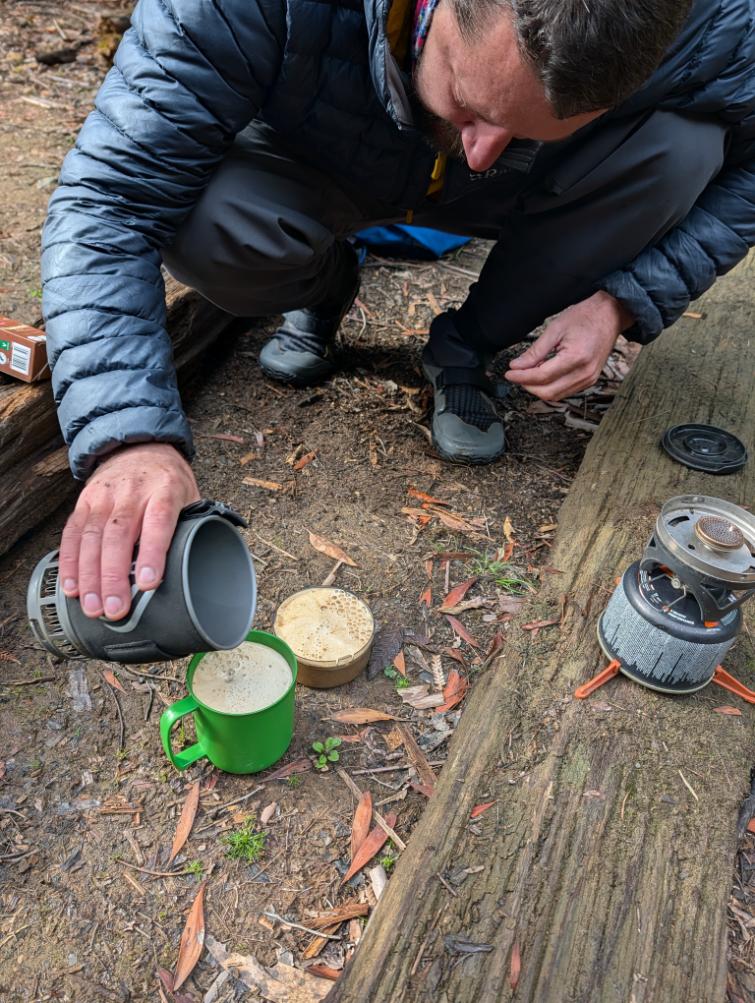
Final brew of the trip!

Harpers Ferry Fall Foliage Adventure Race

18th October 2025

  • Distance: 26.91 mi (7 miles kayaking / 16 miles biking / 4 miles hiking)
  • Time: 4 hours 30 minutes
  • Ascent: 852 ft
  • Weather: Overcast, mid 50’s F

In early September, my friend Ben asked me if I’d partner him on an upcoming adventure race happening in our little town of Harpers Ferry, WV. Hell yeah! I didn’t need much convincing.

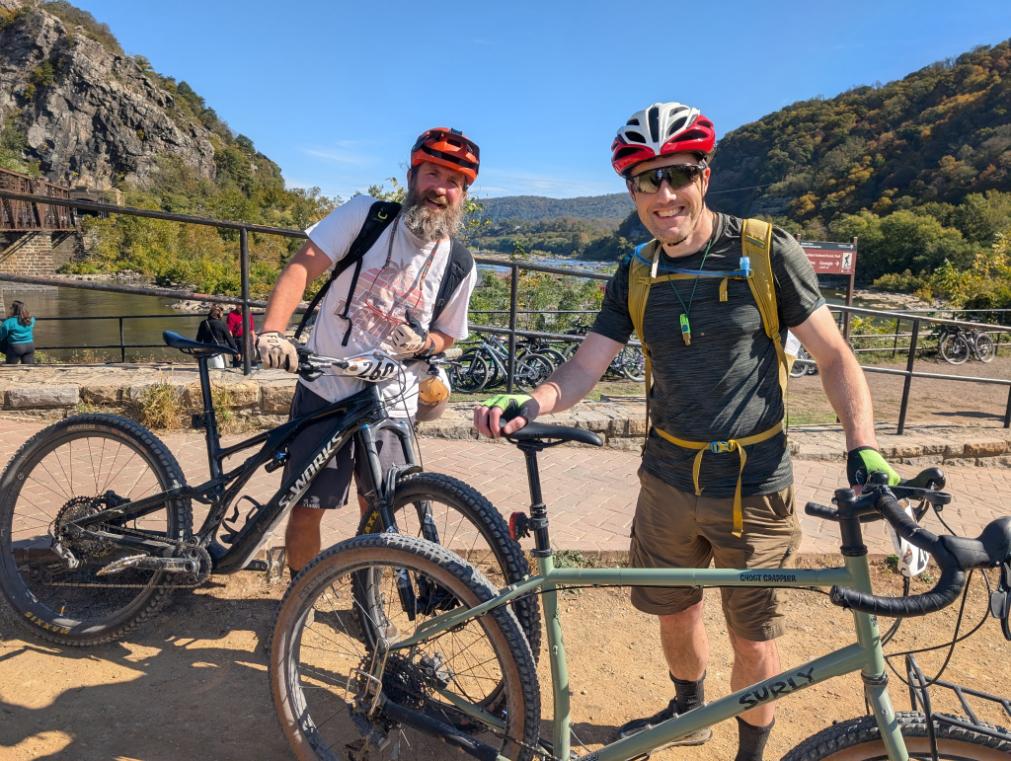
Ben (me, L) and Ben (R, my neighbor), officially known as the Bolivar Bandits, or Ben² as my son called us

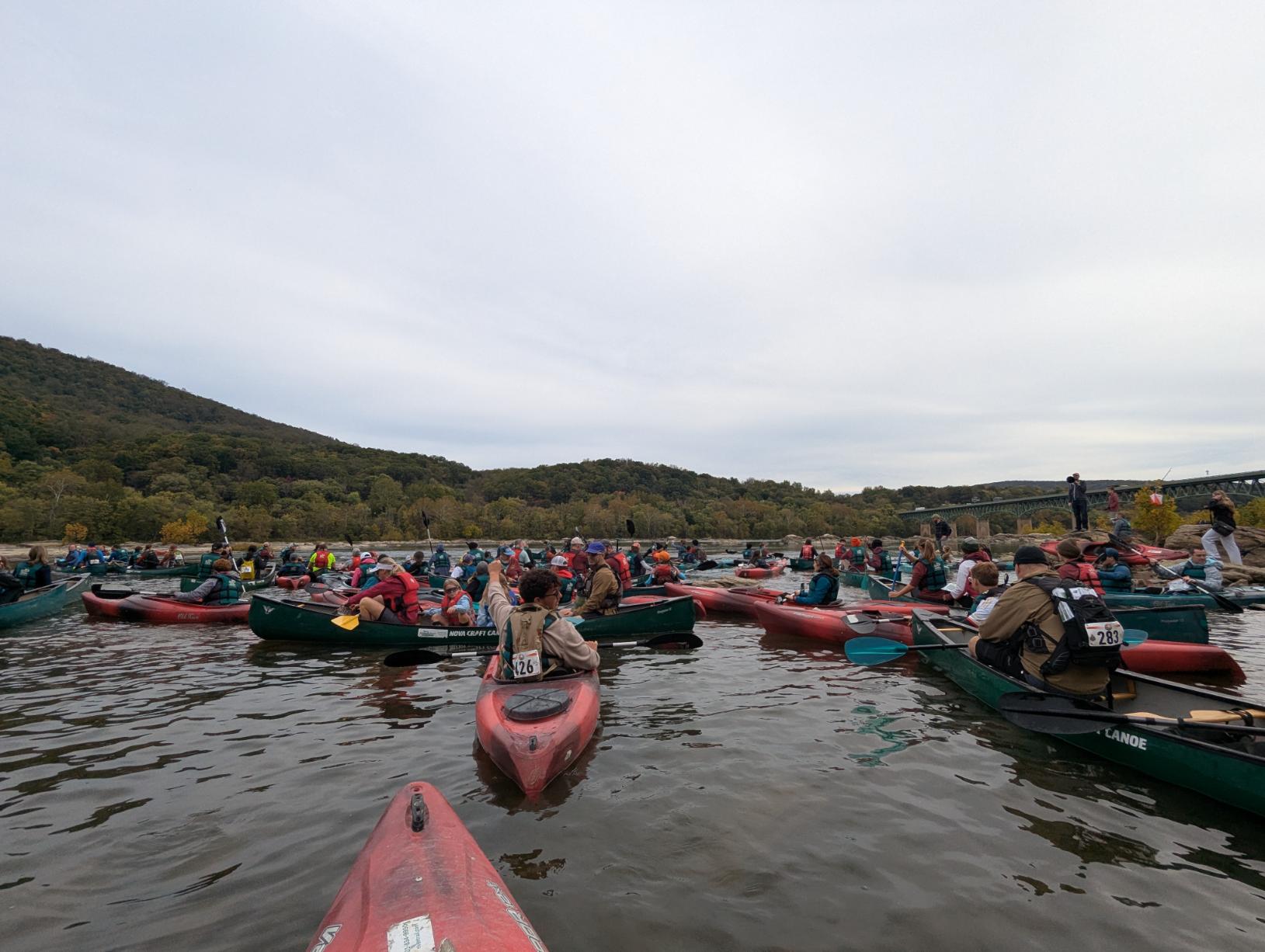
It was a short, half hour walk over to the NPS parking lot, which was being used as the race start area and finish line. We racers huddled in our little groups, shivering slightly in the chill morning air. The 13-hour racers were off first, bussed to the river above dam 3, where they would set off. A little while later, the rest of us, mere casual 5-hour racers, boarded our big green bus to take us to Potoma Wayside, below the rapids, where our race began.

A vast flotilla of small watercraft awaited us at the river edge, a riparian hodgepodge of vessels. Pot luck put us into separate red kayaks, which ended up being to our advantage as the two person canoes struggled badly over the rocks given how low the river was.

My first mistake was not taking off my jacket before jumping into the kayak. It had been a cold morning but I warmed up quickly with the effort of paddling and within a few minutes had to pause mid-river to remove my jacket, not easy with a life jacket on.

Everyone was getting stuck on rocks after leaving the riverbank, so it was very stop-start affair until we got into the river channel proper, where everyone naturally spread out.

My arms were on fire paddling for the first half hour, because of an arms workout two days earlier, and I honestly thought this is going to be torture for the next couple of hours. I did all I could to keep up with Ben.

Thankfully after half an hour or so my arms stopped complaining and I was able to lift the pace fractionally to avoid being left behind.

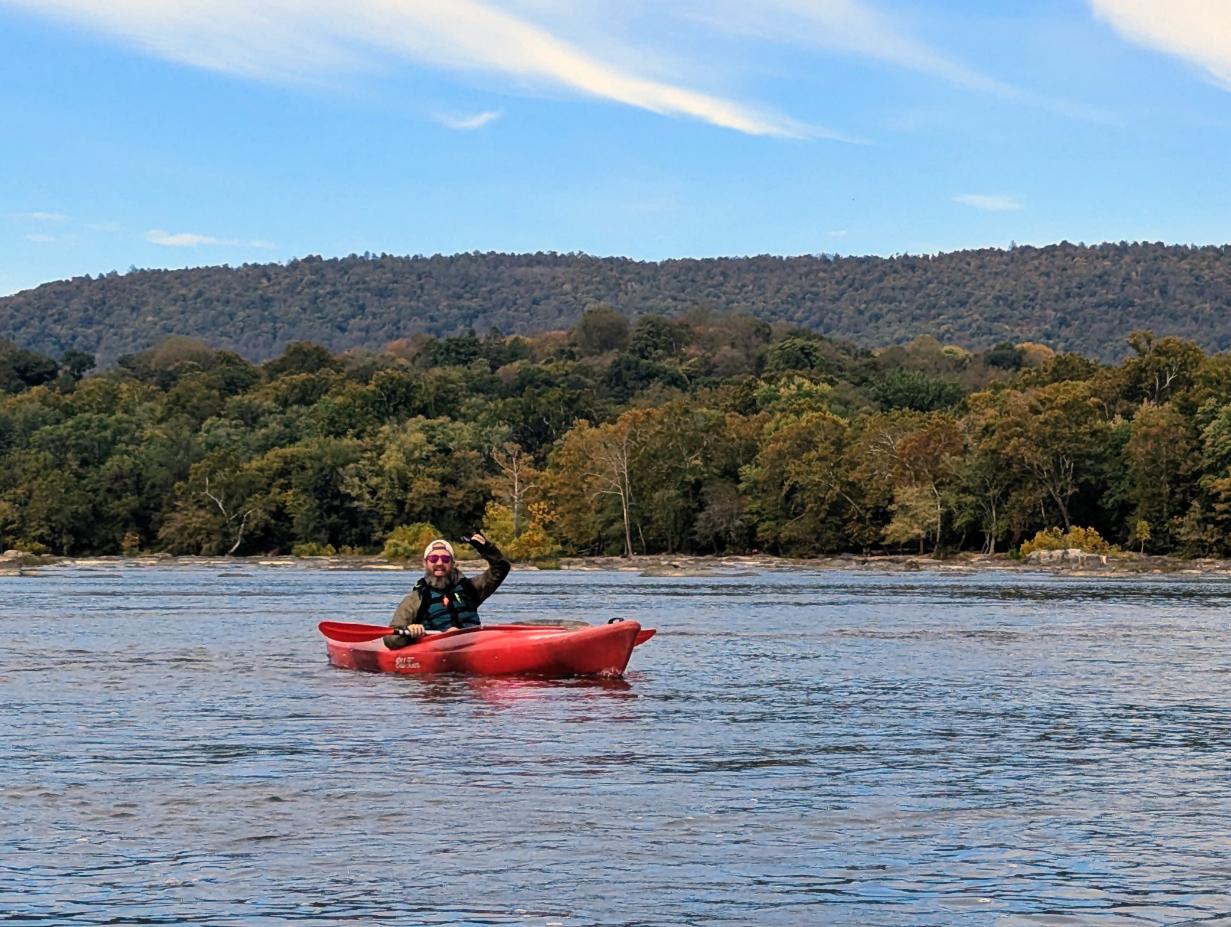
The scenery was of course magnificent. It was a real treat to be out there.

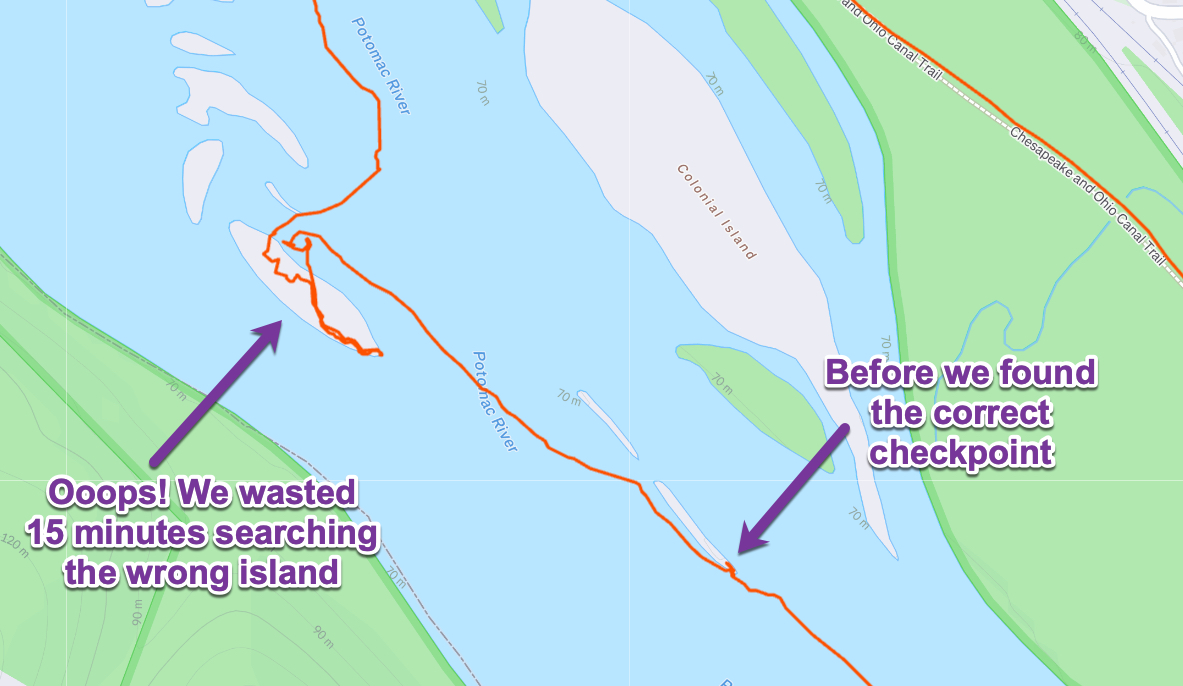
Our biggest mistake was not reading our map carefully. Or at all, in fact.

This was a rookie error that led to a fruitless quest across an overgrown island searching for an elusive checkpoint. We wasted many minutes before realizing the checkpoint was actually on an entirely different island.

In the meantime, all the racers we had overtaken at the start now took the shorter inside channel, ignored this island, and powered back past us.

My sore arms notwithstanding, I really enjoyed the paddling leg. I LOVE being out on the water in a small craft, exploring and taking it all in from this unique vantage point.

Our view approaching the Brunswick bridge, route 287, over the Potomac:

After roughly 7 miles, and 1 hour 45 minutes, of paddling, we pulled up to the boat ramp at Brunswick Family campground, for the transition to bikes. This was accomplished with relative ease, although we both remarked that we felt quite tired and beat up already, haha.

With the bikes retrieved and snacks consumed, we hit the canal with a grin and pedaled downstream to the first checkpoint at Little Catoctin Creek. Leaving bikes by the aqueduct, we rushed down to the river searching for the checkpoint marker.

Perhaps the most fun aspect of these adventure races, or other big outdoor endeavors that are time pressured (because of encroaching darkness or weather), is how focused you become on the task at hand. You exist in the flow state for hours on end, hardly thinking about anything except solving the next step of the puzzle. It’s better than therapy and it’s free.

In this case, we had to wade through the muddy creek bed to find the marker on the far bank, where the creek emptied out into the Potomac river:

The markers were little orange and white triangles, with an electronic tagging system. We carried a little doodad that we plugged into the electronic gizmo, which recorded what time we reached each marker.

We backtracked to the bikes and headed upstream on the canal, back towards Harpers Ferry, stopping a few more times for side quests into the woods to tag checkpoints.

Ben was on a full suspension bike, so he was bouncing away like a madman on a pogo stick.

The route took us as far upstream as the ruined lockkeeper’s house at Lock 35. This final biking checkpoint was hidden inside the ruin, so I had an excuse to see inside that building finally. I must have ridden and walked past it hundreds of time over the past five years but never been inside before.

Crossing over the bridge into Harpers Ferry was a bit of nightmare, it being a Saturday afternoon in peak fall tourist season. Patience was required. Back on the WV side of the river, Lexi and the boys had hiked down to meet us, which was fun and a nice morale boost.

We biked along Shenandoah Street and Shoreline Drive, all the way up the long hill to the NPS parking lot, which was the start/finish area and transition area for the final leg.

The final leg was a running/hiking loop around Murphy Farm, with a last handful of checkpoints to locate. We had the advantage of local knowledge so we found all the checkpoints and made it back to the finish line within the time limit.

This is the wonderful lookout at the south end of Murphy Farm, looking south over the Shenandoah River, where one of the checkpoints was hidden.

Don’t be fooled by this final photo, we only started running when we came around the bend in the back of the picture 😉

(We had to look good crossing the finish line!)

Overall, this was a really good day out. Great people, beautiful scenery, and so fun to be fully engaged and in the zone. We ended up finishing 3rd in the 5-hr M-2 group. Not too shabby! (Although there were only 6 teams in our group 😉

Resources

Fall Foliage Adventure Race

BikeSUP Lander Boat Ramp to Monocacy Boat Ramp

21st September 2025

BikeSUP / 31 miles by bike / 10 miles river SUP / 9 hours 20 minutes

This was BikeSUP trip #7. (See mission #1 here, mission #2 here and a guide to BikeSUP here.)

I’m slowly section-paddling the Potomac River, mostly on a standup paddle board and using my bike to shuttle. Including this trip, I’ve done from Cumberland Valley Hiker-Biker Campsite downstream to Monocacy Aqueduct (excluding about a mile either side of Dam 4, which is definitely NOT paddle-able).

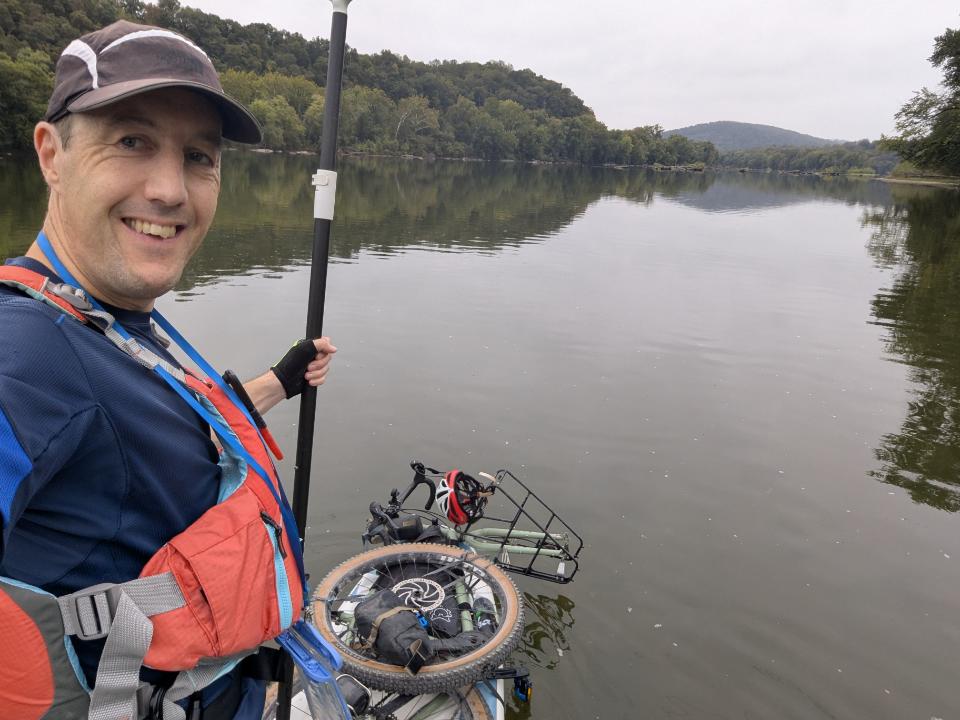
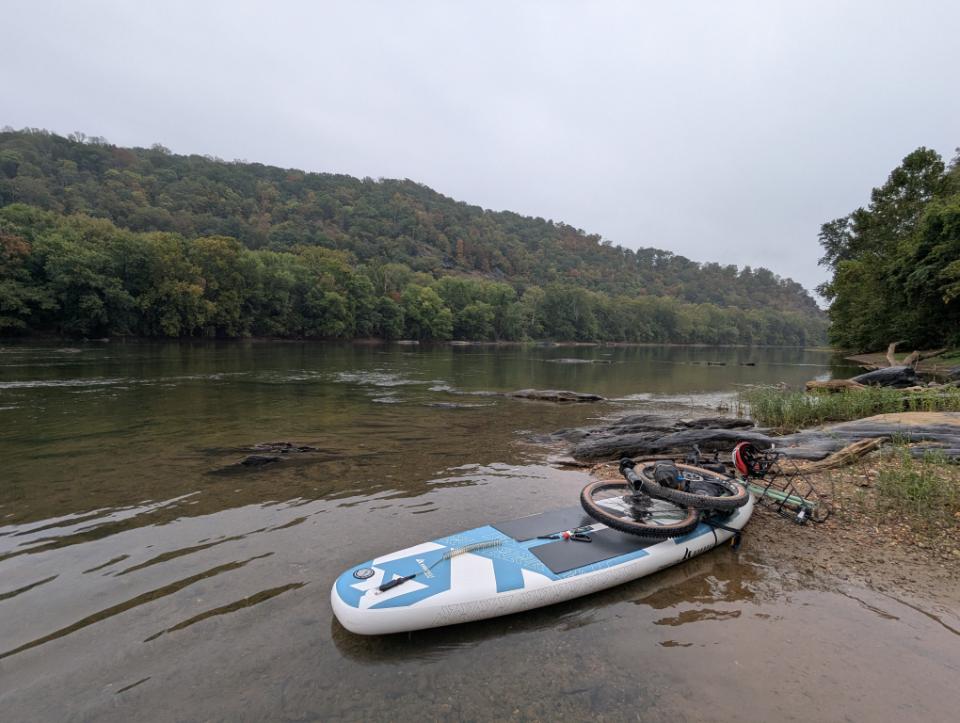
For this trip, I rode from Harpers Ferry to the Lander Boat Ramp, which is about halfway between Brunswick and Point of Rocks. There, I inflated my SUP, strapped on my bike, and paddled down as far as the Monocacy boat ramp. From there, I packed up the board and rode home.

Biking along the C&O canal with the SUP and paddle rolled up on the front rack
Preparing to launch at Lander Boat Ramp
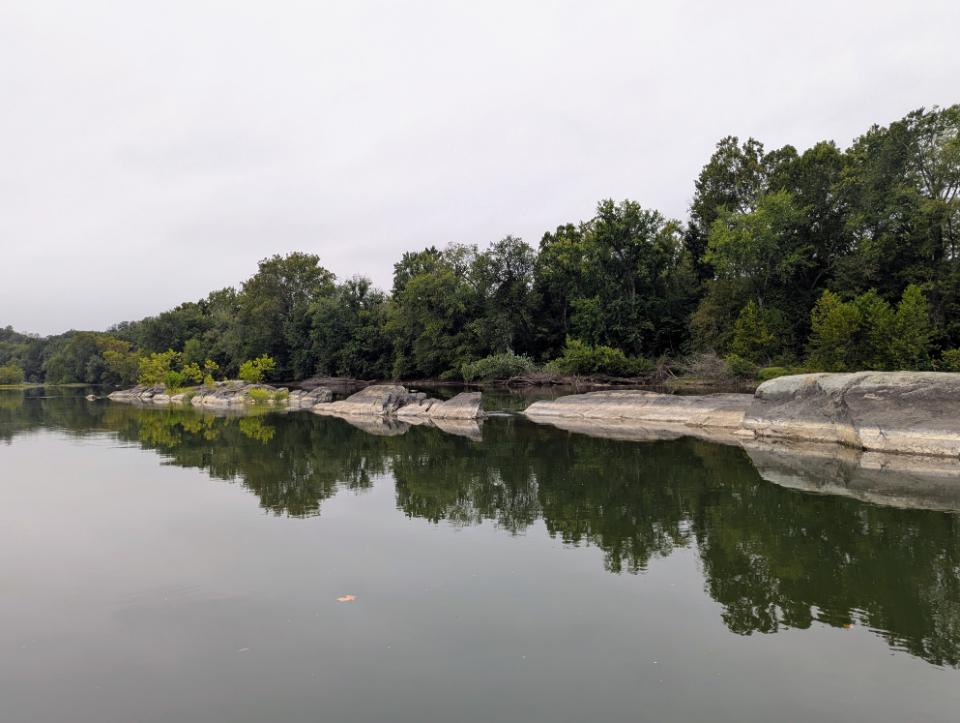
Typical scenery along the river
It just about fits!
The river got super shallow in the braids between the little islands, just upstream of Point of Rocks
Lunch stop on Paton Island
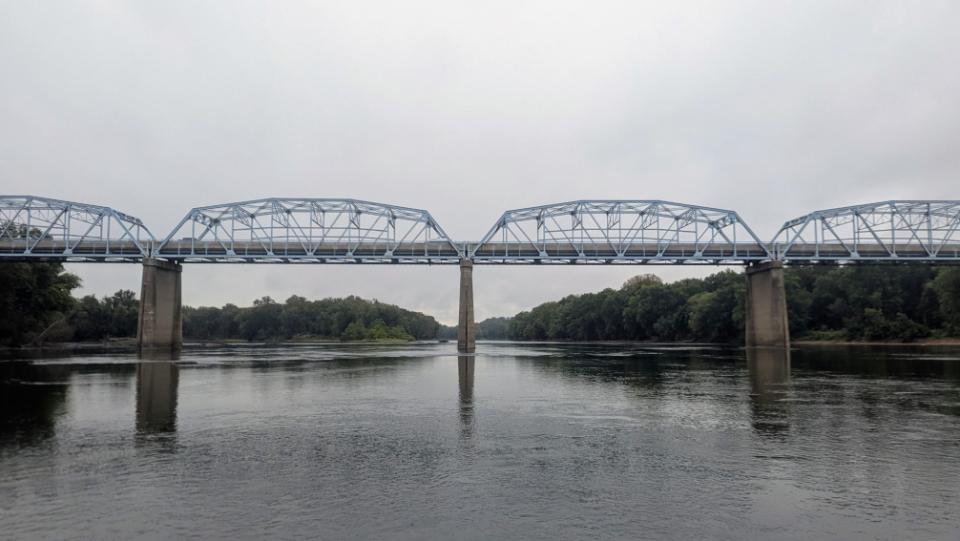
Point of Rocks Bridge (US15)
Looking back upstream towards Cox Island. I came down the left channel (right in this photo).
Dickerson Power Plant, close to Monocacy Aqueduct
Monocacy Aqueduct, which I paddled under
Bike loaded up again for the ride home, Monocacy Boat Ramp
Chill 20 miles home on easy trails

Little Seneca Lake and Sugarloaf bikepacking trip (March 2025)

I had scheduled sinus surgery at the end of March, so I wanted to fit in a mini-expedition before then. As with most of my adventures these days, I love to start and finish from home, so the entire expedition is human-powered. Plus, there is so much to still explore from home that why would I need to go further afield?

I used the excellent MTB Project site to search for an interesting off-road route. This time, I found the Ten Mile Creek route that looked perfect. Somewhere new. Singletrack but not too hard (remember, I’m a middle-aged dad riding a loaded rigid bike. So, yeah, nothing too hard).

Conveniently, it was also close to Sugarloaf mountain, so naturally I included that ascent in my route and the superb gravel road off the backside of the mountain. To get there, I could utilize the canal and stay in one of the hiker biker campsites.

Perfect! Route done. Next was braving the chaos of the garage to dig out all my camping gear, since it had been a year since I last camped. With that done, I was ready.

Below, I share some photos from the 2-day trip. And even though the whole trip was less than 24 hours door-to-door, it packed in everything. Easy miles along the canal, a beautiful campsite, swoopy new singletrack, mountain hairpins, lovely views from the lookout, and, what I’m always searching for, the opportunity to push myself physically whilst exploring the great outdoors.

Day 2 was one of the best days I’ve had on a bike. Mega!

Day 1: Home to Turtle Run hiker biker campsite

27.5 miles / 154 ft ascent

Surly Grappler in bikepacking mode, with the front panniers mounted higher to avoid catching anything when riding singletrack.
Day 1 was along the C&O canal
Love this trail!
View from the cockpit
Camp at Turtle Run hiker biker campsite along the C&O canal
Beautiful evening light at camp.
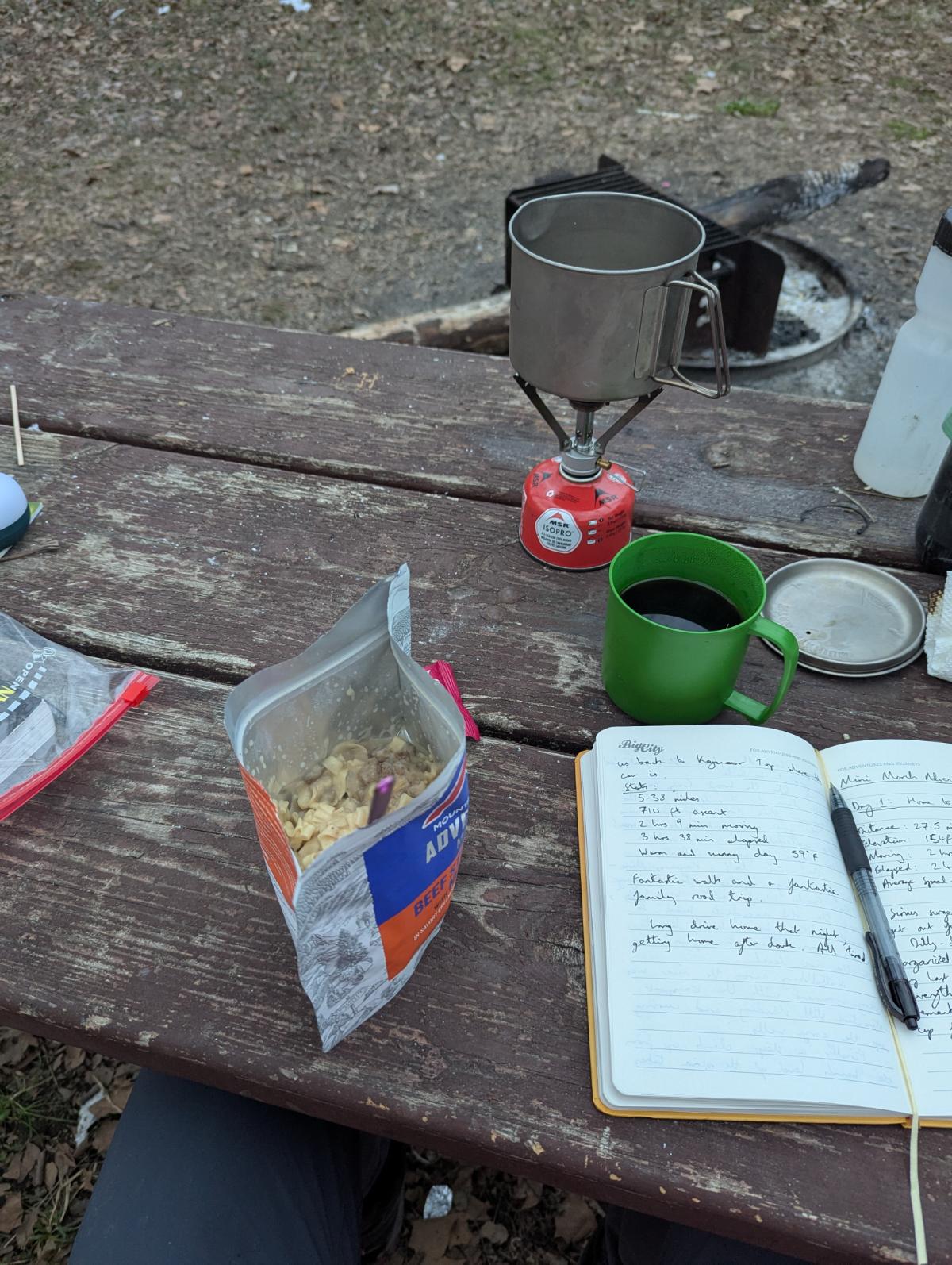
Camp routine: dinner, mug of hot tea, and recording the day’s events in my journal.

Day 2: Turtle Run campsite to home, via Little Seneca Lake and Sugarloaf mountain

61.5 miles / 4,341 ft ascent

The lock house at lock 25, where I turned off the canal towpath to head into Maryland.
On to the quiet backroads of Maryland.
Because the water pumps were not operational along the C&O canal yet, I had to stop in Poolesville to refill my water bottles.
On to the singletrack around Little Seneca Lake!
More swoopy singletrack.
At the end of 10 miles singletrack. Harder and slower than the road! But more fun! 🙂
Approaching Sugarloaf mountain.
One of the hairpins on the ascent of Sugarloaf mountain.
View from the top of Sugarloaf.
Enjoying the gravel road on the backside of Sugarloaf, on my way home.

Appalachian Trail overnighter with the boys

For his 9th birthday, Dominic asked to do a backpacking trip on the A.T. in lieu of a party.

We chose to hike from the Weverton Cliffs parking lot to the Ed Garvey shelter (about 3.5 miles) where we pitched our tent for the night. Even though the whole expedition lasted less than 24 hours, we had a fun time and made a core memory as a family. It was the right choice to keep the distance short; there was no complaining and no-one arrived at camp exhausted.

This is my second backpacking trip with the boys, in addition to a few bikepacking trips. I think it’s time for a longer trip now.

Here are a few photos from the weekend.

Day 1: Weverton Cliffs parking lot to Ed Garvey shelter (3.4 miles)

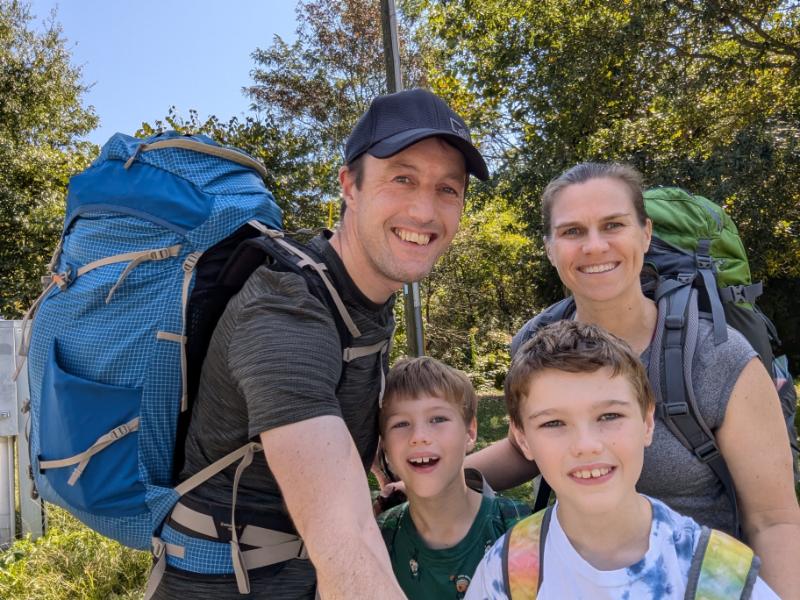
All smiles as we set off from Weverton Cliffs parking lot.
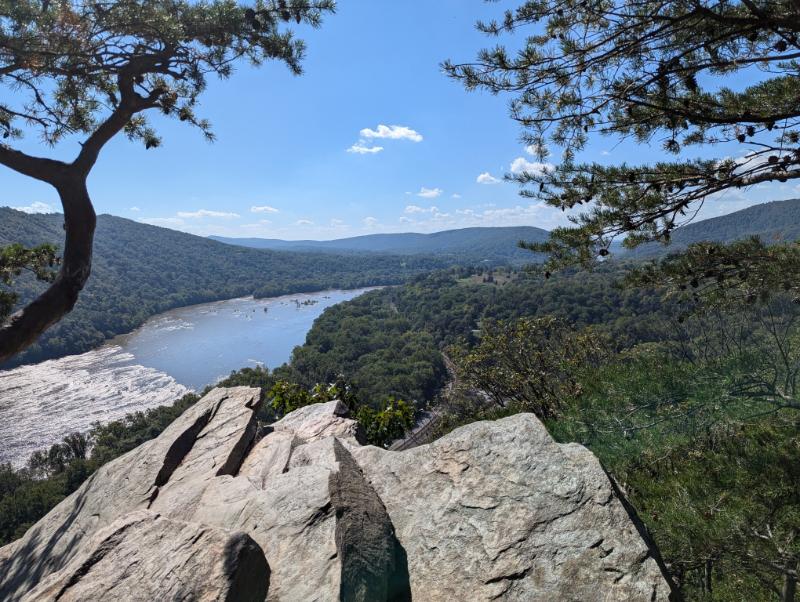
The side trail to the lookout at Weverton Cliffs is a worthy excursion. The view is fantastic.
At Weverton Cliffs lookout. The boys fairly race up the hills now, leaving Mom and Dad in the dust.
View over the Potomac River, with mountains L-R: Short Hill tract, Loudoun Heights, and Maryland Heights.
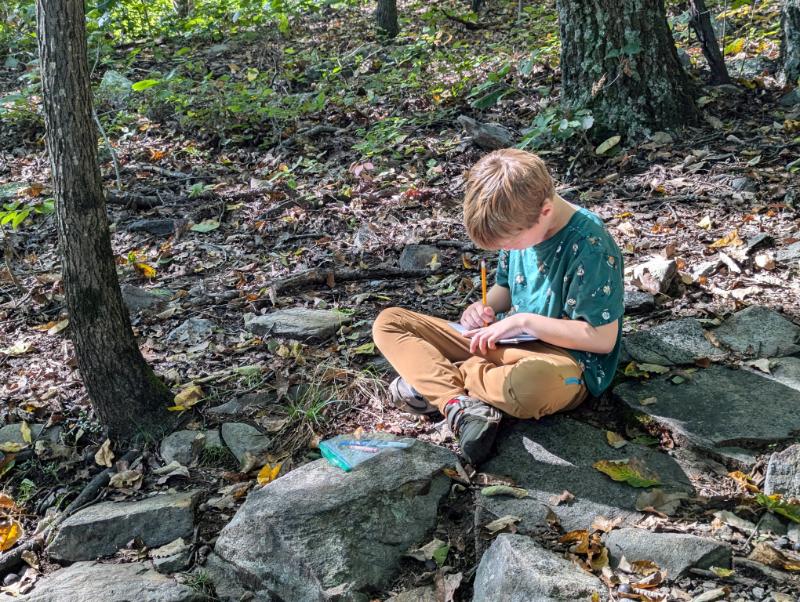
Owen doodled in his nature journal as we went.
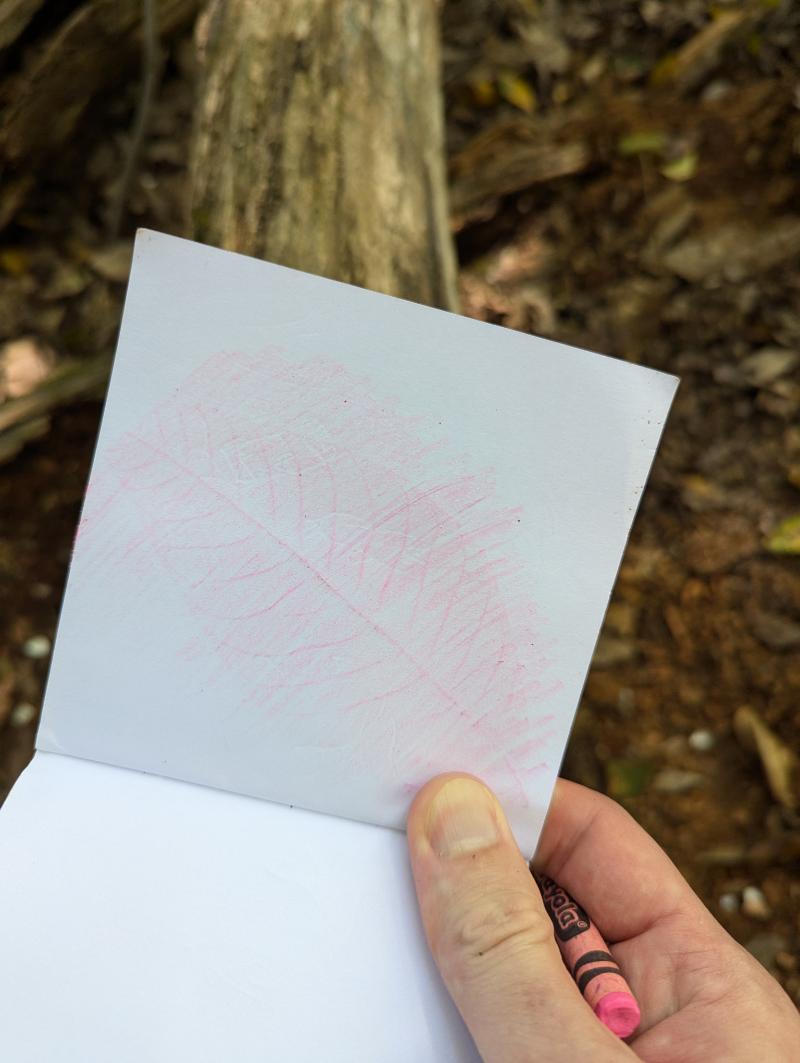
Leaf rubbing in Owen’s journal.
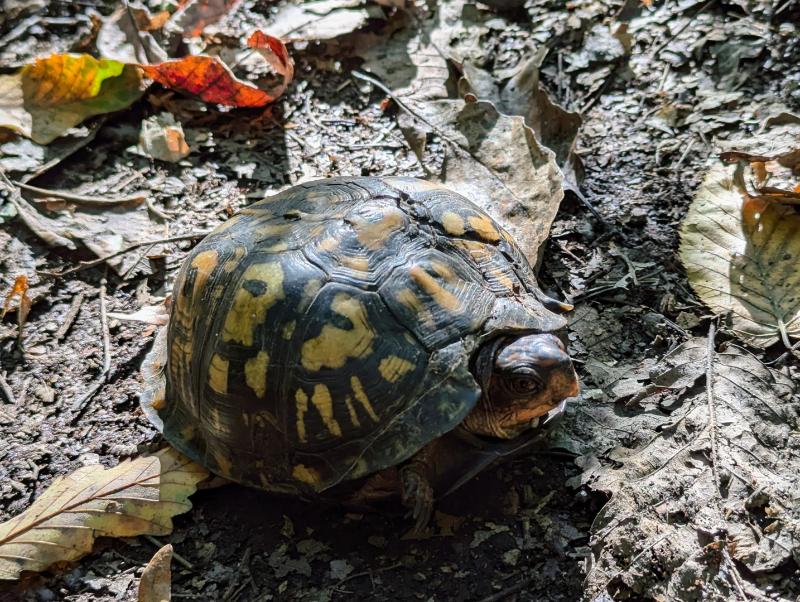
An Eastern Box Turtle on the Appalachian Trail.
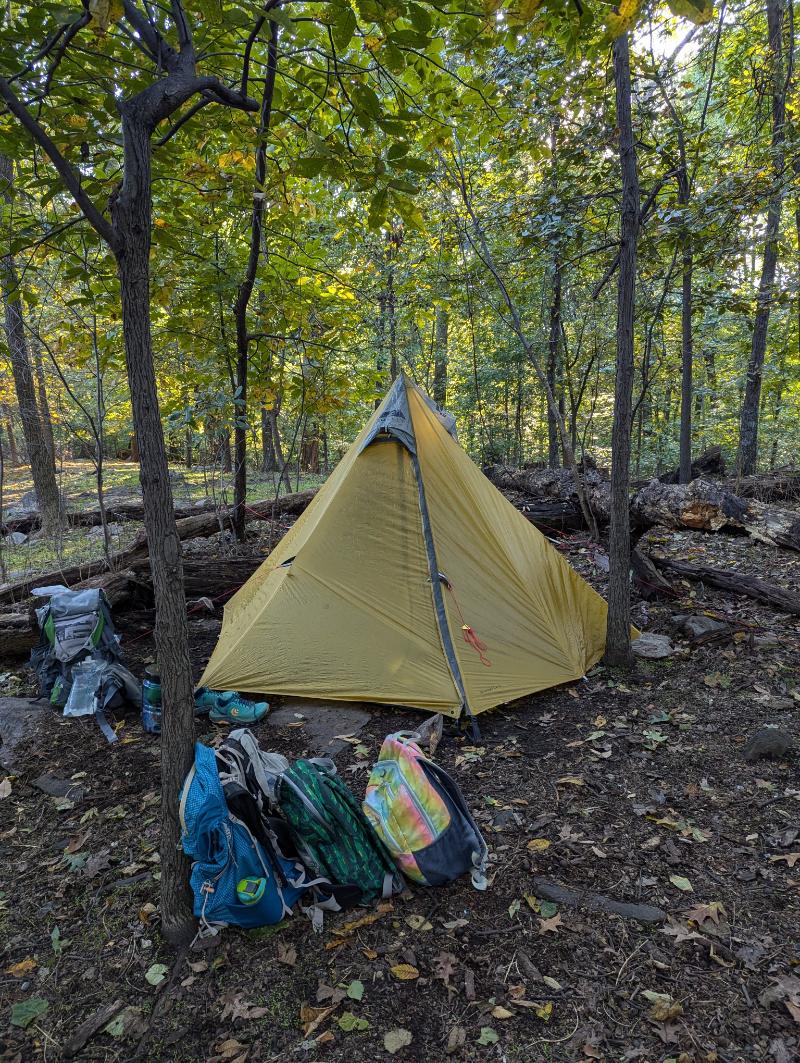
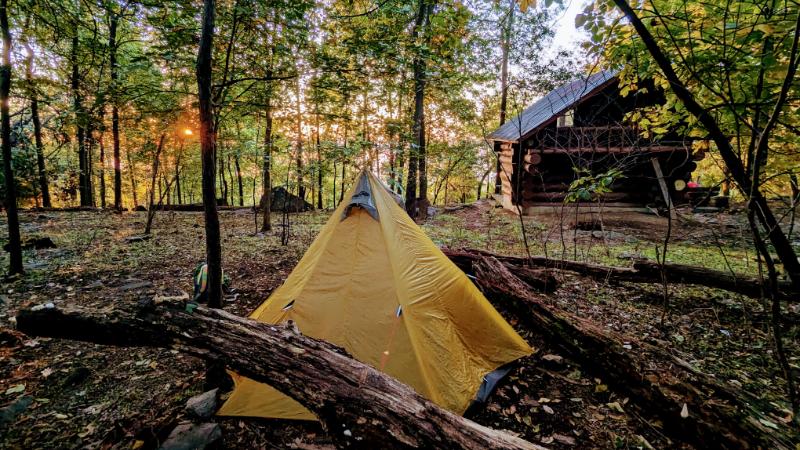
Our home for the night. A 15(?)-year old GoLite Shangri-La pyramid shelter.
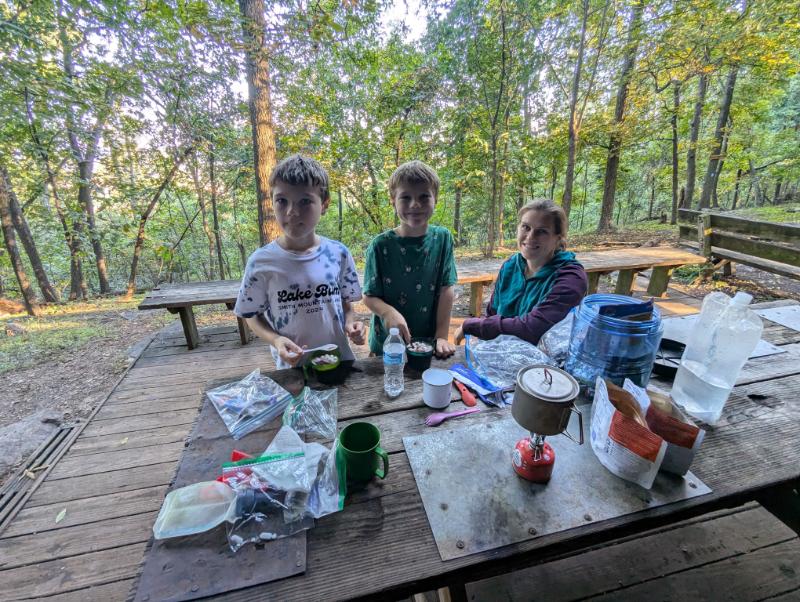
Dinnertime at the Ed Garvey shelter.
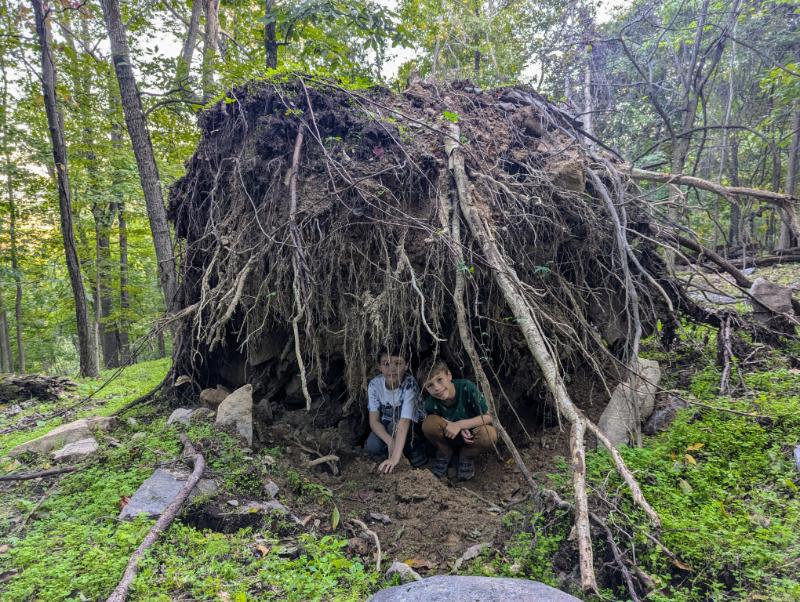
The upturned tree became the boys’ basecamp.
Our tent with the Ed Garvey shelter in the background.

Day 2: Ed Garvey shelter to Weverton Cliffs parking lot (3.4 miles)

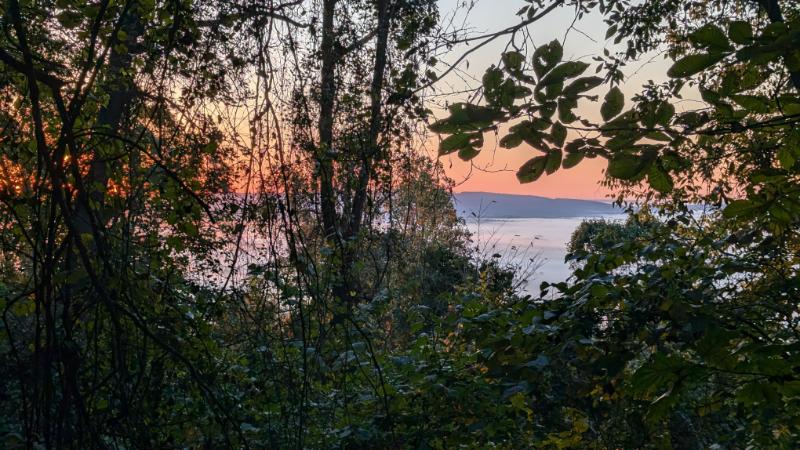
We awoke to a beautiful cloud inversion, glimpsed through the trees.
Gorgeous early morning light.
Ready for the off! We reversed our previous day’s route to return to the car.
Golden Trumpet mushrooms on a rotting log,