Author Archives: benlcollins

Julian Alps hike, Slovenia (July 2024)

Dramatic skies over Lake Bled, Slovenia, on the eve of our trek

Ten years ago, for our honeymoon, Lexi and I enjoyed an amazing week of hiking, relaxing, and great seafood in La Gomera. We still talk about that trip and how much we enjoyed it. And we’ve been looking forward to doing another trip like it ever since.

This year the stars aligned for a child-free week so we headed off to explore the Julian Alps in Slovenia. Once again we booked with Macs Adventure to make the trip as easy as possible logistically. They booked all the mountain huts and hotels, and organized transport and luggage transfers for us.

We had a night in Lake Bled before the hitting the trails. It’s a gorgeous, albeit busy, place. Slovenia was under a heat warning the whole week we were there and it was intense (around 90F in Bled).

The trip began with a delicious dinner overlooking Lake Bled
Bled Castle sits on top of the cliffs overlooking Lake Bled
The market in Bled where we stocked up on food for our trek

Day 1: The Pokljuka Plateau

Suitably replete after a delicious rice pudding breakfast, we left Bled behind and headed up into the mountains.

The taxi dropped us and another family from Canada (who became our trail friends for the trip!) at the trailhead.

Time to go hiking! To say we were giddy with excitement was an understatement. This moment encapsulated 10 years of dreaming 🙂

All smiles at the start of our Julian Alps trek

We hiked through beautiful tall pines to the alpine pastures of Javornik, still used by the local shepherds. We bought some of the locally made “pasture cheese” at one of the shepherds huts for later. Happy to report that it was excellent.

Views out towards the foothills, from the Lipanca hut

We stopped for lunch at the Lipanca hut and sat outside looking out over waves of rolling blue ridgelines, the foothills of the Julian Alps. Lunch was a simple, hearty sausage and bean stew, perfect mountain food.

The Lipanca hut, where we stopped for lunch on day 1

Perhaps the most memorable thing about this hut though, were the funny signs in the bathrooms:

Gents, you have been told
Indeed

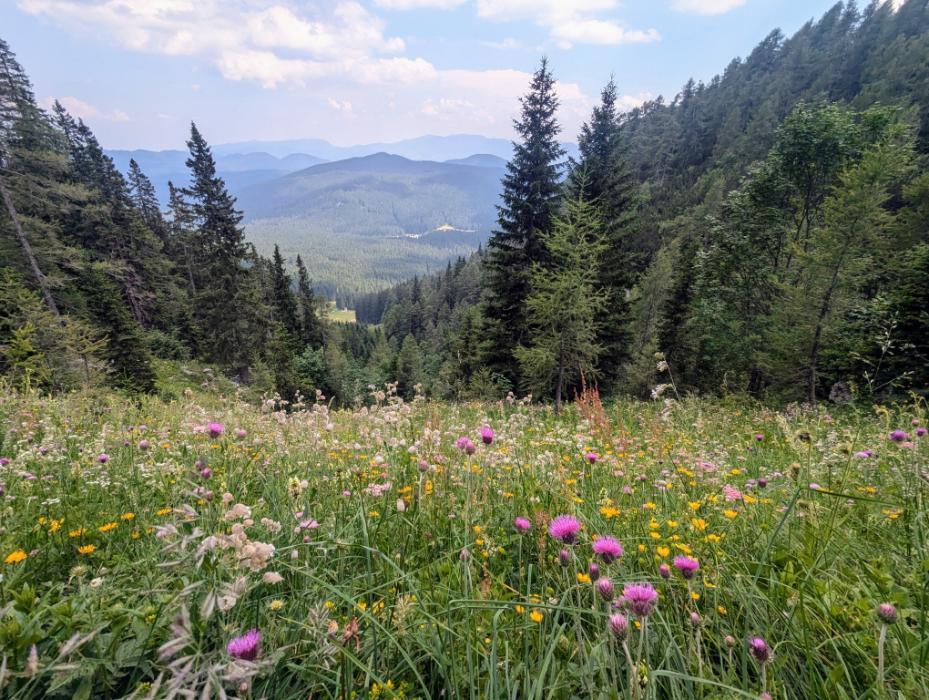
We climbed up through more pine forests after lunch, enjoying the carpets of magnificent wildflowers. I counted 23 different species (identified using the PictureThis app), probably about 50% of what was there.

Near the day’s high point, the high mountains were revealed in spectacular fashion through a gap in ridge. We paused here to savor the view and contemplate our fate… we were looking at the mountains that we would be climbing tomorrow and the next day.

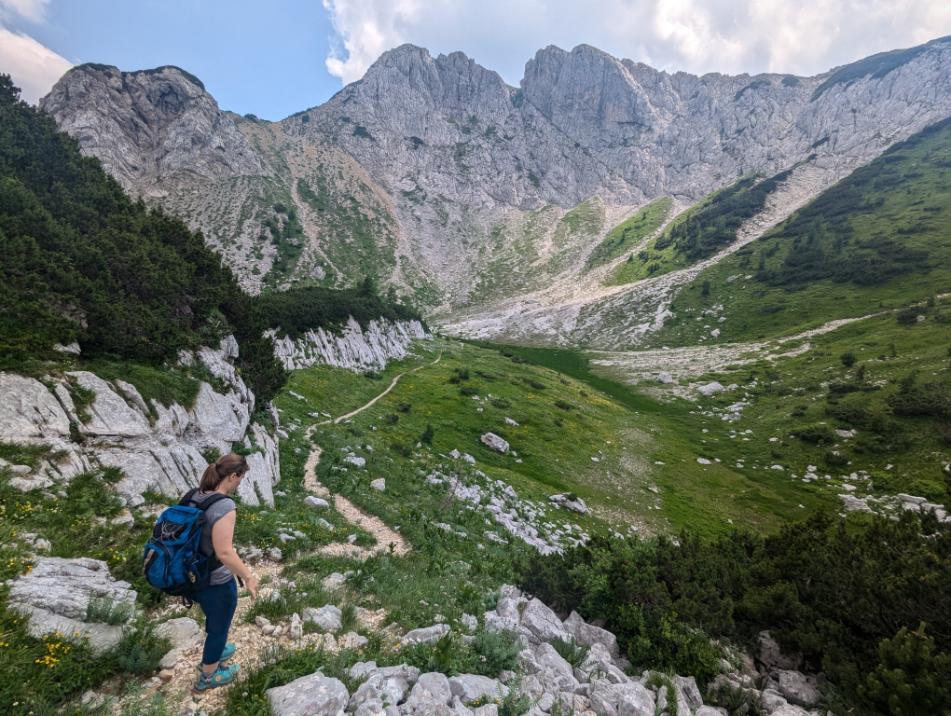
Views from a saddle towards the Triglav massif
Crossing the karst (limestone) landscape of the Pokljuka plateau
The wildflowers were outstanding and provided a dash of color wherever one looked
Meadows above Pokljuka, where we rested to munch on the “pasture cheese” we bought earlier in the day from the local shepherds

We stopped for the night in Pokljuka, at the hotel / biathlon center. It was a simple, clean lodging with great food and a terrace overlooking the biathlon training ground.

It was still baking hot though, so we slept with our windows wide open, which worked well. Until it didn’t.

Our room was the top red arrow. Unfortunately we were directly over the entrance and smoking area (other red arrows), and people started coming and going from 3am onwards. Needless to say, we were a little tired the following morning.

The hotel in Pokljuka, also a biathlon training center

Day 2: Into the High Mountains

We got away by 8am, powered by a breakfast of coffee, fruit, and nutella-smothered croissants.

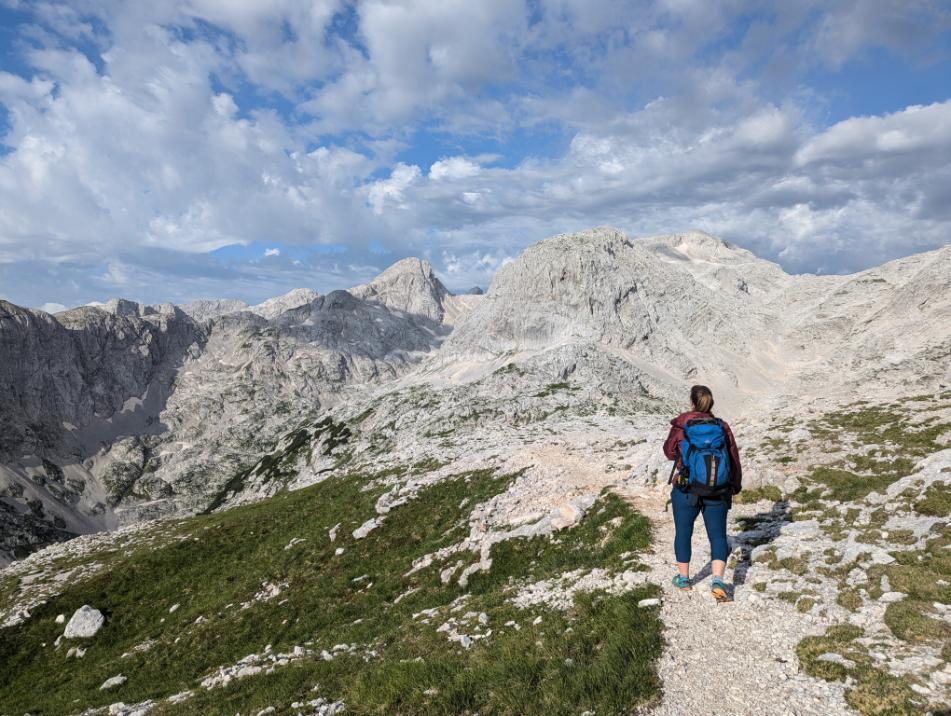
Today was up, up, and up. All day long we climbed into the high mountains. For the first couple of hours we enjoyed the shade of the forest, before emerging into the other-worldly karst (limestone rocks) landscape.
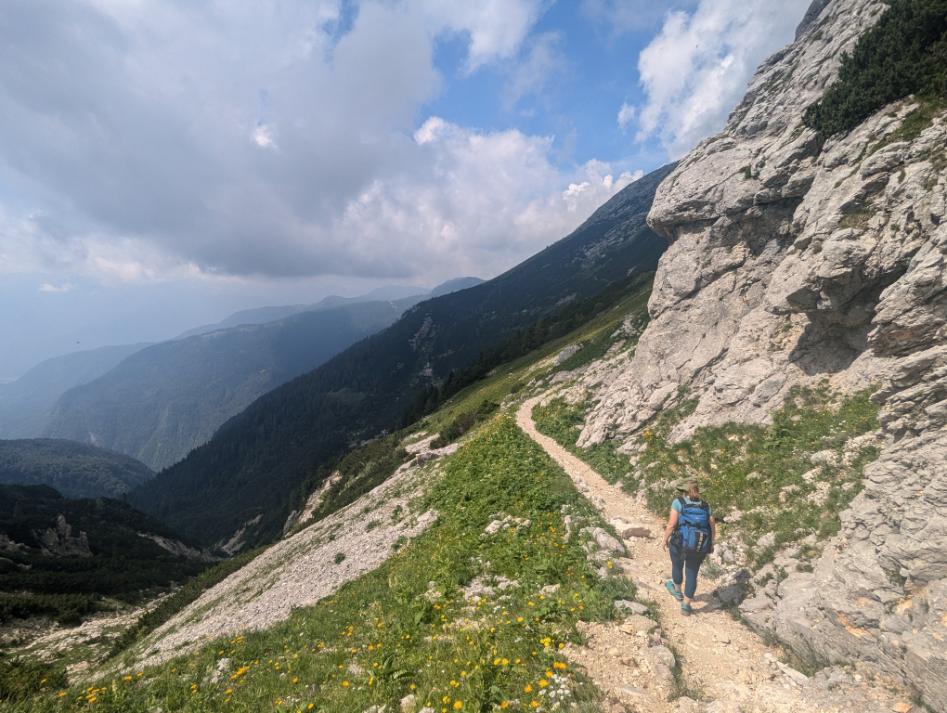
Heading towards Triglav
In my happy place: the mountains
The trail was remarkable in the way it snaked through the steep mountains
The Vodnikov hut, where we had lunch. The Planika hut (our destination) can just be seen on top of the snowfield.
Yours truly, burning off the lunch calories as we climbed to the Planika hut
One of the short Via Ferrata sections, where metal cables and pins aided our passage
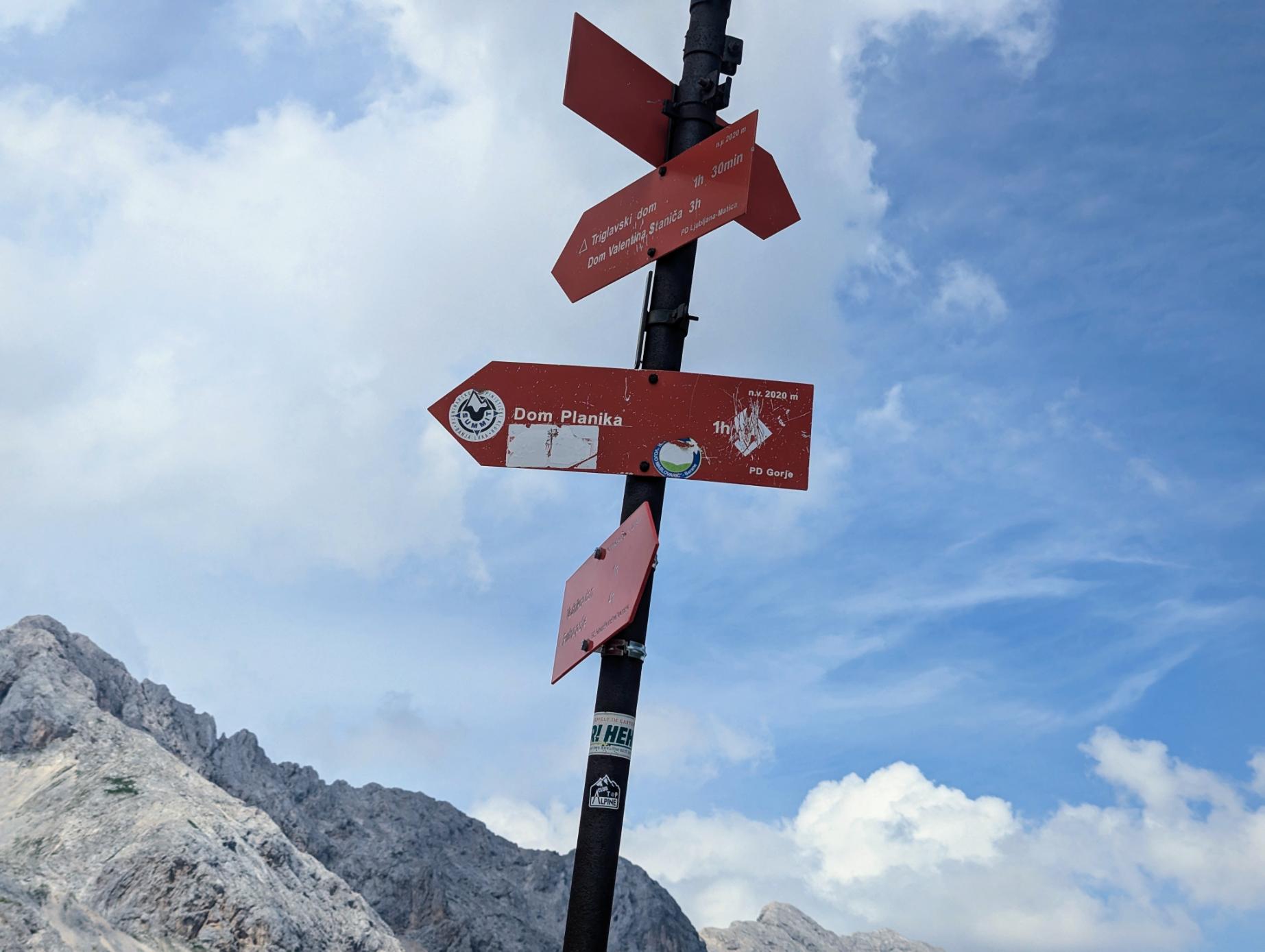
Which way? Dom (hut) Planika our destination
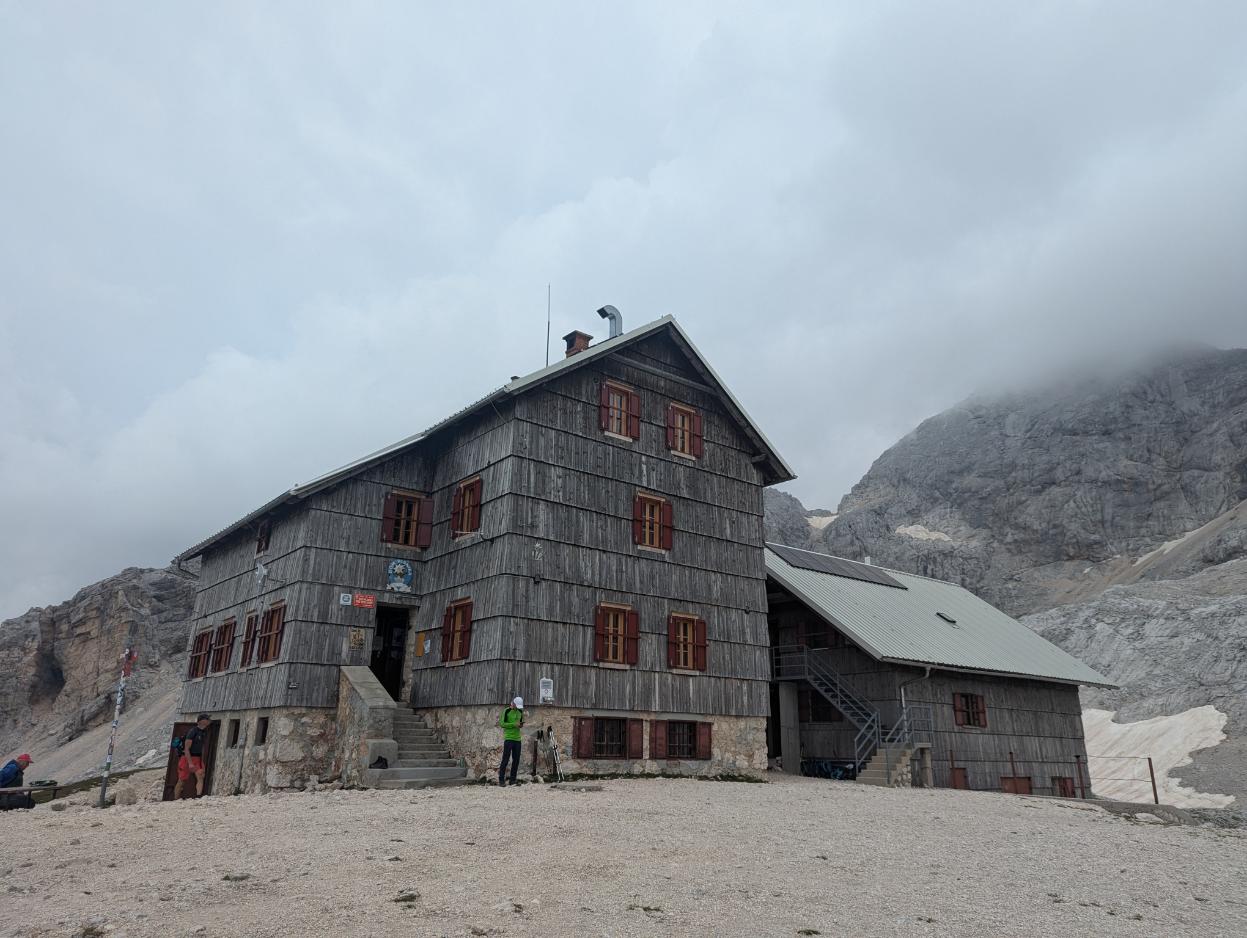
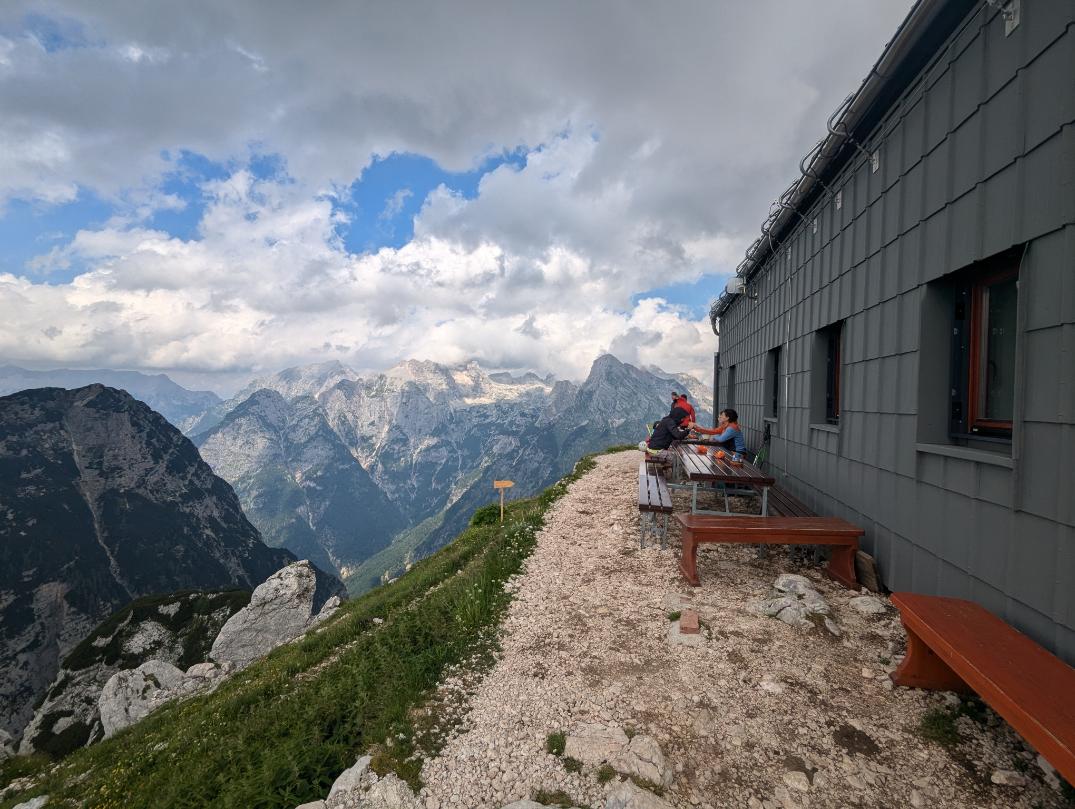
The Planika dom (hut) at the base of Triglav, our home for the night. We stayed in the lower building at the back.
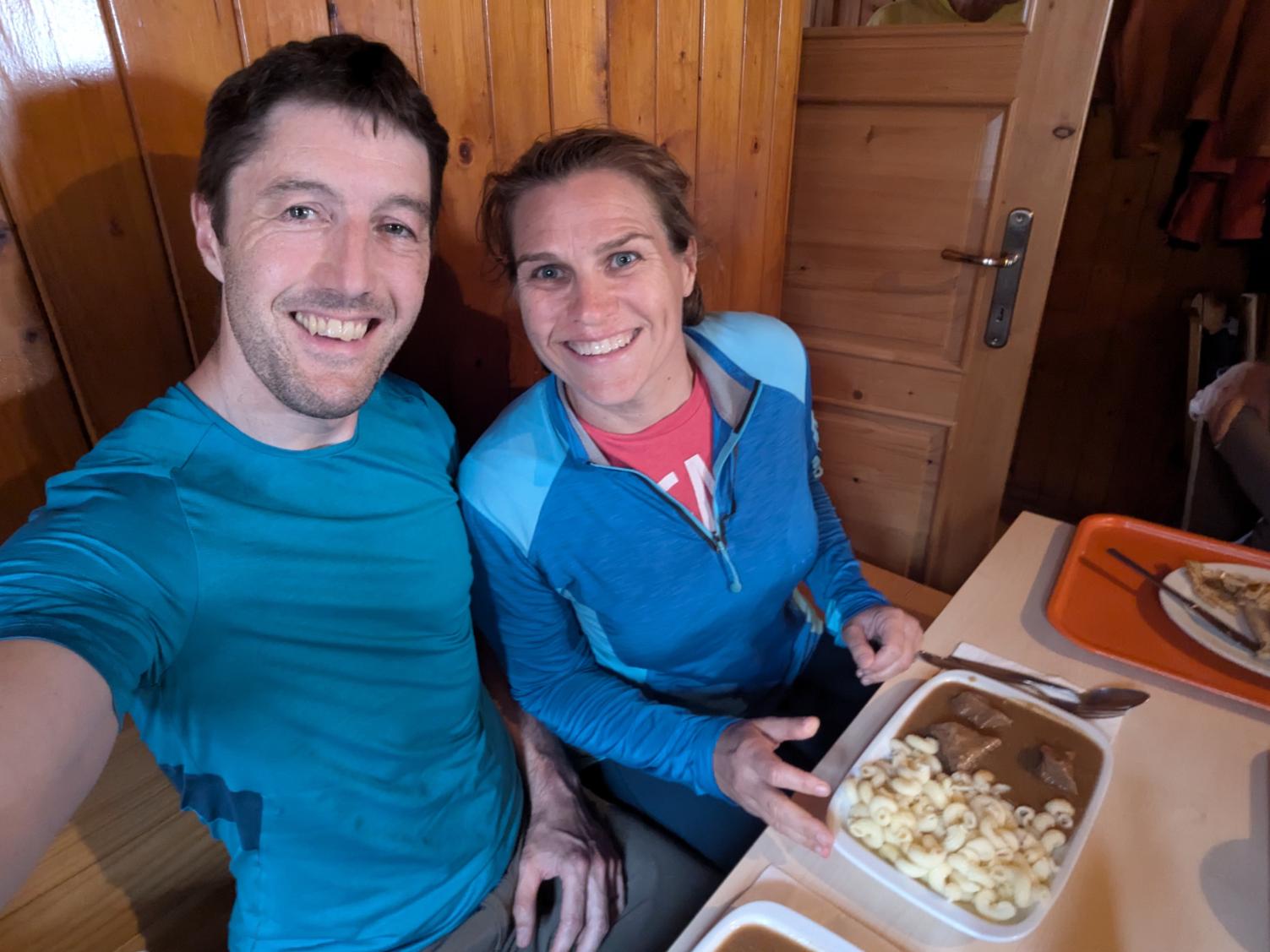
Dinners were simple, hearty servings, just what one needs after a day of mountain walking.
Evening light on the lower mountains, from the Planika hut at the base of Triglav.

Day 3: Crossing the High Alps

Sixteen snoring roommates do not a rested night make. We set off rather bleary eyed again, but buoyed by the beautiful early morning light. The scenery and the mountains were spectacular.

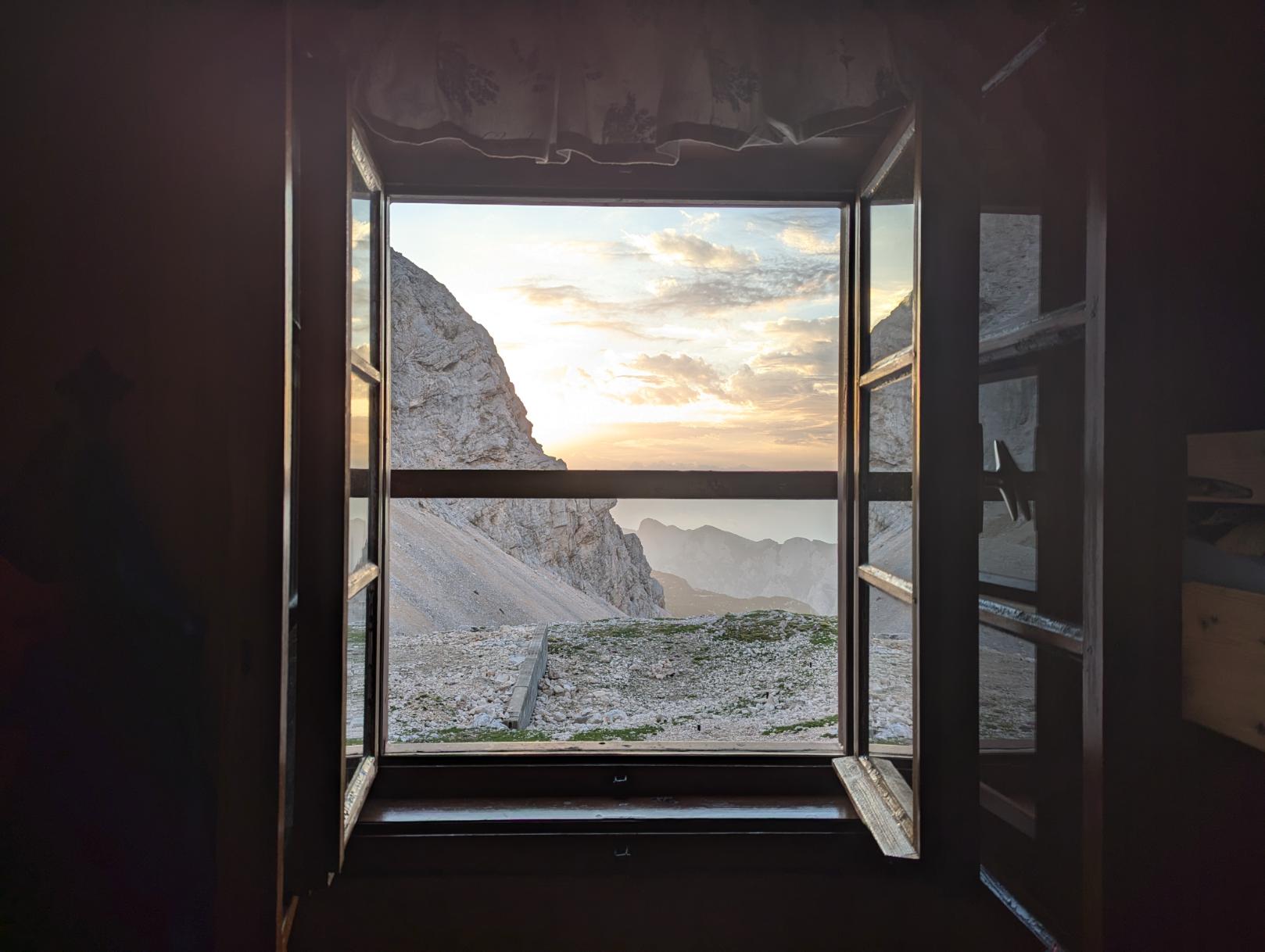
Early morning light
Not a bad view out of the bedroom window!
View west from the Planika hut
The one exposed section of down climbing. Lexi was a trooper and stormed through
Looking towards the Hribarice pass we had to cross later that day
On top of the world: Lexi on the ridgeline
Via Ferrata cables to assist on the more exposed ledges and climbs

Our main objective for the day was to cross the Hribarice pass and gain access to the next valley system. We watched a group of six hikers inching their way up the path towards the pass. They looked like tiny ants from this distance.
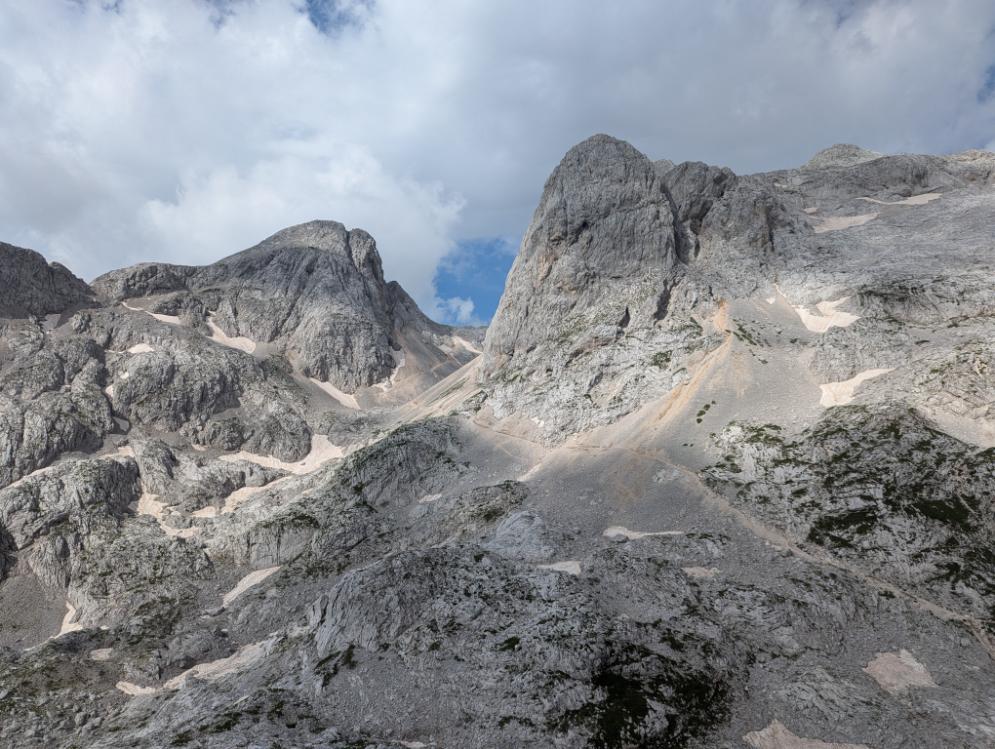
Looking across to the Hribarice Pass that we had to cross
One of the many small snowfields we had to cross
How I felt heading up to the Hribarice Pass, starting to feel ill

The pull up to the pass was hard work so it was a relief to reach the top. I was starting to come down with a sickness, so wasn’t feeling as chipper as day one. We made it though. Our reward was entry to this otherworldly lunar landscape that made for a fascinating hiking experience.
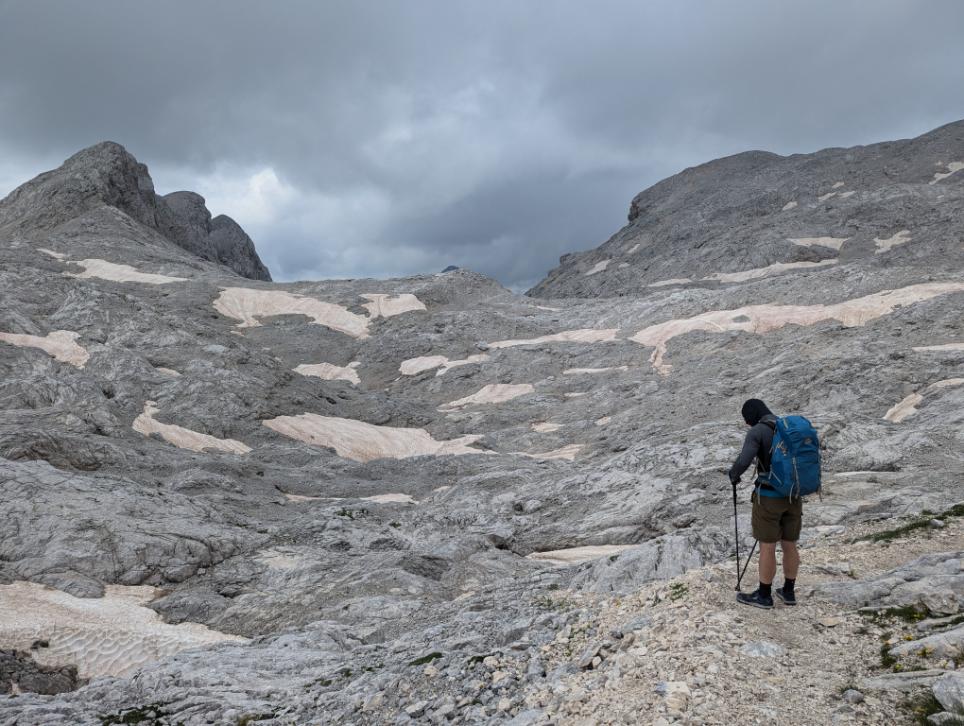
Consulting the map as we crossed the lunar landscape on the other side of the pass
The trusty red and white circles of the Slovenian Mountain Trail, that we followed for most of our trek too
Lunch with a view at the Prehodavich hut

Lower down, as we left the high mountains behind, we entered the valley of seven lakes. It was beautiful walking and easier going than the high mountains of earlier.
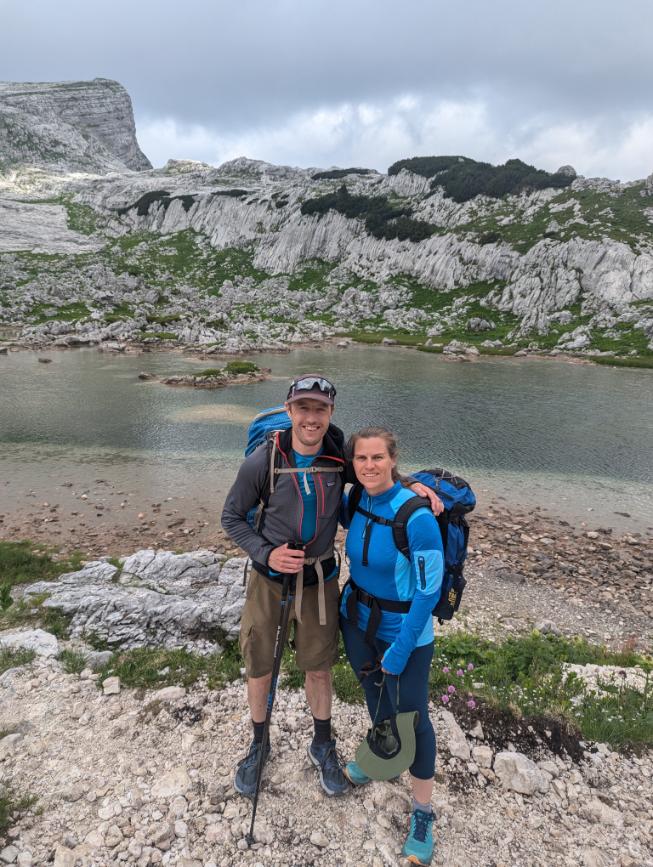
The first lake in the valley of 7 lakes

These alpine lakes were true jewels in this landscape. Turquoise gems amongst the grey, rocky landscape.
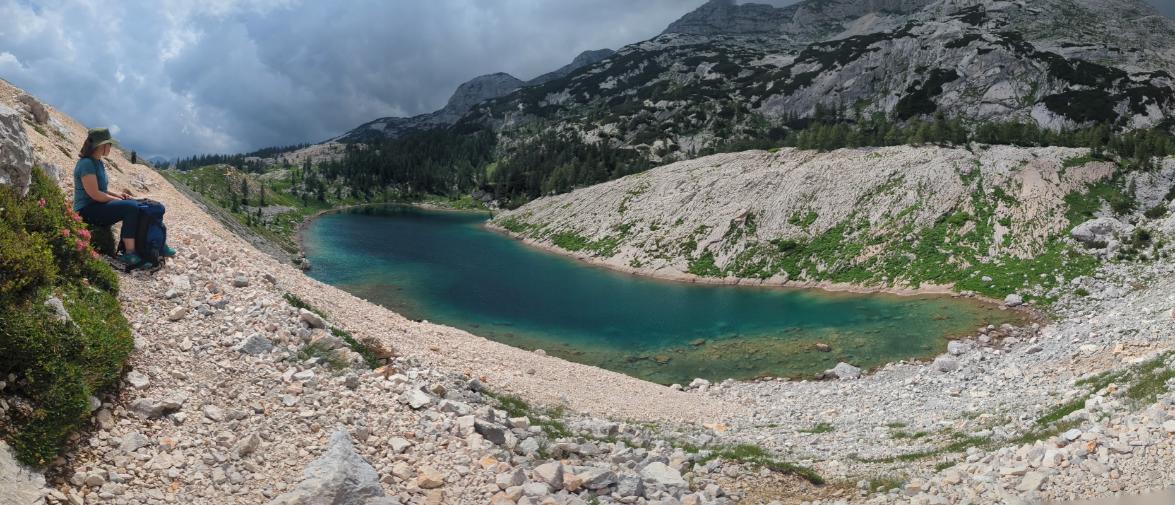
Lake Sedmero Triglavsko jezero

We reached the wonderful Koča pri Triglavskih Jezerih hut around 4pm, our home for the night. I had sauerkraut and sausages for dinner. Nom, nom, nom!

Beautiful wildflowers at the Koča pri Triglavskih Jezerih hut
Our room at the Koča pri Triglavskih Jezerih hut

Day 4: Leaving the mountains and descending to Lake Bohinj

Sadly, I was feeling pretty wrecked by now after another poor night of sleeping. My cough was pretty rough. Unfortunately, Lexi was also under the weather so we were a rather sorry pair as we set off that morning.

Despite that, we still enjoyed a final ten mile hike through gorgeous mountain scenery to end our hike.

Stunning wildflowers as we descended out of the high mountains
Lexi on the final descent to Lake Bohinj, on the old military road

We opted against staying in the final mountain hut, preferring instead to push on to reach the hotel at Lake Bohinj, where we could rest properly.

And that’s exactly what we did.

It definitely felt sad to spend two days sleeping and coughing in a hotel room rather than hiking, but what can one do? We can’t control getting sick. After 24 hours of rest, we at least felt well enough to go for a swim in Lake Bonhinj, which was a real treat to finish the trip with. No point being miserable for long!
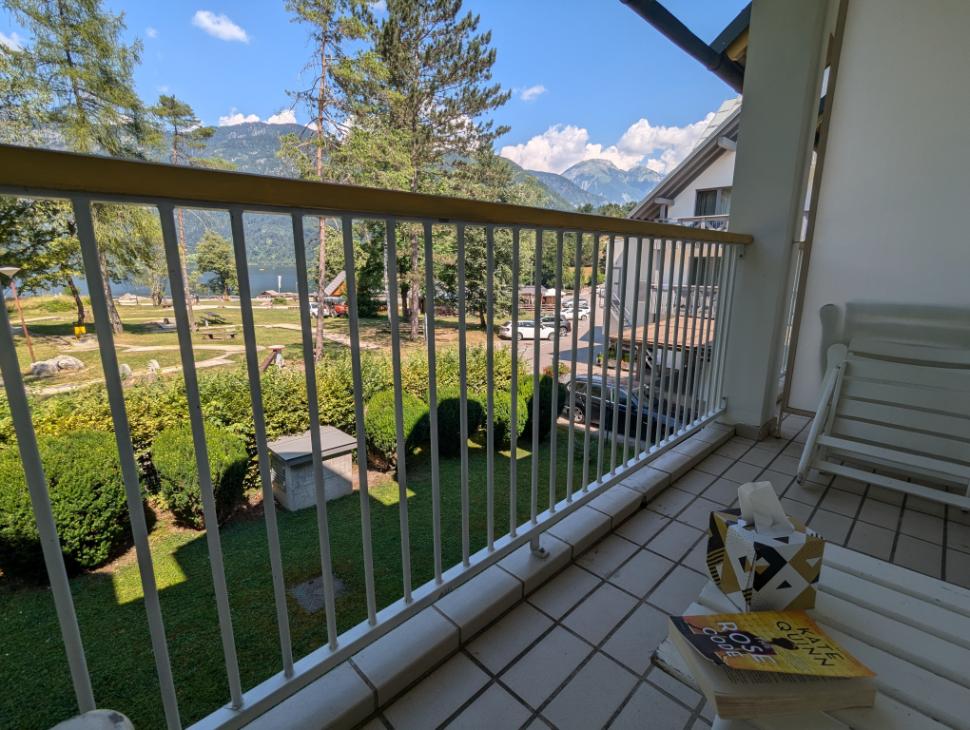
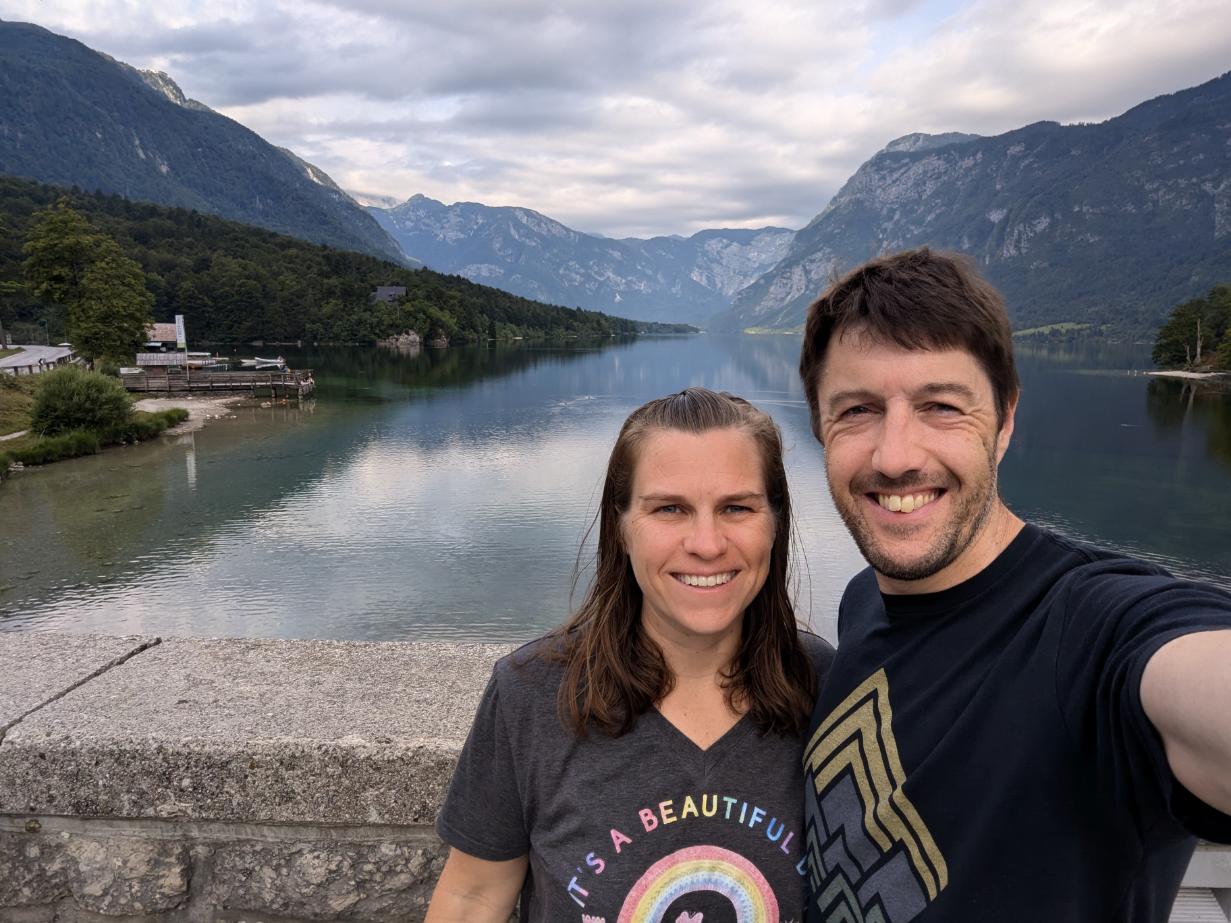
Convalescing on days 5 and 6 with horrible head colds. Urgh! At least the view was nice.
Smiling. Just. Through the worst of it by the end of day 6.

See this little montage I put together on Instagram too.

All in all, another incredible week together, with memories to last a lifetime.

It was a shame we got sick for the final two days but that’s the way the cookie crumbles sometimes.

If I could change anything I would have booked dates to avoid hitting the Triglav area over the weekend. The hut was so crowded that it was a bit much. I think arriving midweek would have alleviated the crowding issue. Oh well, hindsight is a wonderful thing.

Onwards. Looking forward to our next adventure my love ❤️

Introduction to Whitewater Packrafting on the Animas River

Something magical happens when you put like minded people together in the outdoors with a shared mission.

It’s a recipe as old as the hills themselves: take a dose of physical exertion, a pinch of risk, a dollop of uncertainty, top with a large helping of camaraderie, and garnish with laughter. Blend it all together for a perfect day. Repeat for a good life.

Flying over the Rockies. Beautiful!

Earlier this month, on the way to a work conference in Boise, Idaho, I stopped for three days in Durango, Colorado, for an introductory whitewater packrafting course, run by Four Corners Guides.

It must have been my 27-old self who booked the trip back in February, but it was the middle-aged-dad version of me that showed up on June 1st. Go figure. Walking along the banks of the Animas River on the eve of the course, watching big rafts bounce through the waves, my 43-year old self was wondering what the hell my 27-year old self had signed me up for.

Oh well, I was about to find out…

Day 1: Oxbow Park and Preserve to 29th Street / River level ~2,000 cfs

Getting ready to go out on the water

Day 1 began on the mellow flat water of the Animas River, at Oxbow Park and Preserve. 

After introductions (of ourselves — myself, Bridget, and instructor Steve —  and our boats), it was time to don drysuits. Standing in the fierce sun, already sweating, it took willpower to pull the dreaded drysuit neck gasket over my head, endure a split-second of claustrophobic panic, and then settle into feeling like a boil-in-the-bag beef stew. Drysuits keep the water out and the sweat in.

Thankfully, we soon jumped into the river and I understood why we were wearing them. It’s cold at this time of year.

Steve ran us through a set of swim drills (defensive and aggressive, always keeping feet off the river bed), paddle strokes, and boat handling techniques.

These little boats are pure fun!

It was soon lunchtime, and we ate our sandwiches at the river’s edge, watching the crazy spectacle of the annual Durango river parade unfolding on the boat ramp. All manner of crafts and characters were partying and pushing off into the water. Nuts!

After lunch, we proceeded downriver, a merry little convoy of duckies. Along the way, we practiced catching eddies, ferrying, and reading the river. It was an ideal place to learn, with each feature seemingly a tiny bit bigger and more powerful than the previous one. Gradually, I was getting a feel for the river.

Towards the end of the day, we pulled over to scout the last rapid for the day, at 29th Street. 

Holy shit, are we going down that?

It looked quite a bit bigger than anything thus far. I felt a little intimidated at first. But we talked about it as a group and watched boats, paddleboards, lilos, swimmers, and all the flotsam and jetsam of the river parade go through it, and then it didn’t feel scary at all.

We watched Steve go through it first. Calm as a cucumber. As smooth as silk. He made it look so easy. Deliberate paddle strokes, picking the best line, seemingly without expending any effort.

Me bouncing through the feature at 29th

When I followed Steve through, I missed the optimum line (unsurprisingly). I got through the first feature OK, but headed straight into the next set of bigger waves, which Steve’s line avoided. Bouncing around, paddling like a crazy clown, I somehow stayed upright and huffed and puffed my way back to river left and the waiting eddy. 

That was AWESOME!

We go again and again, and each time I slightly improve my line to catch the eddy higher and with less effort.

As the day draws to a close, I realize how weary I am.

It was the fierce sun! Dehydration (I wasn’t sure about opportunities to pee so didn’t drink enough)! The altitude! The time difference! Frickin’ middle-age! Goddammit, all these things conspire to make me quite tired. I eat dinner at the hotel and fall asleep by 8.15pm (give me a break, that’s 10.15pm in my home timezone).

A mighty fine first day!

Day 2: 29th Street to Whitewater park / River level ~2,300 cfs

We started back at the same feature at 29th Street put-in. Another boater, Sarah, joined us for the rest of the course.

I felt much more comfortable this morning, a sign of how much progress I’ve made since yesterday. I practiced a wet self-rescue. It’s reassuring to know that I can get back into the boat and that it’s not too hard (well, provided I still have the boat, as I found out to my cost later on).

Yee-haw! Let’s do this!

The morning was spent working the feature over and over, practicing getting the right line and catching the eddy. The importance of leaning downstream and punching into the eddy with momentum are the main takeaways. That and the tight drysuit neck gasket itching my sunburnt neck like mad.

For lunch, we hauled the boats up into the shade of some trees and sat around asking questions and telling stories. Well, mostly us students asking questions and Steve answering with a selection of stories from his many wild adventures.

In the afternoon we boat from 29th Street down to the Whitewater park through increasingly bumpy and fast rapids. All the time, we practice catching eddies, picking lines, and scouting rapids before running them.

At the whitewater park, we portage around the main rapids (class III/IV, so way out of our league at the moment) but we watch others run them and talk about their lines and the features. Really interesting learning how to read the river.

We put in again just below the whitewater park for a last section down to the take-out and parking lot.

I was riding high at this point, feeling like I was getting the hang of it all. In classic fashion when learning something new, my hubris set me up for a good beat-down.

I was following Sarah through the last set of waves, thinking to myself how fun it was. I was a little too close though, so couldn’t see what was coming. Sarah took the correct line just to the left of the last wave but I didn’t. Too late to change course, I went right into it and learnt the hard way that it had a decent sized hole at the bottom. Yikes!

My boat slammed into the hole and practically stopped. It immediately spun sideways and up on an edge. Time paused for a split-second but I knew what was coming. I get dumped out into the river. Argh me hearties, a genuine swim!

My boat gets stuck in the hole but I’m off racing downriver, paddle in one hand and sunglasses in the other (they fell off but they float, so I grabbed them. Gotta look cool when I’m drowning). Steve paddles over and tells me to grab the back of his boat. With a big effort, he towed me to the riverbank. I straggle ashore like a drowned rat, breathing hard and figuring out what the hell just happened.

Meanwhile, Steve heads off to retrieve my boat, which by now has worked free from the hole and ended up on the opposite bank. I was thankful and relieved, mostly because my wallet and phone were inside a drybag in the boat. (I kept them inside my drysuit with me the next day.)

Well, that made for an exciting finish to the day and a tremendous learning experience for our group to debrief (you’re welcome). It illustrated how quickly things can go south and you can find yourself up shit creek without a paddle, so to speak.

All-in-all, another terrific day!

Day 3: Whitewater park to River Road / River level ~2,700 cfs

The river rose again overnight, so it’s flowing faster this morning. The waves are rowdier but some features, like the hole that dumped me out yesterday, are now mostly washed out.

We start the morning just below the whitewater park with eddy practice, swim practice, rope work, and safety discussions.

We work on catching bigger eddies. The current is much stronger here. I’ve come so far from day 1 and I feel confident about this next eddy assignment. 

“What you’ve gotta do is pierce that eddy line, like an arrow” Steve reminds us.

“Gotcha, yep, that sounds good. I’ll give it a go” I reply.

I paddle out into the current. Lean downstream. Fart upstream, as we’ve been taught. And off I go.

Ok, this is looking good, a nice approach angle, the voice inside my head is saying. (For some reason, I’m hearing the voice of an air traffic controller bringing in a fighter jet to land on a carrier.)

Roger that, the voice continues. 

Then suddenly err, your approach angle is looking a little off now

I see Steve frantically waving to me to head further out into the current

HEAD FURTHER OUT into the current you dumbass… the voice in my head shouts.

Oh shit, I’ve stuffed it up, haven’t I?

I pirouette the boat — not really sure why — which of course doesn’t help and I just end up closer to the feature. I paddle like a madman for 5 or 6 strokes but it’s too late. I’m heading straight towards the wave train, way off the best line and the correct angle of attack. 

Argh, this is NOT going to work.

I blast past the eddy line miles off and crash and burn into the waves, remembering to straighten up at the last second to avoid going for a swim. It takes a big effort to get into the eddy and back upstream. It was fun though!

Yes, I have come far from day 1 but I still have a long way to go. 

After lunch, we paddle downriver, practicing eddying, ferrying, leaning downriver, boat towing, and swimming in the rapids. The river is bouncy and fun, and I enjoy the ride. 

Practicing towing boats. Photo courtesy of Bridget.

We take out for the final time, just past River Road bridge, after the Home Depot. One final wrestle with the drysuit neck gasket and the course is done. 

We chat and laugh and relive the past three-days before saying our goodbyes. 

I LOVED it. Every bit of it.

By the end of three days, I feel a whole lot more confident and less intimidated than when I arrived on day one. I’m looking forward to continuing this journey.

I have a major case of post-river blues now. It’s been a while since I’ve hung out with a crew of folks who LOVE adventuring that much. Telling tales, laughing at anecdotes, excitedly sharing future trip plans. I gotta get more of this in my life again. It’s my drug of choice.

Thanks to the crew for an amazing three days: Steve, Bridget, and Sarah. And to Lizzy and Four Corners Guides for organizing behind the scenes. 🙏

Appalachian Trail Dreaming: 5-days to Front Royal

26 – 30 March 2024 / 5-days / 72.7 miles

Itinerary

  1. Tuesday 3/26: 9.8 miles from Harpers Ferry to David Lesser shelter (1,883 ft ascent)
  2. Wednesday 3/27: 14.8 miles to Sam Moore shelter (3,007 ft ascent)
  3. Thursday 3/28: 15.8 miles to Whisky Hollow shelter (3,863 ft ascent)
  4. Friday 3/29: 18.9 miles to Tom Floyd Wayside shelter (4,210 ft ascent)
  5. Saturday 3/30: 13.4 miles to finish in Front Royal (1,705 ft ascent)

My plan was to follow the Appalachian Trail southbound, setting off from Harpers Ferry, bound for Front Royal.

For the first two-and-a-half days, the trail was familiar: I walked it (in the reverse direction) with my friend Alistair in 2022. Beyond Ashby Gap was new territory though. I’ve wanted to walk this route since we arrived in Harpers Ferry 5 years ago, so it was great to finally make it happen.

Short of time or a millennial? Check out this Instagram photo reel from the trip 😉

Day 1: Harpers Ferry to David Lesser shelter

I got away by lunchtime, the morning consumed in a frenzy of packing, tying up work emails, and fretting about whether I had everything. It’s the same with every multi-day trip.

Nerves settle with the first few footsteps on the trail.

The best send-off! Lexi joined me to the park boundary. It was hard to say goodbye; I wished she was coming with me!
The boardwalks signal your imminent arrival at Keys Gap.
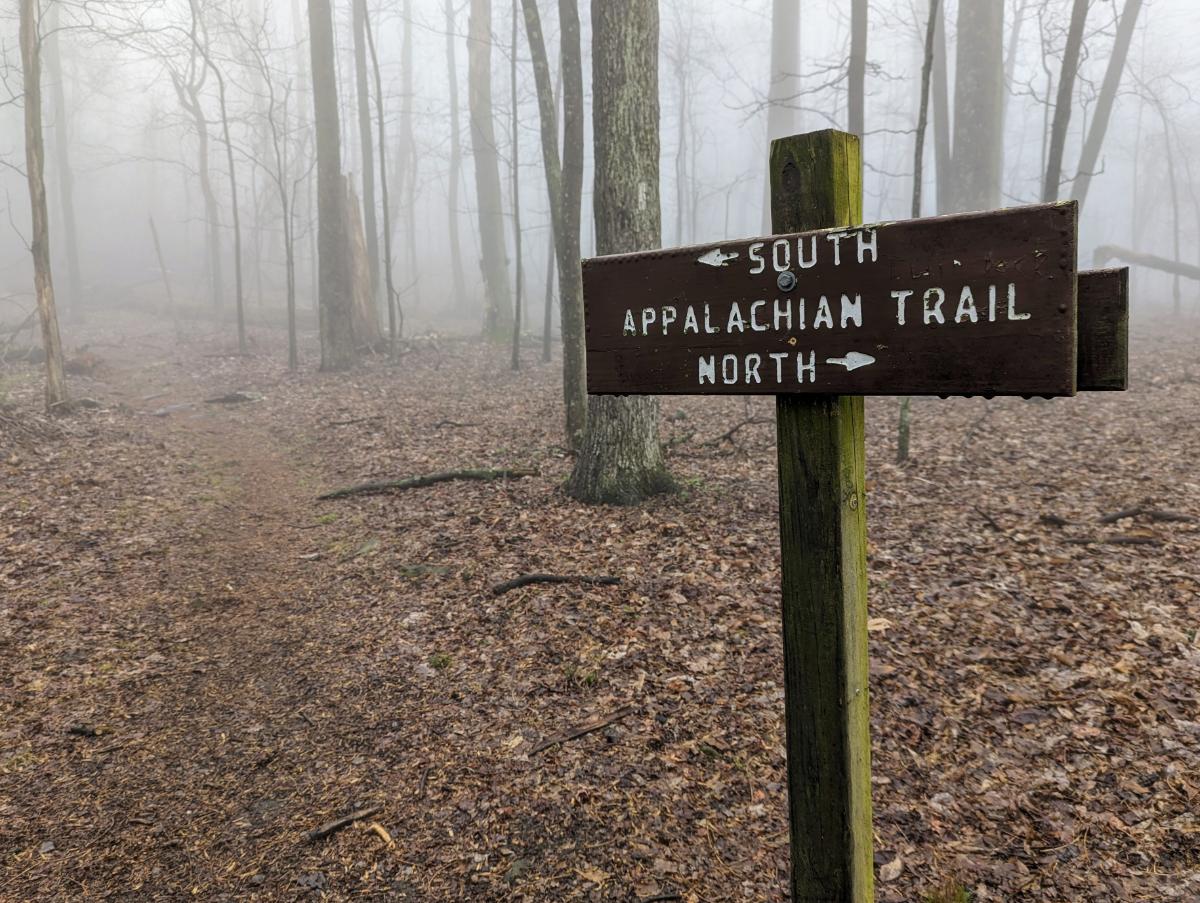
The Appalachian Trail signs are iconic.

I made good time to the shelter, as I’m deeply familiar with this section of the trail. The evening was cold, wet, and windy, but the rain didn’t fill in until after pitching my tent and having dinner. Three other hikers arrived and decided to stay in the shelter but I didn’t chat with them until the following morning.

A quick sit down upon arrival at the David Lesser shelter.
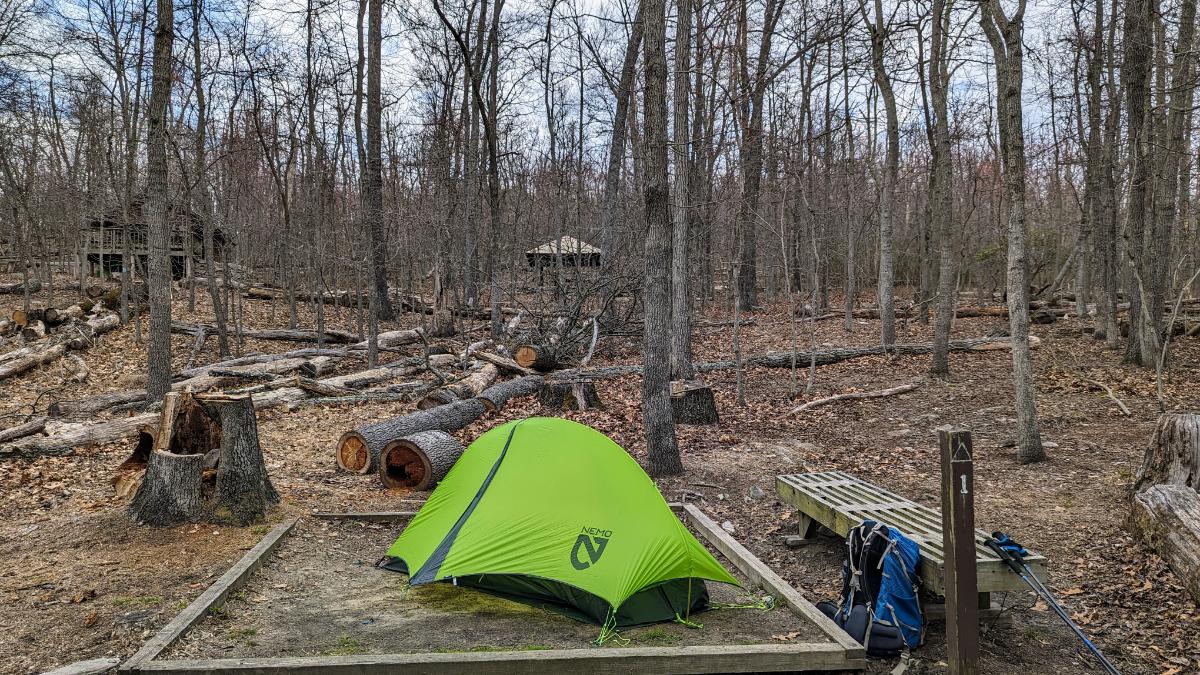
It was a windy afternoon so I deliberated for a while, looking for the most sheltered camp spot (the one with the fewest big trees above!). The shelter is top left in this image.

Day 2: David Lesser shelter to Sam Moore shelter

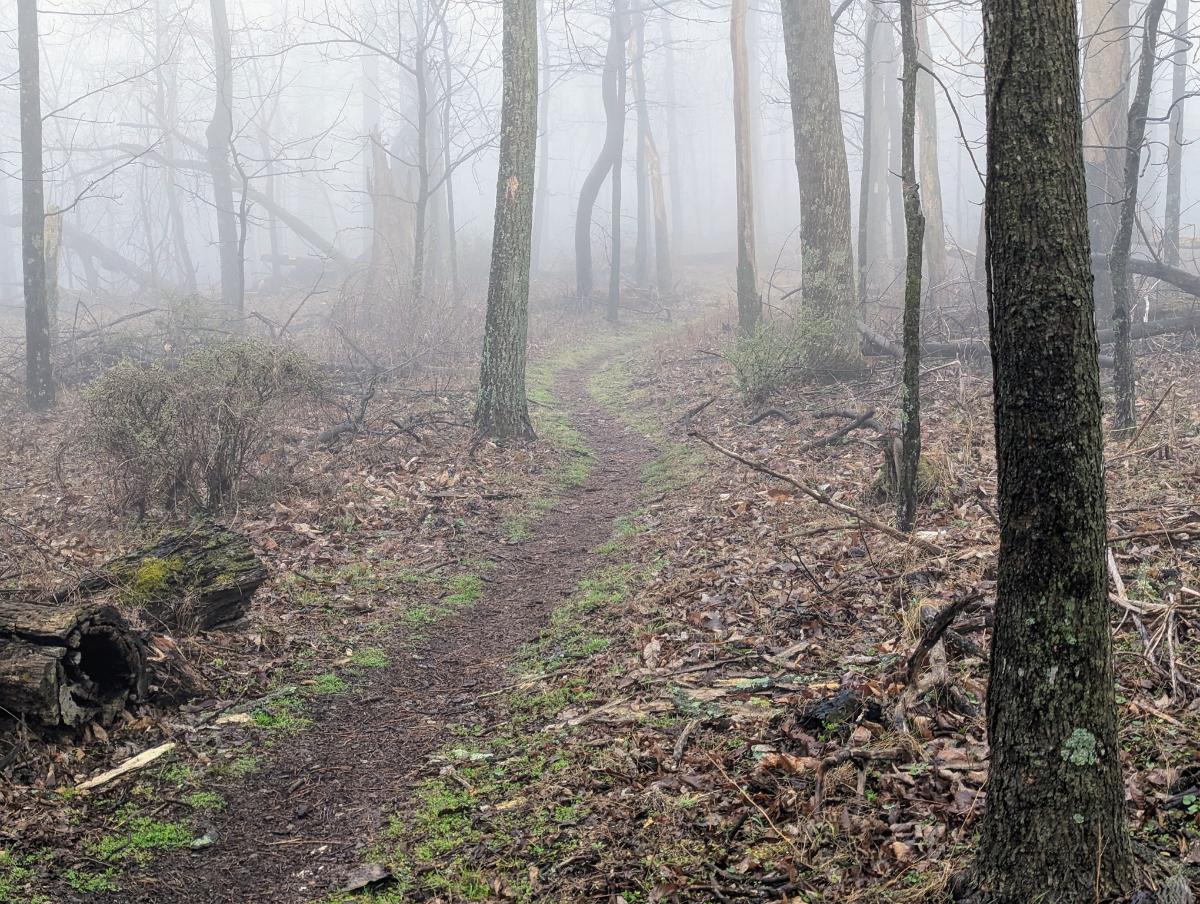
Mist hung on the mountain side, a thick grey soup that gave a primordial feeling to proceedings. I love these kind of conditions. Thankfully, the rain petered out by 9. I had a deliberately slow start to the day to avoid it. The tent was sopping wet though.

I awoke to a thick mist at camp.
Smiling despite the wet, dreich morning.
Setting off from David Lesser shelter, in full rain gear.
Into the mist once more.
There is something beautifully serene about walking through mist-clad woods.
One of my favorite stretches of trail of this section is the rocky traverse along the exposed ridgeline.
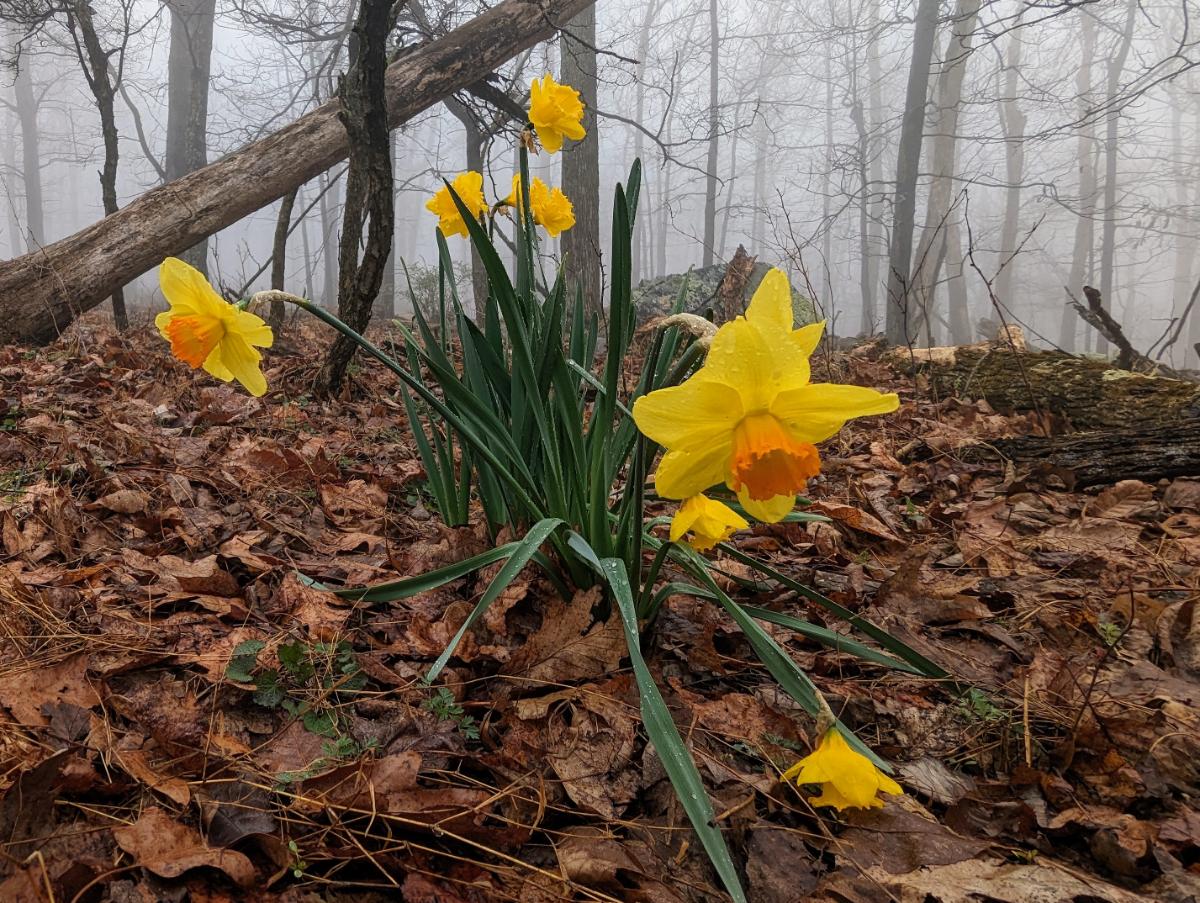
Lonely wild daffodils provided a dash of color amongst the muted pastels of this drab day.
The big boulder near to the Blackburn Trail Center.
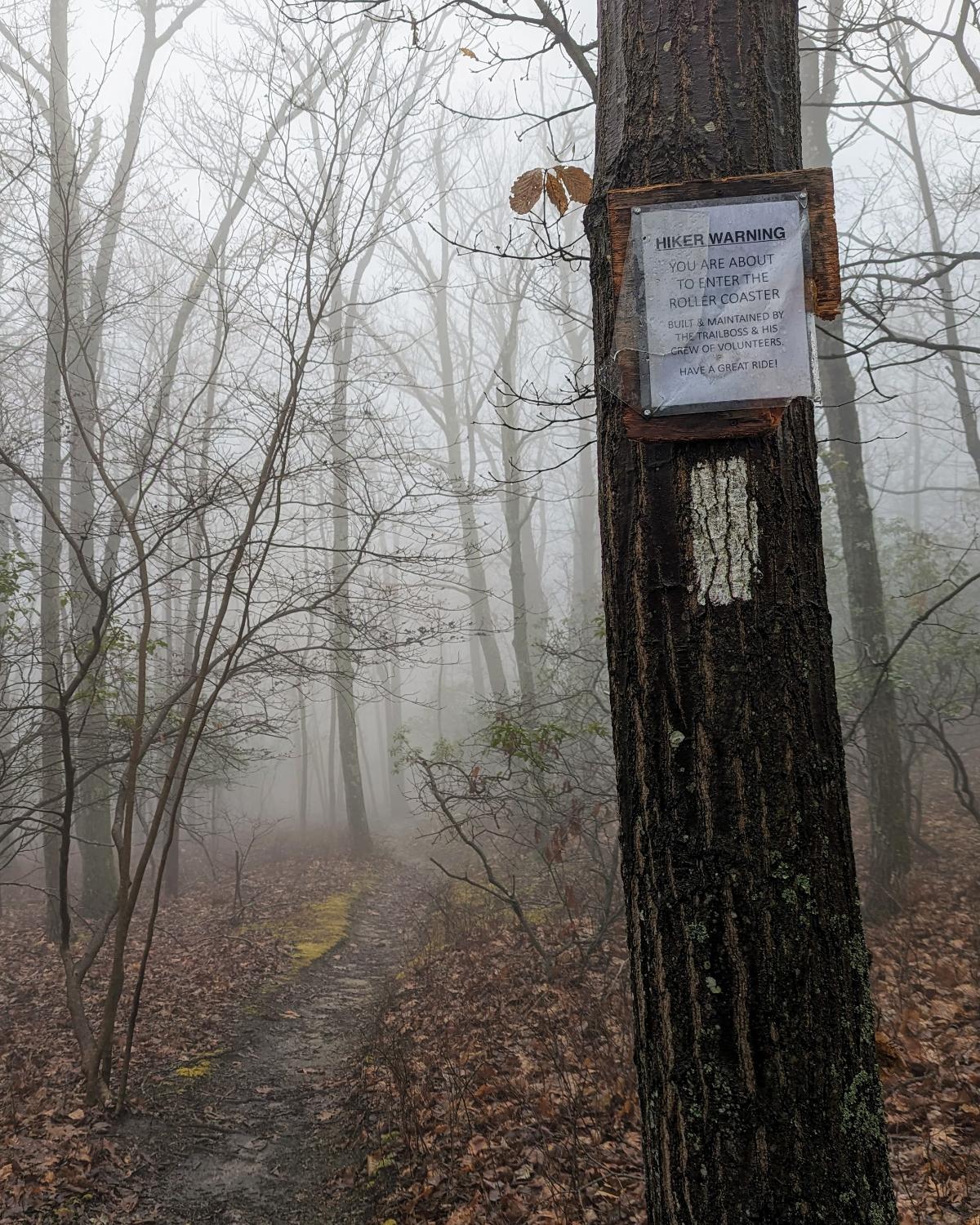
Entering the infamous roller-coaster section: the trail goes up-and-down and up-and-down for the next 17 miles.
A colony of Trichaptum along the trail.
Sadly no views at Raven Rocks lookout on this occasion.
After crossing Snickers Gap (US 7), I climbed up to Bear’s Den lookout and enjoyed the lookout now the cloud base had lifted.
The story here: I walked straight into this tree and smacked my head. Thankfully more of a glancing blow across the top of my head than full to the face. But a warning to pay more attention!
The wonderful Sam Moore shelter.
I pitched my tent in the same place as when I visited here 2 years ago with Alistair, on our 3-day AT hike.

Inspired in part by Alistair Humphrey’s Local book, I use the PictureThis and Merlin apps to identify plants and birds that I see on my walks. It deeply enriches my time in the woods, especially at this time of year when the spring flowers are out.

In addition to the daffodils and bluebells, I saw Bloodroot, Saxifrage, Common Periwinkle, Spring Beauty, Glory of the Snow, Rue-anemone, Violet, Chickweed, Yellow Fumewort, and lots of Cutleaf Toothwort.

Green False Hellebore line the banks of Sawmill Creek, the small creek next to the shelter that serves as the water source for hikers.
Dinner and journal, one of the most enjoyable parts of any day on the trail.

Day 3: Sam Moore shelter to Whisky Hollow shelter

I awoke to another claggy morning, but it soon lifted.
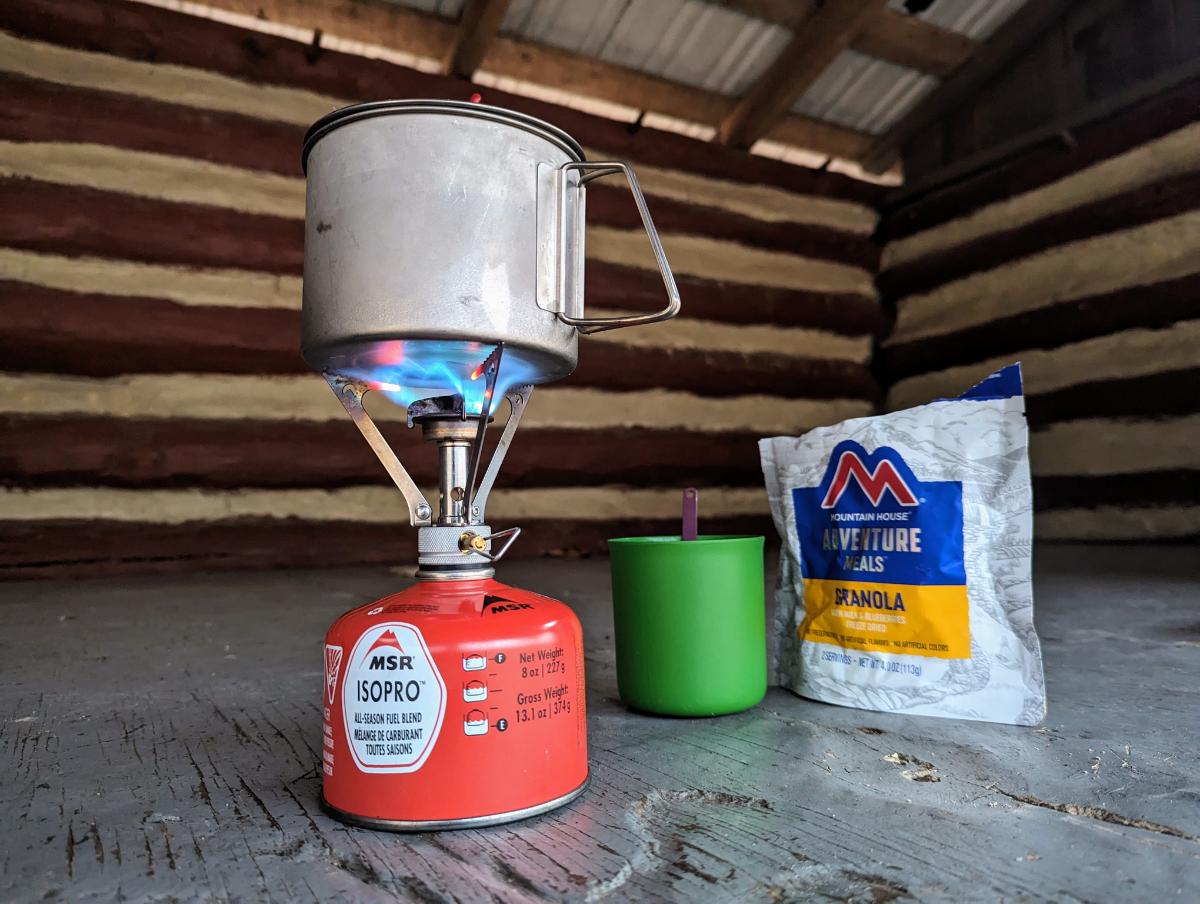
Breakfast of granola and coffee in the shelter.
View from the top of Buzzard Hill.
Stream crossing near Morgans Mill Road.
Ashby Hollow (?) stream. So pretty.
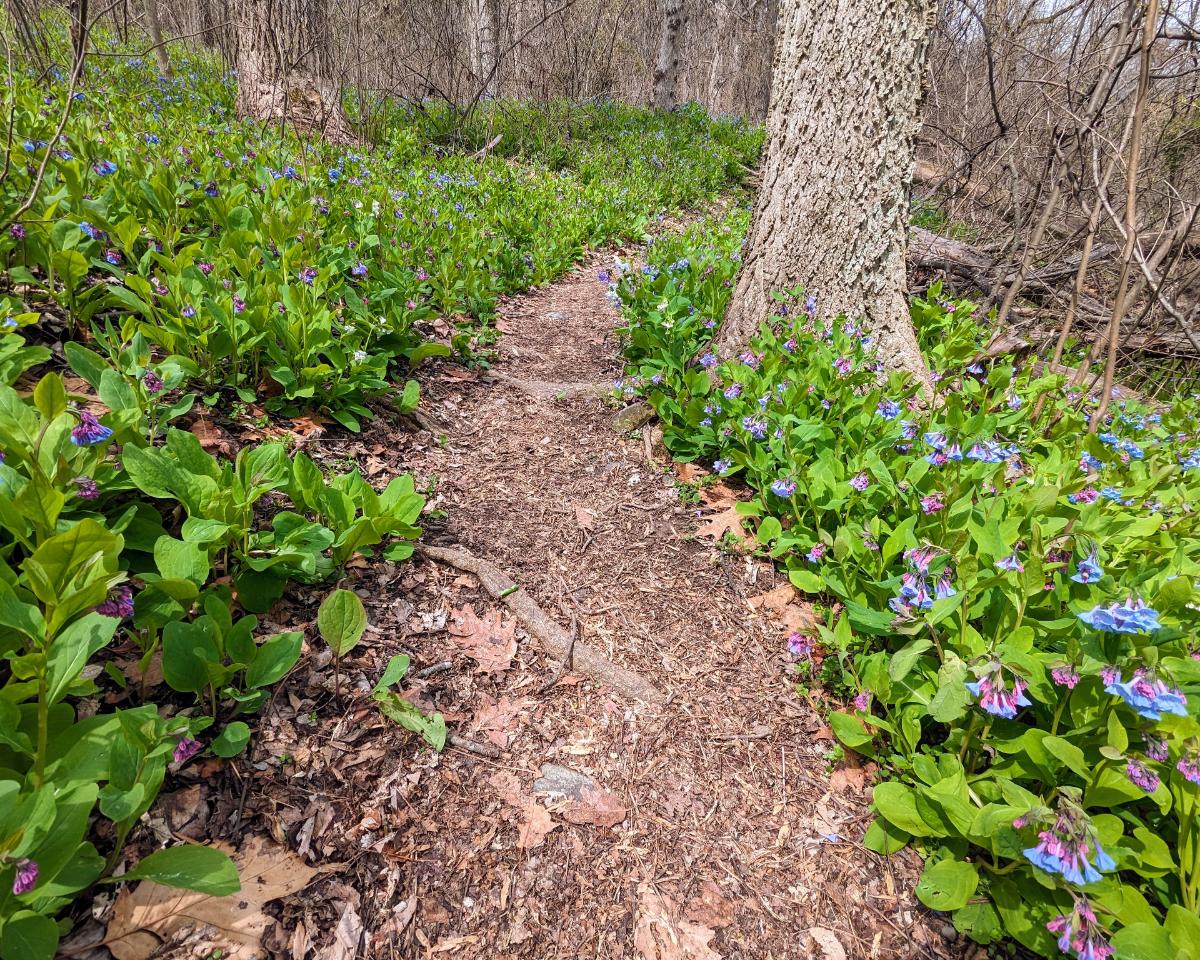
A delightful section of trail, carpeted with bluebells on either side.

When I crossed Ashby Gap (US 50), I walked onto a new-to-me section of trail. From here to Front Royal was entirely untrodden ground for me.

That feeling of venturing into the unknown, with everything I need on my back, is as intoxicating as ever. It’s the same feeling that my 21-year old self experienced setting off to walk across the Pyrenees one summer during University.

Sky Meadows was a beautiful, open space after days in the close confines of the trees.
Looking east over Sky Meadows State Park.
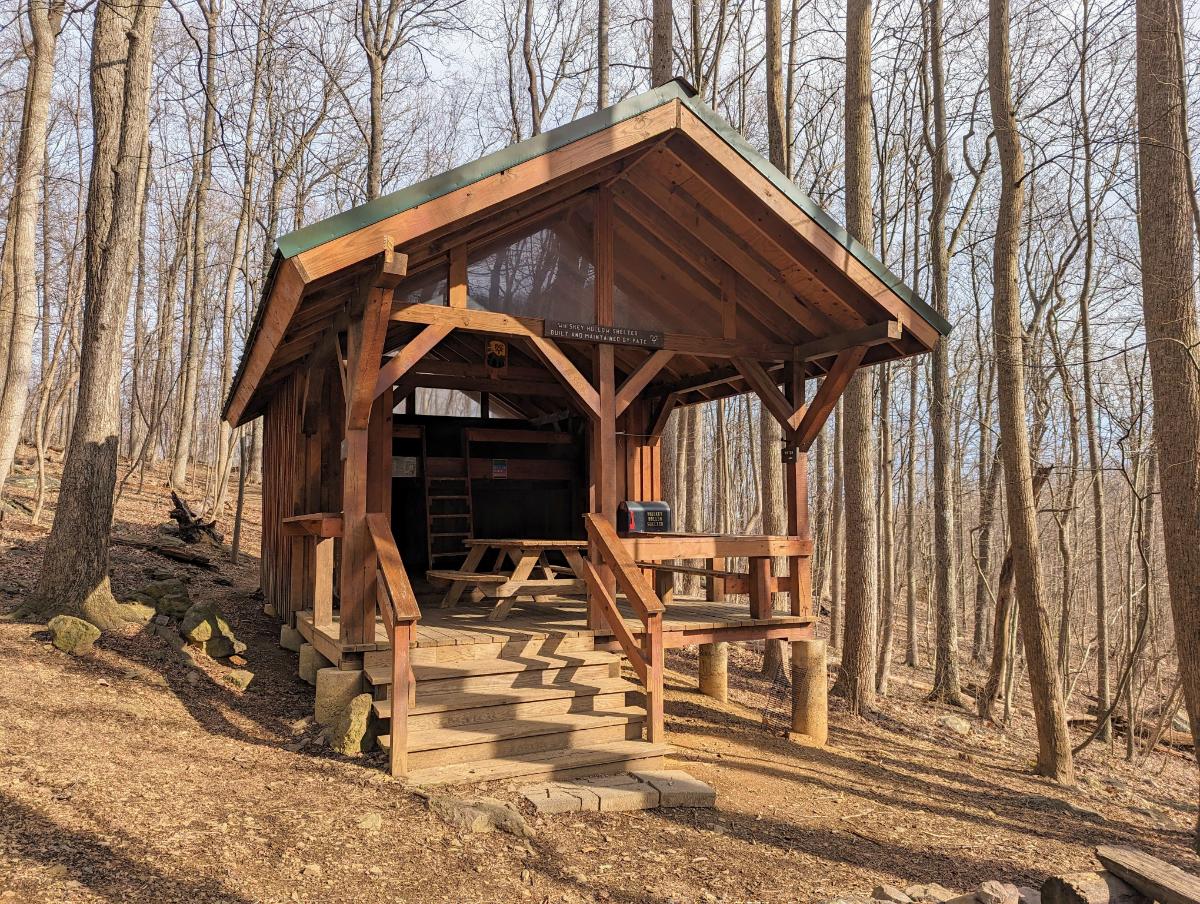
The mighty impressive Whisky Hollow shelter!
View from inside. This is in the Premier League of AT shelters, with the Ed Garvey shelter the only other shelter I’ve seen of this grandeur.
On account of the wind, I elected to stay in the shelter. It was convenient, but cold.

Day 4: Whisky Hollow shelter to Tom Floyd Wayside shelter

A beautiful sunrise through the trees, on the climb out of Whisky Hollow.
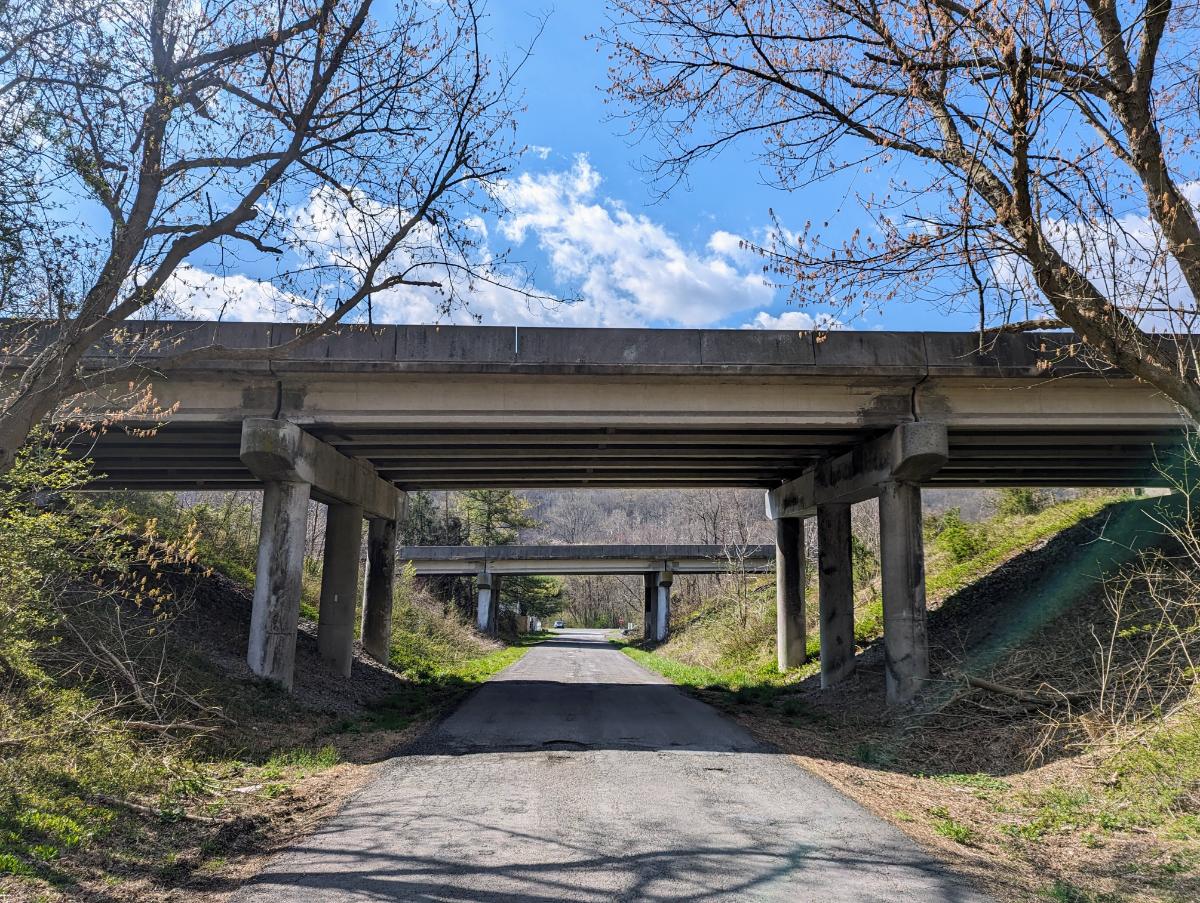
Crossing under I-66.
Starting the climb out from Manassas Gap and the I-66.
Another lovely open section of meadows.
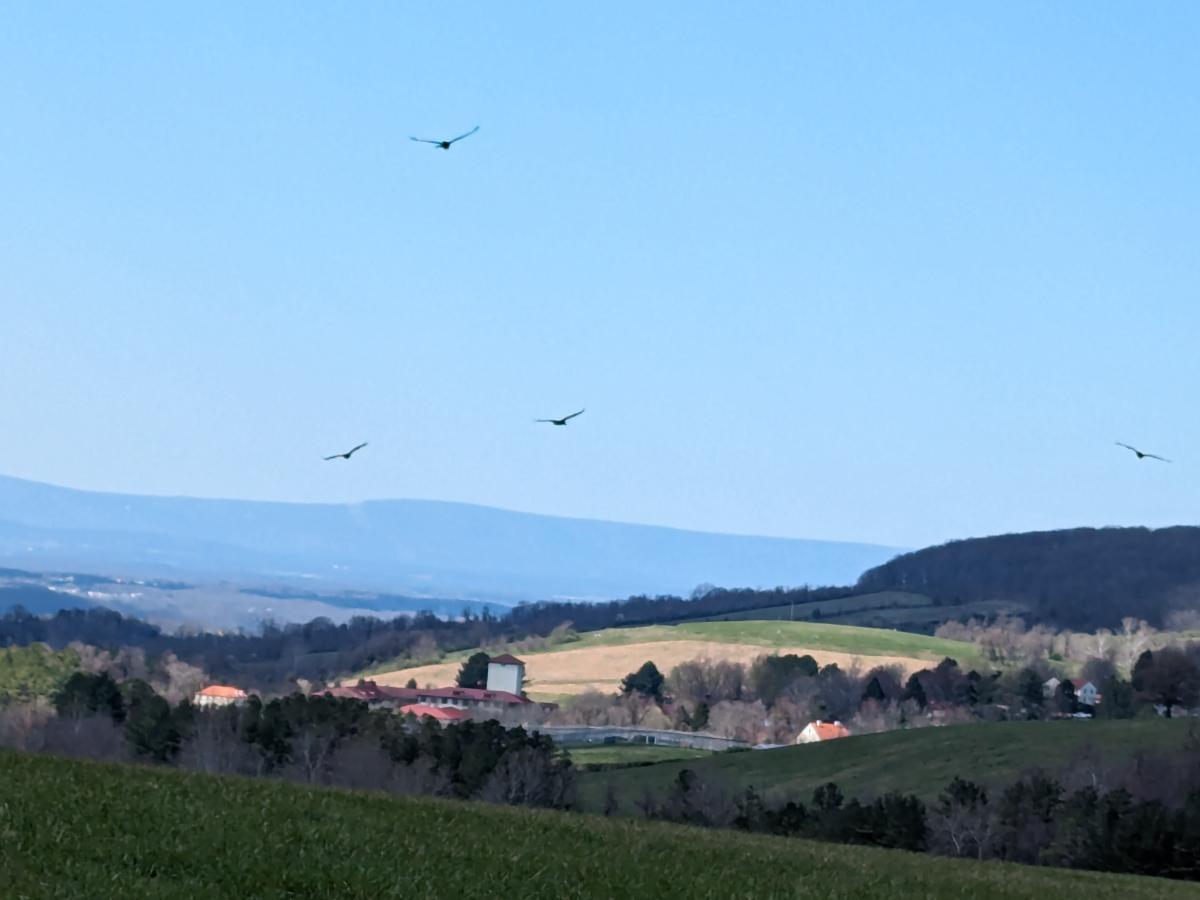
A cast of hawks (I think?) flying over the Smithsonian Conservation Biology Institute’s land, on the climb out of Chester Gap.
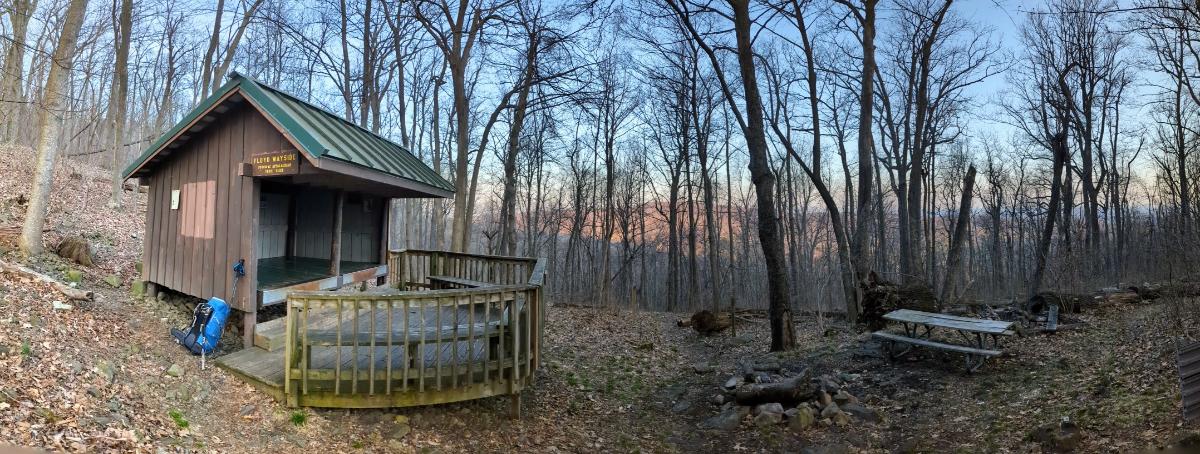
Tom Floyd Wayside shelter, my favorite shelter of this trip.
The spring near Tom Floyd shelter: water source for hikers.
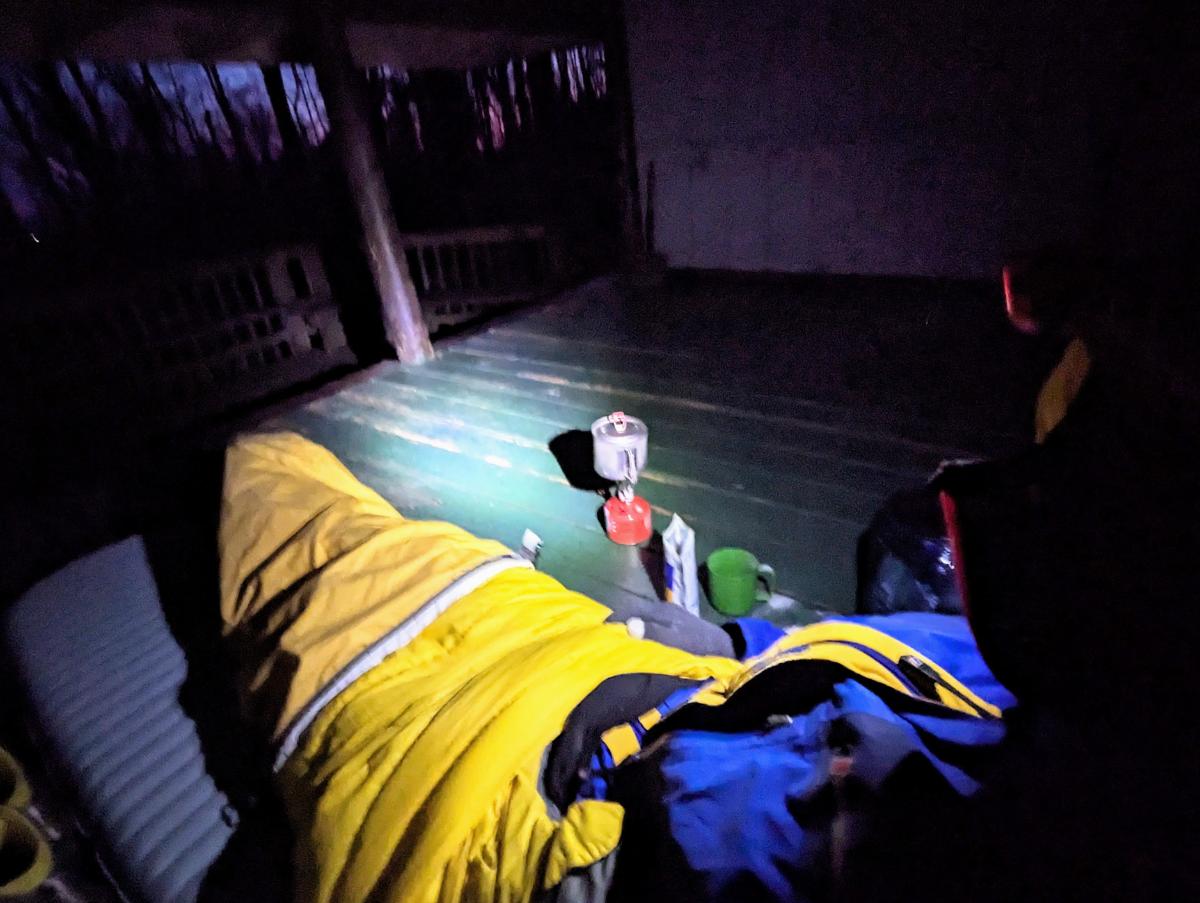
Cooking dinner in the shelter.
Sunset over High Knob, the ridgeline I’d crossed earlier in the day. The shelter is splendidly situated, on the slopes of the mountains that form the northern border of Shenandoah National Park (the shelter is a mile or so outside the park).
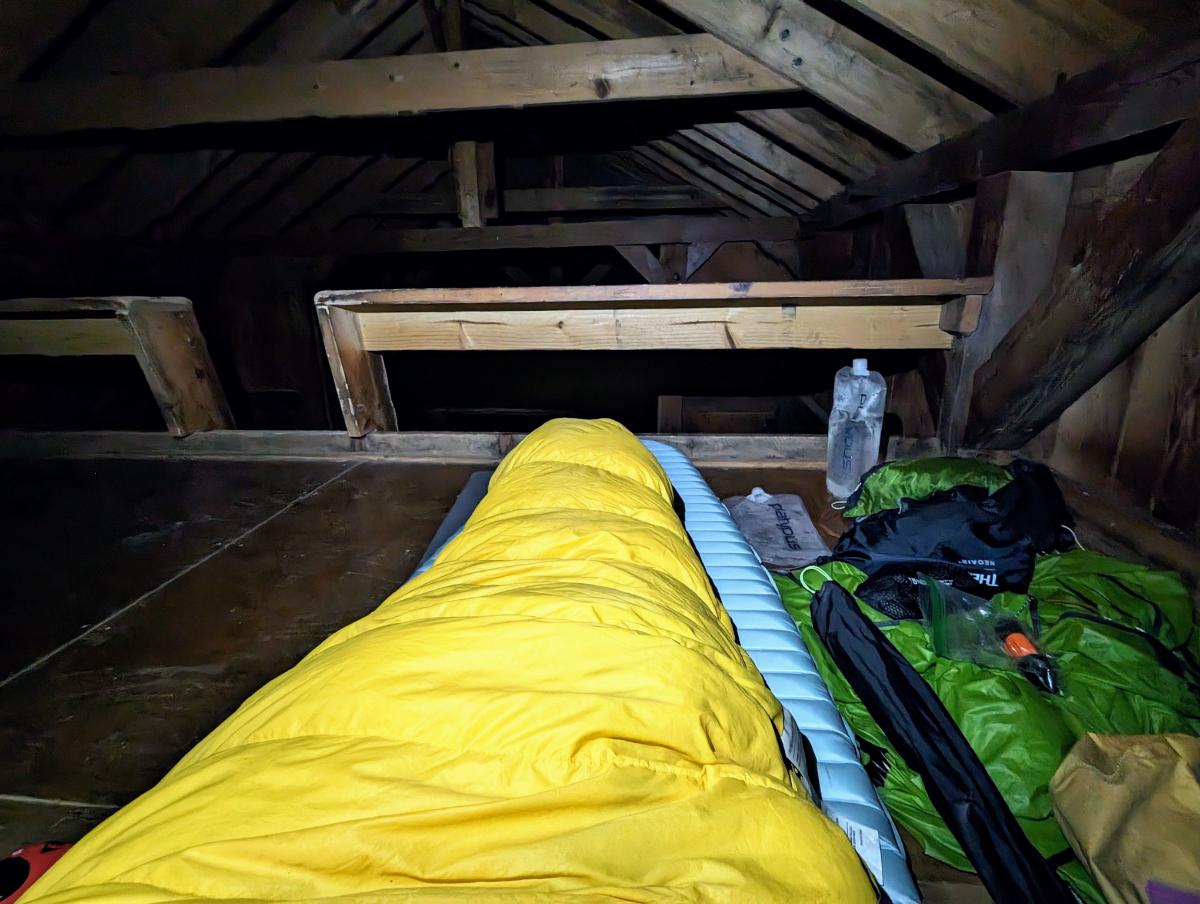
Home for the night. It was another windy night, so I decided the shelter would be safer (from falling branches).

Day 5: Tom Floyd Wayside shelter to Front Royal

A mellow final day on gorgeous Shenandoah trails. I saw more people today than the other four days combined (being a Saturday in a National Park).

Cooking breakfast at dawn, from the warmth of my sleeping bag.
Packed up and ready to leave.
Arrival in Shenandoah National Park, under marvelous morning light burning through the thin mist.
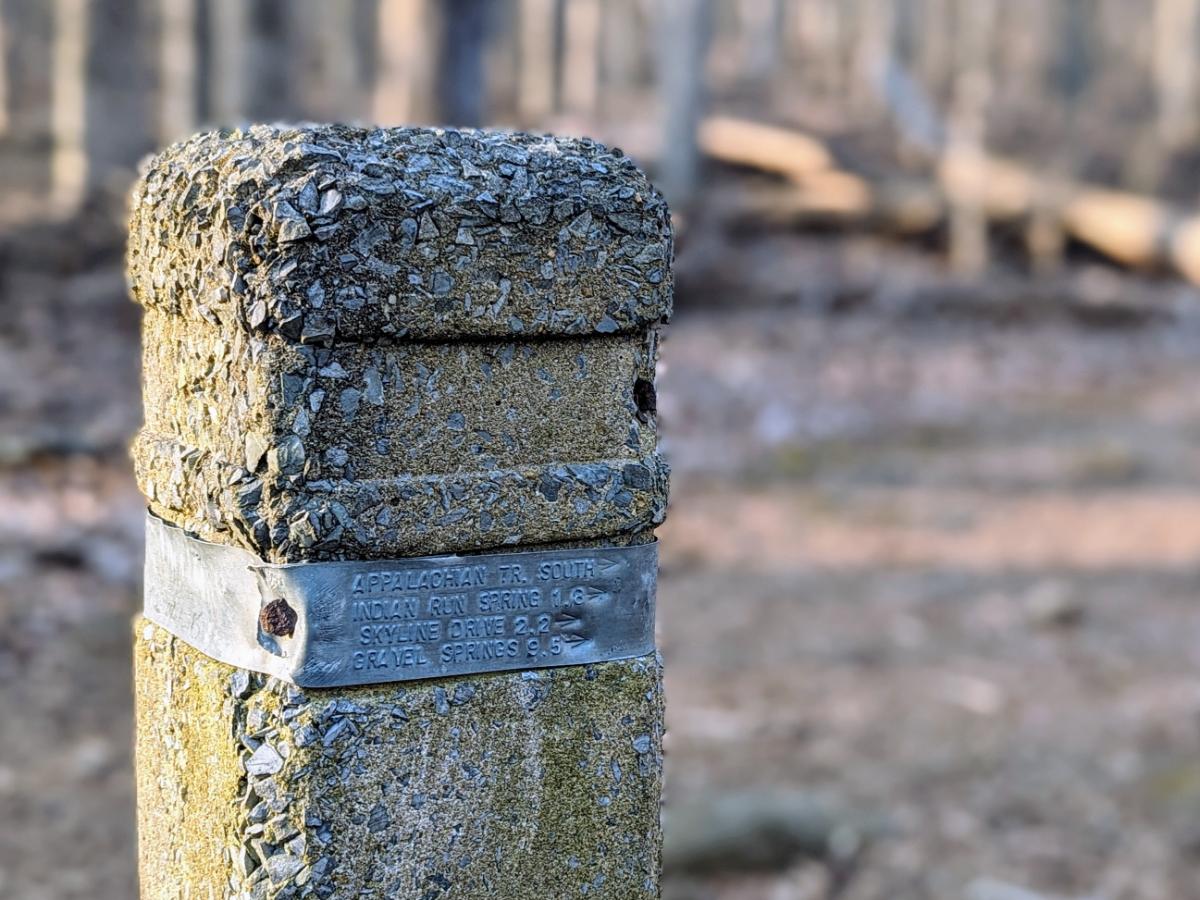
Nice to see the familiar stone marker posts in Shenandoah.
Furry friend on the trail.
View from the summit of Carson Mountain, 2,559ft.
The interesting 3-bouldered summit of Carson Mountain.
Crossing Skyline Drive.
Views into the Shenandoah Valley from the Dickey Ridge Trail.
A final tuna sandwich for lunch.
Made it! Arrival at Front Royal.

Overall, this was a fantastic five days of backpacking through wonderful scenery. If I had any lingering doubts about my desire to one day hike the whole Appalachian Trail, this trip extinguished them. It’s a paradise for hikers and nature lovers.

Winter Season 2023/24

I’m writing this on 14th March and it’s 76F! I think winter is over for this year 😉

Suffice to say, it was another short winter, like last year. In fact, winter didn’t start properly until the first snowfall on 6th January and it was all over by the end of that month. But we did have more snow than last year at least, so I’ll give this year a C+ grade rather than an F.

Some highlights from this season:

6 January 2024: Stone Fort loop

9.1 miles / 1,969 ft ascent / 4 hrs 7 minutes

Enjoyable walk in a couple of inches of fresh snow.

On top of the Maryland Heights ridge (Stone Fort loop)
Panorama from Maryland Heights, with the Potomac River (right), Harpers Ferry (middle), Shenandoah River (coming in from the middle) and Loudoun Heights (left)
Lower town Harpers Ferry and the confluence of the Potomac (bottom) and Shenandoah (top) rivers

More photos on Instagram.

7 January 2024: Loudoun Heights Sunset + Snow

7.8 miles / 1,762 ft ascent / 3 hrs 40 minutes

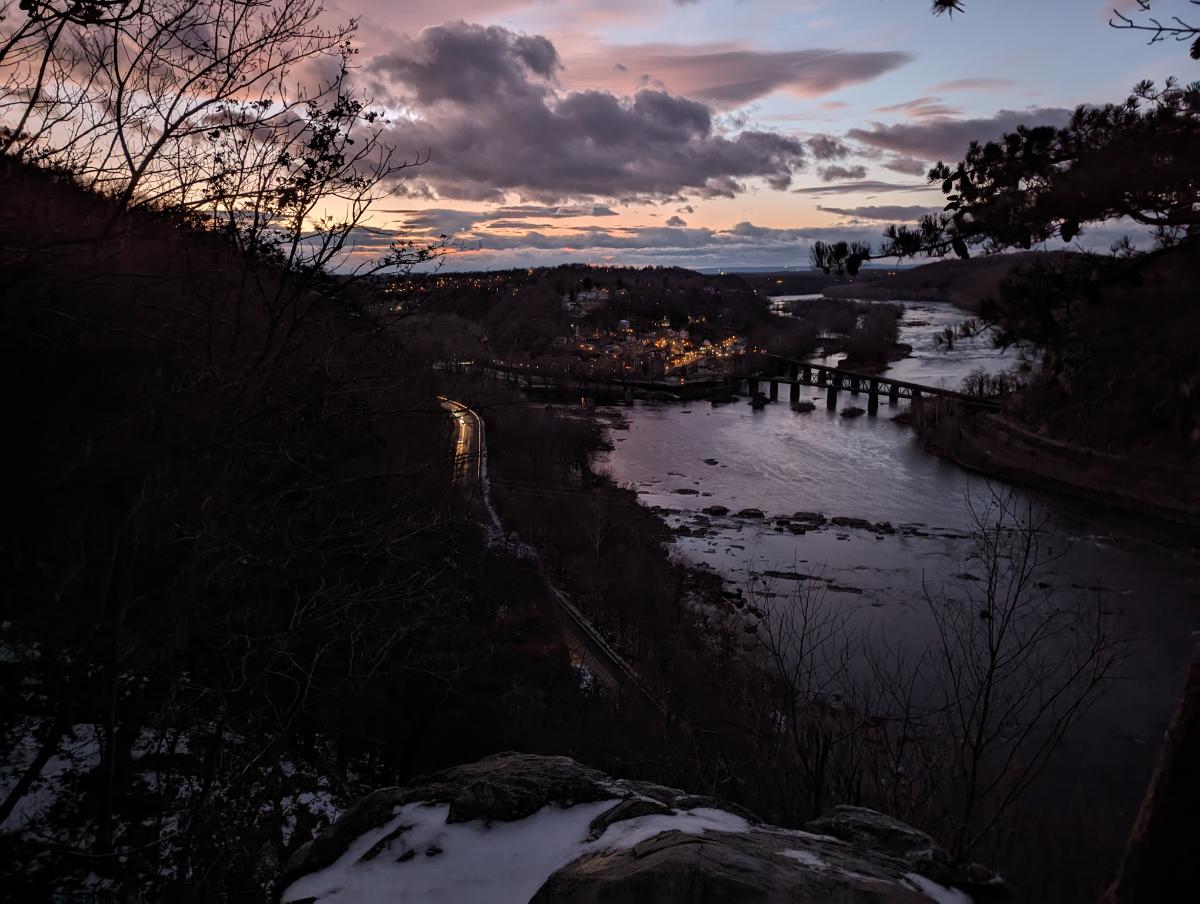
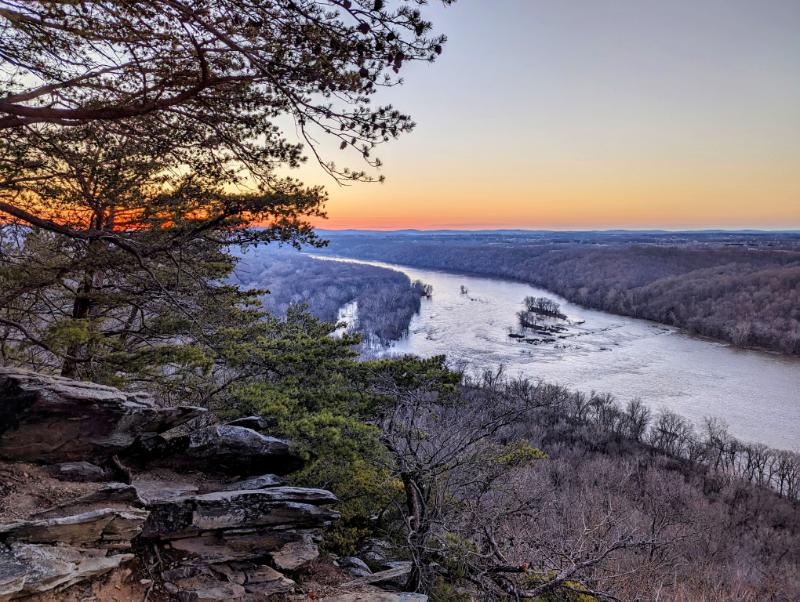
Tremendous walk with stunning views of Harpers Ferry and Charles Town at night. Cold and crisp. Beautiful colors at sunset from Split Rock overlook.

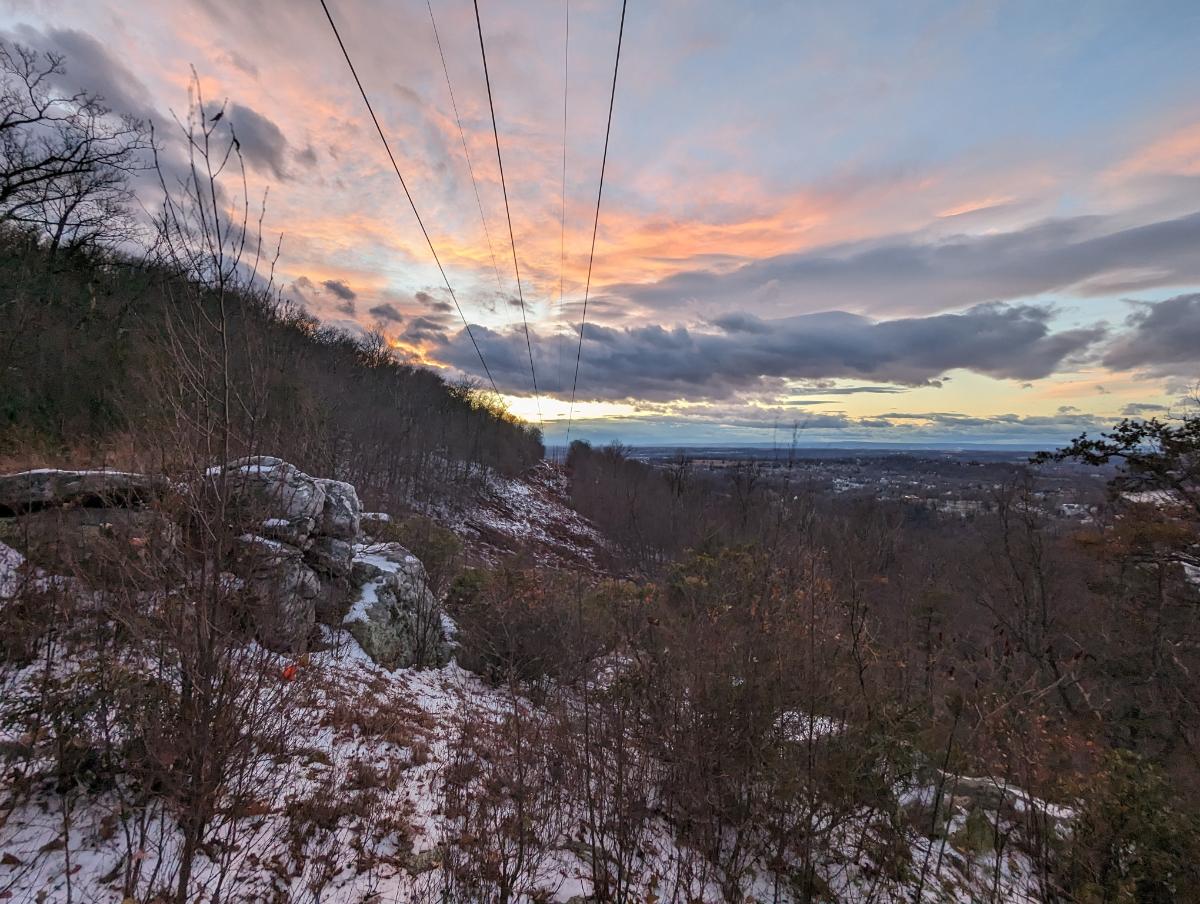
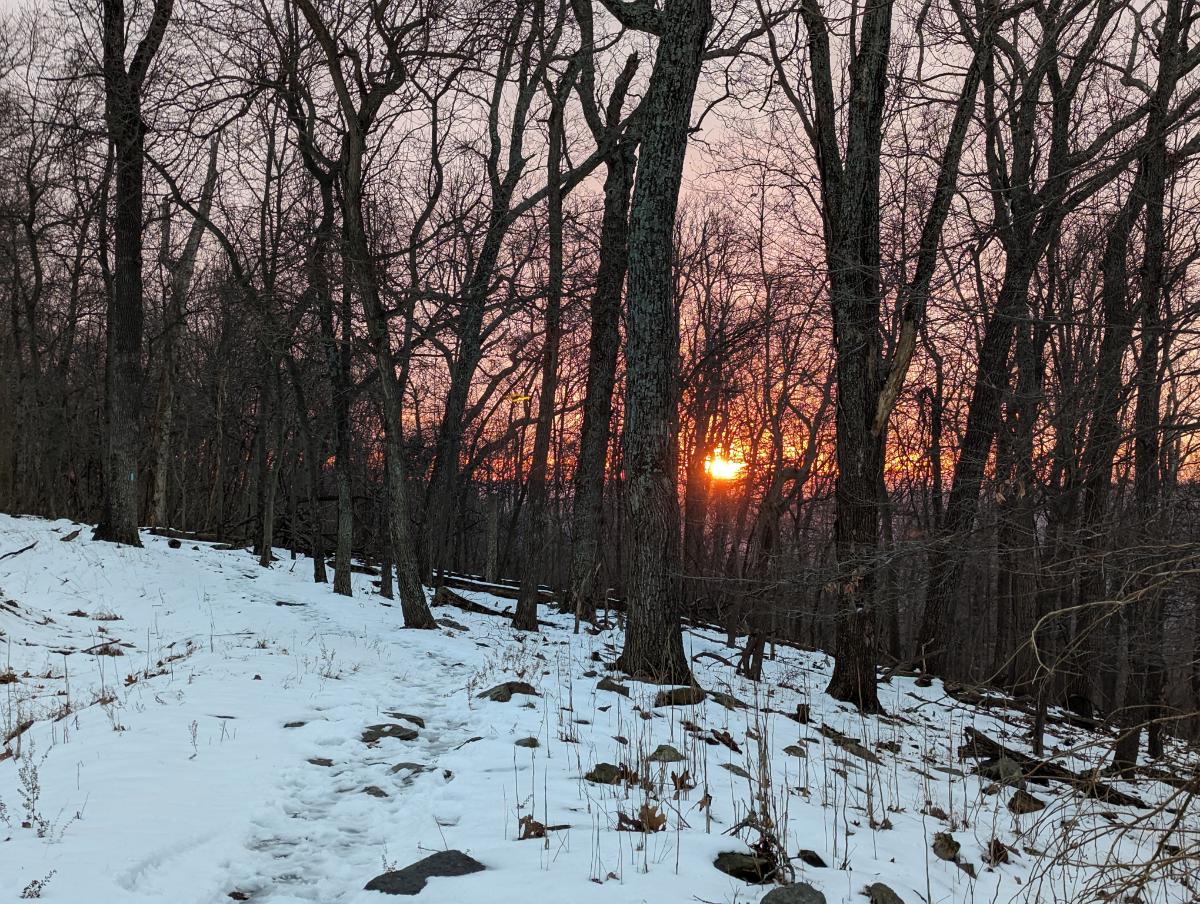
Sunset on the shoulder of Loudoun Heights
Split Rock overlook at dusk
Charles Town and Harpers Ferry lights from high on Loudoun Heights

More photos on Instagram.

14 January 2024: Sunrise and snowstorms (Weverton Cliffs and Ed Garvey return)

16.8 miles / 1,982 ft ascent / 6 hrs 50 minutes

Fantastic long walk to catch sunrise from Weverton Cliffs. Brief snowstorm on the return journey.

View from Weverton Cliffs, with Loudoun Heights in the background
Sunrise over the Potomac, from Weverton Cliffs
Dusting of snow on the AT

Full details here.

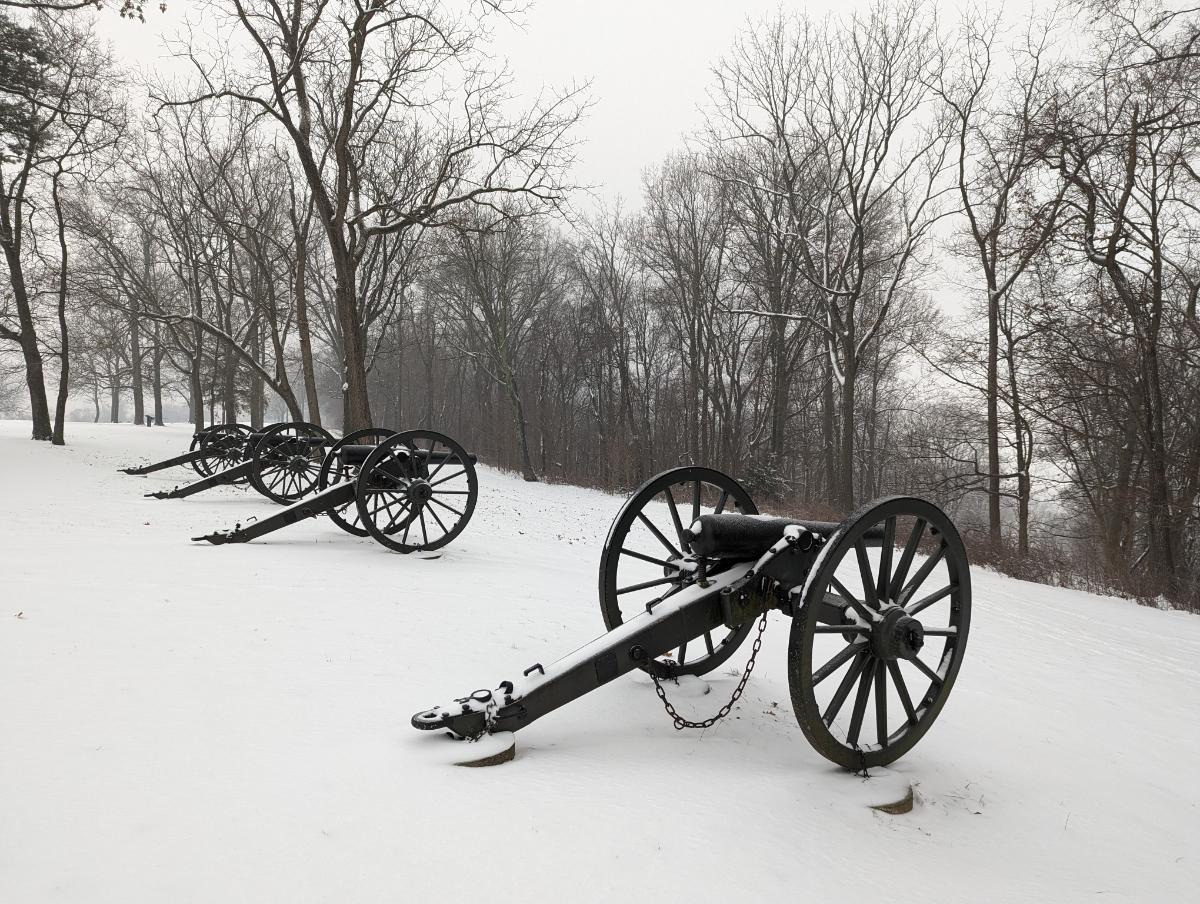
16 January 2024: Snowy Bolivar Heights

3.7 miles / 422 ft ascent / 1 hr 23 minutes

Bolivar Heights panorama (click to enlarge)
The cannons at Bolivar Heights

19 January 2024: Snowy Loudoun Heights

7.9 miles / 1,695 ft ascent / 4 hrs 16 minutes

The most wintry hike, with about 3 inches of fluffy snow on the ground.

Split Rock / AT junction
Essential winter gear: poles and a flask of tea!
Harpers Ferry from Split Rock lookout
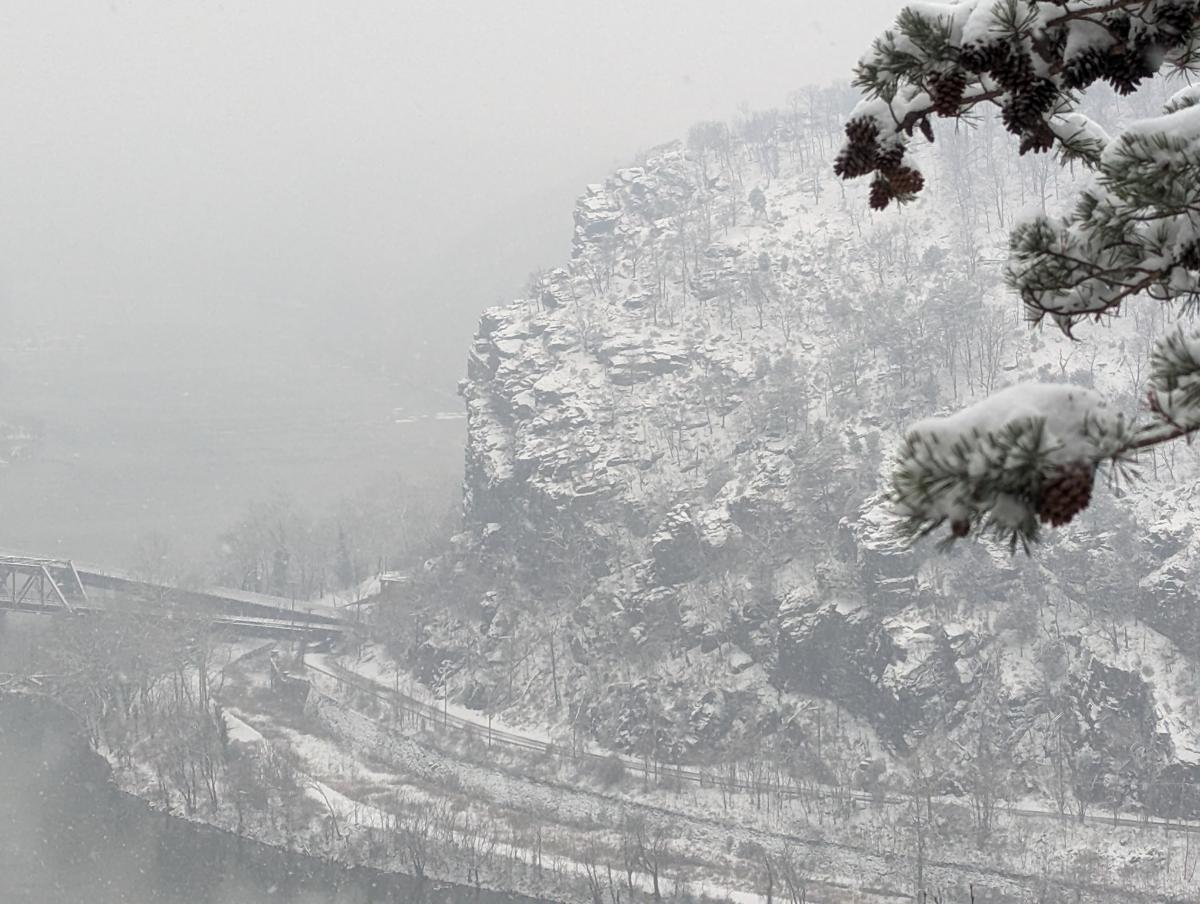
Close up of the cliffs above the railway line on Maryland Heights

More photos on Instagram.

21 January 2024: Snowy Bolivar Heights

3.7 miles / 416 ft ascent / 1 hr 22 minutes

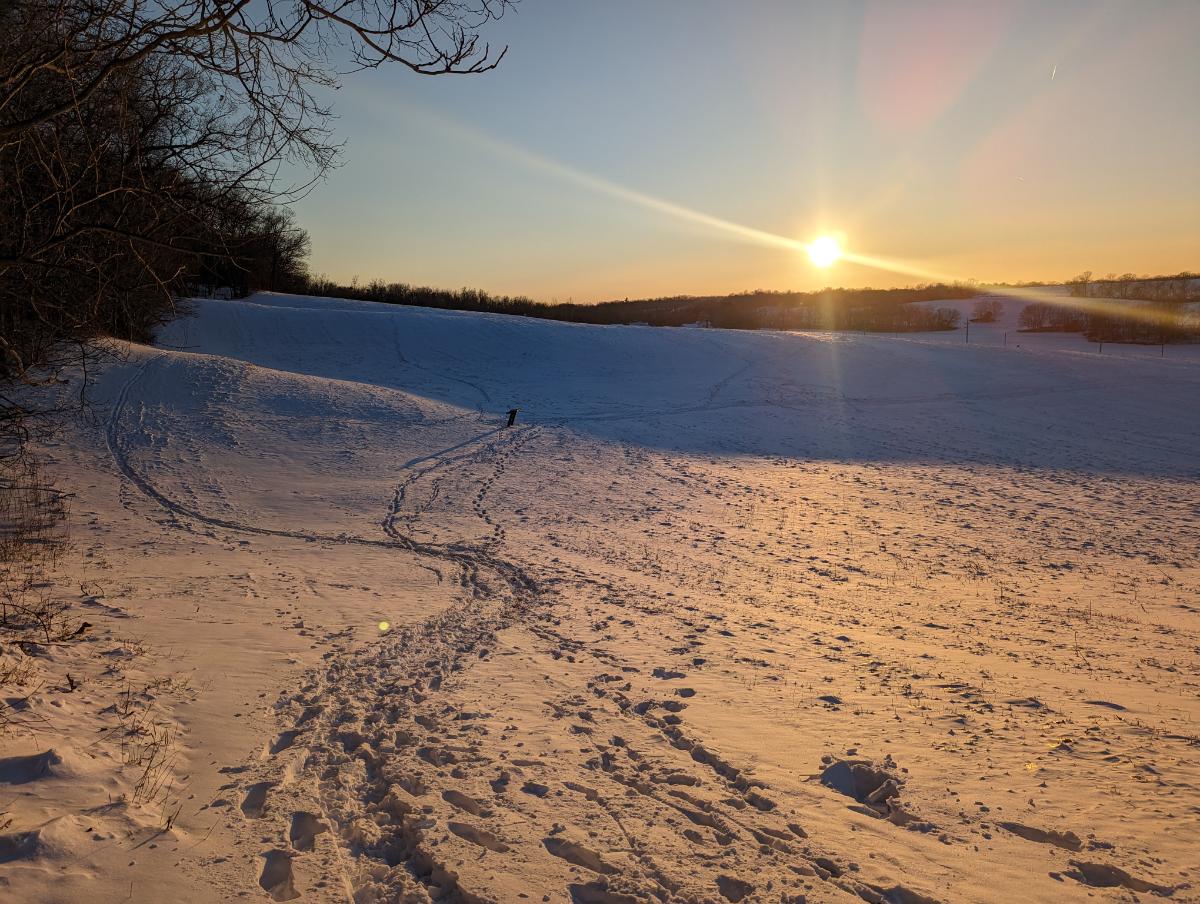
On the west slopes of Bolivar Heights, looking SW
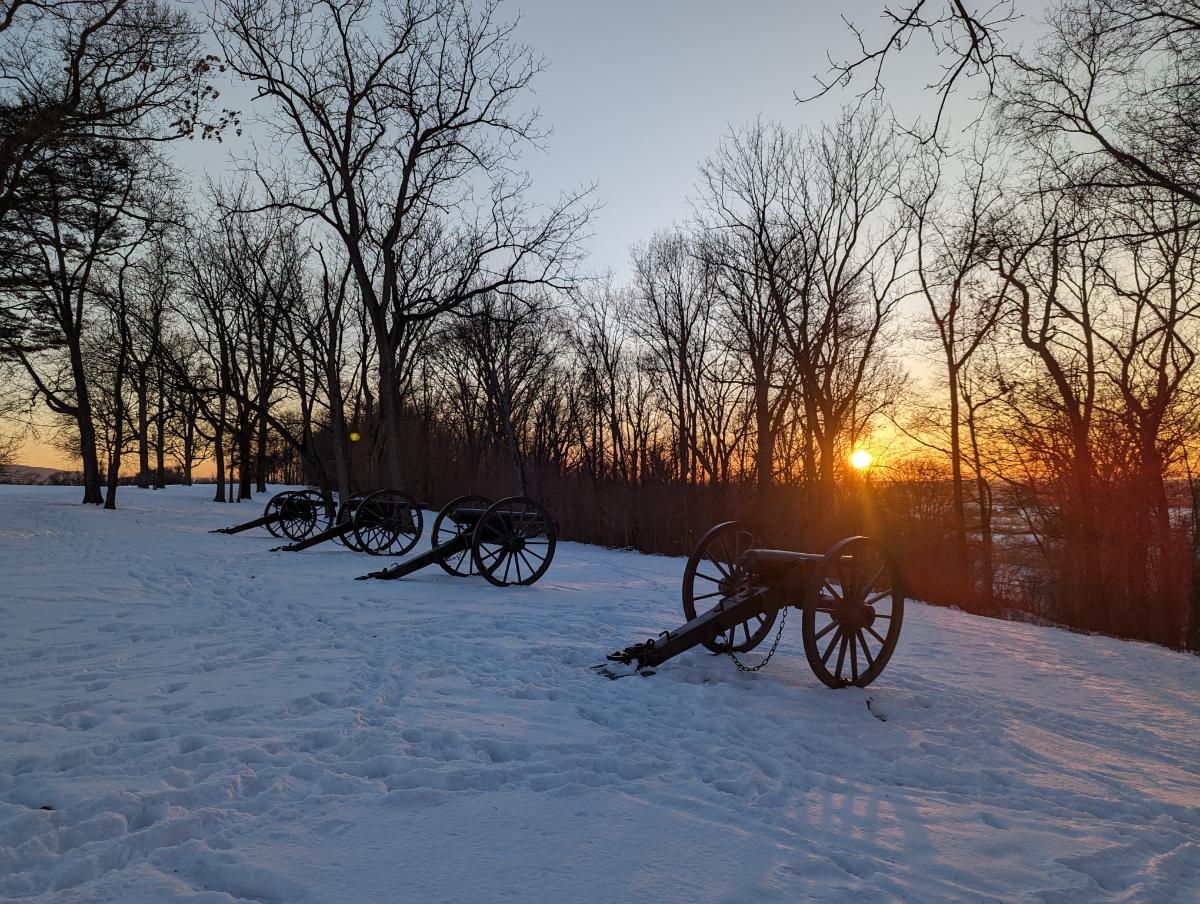
The cannons at Bolivar Heights at sunset

24 January 2024: Snowy Twin Peaks (Loudoun Heights and Stone Fort loop)

14.7 miles / 3,029 ft / 6 hrs 23 minutes

Sunrise from the side of Maryland Heights on my way up the Stone Fort loop
Sunrise from the top of the Stone Fort loop, Maryland Heights
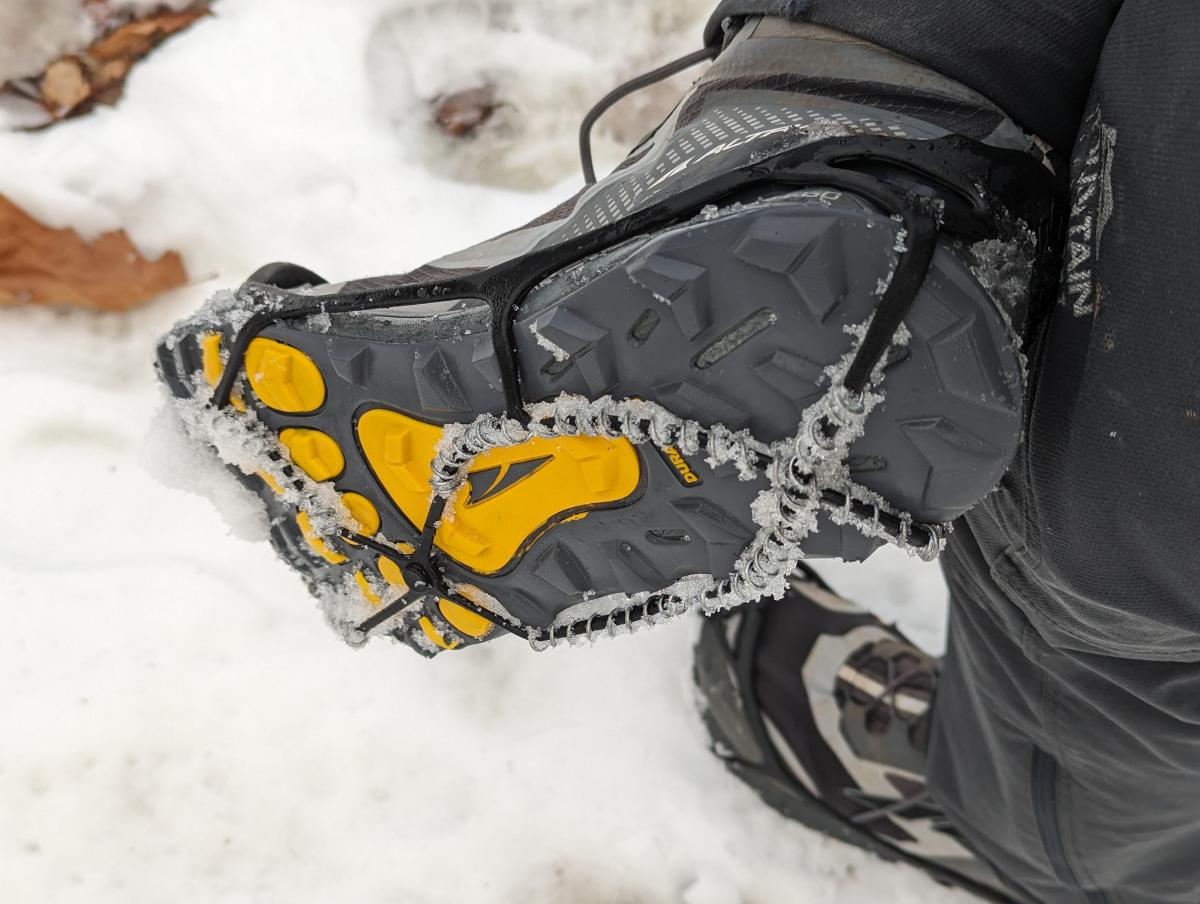
This walk was the only time I needed the traction spikes this season 😦
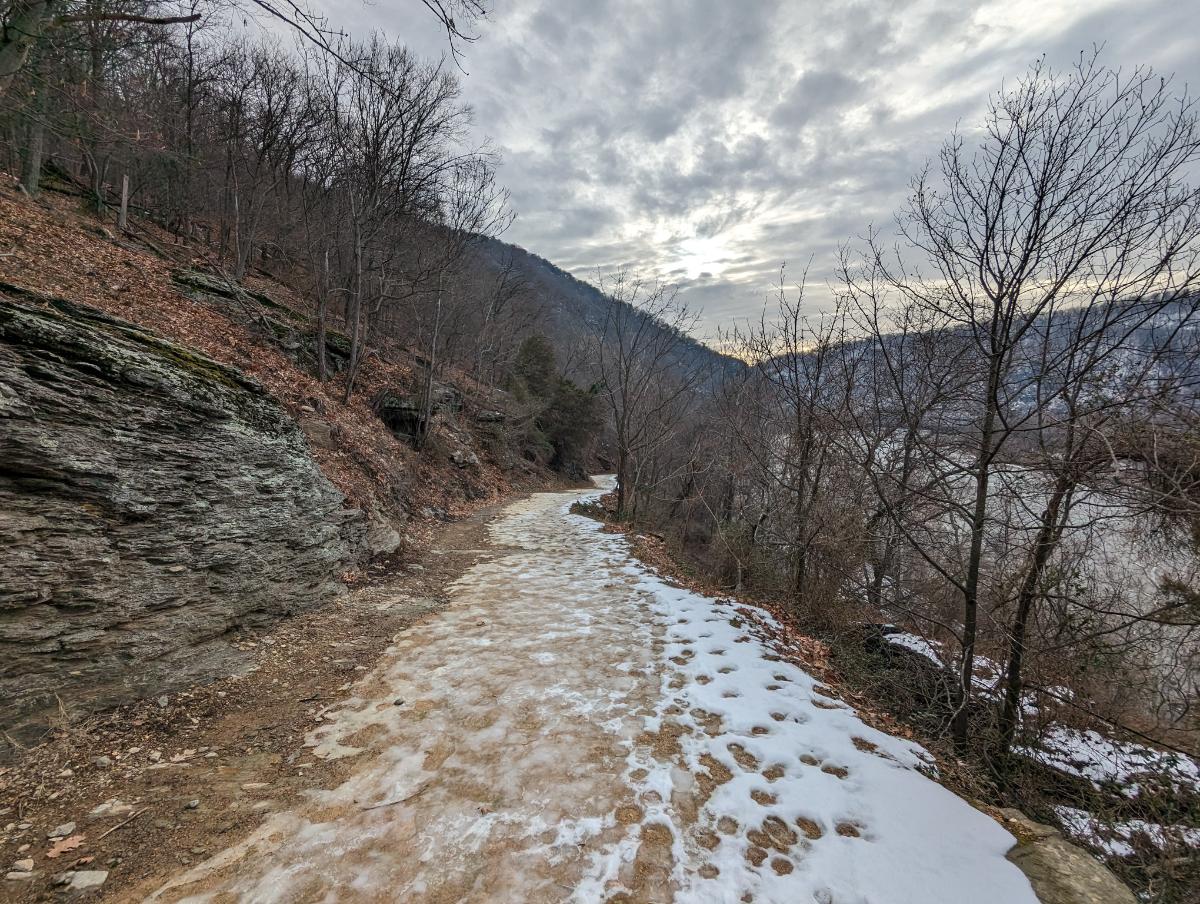
The snow turned to slush on the way down
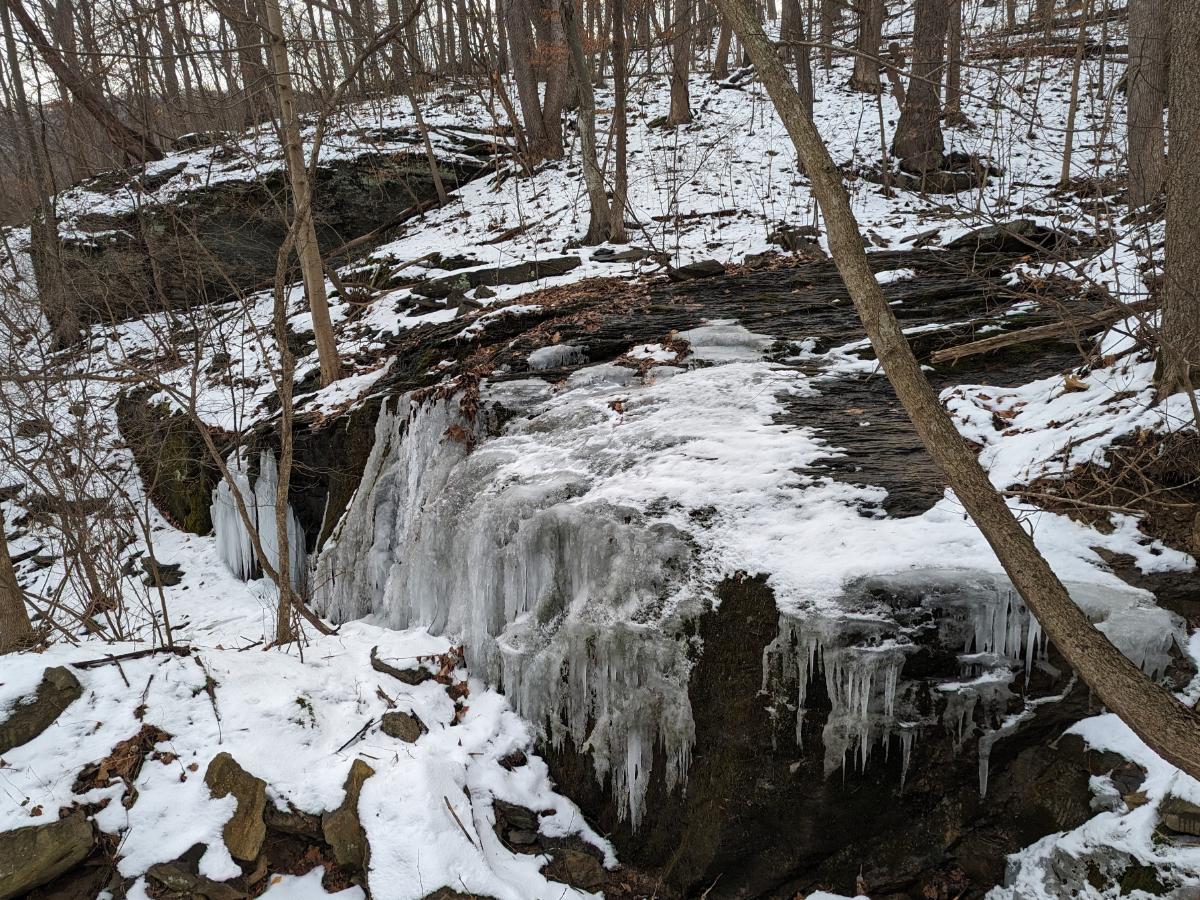
A frozen creek on the way up Loudoun Heights
Looking across to Maryland Heights from the shoulder of Loudoun Heights

Otherwise, we had plenty of non-snowy adventures in the hills and along the C&O towpath during the “winter” season. Hopefully, and I say this every year, we get a bit more snow next year!

Prior Years

Book Review: LOCAL by Alistair Humphreys

I thoroughly enjoyed this book.

The author begins by asking the question: is one map enough for a lifetime of exploration? Or to put it plainly, can his local area satisfy his wanderlust?

The author is renowned adventurer Alistair Humphreys1 (National Geographic’s Adventurer of the Year 2012 nonetheless!), whose wanderings have taken him around the world and across oceans.

But this is not a book about how the author finds dazzling adventures close to home. Instead, the author spends a year understanding and learning to love his local area, his “bog-standard corner of England”.

Each week he chooses a different area — or “grid square” — to visit. Each chapter of the book represents one of these weekly outings to a new section of The Map.

What emerges from the pages is the author’s childlike curiosity and excitement about his own backyard. Each chapter is brimming with details of hidden natural beauty, the minutiae of life and the people who live there. He sees the history of his backyard unfold with every step.

But much more important than those details, more important than those delightful surprises he finds behind each rock, are the bigger themes that emerge from this year-long project.

Questions of land access, land use, re-wilding, climate change, and ultimately, how much we care about the places we call home.

The books encourages you to ask yourself these big questions. It encourages you to cast fresh eyes on your own backyard. Why does it look the way it does? What forces are in play shaping the area? What will it look like for my children?

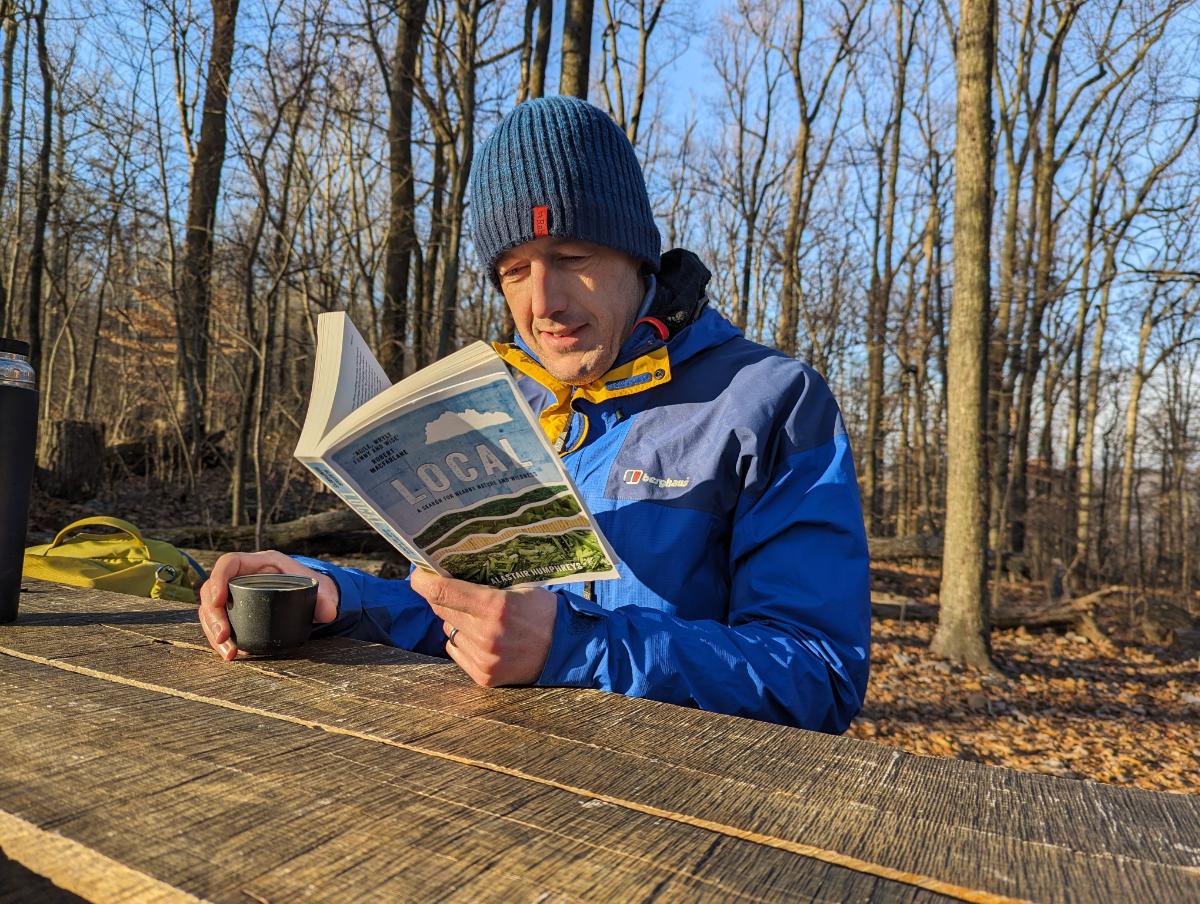
Reading Local in my local woods with a flask of tea. Life is good.

So much of the book resonated with me that it felt like it was written personally for me.

Like the author, I’m a middle-aged dad with a packed schedule. Throw in a pair of dodgy old knees and a dwindling appetite for risk, too. I notice my own metamorphosis has parallels to the authors’.

I tend to walk and bike instead of run and climb these days (although I have not given up entirely on those pursuits!). I’m as equally interested to learn about a new bird or wildflower as I am to try for a PR on the trails.

I was already headed in this direction, but this book gave me the encouragement to continue that path. It helped me embrace a more holistic experience of the outdoors.

And for that I am very glad.

Here are two practical ways this book has influenced my outdoor habits:

1. Learning About My Local Environment

After years of living here in blissful ignorance, I’ve started taking notice of the flora and fauna that also live here.

Each time I go out for a walk or bike ride, I aim to identify one new thing.

Luckily for us oblivious souls, there are fantastic apps (AI-assisted! All bow to our AI overlords!) to help with that:

From left to right:

  • I use the PictureThis app to identify plants.
  • I use the Merlin Bird app from Cornell University to identify birds by their songs. It’s wonderful! (This was a tip from the book Local!)
  • I use an app called Rock Identifier to identify rocks on the trail.

Recently, I’ve enjoyed the songs of American Robins, Red-winged Blackbirds, Northern Cardinals, Carolina Wrens, American Crows, Eastern Towhees, Northern Flickers, Red-bellied Woodpeckers, Carolina Chickadees, Tufted Titmouses, Eastern Bluebirds, and House Sparrows.

Another example: taking a new side trail in my neighborhood led me to this stunning thicket of bamboo that I had no idea existed in town.

2. Becoming Aware of Land Access Issues (an Obituary for Elk Ridge Trail)

At the top of my local mountain — the Stone Fort loop of Maryland Heights — is an old marker post for the Elk Ridge Trail. It’s weathered but not that old. Notably though, there is no paint on the letters, so it’s hard to read until you’re up close.

Look closely and you can see an old trail name on the post as well as the old blue blaze on the tree.

The trail is still marked on hiking maps, like this one from Alltrails that I’ve annotated:

The Wikipedia page for Elk Ridge states: “An unmaintained trail leads along the ridge of Park Service land onto private property to Buggy Rocks and views east of Pleasant Valley.”

It sounds lovely but there’s a line of very clear “POSTED: NO TRESPASS” signs on the park boundary.

It’s abundantly clear the owner does not want anyone on their land. And this being America, deliberate trespassing is a very silly idea.

I once met a runner who had traveled this path many years ago, but couldn’t recall much other than it being boggy in places.

Who knows, maybe one day this trail will be open again, but I’m not holding onto much hope.

To balance this — because I don’t want to close on a negative thought — the Trail & Town group here in Harpers Ferry has done tremendous work creating a system of new trails through Woodpecker Woods and the Ridge Street connector trail. We have miles of fantastic new trails to enjoy!


So yes, I recommend this book if you’re at all interested in your local area. It’ll encourage you to open your eyes more as you explore your own backyard.

And as you learn more, you start to care more. And that’s the key message.

⭐⭐⭐⭐⭐

Local: A Search for Nearby Nature and Wildness is available wherever you buy books or on Amazon here (US site).


  1. I once loaned the author my crampons and ice axe for a winter UK 3-peaks trip for a Sunday Times feature. About the closest my adventuring got to being featured in the broadsheets LOL!