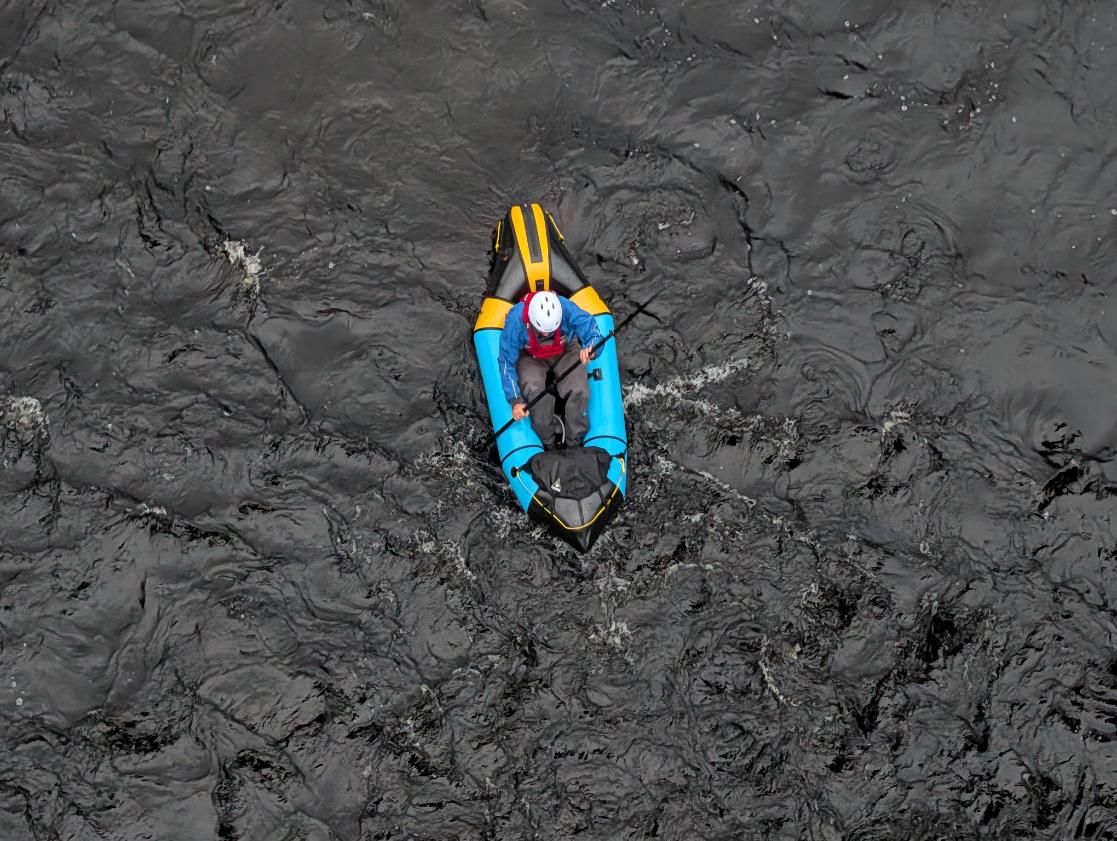
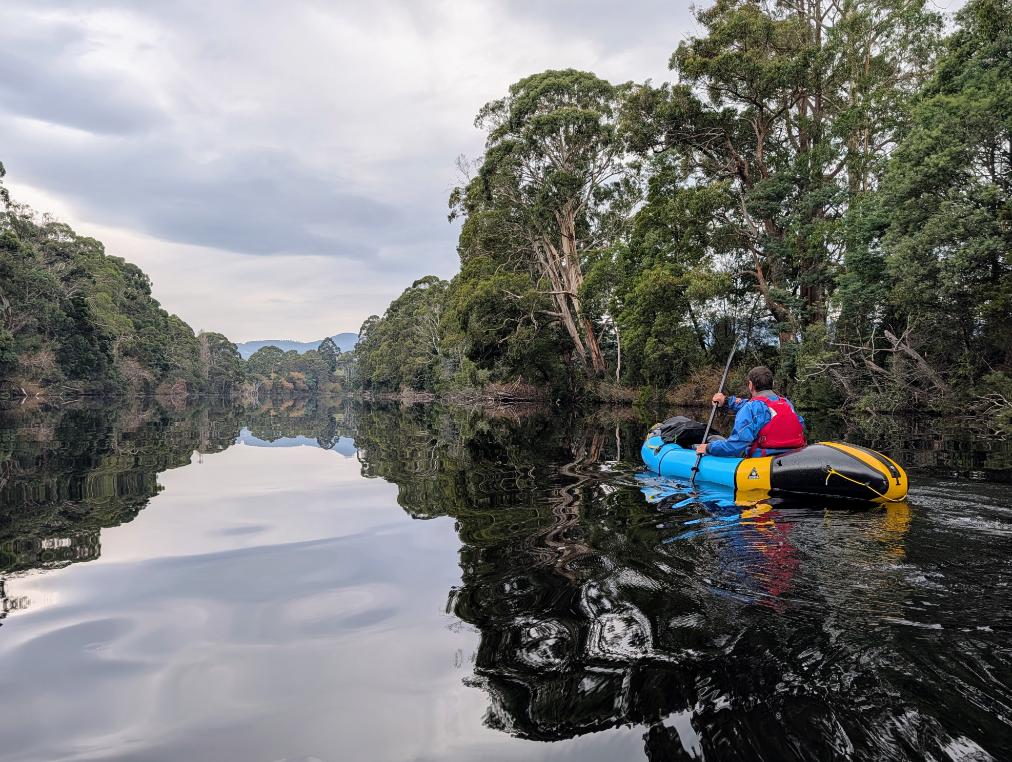
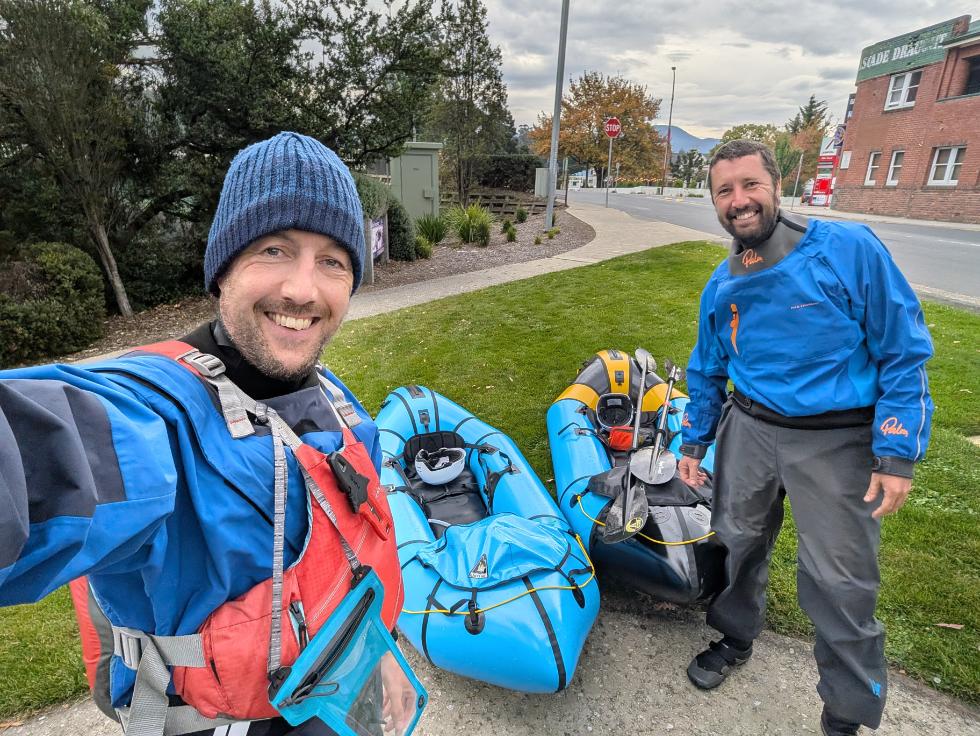
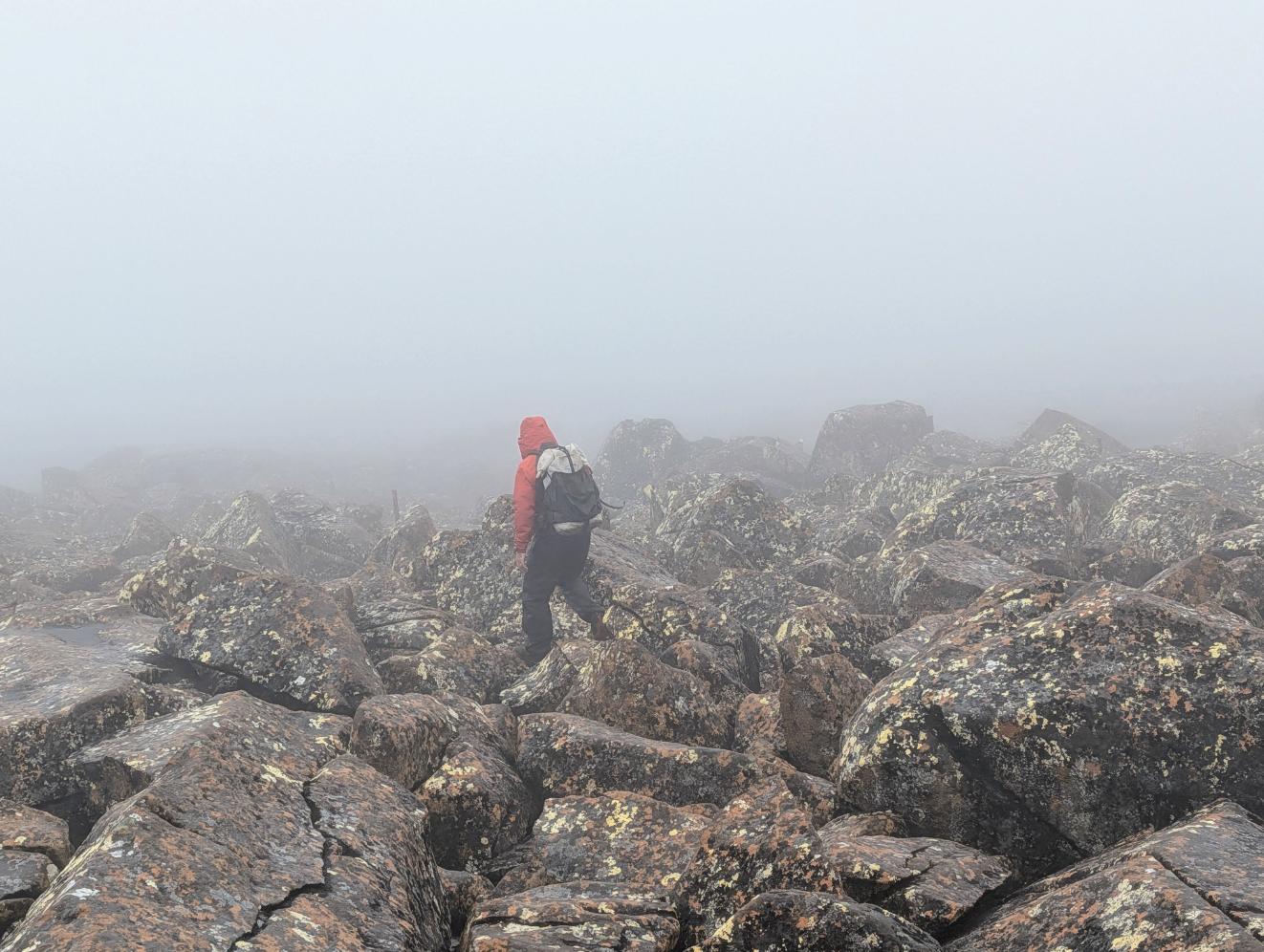
Tag Archives: packrafting

Tasmania Packrafting 2026

24th April – 8th May 2026

My brother and I had two weeks in Tasmania with packrafts. We packrafted on 9 days, hiked on 3 days, and had a 1 day transfer at the end of the Huon River expedition to get back to the car, which represented a really good ratio of adventure days to rest days.

It was one of the best expeditions we’ve been on together and we really maximized the good weather to achieve our objectives.

Here’s a 22-minute video stitched together from all the short clips we recorded. Below that is a more detailed photo essay. Enjoy!

Lake Pedder Expedition (Days 1 – 3)

  • Total Distance: 22 miles / 35.4 km
  • 3 days
  • 1 summit (Scotts Peak)

When we arrived in Southwest National Park, a large high pressure system had settled over Tasmania. Wanting to take take advantage of these calm conditions—wind is the enemy of packrafters!—we decided to explore some of the islands in Lake Pedder.

We camped and explored both islands, Mt Solitary and Scotts Peak, and climbed Scotts Peak. The packrafting involved open water crossings of up to about 2.5 miles between the islands. Even with the relatively benign conditions, the afternoon wind affected our plans, so we had to abandon the circumnavigation of Mt Solitary and return with the wind at our backs (which was great fun!). 
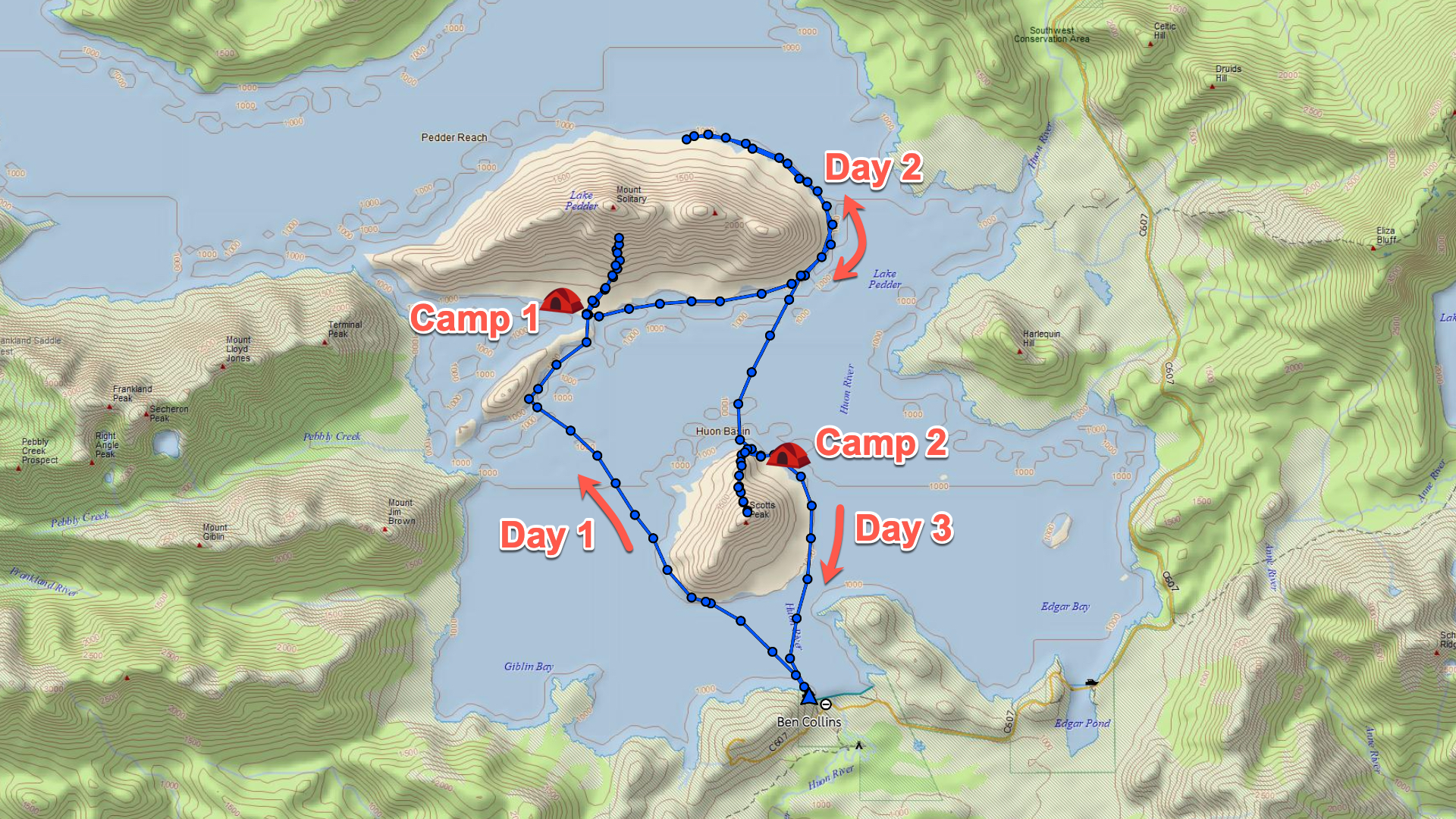
Day 1: Paddling to Mt Solitary and exploring the island
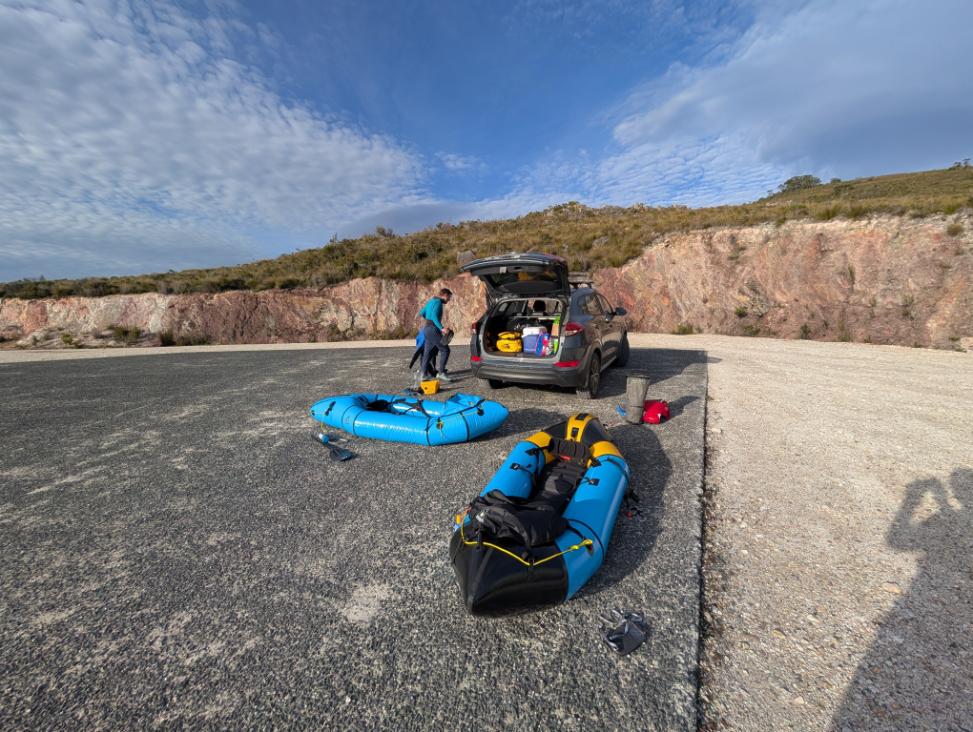
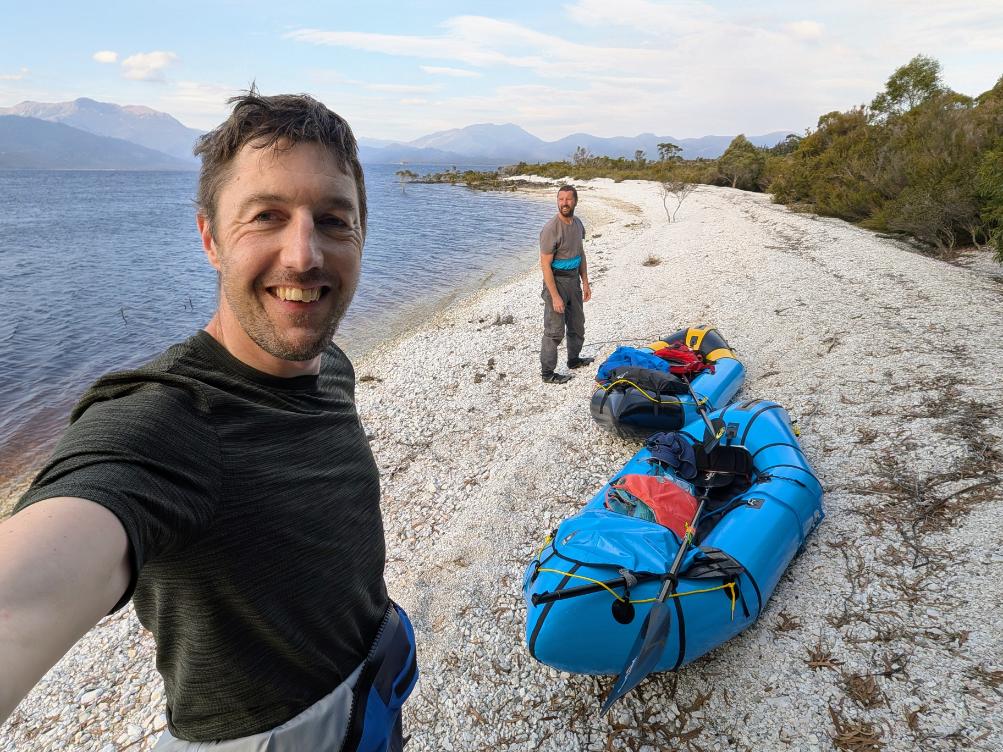
Packing at Scotts Dam boat ramp. (Photo Pete Collins)
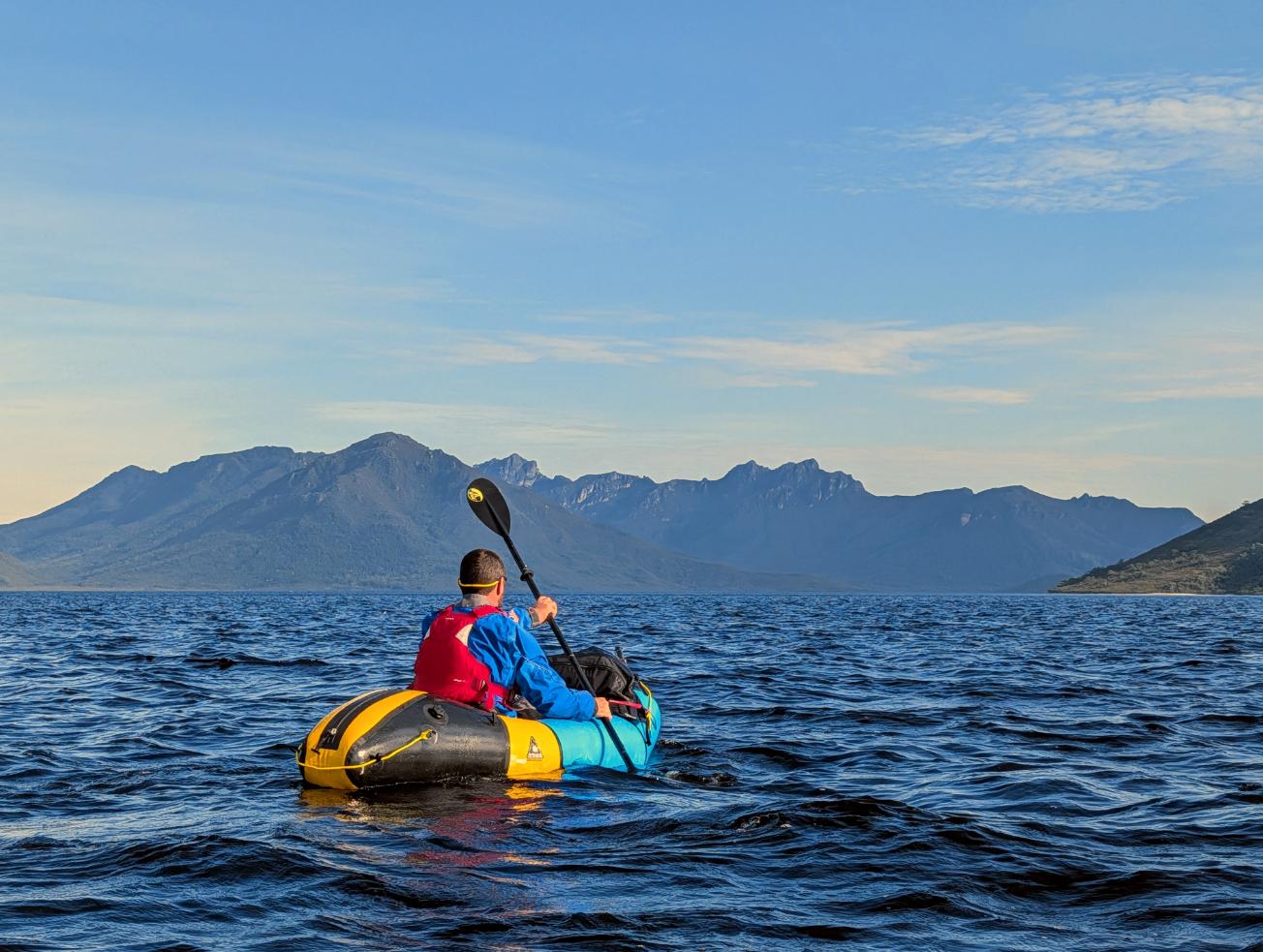
Paddling towards Scotts Peak island
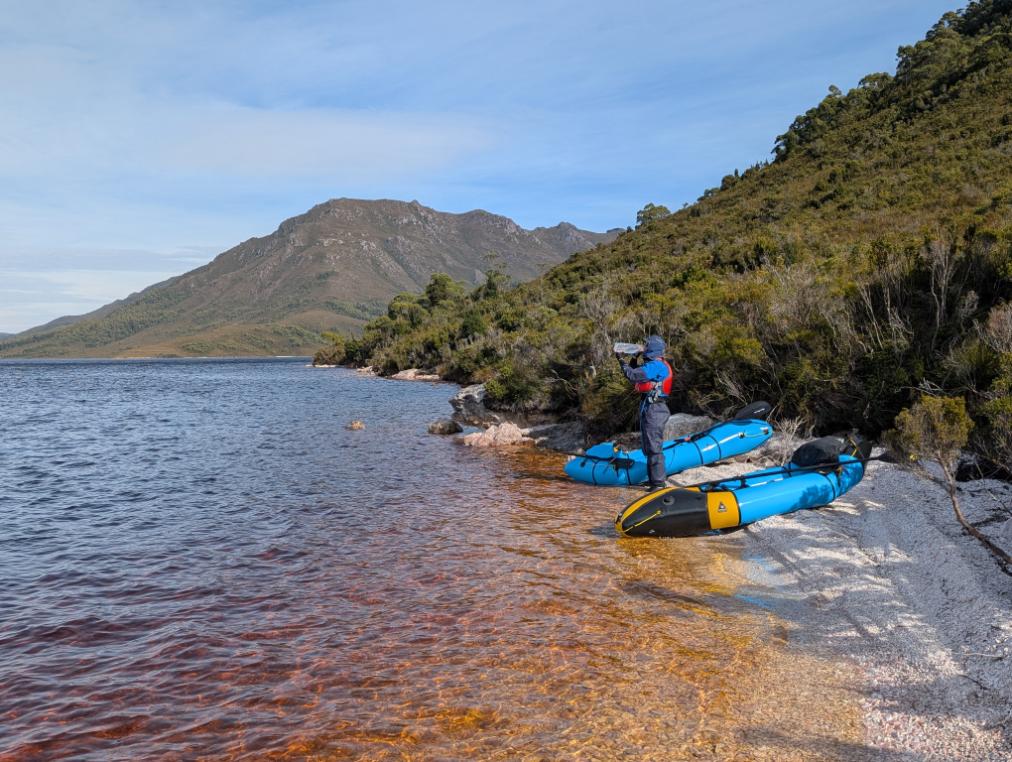
Drinks break on the small Barrier Islands between Scotts Peak island and Mt Solitary island. (Photo Pete Collins)
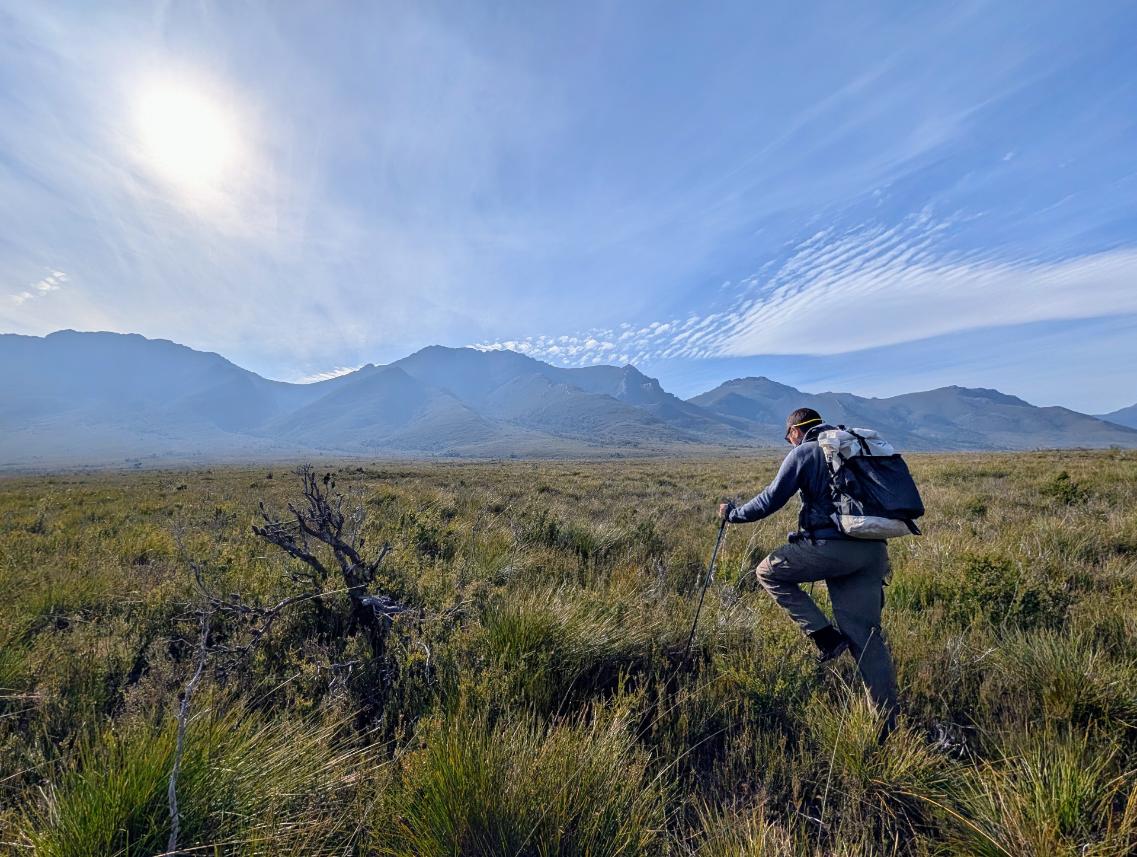
Pete hiking over the rough button grass at the start of our attempted climb of Mt Solitary
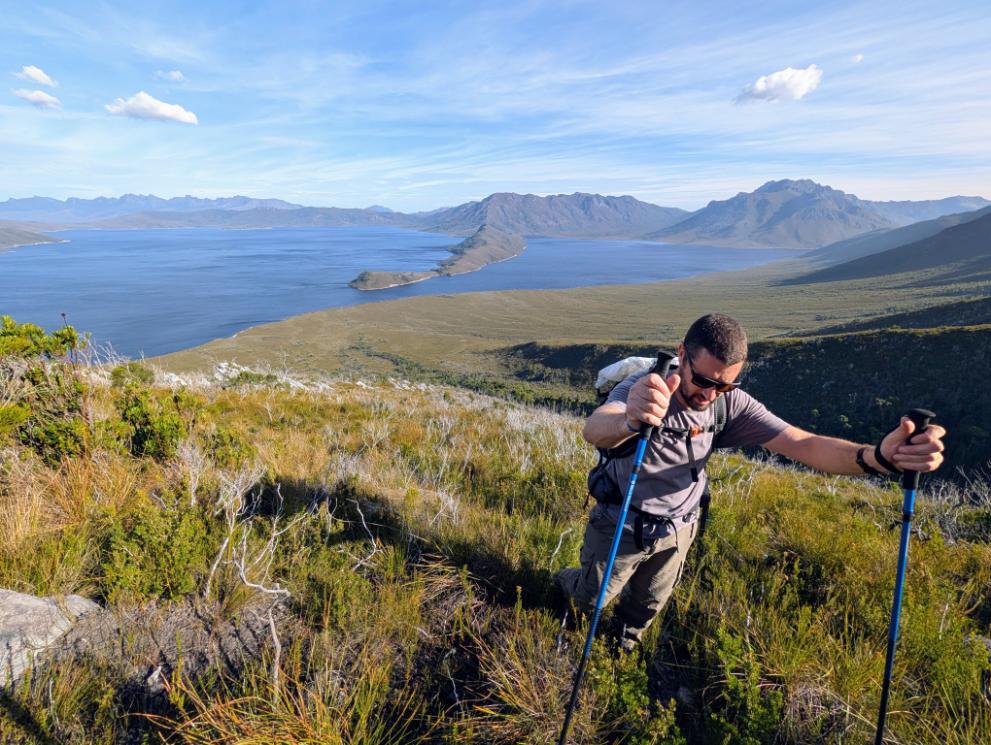
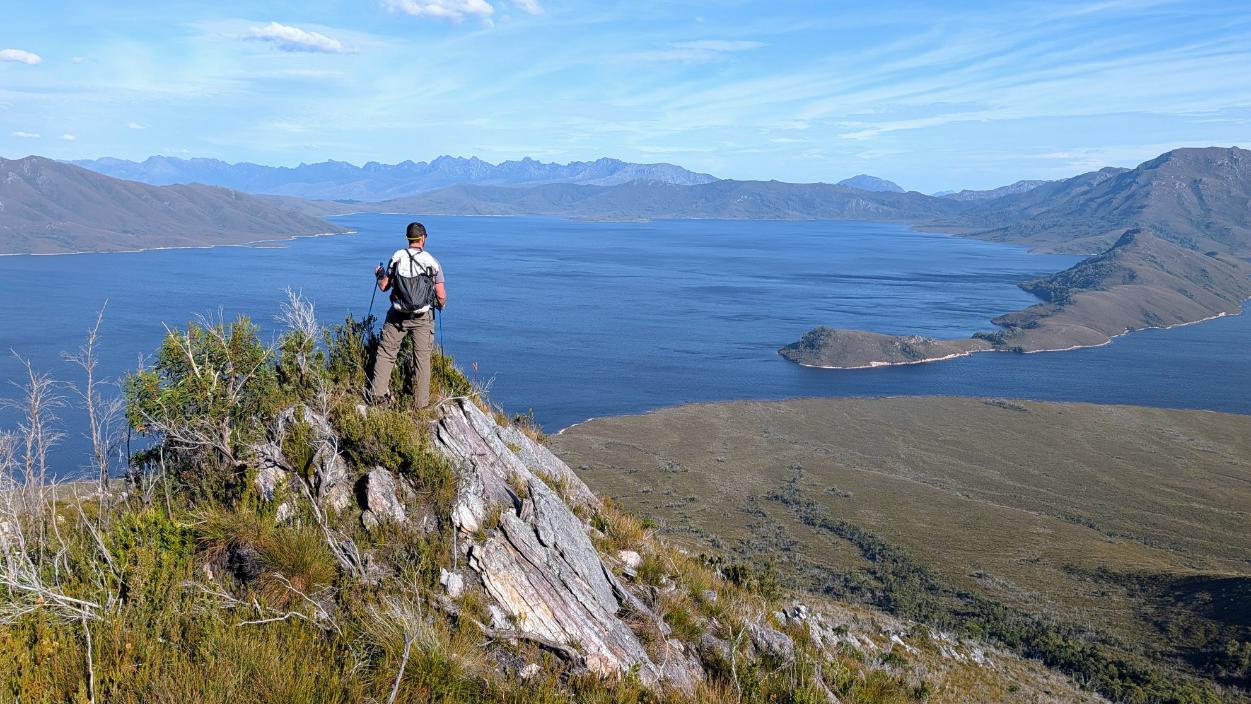
Pete high on the shoulder of Mt Solitary. You can clearly see the Barrier Islands center of the picture.
Taking in the views at our high point on the shoulder of Mt Solitary. The going was tough underfoot and we didn’t have enough daylight to get to the top before dark.
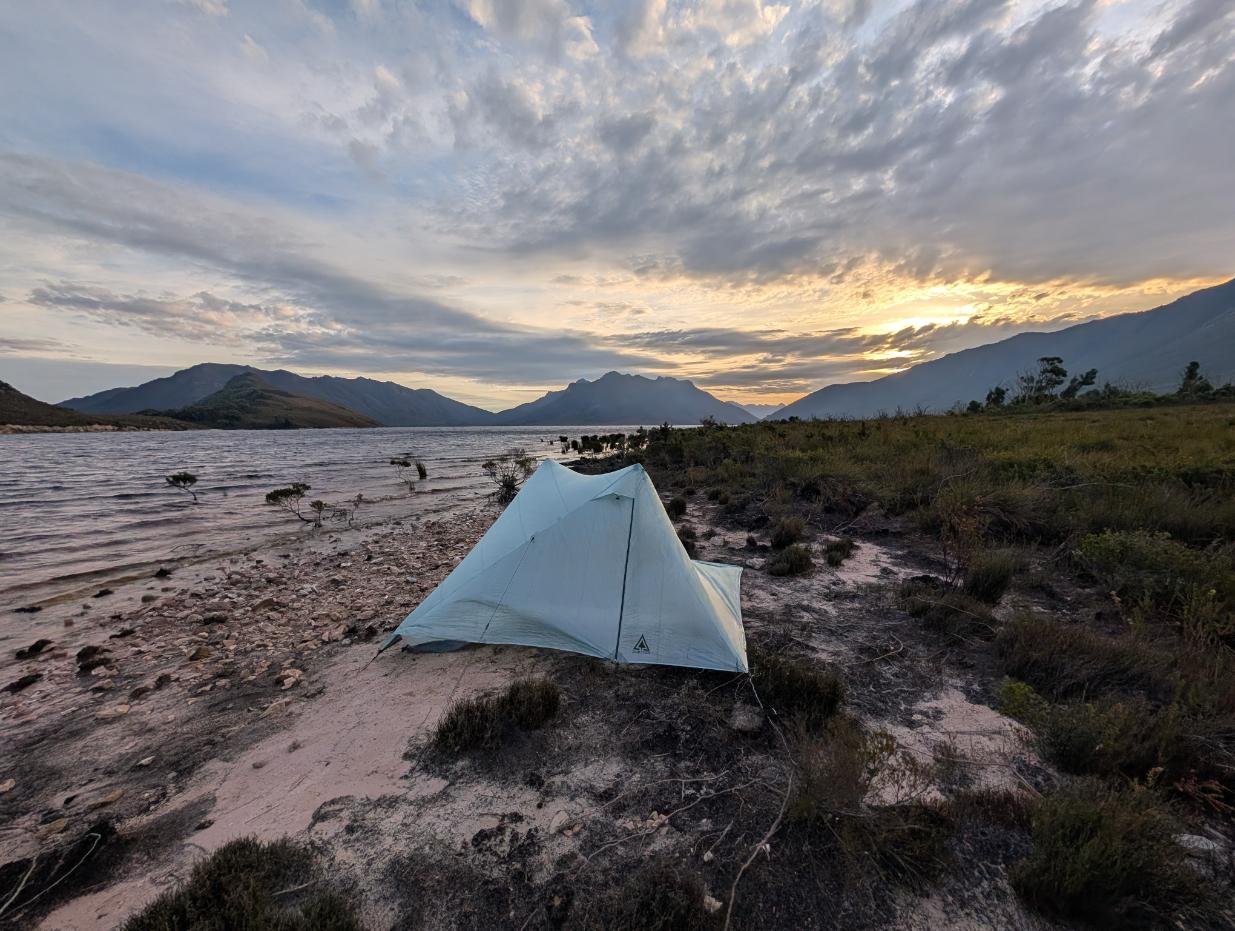
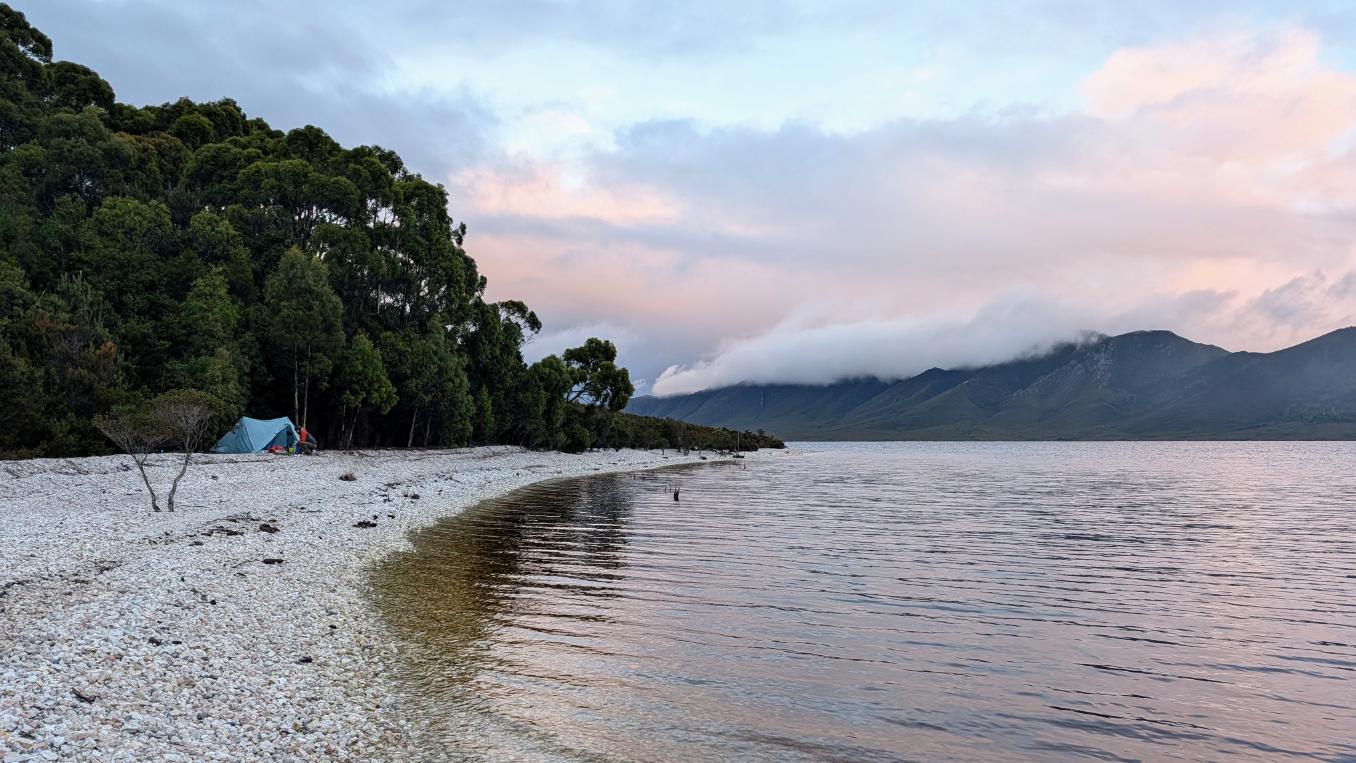
Our campsite on the edge of Lake Pedder, about the only flat bit of ground we could find. (Photo Pete Collins)

Day 2: Paddling around Mt Solitary on Lake Pedder
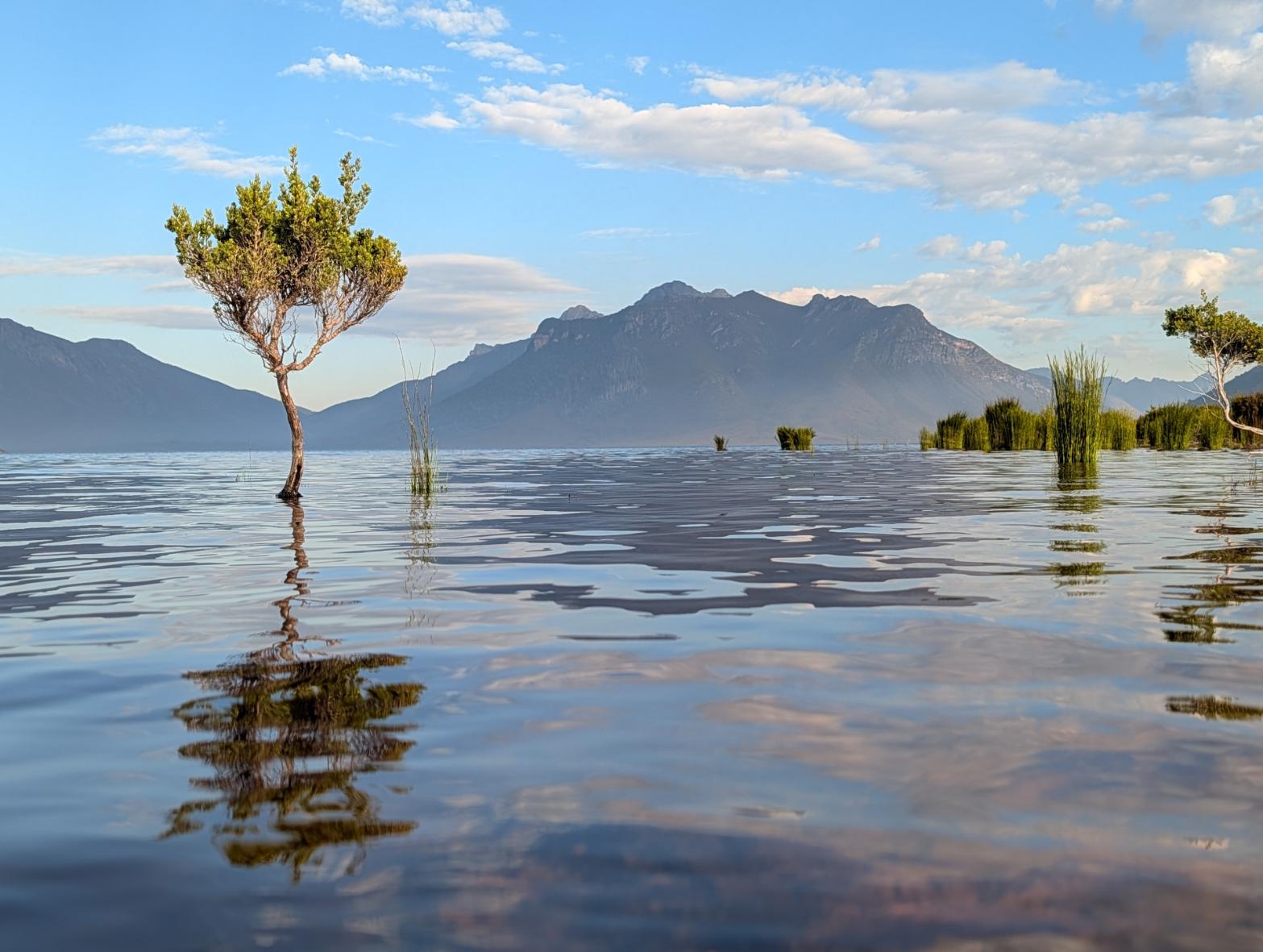
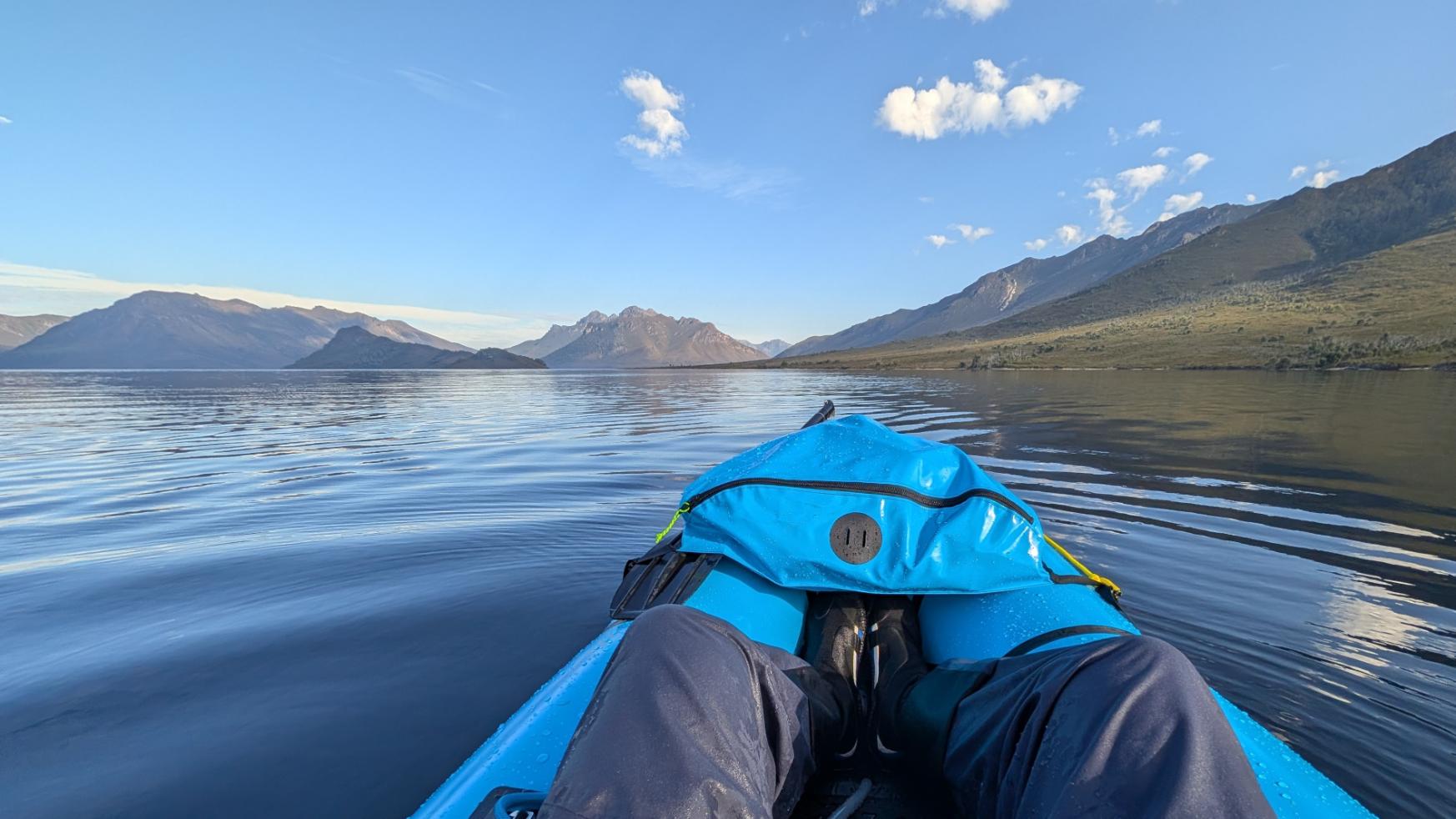
Beautiful, calm conditions on the morning of day 2
Glorious views from the shores of Mt Solitary
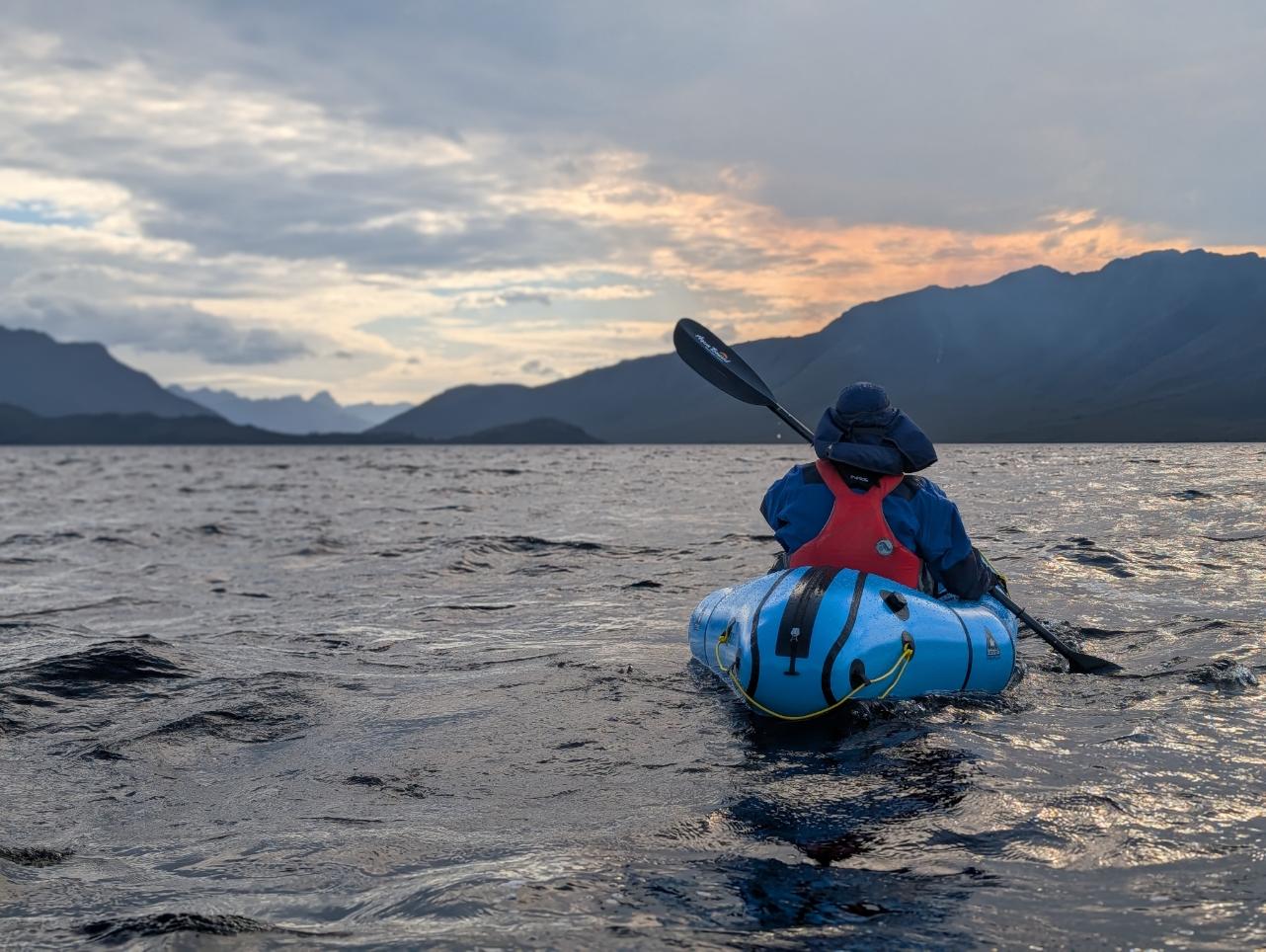
The conditions got considerably rougher as the day wore on and the wind became too strong to paddle against. We had to abandon our plans to circumnavigate Mt Solitary. (Photo Pete Collins)
“Yep, this looks like a good campsite” at the end of day 2
Our five-star campsite on Scotts Peak island: flat, sheltered, private beach, epic views, infinite water supply. One of the best wild camping spots I’ve stayed at.
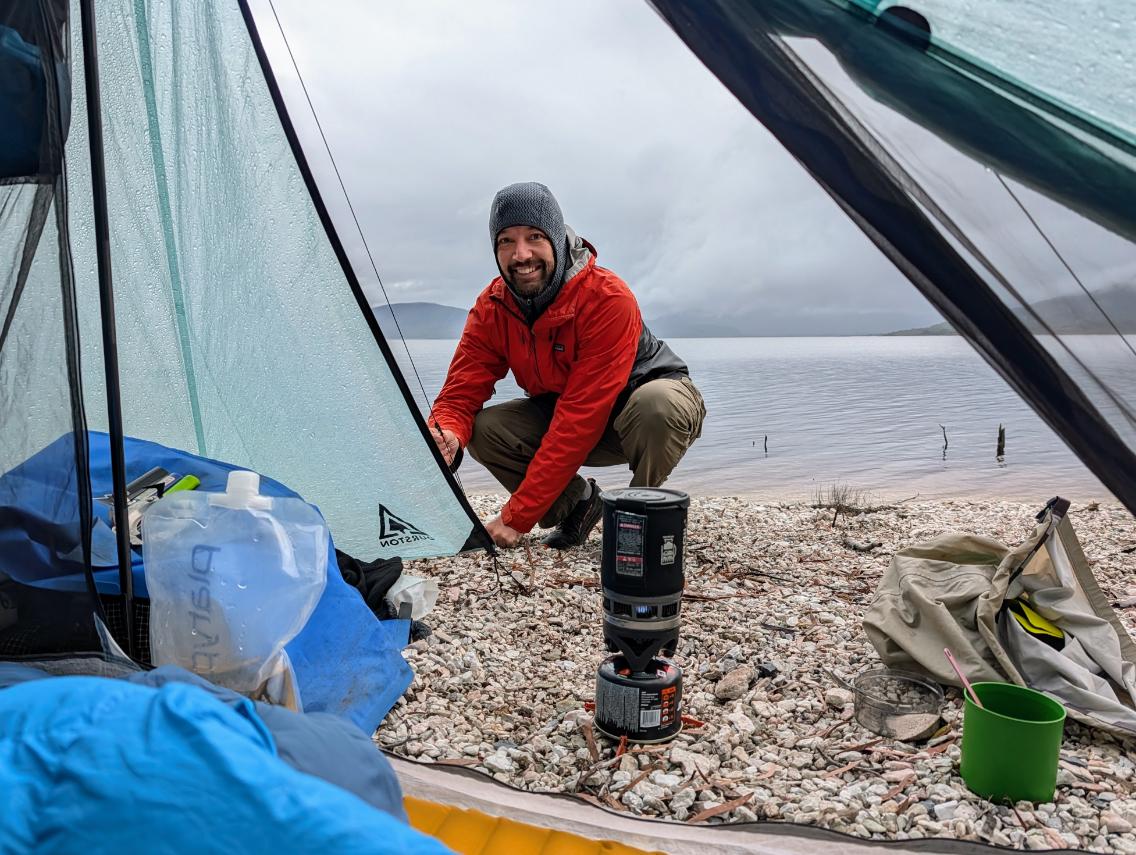
Tent pitched with epic views, water on the boil for a cup of tea. Happy days!

Day 3: Scotts Peak climb and Lake Pedder Packrafting
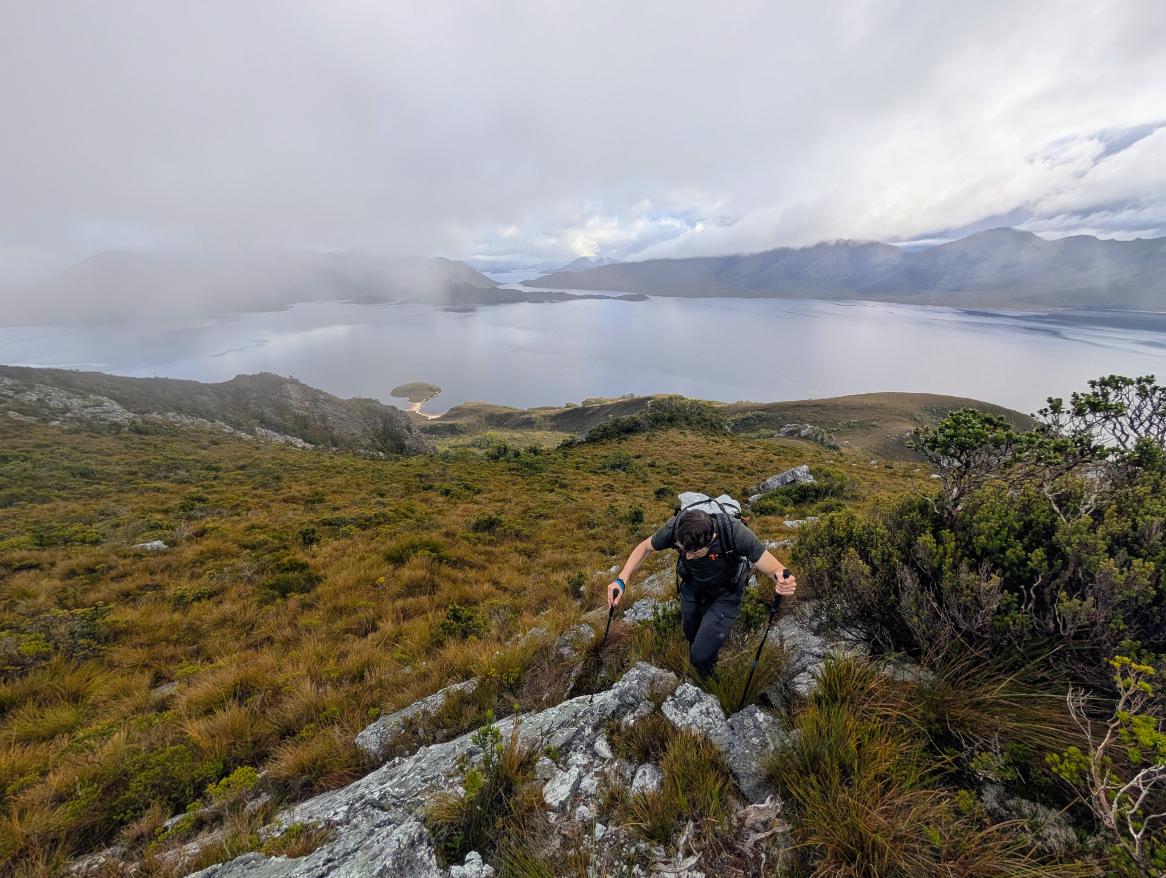
Yours truly climbing Scotts Peak, with Lake Pedder and Mt Solitary island in the background. (Photo Pete Collins)
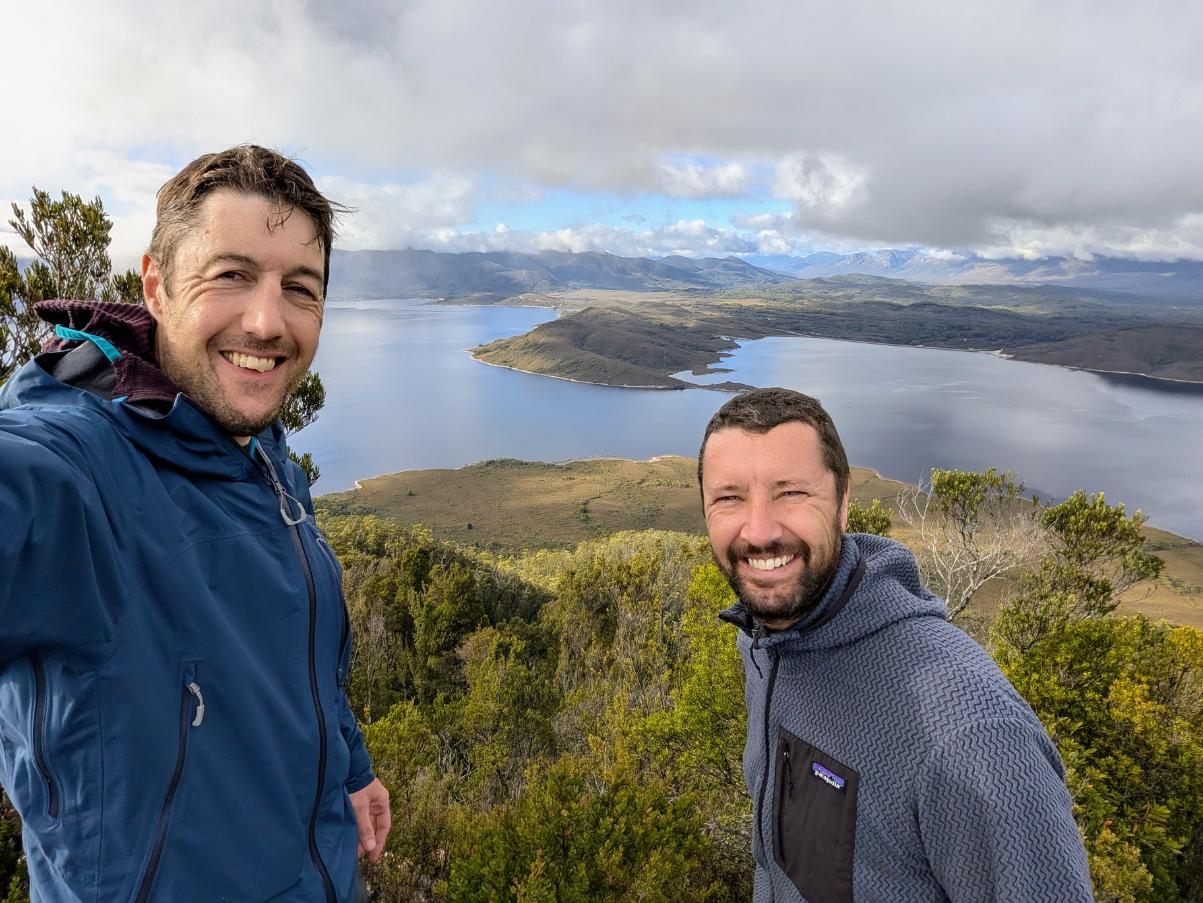
Brothers on the summit of Scotts Peak. So cool to be up here together! No sign of others humans or man-made objects in any direction (except for the metal pole marking the summit). We could look across to Mt Eliza and Mt Anne, from our 2018 Tasmania trip.
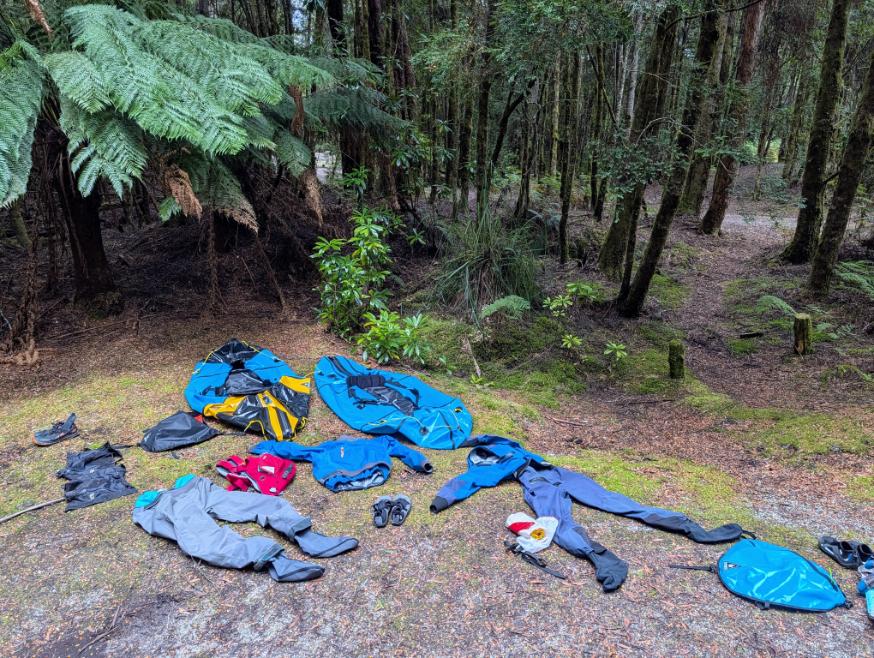
Back at the Huon River basecamp, drying our paddling gear

Huon River Expedition (Days 4 – 9)

  • Total Distance: 60 miles / 96.5 km
  • 6 days (2 hiking, 4 packrafting)
  • Grade II rapids

Next up was our main objective: the Huon River, a remote Grade II river flowing from Scotts Peak dam to Huonville.

The route was a long traverse from left (Port Davey trailhead) to right (town of Huonville):
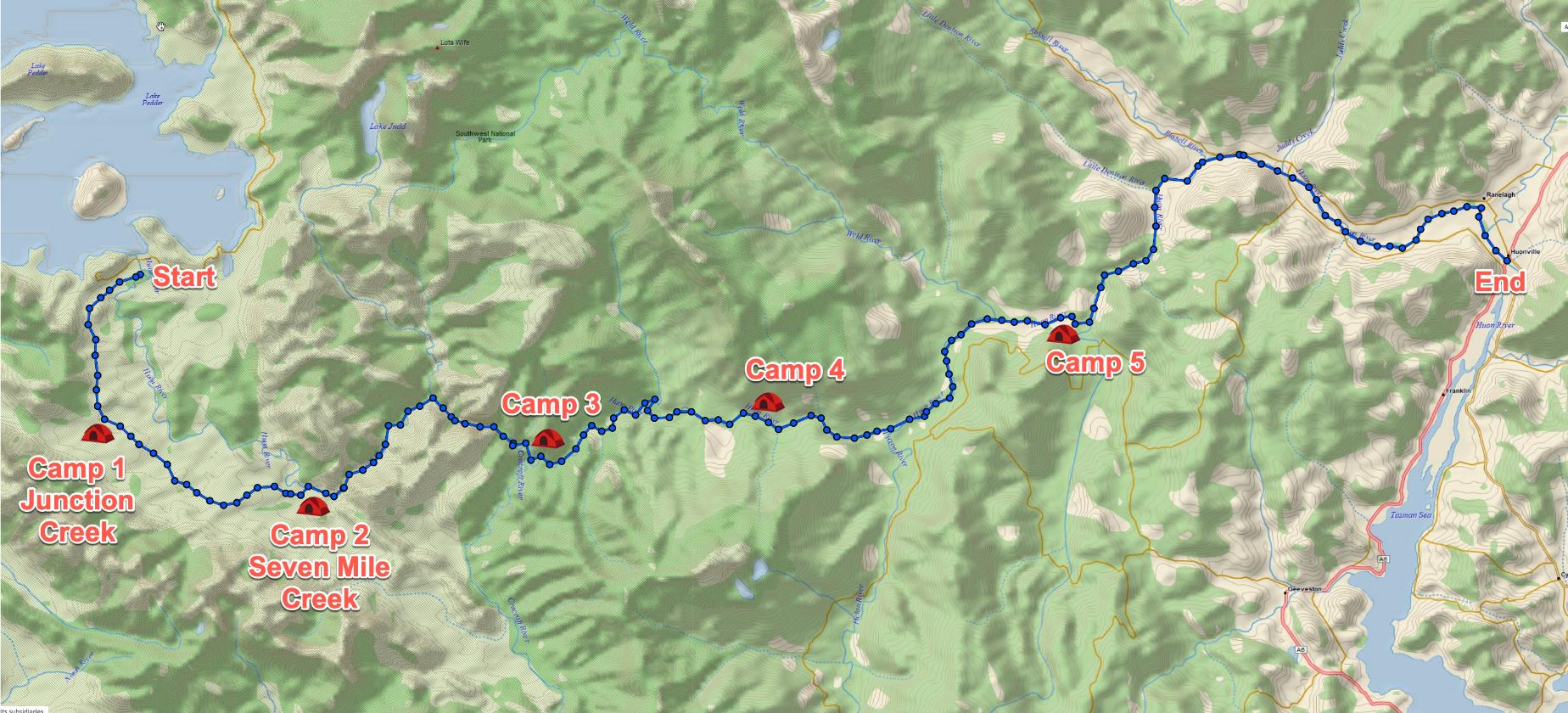
Day 4: Port Davey Track to Junction Creek Campsite (hiking)

My brother and I have done many mountain trips before, but this was our first backcountry trip with packrafts. We felt a mix of excitement and trepidation as we set off for the remote Huon river.
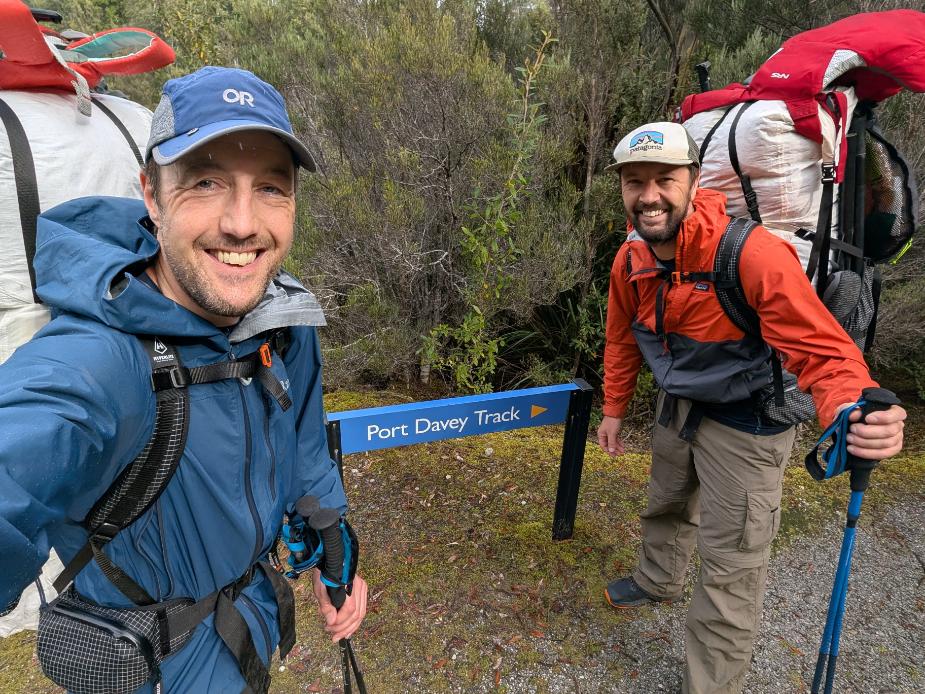
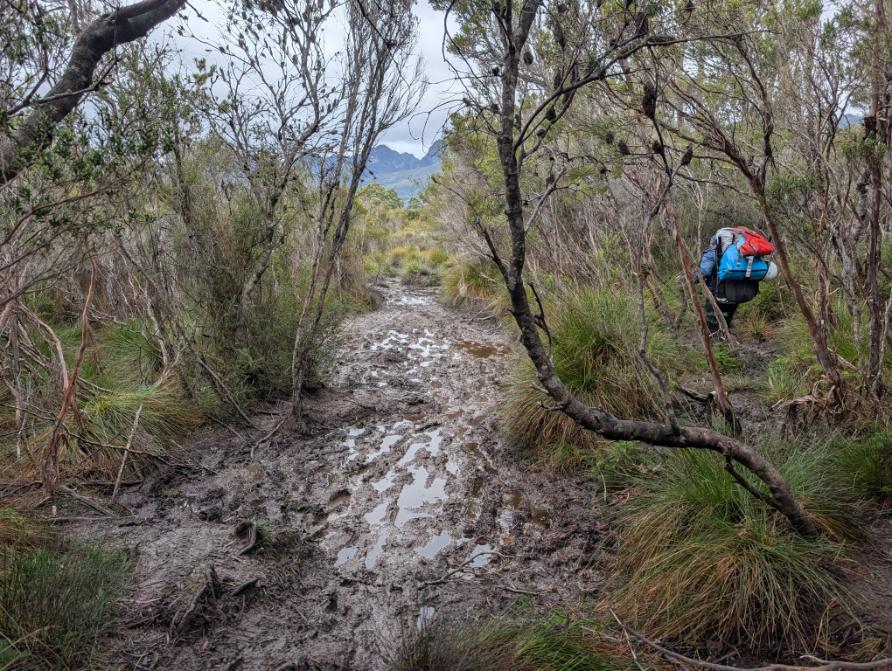
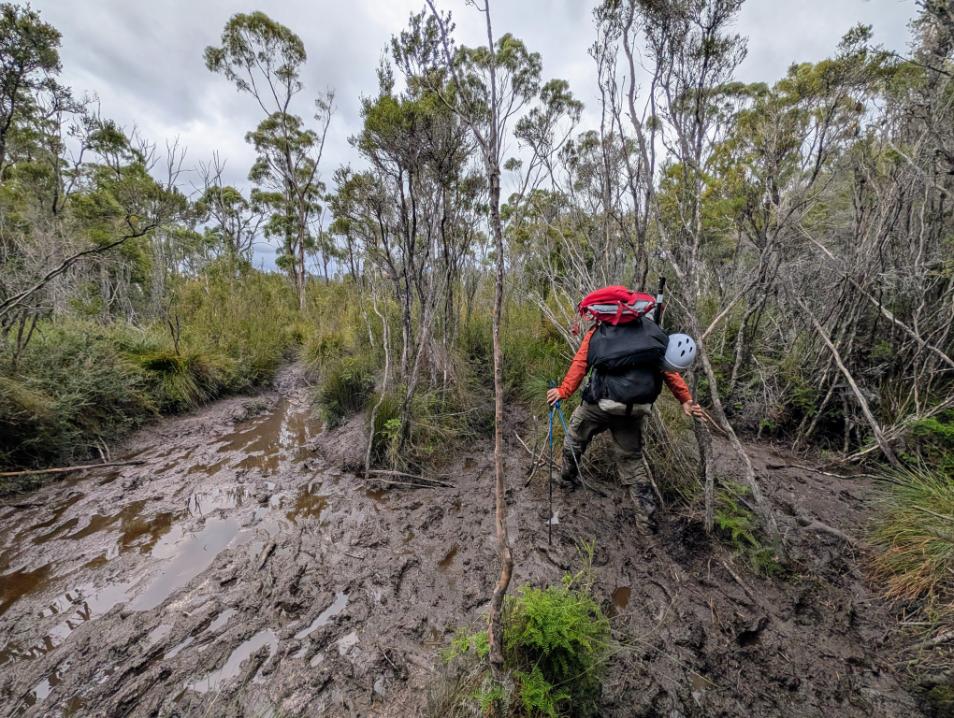
At the trailhead of the Port Davey track. It was hard going, especially with heavy packs and thick mud.
Did I mention the thick mud? (Photo Pete Collins)
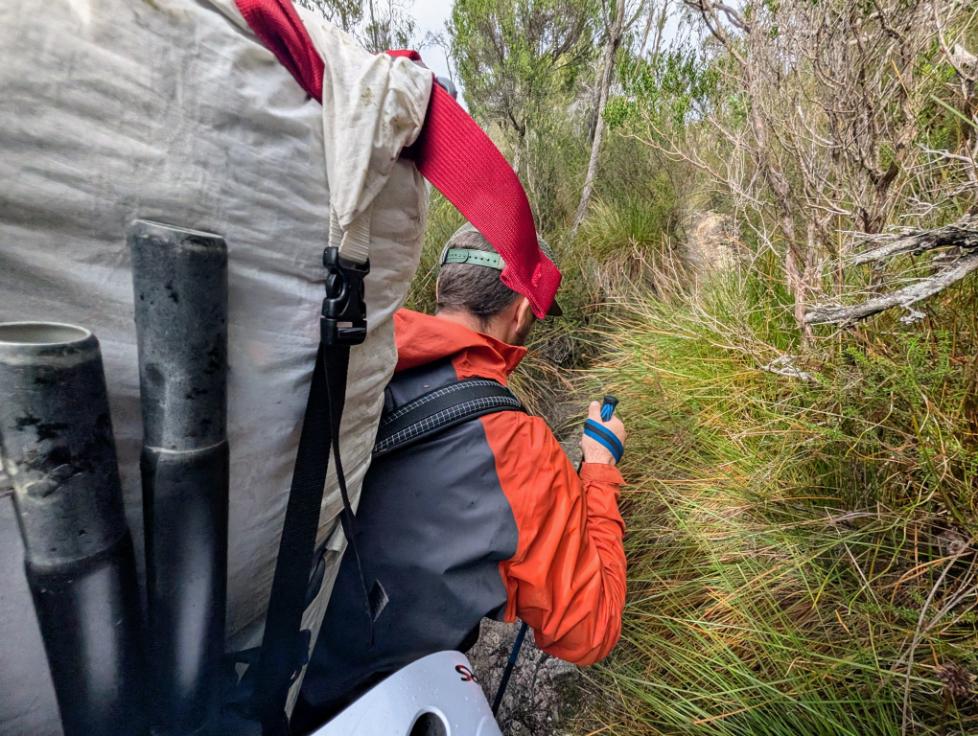
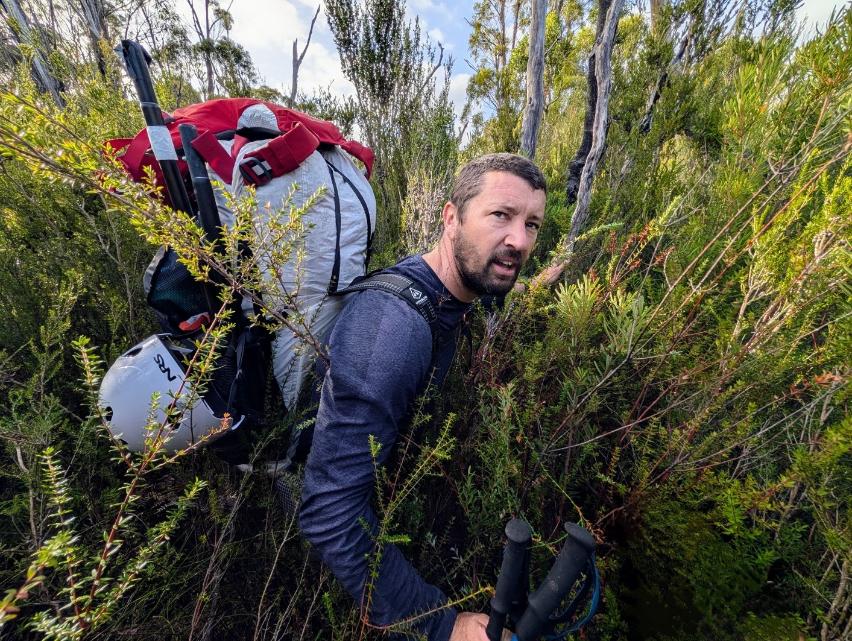
Or thick vegetation? Yes, we were on the trail at this point.
More of that thick mud.

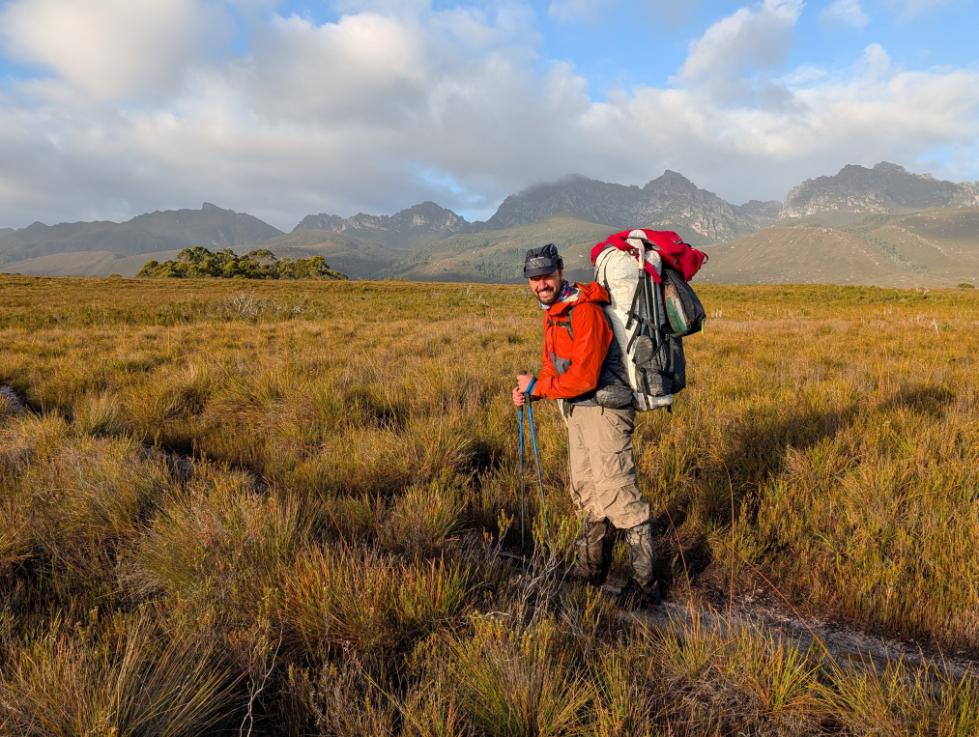
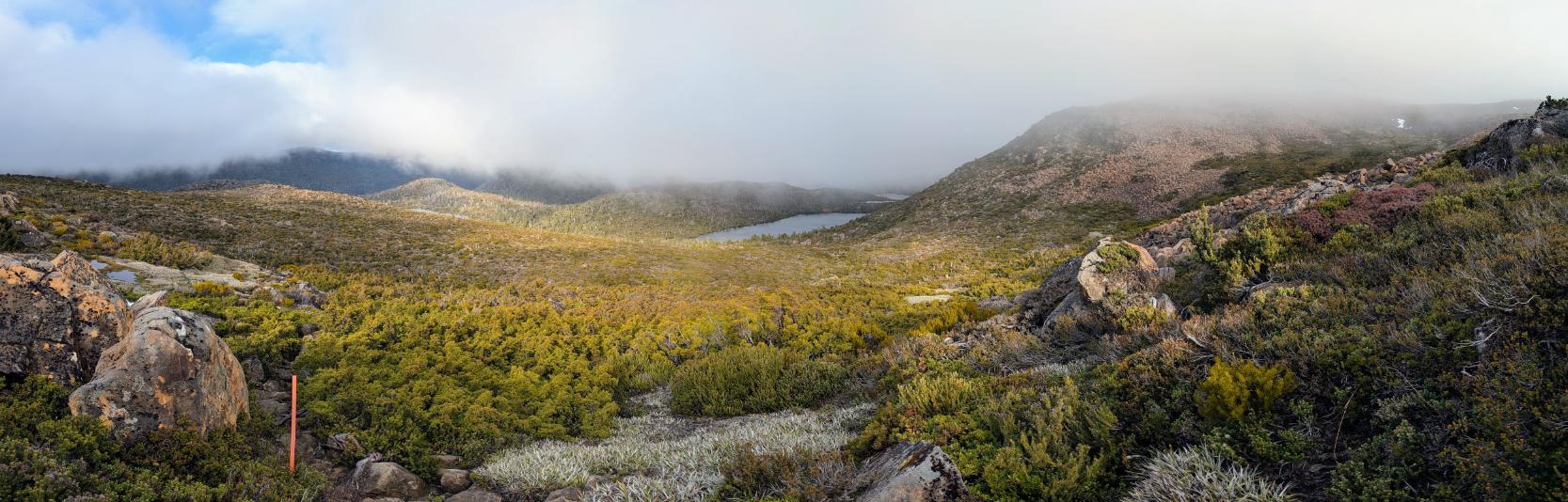
We were lucky with the continuing good weather and had fantastic views of the Western Arthurs mountains stretching into the distance.
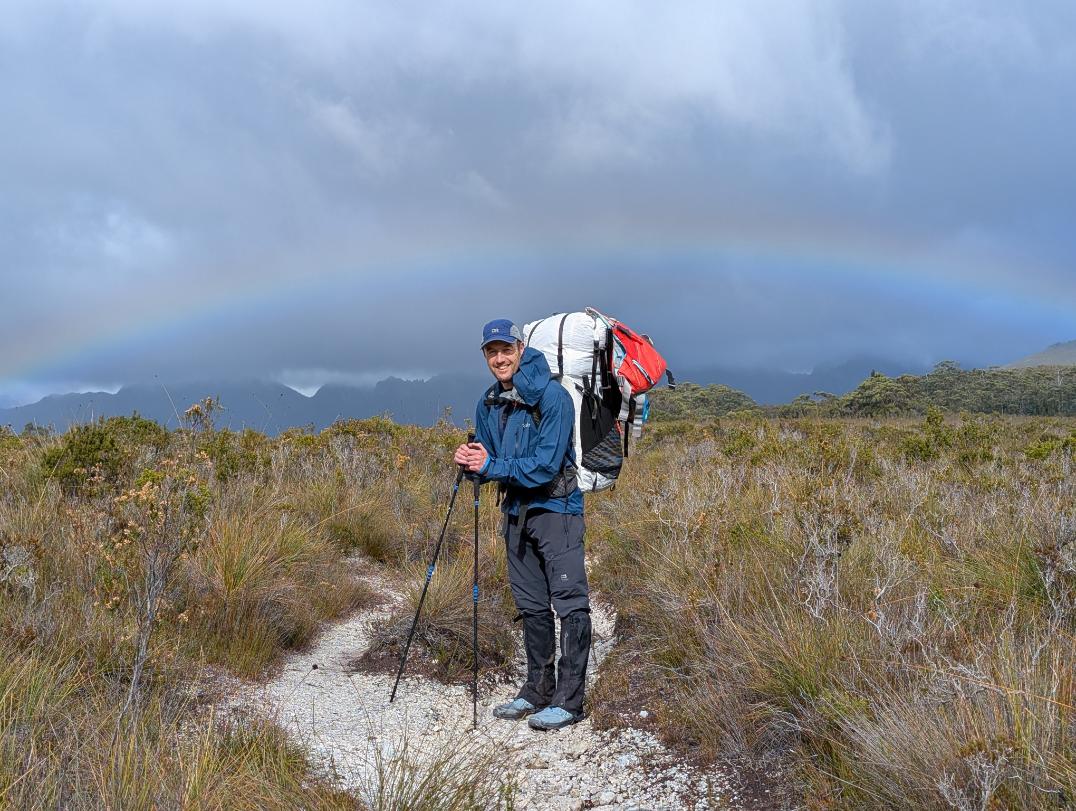
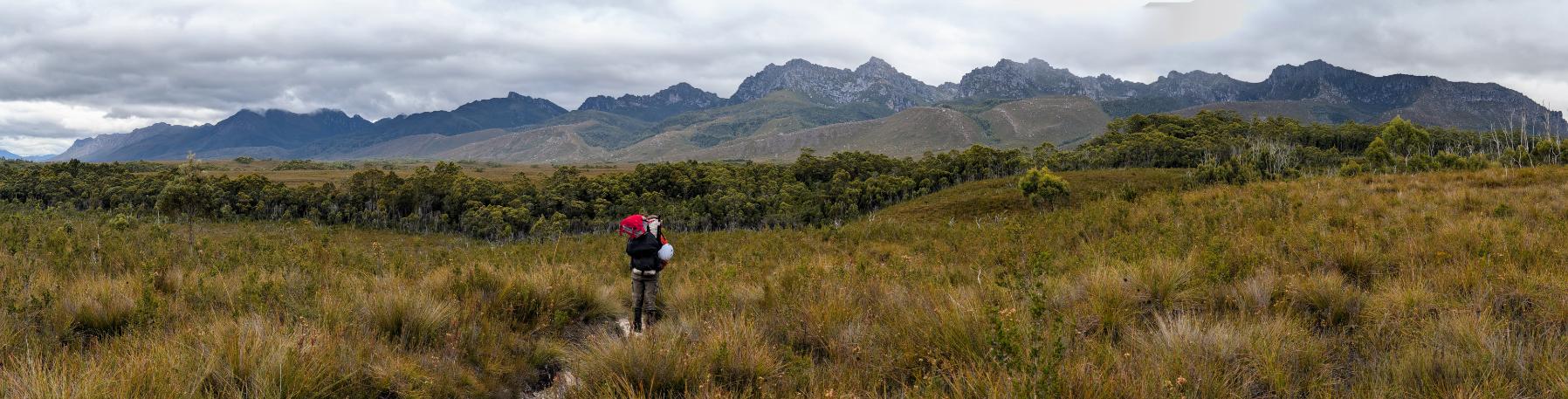
Rainbow over the Western Arthurs range. Enjoying ourselves despite the mud and heavy bags. (Photo Pete Collins)
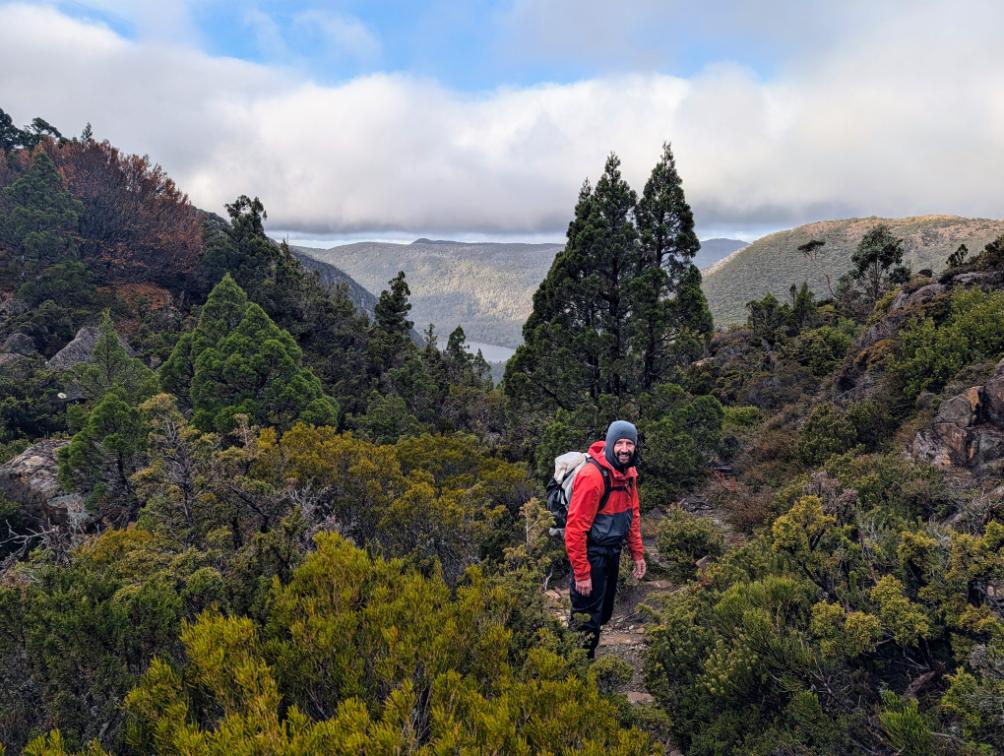
Pete with the full Western Arthurs stretching across the horizon.

As the river levels were very low (borderline runnable) we opted to skip the upper part of the river and put in near Junction Creek, where the trail and the river converge and are less than a mile apart. We camped at Junction Creek that night, full of excitement to get on the river early the next morning. Little did we know what Mother Nature had in store for us.

Day 5: Junction Creek camp to Seven Mile Creek camp (hiking)
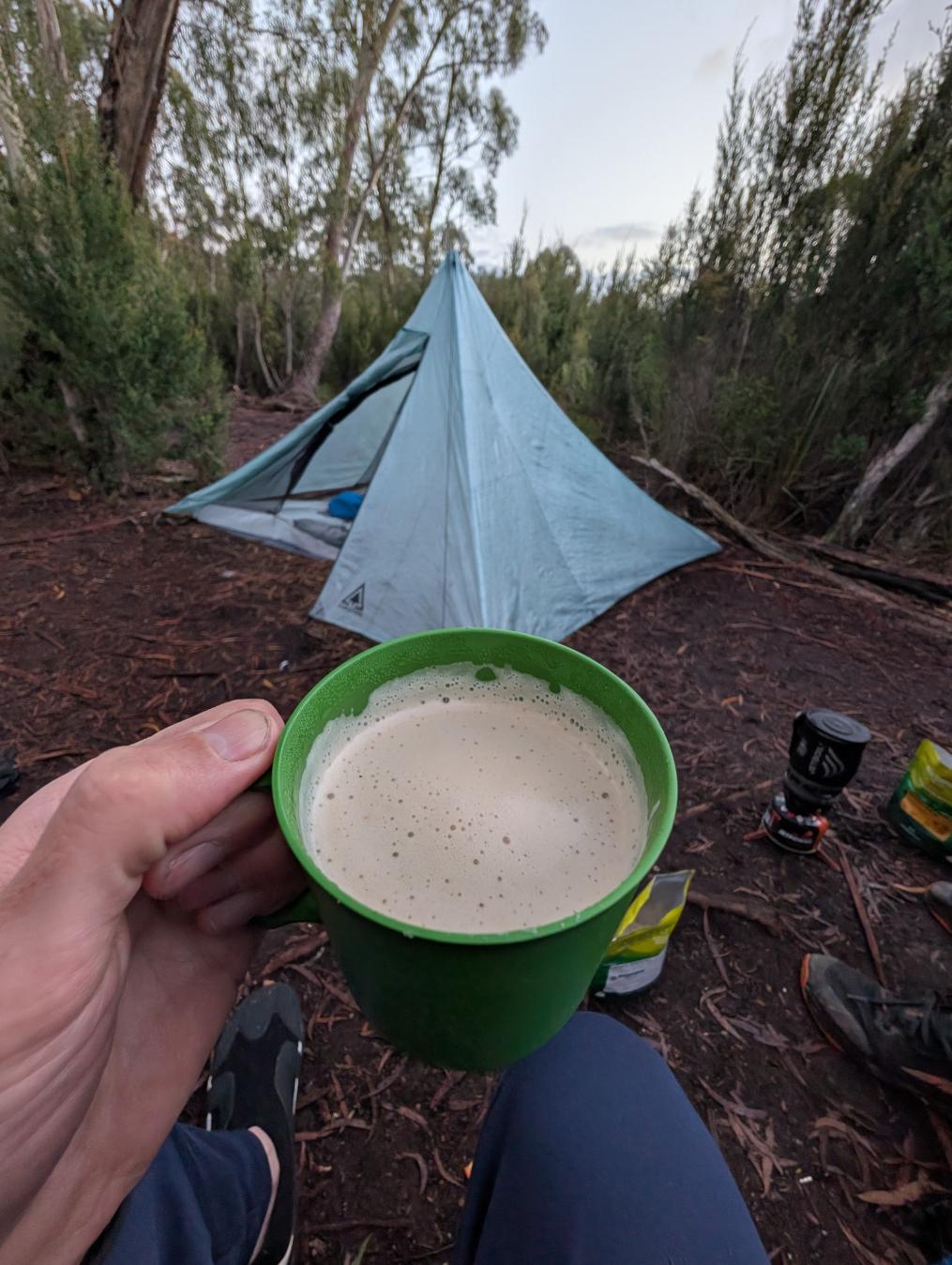
Morning coffee at camp, one of the highlights of the day. Definitely the highlight of the day that followed this one, haha.
Trying to cross the mile of thick bush between the trail and the Huon River, close to Junction Creek, but the vegetation was so thick as to be impassable. And, much as my brother and I love a good sufferfest, after taking hours to cover only a few hundred feet, we cut our losses and backtracked to the trail.
We continued hiking for another day until the trail converged on the river again. We would try to put in there. At least we had fantastic weather and fantastic views of the Western Arthurs range all day.
The best sections of hiking were the ones through the old growth forest, where Dead Man’s moss hung thick and time seemed to stand still. (Photo Pete Collins)
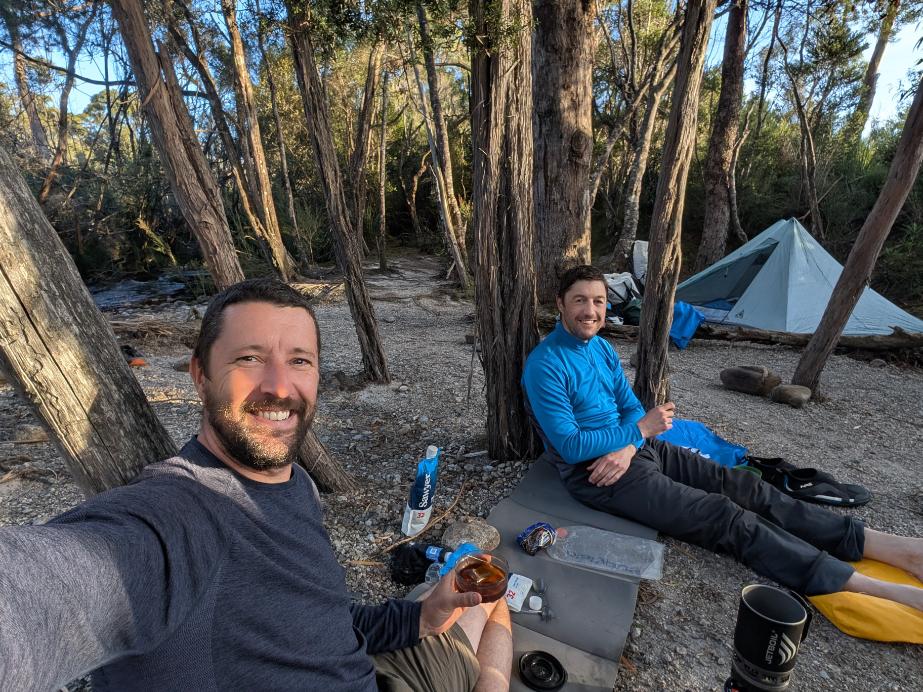
Camped next to Seven Mile Creek at the end of second day of the Huon expedition (day 5 overall). Pete left and me on the right (blue top). (Photo Pete Collins)

Day 6: Seven Mile Creek and Huon River Gorge (packrafting)

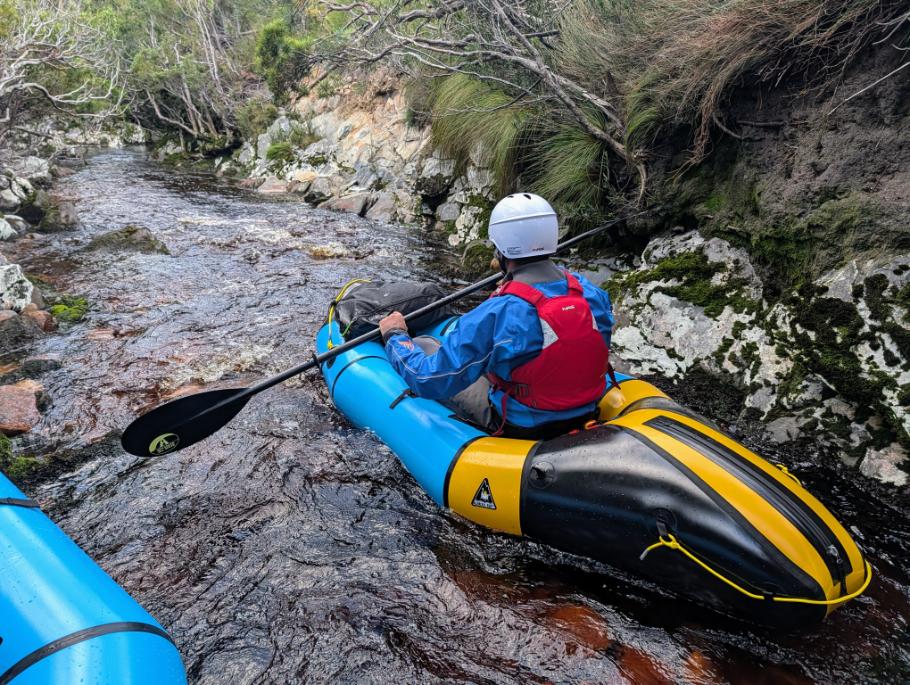
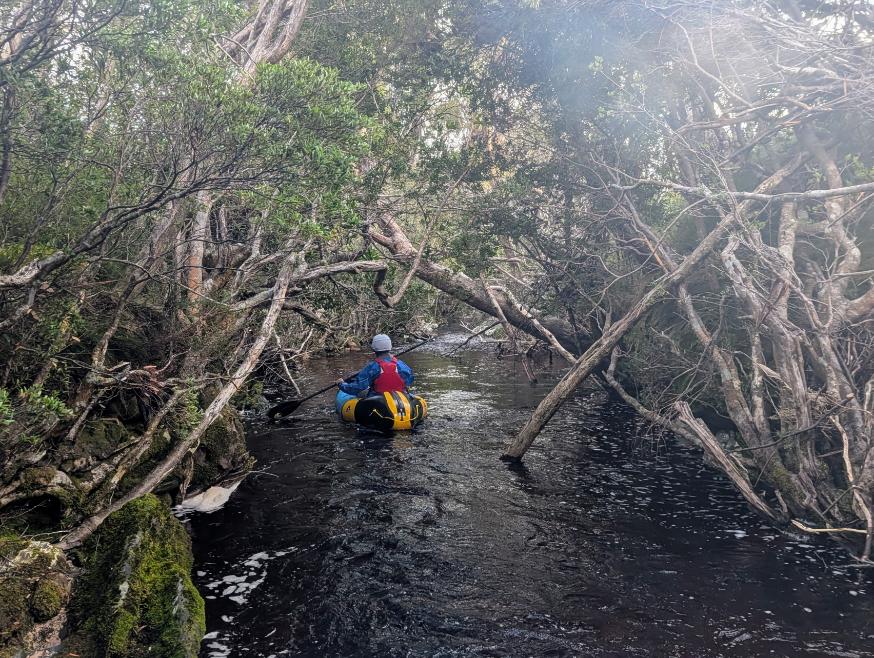
The following morning we were able to paddle the few hundred feet down the narrow gorge of Seven Mile Creek to reach the Huon River proper.

The gauge at Judbury was around 0.7m during our trip, which was definitely on the low side. The first day on the river, starting from Seven Mile Creek, was scratchy, and we repeatedly had to jump out to scoot over rocks. But it got better as we got further down the river. But the upper rapids would definitely be more fun and you’d move a lot quicker if the gauge was over 1m.
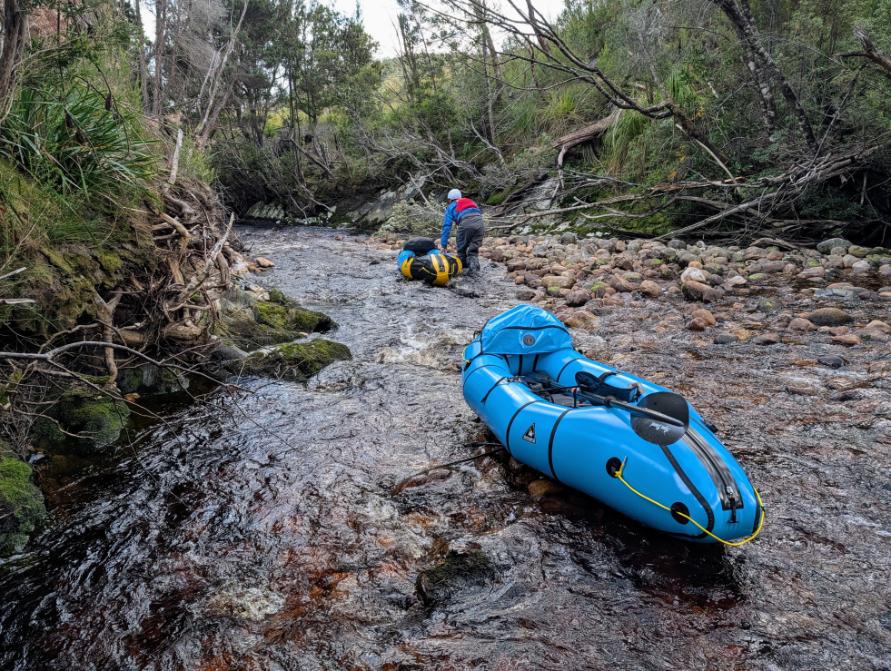
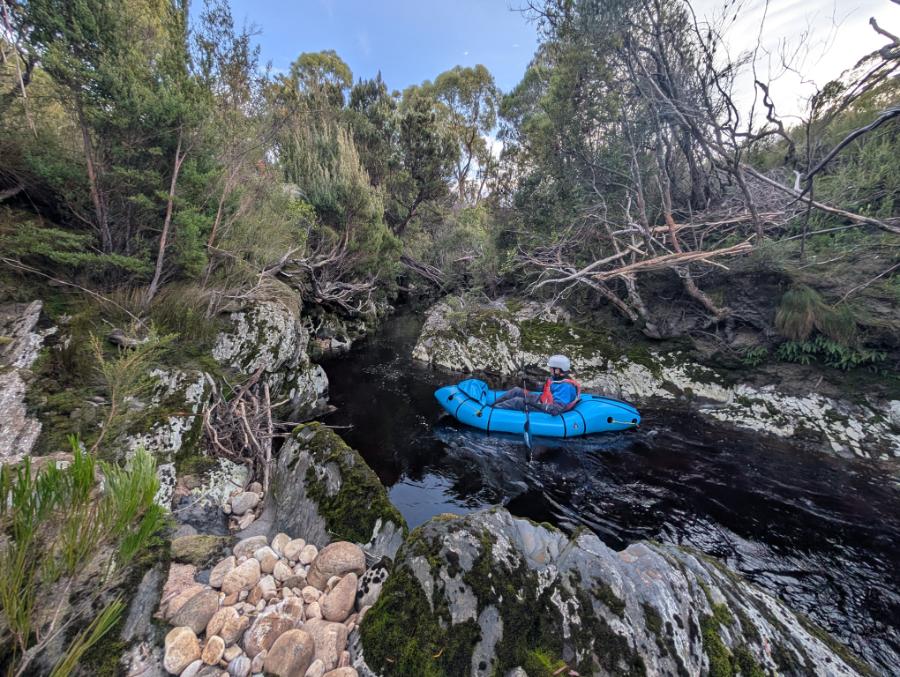
Starting down Seven Mile Creek, not sure what to expect. But super excited to be in the rafts and to get the weight off our shoulders.
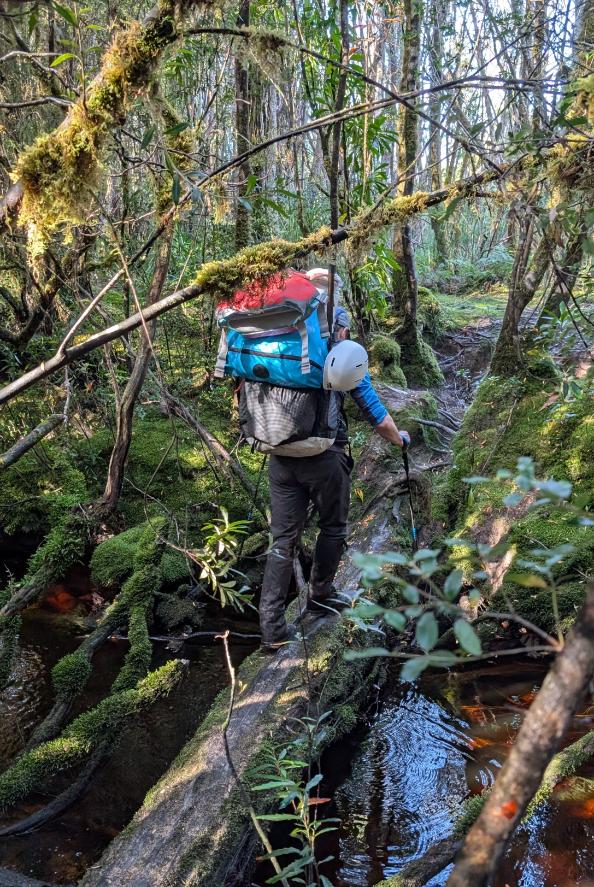
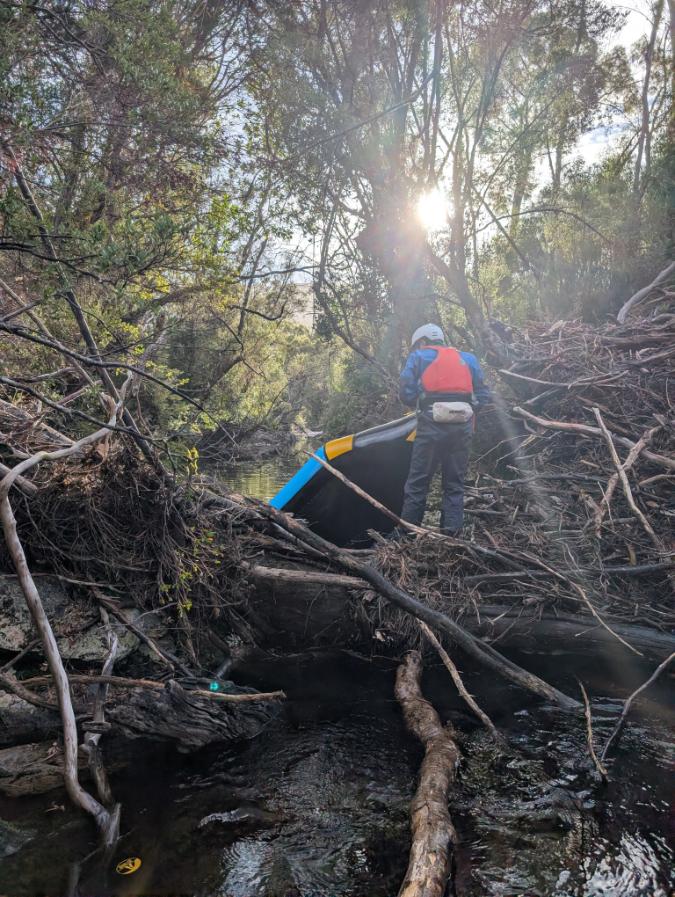
We didn’t have to wade for long. Soon, we were taking our first paddle strokes through the unbelievably cool, narrow gorge of Seven Mile Creek. It didn’t last long though, because we soon had to get over a huge log jam. (Photo Pete Collins)
Pete taking his first paddle strokes on Seven Mile Creek.
Giant log pile blocking the river required some strenuous work to get over. It felt like we crossed over a threshold here too. Behind was the Western Arthurs trails and campsites, which although remote, still had a few other hikers about. Now, we would be totally alone as we headed down river into the wilderness. We wouldn’t see anyone for the next 3 days. (Photo Pete Collins)
Seven Mile Creek was an outstanding mini section of gorge that gave us a flavor of what was to come.
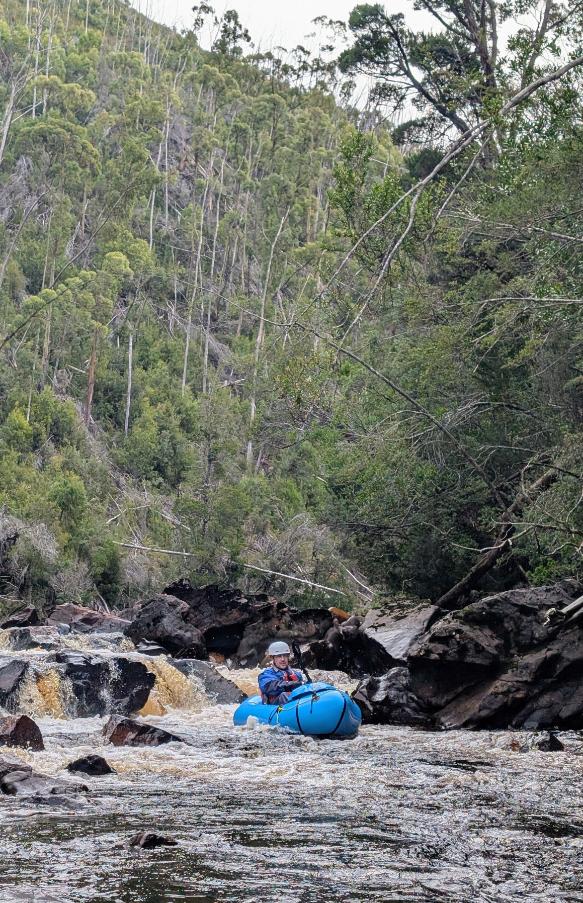
On the Huon River proper and navigating our first rapids. It was quite bony but the rafts didn’t care as we scooted over countless rocks on this first day. They’re tough little boats. (Photo Pete Collins)
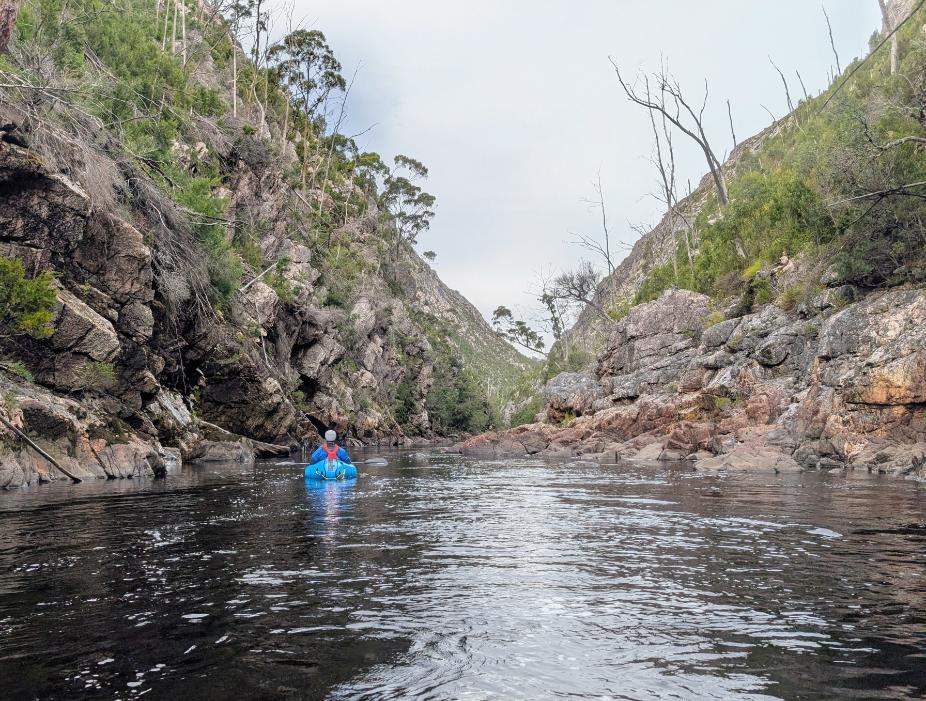
Me entering the Huon Gorge, which was the highlight of our whole time in Tasmania. A spectacular and utterly wild place that we had entirely to ourselves. (Photo Pete Collins)
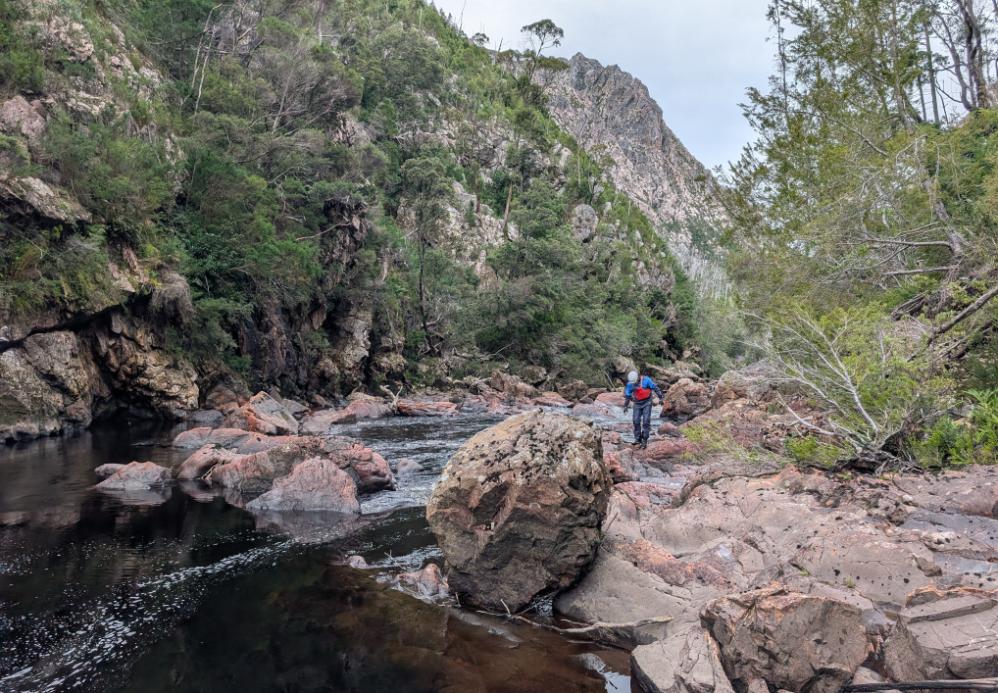
Pete scouting a rapid in the Huon Gorge looking for strainers and a suitable line.
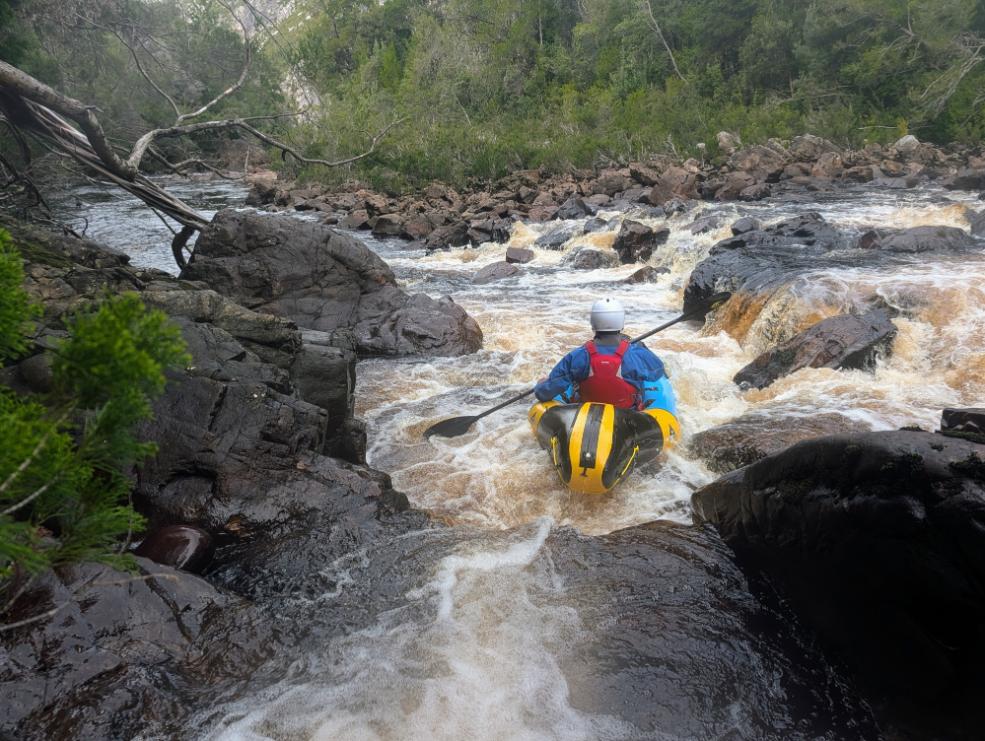
Pete mid rapid on the Huon.

The gorge was an incredible place.

High walls on both sides, fun rapids, lots of birds, big gum trees and huon pines lining the banks. And we had the river entirely to ourselves for days.
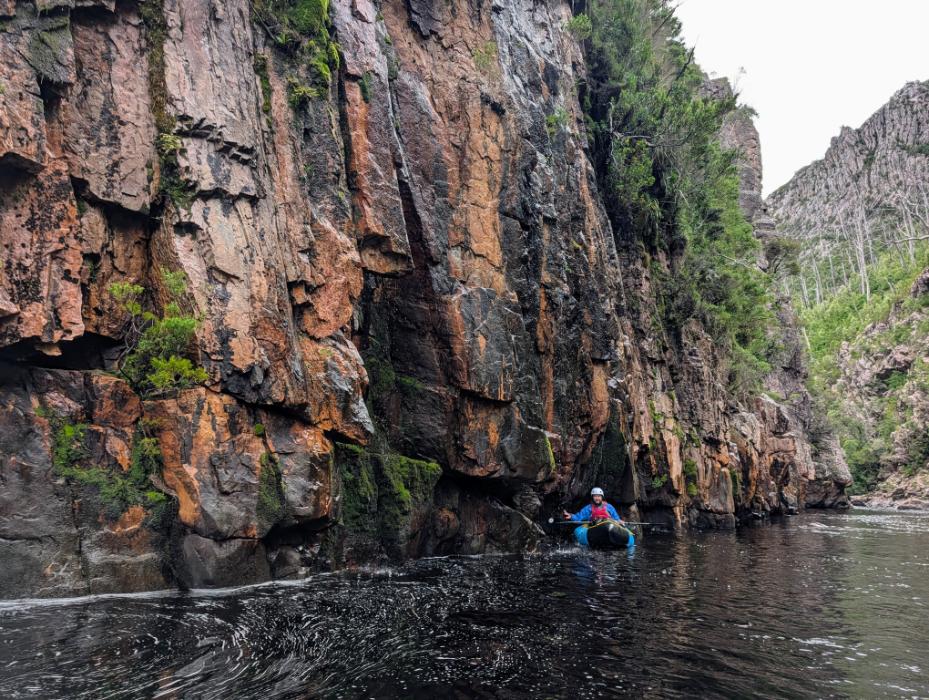
Pete next to the mighty walls of the Huon Gorge.
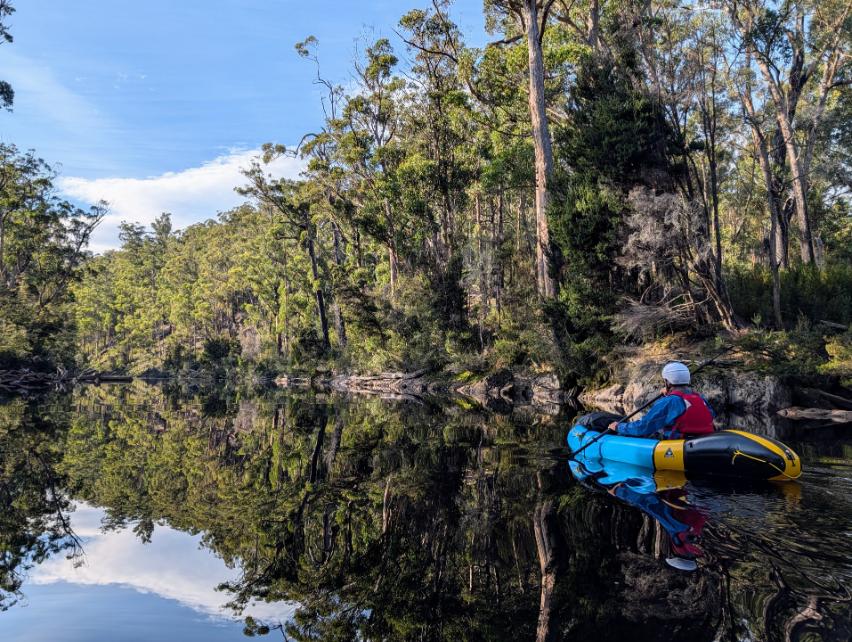
As we paddled further downstream, the gorge walls gave way to gently sloping forested banks. Rapids were followed by pools followed by more rapids and by more pools and so on. A sort of endless moving walkway of beautiful scenery.

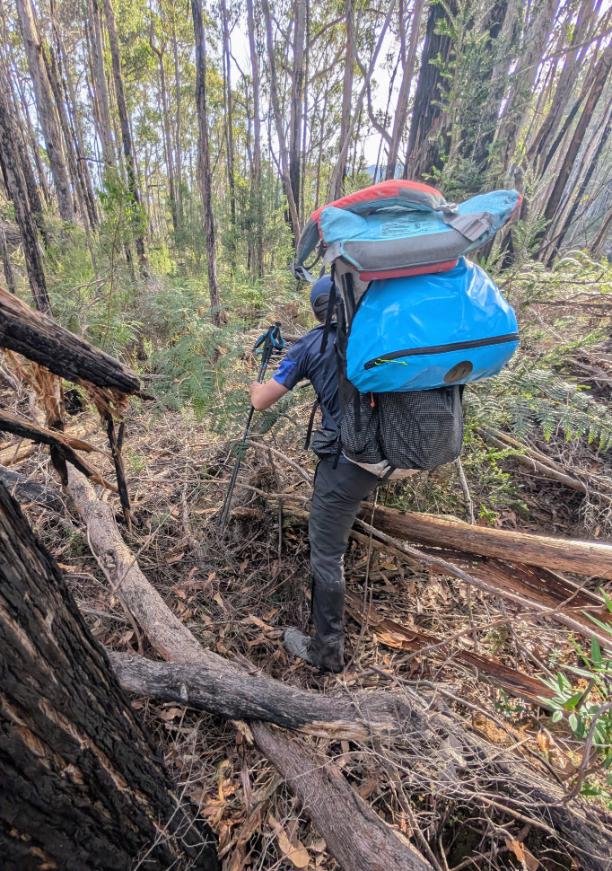
After 2 days of paddling, we took out, turned around and tried to hike back to the car along the Huon Track (plan A). Much like our earlier attempts at off trail travel, the Huon Track was a no-go. The supposed trail barely existed and whenever we found a trace of it, it quickly disappeared into thick, impenetrable bush. After a couple of hours of hard work with little progress, we opted for a Plan B. Return to the river and paddle the remaining miles downstream to Huonville. Once there, we would have to figure out transport back to the car 60 miles away at Scotts Peak dam.

In the end, the transfer was easy to come by (thanks Airtasker!) so running the full river was a much more enjoyable and satisfying trip. Instead of slogging along with heavy packs, we floated down the beautiful river and enjoyed a few days of serene, chill paddling and occasional rapids.
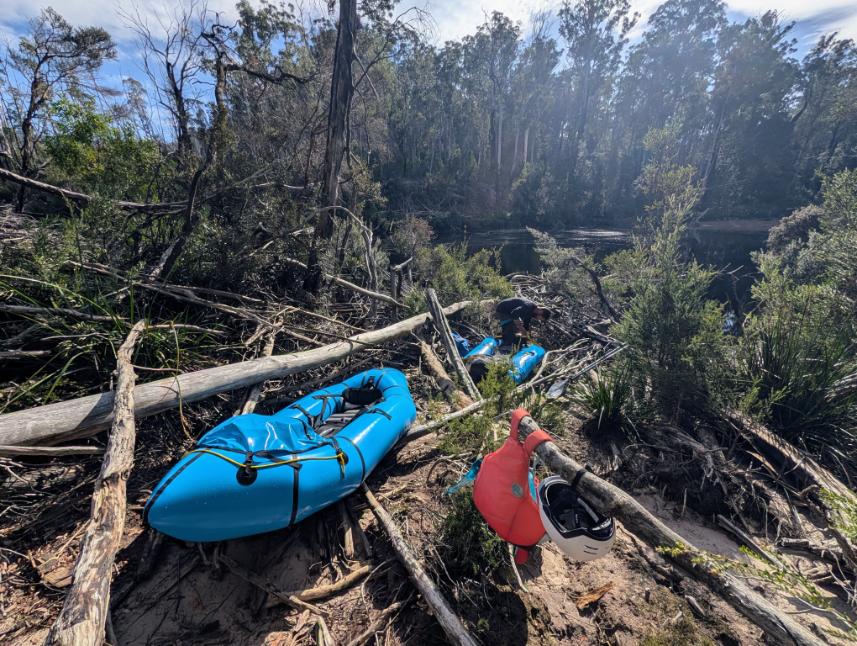
Our takeout spot was a bit scrappy. The sun was beating down and I remember how hot and frustrated I got trying to roll up my raft small enough to fit in my bag again.
Trying to find the Huon track. We found traces of it, which were confirmed by our GPS Alltrails maps, but the track barely existed and frequently disappeared into thick bush or piles of dead trees. It was VERY heavy going. After an hour of barely any progress, we realized the folly of this plan and decided to return to the river and continue downstream to the town of Huonville. From there, we would figure out a ride back to our car somehow. (Photo Pete Collins)
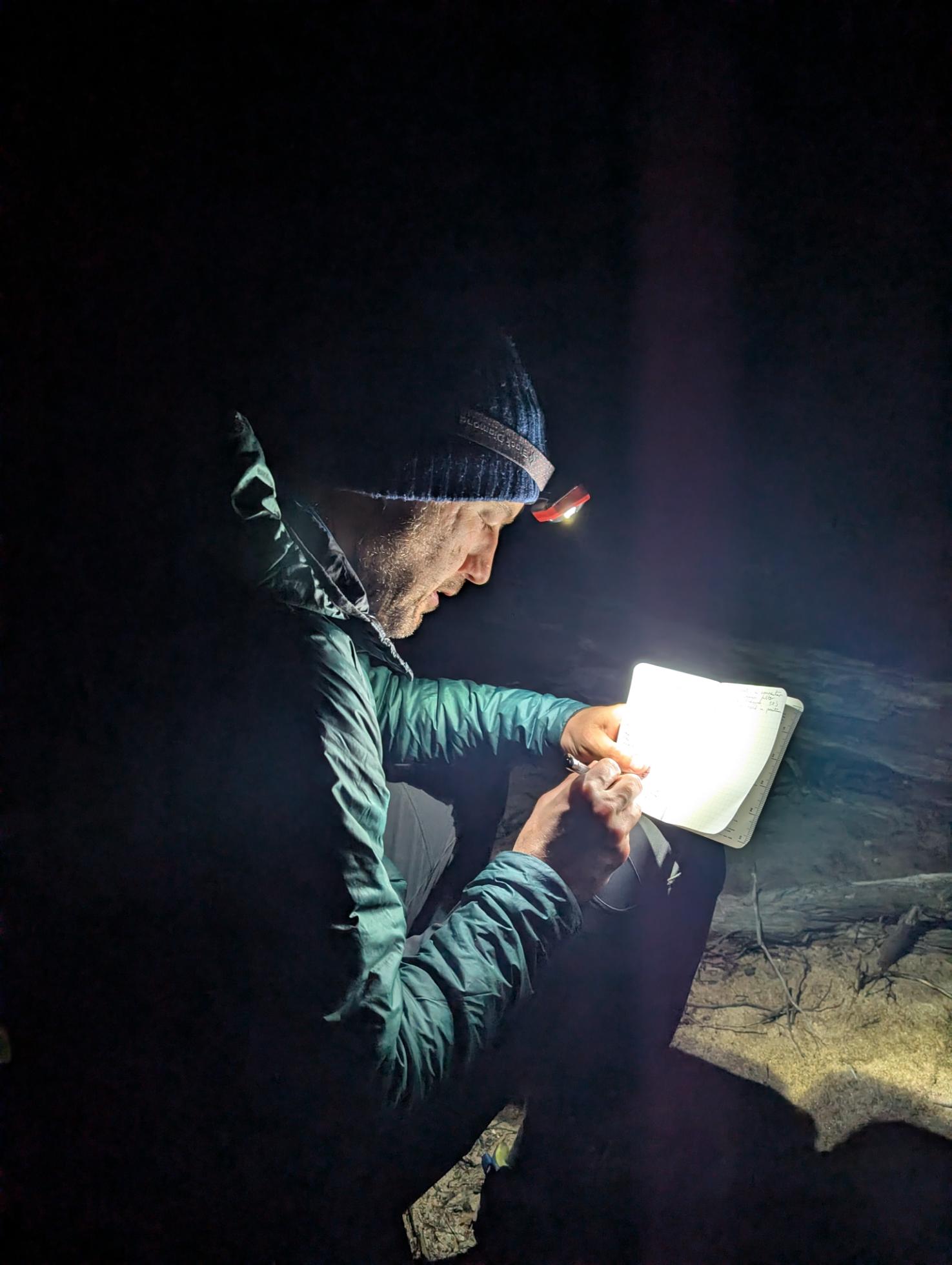
Catching up on the journal at day’s end, an essential ritual of very trip I do. (Photo Pete Collins)

Day 7: Huon River below the gorge (packrafting)
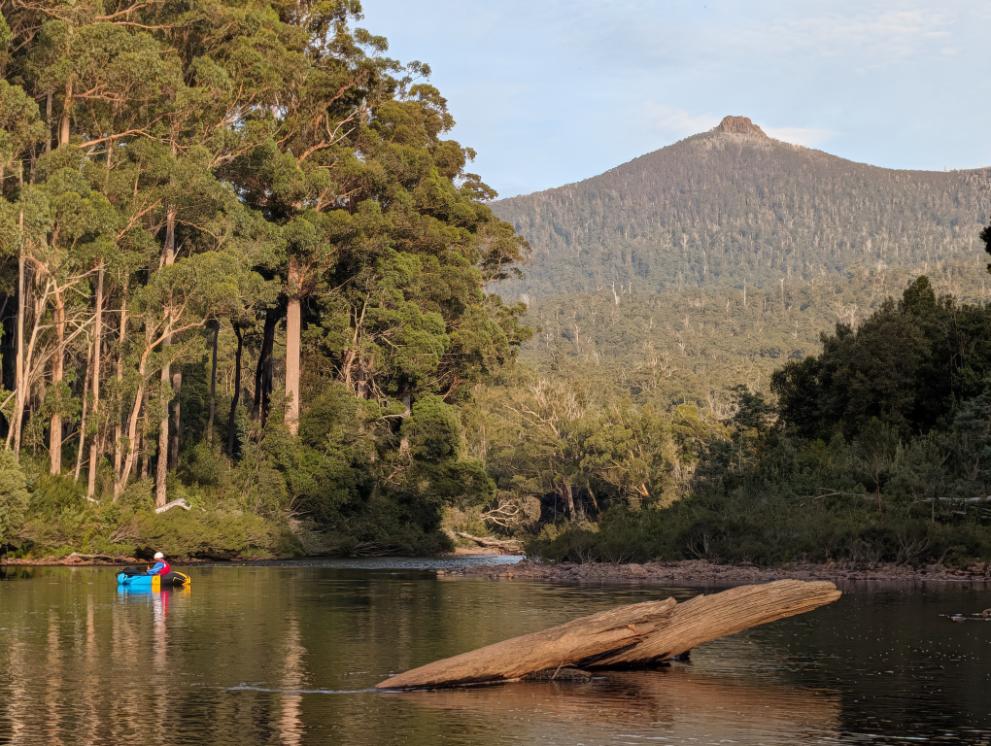
Typical scenery of the Huon River on one of the serene sections
Beautiful evening light over Pear Hill (I think?)
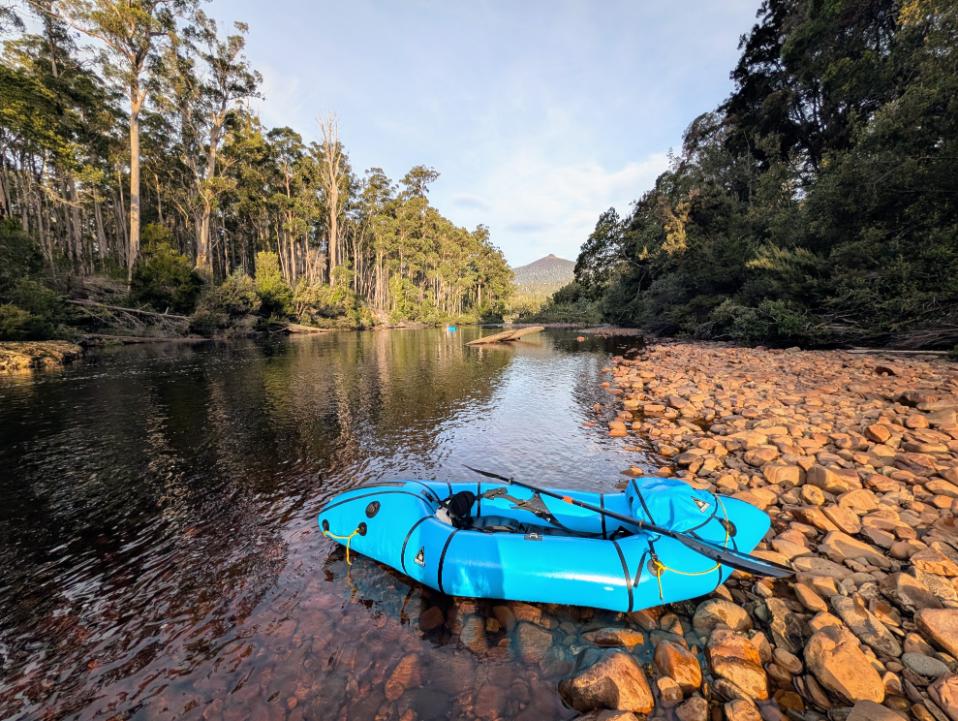
The riverbanks were often steep, wooded banks so we were always on the lookout for flat (ish) gravel bars like this, where we could pitch the tent back from the river edge and have rocks to dry the gear. Better than sand, which gets stuck everywhere, including wrecking one of the zips on Pete’s tent.
Our own lost world to explore

Day 8: Huon River (packrafting)
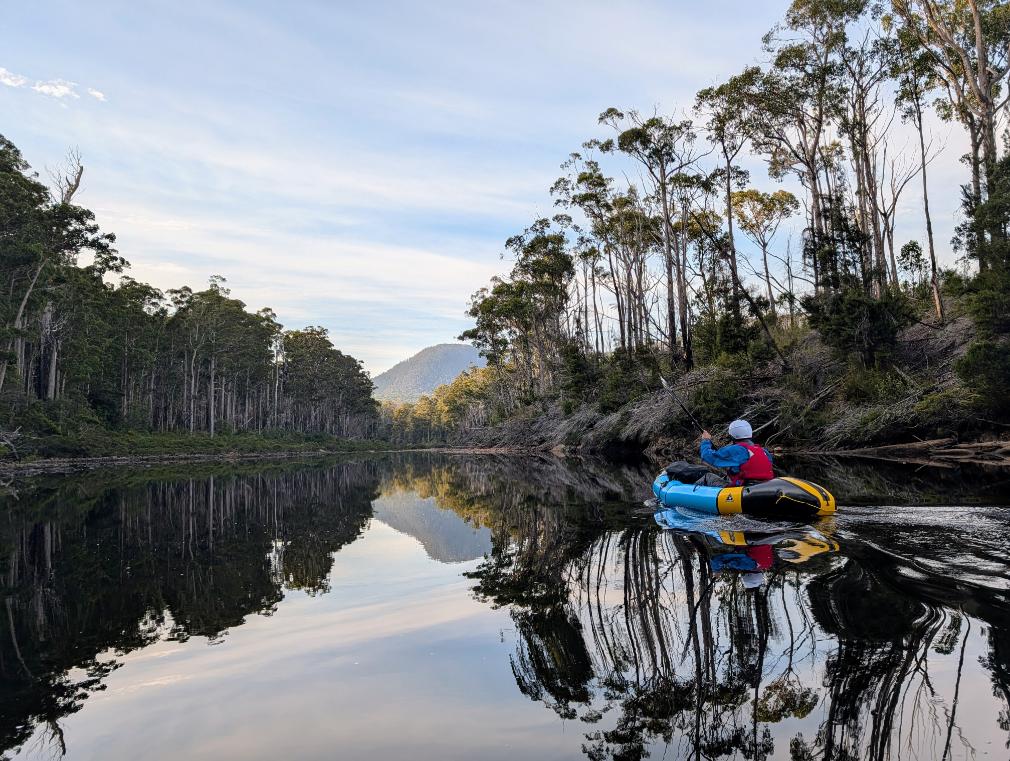
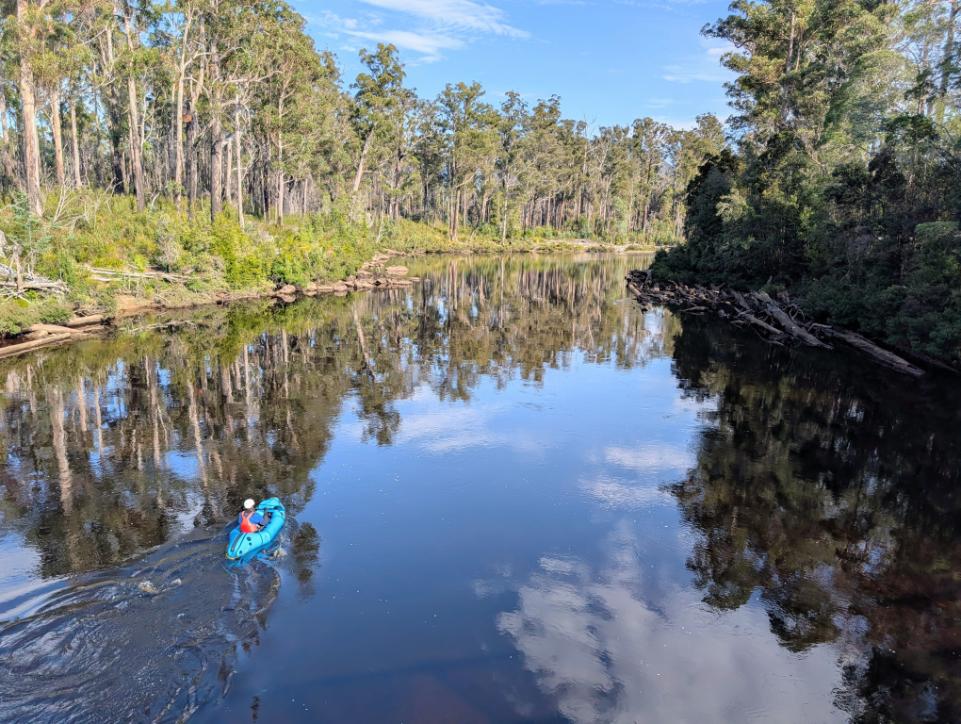
Pete snapped this photo of me from Arve Road bridge at Tahune, our first sighting of other humans in a few days. (Photo Pete Collins)
Pete paddling
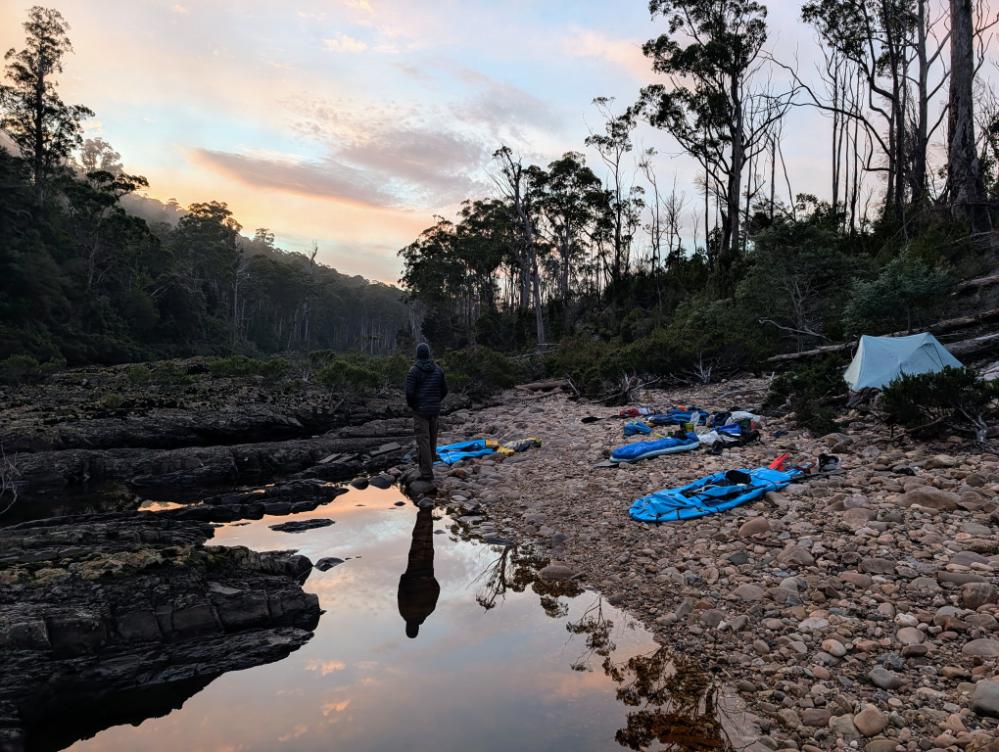
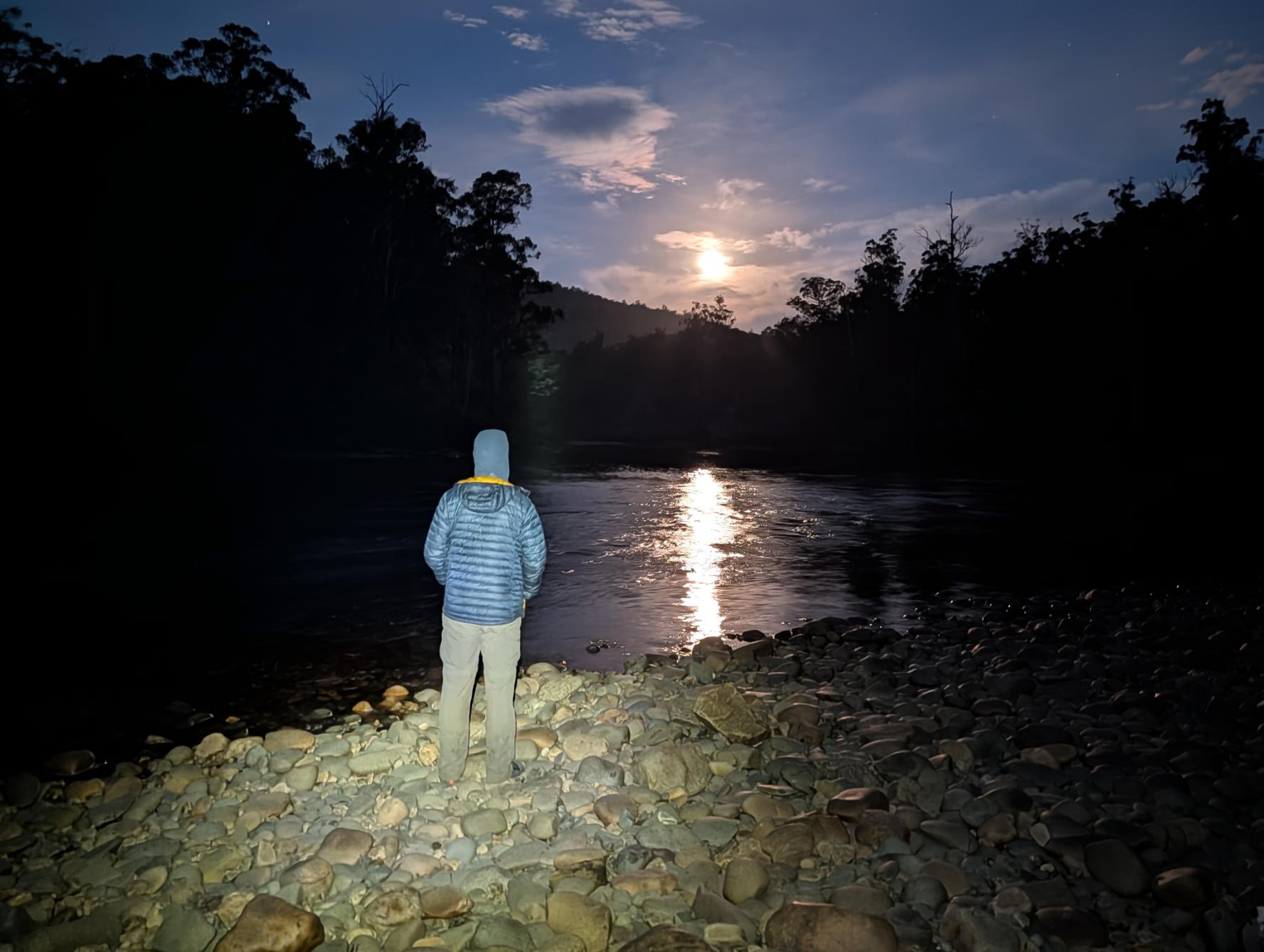
Most nights were clear with a full moon, enough light to move around camp without a headtorch.
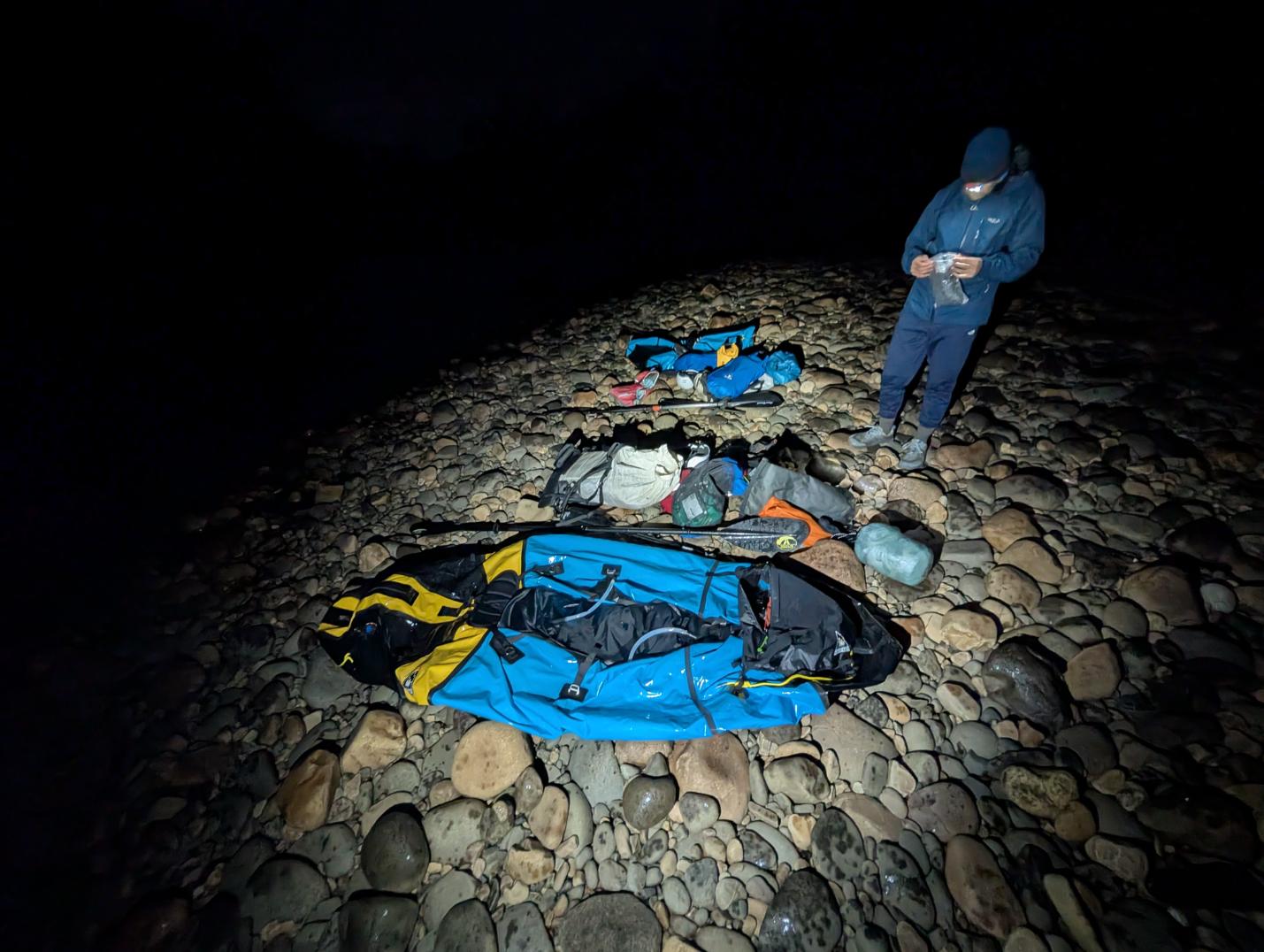
Organizing gear before storing it all for the night.

Day 9: Huon River to Huonville (packrafting)
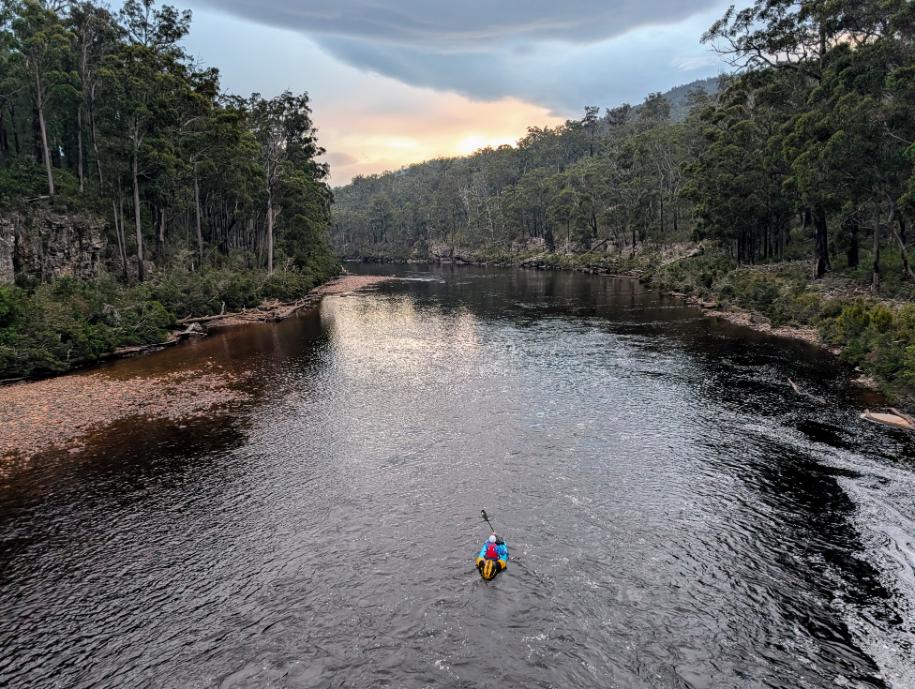
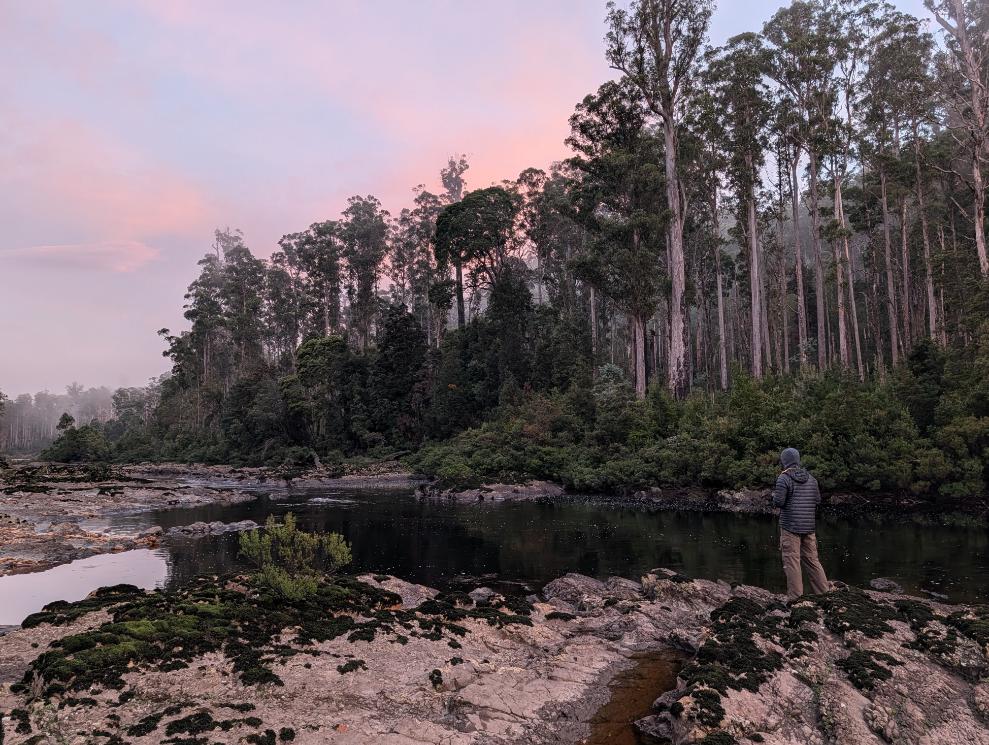
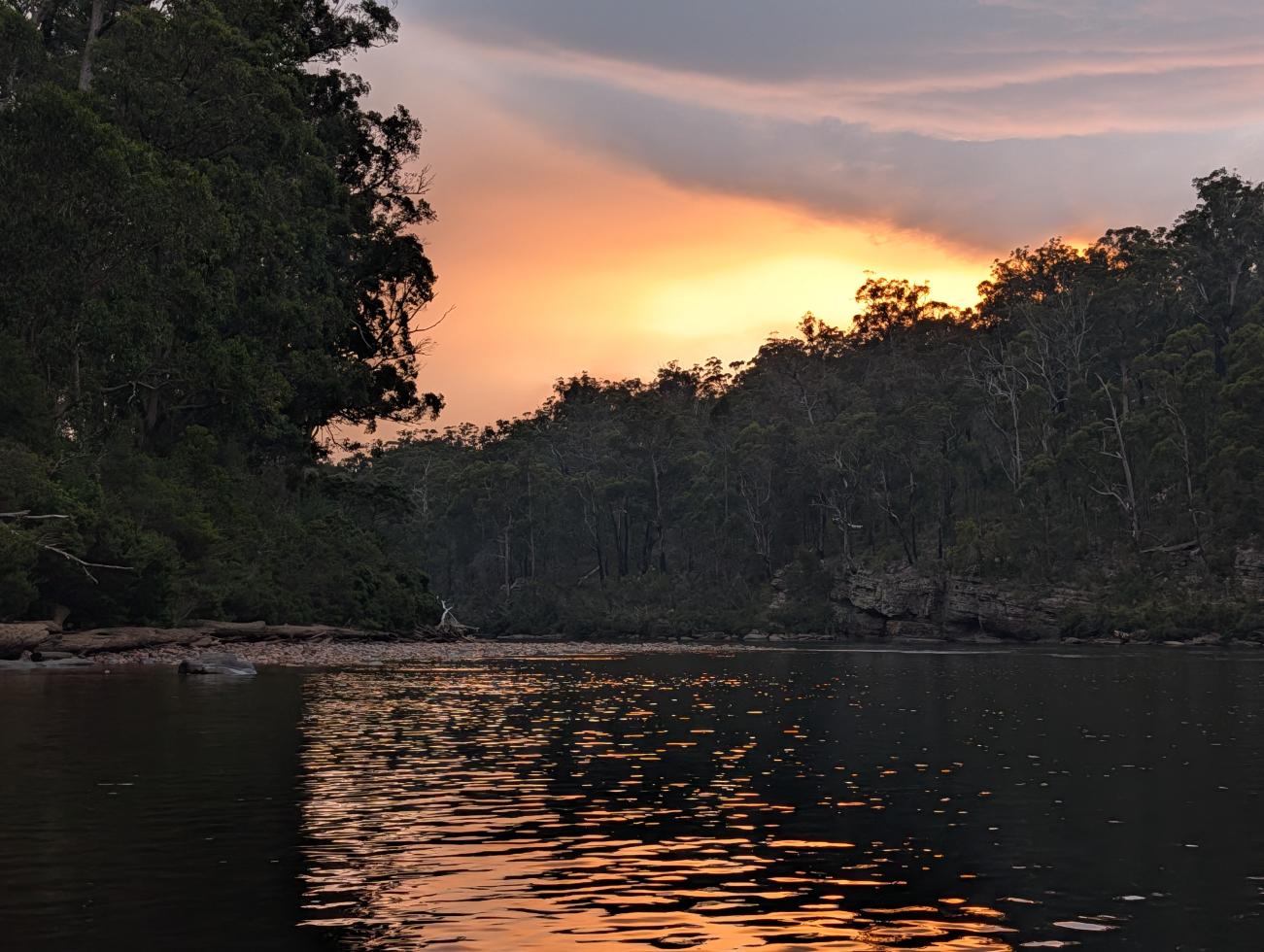
We got an early start on the final day and witnessed sunrise from the river. The colors were gorgeous.
Mother Nature doing her thing. We were feeling grateful to witness it.
Packrafts are incredible little boats. So fun and so capable at the same time.
Nearly there. Final few miles of flat paddling on the Huon River.
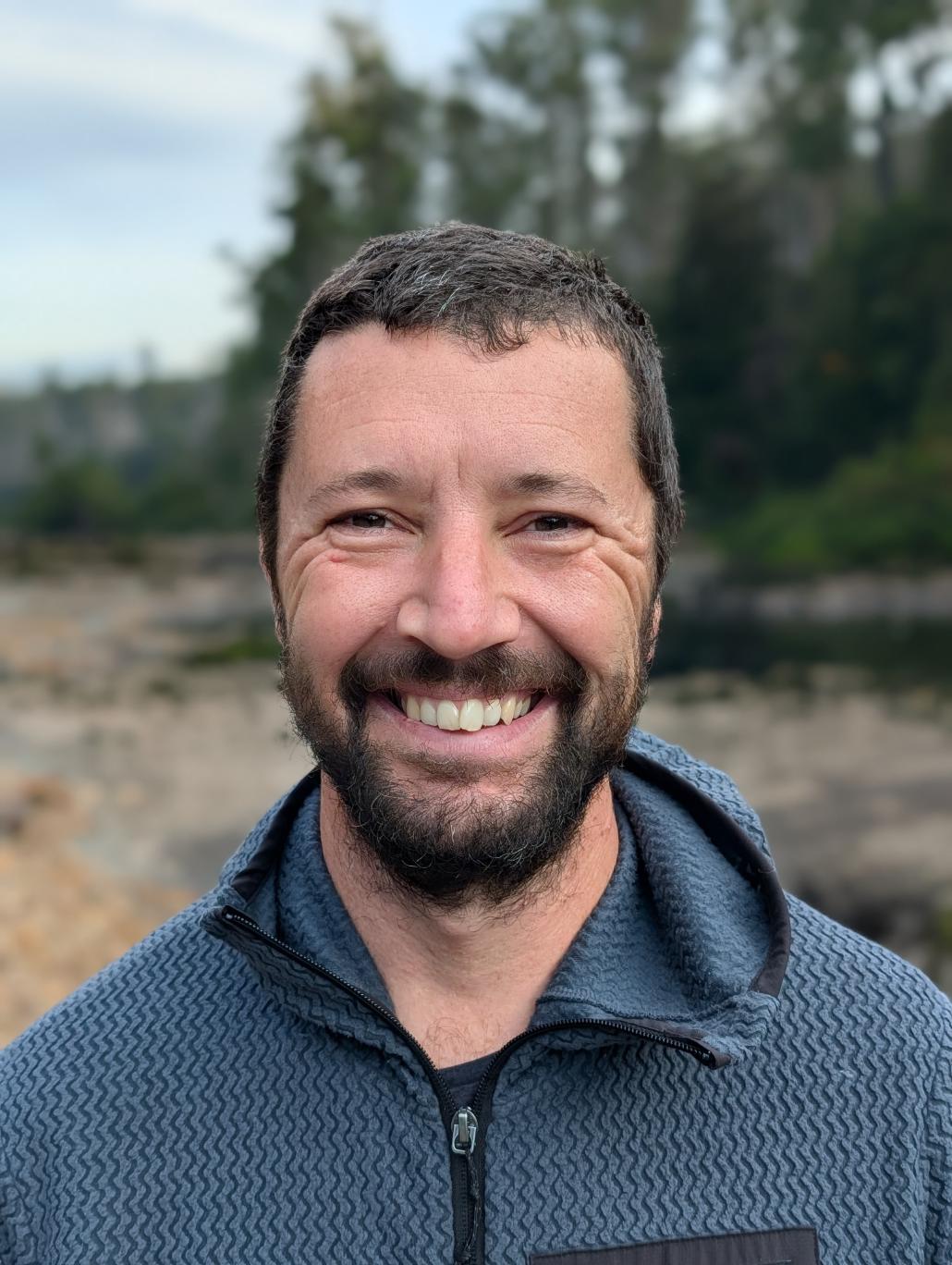
All smiles at the takeout in Huonville, six days after setting out from the Port Davey trailhead.

Almost immediately after stepping foot on dry land, we were accosted by a drunk guy who claimed to be James Joyce from Ireland. When we told him we were headed back to Hobart, he said he would join us. Haha! This was our first interaction with another human being in six days, welcome back to the real world. Wild.
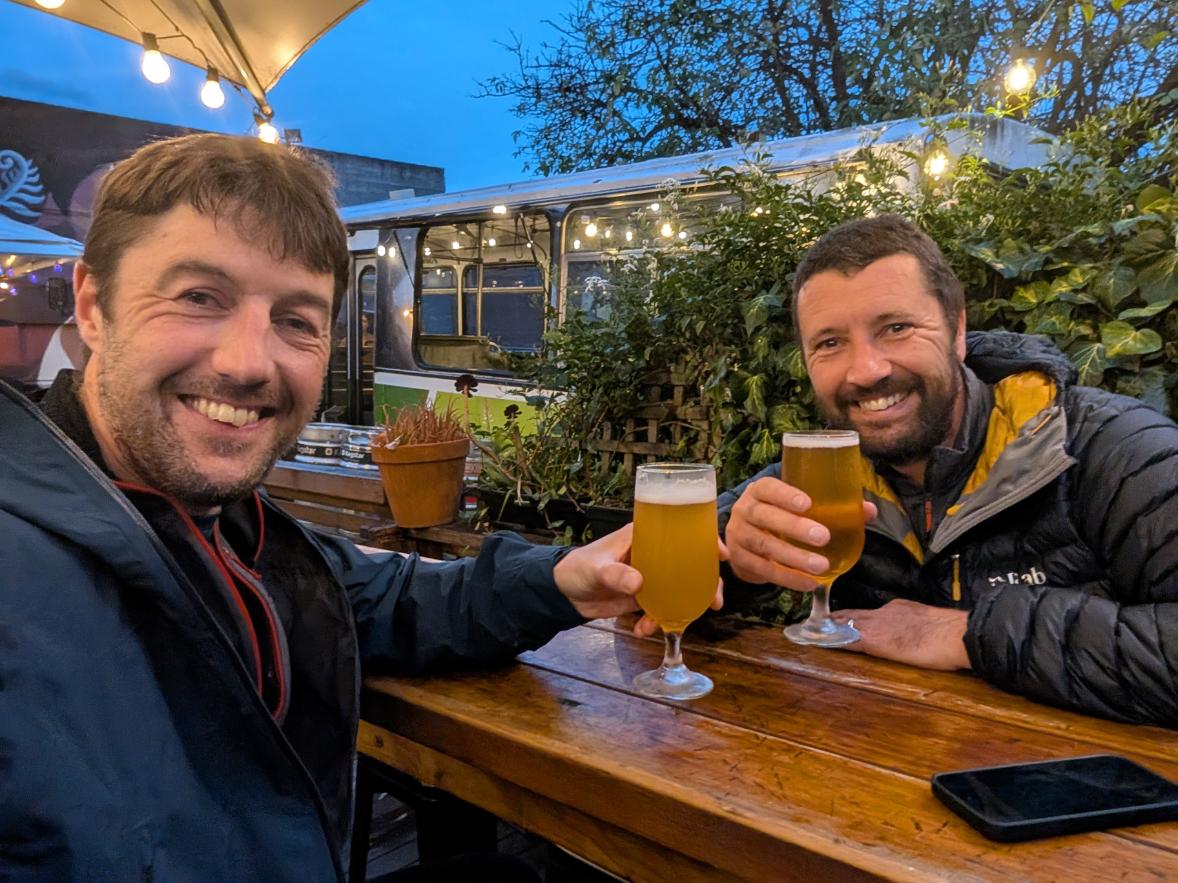
Celebratory beers in Hobart!

All-in-all, it was a fantastic expedition and has me fired up for future missions! Packrafts are so much fun and open up so many possibilities for backcountry expeditions.

Days 10: Transfer from Hobart / flat battery / drive to Mt Field

We used Airtasker to set up a transfer from Hobart back to Pete’s car in the Scots Peak Dam area. Our driver was a young guy, very friendly, who drove us back at breakneck speed.

The car was still there, but it wouldn’t start because the battery was dead. Argh!

This could have been quite serious because it’s such a remote area. There were two other cars in the parking area at the trailhead, but these people could be out for days still. And since we’re at the very end of a remote gravel road in the National Park, there’s not exactly much passing traffic.

We tried pushing the car, but could barely budge it, since it was parked at a slight incline. Luckily, within about half an hour of arriving back at the car, a Parks Tasmania crew (thanks Baz and Andy!) were passing to pick up an excavator with a dead battery. We flagged them down and it was a trifle to get the car going again. What a stroke of luck!

Since we needed to drive around for a while to charge the battery up and the latest weather forecast indicated a dump of snow was on the way, we headed north to the Mount Field area.
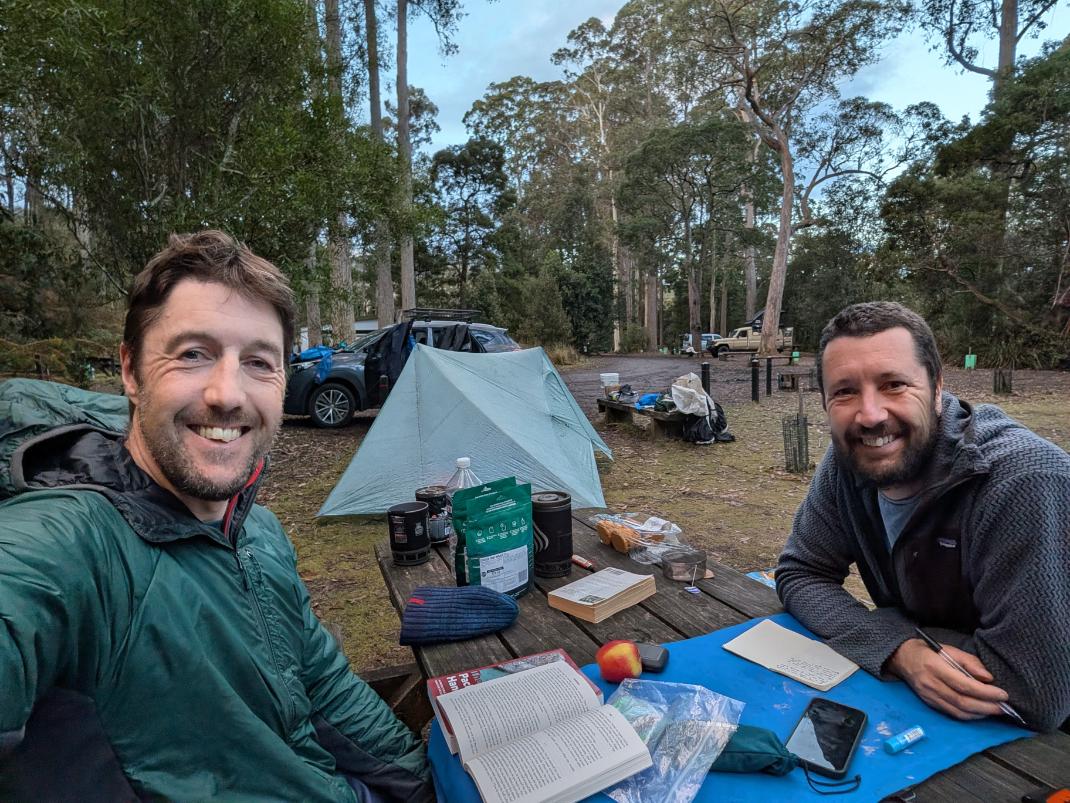
Camped at Mt Field National Park.

Day 11: Mt Field West & Tarn Shelf circuit hike

Brilliant day, despite the foul conditions in the first half of the day.
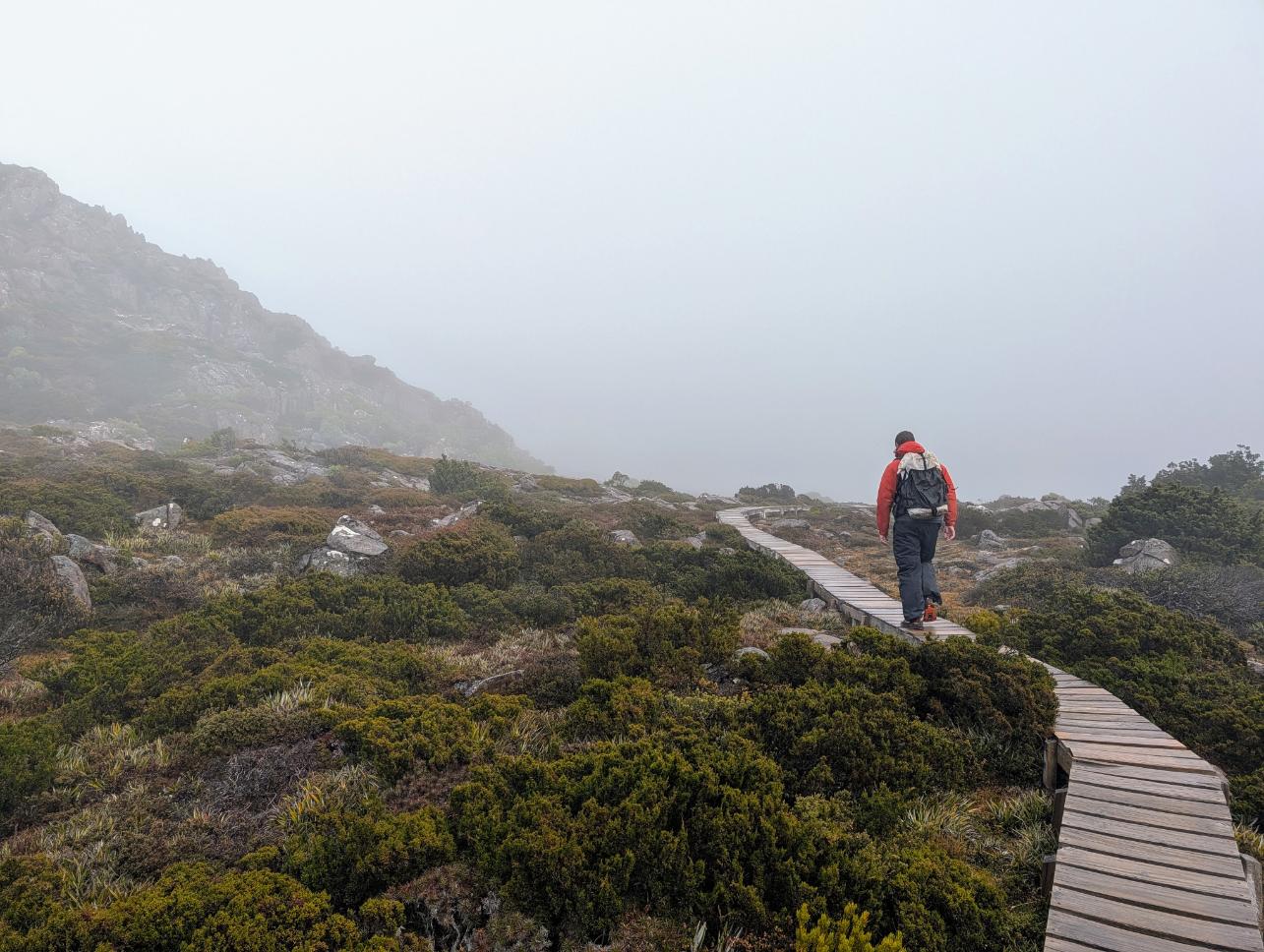
Into thick weather as we climb Tarn Shelf Track.
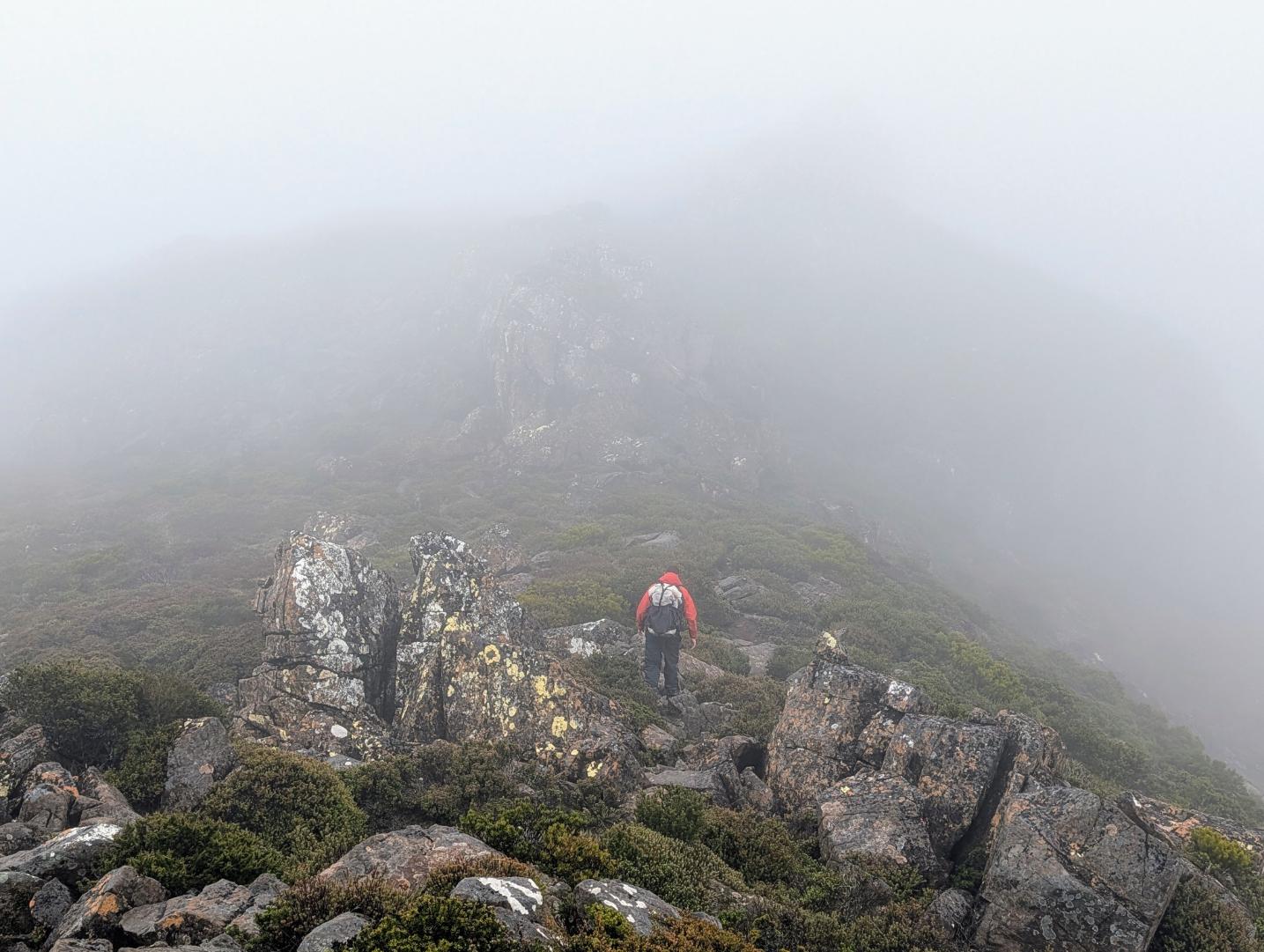
Crossing the Rodway Range in driving rain and thick mist. Bit different to the last time we were here in 2018 (see end of this post).
Ascending the Mount Field West Track, no let up in the weather.
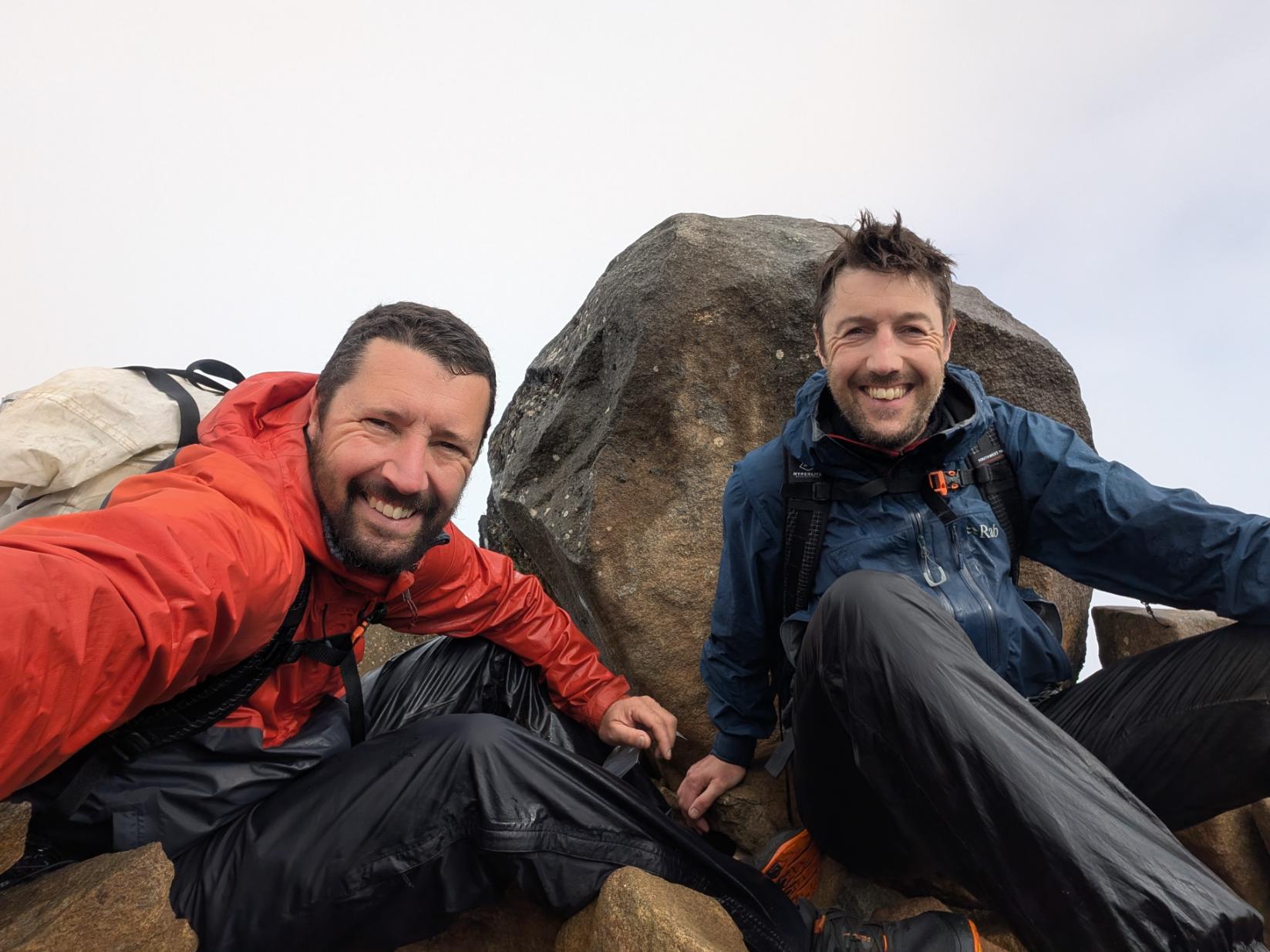
Summit of Mount Field West. We stood here together in January 2018 and had magnificent views that day (although I had a terrible headache). Sadly not today though! Still a great adventure to get here. (Photo Pete Collins)
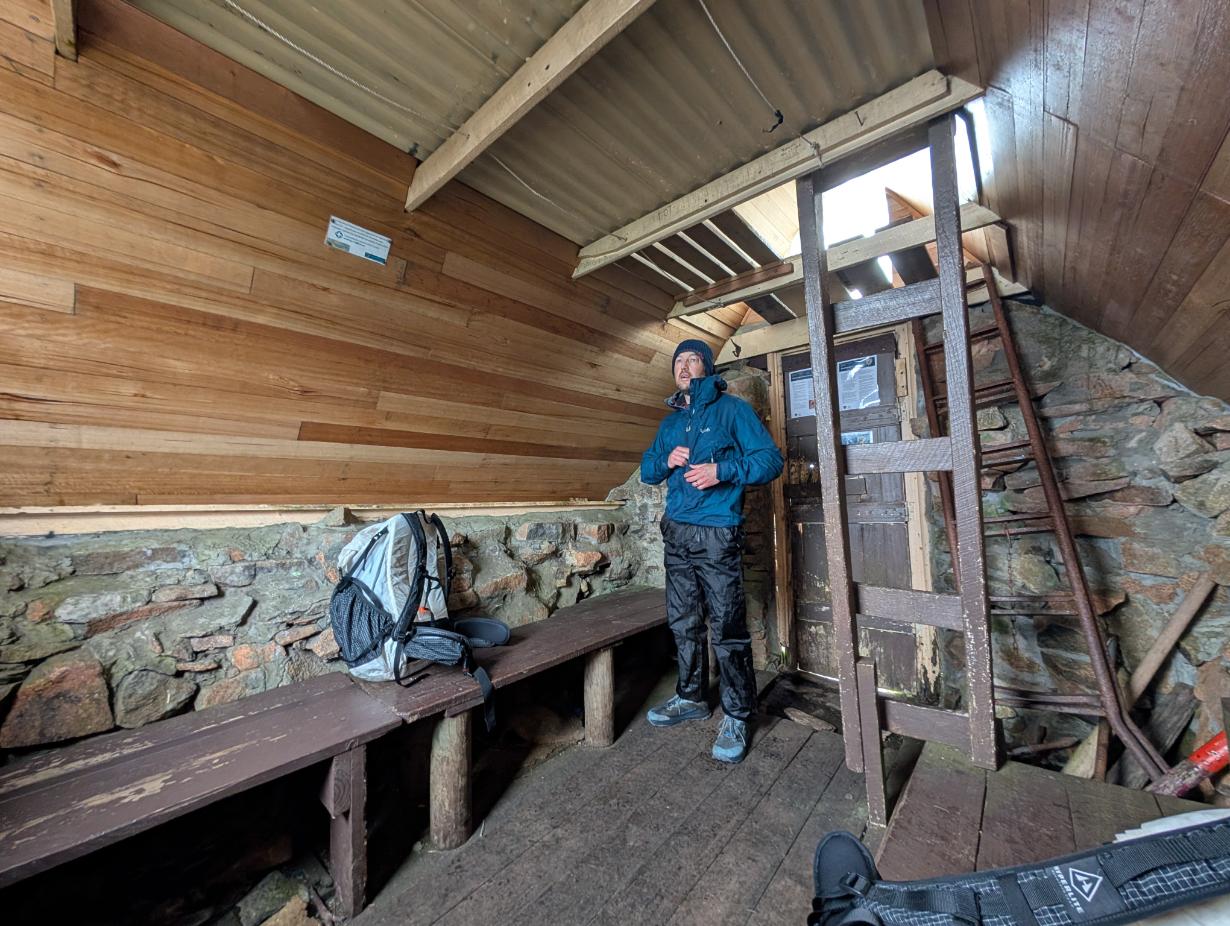
Taking a break in K Col hut. We were wet and cold, so this hut was a welcome respite from the sideways rain. It also marked a shift in the weather. When we left the hut, the rain abated and blue skies broke through in patches, lifting our mood and drying us out somewhat. (Photo Pete Collins)
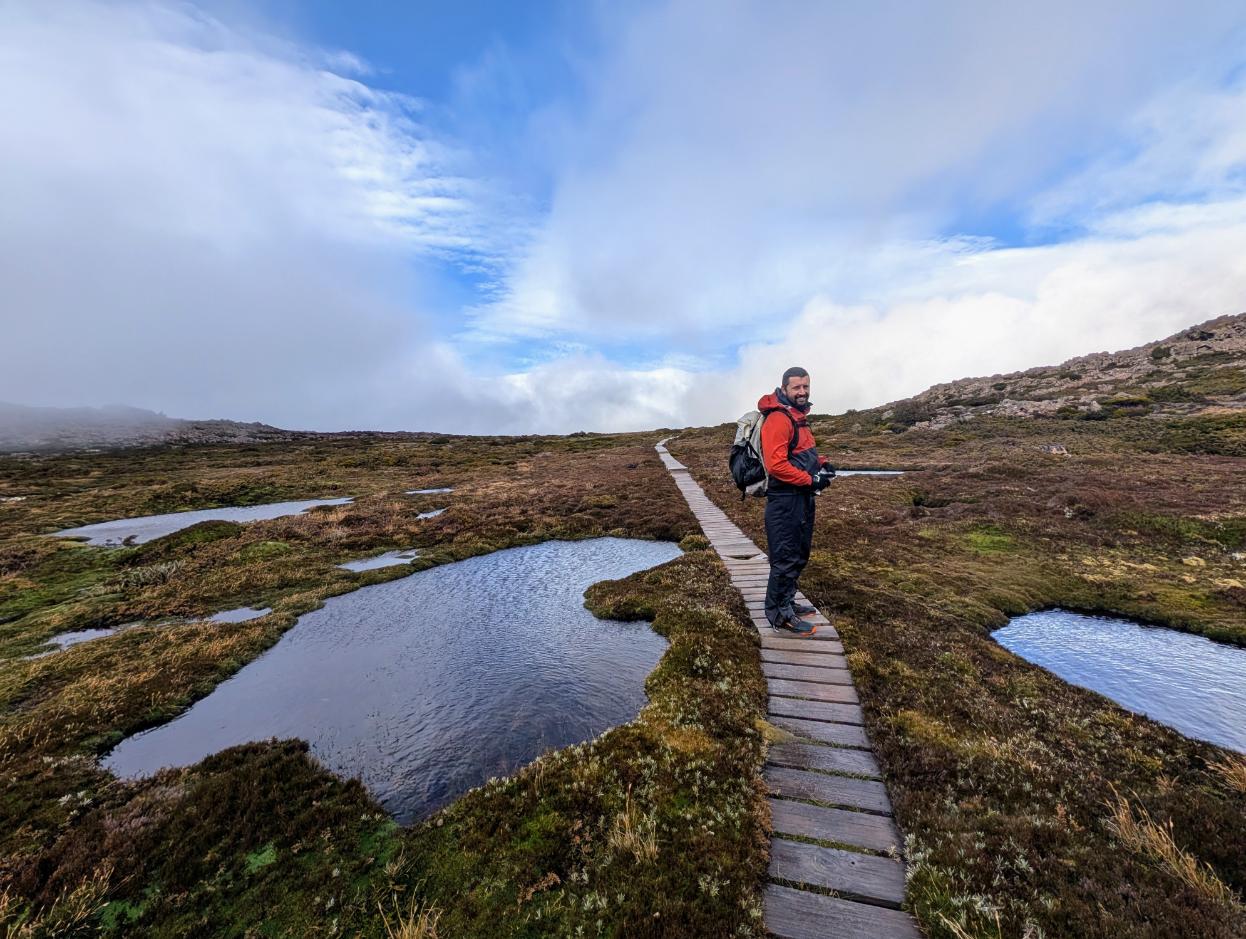
New boardwalks on the K Col track, to protect the alpine ecosystem.
Spectacular view from K Col track.
Pete on the Tarn Shelf track, a beautiful section of trail towards the end of the day.

Day 12: Packraft Training on the River Mersey

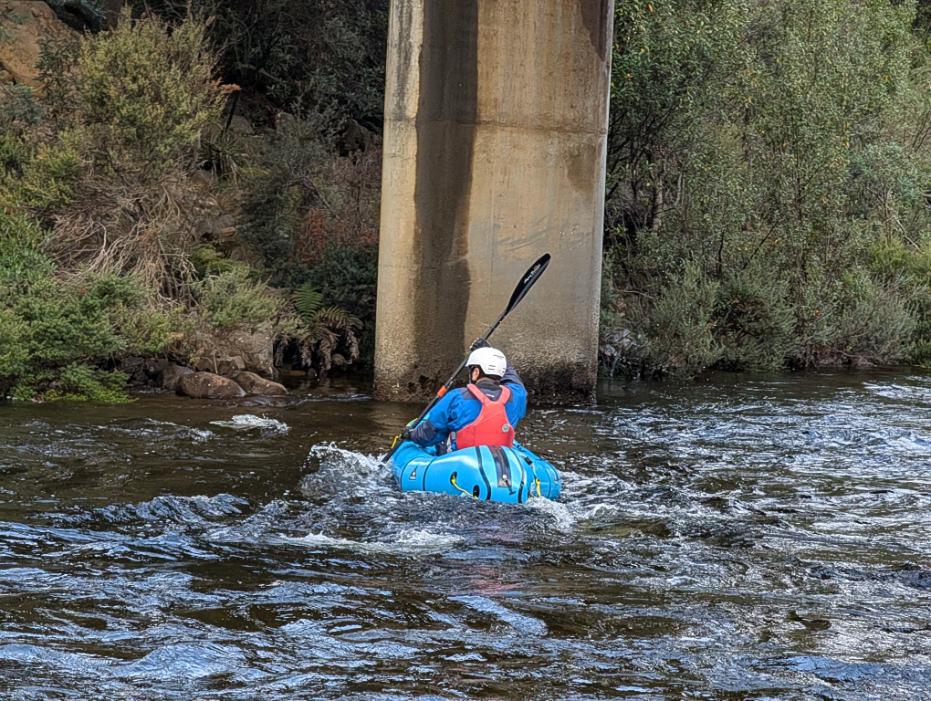
Another day of mixed weather so we spent half a day practicing eddy turns and ferrying in a fast, pushy river environment on the River Mersey.
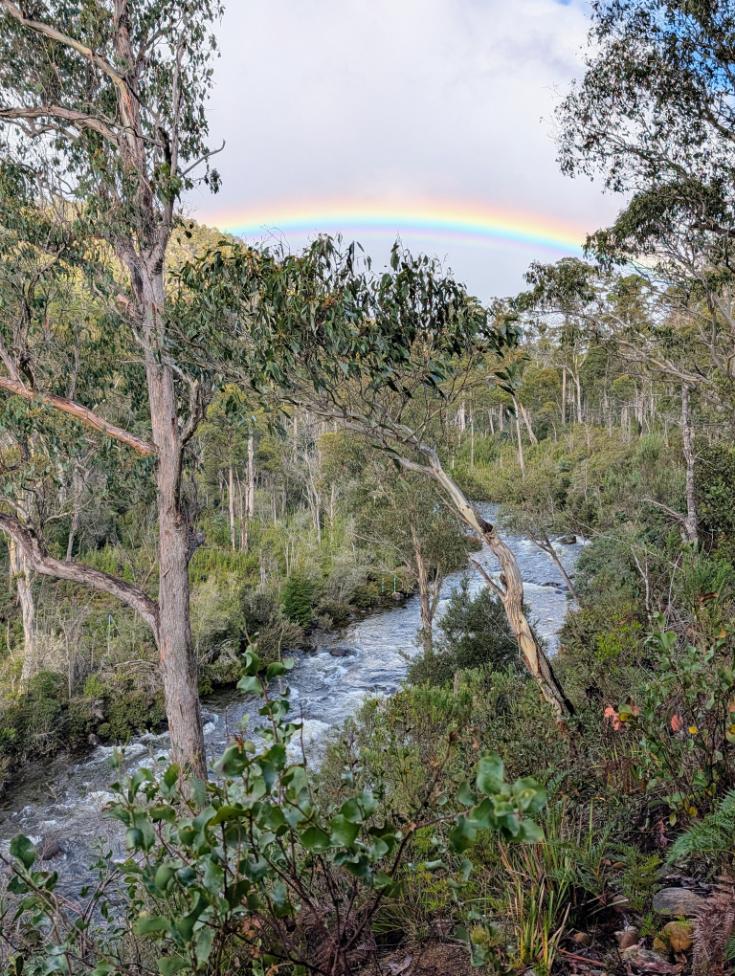
Rainbow over the River Mersey
Practicing ferrying in the fast flowing water. (Photo Pete Collins)
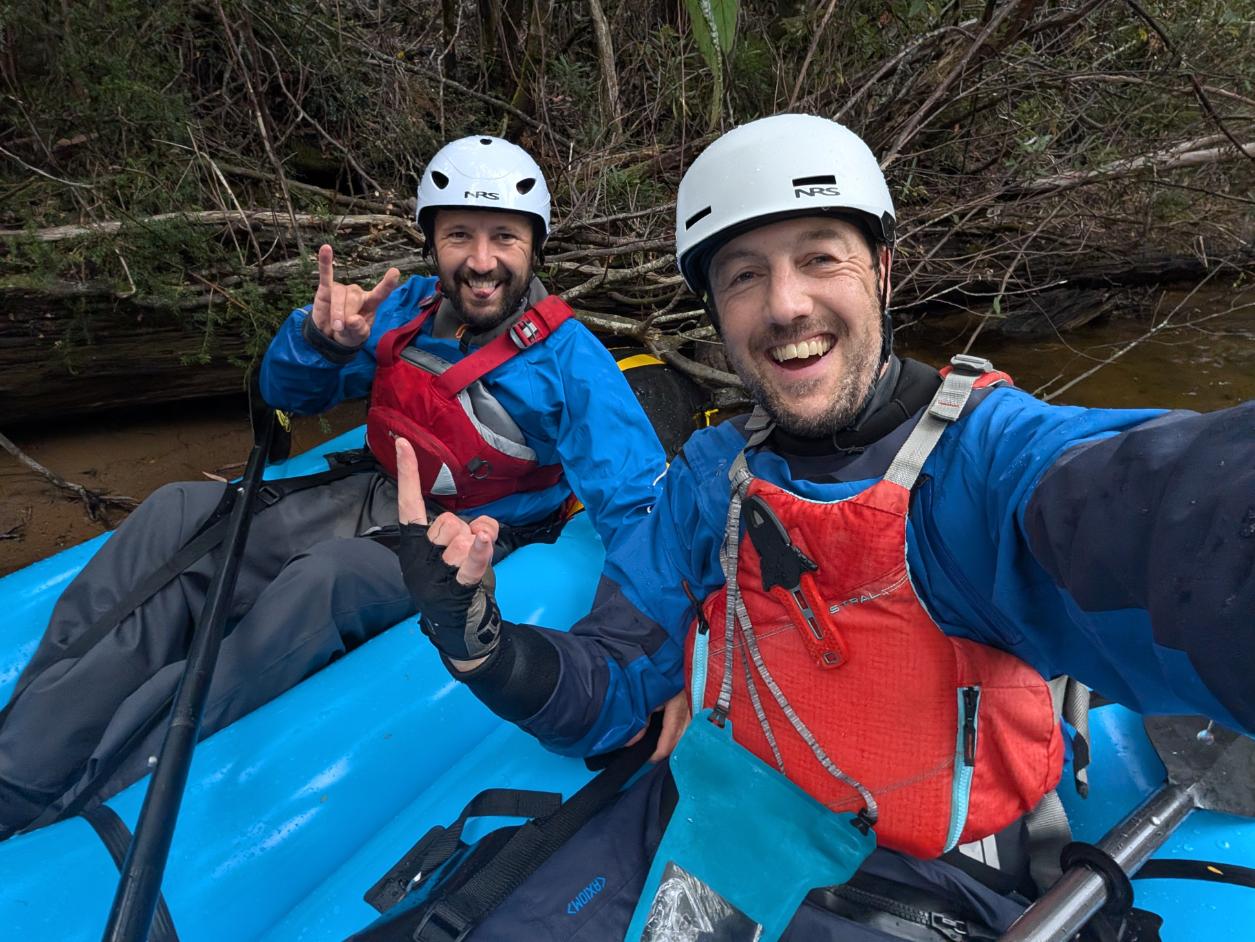
Having a blast!
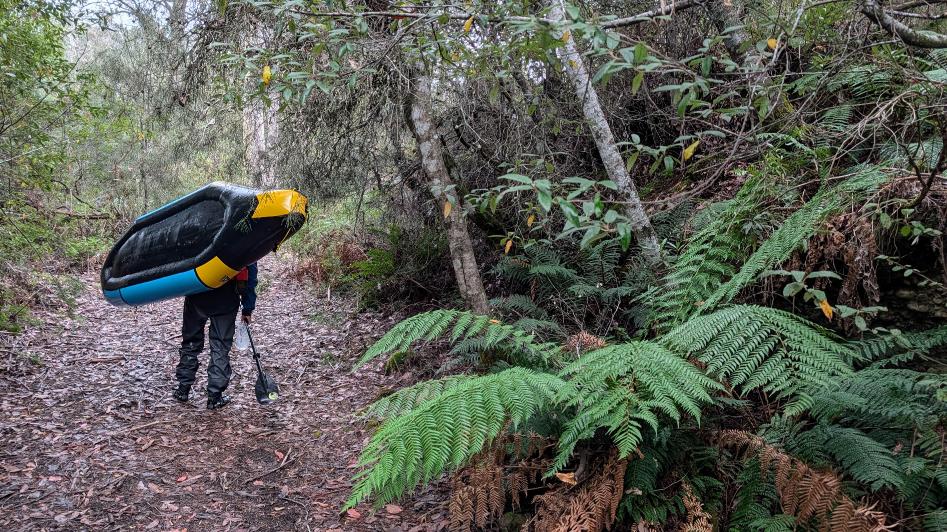
Walking back to the car after a successful few hours on the river.

Day 13: Packrafting on Lake Barrington
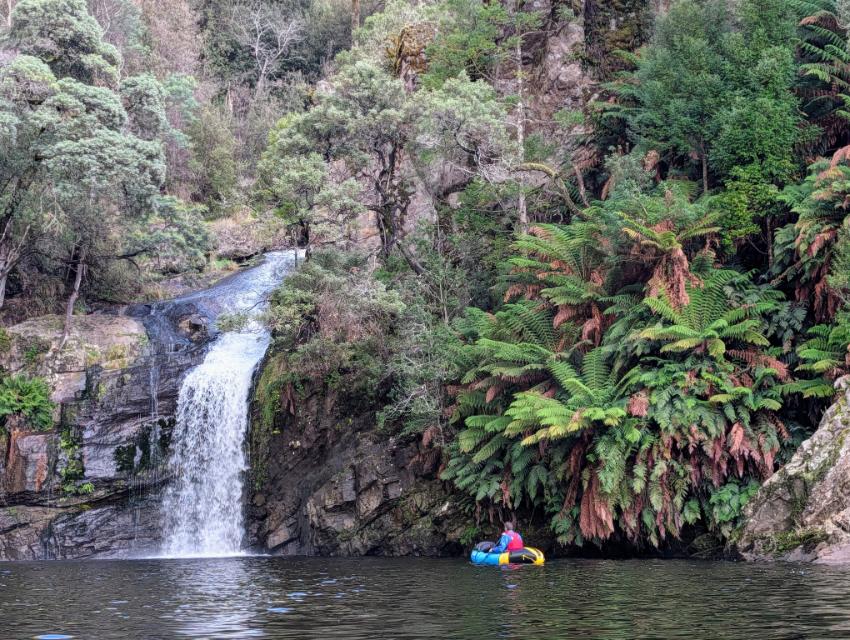
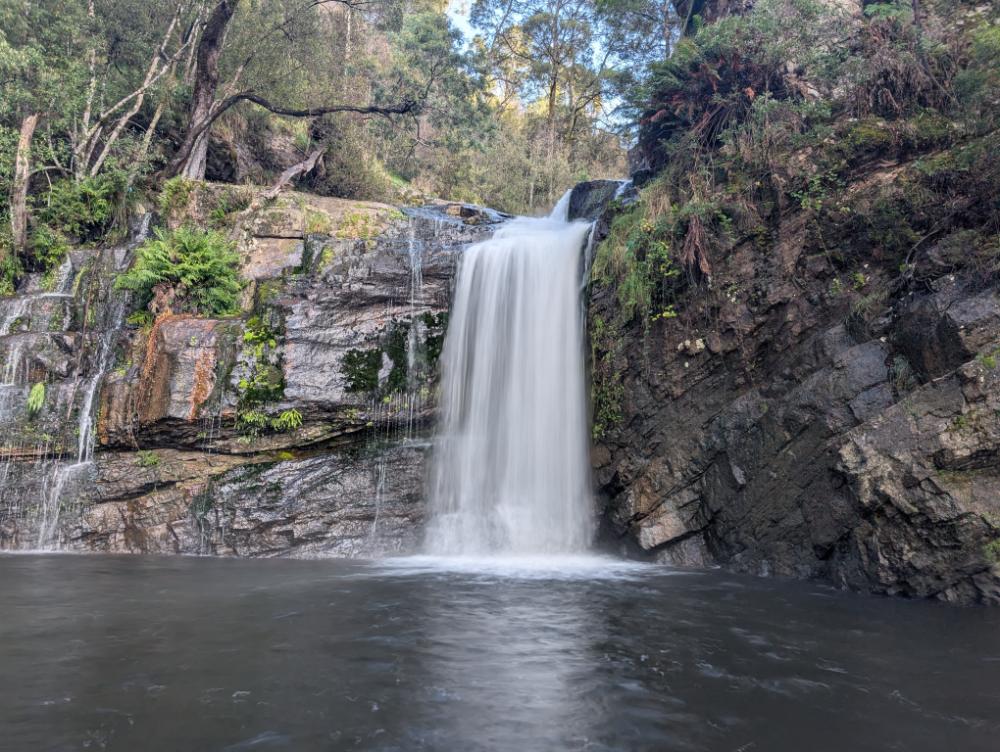
Pete next to Forth Falls.
Forth Falls. (Photo Pete Collins)
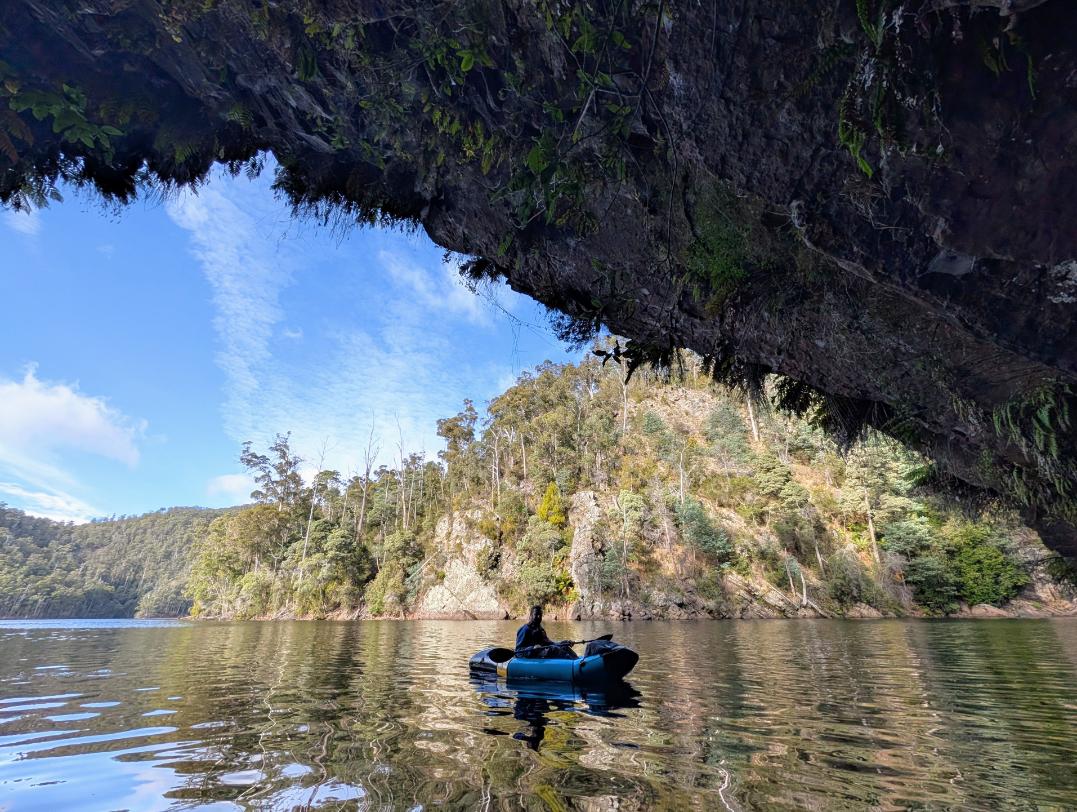
Paddling into the cave by Forth Falls.
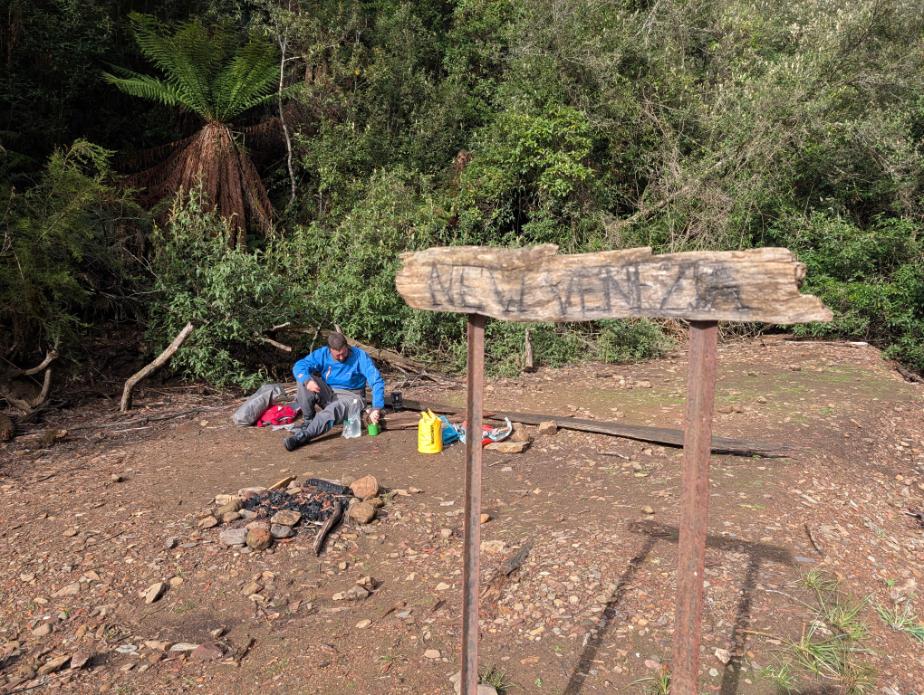
Our final trip brew stop in a cove called “New Venezia”.
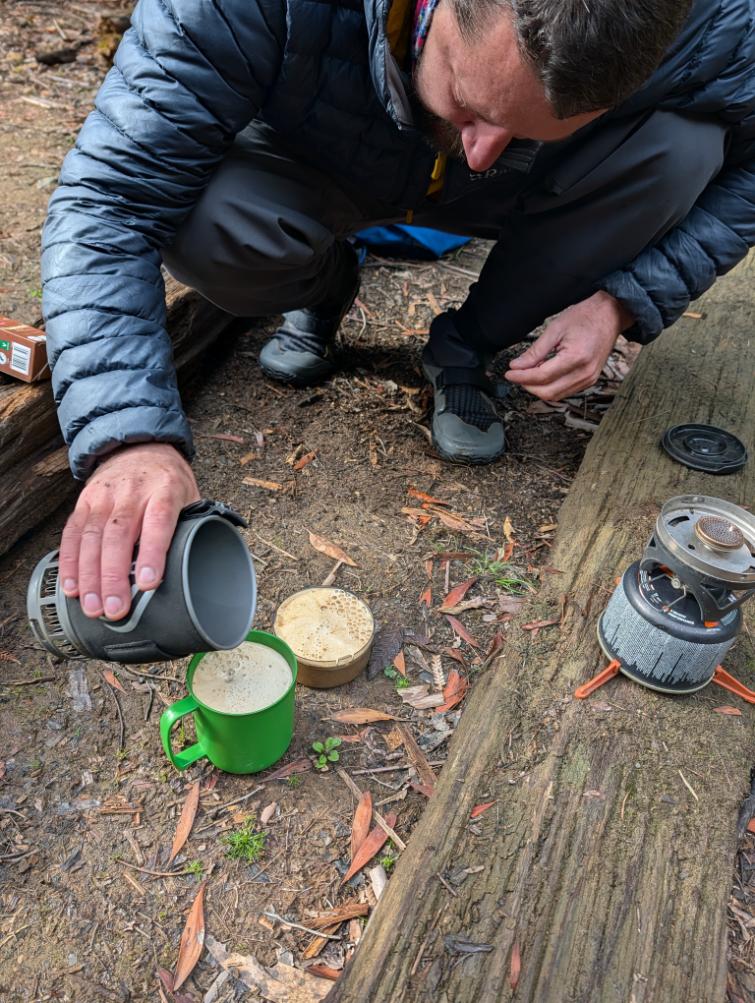
Final brew of the trip!

Introduction to Whitewater Packrafting on the Animas River

Something magical happens when you put like minded people together in the outdoors with a shared mission.

It’s a recipe as old as the hills themselves: take a dose of physical exertion, a pinch of risk, a dollop of uncertainty, top with a large helping of camaraderie, and garnish with laughter. Blend it all together for a perfect day. Repeat for a good life.

Flying over the Rockies. Beautiful!

Earlier this month, on the way to a work conference in Boise, Idaho, I stopped for three days in Durango, Colorado, for an introductory whitewater packrafting course, run by Four Corners Guides.

It must have been my 27-old self who booked the trip back in February, but it was the middle-aged-dad version of me that showed up on June 1st. Go figure. Walking along the banks of the Animas River on the eve of the course, watching big rafts bounce through the waves, my 43-year old self was wondering what the hell my 27-year old self had signed me up for.

Oh well, I was about to find out…

Day 1: Oxbow Park and Preserve to 29th Street / River level ~2,000 cfs

Getting ready to go out on the water

Day 1 began on the mellow flat water of the Animas River, at Oxbow Park and Preserve. 

After introductions (of ourselves — myself, Bridget, and instructor Steve —  and our boats), it was time to don drysuits. Standing in the fierce sun, already sweating, it took willpower to pull the dreaded drysuit neck gasket over my head, endure a split-second of claustrophobic panic, and then settle into feeling like a boil-in-the-bag beef stew. Drysuits keep the water out and the sweat in.

Thankfully, we soon jumped into the river and I understood why we were wearing them. It’s cold at this time of year.

Steve ran us through a set of swim drills (defensive and aggressive, always keeping feet off the river bed), paddle strokes, and boat handling techniques.

These little boats are pure fun!

It was soon lunchtime, and we ate our sandwiches at the river’s edge, watching the crazy spectacle of the annual Durango river parade unfolding on the boat ramp. All manner of crafts and characters were partying and pushing off into the water. Nuts!

After lunch, we proceeded downriver, a merry little convoy of duckies. Along the way, we practiced catching eddies, ferrying, and reading the river. It was an ideal place to learn, with each feature seemingly a tiny bit bigger and more powerful than the previous one. Gradually, I was getting a feel for the river.

Towards the end of the day, we pulled over to scout the last rapid for the day, at 29th Street. 

Holy shit, are we going down that?

It looked quite a bit bigger than anything thus far. I felt a little intimidated at first. But we talked about it as a group and watched boats, paddleboards, lilos, swimmers, and all the flotsam and jetsam of the river parade go through it, and then it didn’t feel scary at all.

We watched Steve go through it first. Calm as a cucumber. As smooth as silk. He made it look so easy. Deliberate paddle strokes, picking the best line, seemingly without expending any effort.

Me bouncing through the feature at 29th

When I followed Steve through, I missed the optimum line (unsurprisingly). I got through the first feature OK, but headed straight into the next set of bigger waves, which Steve’s line avoided. Bouncing around, paddling like a crazy clown, I somehow stayed upright and huffed and puffed my way back to river left and the waiting eddy. 

That was AWESOME!

We go again and again, and each time I slightly improve my line to catch the eddy higher and with less effort.

As the day draws to a close, I realize how weary I am.

It was the fierce sun! Dehydration (I wasn’t sure about opportunities to pee so didn’t drink enough)! The altitude! The time difference! Frickin’ middle-age! Goddammit, all these things conspire to make me quite tired. I eat dinner at the hotel and fall asleep by 8.15pm (give me a break, that’s 10.15pm in my home timezone).

A mighty fine first day!

Day 2: 29th Street to Whitewater park / River level ~2,300 cfs

We started back at the same feature at 29th Street put-in. Another boater, Sarah, joined us for the rest of the course.

I felt much more comfortable this morning, a sign of how much progress I’ve made since yesterday. I practiced a wet self-rescue. It’s reassuring to know that I can get back into the boat and that it’s not too hard (well, provided I still have the boat, as I found out to my cost later on).

Yee-haw! Let’s do this!

The morning was spent working the feature over and over, practicing getting the right line and catching the eddy. The importance of leaning downstream and punching into the eddy with momentum are the main takeaways. That and the tight drysuit neck gasket itching my sunburnt neck like mad.

For lunch, we hauled the boats up into the shade of some trees and sat around asking questions and telling stories. Well, mostly us students asking questions and Steve answering with a selection of stories from his many wild adventures.

In the afternoon we boat from 29th Street down to the Whitewater park through increasingly bumpy and fast rapids. All the time, we practice catching eddies, picking lines, and scouting rapids before running them.

At the whitewater park, we portage around the main rapids (class III/IV, so way out of our league at the moment) but we watch others run them and talk about their lines and the features. Really interesting learning how to read the river.

We put in again just below the whitewater park for a last section down to the take-out and parking lot.

I was riding high at this point, feeling like I was getting the hang of it all. In classic fashion when learning something new, my hubris set me up for a good beat-down.

I was following Sarah through the last set of waves, thinking to myself how fun it was. I was a little too close though, so couldn’t see what was coming. Sarah took the correct line just to the left of the last wave but I didn’t. Too late to change course, I went right into it and learnt the hard way that it had a decent sized hole at the bottom. Yikes!

My boat slammed into the hole and practically stopped. It immediately spun sideways and up on an edge. Time paused for a split-second but I knew what was coming. I get dumped out into the river. Argh me hearties, a genuine swim!

My boat gets stuck in the hole but I’m off racing downriver, paddle in one hand and sunglasses in the other (they fell off but they float, so I grabbed them. Gotta look cool when I’m drowning). Steve paddles over and tells me to grab the back of his boat. With a big effort, he towed me to the riverbank. I straggle ashore like a drowned rat, breathing hard and figuring out what the hell just happened.

Meanwhile, Steve heads off to retrieve my boat, which by now has worked free from the hole and ended up on the opposite bank. I was thankful and relieved, mostly because my wallet and phone were inside a drybag in the boat. (I kept them inside my drysuit with me the next day.)

Well, that made for an exciting finish to the day and a tremendous learning experience for our group to debrief (you’re welcome). It illustrated how quickly things can go south and you can find yourself up shit creek without a paddle, so to speak.

All-in-all, another terrific day!

Day 3: Whitewater park to River Road / River level ~2,700 cfs

The river rose again overnight, so it’s flowing faster this morning. The waves are rowdier but some features, like the hole that dumped me out yesterday, are now mostly washed out.

We start the morning just below the whitewater park with eddy practice, swim practice, rope work, and safety discussions.

We work on catching bigger eddies. The current is much stronger here. I’ve come so far from day 1 and I feel confident about this next eddy assignment. 

“What you’ve gotta do is pierce that eddy line, like an arrow” Steve reminds us.

“Gotcha, yep, that sounds good. I’ll give it a go” I reply.

I paddle out into the current. Lean downstream. Fart upstream, as we’ve been taught. And off I go.

Ok, this is looking good, a nice approach angle, the voice inside my head is saying. (For some reason, I’m hearing the voice of an air traffic controller bringing in a fighter jet to land on a carrier.)

Roger that, the voice continues. 

Then suddenly err, your approach angle is looking a little off now

I see Steve frantically waving to me to head further out into the current

HEAD FURTHER OUT into the current you dumbass… the voice in my head shouts.

Oh shit, I’ve stuffed it up, haven’t I?

I pirouette the boat — not really sure why — which of course doesn’t help and I just end up closer to the feature. I paddle like a madman for 5 or 6 strokes but it’s too late. I’m heading straight towards the wave train, way off the best line and the correct angle of attack. 

Argh, this is NOT going to work.

I blast past the eddy line miles off and crash and burn into the waves, remembering to straighten up at the last second to avoid going for a swim. It takes a big effort to get into the eddy and back upstream. It was fun though!

Yes, I have come far from day 1 but I still have a long way to go. 

After lunch, we paddle downriver, practicing eddying, ferrying, leaning downriver, boat towing, and swimming in the rapids. The river is bouncy and fun, and I enjoy the ride. 

Practicing towing boats. Photo courtesy of Bridget.

We take out for the final time, just past River Road bridge, after the Home Depot. One final wrestle with the drysuit neck gasket and the course is done. 

We chat and laugh and relive the past three-days before saying our goodbyes. 

I LOVED it. Every bit of it.

By the end of three days, I feel a whole lot more confident and less intimidated than when I arrived on day one. I’m looking forward to continuing this journey.

I have a major case of post-river blues now. It’s been a while since I’ve hung out with a crew of folks who LOVE adventuring that much. Telling tales, laughing at anecdotes, excitedly sharing future trip plans. I gotta get more of this in my life again. It’s my drug of choice.

Thanks to the crew for an amazing three days: Steve, Bridget, and Sarah. And to Lizzy and Four Corners Guides for organizing behind the scenes. 🙏