Category Archives: Multisport

Harpers Ferry Fall Foliage Adventure Race

18th October 2025

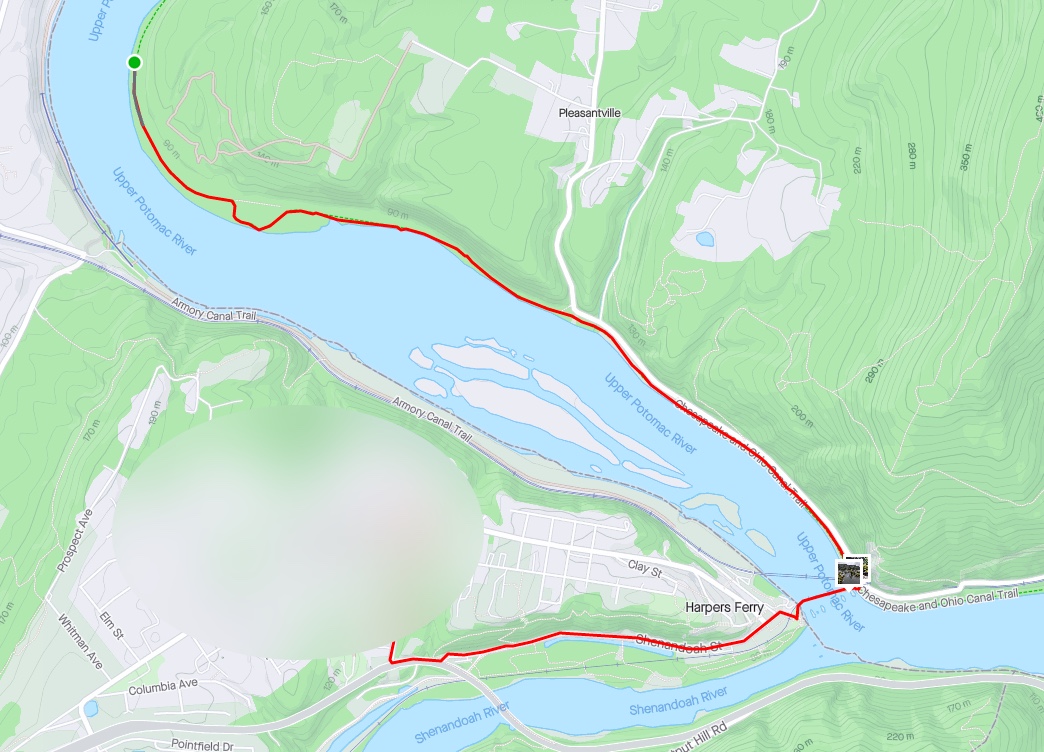
  • Distance: 26.91 mi (7 miles kayaking / 16 miles biking / 4 miles hiking)
  • Time: 4 hours 30 minutes
  • Ascent: 852 ft
  • Weather: Overcast, mid 50’s F

In early September, my friend Ben asked me if I’d partner him on an upcoming adventure race happening in our little town of Harpers Ferry, WV. Hell yeah! I didn’t need much convincing.

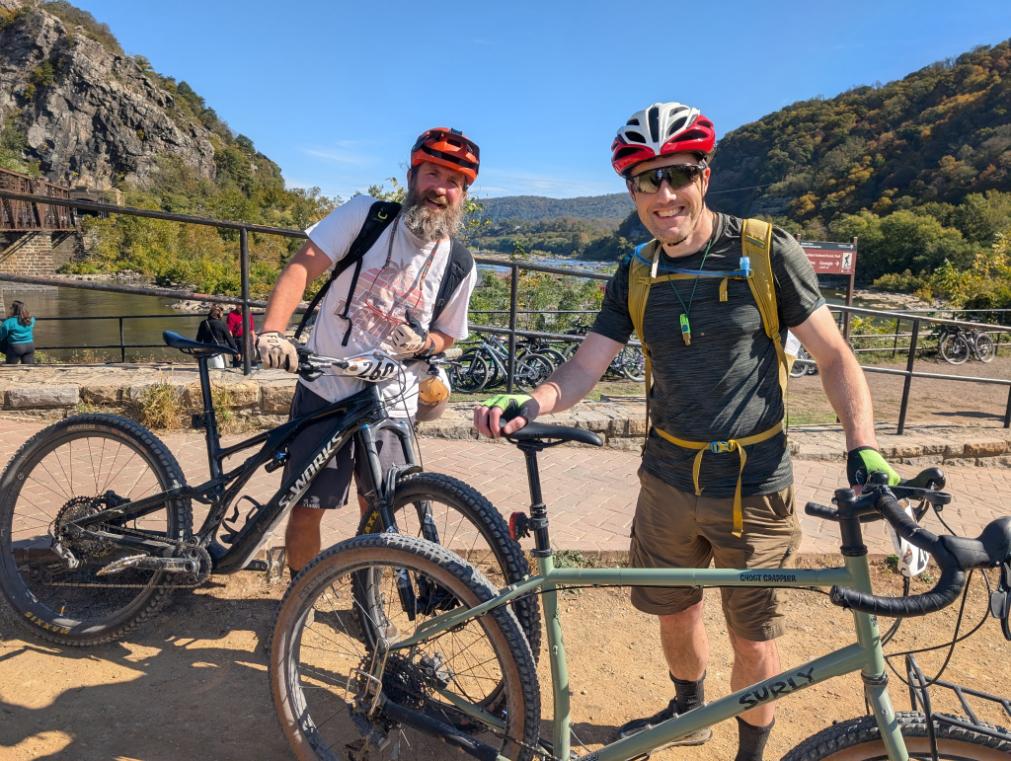
Ben (me, L) and Ben (R, my neighbor), officially known as the Bolivar Bandits, or Ben² as my son called us

It was a short, half hour walk over to the NPS parking lot, which was being used as the race start area and finish line. We racers huddled in our little groups, shivering slightly in the chill morning air. The 13-hour racers were off first, bussed to the river above dam 3, where they would set off. A little while later, the rest of us, mere casual 5-hour racers, boarded our big green bus to take us to Potoma Wayside, below the rapids, where our race began.

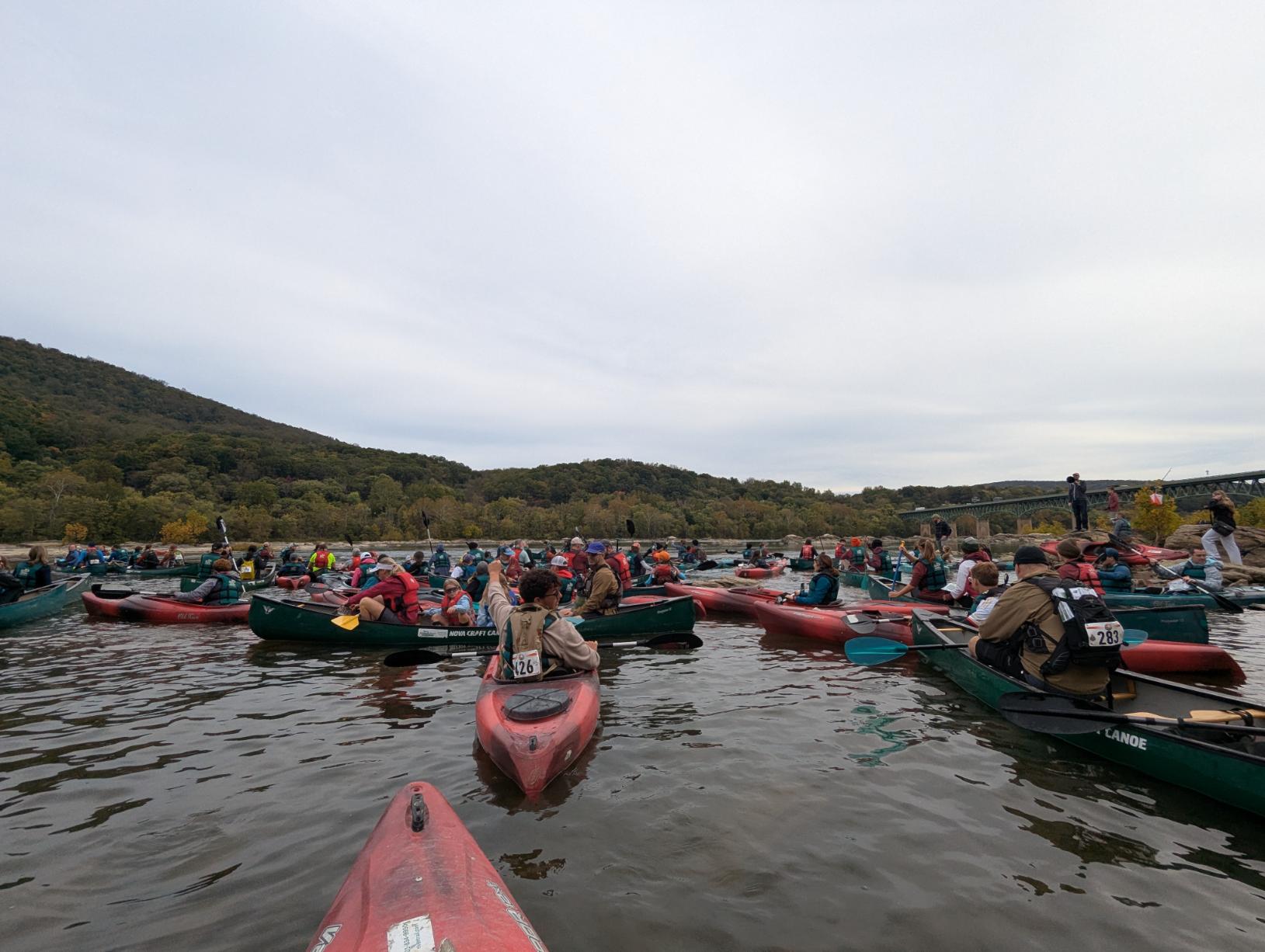
A vast flotilla of small watercraft awaited us at the river edge, a riparian hodgepodge of vessels. Pot luck put us into separate red kayaks, which ended up being to our advantage as the two person canoes struggled badly over the rocks given how low the river was.

My first mistake was not taking off my jacket before jumping into the kayak. It had been a cold morning but I warmed up quickly with the effort of paddling and within a few minutes had to pause mid-river to remove my jacket, not easy with a life jacket on.

Everyone was getting stuck on rocks after leaving the riverbank, so it was very stop-start affair until we got into the river channel proper, where everyone naturally spread out.
My arms were on fire paddling for the first half hour, because of an arms workout two days earlier, and I honestly thought this is going to be torture for the next couple of hours. I did all I could to keep up with Ben.

Thankfully after half an hour or so my arms stopped complaining and I was able to lift the pace fractionally to avoid being left behind.

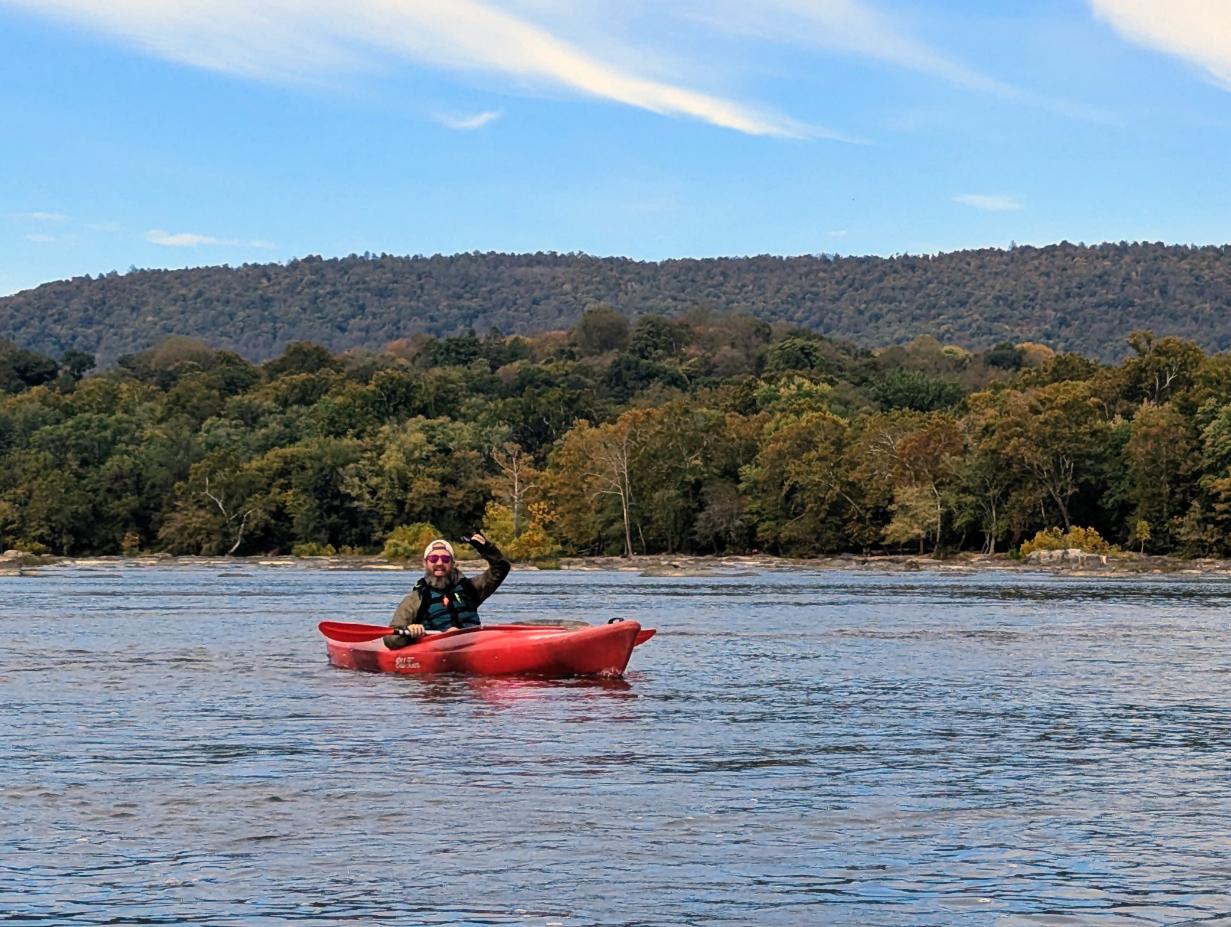
The scenery was of course magnificent. It was a real treat to be out there.
Our biggest mistake was not reading our map carefully. Or at all, in fact.

This was a rookie error that led to a fruitless quest across an overgrown island searching for an elusive checkpoint. We wasted many minutes before realizing the checkpoint was actually on an entirely different island.
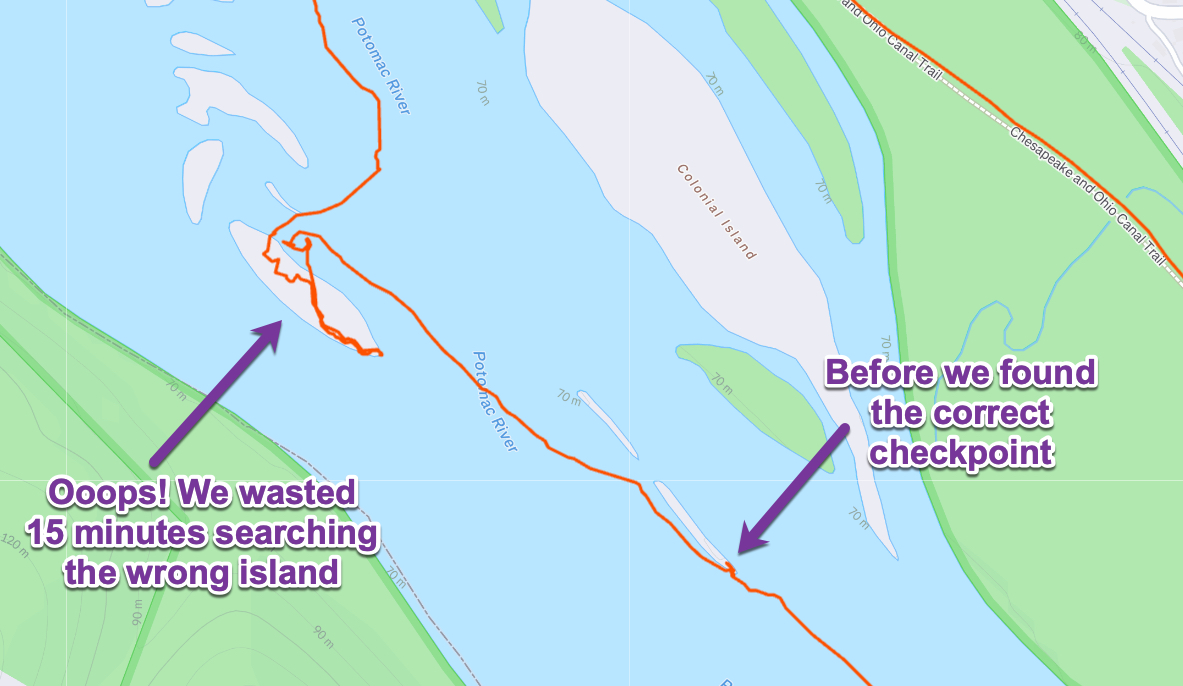
In the meantime, all the racers we had overtaken at the start now took the shorter inside channel, ignored this island, and powered back past us.

My sore arms notwithstanding, I really enjoyed the paddling leg. I LOVE being out on the water in a small craft, exploring and taking it all in from this unique vantage point.

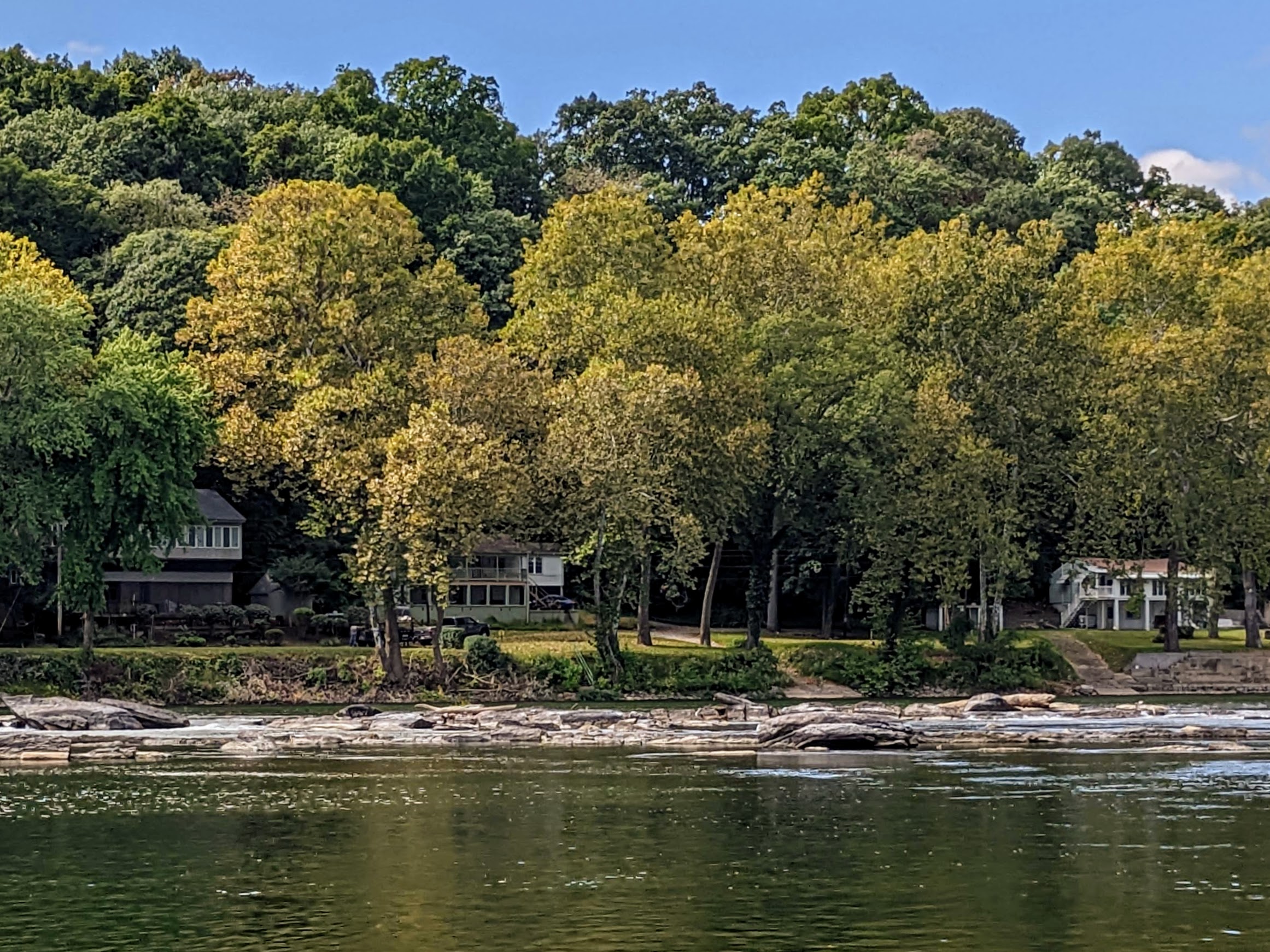
Our view approaching the Brunswick bridge, route 287, over the Potomac:

After roughly 7 miles, and 1 hour 45 minutes, of paddling, we pulled up to the boat ramp at Brunswick Family campground, for the transition to bikes. This was accomplished with relative ease, although we both remarked that we felt quite tired and beat up already, haha.

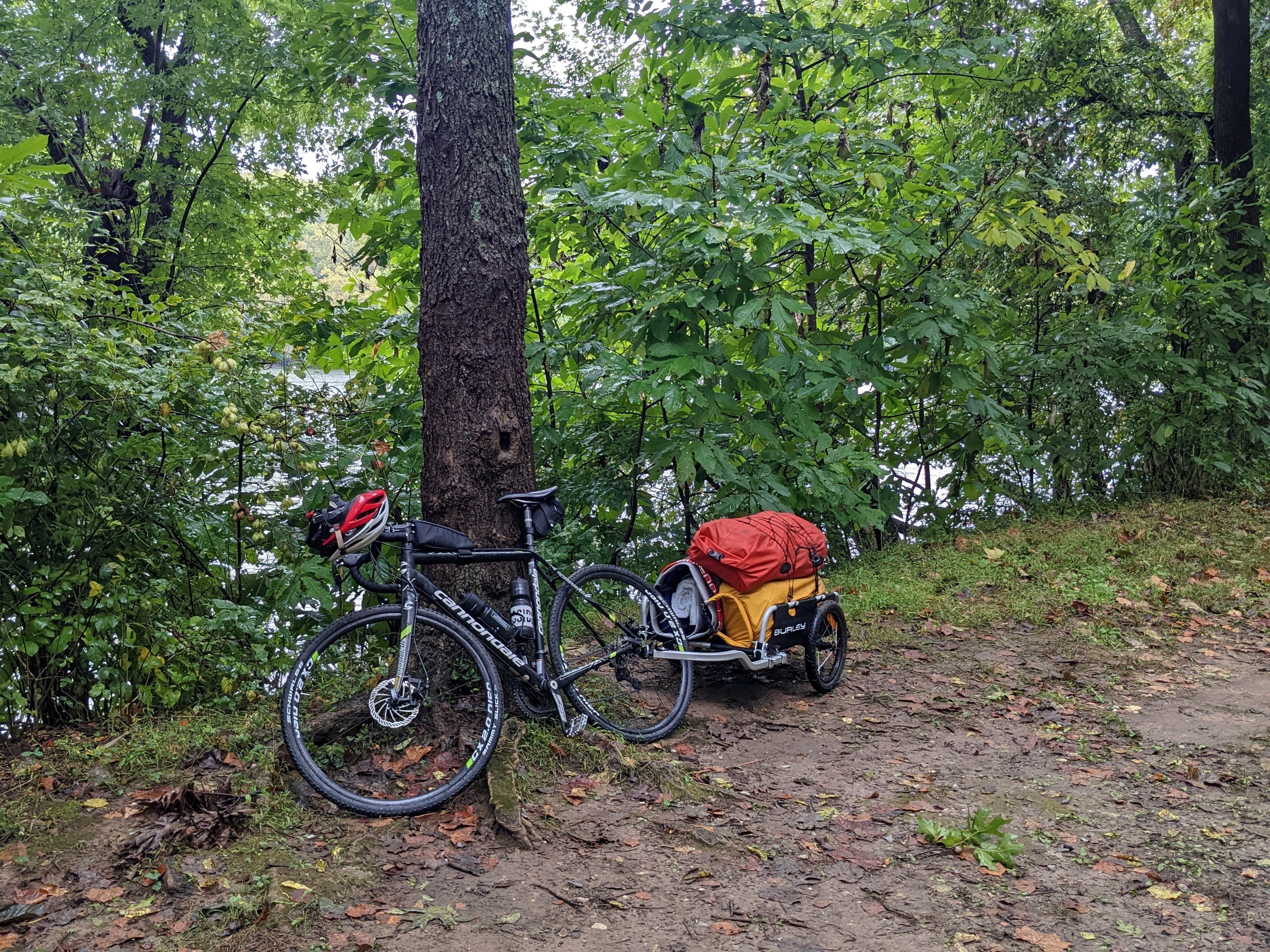
With the bikes retrieved and snacks consumed, we hit the canal with a grin and pedaled downstream to the first checkpoint at Little Catoctin Creek. Leaving bikes by the aqueduct, we rushed down to the river searching for the checkpoint marker.

Perhaps the most fun aspect of these adventure races, or other big outdoor endeavors that are time pressured (because of encroaching darkness or weather), is how focused you become on the task at hand. You exist in the flow state for hours on end, hardly thinking about anything except solving the next step of the puzzle. It’s better than therapy and it’s free.

In this case, we had to wade through the muddy creek bed to find the marker on the far bank, where the creek emptied out into the Potomac river:

The markers were little orange and white triangles, with an electronic tagging system. We carried a little doodad that we plugged into the electronic gizmo, which recorded what time we reached each marker.

We backtracked to the bikes and headed upstream on the canal, back towards Harpers Ferry, stopping a few more times for side quests into the woods to tag checkpoints.

Ben was on a full suspension bike, so he was bouncing away like a madman on a pogo stick.

The route took us as far upstream as the ruined lockkeeper’s house at Lock 35. This final biking checkpoint was hidden inside the ruin, so I had an excuse to see inside that building finally. I must have ridden and walked past it hundreds of time over the past five years but never been inside before.

Crossing over the bridge into Harpers Ferry was a bit of nightmare, it being a Saturday afternoon in peak fall tourist season. Patience was required. Back on the WV side of the river, Lexi and the boys had hiked down to meet us, which was fun and a nice morale boost.
We biked along Shenandoah Street and Shoreline Drive, all the way up the long hill to the NPS parking lot, which was the start/finish area and transition area for the final leg.

The final leg was a running/hiking loop around Murphy Farm, with a last handful of checkpoints to locate. We had the advantage of local knowledge so we found all the checkpoints and made it back to the finish line within the time limit.

This is the wonderful lookout at the south end of Murphy Farm, looking south over the Shenandoah River, where one of the checkpoints was hidden.

Don’t be fooled by this final photo, we only started running when we came around the bend in the back of the picture 😉

(We had to look good crossing the finish line!)

Overall, this was a really good day out. Great people, beautiful scenery, and so fun to be fully engaged and in the zone. We ended up finishing 3rd in the 5-hr M-2 group. Not too shabby! (Although there were only 6 teams in our group 😉

Resources

Fall Foliage Adventure Race

The Bike SUP Guide: Paddleboard Adventures By Bike

I’ve been fascinated by self-powered adventures, especially those starting and finishing at home, for as long as I can remember. Adventures that are self-contained and car-free. 

It’s the ultimate freedom. You have everything you need with you and no set destination to return to. (Well, apart from home, unless you’re setting off on something epic of course…)

For the past few years, I’ve been combining two of my favorite activities: standup paddling and biking. I’m fortunate to live at the confluence of two major rivers on the East Coast of the US. One has a bike trail running alongside it. It’s the perfect territory to perfect the art of using bikes and paddle boards to access and explore rivers. 

So when my friend Chuck texted me recently, asking if I wanted to paddle the next day, I said yes immediately. I knew I would bike to and from the river with my board. I packed that night so I could get an early start.

The following morning, I biked for 22 relaxing miles along the bike trail to our rendezvous at the boat ramp. My paddle board was rolled up and strapped to the top of my front pannier rack. Apart from slightly heavier steering, the effect on my bike handling was minimal.

At the boat ramp, I blew up my board and strapped the bike to the front whilst waiting for my friends to arrive.

When Chuck and Brenda arrived, they were intrigued by my car-free setup. Questions abounded. How is the bike strapped on? What’s the extra weight like? Is the board stable? To which I answered, yes! We launched and paddled into the main current.

The board was perfectly stable, even with the extra weight up front. The effect on board handling was negligible with the bike positioned over the centerline. One difference though: with all those sharp objects in front of me, I was extra careful to not fall forwards! Especially when navigating through the occasional bumpy riffles.

Our merry flotilla floated downstream enjoying the aquatic world gliding beneath our feet. We spied huge catfish, 70-year old river clams, and old tires beneath the surface. We startled a great blue heron and, later, saw a pair of bald eagles fly overhead as we continued downstream.

Eventually, busy-life demanded my return and the spell of the river was broken. We took out at a deserted boat ramp.

Here, I deflated my board, rolled it up, and strapped it on the front of my bike. I bid my companions farewell as my adventure continued. I swapped paddle strokes for pedal strokes and rode home, the river by my side, with a grin as wide as the bends of the river itself.

Route Tips

Many rivers have parallel roads and boat ramps. It’s likely you can create your own multi-sport loops in your neck of the woods.

Some pointers to keep in mind:

  • You want to be comfortable standing on your board before you try paddling with a bike strapped to the board as well.
  • Start with a small goal to get used to the setup and extra weight, both cycling and paddling.
  • Stick to flat water to minimized the chances of falling forwards onto your bike.
  • Keep in mind that it takes about 20 – 30 minutes to transition from the bike to being on the water and vice versa.

Biking Setup

Any bike will do, but it’s probably advisable to have wider tires for stability when you’re carrying the extra weight. Plus, you’ll likely want to fit a pannier rack so eyelets are a good idea (though it is possible to fit a rack without eyelets).

I’m riding a Surly Grappler, which is an all terrain drop-bar mountain bike. It’s ideally suited to this kind of adventure touring.

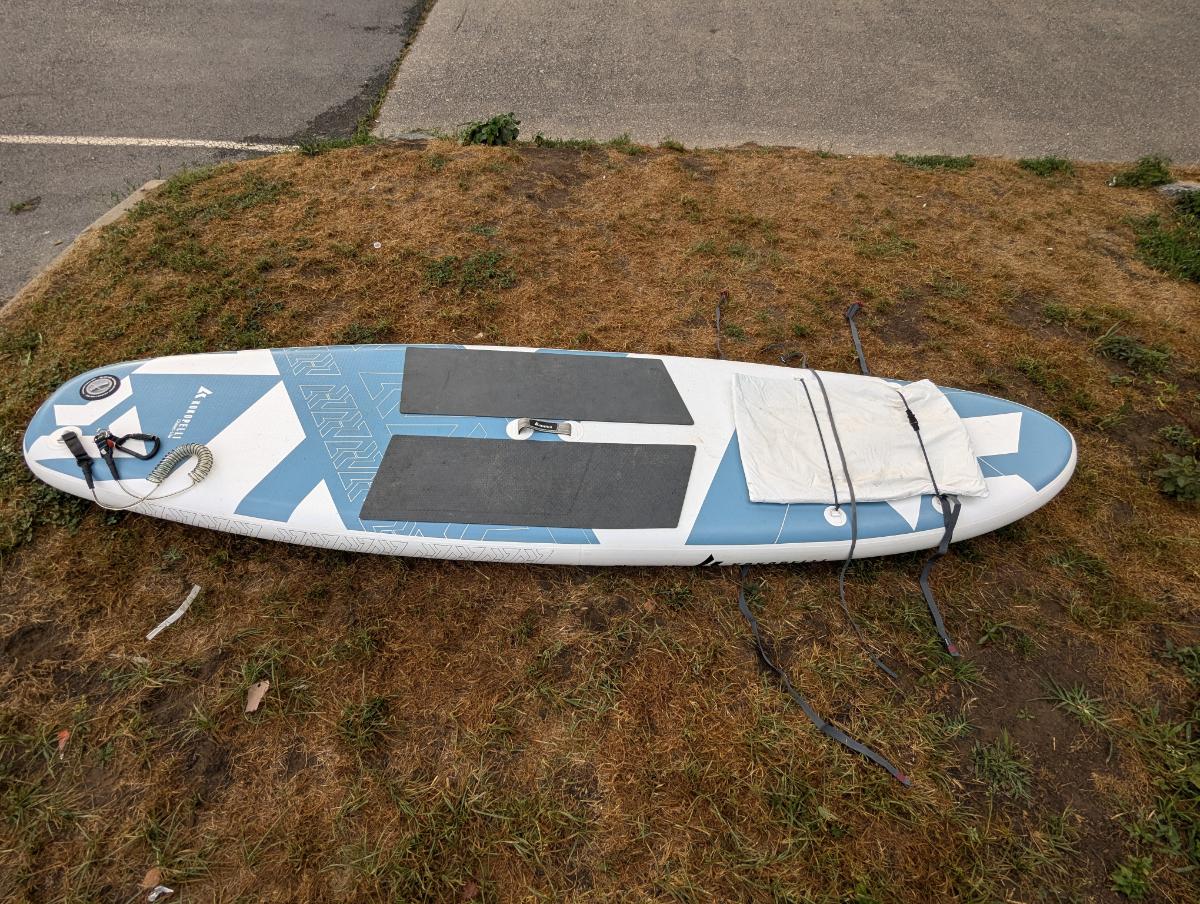
The Kokopelli Chasm Lite is the lightest paddle board in the world, so it’s uniquely qualified for this type of adventure. It rolls up small enough to sit comfortably on the top of a bike rack (or fit into a backpack if you’re a hiker!).

Most other paddle boards are too large and heavy to carry on the bike itself. You could carry them on your back in a huge backpack, but that’s not comfortable for longer distances. For heavier and bulkier boards, you can undertake car-free trips using a bike trailer. But the whole setup is much bulkier.

To carry a lightweight paddleboard on your bike, start by rolling up the board with the paddle inside the roll. Then wrap this board inside of the foam pad that you’ll use later on to protect the board. This SUP sushi roll is strapped on top of the front pannier rack.

A rear pannier rack would also work, but I prefer to have the weight up front. I find that heavily laden bike with all the weight over the rear wheel makes the steering very light and squirrely, which has led to one bad crash for me on a previous tour.

Carry the pump, fin, and other accessories in a frame bag or a seat pack.

PFDs (life jackets) are bulky. So far, I’ve found the best place to carry them is to strap them around the seat pack, which works pretty well. If you do this, make sure the straps are cinched super tight to avoid the PFD hitting your rear wheel.

Paddling Setup

Most paddle boards can comfortably carry a bike as you paddle downstream or across a lake. One caveat, you should only try this if you’re a fairly experienced paddle boarder with good balance. You don’t want to be falling on top of a bike. They’re sharp and expensive. To carry a bike on your board:

  • Tuck a pad under the front bungee straps of the board (to protect the board). Use a cutoff from a foam camping pad, or foam packaging, or something similar.
  • Remove the front wheel of your bike.
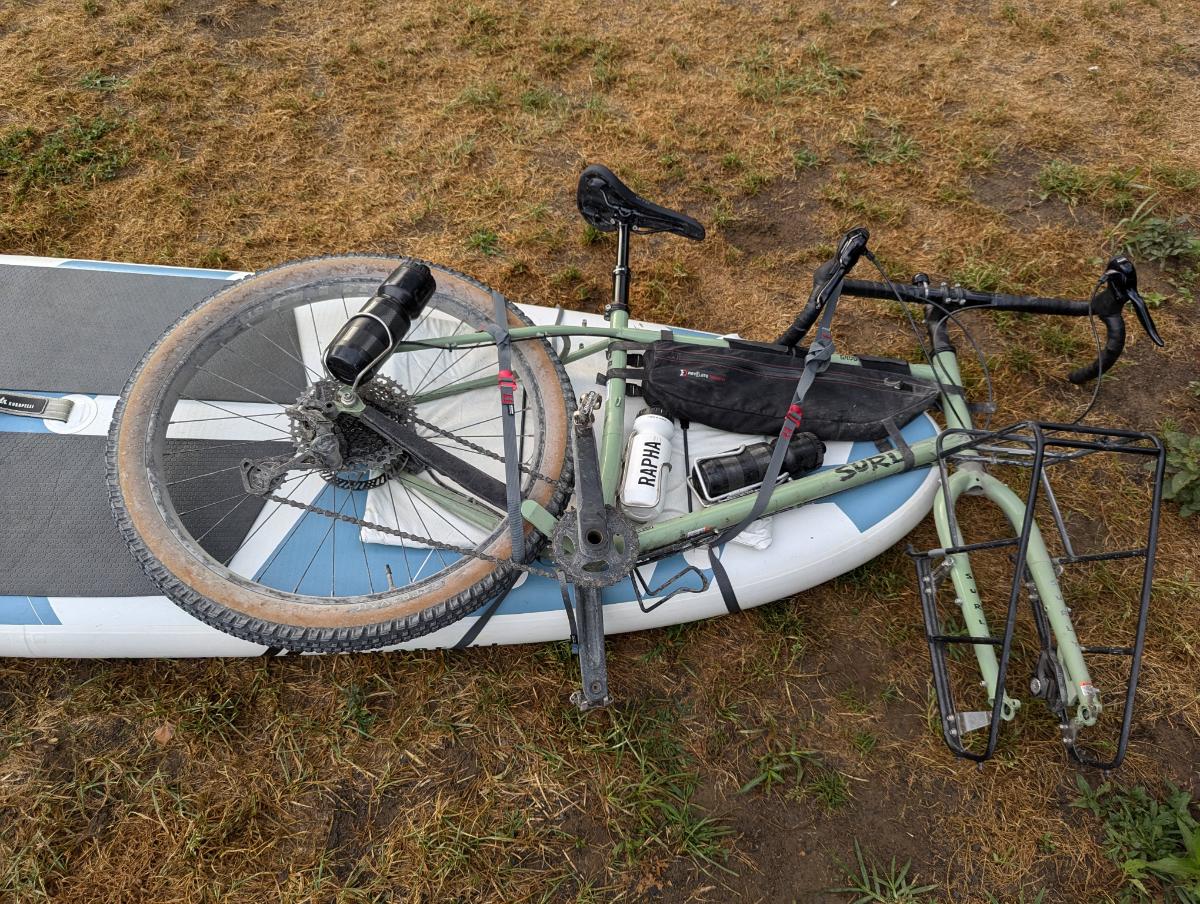
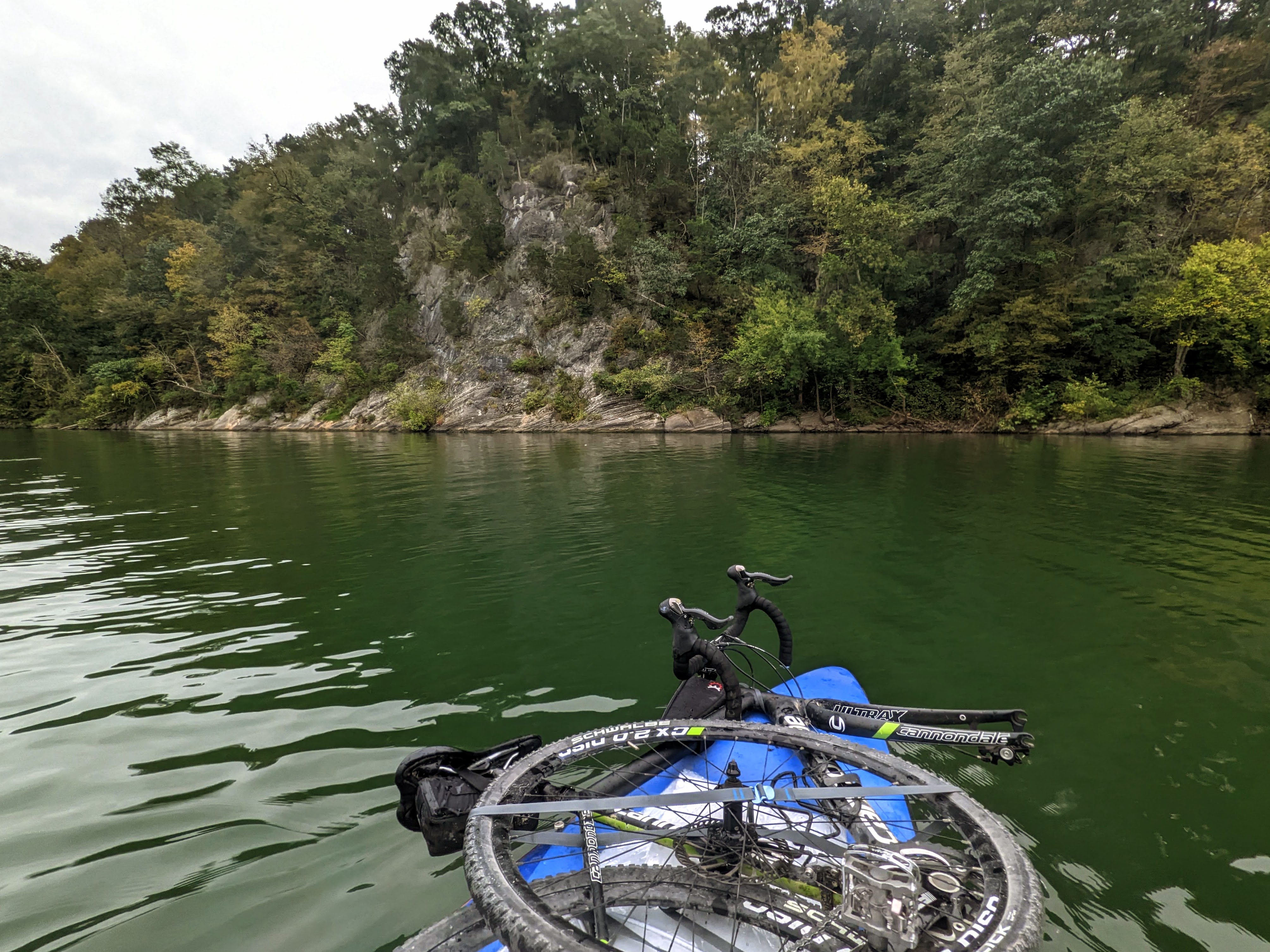
  • Strap the bike over the front of the board, with the handlebars twisted.
  • Put the drive side facing up (gears away from the board).
  • Rotate the pedals so the lower pedal hangs over the side of the board (it will dip in the water occasionally so you could optionally remove it if you like).
  • Use a couple of webbing straps under your board and threaded through the front D-ring eyelets to secure the bike (I like using Sea to Summit Accessory Straps).
You actually want the bike shifted a few inches further back than shown in this photo. So that the fork sits across the nose of the board to prevent it turning.
  • Strap the front wheel and any baggage on top of the bike.
  • Keep snacks, a drink, sunscreen, etc. accessible in a small dry bag clipped on top of the bike or to the handle in the center of the board. That way you won’t have to dig around under your bike to find essentials on the river.
  • Tie off loose strap ends to keep your board.
  • Set this all up next to the water. The board is an absolute beast to carry once it’s loaded with 40 lbs of bike gear (speaking from experience…).

Before paddling off, give the board a wobble-test to check everything is secure. Think about what would happen if your board flipped over. Is everything tied down?

Multi-day Expeditions

So far, I’ve done one multi-day bike SUP tour, over 3-days. But that was before I moved to a lightweight SUP, so I used a trailer to carry my board when biking. The trailer works fine, but it’s bulky and annoying when you’re cycling and then more gear to strap onto the board.

My goal is to add a pair of front panniers and a full frame bag to the lightweight bike/board setup above, negating the need for a trailer. I think that’ll be the best way to do multi-day bike SUP tours.

Watch this space…

Further Resources

A few other crazies have tried bike SUP adventures over the years, here are their stories:

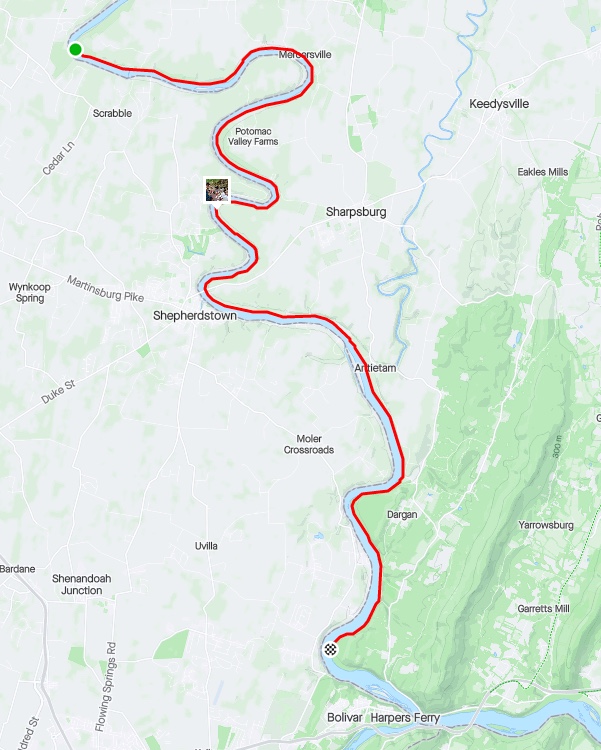
3-Day Bike And Paddle Board Tour On The C&O Towpath And Potomac River

29 September – 1 October 2022

  • Day 1: Bike 39 miles / 4 hrs 12 min
  • Day 2: SUP 10.5 miles / 4 hrs 48 min & Bike 23.3 miles / 2 hrs 29 min
  • Day 3: SUP 2.1 miles / 1 hr 3 min & Bike 4.3 miles / 41 min

Day 1: Home to Cumberland Valley campsite

Day 1 route along the C&O canal on the bike

I left home on the bike towing the trailer loaded with camping gear and paddling gear. The portage down the steps at the end of the pedestrian bridge — to gain the C&O canal — was rather strenuous to say the least! It took 4 trips to get the bike, trailer, board, and dry bags down to the canal.

The riding was easy by comparison! Well, at least this first section up to Shepherdstown, where the most notable thing was the number of other bikers and walkers out (it was a beautiful afternoon!).

Past Shepherdstown, the riding was quieter. It’s a really lovely section. I did spy through the trees that the river was extremely low (almost at drought level), so there were far more rocks showing than on previous paddles. This didn’t bode well for the paddle boarding part of the mission.

Rocks, rocks everywhere on the Potomac

Shortly after the Big Woods campsite, the trail deteriorates to loose sandy gravel and ruts. It’s all rideable, but not very easy compared to the trail up to that point.

I fell off at one point. The deep gravel slowed the trailer down, which pulled at my bike and threw me off sideways into the grass. No harm done, the whole thing was quite amusing. Shame I didn’t have a video! 😉

Crash!

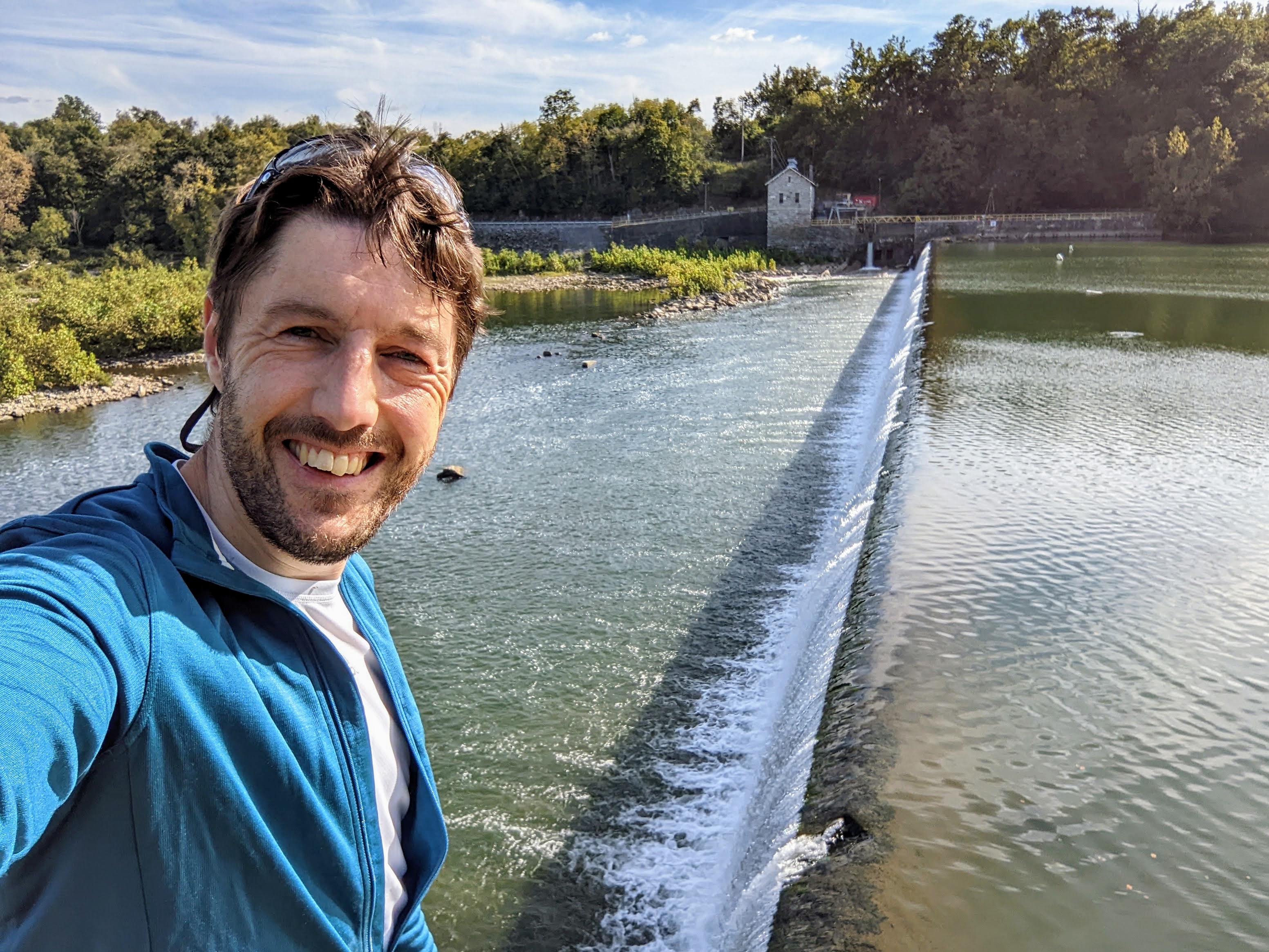
Next up was the impressive dam 4 – a low head dam across the whole river connected to a small hydro plant. I remember being here with my brother in 2014, on our tour of the C&O and GAP trails (part of a longer NE USA tour).

Dam 4

Past dam 4 is my favorite section of the trail, where you ride along the side of the river on the towpath. The barges traveled this section of the C&O canal along the river, because dam 4 backs the water up and makes for a deep, slow section, known as Big Slackwater.

Towpath at Big Slackwater
It’s a lot of gear! But honestly, it’s totally manageable as long as you don’t meet any hills…

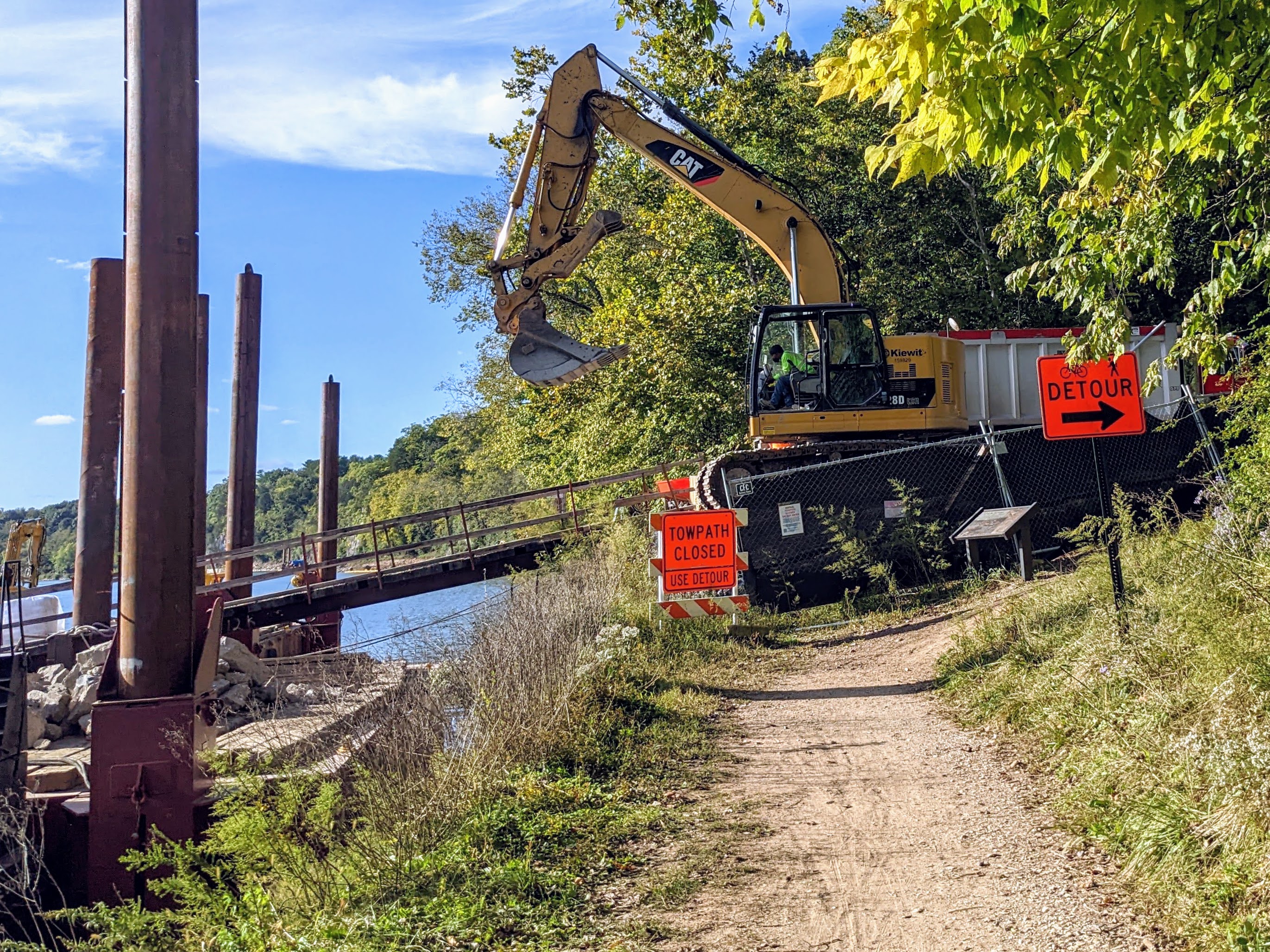
Up ahead I could see some ominous red signs, barriers, and construction machinery. Uh oh! The towpath was closed. Thankfully, there was a diversion, so I didn’t have to abandon my plan to continue further along the trail.

The detour turned away from the river and climbed steeply up a dirt trail to a road. It was so steep that I had to face backwards and pull the bike up by the handlebars, right at my limit. It was too heavy to push. This was what I came for though, adventure and struggle. Loved every minute of it.

Detour!
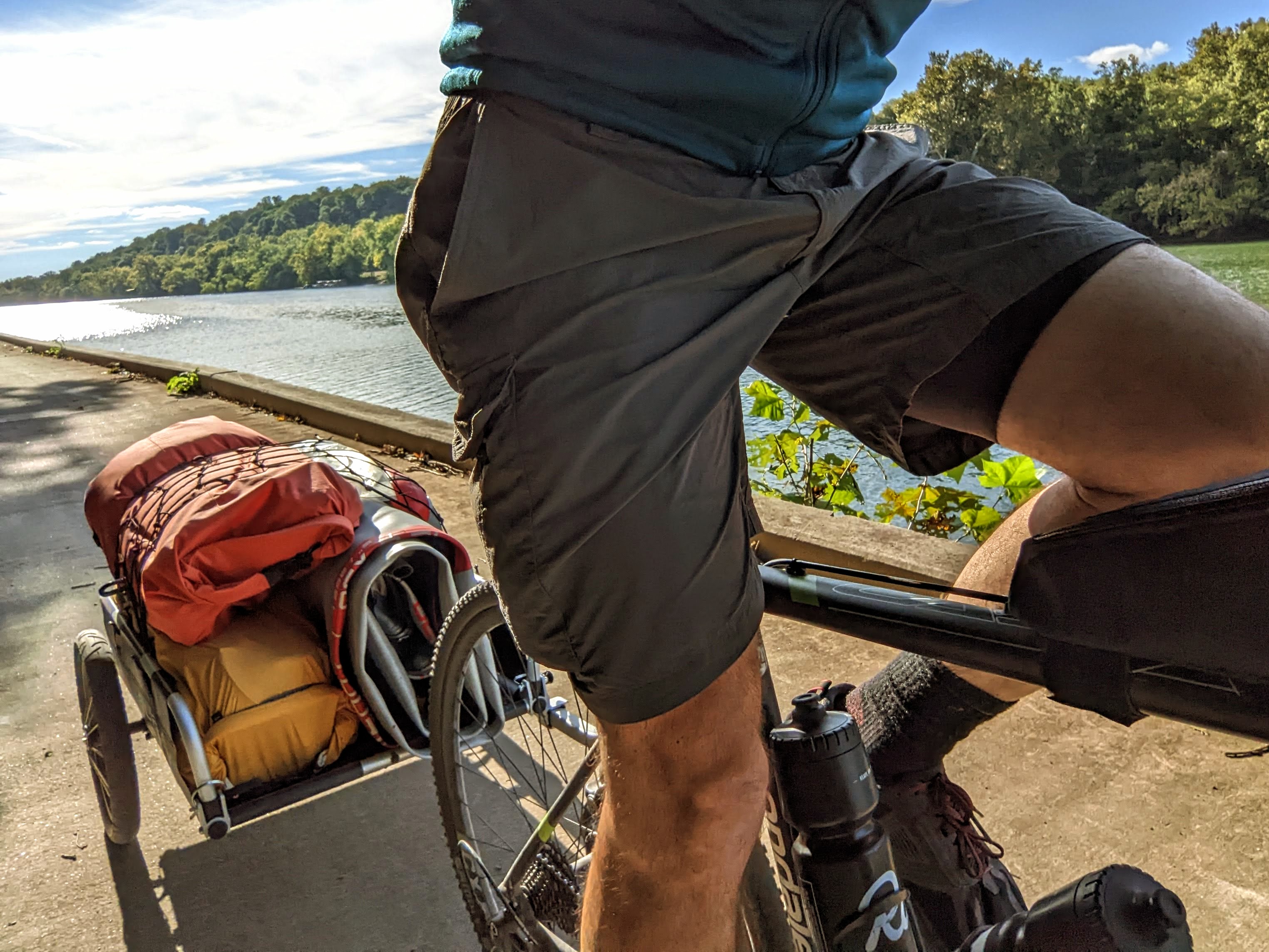
Doesn’t look like much but it took a severe effort to pull this lot up the hill 😉

After the dirt road came a few miles of hilly country roads. It was excellent cycling, but hard work with the trailer. I also missed having my clip-in shoes, having opted to ride in trainers (so everything else was easier).

I was relieved to reach the C&O towpath again a few miles later. My quads were screaming with the effort and I was ready to reach camp.

I almost stopped at Opequon campsite because it looked excellent and was empty. But I stuck with my plan to reach Cumberland Valley campsite – it would give me more paddling miles tomorrow.

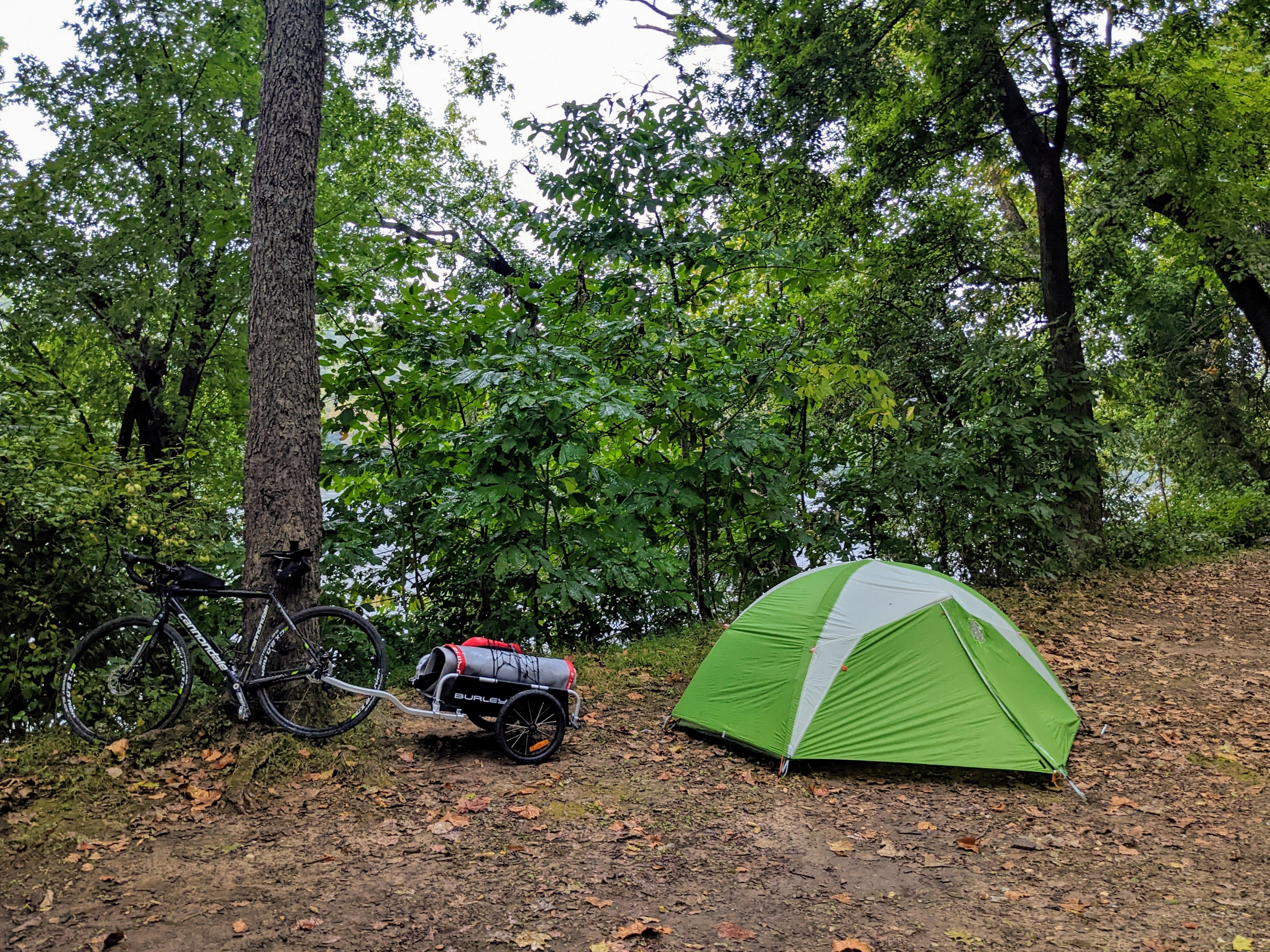
I made it to camp!

At camp, there were 4 other bike tourers: John, Dave, and Barry (a group from PA) and a younger guy called Mitchell. We had a really fun evening chatting and swapping stories. Dave brought out a bottle of salted caramel Tennessee whisky at one point, which smelt amazing. Even though I don’t like whisky, I was game to try this one and it was surprisingly good. A great night, lots of funny stories.

Day 2: Cumberland Valley campsite to Huckleberry Hill campsite

River Route on the SUP (day 2)

Day 2 paddling route

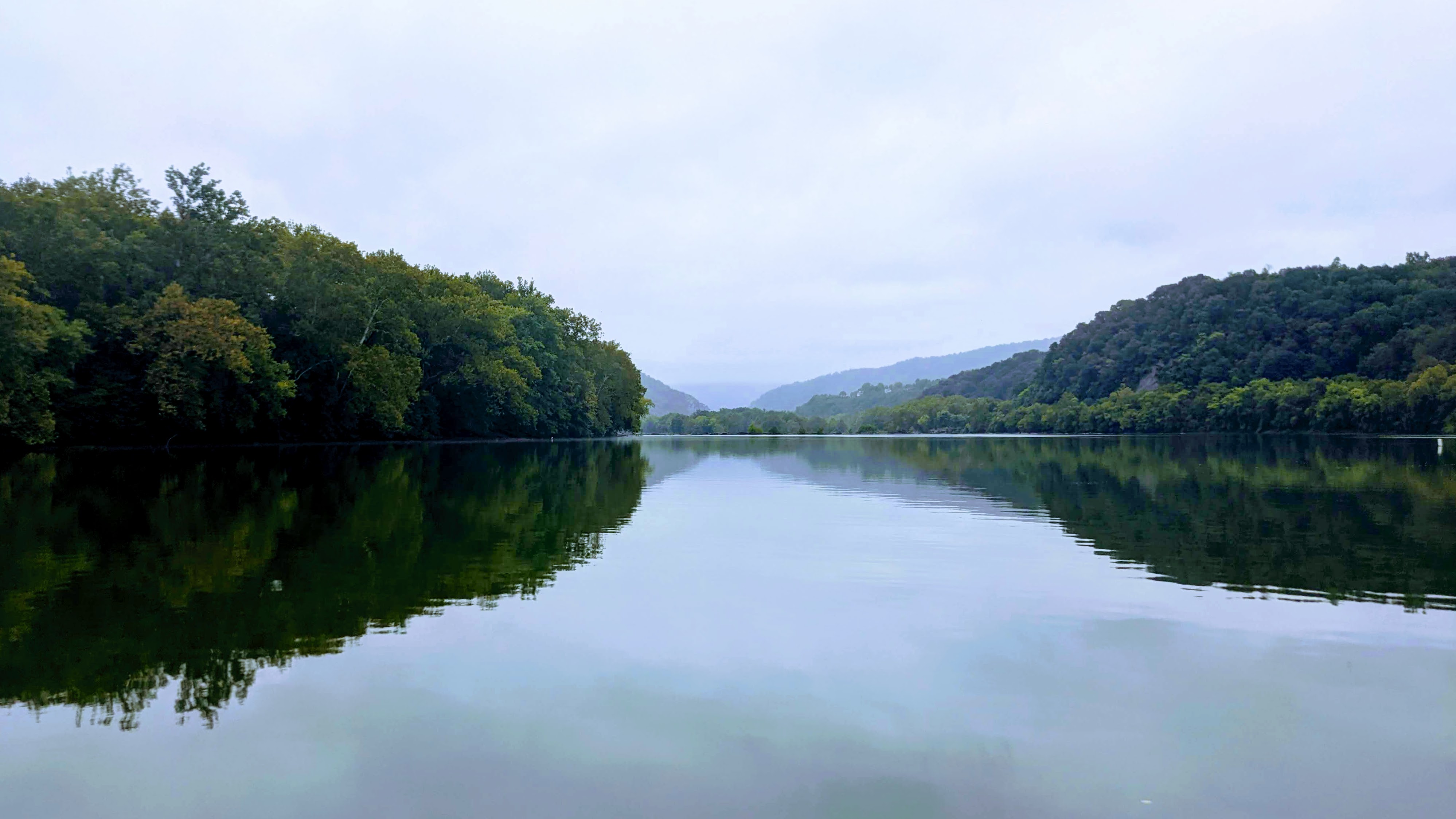
Day 2 started with a beautiful sunrise over the Potomac. The river looked serene and inviting. The beach was muddy and shallow, so not ideal for launching, but after assessing it for a while, I decided it would go. No way to avoid the mud though.

Early morning on the Potomac River, from Cumberland Valley campsite

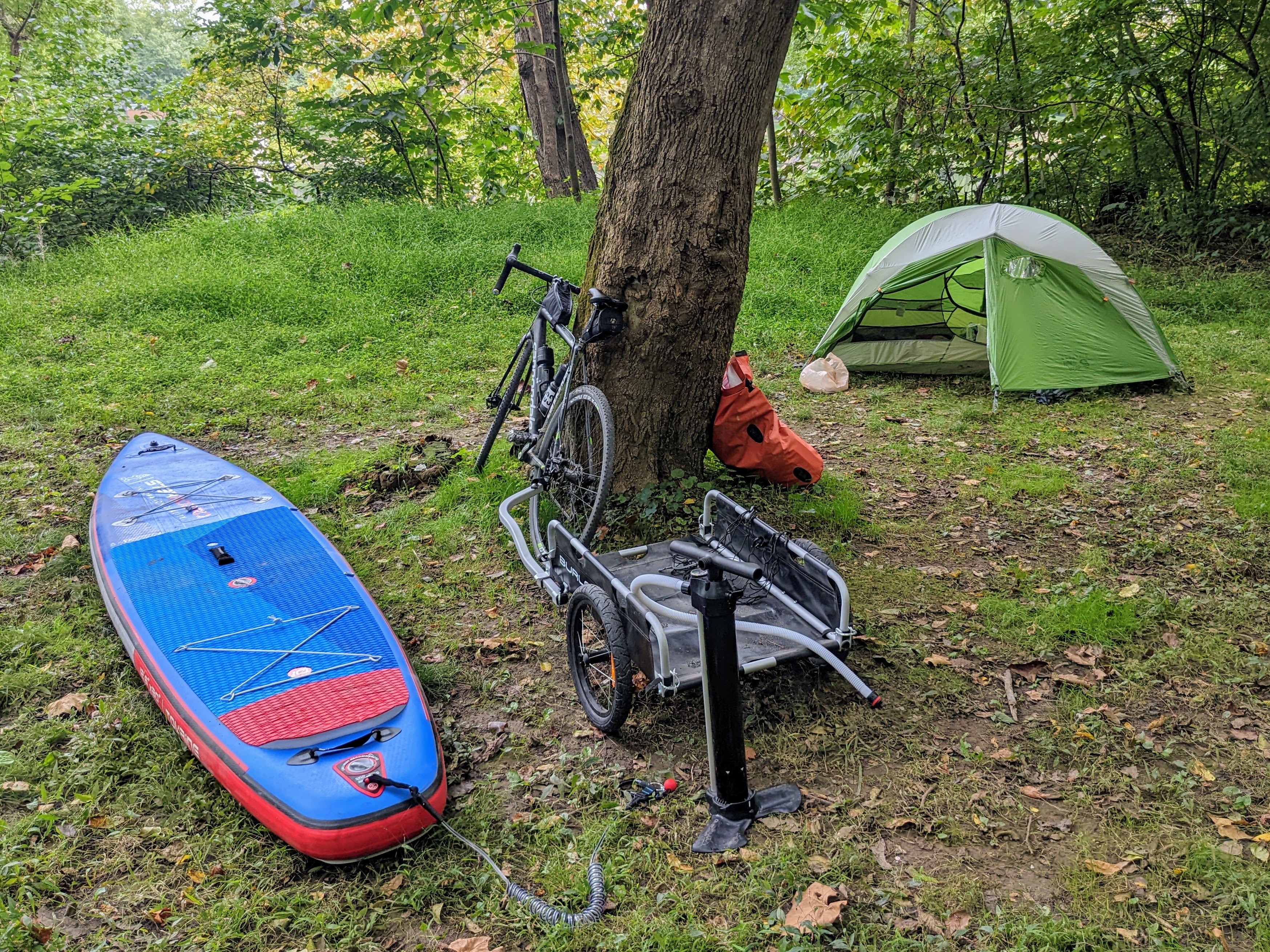
Back at the tent, I blew up the board and had breakfast. It takes much longer to strike camp when you have to also transition from one sport to another.

River transport, trail transport, and home

John, Dave, and Barry were fascinated by my setup and plan to travel home via the river. They helped carry my stuff down to the river bank where I lashed the bike to the front of the board, and the trailer to the back of the board.

With that done, it was time to push off into the river!

With the extra weight, the board was definitely a little more wobbly than usual, but I quickly got used to it. I pushed out to the middle of the river kneeling, but then stood up once it was deeper.

My bike strapped onto the front of the board, with the front wheel removed
Super happy to be out on the river
I stopped for lunch at Opequon campsite, 5 miles downstream from where I camped
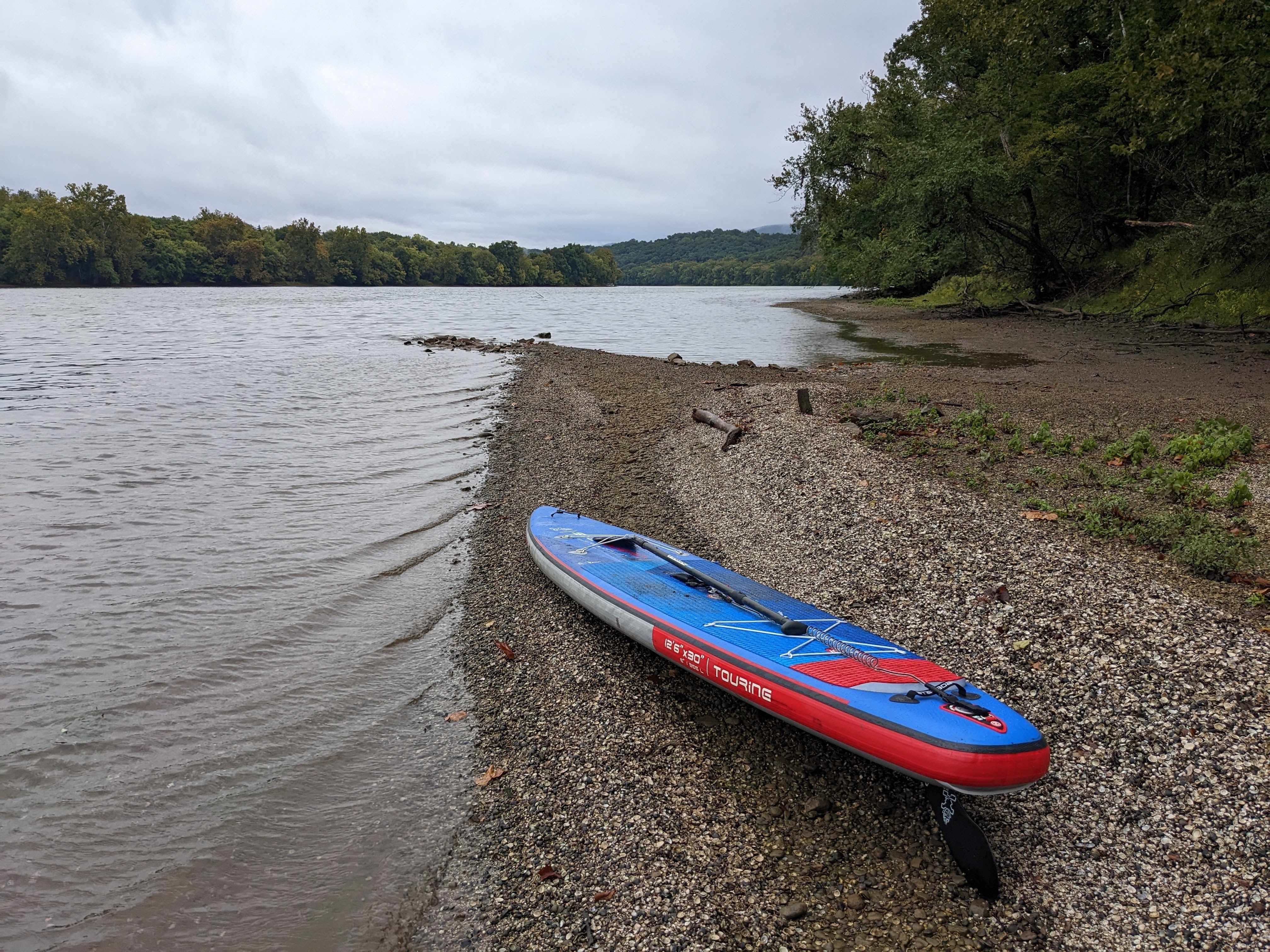
The board beached at Opequon campsite
Outstanding scenery along the Big Slackwater section of the river

I paddled past the closed section of the C&O canal towpath, where several teams of construction workers were hard at work to rennovate the towpath. It’s a beautiful section of the river to paddle. Wide, deep, and slow moving. It’s more like a long lake than a river at this point. Makes for relaxing, slow paddling.

Floating alongside the towpath at Big Slackwater

I took out at Big Slackwater boat ramp, about a mile upriver from dam 4. These low head dams are super dangerous for paddlers, and an almost certain death sentence if you go over one.

At the takeout

I’d paddled about 11 miles downstream, in four and a half hours. My hands and shoulders were tired, so it was a good time to transition back to the bike.

Bike Route along the C&O (day 2)

Originally I had hoped to paddle this section, but the river was so low, and so many rocks were exposed, that I decided it wouldn’t work for standup paddling. So I hopped back on my bike to ride the canal downstream again, to Killiansburg Cave campsite, where I planned to camp.

Day 2 bike route

Along the way, other hikers and bikers kept mentioning the coming storm (the remnants of Hurricane Ian). I knew that rain was forecast but wasn’t expecting anything worse. But since everyone else was planning to be off the trail, I was open to reconsidering my plan. I got a new forecast as soon as I had reception again, and since it still looked like only heavy rain, I decided to stay out for this second night.

I had an early dinner at Killiansburg Cave campsite but decided to keep going. It wasn’t as nice as some of the other hiker biker campsites.

Dinner – mountain house meal and a cup of tea

I rode all the way to Huckleberry Hill campsite — where I’d camped with the boys a few weeks earlier — and set up just as the rain was starting to come down. There was one other hiker at the camp, so I wasn’t the only mad one camping in the rain.

A wet and muddy camp at Huckleberry Hill campsite

Day 3: Huckleberry Hill campsite to home

It hammered with rain all night, and I woke up to huge puddles outside the front of the tent. The saturated ground couldn’t soak up all the rain.

Everything was wet and muddy, the water had even seeped into the front half of the tent. But I still slept pretty soundly through it all!

Home, sweet home
Boiling water for breakfast

Breakfast SUP session

Day 3 paddling route

This section of the river is just upstream from the remnants of dam 3 so, like it does at dam 4, the water gets backed up. Hence, it’s deeper than other parts of the river and suitable for paddle boarding, despite the severely low river. So I inflated the board and headed out for a morning paddle. Since I wasn’t moving camp, I didn’t have the bike and gear loaded up on the board this time.

Breakfast on the river

The mist and rain showers made for an atmospheric paddle, and the mountains over Harpers Ferry looked magnificent.

Looking downriver to Harpers Ferry

Strong gusts of wind made the paddling upstream arduous, and created small waves on the river to add some extra excitement. All in all, a great paddle.

Taking a break at “shell beach”

Final bike leg to home

Day 3 bike route

I struck camp for the final time, and rolled up the sopping wet tent. Everything was wet and muddy, but I was grinning ear to ear.

Packed up and ready to roll out of camp on the morning of day 3

There were two final obstacles before reaching home. First, hauling all my stuff up the stairs onto the bridge into Harpers Ferry. And then second, riding up the hill in Harpers Ferry to get home. Both were suitably hard and a fitting finish to the tour!

Recap Video

I took a few videos on my phone, which give the flavor of the trip:

Summary

A great few days testing out this multisport bike/SUP discipline. After the first bike/SUP experiment proved that the concept works, this one proved that it scales to multi-day trips.

It’s given me enough knowledge to know that the full C&O canal towpath and Potomac river could be traversed in this manner. Starting from HF, I could paddle to DC, turnaround and ride to Cumberland, then float back to HF. I would need to portage the rapids at HF and Great Falls of course, and the dams, but the majority of the river is flat and runable. I think it would make for a great 10 – 14 day adventure. One for the future!