Category Archives: Photography

Standley Chasm (Larapinta Trail Part Two)

This is part two of a three-part series about a thru-hike with my brother of the stunning Larapinta trail. Part one can be viewed here. Part three, a post for the explorer-buffs amongst you, is coming soon.

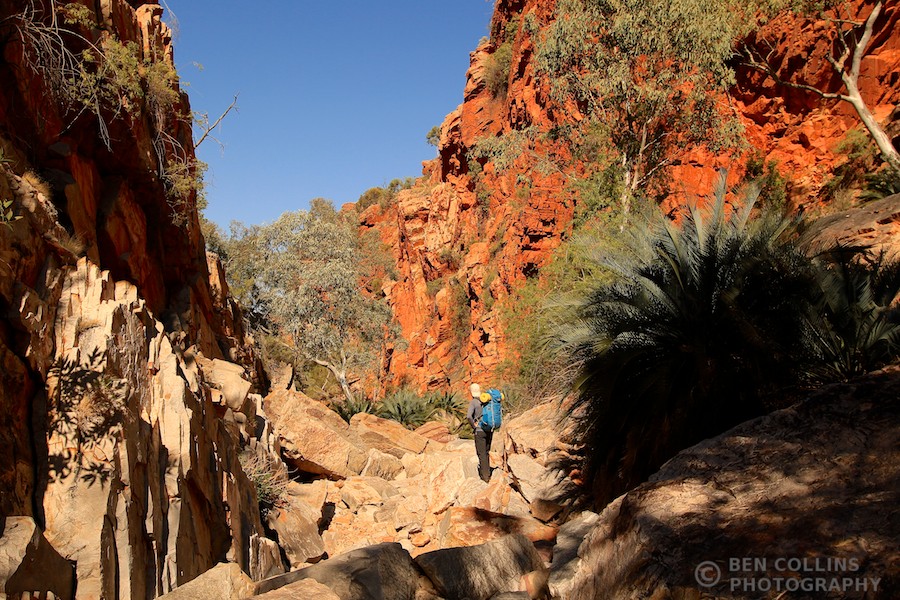
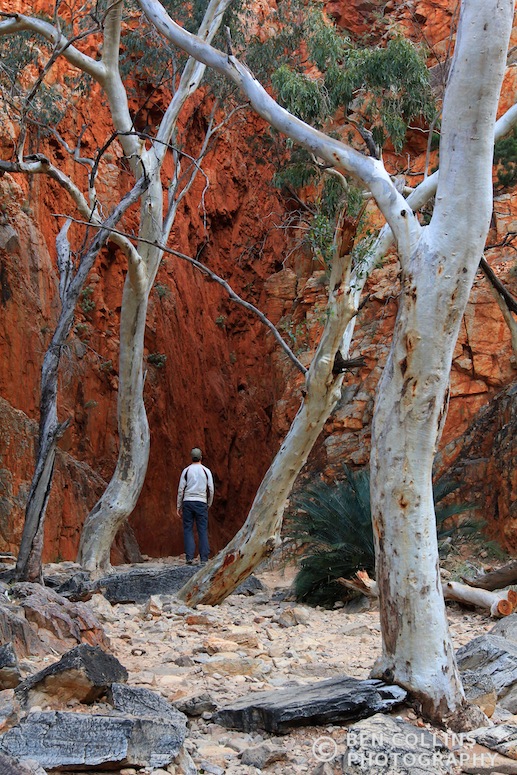
Standley Chasm is one of the standout geological features of the West MacDonnell mountain range. It lies close to the trail, so on the morning of day 7 of our trek we took a side trip to see it. The soaring red walls, some 80 metres high, were well hidden until we turned the final corner of the walk in. We stopped in our tracks, craning our necks to take in their full height, in awe of the forces that created such a feature. No one else was there, just me and my brother standing transfixed between those red walls. It was one of those moments that’ll stick in mind; one of the highlights of our time in this beautiful part of the world.

Entering Standley Chasm

Entering Standley Chasm, West MacDonnell Range, Australia

Standley Chasm, West MacDonnell Range, Australia

Standing in Standley Chasm, West MacDonnell Range, Australia

Standley Chasm, West MacDonnell Range, Australia

Looking back at the entrance to Standley Chasm, West MacDonnell Range, Australia

Credit to my brother for taking the second shot in this set.

Larapinta Trail

“So where are you going on holiday this year?” my Australian colleague asked.

“For a trek in the outback.”

“Shit, be careful man, it’s serious out there. Watch out for snakes, they have big brown snakes, King Browns they’re called. They’ll grow to three metres and it’s game over if they bite.”

With that encouragement still ringing in my ears, my brother and I went walkabout in the outback, clad in shorts and trail runners.
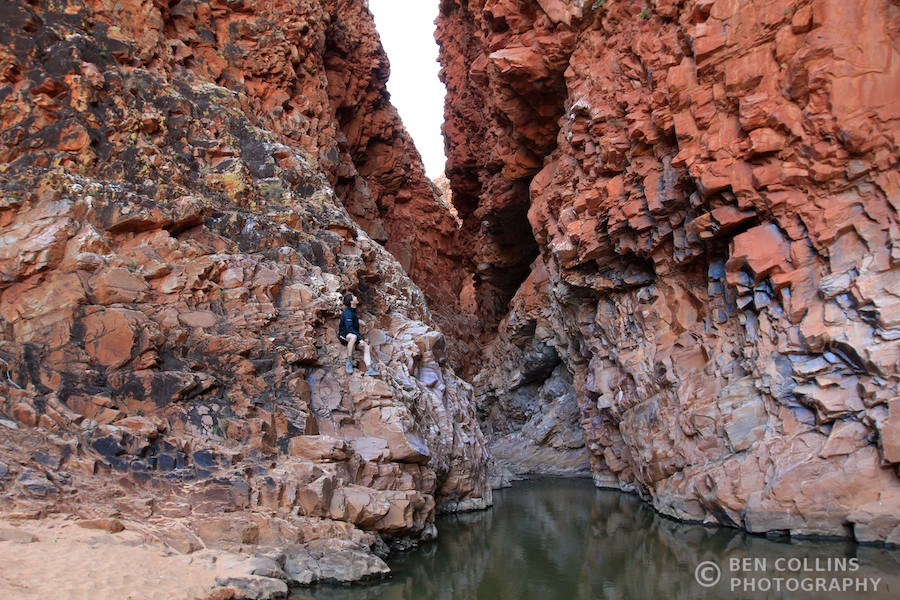
The amazing Redbank Gorge

Redbank Gorge – morning of day 1

The Larapinta Trail justifiably lays claim to being one of the best arid-zone walking tracks in the world. Running for approximately 225km from the foot of Mount Sonder back to the town of Alice Springs, it traverses the rugged and remote West MacDonnell range. Trekking is only possible during the cooler off-season and even then you’ll get fried under the midday sun. The scenery is jaw-droppingly spectacular.

It was going to be a sporting challenge to cover the whole route in eight days. We knew we had to be on our game. But that’s why we were here, why we came. To push ourselves, get a little outside our comfort zones and feel alive again.

Dropped at the trailhead early, we stood shivering in the unexpected coolness of the morning. Almost immediately we were drawn away from the main trail to explore Redbank Gorge. Not sure what to expect, we stood in awe of the towering red walls and boy’s-own-adventure-feel of the place. We were the only ones present – a theme that was to become common throughout our trip – and the silence, the stillness of this majestic place was palpable. We spoke in hushed tones, feeling out of place. We’d only just begun our trek and hadn’t yet adjusted from the civilized world, with all its noise, commotion and distractions.

Trekking through the West MacDonnell Range, Central Australia

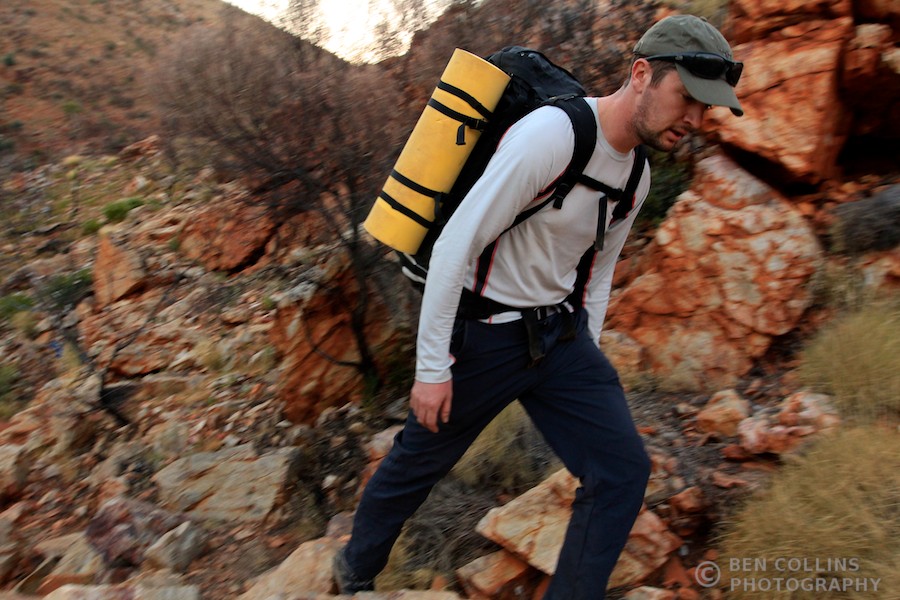
The track was well marked and rocky or sandy underfoot, passing through areas of scrubland and low trees. Spinifex was everywhere, continually scratching our lower legs. Whoever walked first was tormented by the flies, whilst second in line was attacked by angry disturbed ants, pouring out of innumerable nests. When walking through the stretches of long grasses near the edges of creeks, the words of my Australian colleague echoed around my head: “watch out for snakes….”

Naive to the strength of the sun still, we began the trek in shorts, t-shirts and only baseball caps to protect us, a mistake we wouldn’t make again. After both suffering an excess of the sun’s rays, we improvised legionnaire style caps by draping our short sleeve t-shirts under our baseball caps to cover our necks.

A dingo print and a footprint in the Australian Outback

A dingo print next to one of our own

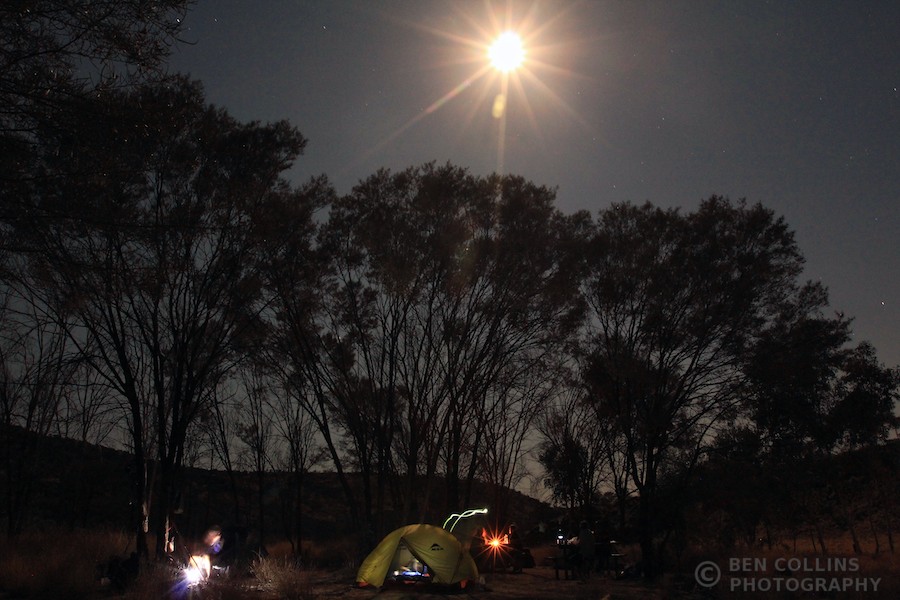
Although we never saw the maker of this print, we did receive a visit from a dingo at our camp on night 5 (Fringe Lily camp). He calmly meandered through our camp, about an hour after sundown, coming to within 30 metres of the tent. The beams of our head torches reflected back his beady green eyes. Man and beast stood transfixed momentarily, before he cantered off. Later that night we heard him howling, a sound we won’t forget in a hurry.
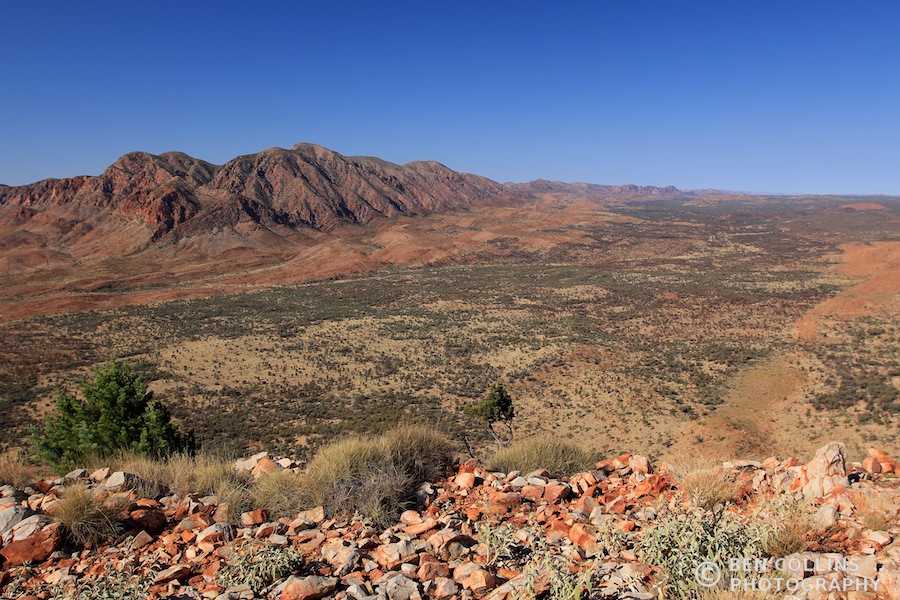
Mt Giles and the Alice Valley, Australia

Mt Giles and the Alice Valley

Days 2 and 3 were spent walking along the spine of Heavitree Range, a sub-range of the West MacDonnells. Day 4 involved a crossing of the expansive Alice Valley, a full day’s walk – the hottest on our trek – with scant shade from the sun. On the opposite side of the valley was the Chewings Range, which would feature prominently in the second half of our trek.
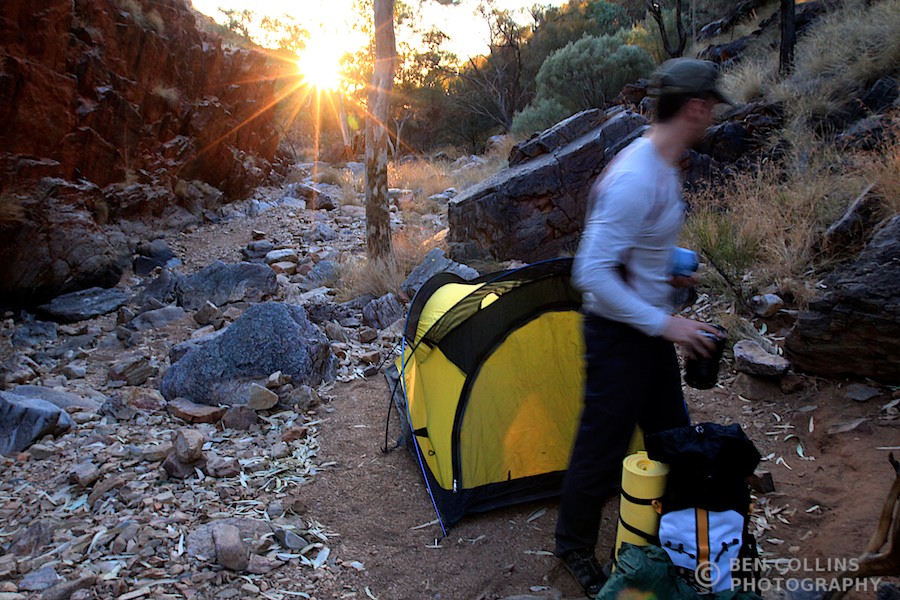
Spectacular wild camp in Waterfall Gorge, Larapinta Trail, Australia

Spectacular wild camp in Waterfall Gorge – night 2

One quickly adjusts to camp life. Routines fall into place and roles are established. Each day we’d try to beat our previous time for setting up and striking camp, discussing how we’d improve and what we’d do differently on the next adventure. Fast, light and far became our mantra. Camp life was simple precisely because we hadn’t brought a great deal of belongings with us.

Cooking on the camp stove, Larapinta Trail, Australia

One of the most eagerly anticipated moments of the day – dinner time
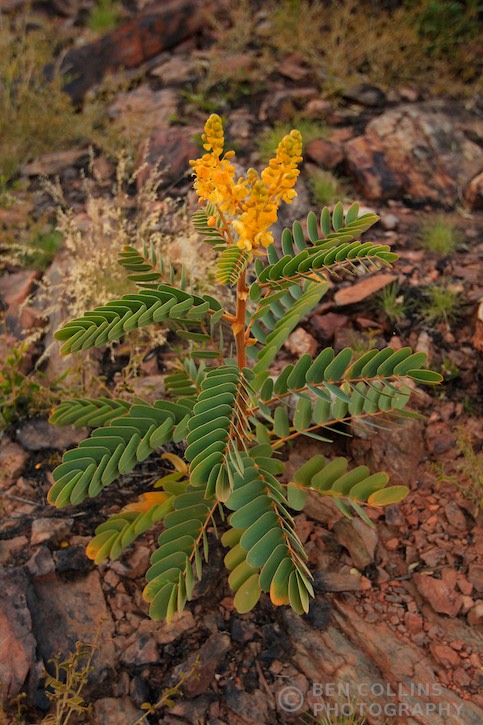
Flora on the Larapinta Trail, Australia

Early mornings were my favourite time of day. The solitude and silence was difficult to beat. Anticipating the day ahead; watching the sun slowly but surely turn the dull, brown mountains a rich orange; feeling fresh and well rested, enthusiastic to get miles under our belt. Discussing the plan of action for the day, the likely highlights and difficulties, chatting about anything else on our minds. Living in the moment. It was good to spend this time with my brother. We enjoy too few days like this together.

Trekking along the Larapinta Trail, Australia

Trekking – morning of day 3

Trekking through the Inarlanga Pass, Larapinta Trail, Australia

Trekking through the incredible Inarlanga Pass – day 3

Big sky country, Australian Outback

Big sky country

Spectacular views back west along the Heavitree Range from Counts Point lookout, Larapinta Trail, Australia

Spectacular views back west along the Heavitree Range from Counts Point lookout

Camping in the Outback, Australia

Home from home, camped at Rocky Gully – night 4
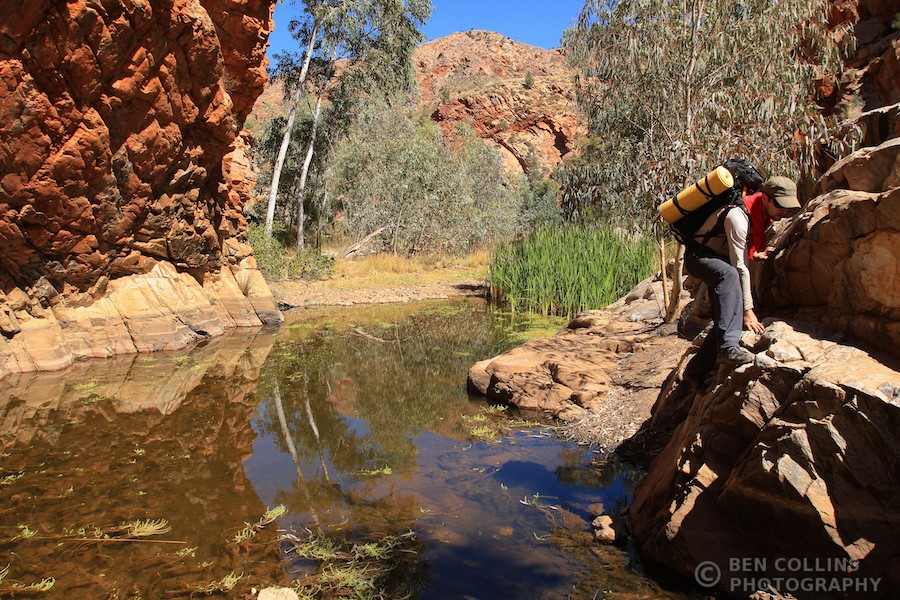
Trekking through Hugh Gorge, Larapinta Trail, Australia

Trekking through Hugh Gorge – day 5

“Bro, I’m going to rest on that rock over there.”

“No worries, I’ll keep going slowly.”

Moments later I came across the unmistakable track of a snake in the sandy creek bed. A very large snake, crossing the creek bed perpendicular to the direction I was walking.

“Whoa, Pete, look at these tracks, these are some BIG snake tracks.”

My eyes followed the tracks to my left. Towards the side of the creek, towards the rocks on the side of the creek, the rocks on the side of the creek that my brother decided to lean against.

Just as my eyes reached the rocks, my brother looked down at his feet. We both saw the snake at the same time. My brother jumped. Great bounding jumps into the middle of the creek, curses flying once he’d got over the initial shock. The snake, all two and a bit metres of him, was lying right where my brother had been standing, less than 30 centimetres from my brother’s feet.

We were both a little shaken. Neither of us knew whether the snake was venomous but we were just supremely thankful he hadn’t bitten my brother either way. We kept an even more vigilant watch out from this point forth.

(Subsequent research has led me to believe the snake was a Diamond Python, reassuringly non-venomous.)

Diamond Python, Outback, Australia

The two metre snake that Pete nearly stood on in Hugh Gorge – day 5

Some of the most spectacular trekking terrain was encountered in the numerous gorges we passed through. All involved a degree of scrambling; clambering up, down and sideways over boulders above pools of water. I kept expecting Professor Challenger to jump out from behind a rock and start barking orders at us.

Trekking through Hugh Gorge, Larapinta Trail, Australia

Trekking through Hugh Gorge – day 5

Blister treatment, Larapinta Trail, Australia

Keep ’em happy and they’ll carry you far: pre-emptive blister treatment

Moonrise at Fringe Lily Creek camp, Larapinta Trail, Australia

Moonrise at Fringe Lily Creek camp

Bird at Fringe Lily Creek camp, Larapinta Trail, Australia

A feathered friend drops in for dinner, Fringe Lily Creek camp – night 5

Fringe Lily Creek camp, Larapinta Trail, Australia

Fringe Lily Creek camp – night 5

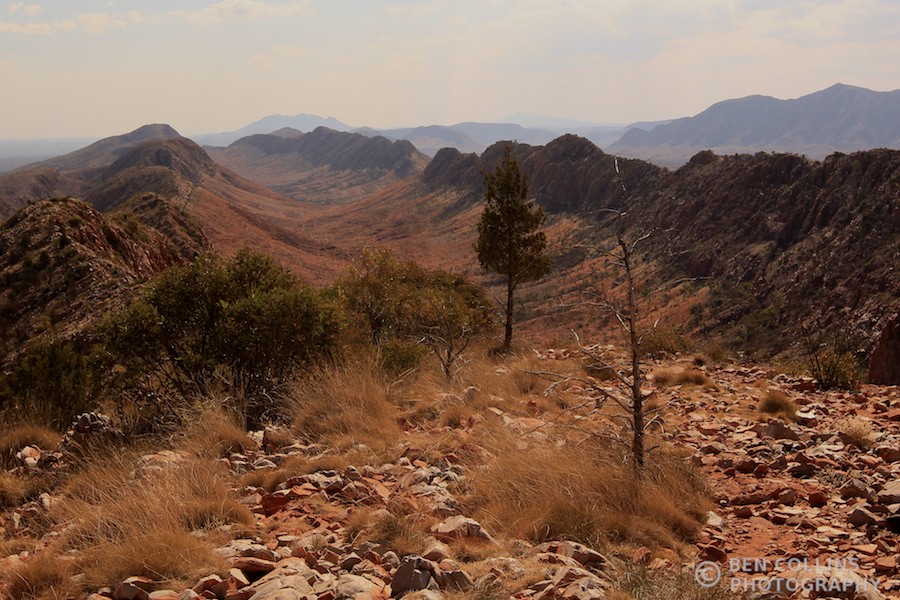
The ridges of the Chewings Range were followed on days 5, 6 and 7 – my favourite section of the Larapinta trail. They form a line of jagged, folded rocks, all orange and red, with spectacular views of the surrounding plains. Several rough gorges, steeply wedged between the cliffs, full of water holes and exotic cycads provided exciting interludes between the ups and downs of the mountains.

Staring into the abyss, Rocky Cleft, Larapinta Trail, Australia

Staring into the abyss – Rocky Cleft, day 6
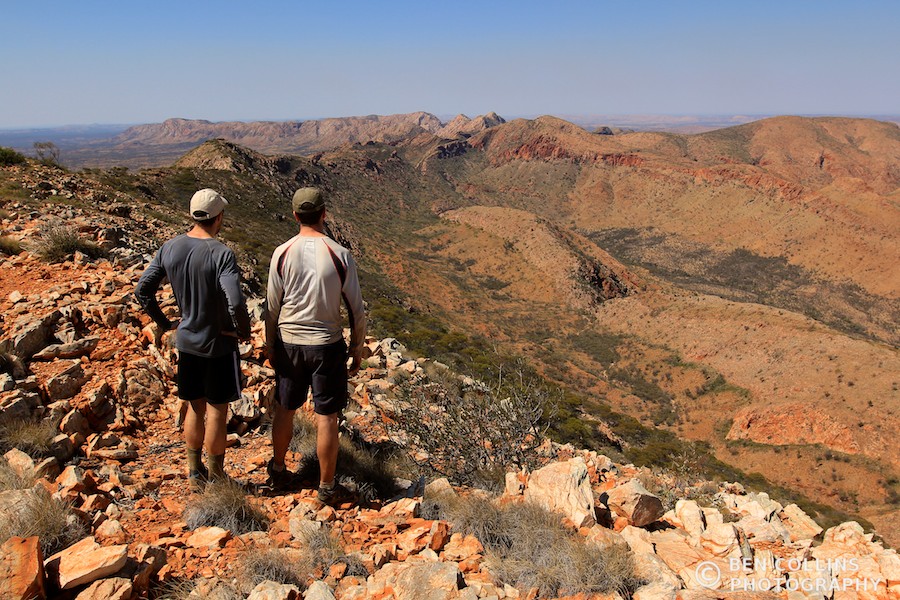
Summit of Brinkley Bluff, looking east to the Chewings Range, Australia

Summit of Brinkley Bluff, looking east to the Chewings Range – day 6
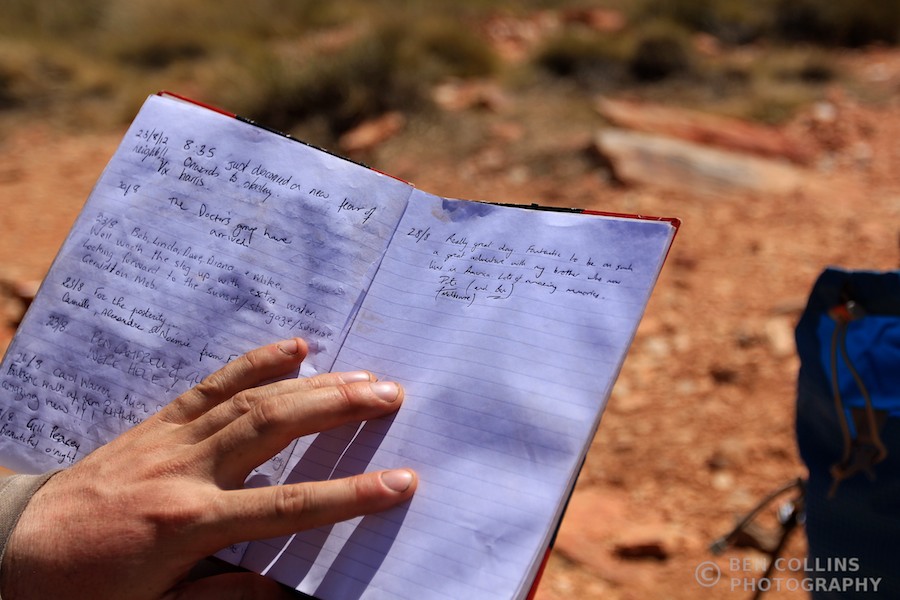
Signing the summit register on Brinkley Bluff, Larapinta Trail, Australia

Signing the summit register on Brinkley Bluff

Lizard, Outback, Australia

A Central Netted Dragon lizard, one of the few lizards we saw. Thanks to a reader for informing of the name!
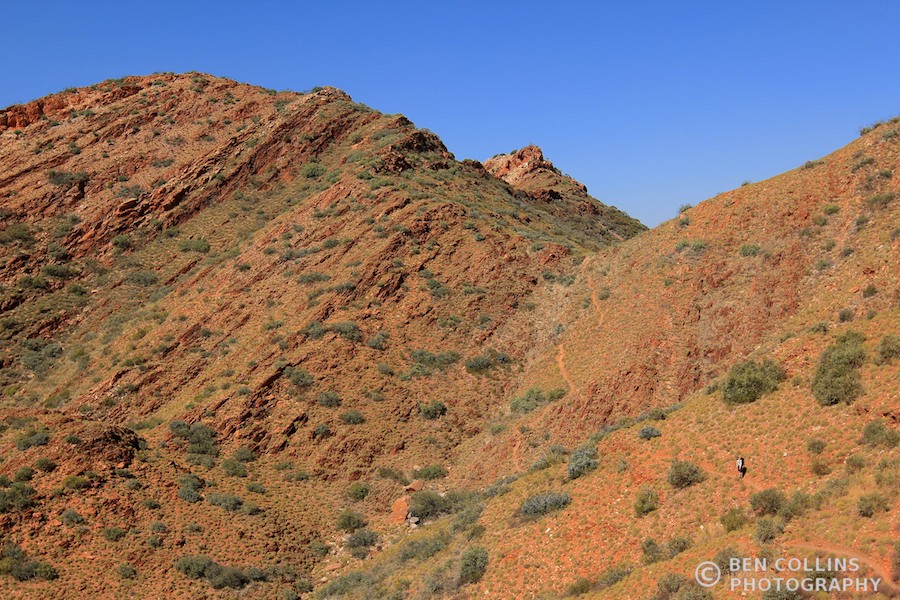
Traversing through the Chewings Range, Larapinta Trail, Australia

Traversing through the Chewings Range – day 6

We camped at the Standley Chasm campground on night 6. After a sweltering afternoon with little water, we arrived tired and dehydrated and were pleasantly suprised to find a kiosk selling ice cold drinks and ice creams. After several nights wild camping alone, the small group of fellow walkers provided welcome company.
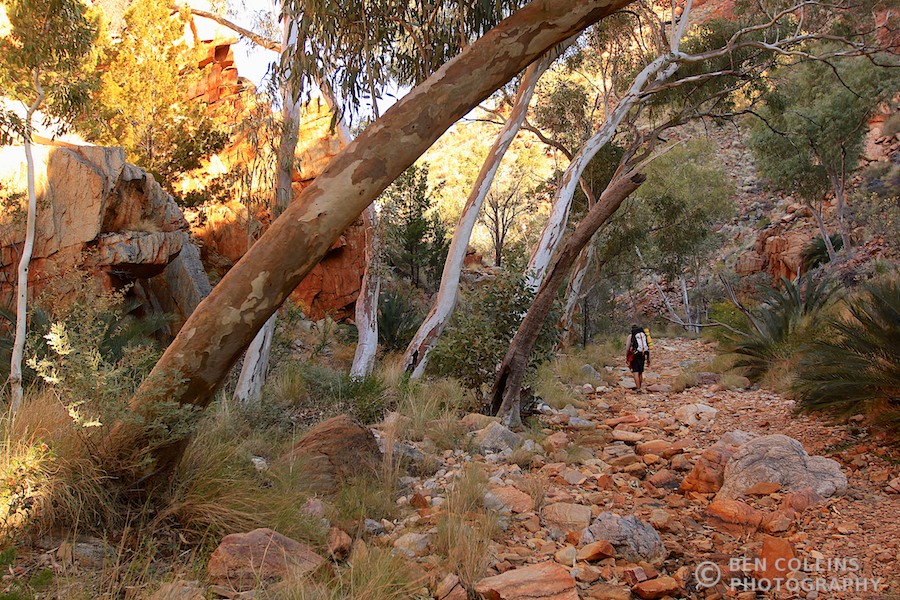
Approaching Standley Chasm camp, Larapinta Trail, Australia

Following a dry river bed approaching Standley Chasm camp – day 6

Standley Chasm was the standout geographical feature of the route, even though it was not in the least bit wild or remote, having been set up as a tourist attraction. Nevertheless, it was a spectacular place and we once again had it to ourselves. (Note: these photos can be seen here, part two of the Larapinta Trail Story.) The pull up from the valley floor was steep and tough going. All day we climbed, descended and climbed some more. Over mountain tops, through densely vegetated gorges with one sublime vista giving way to the next. Days 6 and 7 were as spectacular as it gets; some of the best walking I’ve had in a long time.

Climbing steeply out of Standley Chasm, Larapinta Trail, Australia

Climbing steeply – day 7

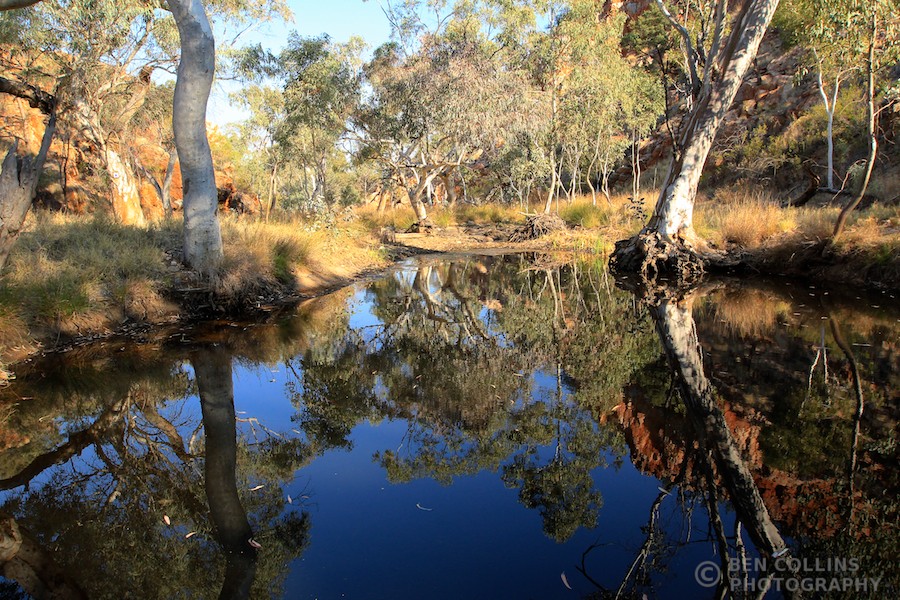
Reflection in a water holeMulga Camp was a pleasantly sociable end to our trek. Several other parties were established when we arrived and we shared a convivial atmosphere over dinner. Round after round of tea – we had gas and tea bags left over – comparing stories from other destinations and adventures.

Moonlit Mulga Campsite, Larapinta Trail, West MacDonnell National Park, Australia

Moonlit Mulga Campsite, our final camp – night 7
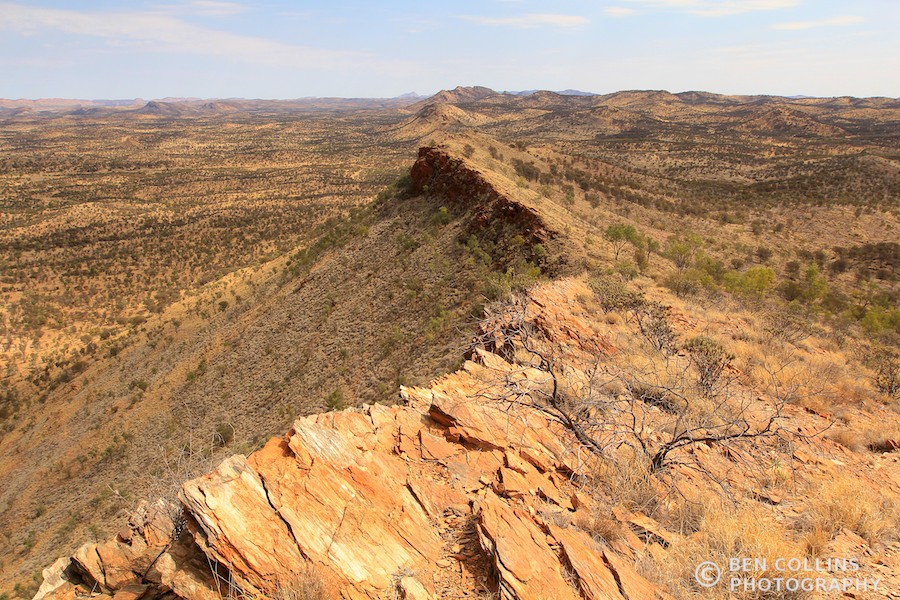
Euro Ridge, West McDonnell range, Australia

The final along climb along Euro Ridge, looking back west over the West McDonnell range – day 8

The end was now in sight. We could see the town of Alice Springs from the high point of Euro Ridge, although we still had another 10km to walk. Thoughts turned, as they oft do at this stage of a journey in the wilds, to what needs would be first satisfied once we re-entered society (shower, clean clothes) and, more importantly, what that celebratory beer would taste like and what the next adventure would be.

Footsore, and with weary limbs, we walked into Alice Springs after a 41km day that began at 5.45am when we stole away from camp in the pre-dawn light. Mercifully, the day had been overcast and cool.
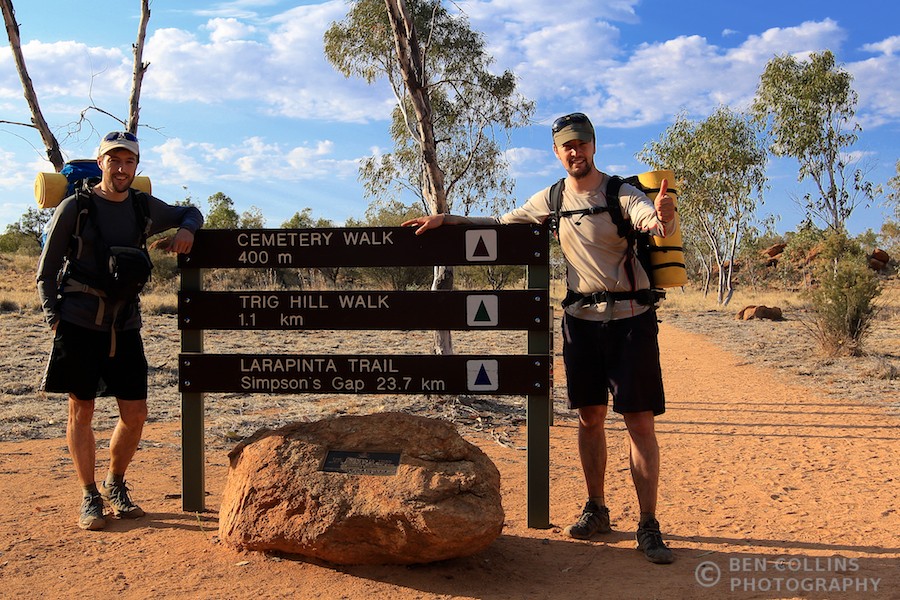
Trailhead, Larapinta Trail, Australia

Trail’s end, bittersweet feeling – day 8

I was stoked to finish the trek – the successful completion of any goal is bound to bring happiness – but at the same time, a little sad on the inside. Sad to be leaving behind the simple life we’d come to appreciate. Sad that this year’s adventure with my brother had come to an end.

The Larapinta trail had wildly exceeded expectations. We’d enjoyed a splendid adventure together, seen a spectacular part of the world and pushed ourselves enough to feel deeply satisfied.

(Thanks to my brother for his company and some of his excellent photos.)
Across Spain on foot – an introduction

Spain 10

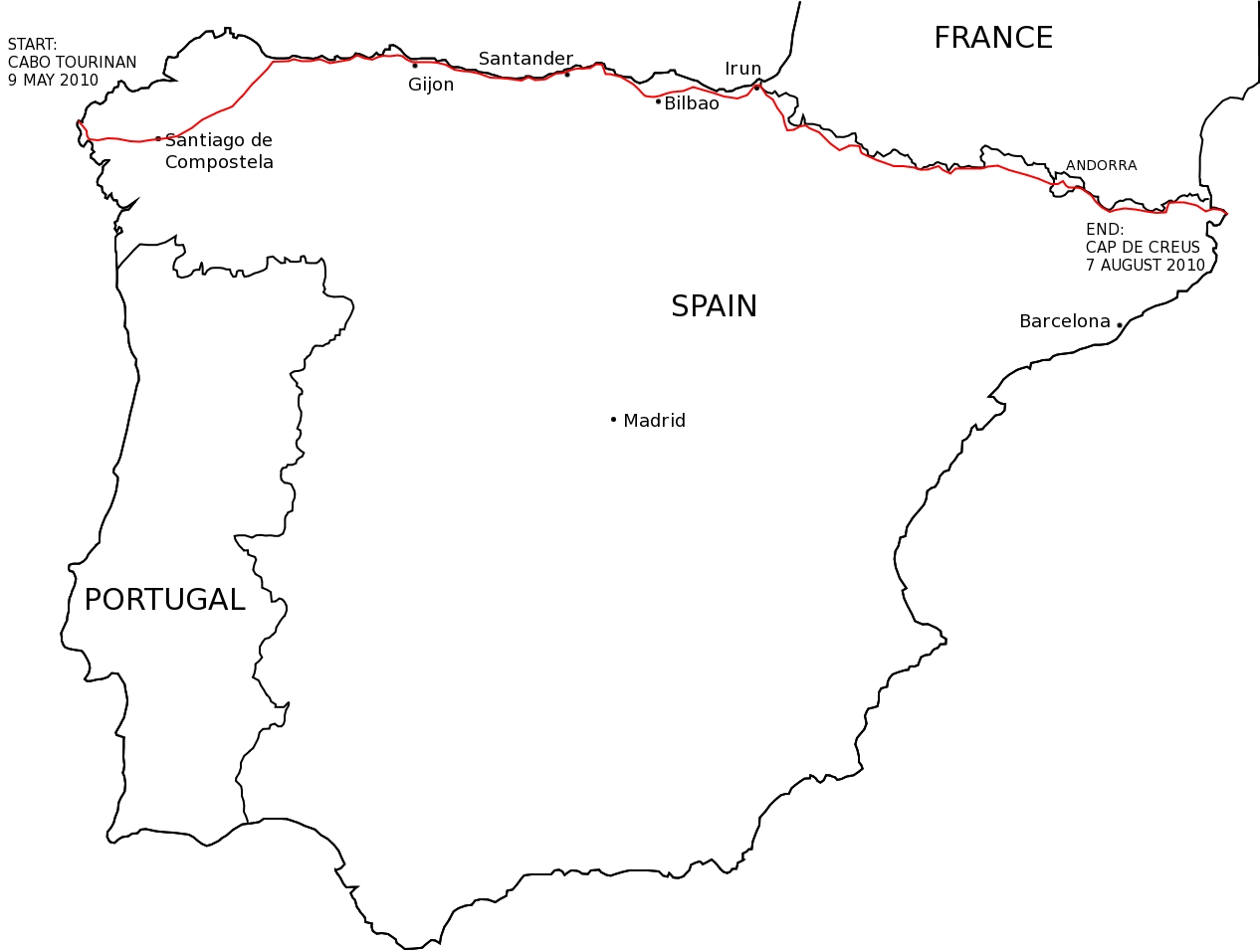
Between 9 May 2010 and 7 August 2010, I walked 1,789 kilometres (1,115 miles) from the western most point of the Spanish mainland to the eastern most point of the Spanish mainland. I documented the landscapes that I walked through with a series of landscape photographs.

The full set of photos can be seen here on my flickr stream. As time permits, I’ll upload more stories and photos to this website.

I spent 74 days walking through farmland, along coastlines and over mountains. I swam in the sea, slept on beaches, crossed raging mountain rivers, slid down snow slopes and stood on summits with far reaching vistas. Throughout I made a documentary record of the landscapes I walked through and the wonderful scenery I saw along the way.

Map of my route across Spain

Map of my route across Spain

Spain consists of seventeen autonomous communities. I passed through seven of these that ran coast-to-coast across Northern Spain: Galicia, Asturias, Cantabria, Basque Country, Navarre, Aragon and Catalonia. I also passed through Andorra.

I planned this project in March and April of 2010, unsure how successful the combination of a long wilderness trek and landscape photography would be. It certainly required a degree of compromise in each discipline. I couldn’t carry as much photographic equipment as I’d have liked and yet the weight of what I did carry certainly impacted on my walk. At times the photography felt like a burden, one that I wish I could dispense with, so that I might travel lighter and faster and just enjoy the purity of the journey. At other times, it would have been wonderful to stop in one place for several days, exploring and taking photos at will.

I present this collection of photographs as a documentary project that spans the width of Spain, rather than as individual landscape photographs. Once the walk was underway, I did no specific planning for individual shots, other than choosing what I thought might be interesting viewpoints to finish at each day. However, constraints of weather, food supplies and fitness often dictated where I would stop for the night, so sunset and sunrise shoots did not always happen.

I became highly proficient at spotting photographic opportunities over the course of the trek; which were the ones worth stopping for and using a tripod and filters, if necessary. Inevitably, the better photographs were those that were more considered; when I had stopped and taken the time to compose and capture a scene. That said, a number of photos in this book were taken as handheld shots.

Walking is a slow way to travel but, in my opinion, if one has the time it is surely one of the best ways to travel. A hugely enjoyable aspect of the trek was meeting the local people and other walkers, to ask for directions or to share in the wonders of the surroundings. Throughout my time on the Camino del Norte route, I frequently became lost and quickly became adept at asking for directions in Spanish. This usually led to a conversation about the area, my walk, the weather and the World Cup. On more than once occasion it resulted in an offer of a drink, and, once, even leading to an offer of a lawn to camp on, a beer to drink, half a watermelon to eat, a table and chair to sit on, and the gift of a walking stick!

The trek was everything I had hoped for and more. It was challenging, rewarding, suprising and mundane at times. At times, I felt tired, footsore, hungry, thirsty, sleepy, scared or nervous but these feelings would pass and the wonder at my situation would return. Sometimes on the trail, for no particular reason at all, I would feel incredibly happy and break out into an inane grin. Other times I struggled to shake off the feeling of pressure that the photographic element of this project bestowed upon me.

If there was one wish for an outcome from this adventure, then I hope it inspires you to go forth, out your front door, walking boots laced up and camera in hand. There’s a wonderful world of adventure and natural beauty out there awaiting you. I hope you enjoy the photos and the journey!

Here’s a podcast about my Spain trip.

Camel Trek in the Sahara (2009 – 2010)

A photo essay from a 6 day camel trek in the Sahara over New Year of 2009/10. Capturing this harsh environment was a real challenge. The light would change rapidly from bright to dark at sunset (and vice versa at sunrise) and the midday sun was so strong that photography was severely limited. I tried to capture the essence of this desert trek but there were so many scenes never captured – they were either beyond my skill set to record or happened before I could react. (A good excuse to go back though.)
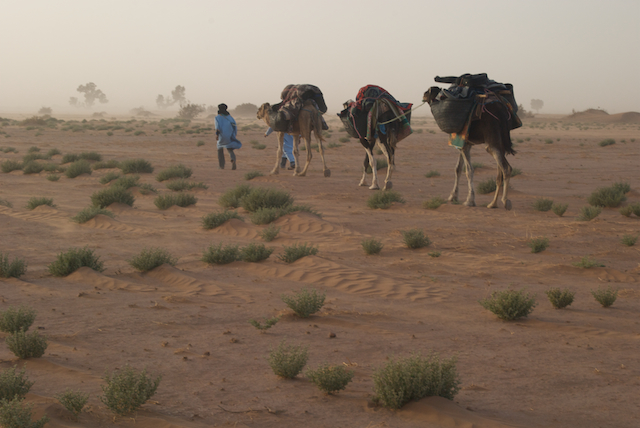
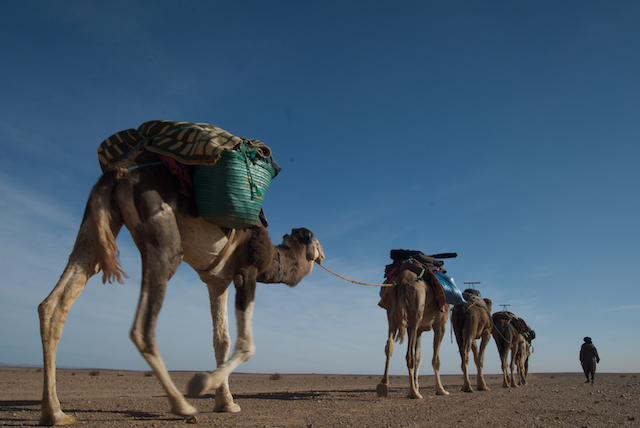
Camel Train walking into a sandstorm: The first day was something of a baptism of fire as strong headwinds blew the sand into our faces. Nothing for it but to wrap the headscarf over our mouths and noses. The horizon was a hazy nothingness – just as one would imagine the desert in a sandstorm.

Morocco-1

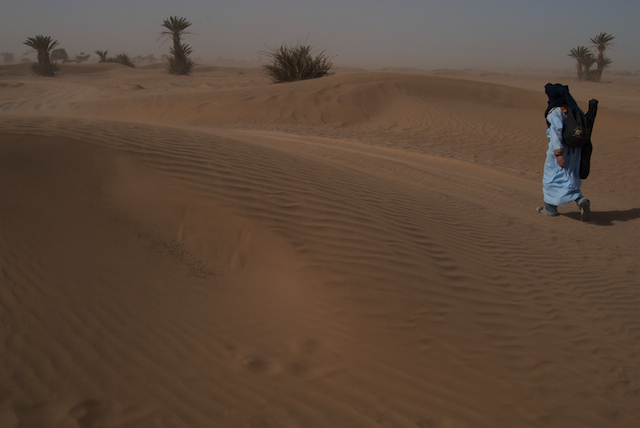
Mbarack in the dunes: Our guide, 24 year old MBarack, from the town of M’hamid (where we began our trek), leads the way through the dunes on the first day.

Morocco-2

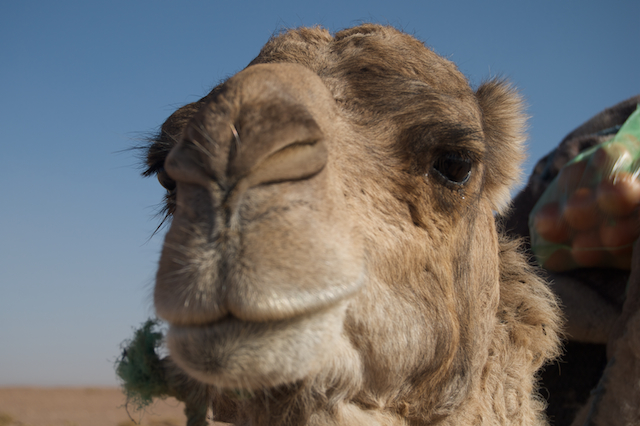
Camel Portrait: Camels are grumpy creatures and usually didn’t appreciate the camera lens anywhere near their noses. Happily this one didn’t object.

Morocco-3

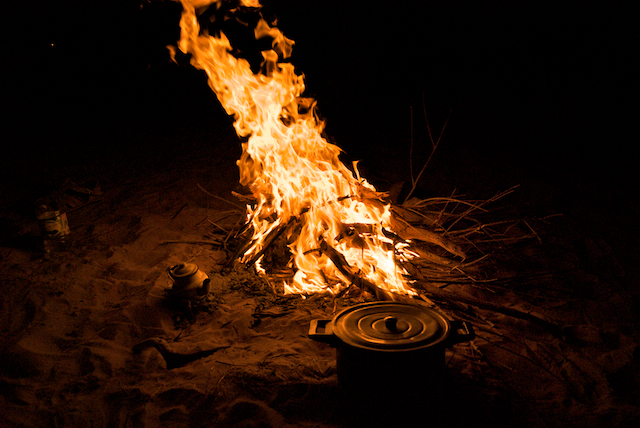
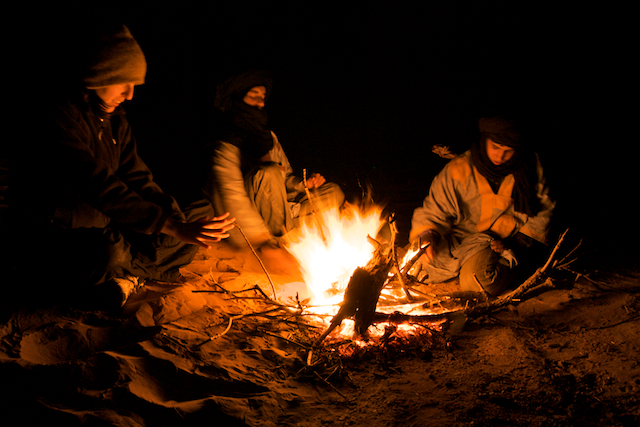
Warming our hands around the campfire: The nights were cold and fires were essential not only for cooking but also keeping warm whilst waiting for dinner.

Morocco-4

New Year’s Eve desert style: My friend Claire and I spent New Year’s night in the desert, chatting with the guide and his assistant in a mixture of English, French and Arabic. The guitar was passed between all of us – those few chords I can remember from school days not quite cutting it though.

Morocco-5

On the march: We walked alongside the camel train for a majority of the trip, partly because we didn’t always have a camel available for riding but mostly because they were rather uncomfortable to ride.

Morocco-6

Portrait of Mbarack: Great guy and so at ease in the desert. We were all friends by the end of the trip.

Morocco-7

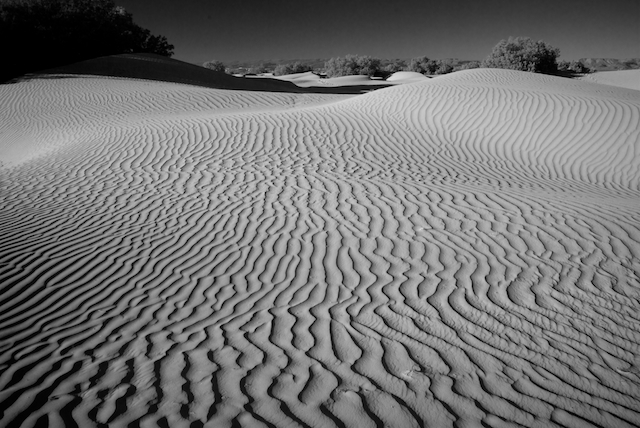
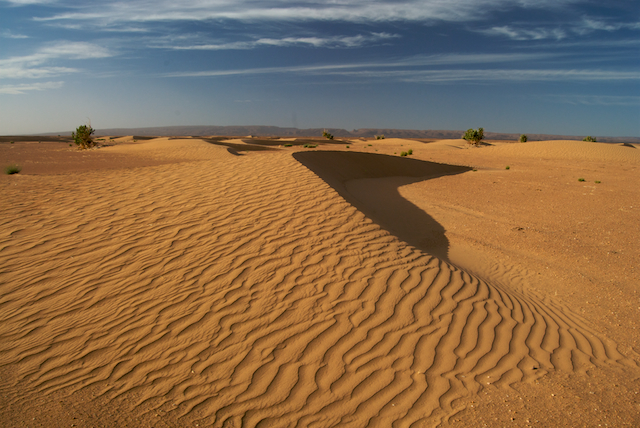
Dune Abstract 1: An experiment to capture these amazing lines in the sand and turn them into black & white abstracts.

Morocco-8

9. Dune Abstract 2: Another experimental black & white shot.

Morocco-9

Dune Abstract 3: And another.

Morocco-10

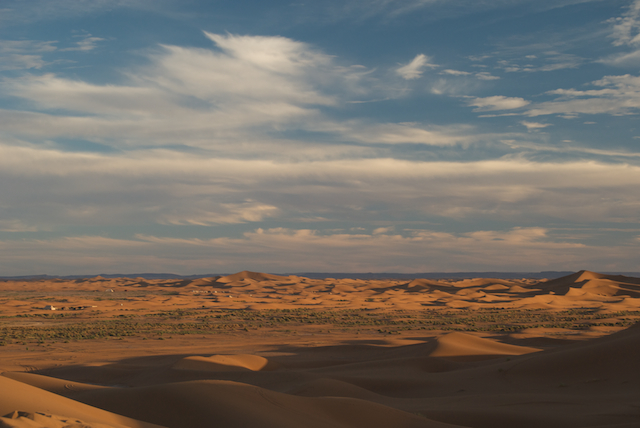
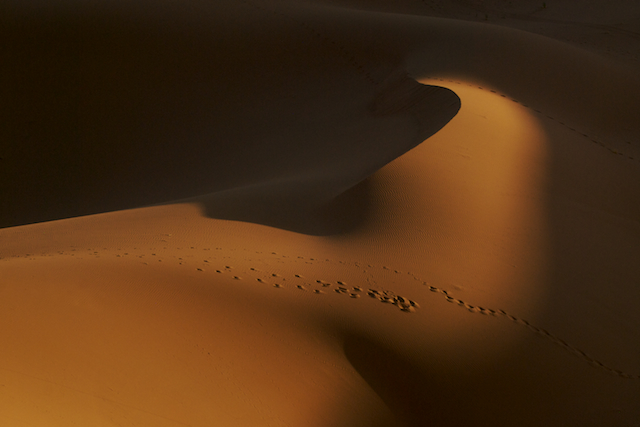
Desert sunrise: Sunrise over the dunes was beautiful. The contrast between the golden sand in sunlight and the cold darkness of the sand in the shadows was so dramatic that it was difficult to capture.

Morocco-12

Desert sunrise: Great whale-backed ridges of sand were all around me. Argh, which to photograph? You have no time to mess around as the sun rises suprisingly quickly.

Morocco-13

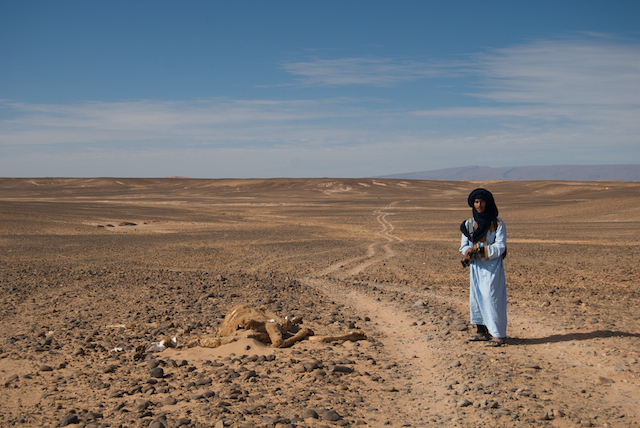
The dead camel: The guide said it was old but I can’t remember ever clarifying whether he meant the camel was old when it died or whether it has been on this spot for a long time. Whatever, the smell, though subtle, was just enough to hurry us along.

Morocco-15

Erg Chigaga dunes: Wow, our first view of the dunes of the Erg Chigaga (goal of our expedition) stretching off into the distance.
Morocco-17

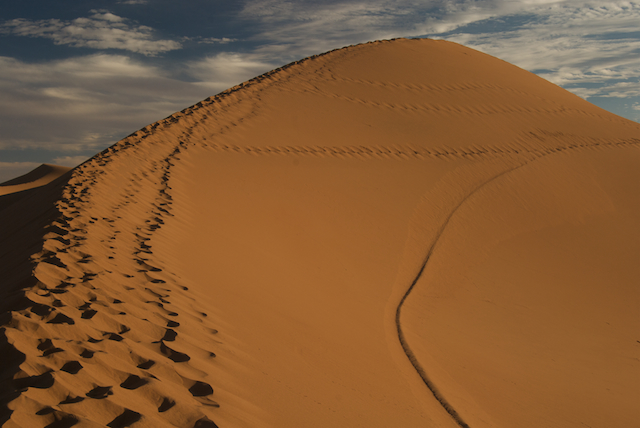
The dunes: They were hard work to climb! And covered in footprints from the crowds who were here on New Year’s eve (it is possible to reach here in a 4×4). Thankfully there were few other people around when we were there.

Morocco-18

Light on the dunes:

Morocco-19

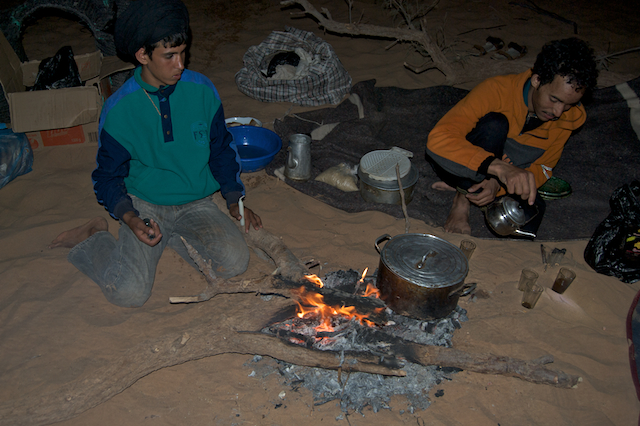
Campfire: Here, Mbarack is pouring out the sweetened tea (”whisky de berber”) that is drunk all through the Sahara. Every time we stopped one of the first and most important tasks was to brew and drink this incredibly refreshing tea.

Morocco-21

Camels at sunset: In the early evening, the camels were hobbled (front legs tied together by a short cord to stop them wandering too far) and allowed to graze.

Morocco-22

Camels at sunset: They are fascinating creatures, full of character.

Morocco-23

Dinner cooking next to the fire: Cooking around the campfire was a daily experience. We ate tremendously well, testament to the cooking skills of our guide Mbarack.

Morocco-24

Nothing like a good old camp fire singalong: Stopping at sunset (6ish) gave us plenty of time to sit round the fire and listen to the desert songs.

Morocco-25

Camel train returning home: We actually returned with a different camel train after our original three wandered away during their morning grazing. Despite us all searching frantically, they weren’t found until many days later!

Morocco-26

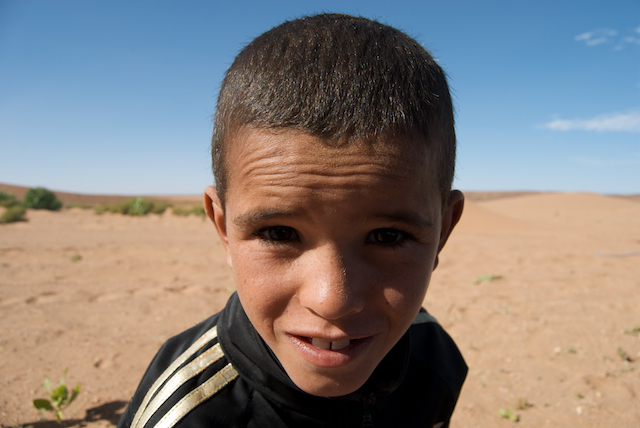
Budding entrepreneur: This young desert nomad appeared out of nowhere whilst we were stopped for lunch on the last day. He was quite shy at first but ended up selling Claire a bracelet in exchange for some Dirhams (Moroccan money), some pens and permission for me to take a few photos. As soon as the camera came out, he grew in stature and started playing up, looking inquisitively into the lens as I took the shot.

Morocco-27

Stretching our legs: The final day’s march was a long one, about 30km in total. Although it was hot, it was a pleasant day for trekking as we had a welcome breeze.

Morocco-28

Final dunes: About two hours before we finished the trek we came across these dunes, the final set of large dunes. It was a great spot to pause and reflect on the wonders of the past 6 days.

Morocco-29

Getting high in the Peruvian Andes

Location: Cordillera Blanca, Peruvian Andes
Date: July 2008
Duration: 21 days

A selection of photos from a 21 day mountaineering trip to the Cordillera Blanca range of the Peruvian Andes.

It was a great adventure – the mountains were superb alpine challenges and the valley culture provided a fascinating backdrop to our climbs (20 photos total):

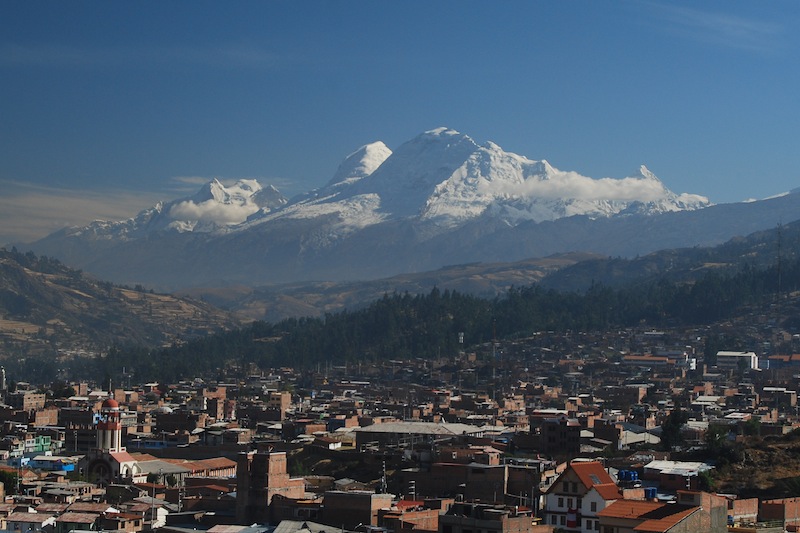
1. Nevado Huascaran, 6746m Our objective for the trip was to climb Huascaran, seen here dominating the skyline beyond the town of Huaraz.
Peru (0)

2. Sunrise on Ranrapalca We watched the sun rise and slowly illuminate the face of Ranrapalca on the opposite side of the valley. We were trying to climb Nevado Urus, a 5,000m peak, as a warm up before an attempt on Huascaran.
Peru (3)

3. My brother, Peter Descending Nevado Urus. Having suffered from the altitude and been hampered by the deep snow we never made the summit.
Peru (4)

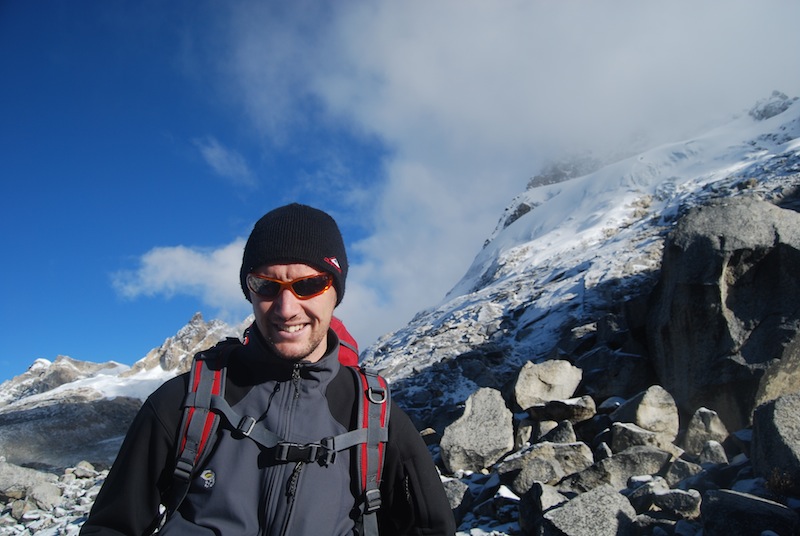
4. Yours truly
Peru (5)

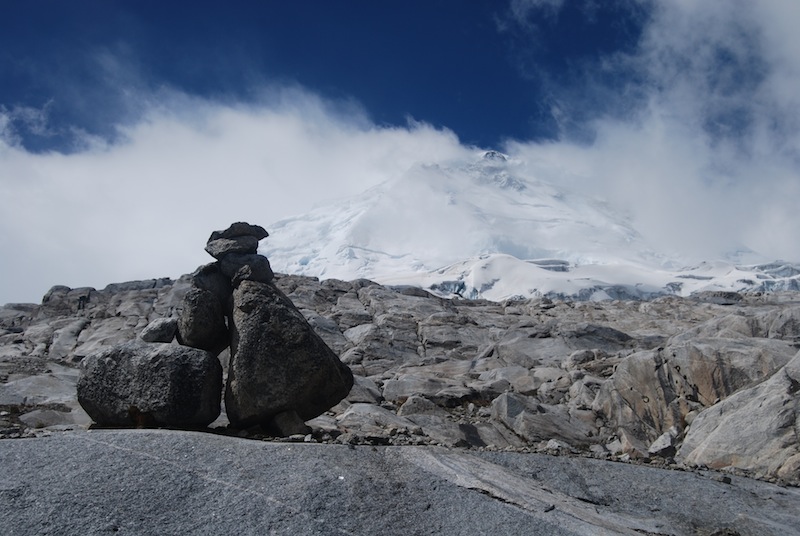
5. Cairn on Huascaran Low down on the rocky approach to the glaciers of Huascaran, our way marked by cairns.
Peru (7)

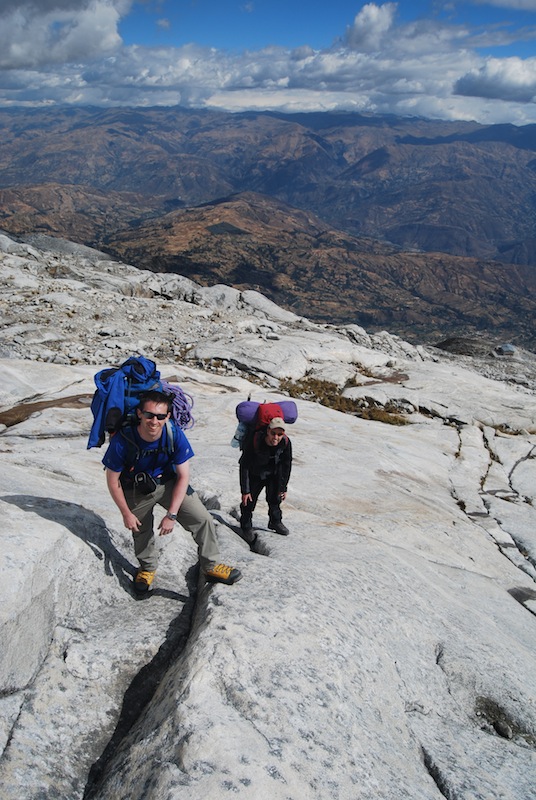
6. Scrambling up the rocks Steven (L) and Peter (R) climbing up the exposed slabs to advanced base camp. The rucsacs were incredibly heavy with all the mountaineering gear and nearly a week’s worth of food. Spirits high though!
Peru (8)

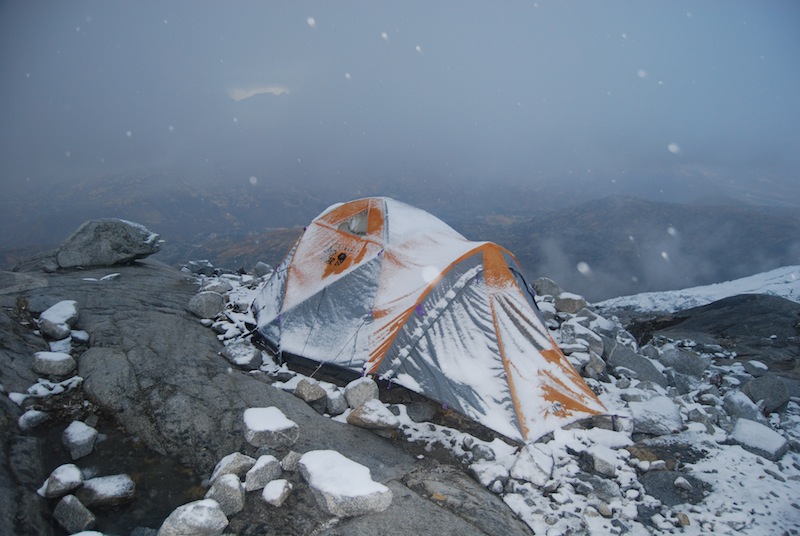
7. Advanced Base Camp The snow was bad news as it would mean avalanches were more likely higher on the mountain. Consequently we felt our chances of summiting slipping away as the snow fell and fell.
Peru (9)

8. Onto the glacier Peter (L) and Steven (R) climbing onto the glacier, moving from Advanced base camp to Camp 1 at 5,250m.
Peru (10)

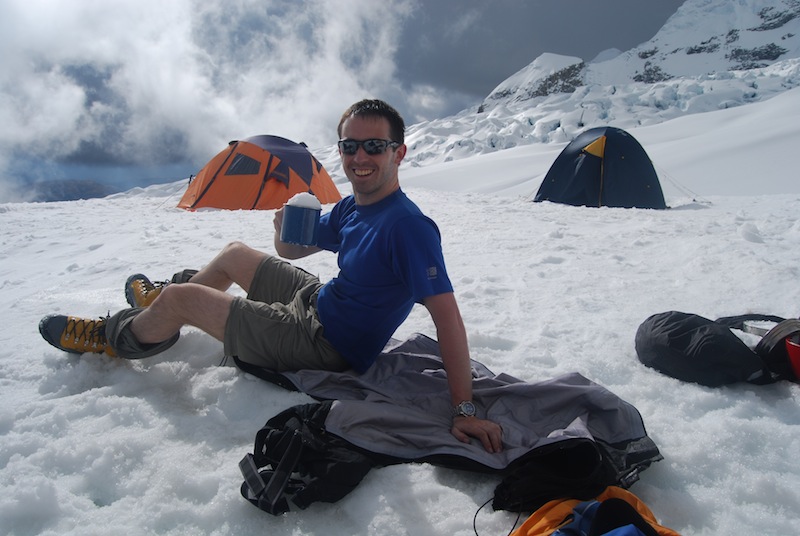
9. Cup of snow Camp 1, 5,300m high, and it was baking hot when we arrived; there was only one thing for it, a cup of snow!
Peru (11)

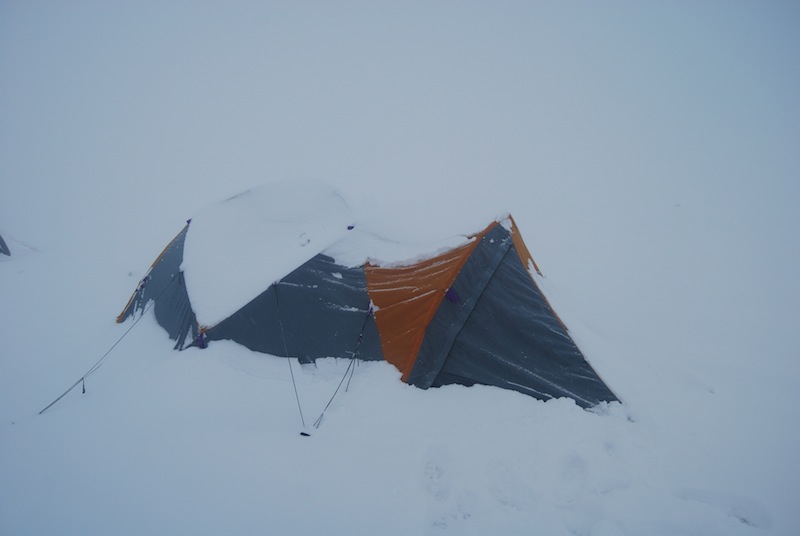
10. Stormy sunset A portent of things to come. It was an amazing sunset to witness but full of ominous signs for the mountaineer. Sure enough, during the night, it snowed heavily.
Peru (12)

11. Camp 1 in the snow We had to dig ourselves out of our half-buried tent the following morning. Any summit attempt was out of the question. Down we went then. ‘Twas a great adventure though.
Peru (13)

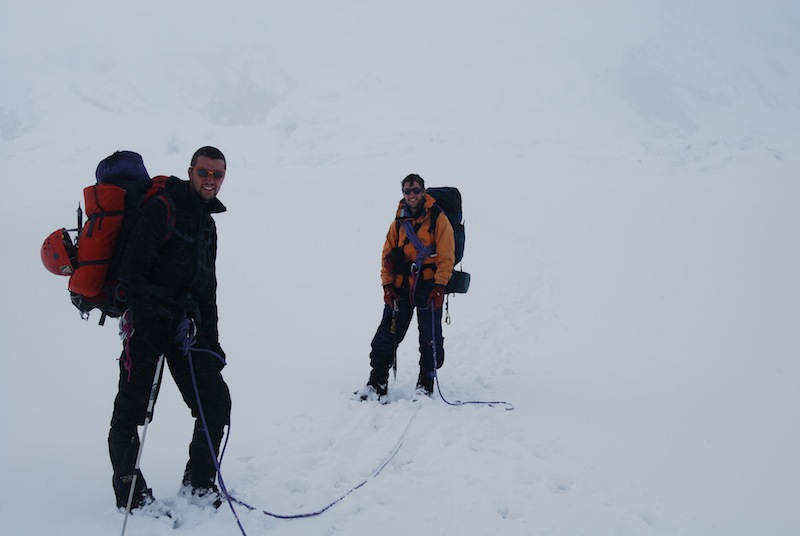
12. On the descent Descending the glacier in thick fog.
Peru (15)

13. Final roll of the dice We had just enough time left for one final climb – a 2 day attempt on Vallunaraju, 5686m. Here we are low on the glacier, still experiencing deep snow.
Peru (17)

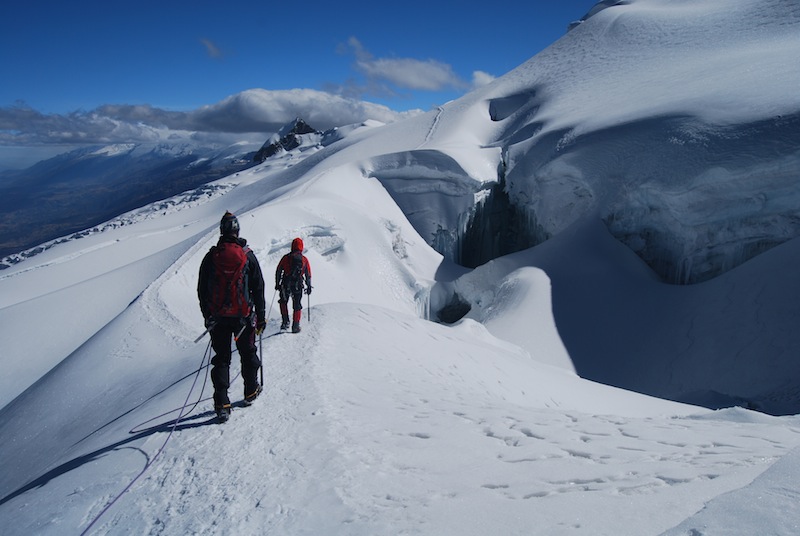
14. Amongst the crevasses HIgher up the conditions improved and we romped along amongst the enormous and awe-inspiring crevasses.
Peru (18)

15. Victory Finally we summit something! Standing on the top of Vallunaraju with its superb 360 panorama remains one of my top mountain experiences.
Peru (21)

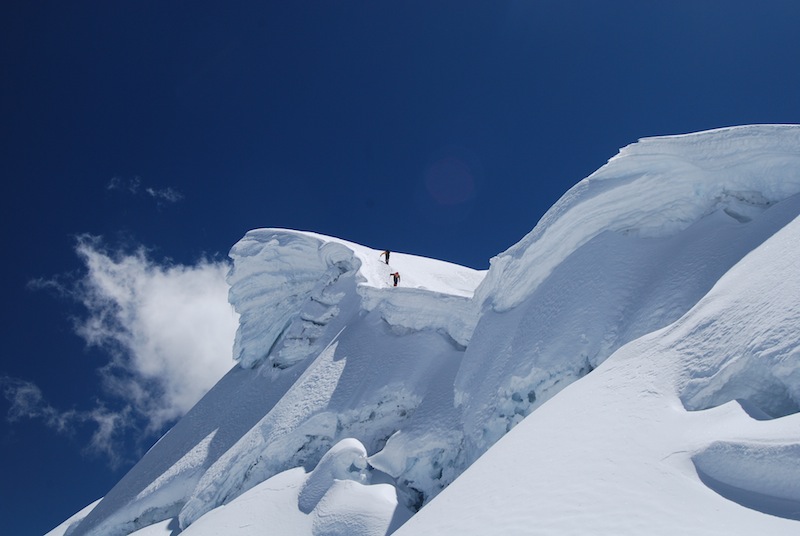
16. Climbers on the summit ridge Two Norwegian climbers were about an hour behind us on climb. I took this shot of them nearing the summit as we descended.
Peru (24)

17. Self-portrait
Peru (22)

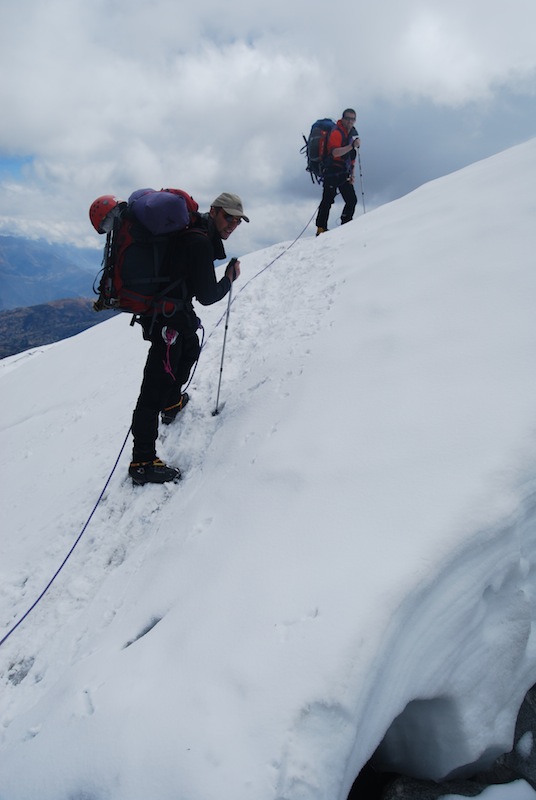
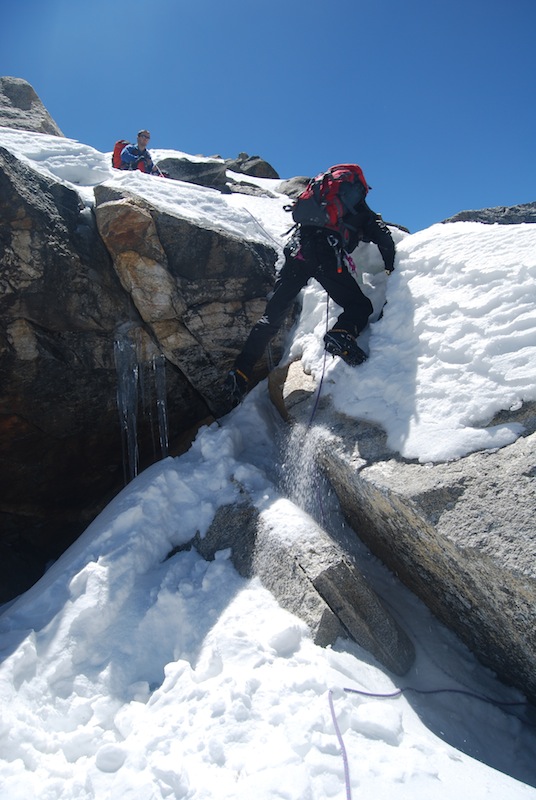
18. Down climbing Down climbing one of the steep ice pitches between crevasses on the glacier.
Peru (23)

19. The final rocky step This was the last technical section of the climb – it was actually fairly straightforward and very short.
Peru (25)

20. Dinner Well, we had to try the local delicacy! Tasted pretty good but there isn’t that much meat on those guinea pigs…
Peru (26)