Category Archives: Hiking

Ancient Citadels of the Northwest Highlands

Thousands of tired, nerve-shaken, over-civilized people are beginning to find out that going to the mountains is going home; that wildness is necessity; that mountain parks and reservations are useful not only as fountains of timber and irrigating rivers, but as fountains of life.” – John Muir

Wise words, and more so than ever before in this day and age. I was, or rather more accurately, am, one of those tired, nerve-shaken, over-civilized people and a return to the natural environment was the only likely cure to a cabin fever as bad as I’d felt in a long time. Since summer last year, I’d spent perhaps 6 or 7 days running or walking in the real outdoors (runs along the Thames in central London don’t count). Last year’s hard won experience had faded and the skills picked up during those journeys long since forgotten. It’s been a highly productive year in other aspects, but hardly a vintage outdoor year.

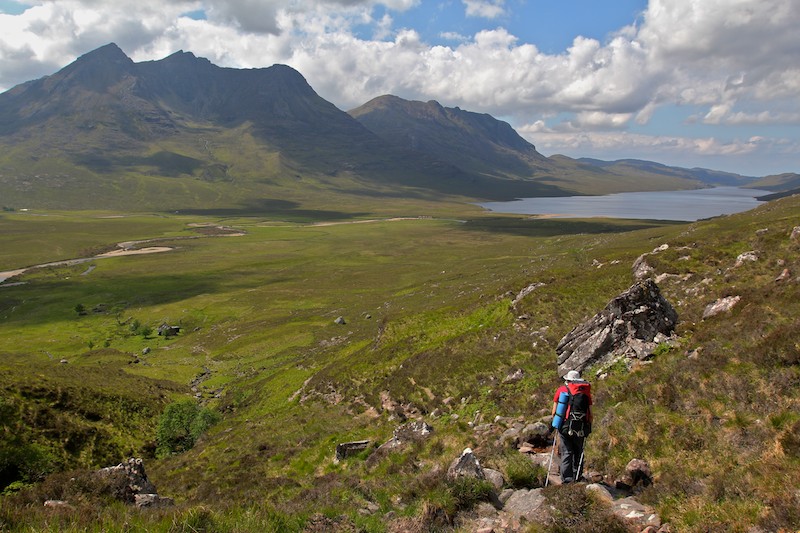
Day 1: Driving into the wilds. Fumbling around in the glove pocket, tuning the radio, tying bootlaces, looking at the map, then suddenly looking up and out. Boom. The mountains yonder. It’s the magnitude – the bulk – of these hills when seen from the roadside that causes a sharp intake of breath (ok, so this photo doesn’t quite convey this!). You notice the beauty second, as you exhale. This first glimpse of the mountains always sends my spirits soaring. Excitement builds as the adventures planned – Ed – can you plan an adventure? – for the following days are shortly to begin. Accompanied by my long time walking partner, Alistair, we planned to base ourselves at Shenavall bothy and spend a few days walking and scrambling in Scotland’s Great Wilderness.

Wester Ross  001

Roughly 6km after leaving the car, we crossed the shoulder of An Teallach and gazed down upon Loch na Sealga and the Great Wilderness. Before us lay a mountainous stronghold, peak after peak thrusting upwards; dark terrible citadels of the North West Highlands. Steep cliffs, striking ridges and crenellated summits promise much to the adventurous walker.
Wester Ross  002

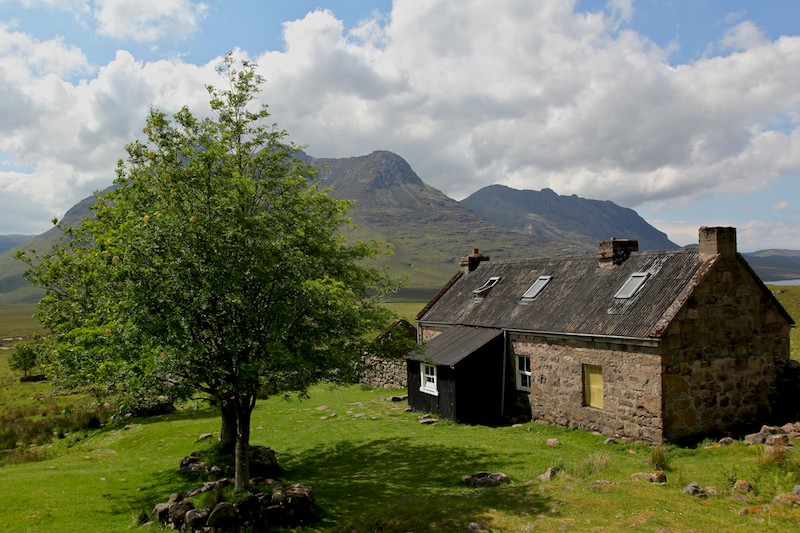
Shenavall Bothy, a remote and basic cottage in Wester Ross, with the corbett of Cul Beag Mhor behind. It’s a popular spot and justifiably so, occupying a splendid position in the heart of the Great Wilderness, right at the foot of iconic An Teallach (one of, if not the finest mountain on mainland Scotland).
Wester Ross  003

We dropped the camp gear at the bothy and had a late lunch of cheese and salami wraps. Leaving the bothy at 2.30pm for An Teallach wouldn’t normally be advisable but we had the month of June fighting our corner. He guaranteed us light until 11pm so we took heart and set off – to do what we mountaineers do best. Puff and sweat our way uphill, questioning exactly why we keep subjecting ourselves to such ordeals. Why we come back year after year. Of course, we all know why. The answer lies just a little higher, perhaps just along the ridge, cresting it and looking down into a new world. A world promising more beauty, wonderment and adventure. The photo shows Alistair heading upwards over the interminable boulder fields of Sail Liath, 954m, the first top on the ridge of An Teallach.

Wester Ross  007

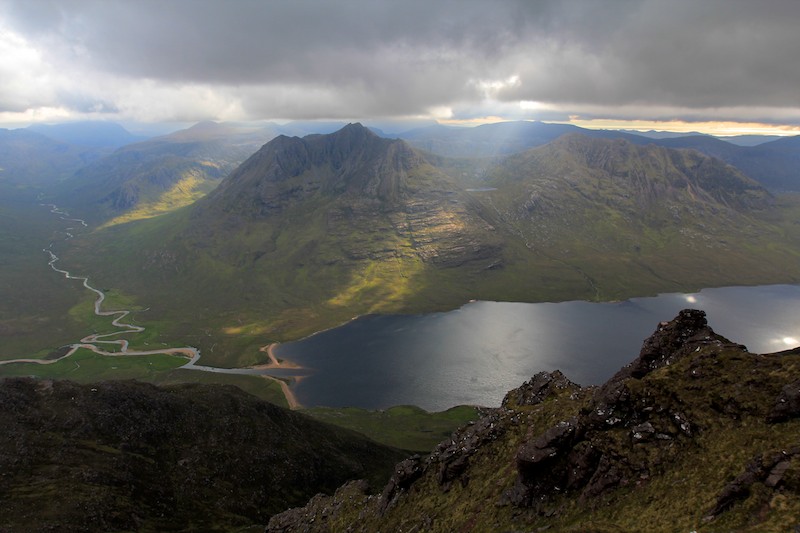
The splendid main ridge of An Teallach, from the summit of Sail Liath. The two munros are the prominent peaks to the left and right of the lowest point of the ridge in the centre of the picture. They are Sgurr Fiona, 1060m, and Bidein a’ Glas Thuill, 1062m. Between us and them lay a scramblers paradise, a rough, serrated ridge of impeccable sandstone.

Wester Ross  009

Tempestuous weather filling in as we look to the west, towards the corbetts of Beinn Dearg Mor, 910m on the left, and Beinn Dearg Beag, 820m on the right. Clouds scudded in the from the south west, ending our hopes of scrambling along the ridge in late afternoon sun. The light was quite splendid where the beams of light pierced through the dirty quilt above our heads.
Wester Ross  016

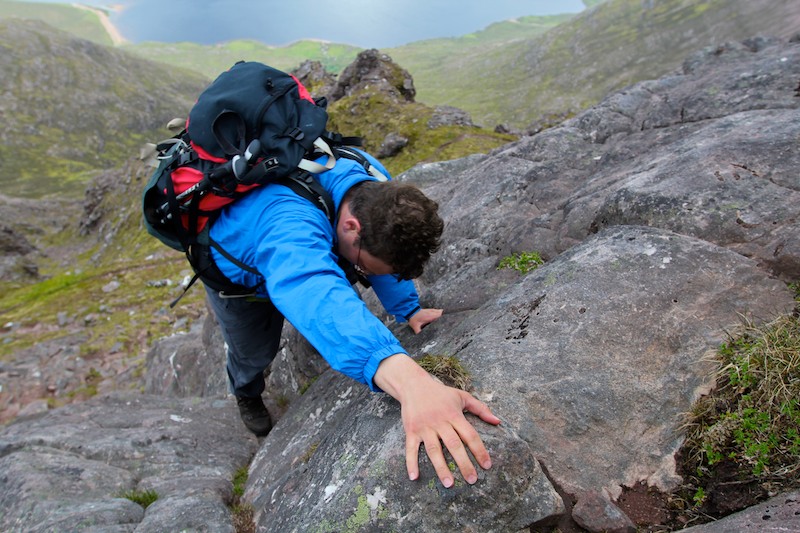
Now the fun begins. Alistair climbing the superb layback crack as we ascend one of the numerous pinnacles along the ridge. The climbing was easy enough, but exposed. The sandstone was rough and holds were plentiful, inspiring confidence and allowing the enjoyment of movement over rock to suppress those jangly nerves.

Wester Ross  004

Further along the ridge, more exposure, more hands on experience. Elevated heart rate, blood pumping round the body, mind focussed entirely on the metre of rock above and below, only vaguely conscious of the wider surroundings. It was a thrilling mountain ridge – a noble opponent that didn’t yield without a good scrap.
Wester Ross  005

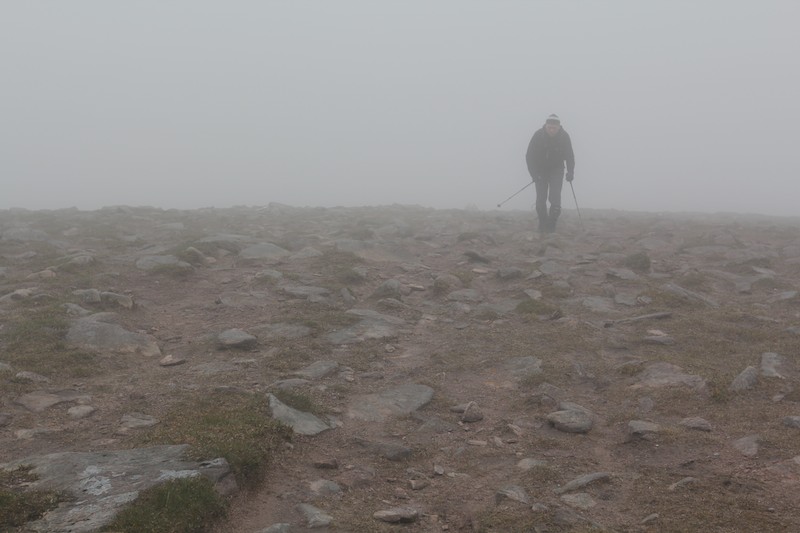
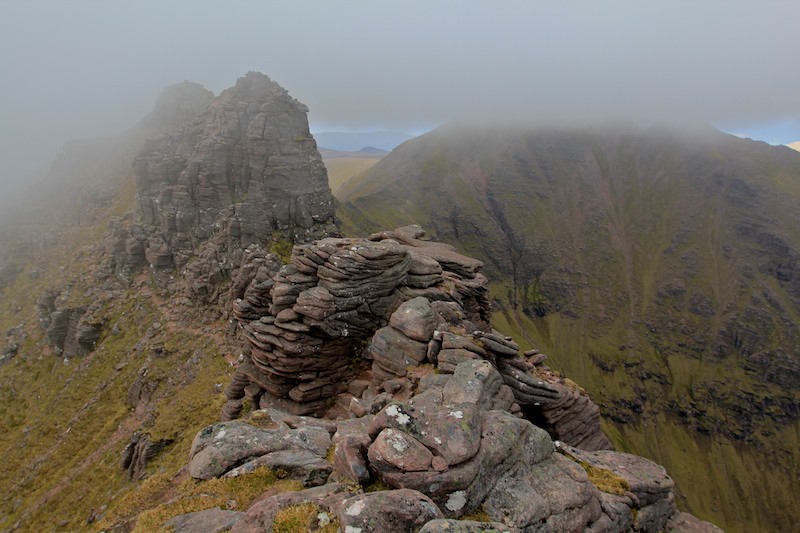
Looking ahead to yet more sandstone outcrops on the ridge, minutes before the cloud descended further and engulfed us. The infamous Scottish murk had finally settled in and held us in its grasp for the remainder of the evening.
Wester Ross  006

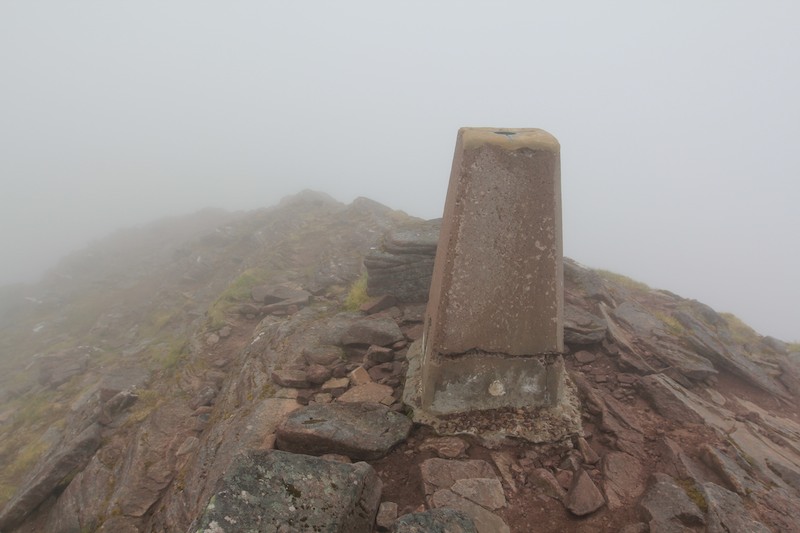
The summit trig point of Bidein a’ Glas Thuill, 1062m, the highest point of An Teallach. We reached the summit at 7.30pm in a good ole’ blow and thick, wet cloud.
Wester Ross  008

Stopping to layer up in the worsening weather before the descent down to camp. It was past 8pm by now and 10.30pm by the time we reached our tents (pitched outside the bothy). Being so far North in the middle of June meant we had daylight until past 10 and it didn’t get properly dark until 11 so we could afford to have long days.

Wester Ross  010

Day 2: The next morning, camp outside the bothy.

Wester Ross  018

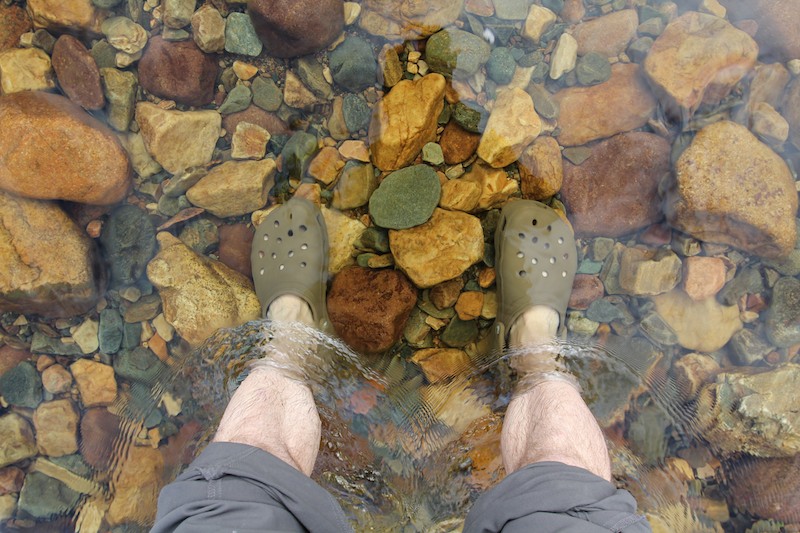
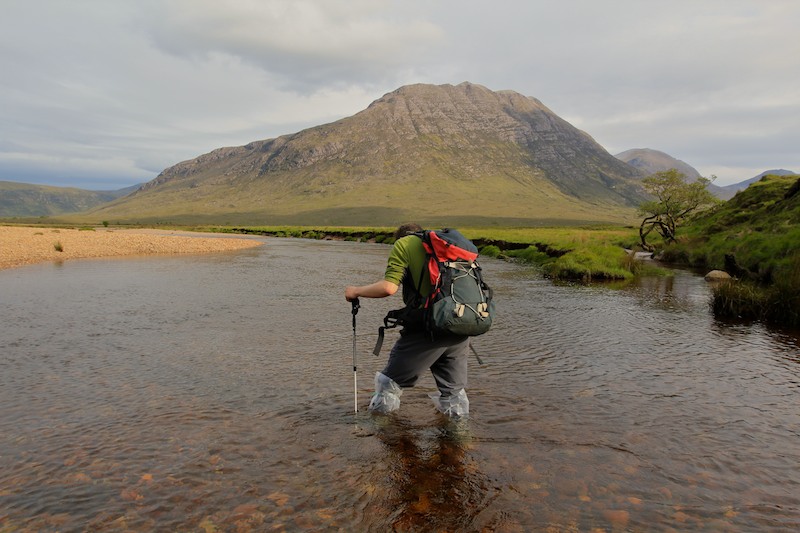
River crossing. Crocs borrowed off Alistair as I hadn’t really thought through my plan for the river crossings.
Wester Ross  011

Wonderful views across to Beinn Dearg Mor and Loch na Sealga:

Wester Ross  012

On the summit of Beinn a’ Chlaidheimh:

Wester Ross  013

Celebrating with a dram of whisky on the summit of Sgurr Ban, Alistair’s 200th munro.

Wester Ross  014

Alistair near the summit of Mullach Coire Mhic Fhearchair, looking back down the valley to Beinn Mor Dearg and our base near the head of Loch na Sealga:

Wester Ross  015

We enjoyed a beautiful evening walk back down the valley, our weary legs carrying us home to camp:
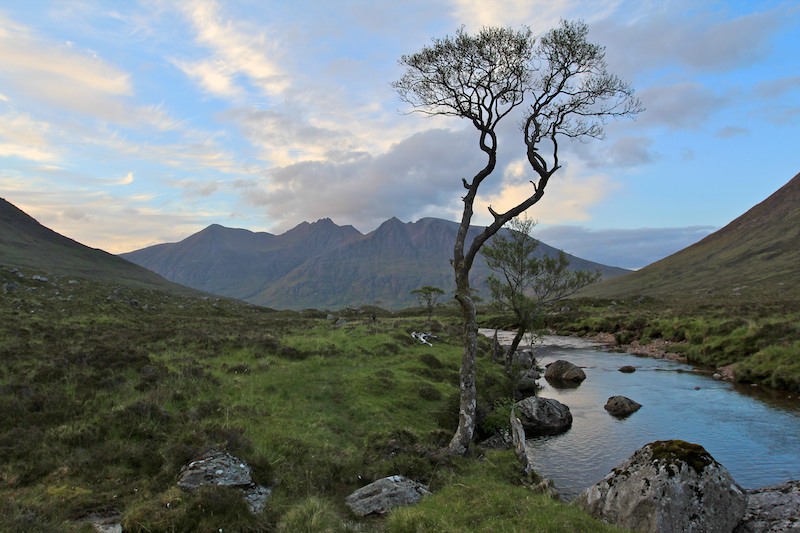
Wester Ross  020

Looking back at the reflection of Mullach Coire Mhic Fhearchair in the evening light:
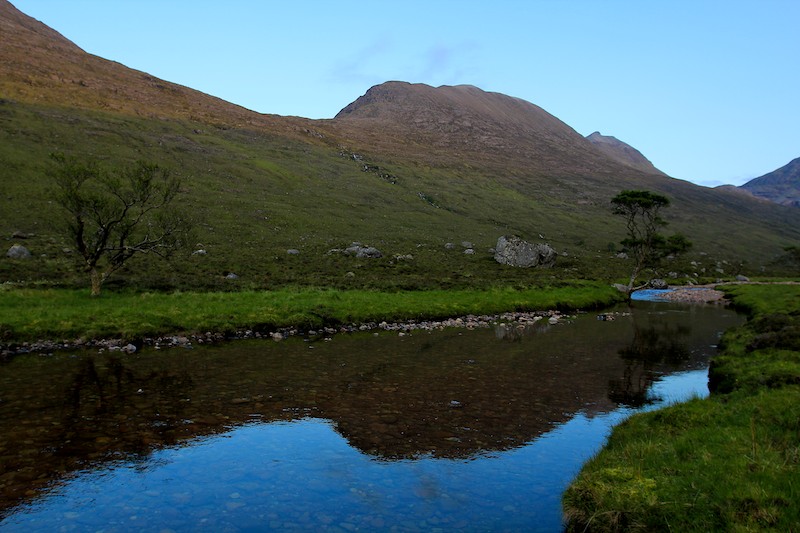
Wester Ross  017

Day 3: Home, sweet home. A Golite Shangri-La 1 tent and inner, pitched with trekking poles. Inside a Rab Neutrino 200 sleeping bag, Karrimor roll mat, Platypus 3L water carrier, Golite Pinnacle rucsac, MSR pocket rocket stove, titanium billy and Asolo boots. Lastly of course, and most important of all, a cup of tea.

Wester Ross  021

Scrambler’s eye view:

Wester Ross  019

Views westwards to the sea from the summit of Beinn Dearg Bheag. Spectacular situation.

Wester Ross  022

Wild flowers – some kind of orchid I think:
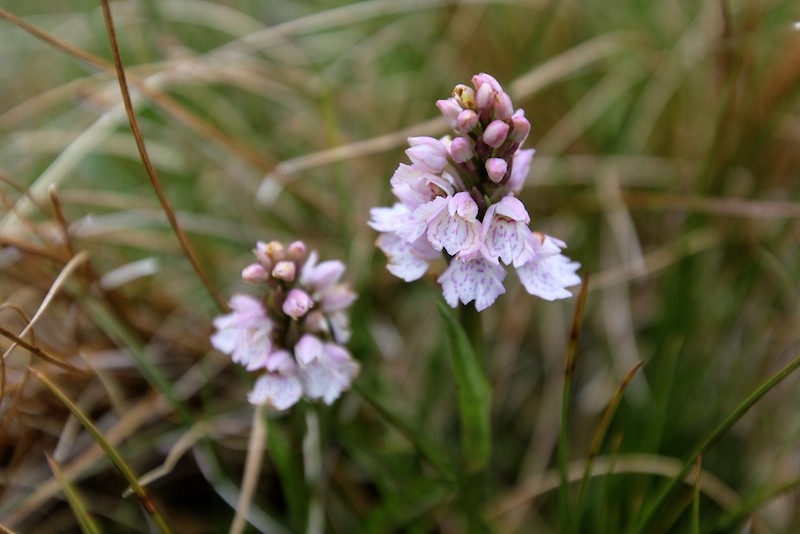
Wester Ross  023

Loch Toll an Lochain and An Teallach’s western spur in the background. It felt unusual to be walking along a beach, half way up a Scottish mountain. But we were not the first – deer prints ran all the way along the beach, though we never saw the creator.

Wester Ross  024

Whisky this way. On we press, a quickening of pace, grumbling stomachs hurrying us back to camp. A tricky descent down the outflow of the loch, down climbing a gorge over clumps of heather kept the senses sharp and the fatigue at bay.
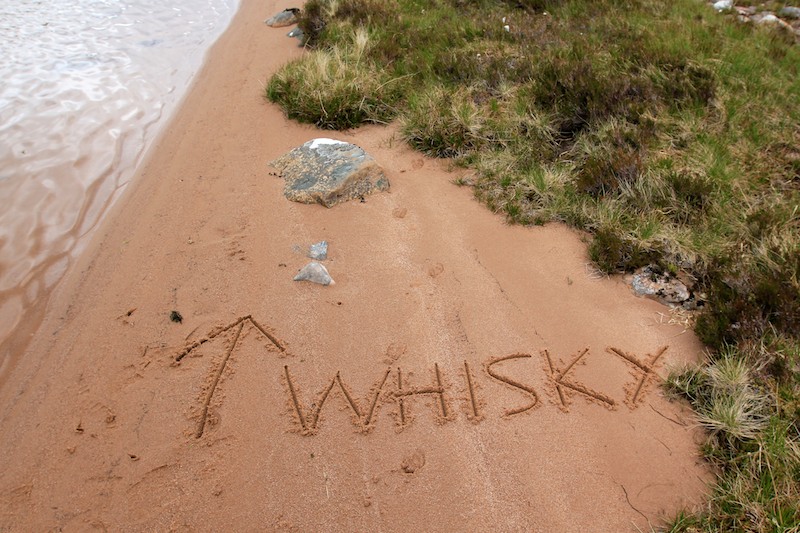
Wester Ross  025

Another crossing of our old friend the Abhainn Strath na Sealga river, with the first munro of yesterday, Beinn a’Chlaidheimh, in the background.
Wester Ross  026

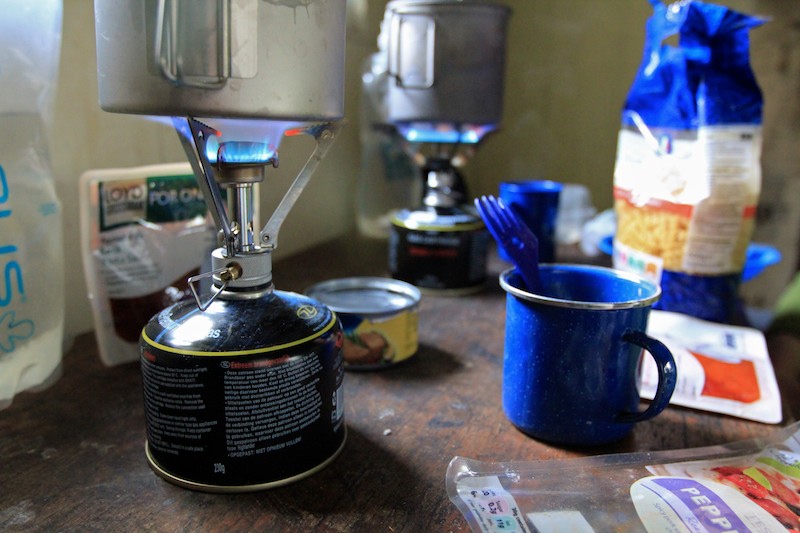
Cooking up a well deserved dinner in Shenavall bothy after a superb day:
Wester Ross  027

Racing the evening light to get back to the car:

Wester Ross  028

Day 4: The misty ramparts of Slioch, hill of Spear, 981m, rising above Loch Maree.

Wester Ross  029

Near the summit and in the cloud:

Wester Ross  030

Victory – on top of Slioch, not much of a view:

Wester Ross  031

Alistair walking along the ridge line of Slioch, showing the scale of these vast Scottish mountains:

Wester Ross  033

The weather improved dramatically over the course of our day and we enjoyed a sunny afternoon as we descended back to the car:

Wester Ross  034

Trees reflected:

Wester Ross  035

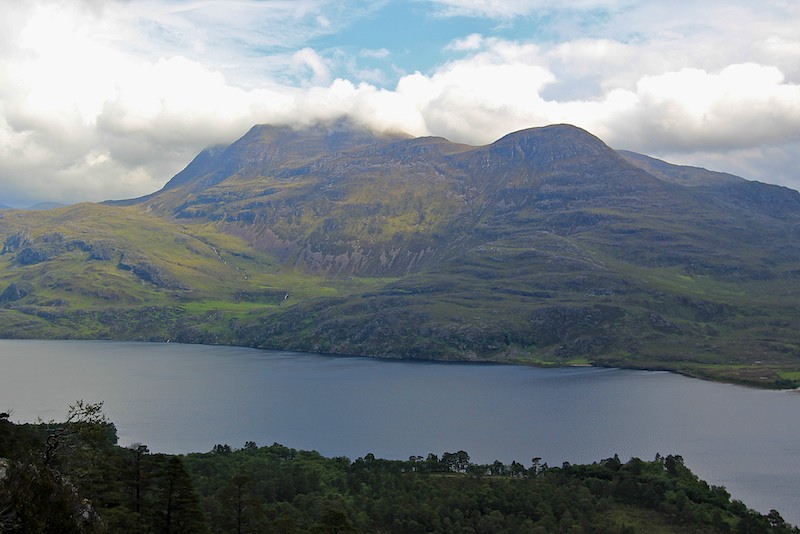
Day 5: Slioch, seen across Loch Maree. A brief parting in the clouds teased us. Blue sky peeped out between the torn, ragged edges of the white duvet. Slioch revealed much to us. Flanks stretching all the way from the loch shore to the fore-summit, but still the top itself remained elusive. Moments were passed in wonder, gazing at this behemoth, remembering to put the camera to one side to soak up the view whilst I still could.
Wester Ross  036

Soon after the photo was taken, dark, ominous clouds rushed in and clobbered away the blue sky. The remainder of the day was spent in a monochrome world of varying shades of grey. A cold wind blew up. Rain slanted sideways, and increased in intensity as we wended our way up the corbett of Meall a’ Ghiuthais, 887m. Energy levels were depleted after the long days earlier in the trip. Each step required a conscious mental effort; it was a case of the destination being important, not the journey. Determined to “bag” one final hill, we slogged upwards and eventually won out. The summit may have been ours, but the enjoyment belonged mostly to the weather gods.

The final image from the trip was of this lone pine, standing tall above the mountainside, impervious to the weather. Directly across from Slioch, a sentry from yesteryear, knowing not the whys, the hows, the reasons, the excuses of us walkers, passing by in a fleeting moment. Through hail, rain or shine, the lone pine just stands, watching the four seasons play themselves out on Slioch’s stage. Just standing. Existing.

Wester Ross  037

Across Spain on foot – an introduction

Spain 10

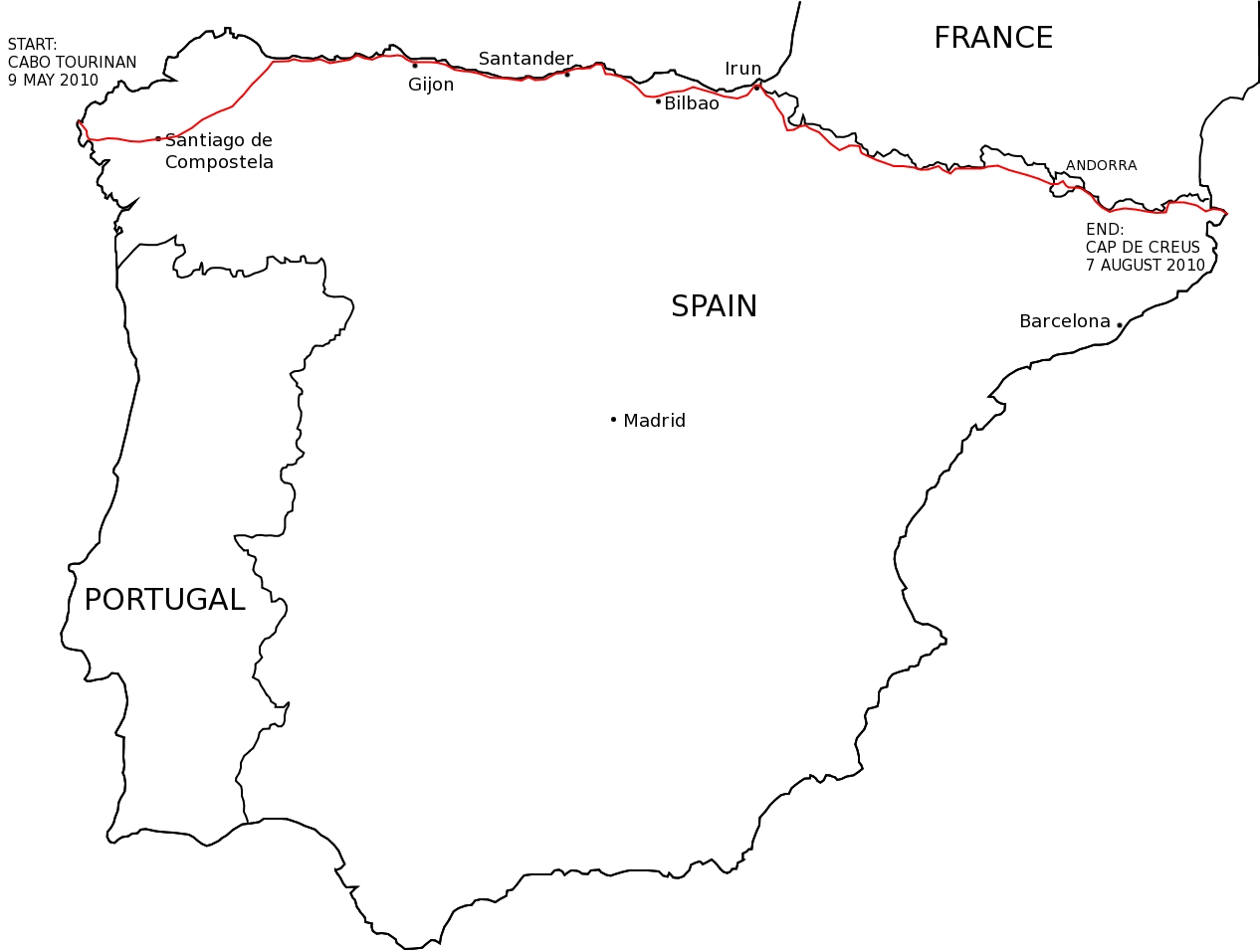
Between 9 May 2010 and 7 August 2010, I walked 1,789 kilometres (1,115 miles) from the western most point of the Spanish mainland to the eastern most point of the Spanish mainland. I documented the landscapes that I walked through with a series of landscape photographs.

The full set of photos can be seen here on my flickr stream. As time permits, I’ll upload more stories and photos to this website.

I spent 74 days walking through farmland, along coastlines and over mountains. I swam in the sea, slept on beaches, crossed raging mountain rivers, slid down snow slopes and stood on summits with far reaching vistas. Throughout I made a documentary record of the landscapes I walked through and the wonderful scenery I saw along the way.

Map of my route across Spain

Map of my route across Spain

Spain consists of seventeen autonomous communities. I passed through seven of these that ran coast-to-coast across Northern Spain: Galicia, Asturias, Cantabria, Basque Country, Navarre, Aragon and Catalonia. I also passed through Andorra.

I planned this project in March and April of 2010, unsure how successful the combination of a long wilderness trek and landscape photography would be. It certainly required a degree of compromise in each discipline. I couldn’t carry as much photographic equipment as I’d have liked and yet the weight of what I did carry certainly impacted on my walk. At times the photography felt like a burden, one that I wish I could dispense with, so that I might travel lighter and faster and just enjoy the purity of the journey. At other times, it would have been wonderful to stop in one place for several days, exploring and taking photos at will.

I present this collection of photographs as a documentary project that spans the width of Spain, rather than as individual landscape photographs. Once the walk was underway, I did no specific planning for individual shots, other than choosing what I thought might be interesting viewpoints to finish at each day. However, constraints of weather, food supplies and fitness often dictated where I would stop for the night, so sunset and sunrise shoots did not always happen.

I became highly proficient at spotting photographic opportunities over the course of the trek; which were the ones worth stopping for and using a tripod and filters, if necessary. Inevitably, the better photographs were those that were more considered; when I had stopped and taken the time to compose and capture a scene. That said, a number of photos in this book were taken as handheld shots.

Walking is a slow way to travel but, in my opinion, if one has the time it is surely one of the best ways to travel. A hugely enjoyable aspect of the trek was meeting the local people and other walkers, to ask for directions or to share in the wonders of the surroundings. Throughout my time on the Camino del Norte route, I frequently became lost and quickly became adept at asking for directions in Spanish. This usually led to a conversation about the area, my walk, the weather and the World Cup. On more than once occasion it resulted in an offer of a drink, and, once, even leading to an offer of a lawn to camp on, a beer to drink, half a watermelon to eat, a table and chair to sit on, and the gift of a walking stick!

The trek was everything I had hoped for and more. It was challenging, rewarding, suprising and mundane at times. At times, I felt tired, footsore, hungry, thirsty, sleepy, scared or nervous but these feelings would pass and the wonder at my situation would return. Sometimes on the trail, for no particular reason at all, I would feel incredibly happy and break out into an inane grin. Other times I struggled to shake off the feeling of pressure that the photographic element of this project bestowed upon me.

If there was one wish for an outcome from this adventure, then I hope it inspires you to go forth, out your front door, walking boots laced up and camera in hand. There’s a wonderful world of adventure and natural beauty out there awaiting you. I hope you enjoy the photos and the journey!

Here’s a podcast about my Spain trip.

Camel Trek in the Sahara (2009 – 2010)

A photo essay from a 6 day camel trek in the Sahara over New Year of 2009/10. Capturing this harsh environment was a real challenge. The light would change rapidly from bright to dark at sunset (and vice versa at sunrise) and the midday sun was so strong that photography was severely limited. I tried to capture the essence of this desert trek but there were so many scenes never captured – they were either beyond my skill set to record or happened before I could react. (A good excuse to go back though.)

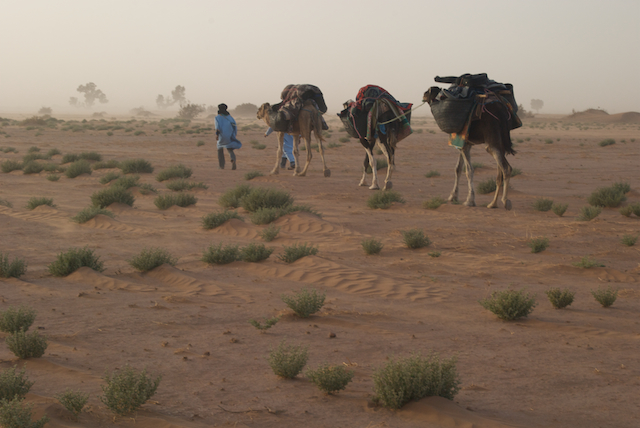
Camel Train walking into a sandstorm: The first day was something of a baptism of fire as strong headwinds blew the sand into our faces. Nothing for it but to wrap the headscarf over our mouths and noses. The horizon was a hazy nothingness – just as one would imagine the desert in a sandstorm.

Morocco-1

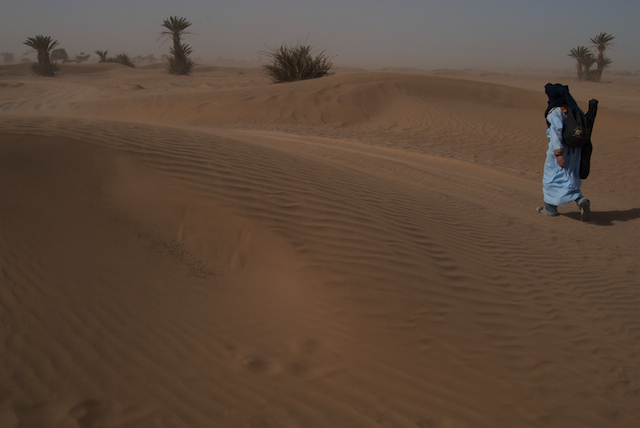
Mbarack in the dunes: Our guide, 24 year old MBarack, from the town of M’hamid (where we began our trek), leads the way through the dunes on the first day.

Morocco-2

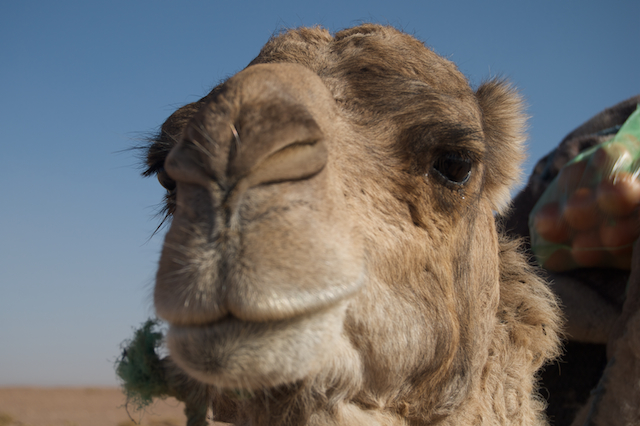
Camel Portrait: Camels are grumpy creatures and usually didn’t appreciate the camera lens anywhere near their noses. Happily this one didn’t object.

Morocco-3

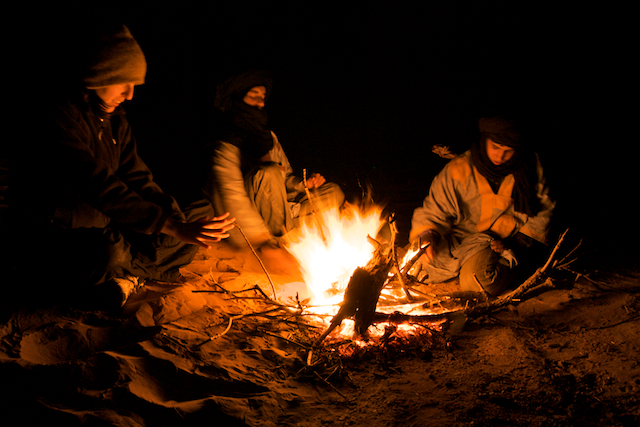
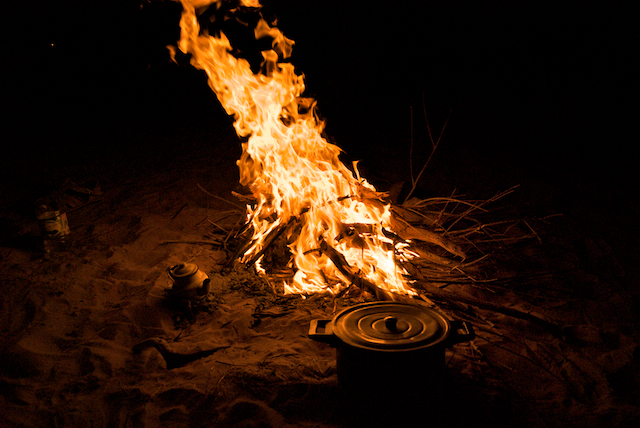
Warming our hands around the campfire: The nights were cold and fires were essential not only for cooking but also keeping warm whilst waiting for dinner.

Morocco-4

New Year’s Eve desert style: My friend Claire and I spent New Year’s night in the desert, chatting with the guide and his assistant in a mixture of English, French and Arabic. The guitar was passed between all of us – those few chords I can remember from school days not quite cutting it though.

Morocco-5

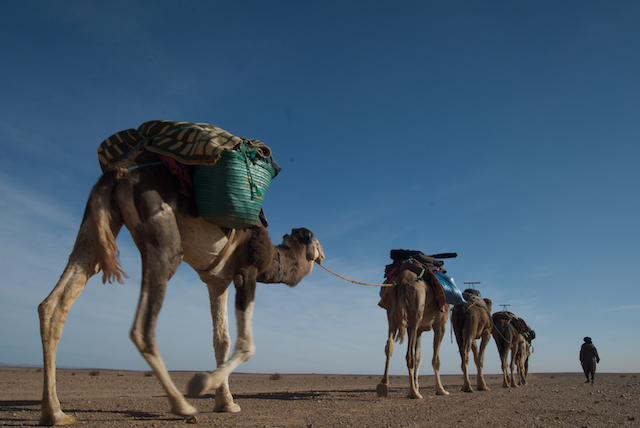
On the march: We walked alongside the camel train for a majority of the trip, partly because we didn’t always have a camel available for riding but mostly because they were rather uncomfortable to ride.

Morocco-6

Portrait of Mbarack: Great guy and so at ease in the desert. We were all friends by the end of the trip.

Morocco-7

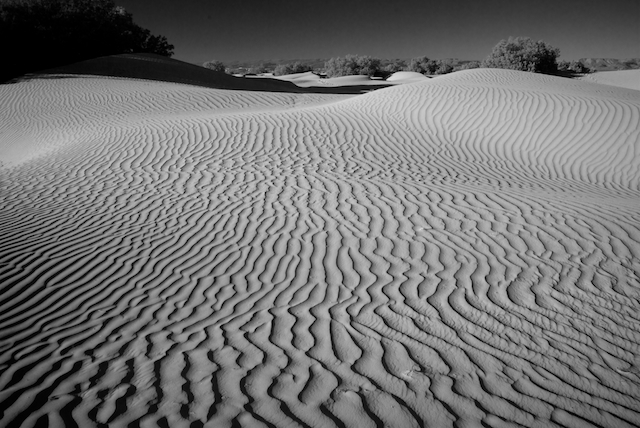
Dune Abstract 1: An experiment to capture these amazing lines in the sand and turn them into black & white abstracts.

Morocco-8

9. Dune Abstract 2: Another experimental black & white shot.

Morocco-9

Dune Abstract 3: And another.

Morocco-10

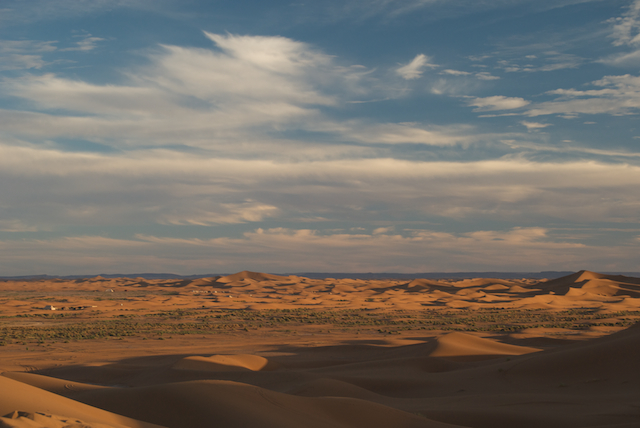
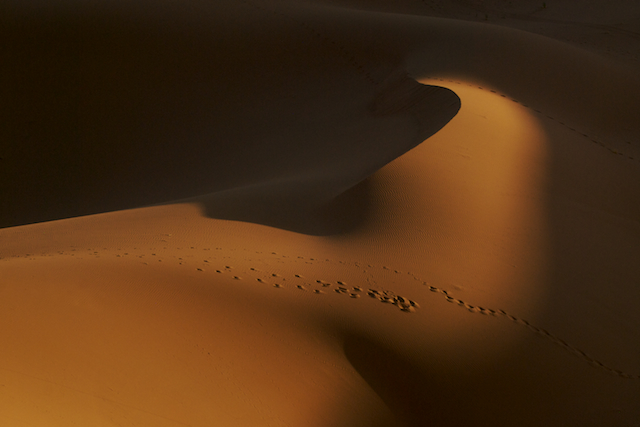
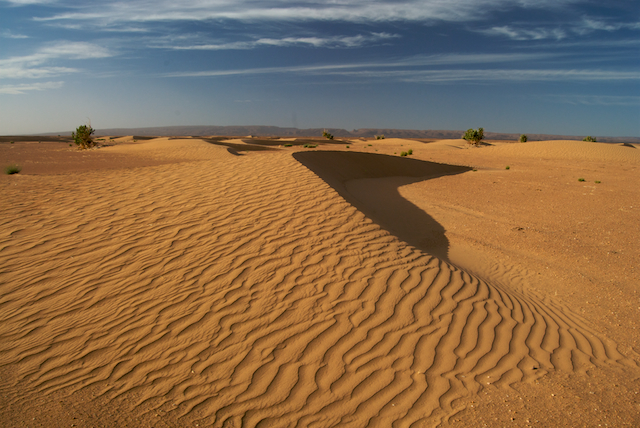
Desert sunrise: Sunrise over the dunes was beautiful. The contrast between the golden sand in sunlight and the cold darkness of the sand in the shadows was so dramatic that it was difficult to capture.

Morocco-12

Desert sunrise: Great whale-backed ridges of sand were all around me. Argh, which to photograph? You have no time to mess around as the sun rises suprisingly quickly.

Morocco-13

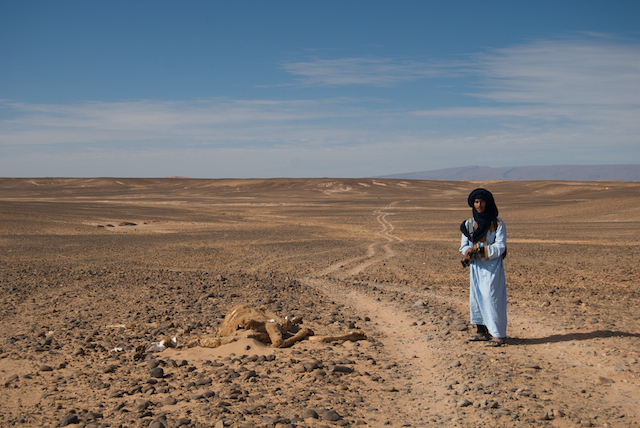
The dead camel: The guide said it was old but I can’t remember ever clarifying whether he meant the camel was old when it died or whether it has been on this spot for a long time. Whatever, the smell, though subtle, was just enough to hurry us along.

Morocco-15

Erg Chigaga dunes: Wow, our first view of the dunes of the Erg Chigaga (goal of our expedition) stretching off into the distance.

Morocco-17

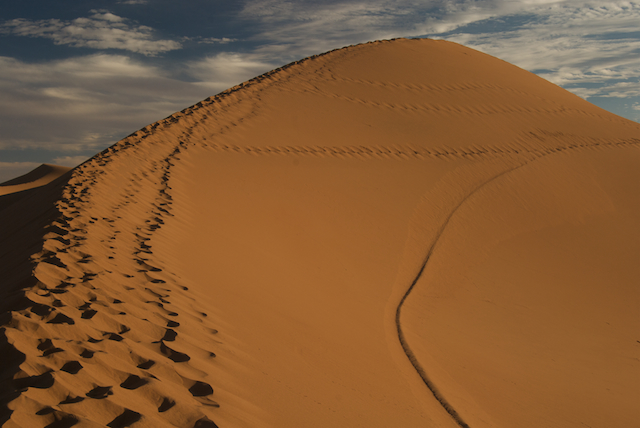
The dunes: They were hard work to climb! And covered in footprints from the crowds who were here on New Year’s eve (it is possible to reach here in a 4×4). Thankfully there were few other people around when we were there.

Morocco-18

Light on the dunes:

Morocco-19

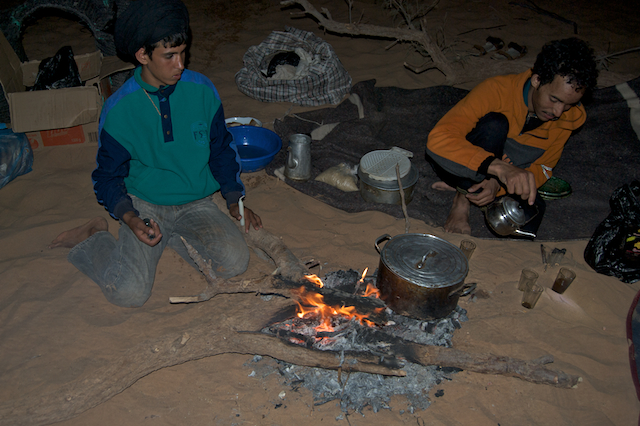
Campfire: Here, Mbarack is pouring out the sweetened tea (”whisky de berber”) that is drunk all through the Sahara. Every time we stopped one of the first and most important tasks was to brew and drink this incredibly refreshing tea.

Morocco-21

Camels at sunset: In the early evening, the camels were hobbled (front legs tied together by a short cord to stop them wandering too far) and allowed to graze.

Morocco-22

Camels at sunset: They are fascinating creatures, full of character.

Morocco-23

Dinner cooking next to the fire: Cooking around the campfire was a daily experience. We ate tremendously well, testament to the cooking skills of our guide Mbarack.

Morocco-24

Nothing like a good old camp fire singalong: Stopping at sunset (6ish) gave us plenty of time to sit round the fire and listen to the desert songs.

Morocco-25

Camel train returning home: We actually returned with a different camel train after our original three wandered away during their morning grazing. Despite us all searching frantically, they weren’t found until many days later!

Morocco-26

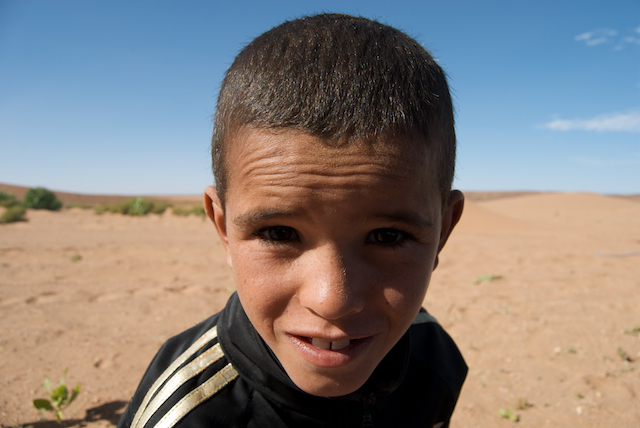
Budding entrepreneur: This young desert nomad appeared out of nowhere whilst we were stopped for lunch on the last day. He was quite shy at first but ended up selling Claire a bracelet in exchange for some Dirhams (Moroccan money), some pens and permission for me to take a few photos. As soon as the camera came out, he grew in stature and started playing up, looking inquisitively into the lens as I took the shot.

Morocco-27

Stretching our legs: The final day’s march was a long one, about 30km in total. Although it was hot, it was a pleasant day for trekking as we had a welcome breeze.

Morocco-28

Final dunes: About two hours before we finished the trek we came across these dunes, the final set of large dunes. It was a great spot to pause and reflect on the wonders of the past 6 days.

Morocco-29

Haute Route, Pyrenees crossing, 2001

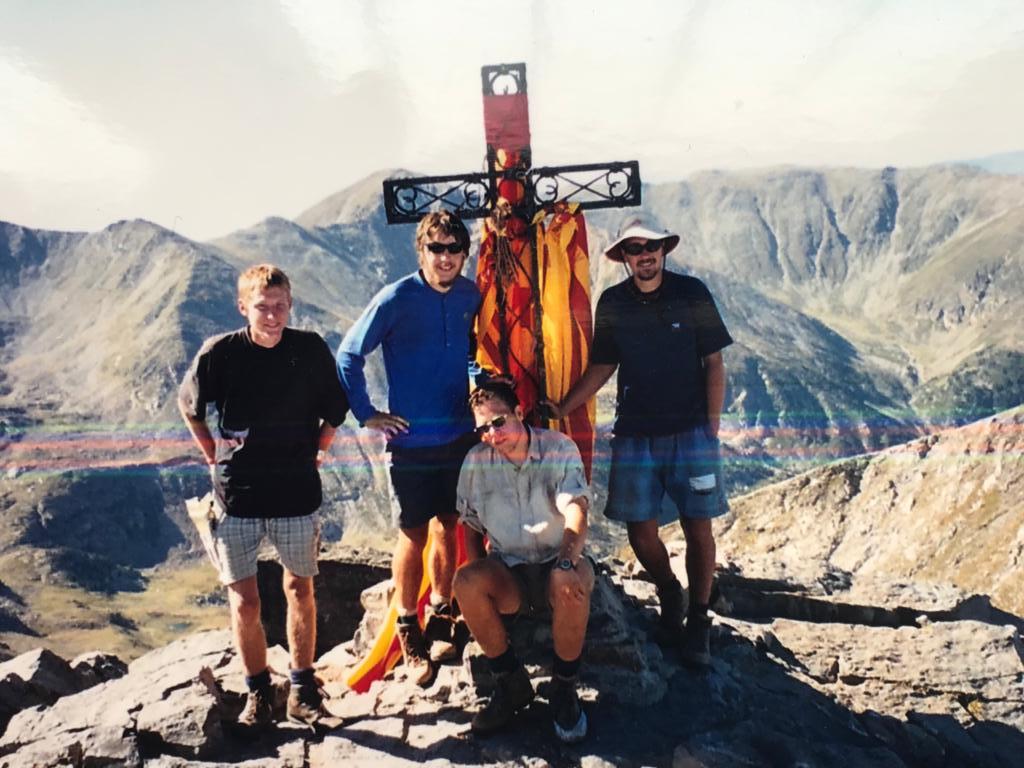
Alistair, Oli, Sam, and I walked across the Pyrenees, from the Atlantic Ocean to the Mediterranean Sea, over the summer of 2001. One of the best adventures of my life.

We walked about 500 miles over 46 days, including travel and rest days.

It pre-dated the digital era. Perhaps someday I’ll digitize the film photos and add notes from my trip diaries.

For now though, here is one photo from that trip that I do have to hand, showing the four of us (from L to R: Oli, me, Alistair sitting, Sam) on the summit of Pic Canigou, a high peak in the Eastern Pyrenees, near the end of our trip: