Goodbye panniers
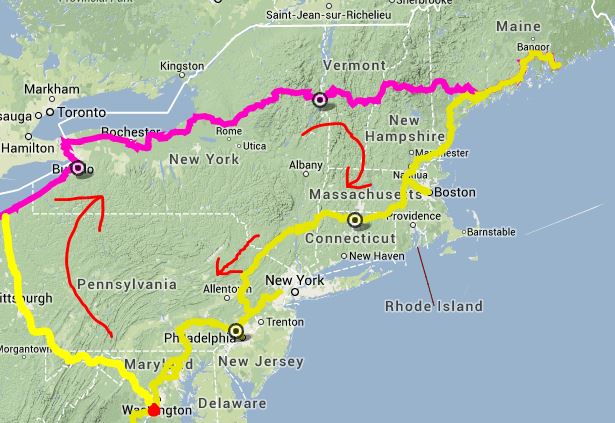
Earlier this summer, my brother and I set off on what should have been a 3,500 mile bike tour around the mountainous west of the U.S. for two months. Things didn’t go to plan when I crashed badly on day 9 so we returned home to DC whilst I recovered. However, I’m now better and itching to get back out on the bike. We’ve spent the downtime going through our kit item-by-item, paring down to the absolute minimum and transitioning from panniers to full bike-packing setup. As I alluded to in this post, I believe my previous setup with two heavy rear panniers was a contributing factor in the crash. A rethink was needed.
Below is a brief history of my bike touring equipment, showing a general progression towards a lightweight setup.
Bike touring version 1 – 1997 to 2006
I began touring way back in my teenage years, on a 26″ mountain bike. This culminated in a 3 month tour across Norway in 2006, at the peak of my fully loaded setup:

Fully loaded above the Arctic Circle, on my 2006 Norway tour
I had two large rear panniers, two smaller front panniers, a bar bag, and a tent and sleeping mat attached to the top of my rear rack. I was certainly not in the lightweight category but I still encountered plenty of heavier laden cyclists during my travels through Norway. I did post some kit home during the tour and suffered numerous broken rear spokes, so the setup was far from ideal. Still, it was relatively stable fore and aft, but rather heavy going uphill. I carried a Terra Nova Voyager tent (2.2 kg), as well as a stove, plenty of warm clothes and food. I was still a novice tourer, carrying too many “spare” items and always an excess of food in my panniers. Overall though, the tour was a fantastic experience and hugely enjoyable.
Bike touring version 2 – 2013/14
After a long period away from bike touring (I spent most of my holidays mountaineering or trekking), I returned to cycling with a vengeance, as a way to explore a new region of the world, when I moved from the UK to Washington DC, USA.
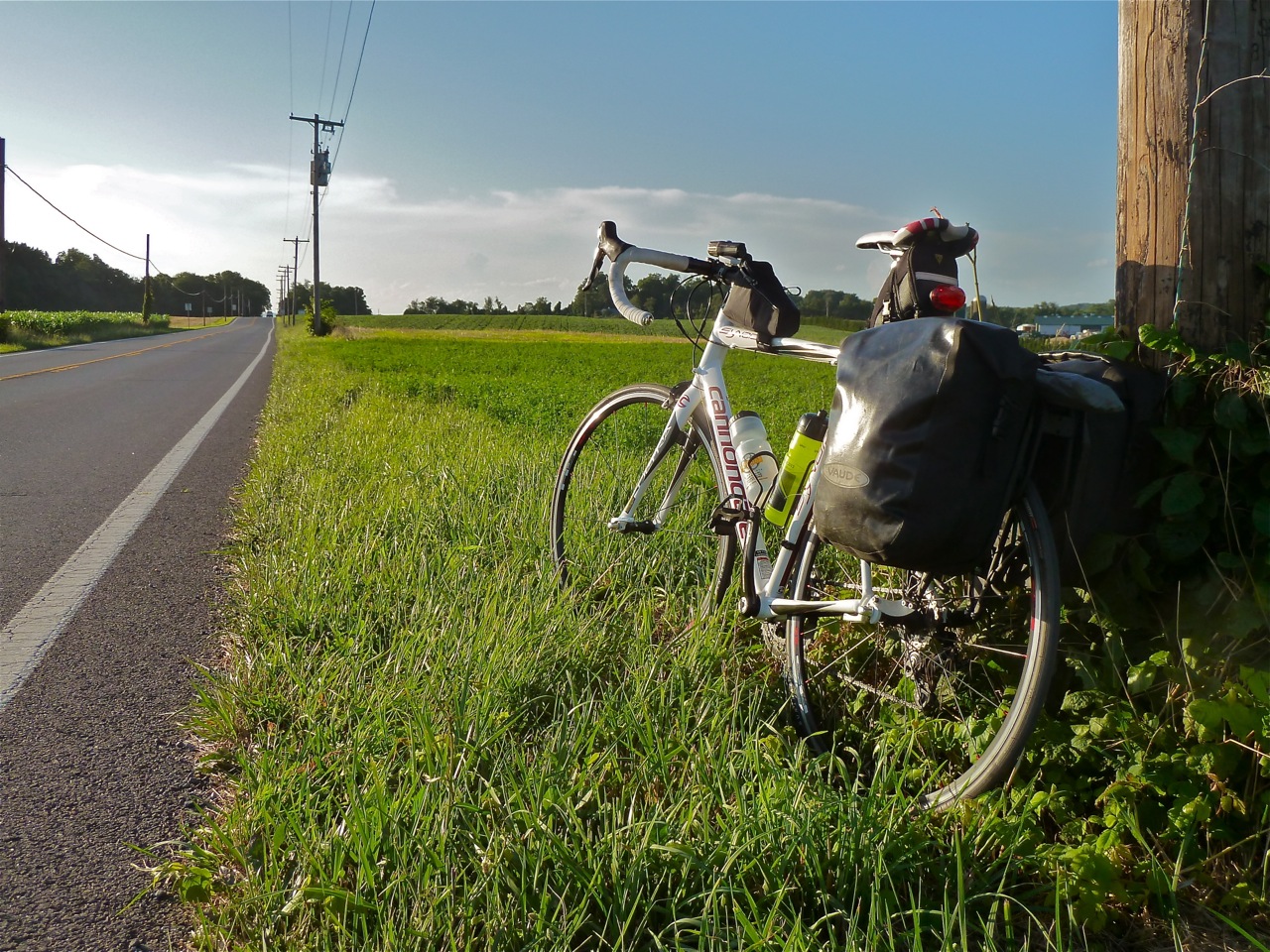
Last year I started touring again – a lightweight tour on a road bike, with two small rear Vaude roll-top panniers and a Revelate gas tank on the top tube. This was a comfortable setup and didn’t dramatically alter the handling of the bike or add too much of a burden for the hills. I kept the weight low by not carrying a stove or too many additional clothes (it being a hot DC summer). I still carried a double skin tent however (a Mountain Hardwear Skyledge tent in this case), weighing a little under 4.4 lbs or 2 kg.

Lightweight rear panniers and a Revelate gas tank bag – works well as long as you keep the weight down
This year I’m riding a Cannondale Cyclocross bike. The riding position is very similar to the road bike and it’s supremely comfortable for long rides. It’s light and rides well over the rougher stuff. It’s inching closer to that mythical one-bike-to-do-it-all that we cyclists dream of.
For the No Rest Out West tour this summer, I went for the same setup that I used on my tour last year, namely two rear panniers and a gas tank bag, but added a bar bag as well. (At the time, I thought the lack of eyelets on the front fork was a drawback of this bike, but now I’m glad I didn’t go down that route of front panniers, and instead went in the opposite direction.) However, I had a lot more gear this time – a stove, warm storm-proof clothing for the mountains, an iPad for keeping in touch with home and telling the story, and a pair of trainers for trekking and days off the bike. Way too heavy to have on the rear of the bike only. The front wheel felt very light and squirmy. The photo below from the California coast shows this setup:
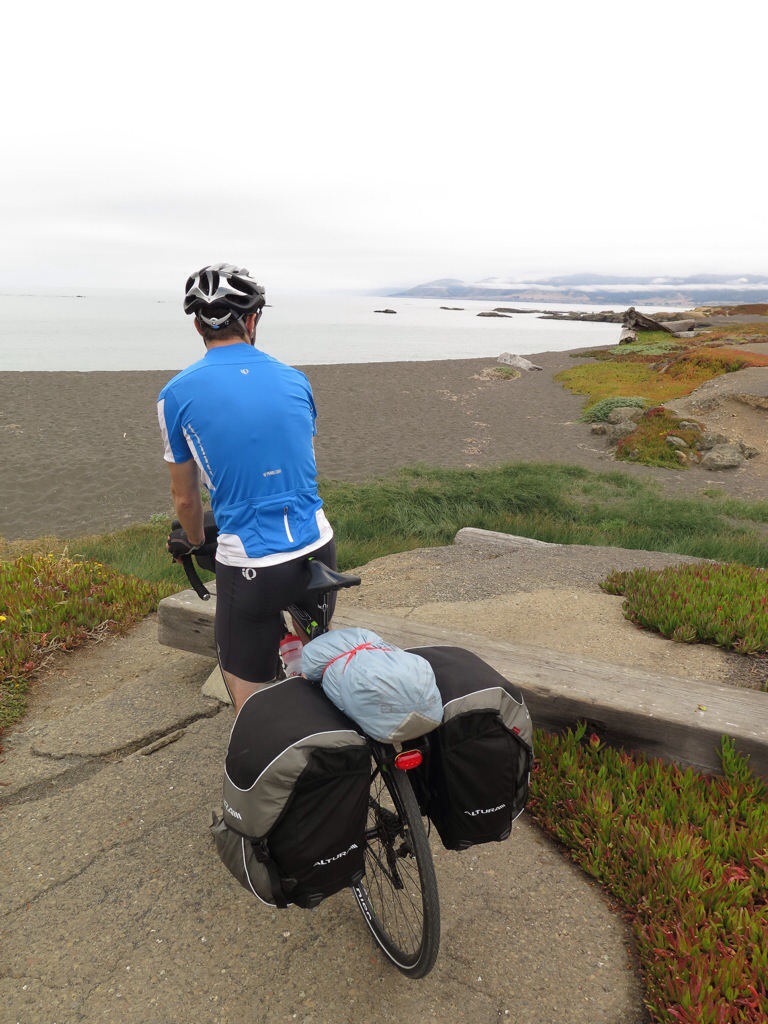
Large rear panniers and tent on the top of the rear rack
Bike touring version 3 – summer 2014
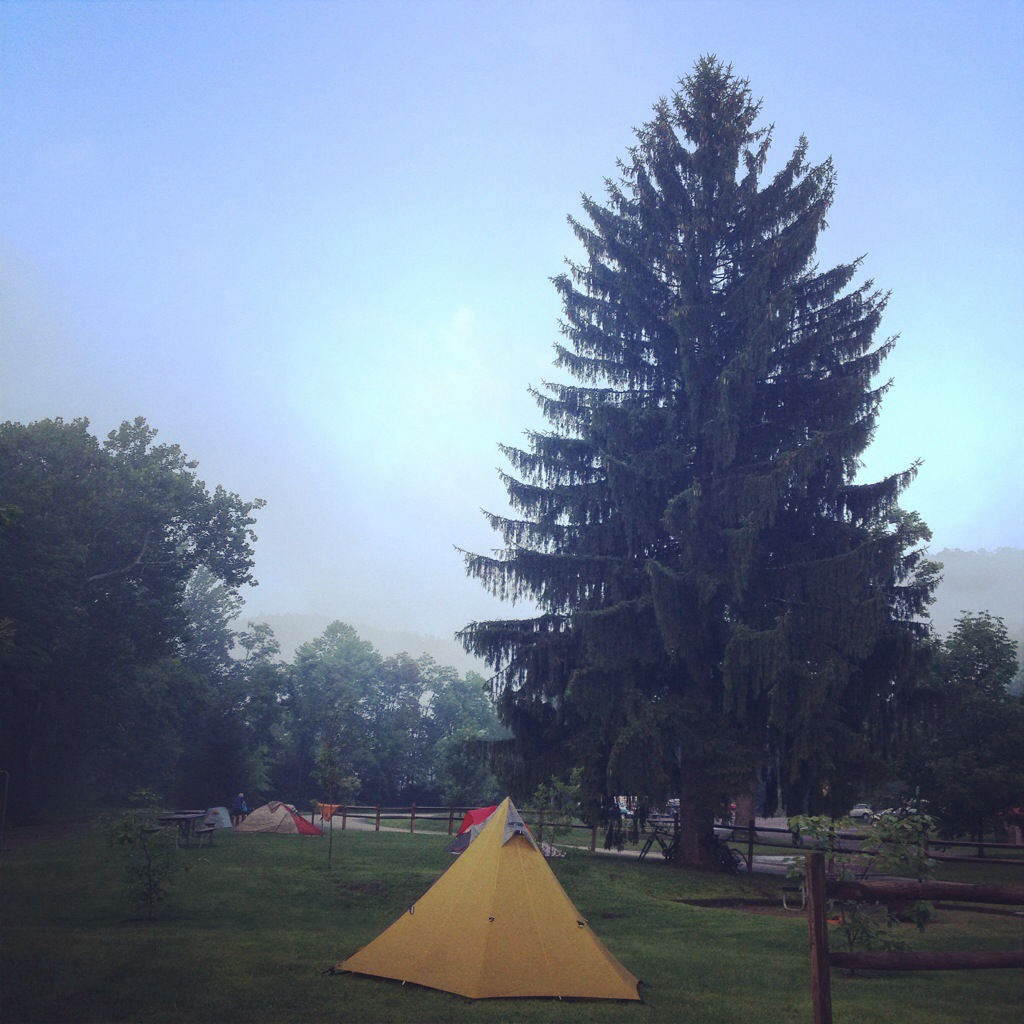
The transformation to this final bike-packing setup really began on day three of the No Rest Out West tour, at a campsite in California. My brother and I had rolled into Van Damme camp after a beautiful, but hilly, 68 mile ride, feeling pretty good and in the touring groove. We were soon put in our place when an ultralight bike tourer arrived at camp, having ridden 160 miles that day. He carried the bare minimum of equipment, in various frame bags. We looked in envy at the lightness of his setup in comparison to our seemingly monstrous panniers. A seed was sown, and we started discussing ultralight tactics that very night. We’d both been following the growing bike-packing movement with interest, so this encounter, and then my subsequent crash on an unstable bike, were the catalysts that set us off down that road.
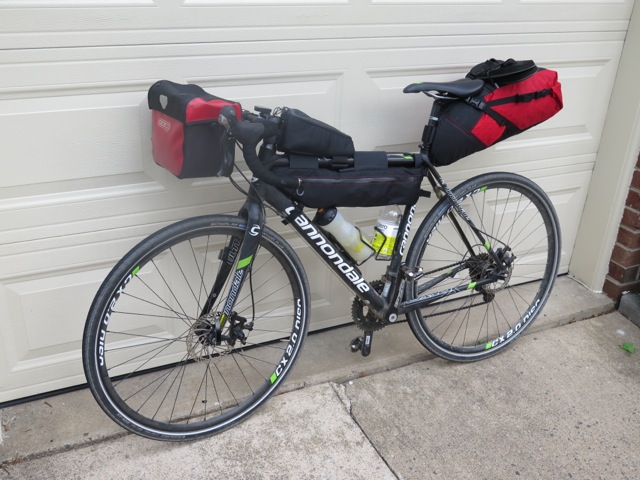
And this is where we’ve ended up:

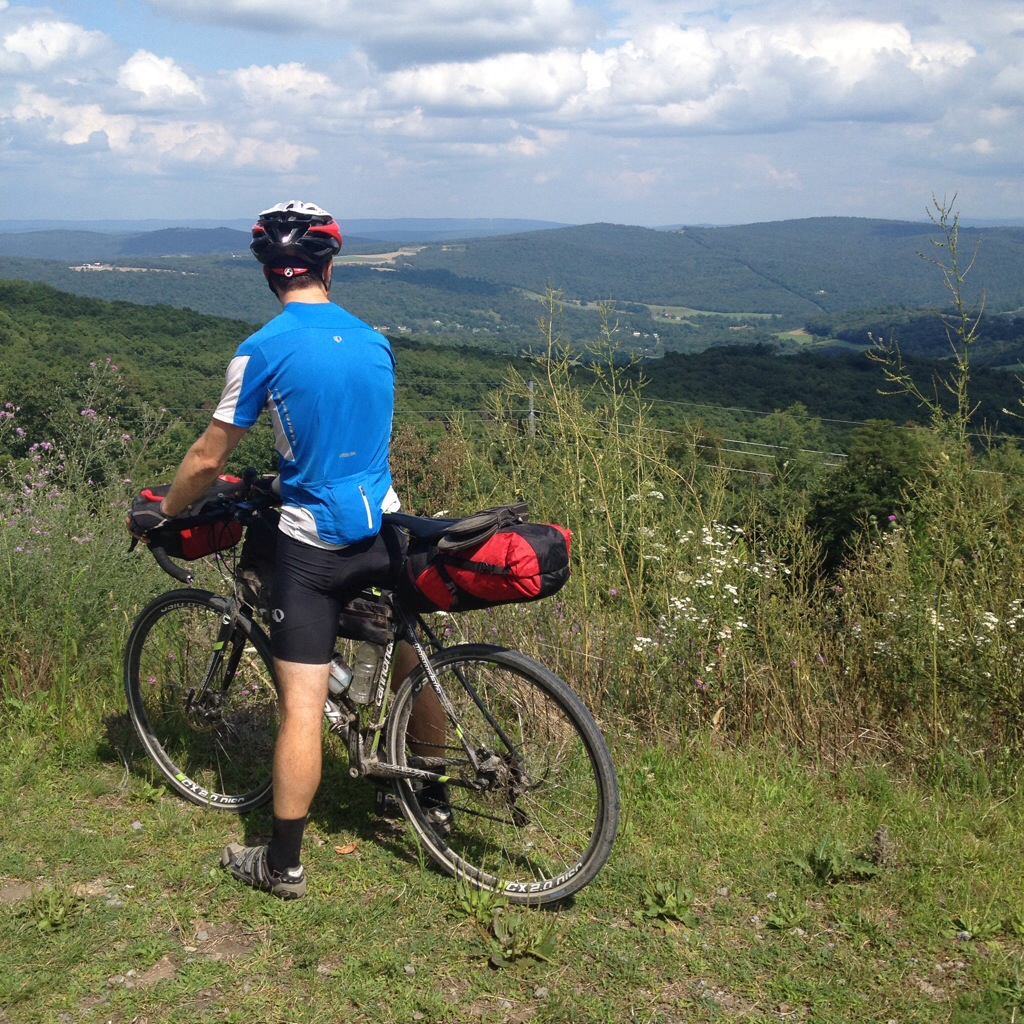
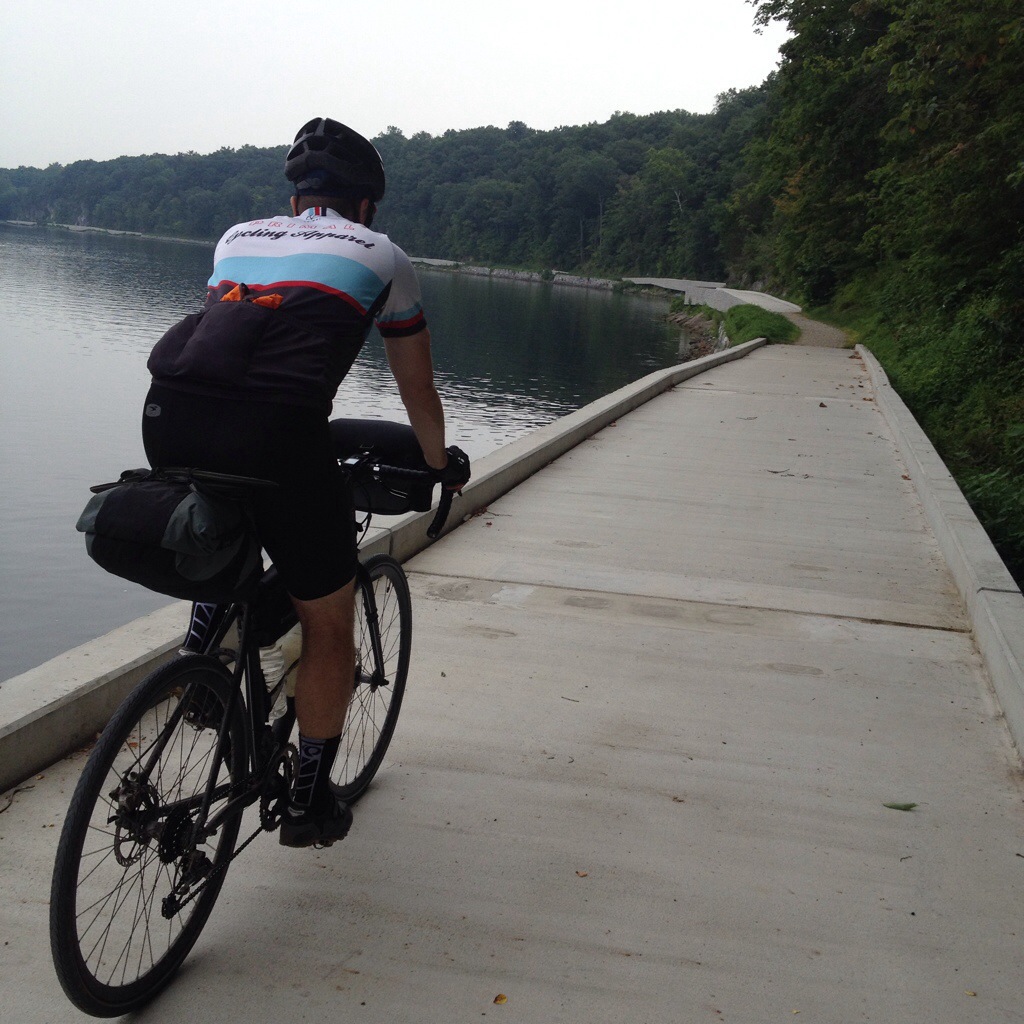
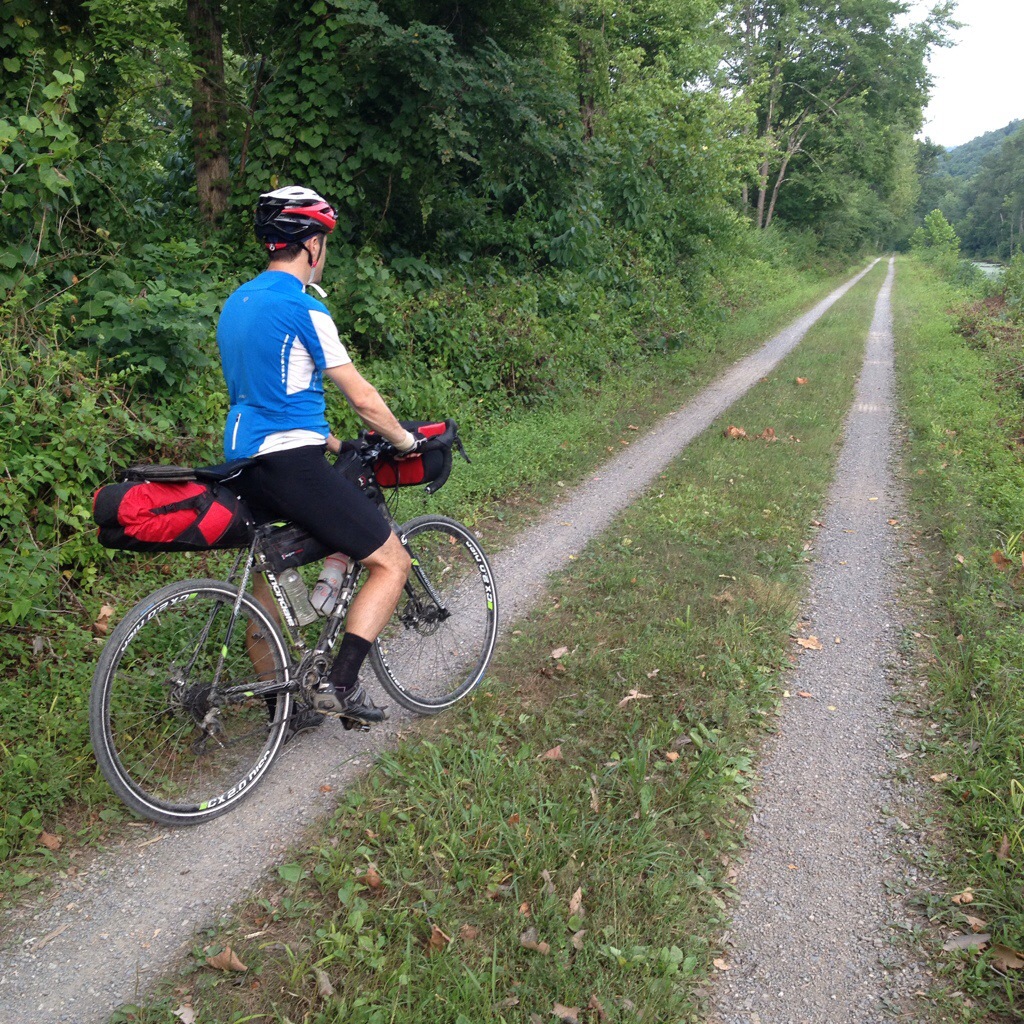
Cyclocross bike setup with Revelate bags, bar bag and touring tyres
For the next phase of our summer tour, we’re leaving a lot of heavy gear at home (notably, the panniers, pannier rack, all the cooking gear, the iPads, spare trainers, warm clothing for the mountains) and swapping out other items for lighter versions (the tool kit has been slimmed down, lighter clothing is being taken). The revised kit list is as follows (summer conditions, north east US):
[Note – am working on weighing all the kit, will add to the table in due course]
Bike and items attached to the bike
| Item |
Kit |
Weight |
Notes |
| 1 |
Cannondale Cyclocross CAADX Disc Ultrega bike |
9,480 g / 334 oz |
Fitted with Schwalbe Marathon Plus tyres for touring (700 by 35) |
| 2 |
Ortlieb bar bag |
|
A 6 liter, waterproof bag containing spare clothes, camera, diary, food. Mine is around 9 years old now, still going strong |
| 3 |
Revelate Gas Tank bag |
|
A 1.5 liter bag on the top tube, useful for food and misc. items |
| 4 |
Revelate Tangle half frame bag |
|
Around 6 liters or so, currently packed with tent poles and flysheet. My brother is carrying the inner tent. |
| 5 |
Revelate Viscacha seat back |
|
Up to 14 liters, packed with sleeping bag, thermarest, spare clothes |
| 6 |
Topeak Mini Dual G minipump |
158 g / 5.56 oz |
Attached to frame via bottle cage mounts |
| 7 |
Water bottles |
|
One standard bike bottle and one soft drinks bottle (since bike bottle too large to fit under frame bag) |
| 8 |
Cateye Strada wireless bike computer |
|
|
| 9 |
Rear red LED light |
|
|
|
TOTAL |
tbc |
|
Camping gear
| 10 |
GoLite Shangri La 3 tent |
|
Lightweight for its size and very comfortable for 2 people, carried between the two of us |
| 11 |
Rab Neutrino 200 sleeping bag |
580 g / 20.5 oz |
4 years old and still going strong, a superb sleeping bag. Leaving stuff sac behind and stuffing directly into Revelate bag |
| 12 |
Rab silk sleeping bag liner |
|
Not sure of the model, old. Leaving stuff sac behind. |
| 13 |
Thermarest Neo Air Small |
|
Very small pack size and ultralight, this smaller size will be an experiment |
| 14 |
Petzl Tikka headlamp |
|
|
| 15 |
Mini Pac towel |
|
|
|
TOTAL |
tbc |
|
Clothing (items worn on the bike indicated in parentheses)
| 16 |
Shimano Mountain Bike shoes |
|
Not sure of the model as these are a decade old now, but still going strong. So comfortable! |
| 17 |
2 * Generic black cycle shorts (1 pair worn) |
|
Any brand will do, nothing expensive |
| 18 |
2 * full zip cycle jerseys (1 worn) |
|
|
| 19 |
2 * socks for cycling (1 pair worn) |
|
I favour thicker socks |
| 20 |
Cycling gloves (worn) |
|
|
| 21 |
Bontrager Helmet (worn) |
|
New – replaces the one that was damaged in recent crash |
| 22 |
Oakley sunglasses (worn) |
|
|
| 23 |
Cycling biretta (cap) (worn) |
|
We bought caps from Velo Cult bike shop in Portland, to remind us of our time in the west |
| 24 |
Cycling jacket |
|
Something lightweight, no hood |
| 25 |
Zip-off trousers (pants in the US) |
|
For town wear |
| 26 |
Long sleeve layer |
|
For town use or cold days on the bike |
| 27 |
T-shirt |
|
For town wear |
| 28 |
Boxer shorts |
|
For town wear |
| 29 |
Flip Flops |
|
For off bike wear |
|
TOTAL |
tbc |
|
Other items
| 30 |
Maps |
|
From the Adventure Cycling Association |
| 31 |
Canon G16 Camera, padded case, mini tripod and charger |
|
|
| 32 |
Mobile phone (cell phone) and charger |
|
|
| 33 |
Diary and pen |
|
|
| 34 |
Toolkit and spare inner tube |
|
Relatively lightweight, left the heavy multitool at home, carrying separate, much lighter Allen keys |
| 35 |
First aid kit |
|
|
| 36 |
Toothbrush and small wash kit |
|
Half sized toothbrush and travel size body wash/shampoo |
| 37 |
Spot satellite messenger |
|
Emergency contact beacon, in case of disaster |
| 38 |
Cable and padlock |
|
Lightweight, shared item |
| 39 |
Ben’s Insect Repellent (DEET) |
|
Small amount carried in 2 oz container |
| 40 |
Chain lube |
|
Small amount carried in 2 oz container |
| 41 |
Wallet with ID, credit cards |
|
|
|
TOTAL |
tbc |
|
Shakedown tour and further refinements
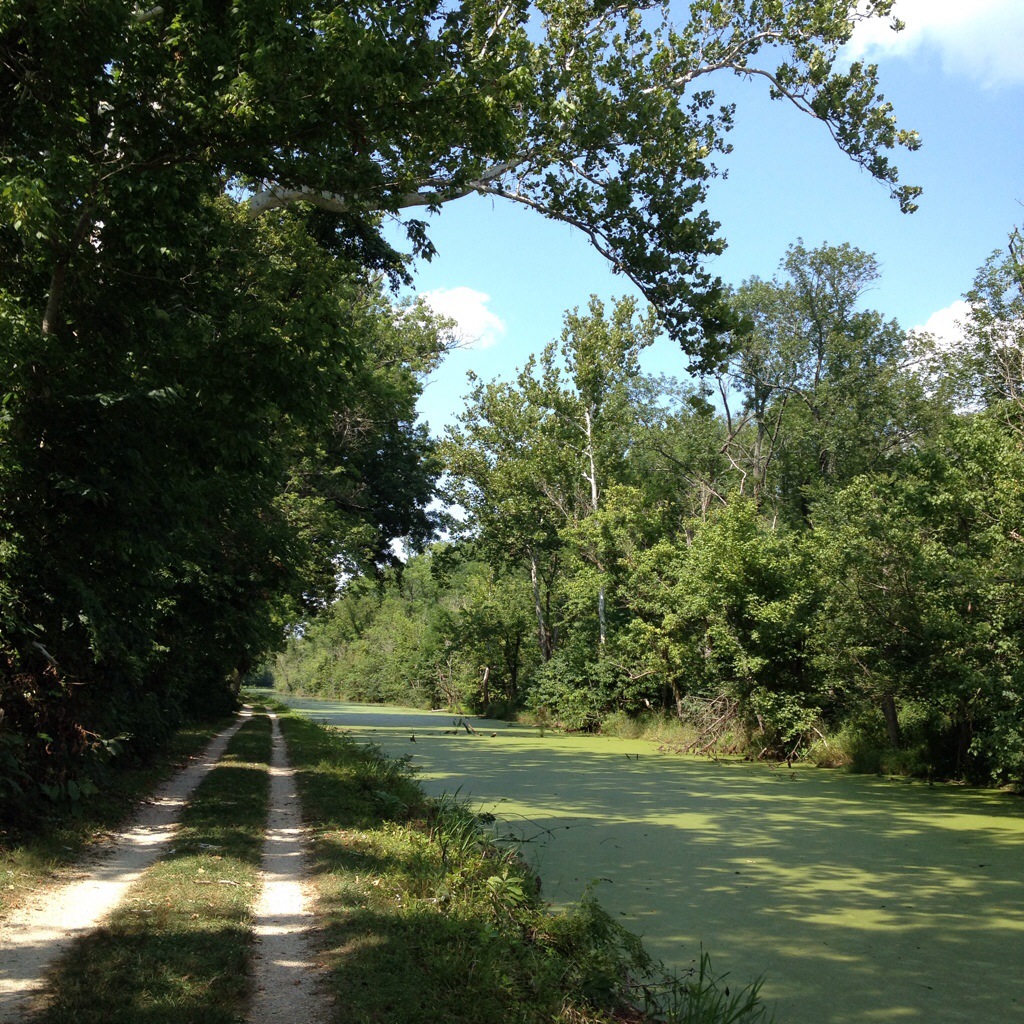
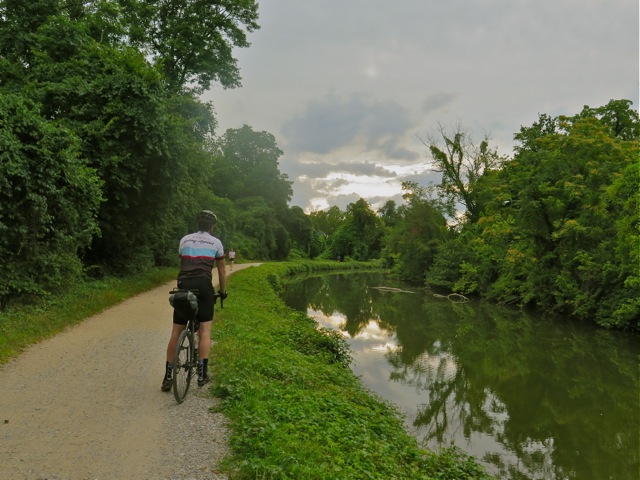
Ahead of our upcoming east coast tour, my brother and I headed out for a short overnighter to test the new setup. A quick, evening blast 30 miles out along the C&O canal, chosen for its lack of traffic and rough surface, then an overnight camp and a blast back early the next morning in time for breakfast.
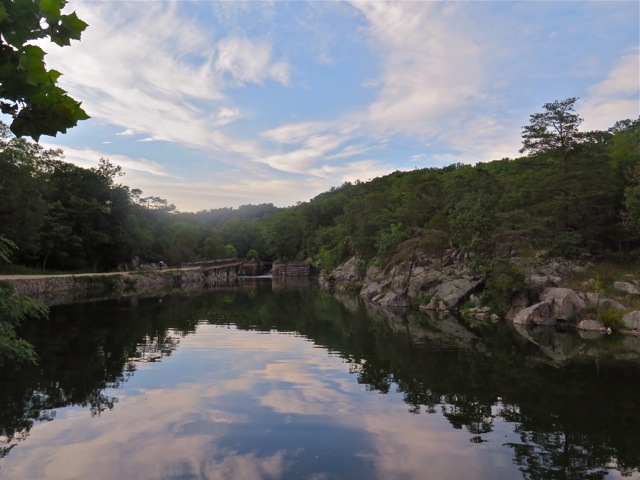
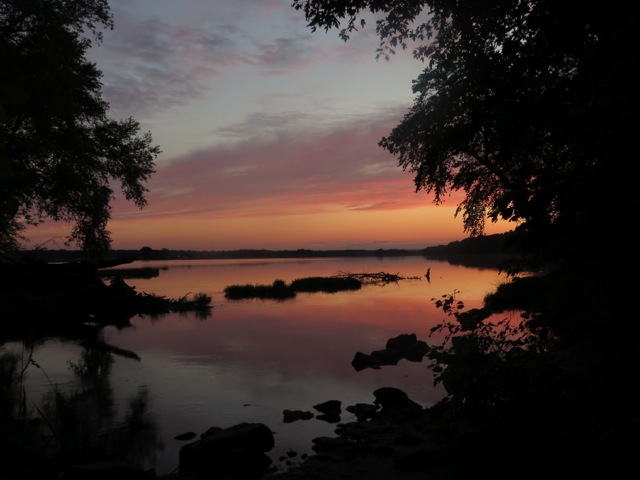
Despite its minute scope, the tour delivered an out-sized portion of natural beauty as we enjoyed a stunning sunset, plenty of wildlife (deer, vultures, herons being the most interesting) and the peace of the woods.
The kit performed flawlessly. The Revelate bags are rock solid – the seat pack does swing side to side when you really stomp on the pedals but you don’t notice when you’re riding. The frame bag isn’t noticeable except for occasional brushes against the inside of my knees which is not a problem. We were able to carry everything we needed (see above list) but it was a squeeze, so we spent some time discussing further weight/volume savings, leading to the following modifications:
- Small half-size toothbrush
- Zip off pants (trousers) – saves on taking separate pants and shorts
- Small bottles for liquids – e.g. take chain lube in a 2oz bottle instead of a 6oz bottle, ditto for bug spray
- Leave mosquito headnets at home
- Transfer the Advil (painkillers) from their container into a bag or much smaller container
- Leave spare spokes and spoke tools at home – much less likely to suffer broken spokes with this lighter setup
- Only carry the minimum number of tent pegs (6 in our case) and leave spares + stuff sac at home
Some photos from this mini-tour:

Pete on the C&O canal

Evening reflection near Great Falls

Sunset over the Potomac River
Further reading – some useful articles I refer to:
Joe Cruz wrote a superb post about touring on a road bike.
Legendary ultralight cyclist Iik talks through his own lightweight evolution – he is much further along this journey than we are, so there’s still plenty to learn here.
Bikepacking.net is a useful resource with plenty of gear and route information in the forums.
Thoughts or comments on anything above? Further tips or any good resources you use? Let everyone know in the comments.