New Zealand Part III – Climbing Black Peak

“Auto racing, bull fighting, and mountain climbing are the only real sports. . . all others are games.” – Ernest Hemmingway

Panorama from the summit of Black Peak

Panorama from the summit of Black Peak

Saving the best to last (see part I and part II of our NZ adventures): my brother and I were given carte blanche for the final day of the holiday so we chose a mountain day that would challenge us – Black Peak. It’s a spiky summit, accessible from the road but still far from the madding crowds, and one which would require just shy of 2,000m height gain (and subsequent descent). It would be a big day out.

A photo essay from the final day in the South Island of New Zealand:

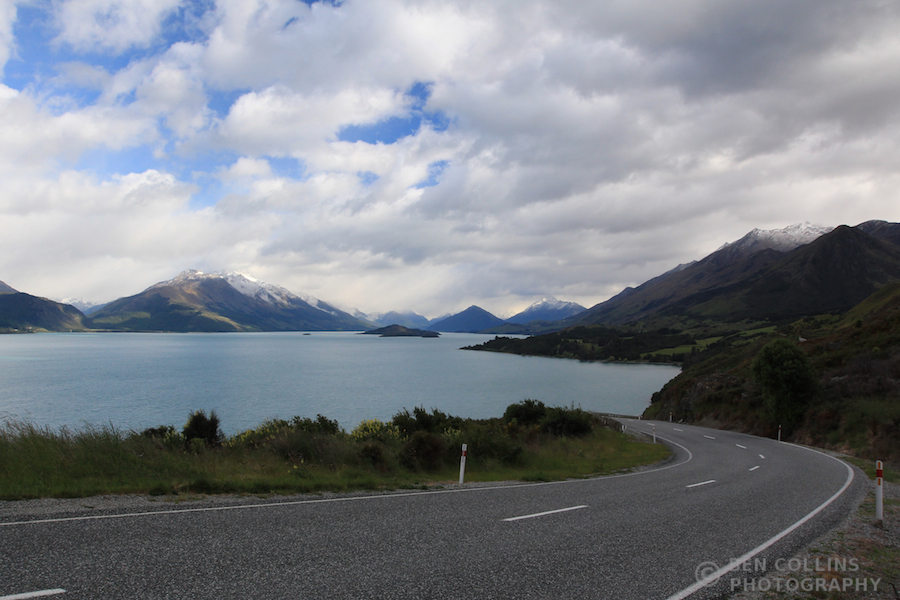
Road to Glenorchy, en route to Black Peak

Road from Queenstown to Glenorchy, en route to Black Peak

River crossing

River crossing early in the day – an unexpected but fun obstacle

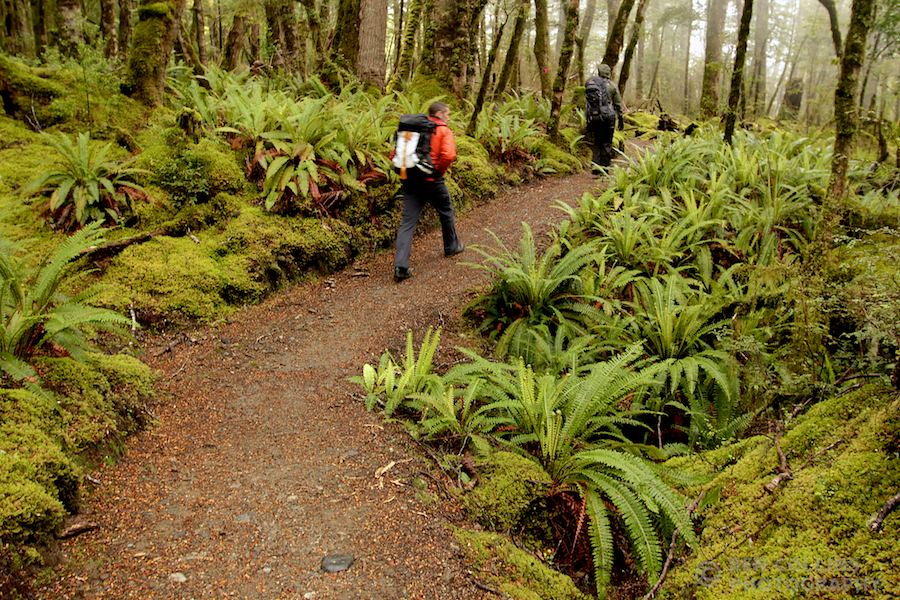
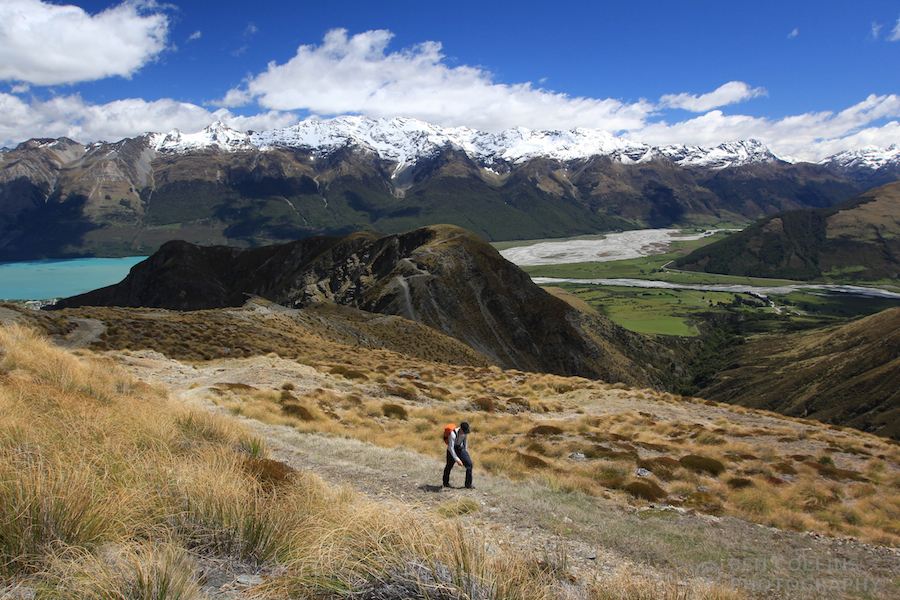
We were rewarded with one of the best days of walking I’ve had in a long time. The day had everything: perfect weather, a long and challenging route, a mountain summit, historic huts, jaw-dropping scenery and no other people. It was a sublime.

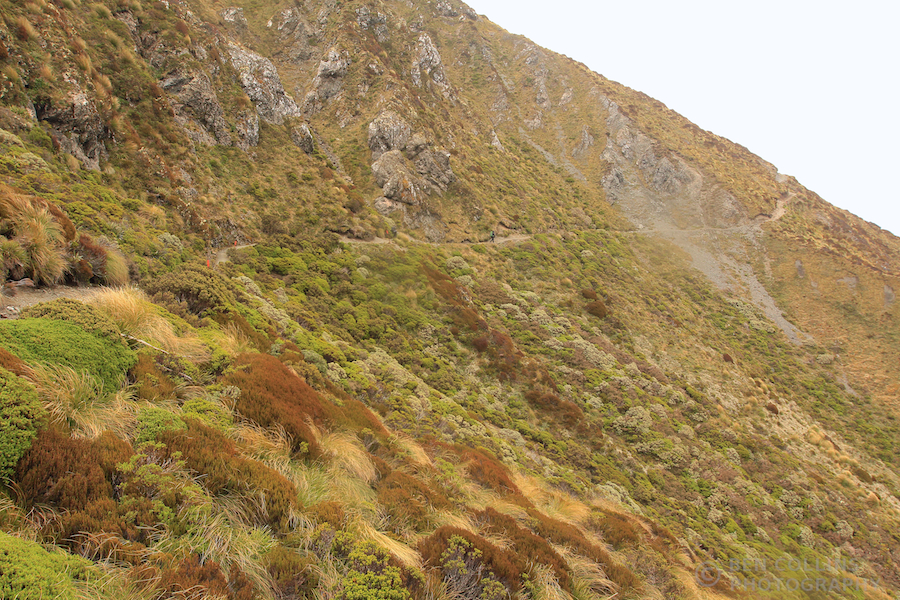
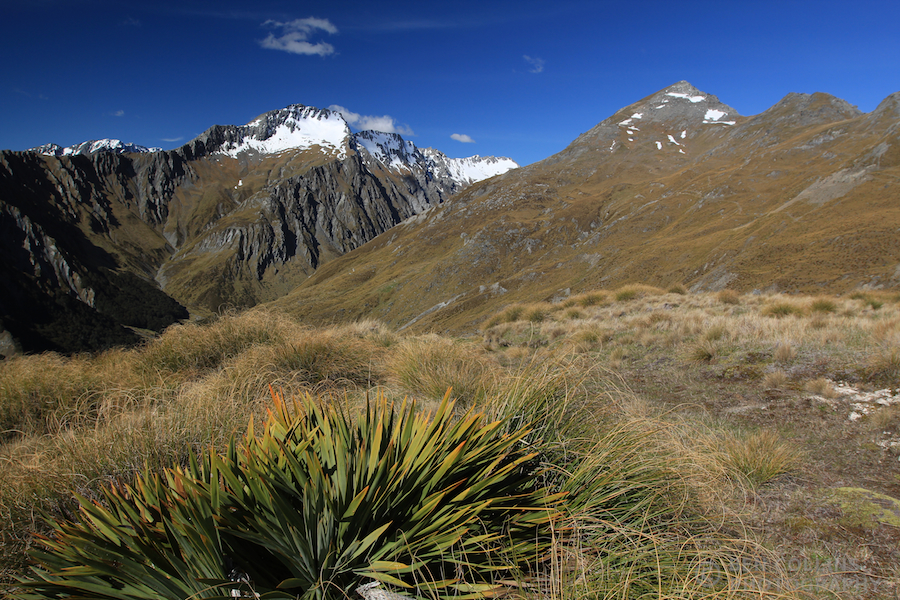
On the slopes of Black Peak

On the slopes of Black Peak

McIntosh's Hut

McIntosh’s Hut

Room with a view

Room with a view

Climbing over the snowfields near the summit

Climbing over the snowfields near the summit

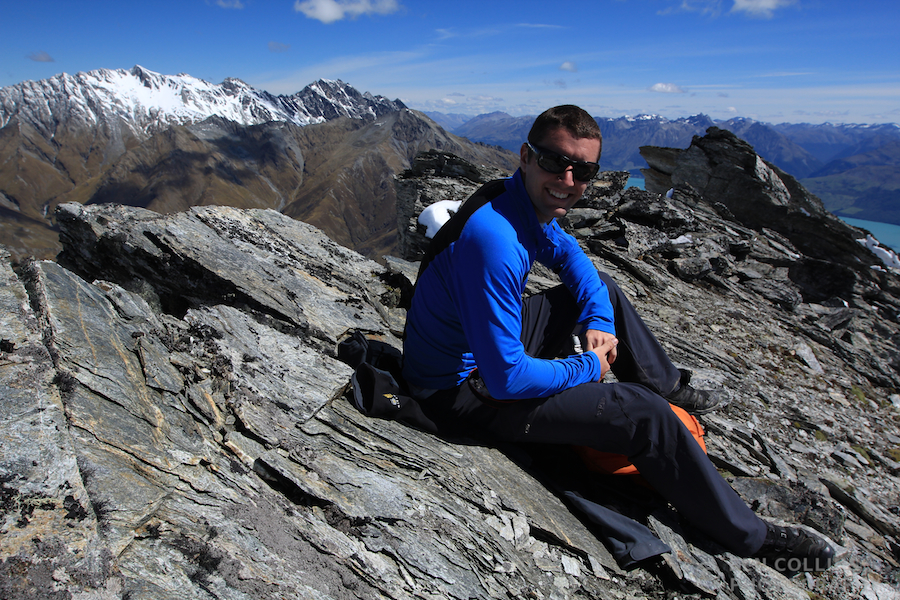
Pete on the summit of Black Peak

Pete on the summit of Black Peak

Black Peak is the pyramidal summit on the R side of skyline

Black Peak is the pyramidal summit on the R side of skyline

Glenorchy valley

Mt Earnslaw, Glenorchy valley

"Look how far we've walked!"

“Look how far we’ve come!”

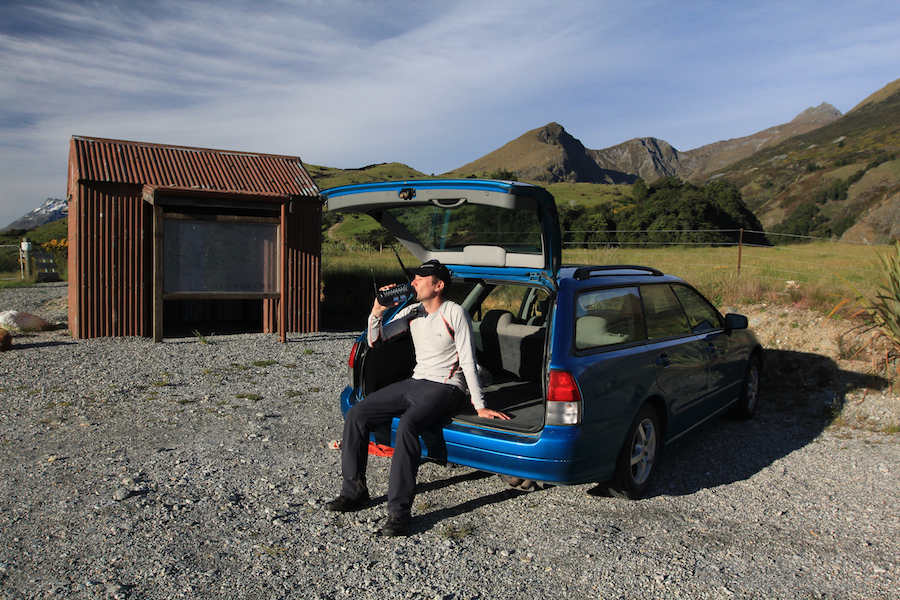
At last…..water

At last…..water. We ran out a couple of hours before but knew we had a refill at the car. Sweet relief!

New Zealand Part II – Kayaking in Doubtful Sound

“…fine country for a waterproof explorer” – Richard Henry, noted naturalist and early explorer of Fiordland

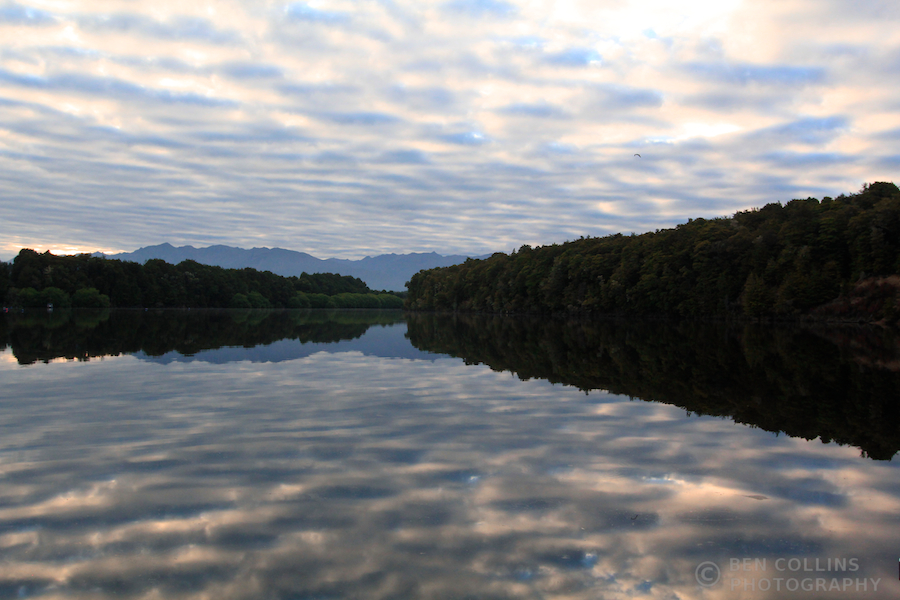
Dawn, Lake Te Anau

Dawn, Lake Te Anau

After a brief rest following our fun four day tramp along the Kepler Track, it was time to venture back out into the wilds. We had booked a two day kayaking tour to Doubtful Sound with Fiordland Wilderness Experience. Doubtful Sound is a vast sea inlet, surrounded by mountains and not connected to the road network. To get there would be a journey in its own right.

Dawn, Lake Manapouri

Dawn, Lake Manapouri

Pete & Lisa, Lexi & I were picked up by the Fiordland Wilderness team early in the morning from Te Anau, and from there we drove down to Lake Manapouri. Here we hopped aboard a boat for the 45-minute crossing to the power station on the opposite side of Lake Manapouri. During the construction of this hydroelectric power plant, a road was built from the site across the mountains to connect it to Doubtful Sound, so creating access to the sea and a route for the heavier, larger construction materials to arrive. The views from the Wilmot Pass, down to Doubtful Sound, were stunning.

Group at Wilmot Pass

Group at Wilmot Pass. L to R: Pete, me (Ben), Lexi and Lisa

After being tortured by the sandflies (yes, they can be bad so pack a bug headnet and bugspray!) during the safety briefing, it was sweet relief to get out on the water. We were in double kayaks that felt very stable but still easy to paddle. The sun was shining (a treat in these parts of the world), the scenery was magnificent and I was with my favourite people so what could be better?

Sunshine on day 1, Halls Arm, Doubtful Sound

Sunshine on day 1, Halls Arm, Doubtful Sound (photograph by Pete Collins)

Beautiful spot for lunch, day 1

Beautiful spot for lunch, day 1

We paddled all the way to the end of Halls Arm, a truly remote spot. There was nobody else for miles around; we were surrounded by nature with our only connection to the outside world being the radio set the guides carried. Whilst paddling we saw Fiordland Crested Penguins and a single, teasing view of a dolphin. We saw great scars on the hillsides where rock avalanches (landslips) had occurred and taken out huge swathes of trees, a reminder, if one was needed, that despite looking serene today in the sunshine, this was a constantly changing and sometimes violent place. But always, always, in my mind, was the thought of how beautiful and untouched it all was.

Paddling down Halls Arm, Doubtful Sound

Paddling down Halls Arm, Doubtful Sound (photograph by Lexi Grant)

Upper reaches of Halls Arm, Doubtful Sound

Upper reaches of Halls Arm, Doubtful Sound (photograph by Pete Collins)

Our camp was part way along Halls Arm, on a flat area of rainforest next to a river bed. Thankfully there was a fixed mess tent (communal tent) so we could hang out and eat our dinner out of reach of the sandflies. Dinner was typical camp food, spaghetti bolognese cooked in a bag in this case, and surprisingly delicious of course, after a day of exercise and fresh air.

Mess tent, camp in the rainforest

Mess tent, camp in the rainforest

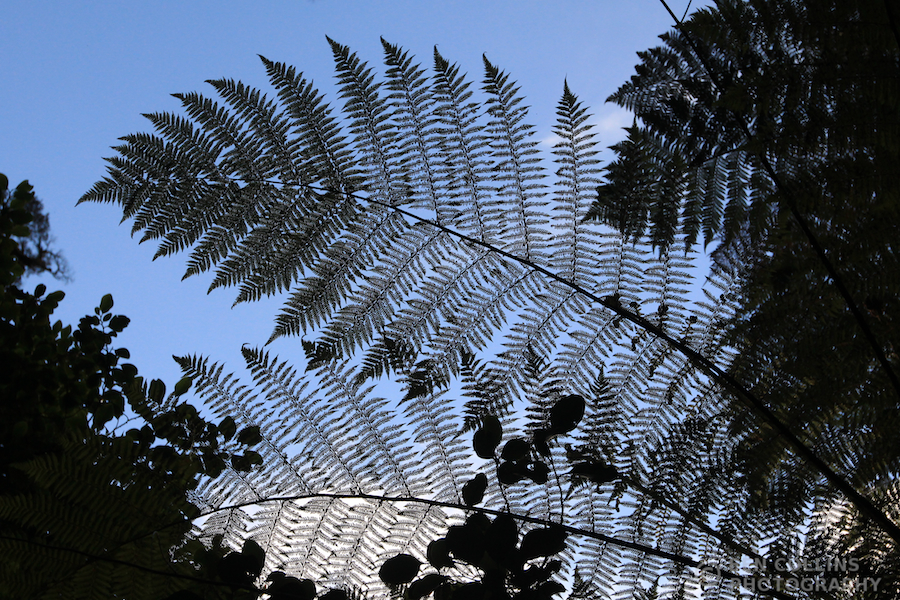
Ferns were everywhere

Ferns were everywhere

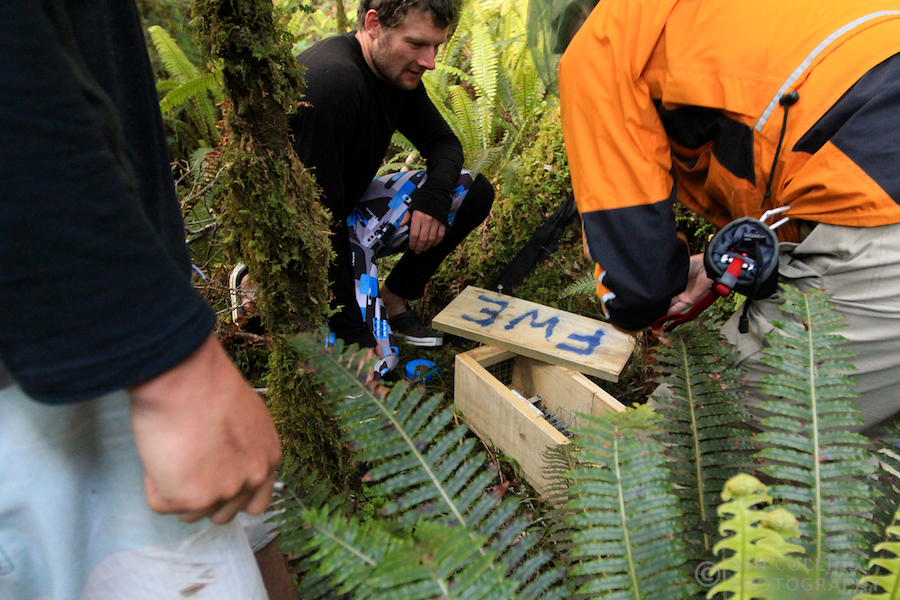
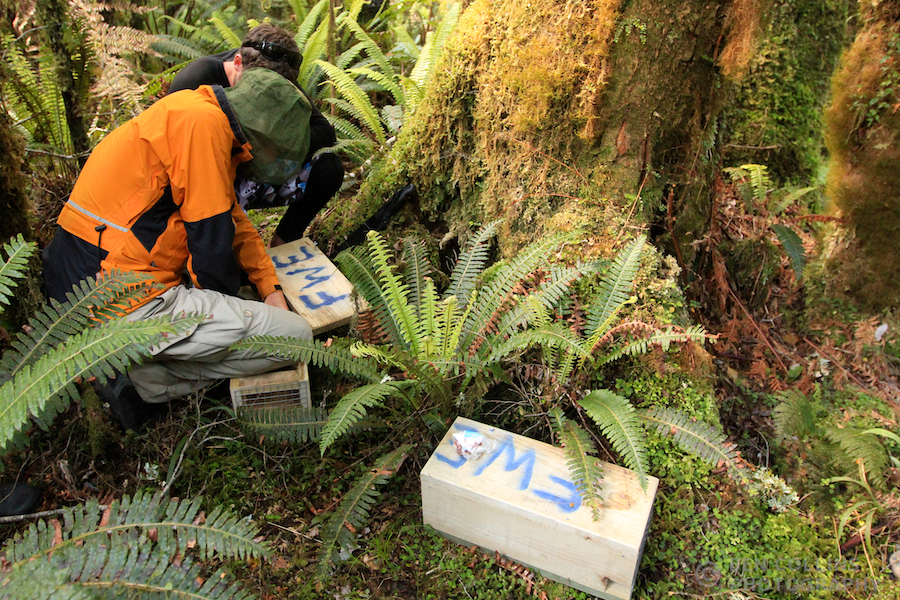
Stoats were introduced to New Zealand in the late 1800’s to help reduce the rabbit population, but since then have become a major pest themselves, a predator to the native New Zealand birds, of which some are flightless and easy prey. There is a major conservation drive to save the native birds from extinction by laying stoat traps in the wilds, so the kayak guides were keen to lay a line of traps behind the campsite which could be checked on a regular basis. We joined in and helped carry and set the traps. The traps are like elaborate mouse traps, with a spring loaded hammer designed to kill any stoat (or rat) that steps on the trigger plate whilst trying to reach the bait (meat and an egg). In all we laid about 20 traps in the forest behind camp, cutting a trail and marking each with GPS coordinates. It was an interesting experience and I hope the conservation efforts are successful throughout New Zealand so the native birds have a chance to flourish again.

Doing our bit for conservation, laying some stoat traps

Doing our bit for conservation, laying some stoat traps

Baiting the stoat trap

Baiting the stoat trap

Setting more traps

Setting more traps

Day 2 was a different experience altogether. Gone was the sunshine and perfect stillness, in its place was a curtain of rain and blustery winds. I was still in high spirits as this was our chance to see the other side of Fiordland, one of the wettest places on earth; a chance to see the real Fiordland and be humbled by it all. One has to accept nature on her terms when one goes “adventuring” after all. Crossing the fiord from Halls Arm was exciting as the wind blown swell tossed our little boats around; it gave us an impression of how difficult kayaking could be in rougher conditions.

The rain arrived on day 2, Doubtful Sound

The rain arrived on day 2, Doubtful Sound

Waterfalls abounded on our second day, pouring over the cliff edges, between trees clinging to the steep walls all the way down to the water’s edge. There was no place to stop, even if we’d wanted to. Creeping along close to the cliff edge, we paddled under low hanging branches and around fallen or submerged trees, enjoying the finer details of Doubtful Sound, our world reduced to the flora immediately around us. Apart from the sandflies, we didn’t see any other wildlife.

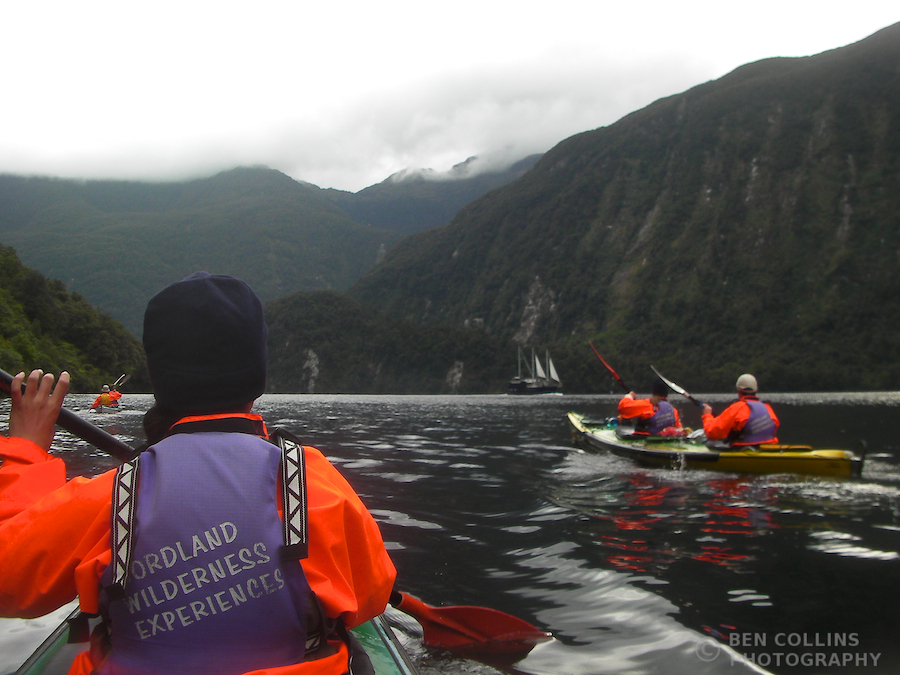
Ship ahoy!

Ship ahoy! One of the few other vessels we saw in Doubtful Sound (photograph by Pete Collins).

Waterfalls poured down the cliffs

Waterfalls poured down the cliffs

On the return leg, we had the wind on our backs so it was an enjoyable paddle back to Deep Cove. A final battle ensued with the sandflies as we packed up the gear. All in all, it had been a brilliant and challenging couple of days in a true wilderness. We were all glad to be free of the sandflies though – they had been driving us all to insanity – although Pete and I secretly wished the adventure was longer. We’d have happily spent a few more days exploring the myriad of inlets and coves of Doubtful Sound.

New Zealand Part I – The Kepler Track

“Fiordland, a vast tract of mountainous terrain that occupies the south-west corner of South Island, New Zealand, is one of the most astounding pieces of land anywhere on God’s earth, and one’s first impulse, standing on a cliff top surveying it all, is simply to burst into spontaneous applause.” – Douglas Adams, Last Chance to See
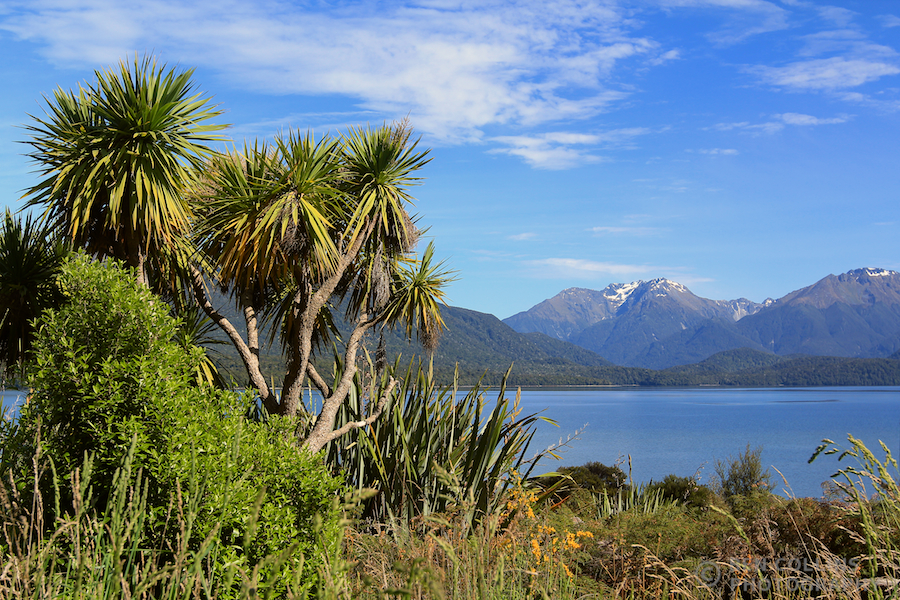
Kepler Track Day 1

Murchison Mountains, Lake Te Anau, Kepler Track Day 1

28 November 2013: We were a party of four (yours truly, my girlfriend Lexi, my brother Pete and his girlfriend Lisa) lacing up our boots and making last-minute adjustments to our backpacks at the start of The Kepler Track, a 60km tramp in Fiordland National Park, in the South Island of New Zealand. Ahead was four days of backpacking through alpine mountains and beech forests, from summits to sandy shores, where we would be bathed in sunshine, battered by wind, and dampened by rain.

Kepler Track Day 1

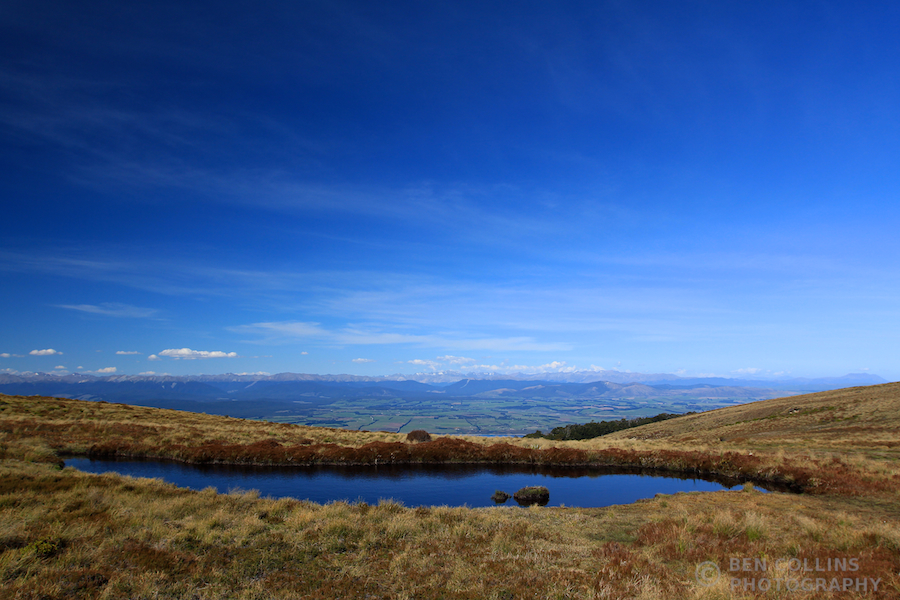
Alpine tarn, Kepler Track Day 1

Our walk began from the door of our hotel in Te Anau. What better way to start than straight from the breakfast buffet station, no driving, no more procrastinating. We picked up our hut passes at the Doc centre en route, a little way outside Te Anau. The weather forecast looked promising, which was all I was hoping for at this stage. Day Two of the walk was the “alpine” day, when we would spend all day above the treeline, crossing some of the ridges of the Jackson Peaks. As long as the weather permitted us access to the higher mountains, and our walk could proceed as planned, I would be happy. At this stage, all looked good.

The route followed the shore of Lake Te Anau to Brod Bay, with the beautiful Murchison mountains as a backdrop (see the first photo), before beginning a long climb through beech forest, eventually emerging above the treeline and finishing at the Luxmore hut. The sun shone, we sweated our way uphill in shorts and t-shirts, reaching the hut around 5pm. The views that opened up as we emerged from the forest were spectacular, at once justifying the effort needed to reach that point.

Sunset from the Luxmore Hut looking out over Lake Te Anau

Sunset from the Luxmore Hut looking out over Lake Te Anau

The Luxmore hut was pleasant and comfortable (as were all the huts on this walk) when judged by the standards of some prior trips (when we’ve been known to sleep on the snow slopes of Mt Blanc in a blizzard sans tent for example). It’s been a while since my last hut trip (I think the Swiss Alps in 2011?) but, as often at mountain huts, it had a welcoming, convivial atmosphere (although, beware of the “socks-ygen”, as the hut warden Peter informed us, from 30 pairs of fruity hiking socks, that would also be present in the atmosphere if we didn’t open a few windows and ventilate the dormitory that night). I was dog tired at day’s end, but insanely happy to be in the outdoors again.

We woke to a slightly different forecast which, rather unsurprisingly for this region (one of the wettest on earth), predicted rain and stronger winds. No bother we thought! We had all the right gear and it certainly wasn’t too dangerous. We would be just fine, with a dollop or two of old-fashioned stoicism.
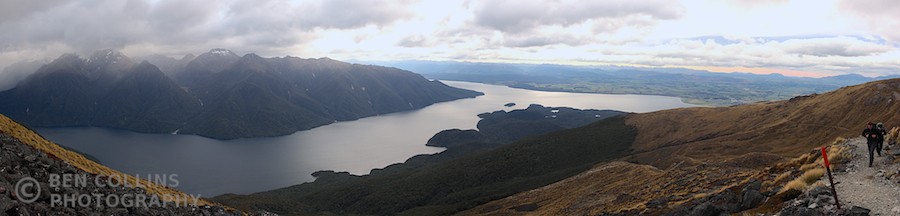
Kepler Pano

Panorama from the Kepler Track over Lake Te Anau

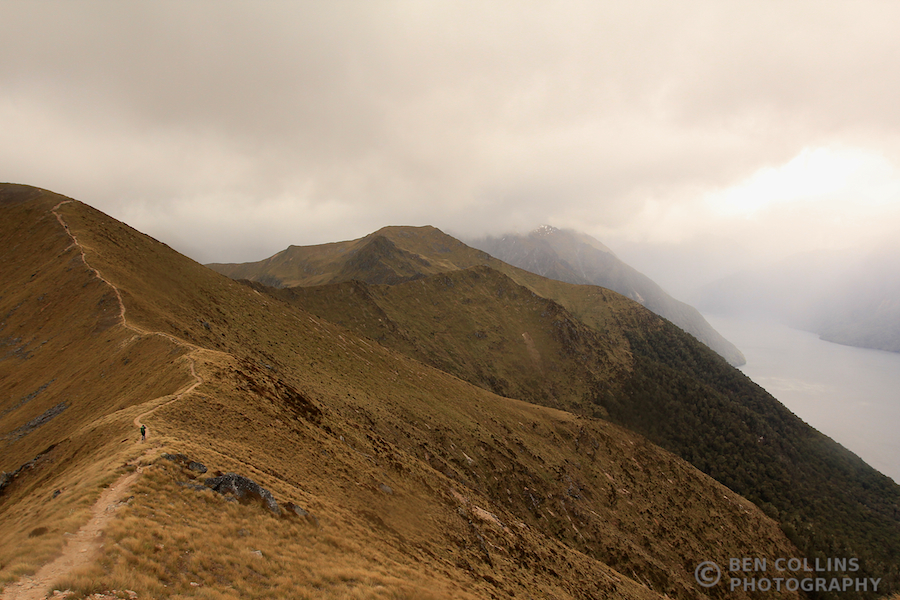
“A bit breezy on top, maybe a bit damp too” were the words of the hut warden as we left. Typical understated Kiwi humour. It was indeed a bit breezy (reaching 100km/h we were informed at the next hut!), which made for a rough-and-tumble sort of day and a well-earned dinner. The thick cloud scudded across the sky, revealing, hiding and teasing us with dramatic views of the mountains and lakes all around us. My brother and I made the short detour to climb Mt Luxmore, which was a relatively quick scramble to the summit and tremendous views over Lake Te Anau. We caught up with the girls at the Forest Burn emergency shelter, where we stopped for lunch and enjoyed a brief respite from the rain.

Summit of Mount Luxmore

Summit of Mount Luxmore, Day 2

Kepler Track Day 2

Kepler Track Day 2, can anyone spot Lexi in the photo?
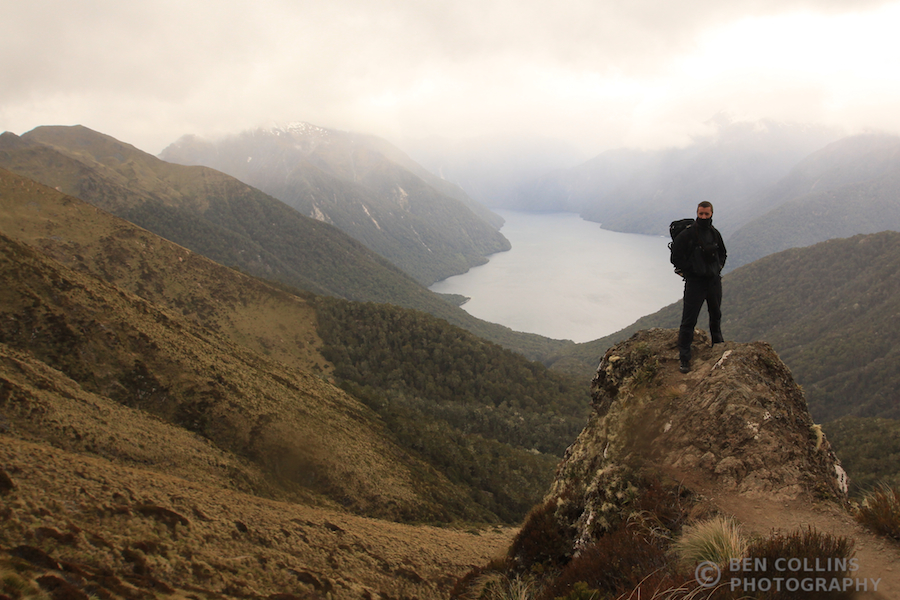
Pete above the South Arm of Lake Te Anau

Pete above the South Arm of Lake Te Anau

The scenery more than made up for the weather. We felt ALIVE! The elements forced us into the present, the here and now, a coarser, more primitive existence for a day, no bad thing in our modern, tech-obsessed lives. I, for one, would not have traded places with anyone that day.

On the march

On the march – “a bit breezy on top”

Kepler Track Ridgeline

Fantastic views from the ridge line

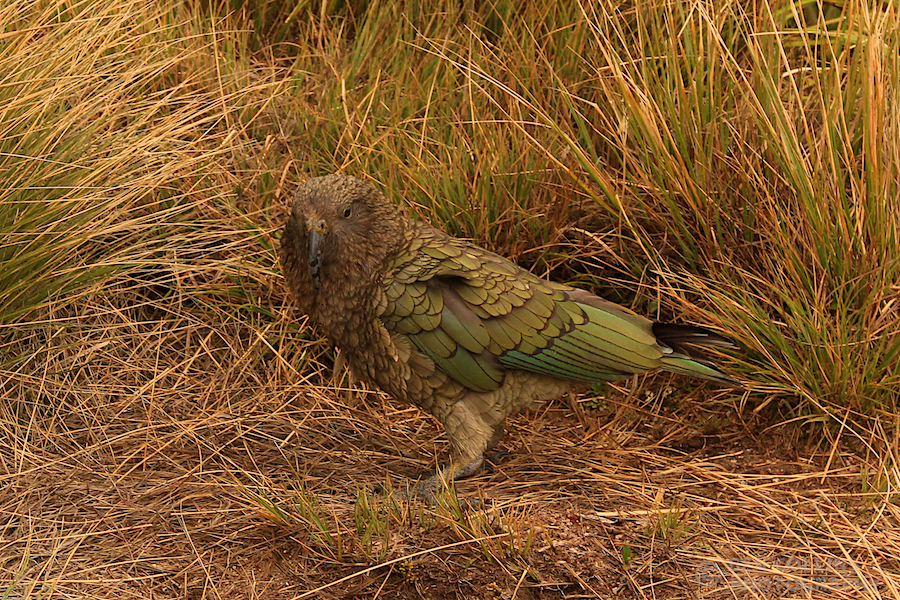
A Kea

A Kea (the only alpine parrot species) outside the Hanging Valley Shelter – they are inquisitive, mischievous creatures
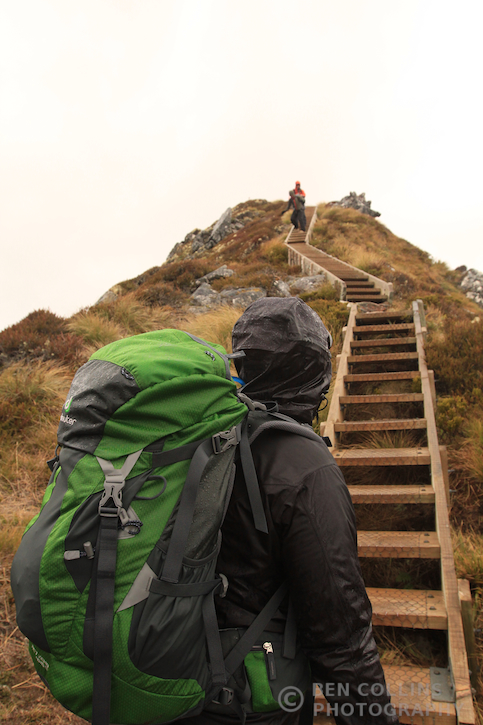
Descending off the ridge

Descending off the ridge

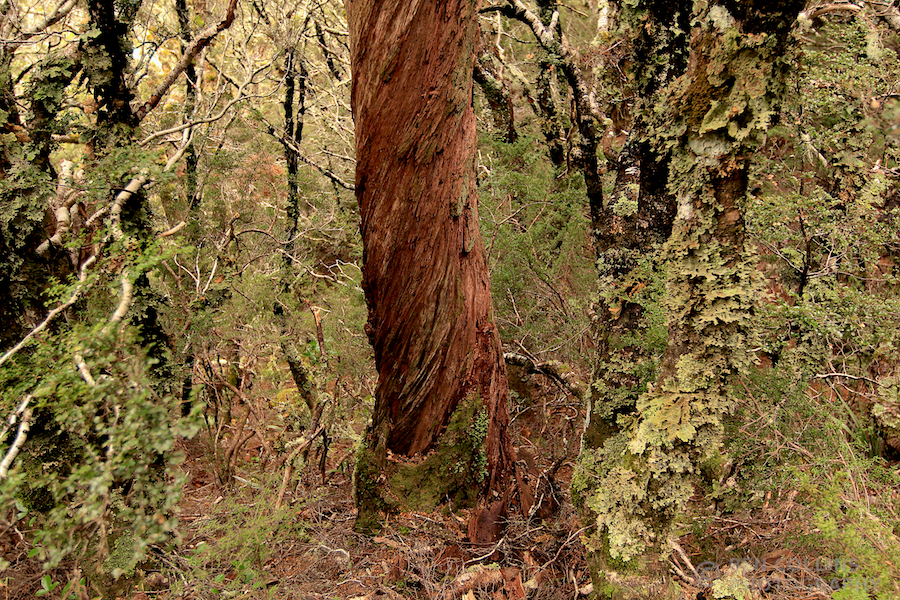
A series of stepped sections along the final, narrow ridge below the second shelter (the Hanging Valley shelter) felt slightly precarious in the wind, but we were at last safely below the treeline. What a day it had been. We still had several kilometres to go, down through the verdant Fiordland rainforest, where seemingly everything, except the odd twisted tree, was coated with moss.

Fiordland Forest

Twisted tree in Fiordland forest

Fiordland rainforest

Incredibly verdant Fiordland rainforest – moss was everywhere

Iris Burns Falls

Iris Burns Falls

The second half of the walk, from Iris Burns hut back to Te Anau, was of a different nature to what we had encountered so far. With the mountains behind us, we spent these final two days among the trees, where the landscape was measured in metres, not kilometres. The joy was in the detail, the vividness of the green mosses, the precise geometry of the fern fronds, the stark black of the tree trunks against the white misty backdrop.
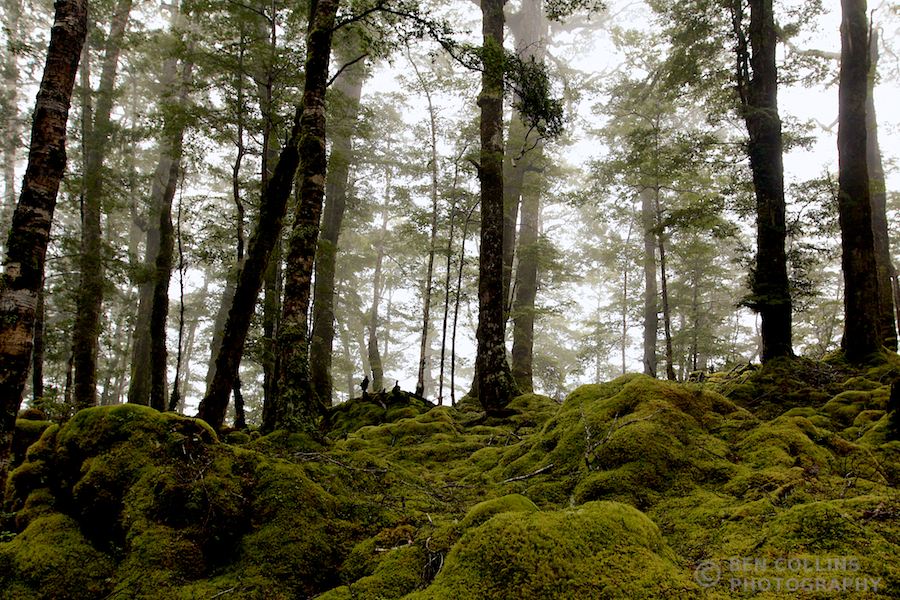
Kepler Track Day 3

Misty rainforest, Kepler Track Day 3

Hiking through the rainforest

Hiking through the rainforest

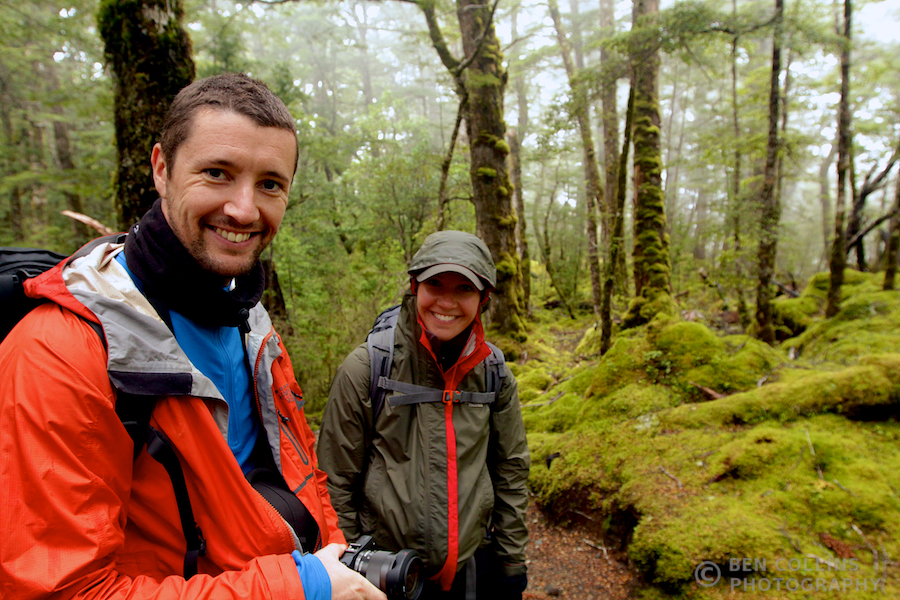
Enjoying the silence and beauty of the forest

Enjoying the silence and beauty of the forest

Our third and final night on the track was passed at Moturau Hut, on the shores of Lake Manapouri. After a night in the mountains, a night in the forest next to a waterfall, it was fitting to finish with a night on the lakeshore with a sandy beach. After dinner we were treated to a sunset to remember. It began with some incredibly warm light breaking through under the cloud base, which had everyone scampering out of the hut and down to the beach with cameras:
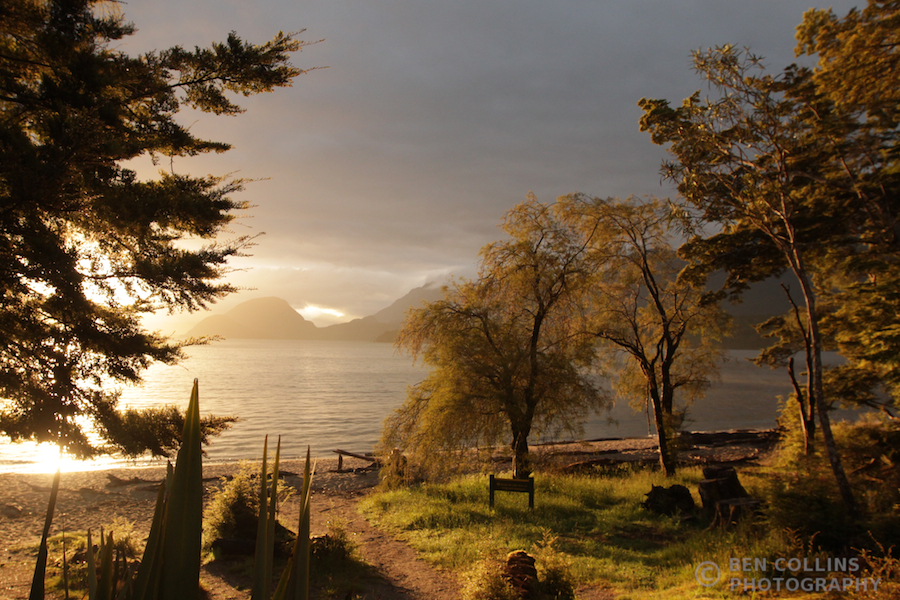
Lake Manapouri Sunset 1

Lake Manapouri Sunset 1

The light kept improving as the sun’s rays filtered between the mountain tops, reflecting in the lake:
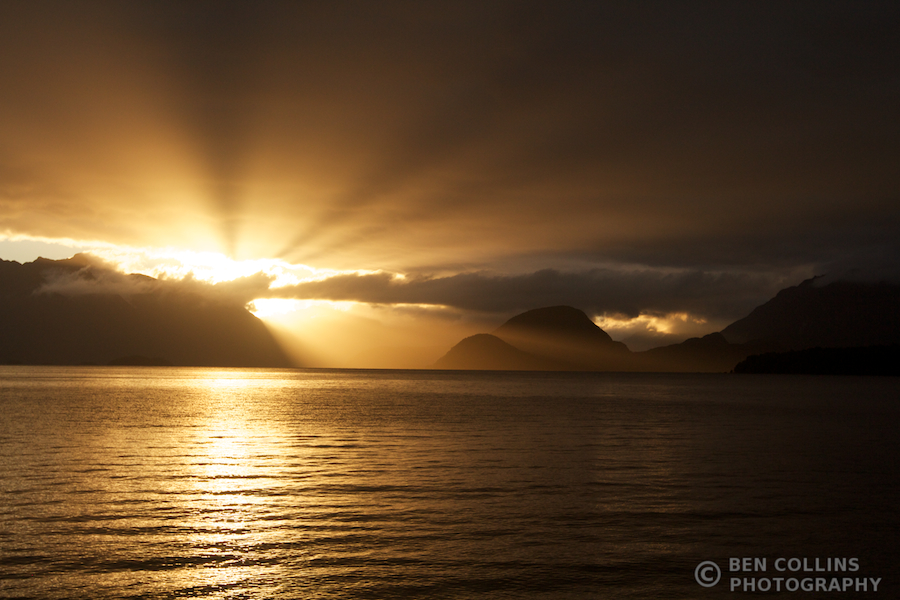
Lake Manapouri Sunset 2

Lake Manapouri Sunset 2

And the final act was the best of all, as the colours turned pink and illuminated a lone cloud over the mountains:
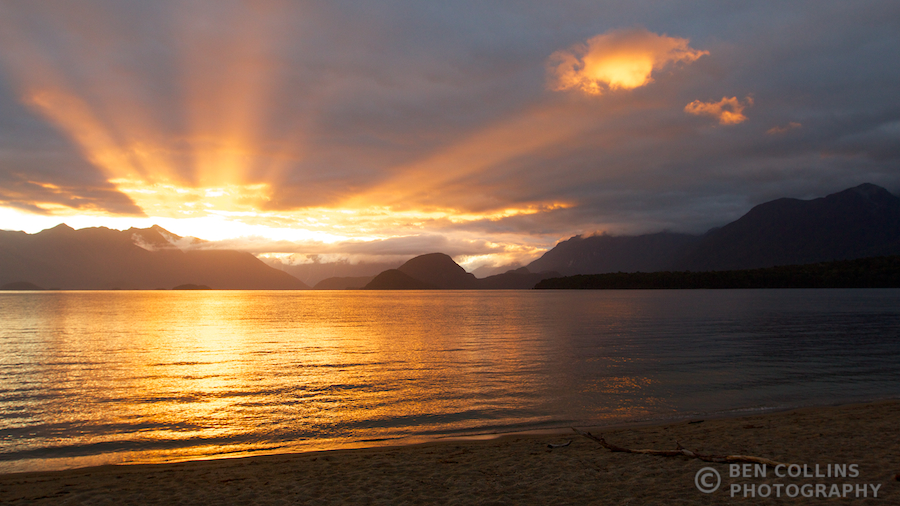
Lake Manapouri Sunset 3

Lake Manapouri Sunset 3

Our fourth and final day of tramping took us from the Moturau Hut all the way back to Te Anau. It was a straightforward day, with little up or down, through forests and along rivers. A mellow day of walking, giving us plenty of time to reflect and scheme up future adventures. The sun was shining and the team were in high spirits as we departed the hut:

The team at Moturau hut

The team at Moturau hut, start of day 4
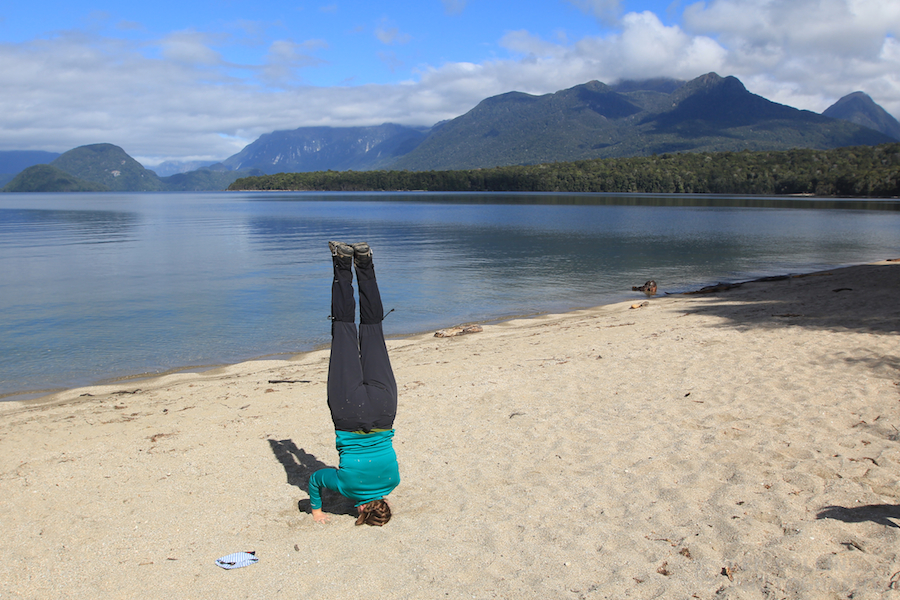
Lexi headstand

Lexi couldn’t resist a quick headstand on the beach before we set off

Wire bridge

Wire bridge, day 4 of the Kepler Track

Amongst the ferns

Amongst the ferns

After four days, 60km of walking, three huts, two keas, two rare whios (blue ducks), more sunshine than we expected, amazing views and more ferns than you can shake a stick at, we were all too soon back in Te Anau. The walk had passed far too quickly, and I felt sad to be back in civilisation so soon! But we had more adventures planned for this trip (story of a future blog post) and this trek had been a wonderful four days with wonderful people, and for that I will always be grateful.

Kepler Finish

Kepler Finish – back at Te Anau, DOC office, and the end of the Kepler Track

Southern Shenandoah National Park Photos

“I went to the woods because I wished to live deliberately, to front only the essential facts of life, and see if I could not learn what it had to teach, and not, when I came to die, discover that I had not lived.” ― Henry David Thoreau, Walden: Or, Life in the Woods

IMG_0964

After a busy summer dominated by work it was high time for a weekend getaway to the woods. I’ve come to love the subtle beauty and rich woodland experiences that characterize any trip to Shenandoah. We had booked a wonderful cabin – High Laurel Inn – for the weekend. Situated on the edge of the National Park (the back fence of the property is the Park boundary!), it was the perfect spot. We could hike from our doorstep.
caption

Our home for the weekend

IMG_1066

The front of the cabin

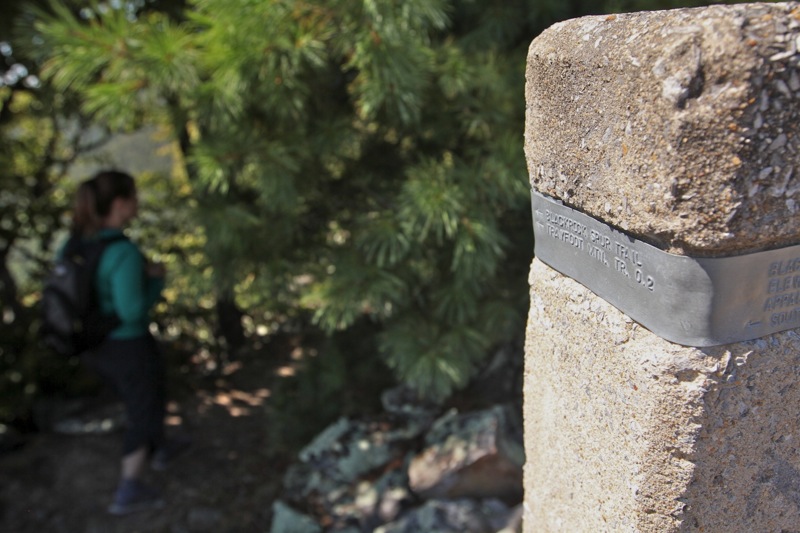
Day 1: 14 September 2013 / Paine Run Trail and Trayfoot Mountain Trail Loop / 10 miles

IMG_0952

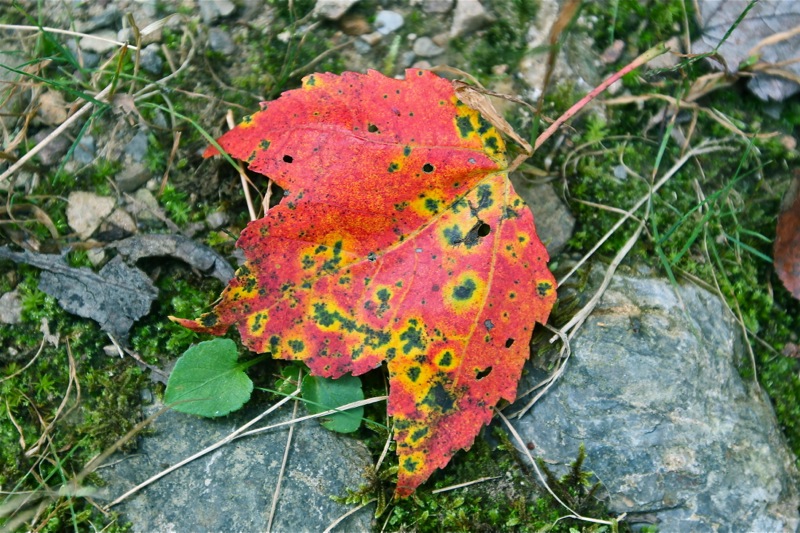
The leaves are turning; fall is on the way

IMG_0966

On the Appalachian Trail

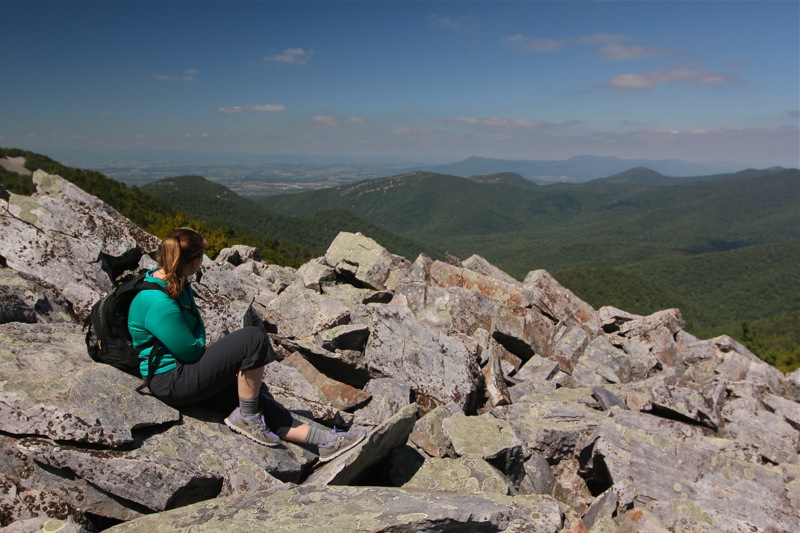
The halfway point of the day’s walk was also the most spectacular viewpoint, the summit of Blackrock mountain:
IMG_0982

A contender for the best vantage point in the Shenandoah National Park perhaps?
IMG_0991

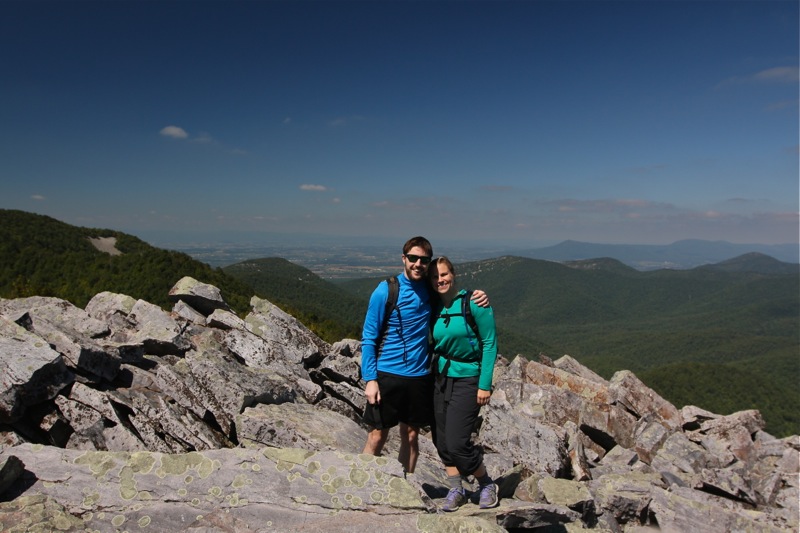
Me and Lexi on the summit of Blackrock

IMG_3444

Blackrock mountain summit panorama

IMG_1000

Onwards to our next summit, Trayfoot Mountain

IMG_1014

Snakeskin

IMG_1020

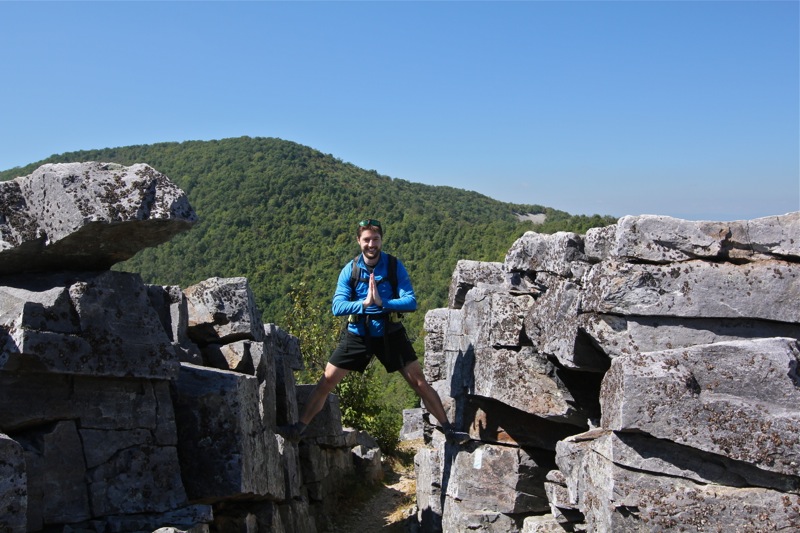
Yogini Lexi showing good form on the shoulder of Blackrock Mountain

IMG_1025

My own attempt

IMG_1044

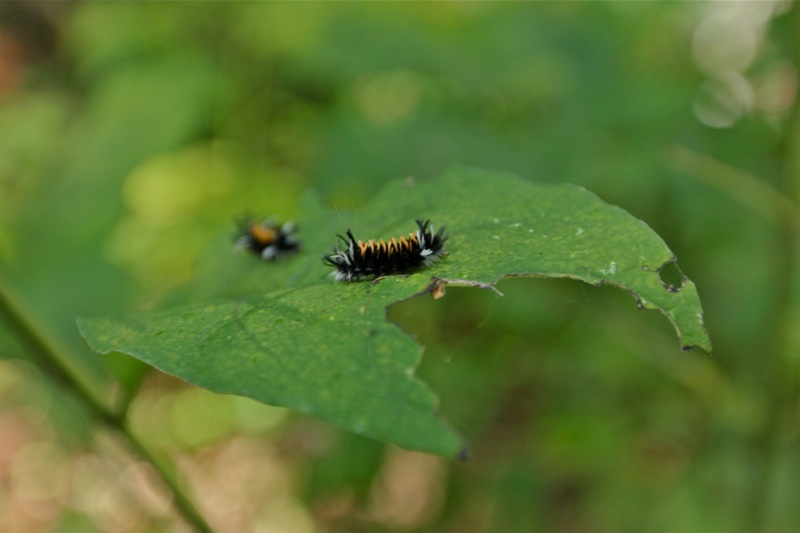
Hairy caterpillar

IMG_1045

Beware of the Yellow Jacket Wasps on Trayfoot Mountain – I was stung 4 times after stepping on a ground nest on the trail. I can tell you they HURT!

IMG_1049

Wooded mountains

IMG_1061

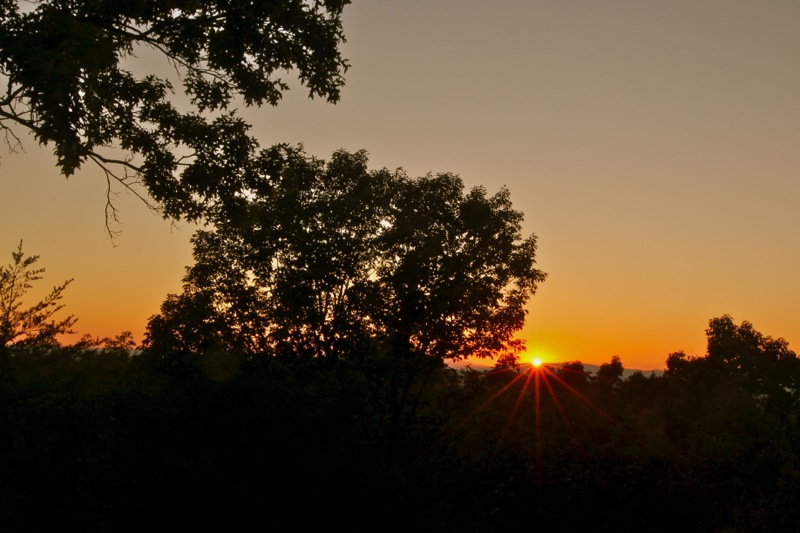
Sunset from the balcony of the cabin

IMG_1068

Meet the locals

Day 2: 15 September 2013 / South River Falls / 8 mile out and back

IMG_1103

On the Appalachian trail

IMG_1105

Spot the caterpillar

IMG_1164

Looking down to South River Falls

IMG_1181

Humbled by the scale of it all

IMG_1194

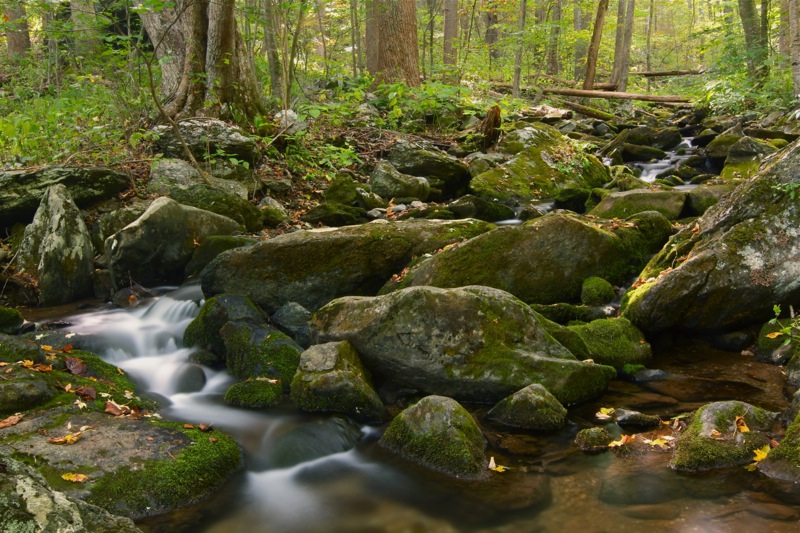
South River

IMG_1201

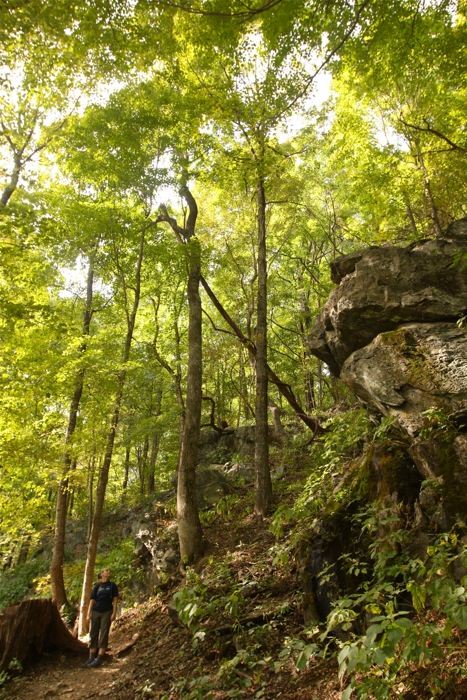
Trail through the woods

IMG_1214

Lexi finds the clearing

IMG_1225

Wild flowers

4th July Bike Tour

Day 1: Washington DC to Calico Rocks camp area, Maryland – 43 miles

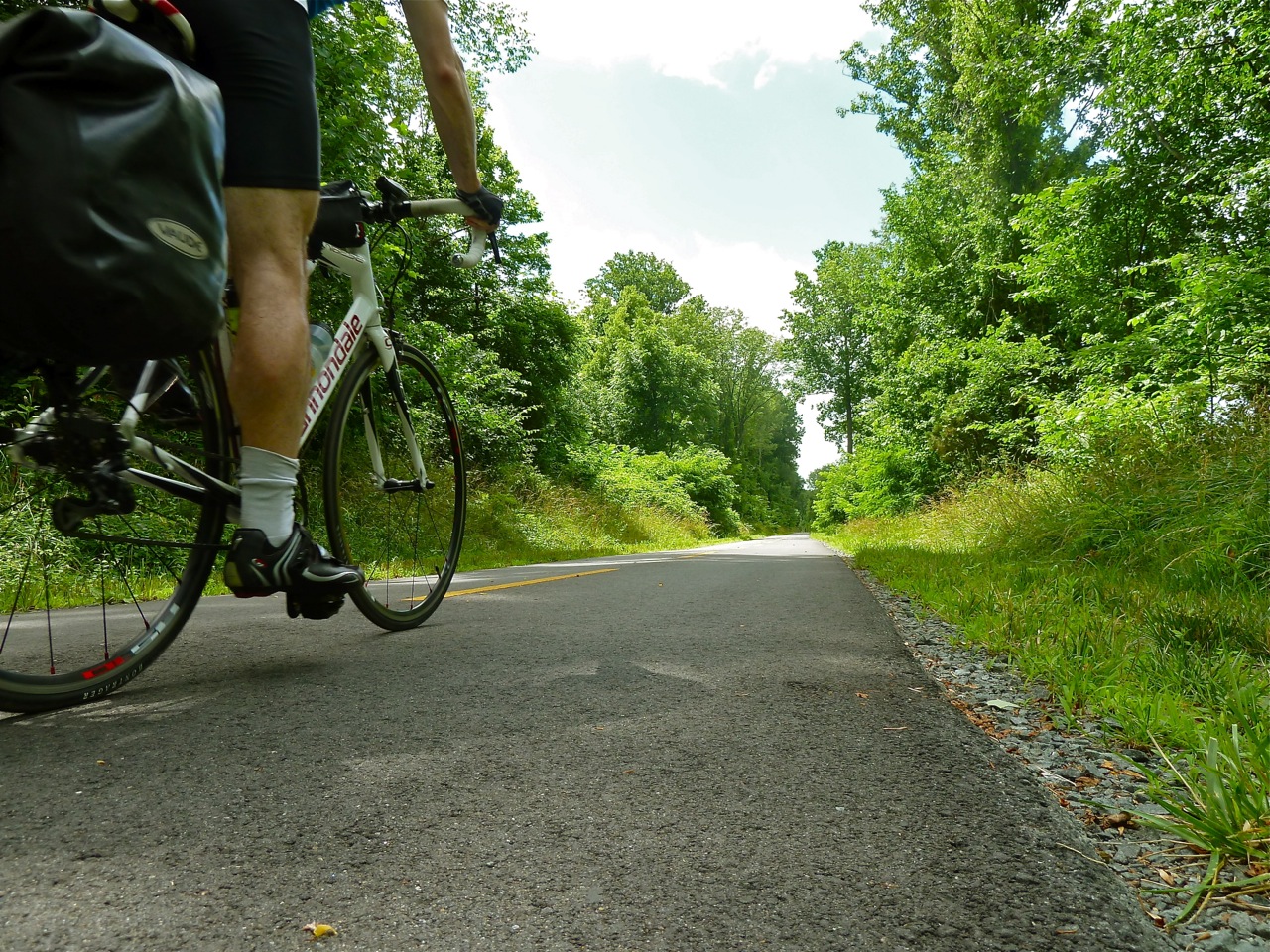
Finding myself having a few days free in a row, I decided to make the most of the opportunity and head out for a little adventure. I strapped the tent to the back of my bike and pedalled out of Washington DC into the evening sunshine.

Heading W into the evening sun, beautiful but hot

Heading W into the evening sun, beautiful but hot

I didn’t end up departing until 4pm – work to do, then it took a while to get ready, hey it’s been a long time since I’ve been bike camping! – which left me about four and a half hours to reach camp. The light was gorgeous, the roads were relatively empty as people were getting in place for the fireworks, but damn, it was hot as hell out there. I had planned to do the climb up and down Sugarloaf Mountain en route, but didn’t have the time on this occasion.

Bike tour 002

Sugarloaf Mountain

Bike tour 018

Bike tour 003

This area is rich in history

Bike tour 004

Long evening shadows

The C & O Canal is 185 mile National Park stretching from Washington DC to Cumberland, West Virginia, running along the Potomac River. There are camp areas every 8 – 10 miles so I aimed for Calico Rocks camping area, near to Point of Rocks, for my overnight stop.

Bike tour 005

Riding along the C & O canal. Feeling the heat but happy to have arrived at camp

All I could think about in those final few miles was the prospect of cold, fresh water. With bottles almost depleted, it would have been a thirsty night if the well was dry. It took many pumps to draw up the first water, as the old-fashioned hand pump creaked, groaned and gurgled into life. There’s nothing quite like a drink of cool, fresh water when you’re baking hot and dehydrated.

Bike tour 006

Water pump at Calico Rocks camp area, C & O canal

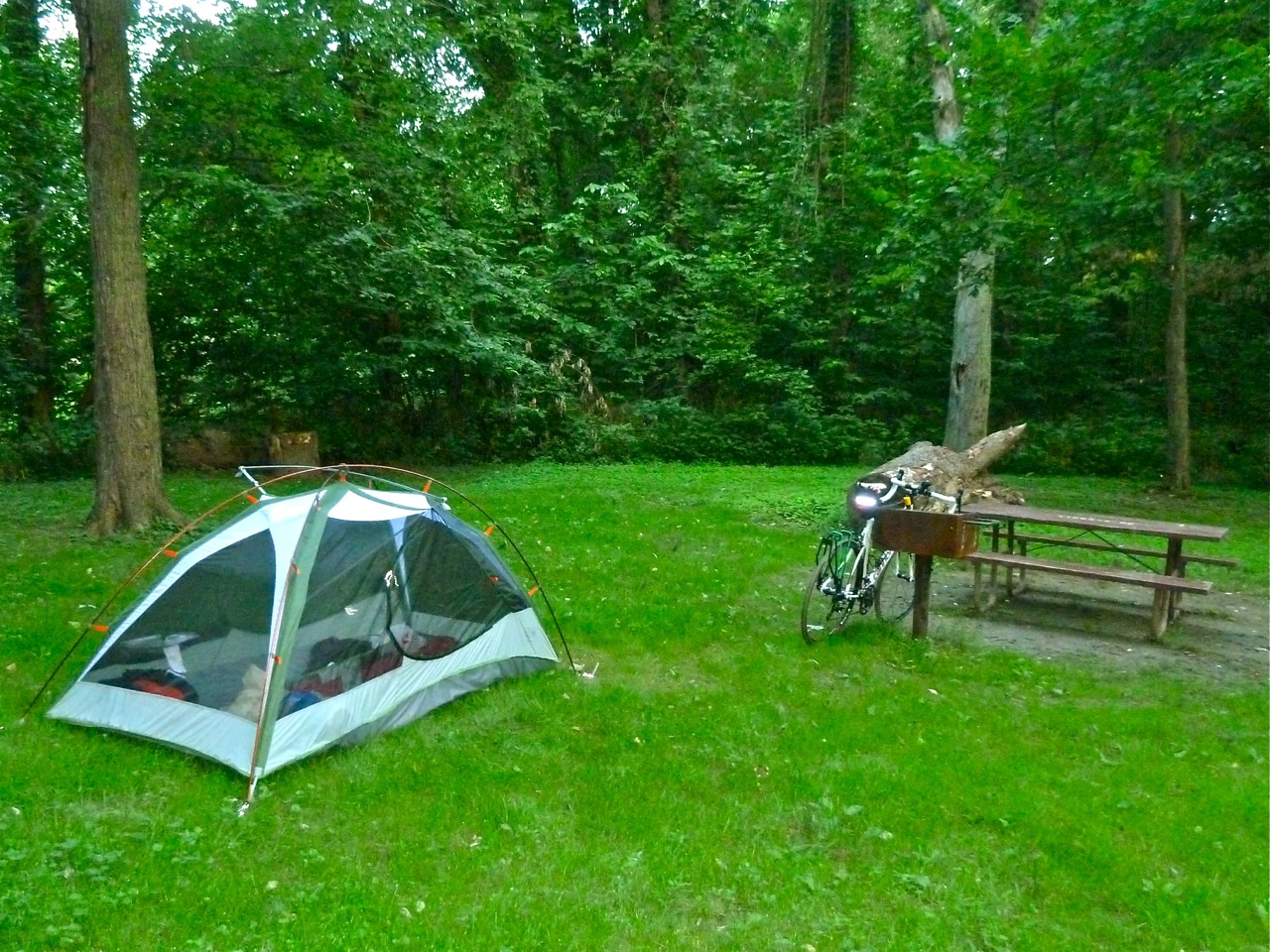
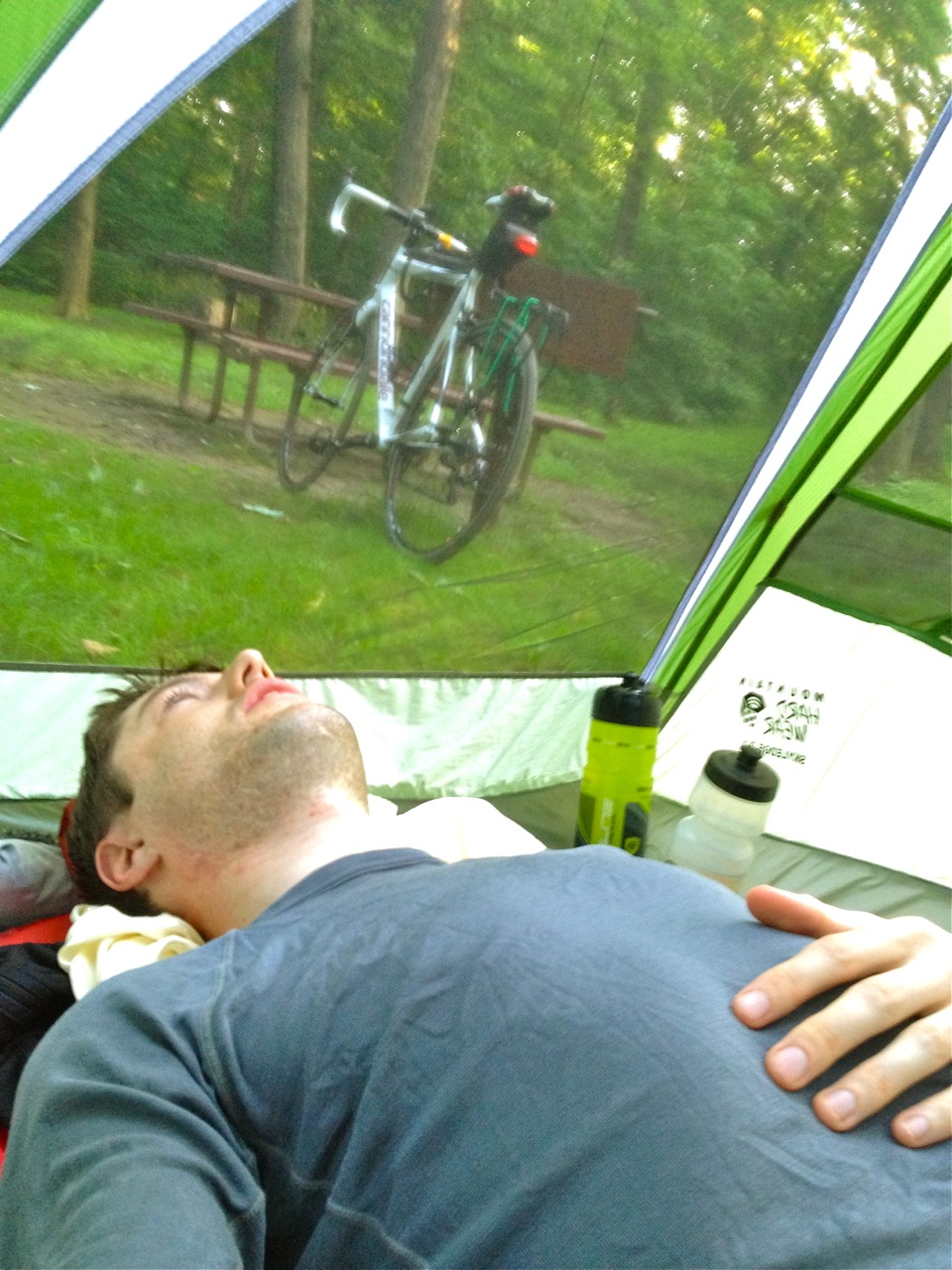
The sultry temps in the high 80s (around 30 degrees C) persisted well into the evening. The mosquitoes had a plentiful 4th July feast. Sleep was not easy until it cooled off, even after I left the flysheet off in a bid to increase the airflow.

Bike tour 008

Home, sweet home

Day 2: Return to Washington DC via Purcellville, Virginia and the W&OD trail – 75 miles

My original plan was to stay out for another night and head down to Shenandoah National Park, but with another hot, hot day in prospect I decided against a second oppressive night in the tent. Plan B was to ride south for 30 miles through the Virginian countryside, pick up the W & OD trail and then follow it 45 miles to home.

Bike tour 009

Early morning day 2 – pondering my strategy to cope with the onslaught of mosquitos once I exit the tent

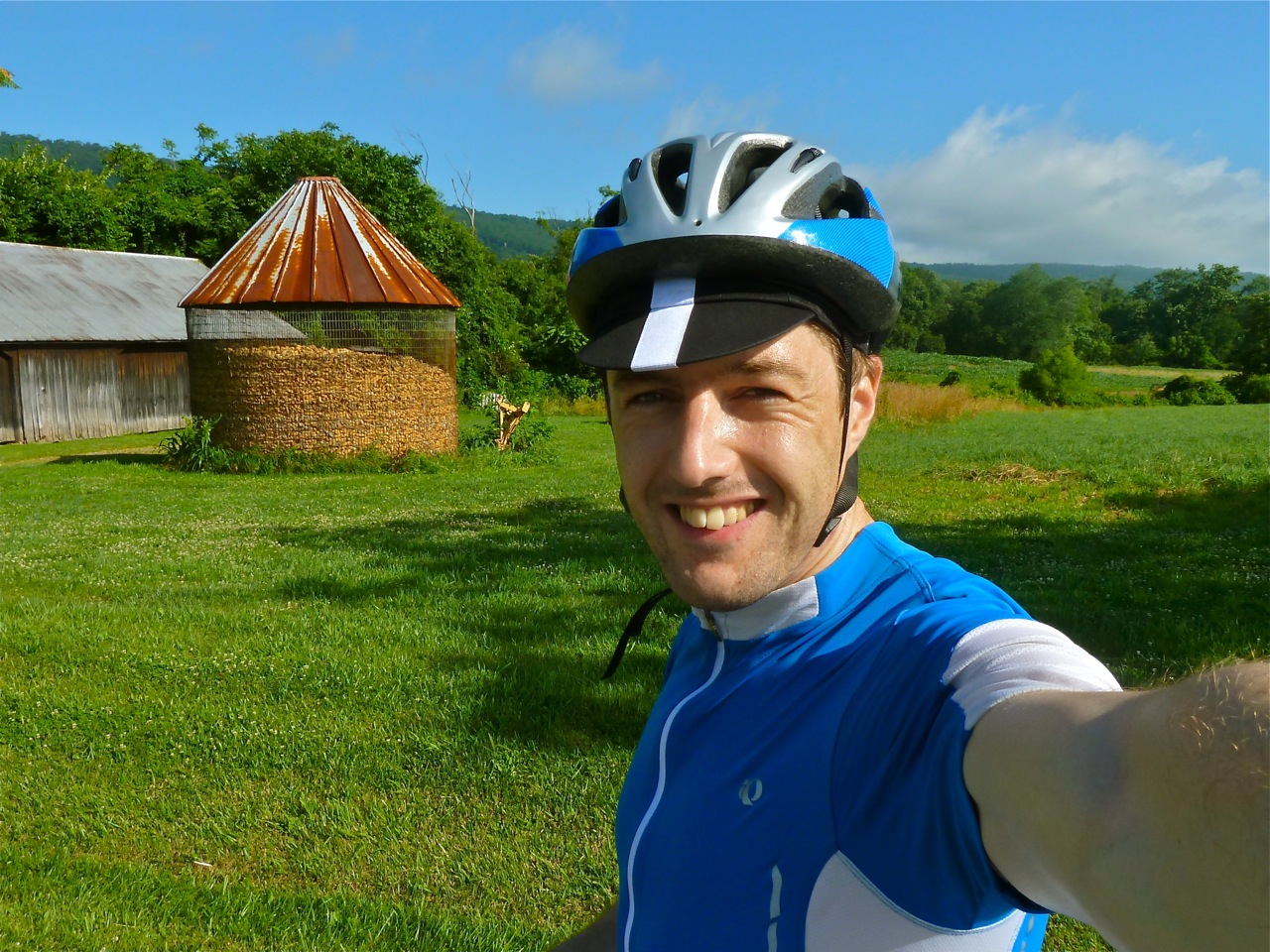
Leaving camp I crossed from Maryland over the Potomac river into Virginia by the Point of Rocks bridge. Immediately afterwards I turned off onto quiet side roads, through rolling farmland along the base of big hills. This was the most enjoyable and scenic stretch of the tour.

Bike tour 013

Mountain Road, Virginia, about 30 miles North of Shenandoah National Park

Bike tour 014

Old corn dryer, Mountain Road, Virginia and yup, starting to get damn hot

There were plenty of other cyclists about at the start (or end) of the W & OD trail at Purcellville. I stopped to top up my water bottles and take a break from the sun.

Bike tour 015

The Town of Purcellville and the start of the W&OD trail back to Washington DC

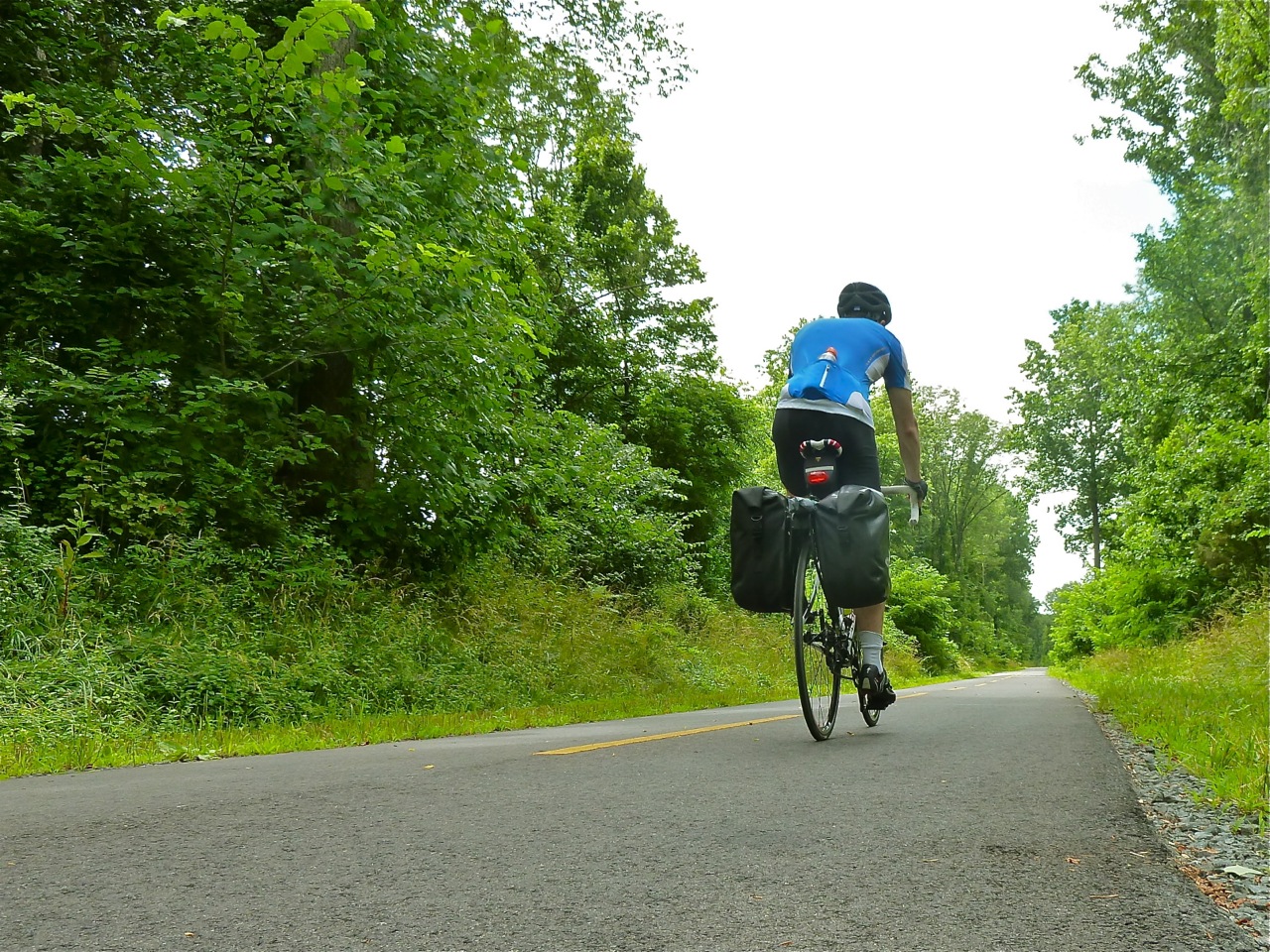
Bike tour 016

On the W&OD trail

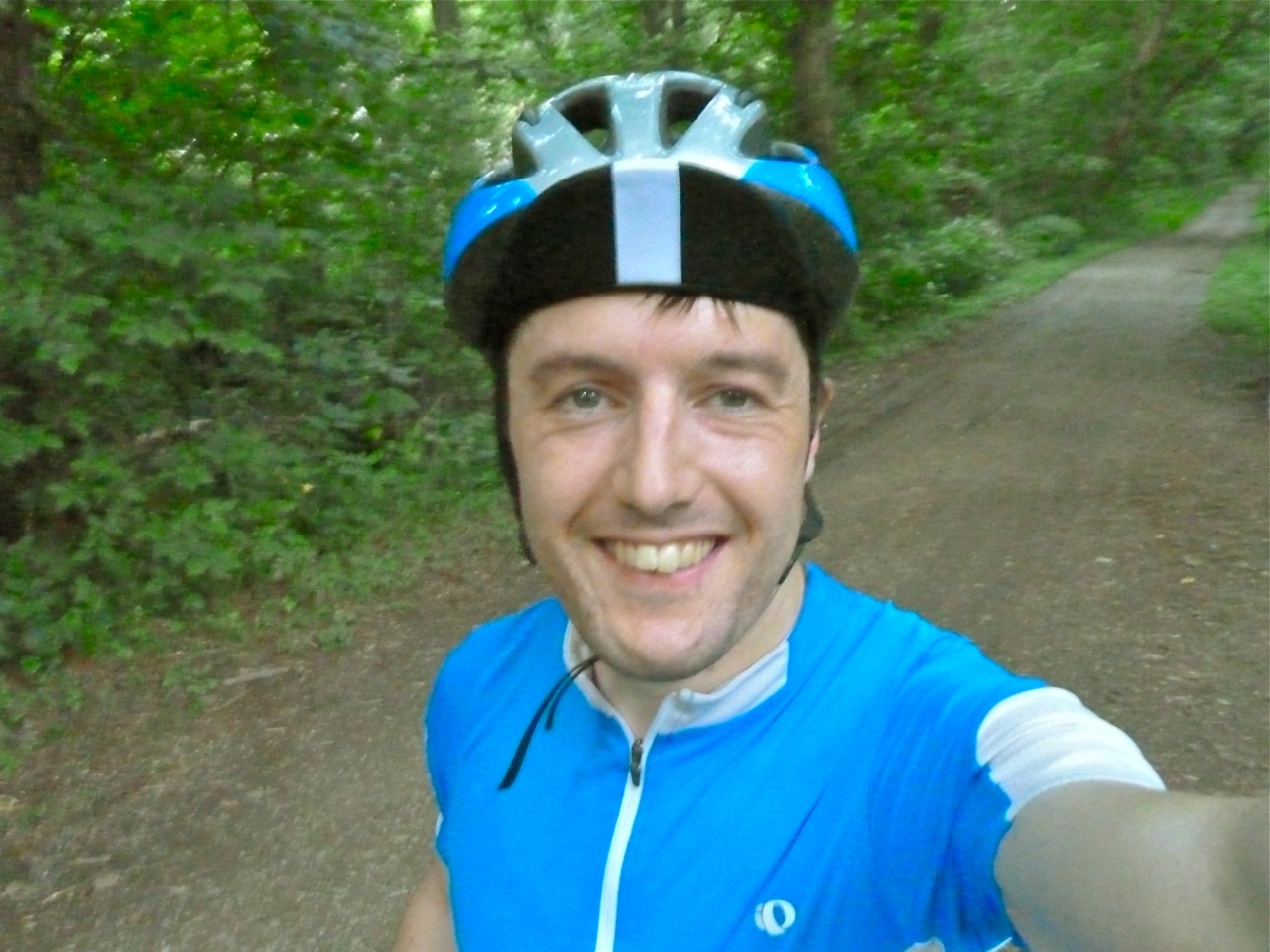
I was really struggling with the heat by the early afternoon; the hottest part of the day and no shade to hide. I rode at a leisurely pace, within myself, to ensure I’d make it home. Big grin on my face of course, I was thoroughly enjoying being out bike touring again.

Bike tour 017

Keep on pedalling

Bike tour 019

One of the old rail cars that would have served this route

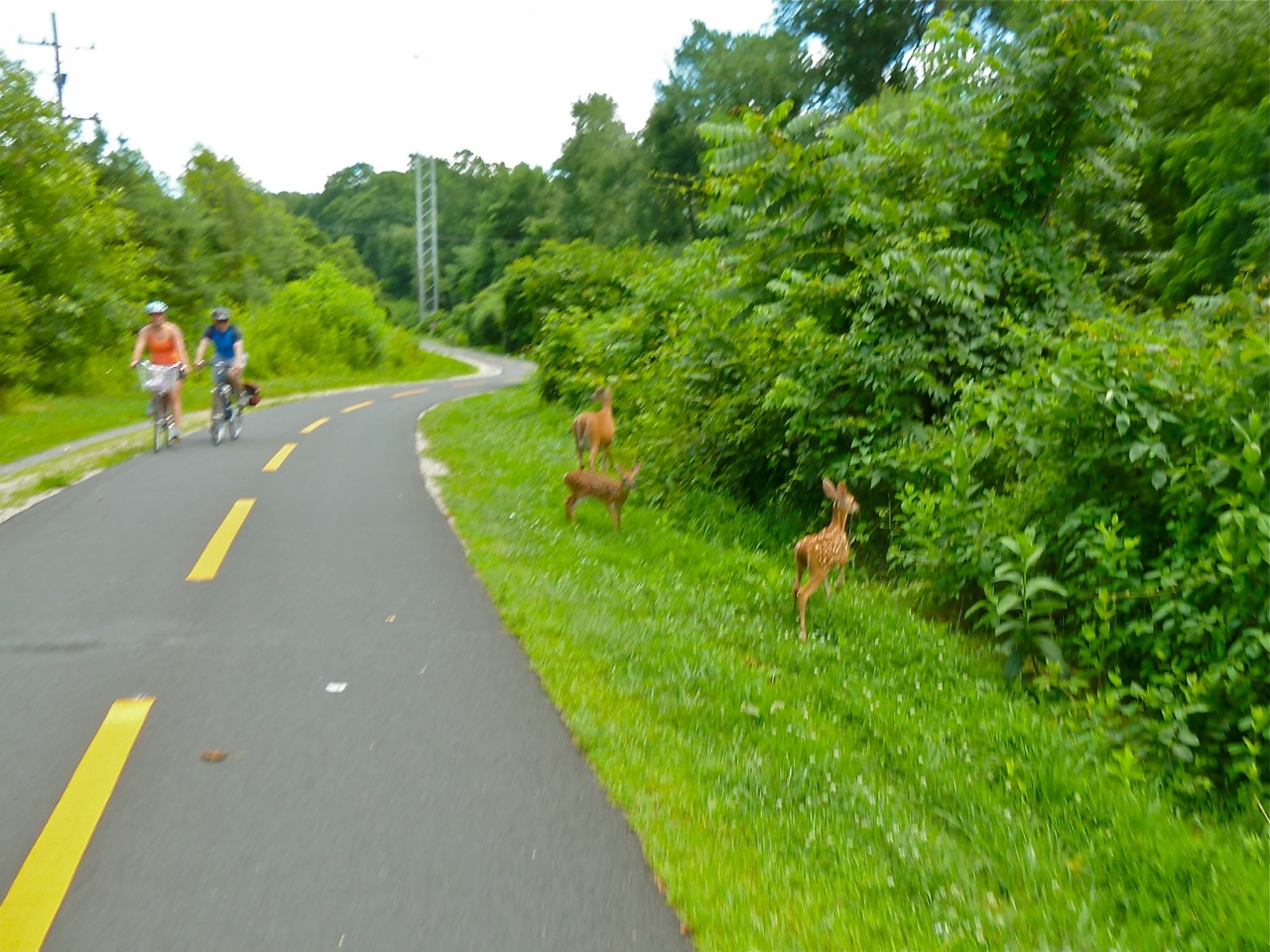
Bike tour 021

A family of deer on the trail (blurry photo taken whilst on the move)

Half the fun of these sorts of trips is the return and being able to feast on whatever you’ve spent the past few hours dreaming about. A cold beer and pizza on this occasion!

Bike tour 022

Reward for all the effort